


What is the Middle East Advanced Wound Care Market Size and Growth Rate?
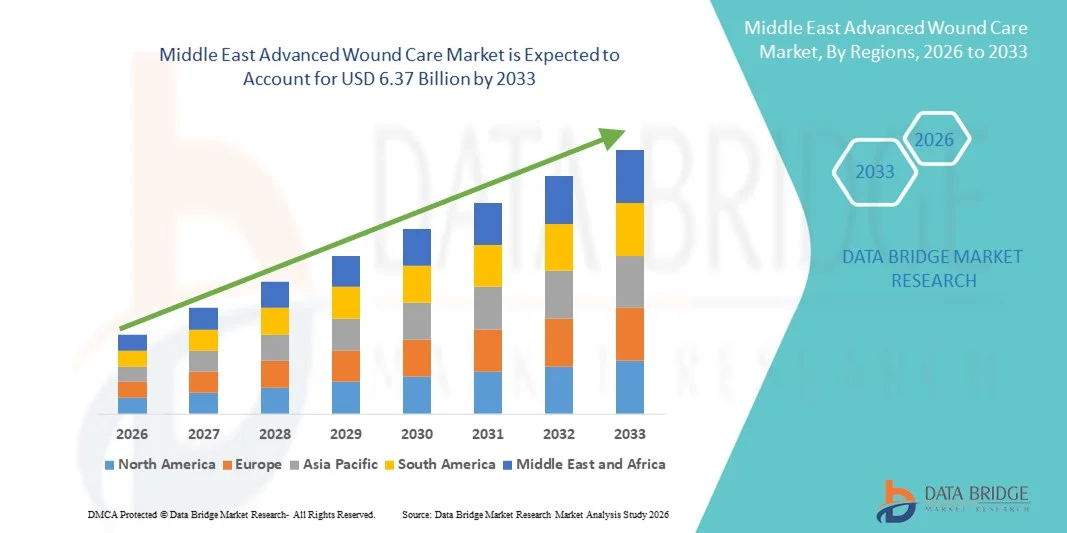
- As per Data Bridge Market Research Analysis the Middle East advanced wound care market size was valued at USD 4.06 billion in 2025 and is expected to reach USD 6.37 billion by 2033, at a CAGR of 5.8% during the forecast period
- The market growth is largely fueled by the rising prevalence of chronic conditions increasing healthcare infrastructure investments, and expanding adoption of advanced wound care products across hospitals and clinics, which together are strengthening demand for modern wound management solutions
- Furthermore, growing awareness of effective wound management practices, improvements in clinical care standards, and supportive public health initiatives are driving the uptake of advanced dressings, therapy devices, and other solutions, establishing advanced wound care as an essential component of healthcare delivery in the region
Market Size & Forecast
- Global Market Value (2025): USD 4.06 billion in 2025
- Expected Market Value (2033): USD 6.37 billion by 2033
- Forecast CAGR (2026–2033): 5.8%
Middle East Advanced Wound Care Market Analysis
- Advanced wound care products including dressings, therapy devices, biologics, and other solutions are increasingly vital components of healthcare delivery in both hospital and homecare settings due to their ability to accelerate healing, prevent infections, and improve outcomes for acute and chronic wounds
- The escalating demand for advanced wound care in the Middle East is primarily fueled by the rising prevalence of chronic conditions such as diabetes and pressure ulcers, growing awareness of effective wound management practices, and increased investments in healthcare infrastructure and modern clinical protocols
- Saudi Arabia dominated the Middle East advanced wound care market with the largest revenue share of 32.9% in 2025, driven by substantial healthcare spending, government initiatives to strengthen clinical care, and early adoption of advanced wound care products across hospitals and specialized clinics
- United Arab Emirates is expected to be the fastest-growing country in the advanced wound care market during the forecast period due to rising chronic disease prevalence, expanding healthcare infrastructure, and increased adoption of modern wound care solutions in hospitals and homecare settings
- The dressings segment dominated the Middle East advanced wound care market with a market share of 40.5% in 2025, driven by their proven efficacy in managing acute and chronic wounds, ease of use, and compatibility with hospital and homecare protocols
Report Scope and Middle East Advanced Wound Care Market Segmentation
|
Attributes |
Middle East Advanced Wound Care Key Market Insights |
|
Segments Covered |
|
|
Countries Covered |
Middle East and Africa
|
|
Key Market Players |
|
|
Market Opportunities |
|
|
Value Added Data Infosets |
In addition to the insights on market scenarios such as market value, growth rate, segmentation, geographical coverage, and major players, the market reports curated by the Data Bridge Market Research also include in-depth expert analysis, patient epidemiology, pipeline analysis, pricing analysis, and regulatory framework |
What is the Key Trend in the Middle East Advanced Wound Care Market?
Rise of Technology-Enhanced and Bioengineered Wound Solutions
- A significant and accelerating trend in the Middle East advanced wound care market is the increasing adoption of bioengineered skin substitutes, negative pressure wound therapy (NPWT) devices, and smart dressings that accelerate healing and reduce infection risk
- For instance, the Smith & Nephew PICO single-use NPWT system allows patients to manage post-surgical wounds at home while maintaining continuous vacuum therapy, improving outcomes and reducing hospital stay durations
- Integration of sensors and digital monitoring in advanced wound care enables features such as tracking wound healing progress, detecting infection, and providing alerts for clinical review. For instance, Molnlycke’s Sensicare dressings incorporate moisture-sensing technology that informs caregivers of optimal dressing changes
- These technology-enhanced wound care solutions facilitate centralized monitoring and telehealth interventions, allowing clinicians to track multiple patients remotely and adjust therapy protocols in real time
- This trend towards more intelligent, patient-centric, and data-driven wound care solutions is reshaping clinician and patient expectations in the region. Consequently, companies such as ConvaTec are developing bioengineered and smart wound care products that combine therapeutic efficacy with monitoring capabilities
- Increasing collaboration between local healthcare providers and international wound care companies is enabling customized products and training programs tailored to Middle Eastern patient needs
- The growing trend of telemedicine and digital health platforms in the region is further driving adoption of smart wound care solutions, as clinicians can remotely monitor and guide treatment for chronic wound patients
Middle East Advanced Wound Care Market Dynamics
Driver
Rising Prevalence of Chronic Wounds and Healthcare Investments
- The increasing prevalence of diabetes, pressure ulcers, and other chronic wounds, coupled with expanding healthcare infrastructure, is a significant driver of the advanced wound care market in the Middle East
- For instance, in April 2025, Saudi Arabia’s Ministry of Health launched initiatives to improve chronic wound management in hospitals, promoting adoption of modern dressings and therapy devices
- As healthcare providers focus on reducing healing times and preventing complications, advanced wound care products offer therapeutic advantages such as bioengineered materials, NPWT, and infection control dressings, providing a compelling upgrade over traditional gauze and simple dressings
- Furthermore, growing awareness among clinicians and patients about effective wound management practices is increasing the adoption of innovative wound care solutions across hospitals, clinics, and homecare settings
- The expansion of private healthcare facilities, homecare services, and specialized wound care centers in countries such as UAE, Saudi Arabia, and Qatar is further propelling the adoption of advanced wound care products
- Increasing government funding for chronic disease management programs in GCC countries is creating structured demand for standardized and clinically proven wound care solutions
- Rising medical tourism in countries such as UAE is boosting demand for advanced wound care treatments, as international patients expect high-quality, technologically advanced care options
Restraint/Challenge
High Costs and Limited Local Manufacturing
- The relatively high cost of advanced wound care products compared to traditional dressings poses a significant challenge to broader market penetration, especially in price-sensitive segments and smaller healthcare facilities
- For instance, bioengineered skin substitutes or NPWT devices are often considered premium solutions, limiting access in smaller clinics or for homecare patients without insurance coverage
- Limited local manufacturing and heavy reliance on imports make pricing and supply chain stability critical concerns, particularly in non-GCC countries with constrained healthcare budgets
- While costs are gradually decreasing, the perceived premium for advanced wound care technology can still hinder widespread adoption among mid-tier hospitals and ambulatory centers
- Overcoming these challenges through cost-effective local production, public-private partnerships, and reimbursement support will be vital for sustained market growth and broader accessibility
- A lack of trained personnel and clinical expertise in some countries restricts optimal utilization of advanced wound care devices, slowing adoption rates
- Regulatory delays in approving new wound care products in certain Middle Eastern countries further constrain market expansion, as manufacturers must navigate diverse compliance requirements across the region
Middle East Advanced Wound Care Market Scope
The market is segmented on the basis of product type, wound type, wound class, end user, and distribution channel.
- Product Type
On the basis of product type, the Middle East wound care market is segmented into dressing, therapy devices, biologics, and others. The dressing segment dominated the market with the largest market revenue share of 40.5% in 2025, driven by its versatility across acute and chronic wounds. Hospitals and clinics widely use hydrocolloid, foam, alginate, and antimicrobial dressings to maintain a moist healing environment and prevent infection. The ease of use, affordability relative to therapy devices or biologics, and compatibility with home healthcare applications further strengthen its dominance. Advanced dressings incorporating sensors or bioactive agents are improving therapeutic outcomes and attracting clinical preference. The segment benefits from consistent demand in surgical wards, emergency units, and homecare settings. Broad availability, clinician familiarity, and proven healing efficacy reinforce the leadership of the dressing segment in the region.
The therapy devices segment is expected to witness the fastest growth at a CAGR of 20% from 2026 to 2033, driven by increasing hospital and homecare adoption. Devices such as negative pressure wound therapy (NPWT), ultrasonic devices, and phototherapy units are used extensively for chronic wounds and post-surgical recovery. These devices accelerate healing, reduce infection risks, and shorten hospital stays. Growing awareness of technology-enhanced wound care among clinicians and patients supports demand. Portable NPWT units allow patients to continue therapy at home, further increasing adoption. Integration of digital monitoring and smart alerts in therapy devices enhances treatment efficacy. Government initiatives in GCC countries to improve chronic wound care are also fueling growth in this segment.
- By Wound Type
On the basis of wound type, the market is segmented into primary wound care, secondary wound care, and tertiary wound care. Primary wound care dominated the market with the largest share in 2025, as it represents the first line of treatment for acute injuries and surgical wounds. Products include standard and advanced dressings, topical agents, and basic therapy devices, ensuring rapid healing and infection prevention. Hospitals and clinics rely heavily on primary care products due to their cost-effectiveness and ease of application. High patient volumes in Saudi Arabia, UAE, and Kuwait further support this segment. Clinicians value primary wound care for predictable outcomes and adaptability across different wound types. Continuous innovation in primary care dressings enhances therapeutic efficacy and maintains dominance in the region.
The secondary wound care segment is expected to witness the fastest growth from 2026 to 2033, due to rising prevalence of chronic wounds such as diabetic foot ulcers and pressure sores. Products include advanced dressings, NPWT devices, and biologics designed for complex healing. Growth is driven by specialized wound care centers and homecare adoption, particularly in GCC countries. Increased clinician awareness about specialized interventions for chronic wounds fuels the segment’s expansion. Telehealth and digital monitoring integration enhances secondary wound care outcomes. Patient-centric treatment protocols for secondary care accelerate adoption in hospitals and clinics. Rising chronic disease incidence in the Middle East further supports fast growth.
- By Wound Class
On the basis of wound class, the market is segmented into Class I, Class II, Class III, and Class IV wounds. Class II wounds dominated the market in 2025 due to their moderate severity and high occurrence across hospitals and homecare. These wounds include post-surgical wounds, burns, and superficial ulcers requiring advanced dressings and therapy devices. Hospitals prioritize Class II wound management to prevent progression and infections. Clinicians rely on clinically validated dressings and NPWT devices for predictable healing. Government healthcare initiatives in Saudi Arabia and UAE promoting standardized wound care protocols support this segment. The broad applicability and moderate treatment complexity make Class II wounds the leading revenue contributor in the region.
The Class III wounds segment is expected to witness the fastest growth from 2026 to 2033, due to rising chronic and complex wound cases such as deep ulcers and severe burns. Advanced wound care products, including NPWT devices, biologics, and bioengineered dressings, are increasingly used for Class III wounds. Specialized care in hospitals and wound centers drives adoption. Telehealth integration enables continuous monitoring and intervention for complex wounds. Growing diabetic populations and aging demographics in the Middle East accelerate demand. Patient awareness and preference for advanced solutions contribute to rapid segment growth.
- By End User
On the basis of end user, the Middle East wound care market is segmented into hospitals, wound care centers, ambulatory centers, home healthcare, clinics, and others. The hospitals segment dominated the market with the largest revenue share of 45% in 2025, driven by high patient volumes and extensive wound management needs. Hospitals use a wide range of advanced wound care products including dressings, therapy devices, and biologics for acute, chronic, and post-surgical wounds. The presence of specialized wound care units in tertiary hospitals further reinforces demand. Hospitals benefit from centralized procurement and the ability to implement standardized protocols across multiple wards. The segment’s dominance is also supported by government initiatives and insurance coverage in GCC countries. Advanced wound care adoption in hospitals ensures reduced healing times, lower infection rates, and improved patient outcomes. High awareness among hospital clinicians and administrators regarding the efficacy of modern wound care products continues to fuel this segment’s leadership.
The home healthcare segment is expected to witness the fastest growth at a CAGR of 20% from 2026 to 2033, driven by the increasing preference for in-home chronic wound management. Patients with diabetic foot ulcers or pressure sores are increasingly using portable NPWT devices and smart dressings at home. Telemedicine platforms facilitate remote monitoring by clinicians, further boosting adoption. The convenience and comfort of receiving advanced wound care at home appeal to both patients and caregivers. Growing government and private support for home healthcare programs in countries such as UAE and Saudi Arabia fuels market expansion. The rise in elderly populations requiring continuous wound care is also a major factor accelerating growth in this segment.
- By Distribution Channel
On the basis of distribution channel, the Middle East wound care market is segmented into direct tenders and retail. The direct tenders segment dominated the market with the largest revenue share of 52% in 2025, driven by bulk procurement by hospitals, clinics, and government healthcare facilities. Large-scale tender agreements allow healthcare institutions to access a consistent supply of advanced wound care products at negotiated prices. This channel ensures timely delivery, quality assurance, and access to high-end products such as NPWT devices and biologics. Government contracts and public hospital tenders in GCC countries, particularly Saudi Arabia and UAE, further support this segment. Clinicians rely on direct tenders to maintain stock of essential products for both acute and chronic wound care. The dominance of this segment is reinforced by long-term contracts and centralized procurement practices that reduce administrative burden and costs.
The retail segment is expected to witness the fastest growth from 2026 to 2033, due to rising demand for over-the-counter wound care products in pharmacies and online platforms. Patients and caregivers increasingly prefer easy access to advanced dressings, topical agents, and small therapy devices for home use. E-commerce growth and digital healthcare platforms are facilitating retail expansion, particularly in urban centers of UAE, Saudi Arabia, and Qatar. Retail availability supports self-care management of minor to moderate wounds, reducing hospital visits. Growing consumer awareness about modern wound care solutions contributes to higher adoption. The convenience of purchasing products through retail channels for immediate use drives rapid growth in this segment.
Middle East Advanced Wound Care Market Regional Analysis
- Saudi Arabia dominated the Middle East advanced wound care market with the largest revenue share of 32.9% in 2025, driven by substantial healthcare spending, government initiatives to strengthen clinical care, and early adoption of advanced wound care products across hospitals and specialized clinics
- Patients and healthcare providers in the region increasingly value the effectiveness, faster healing outcomes, and infection control offered by advanced wound care products, including dressings, therapy devices, and biologics
- This widespread adoption is further supported by well-established hospitals, high healthcare spending, a technologically aware medical community, and initiatives to integrate modern wound management protocols, establishing advanced wound care as a preferred solution for both acute and chronic wound treatment in clinical and homecare settings
The Saudi Arabia Advanced Wound Care Market Insight
The Saudi Arabia advanced wound care market captured the largest revenue share of 32.9% in 2025, driven by high prevalence of chronic wounds, expanding hospital infrastructure, and government initiatives to improve wound management protocols. Healthcare providers and patients increasingly prioritize advanced dressings, therapy devices, and biologics for faster healing and infection prevention. The growing adoption of telemedicine and homecare wound management further fuels market growth. Hospitals and specialized wound care centers are key consumers, while private clinics are gradually increasing adoption. Awareness campaigns and training programs for clinicians enhance the use of modern wound care solutions. The combination of strong healthcare spending, government support, and patient demand establishes Saudi Arabia as the leading country in the region.
United Arab Emirates (UAE) Advanced Wound Care Market Insight
The UAE advanced wound care market accounted for a 21% share in 2025 and is expected to be the fastest-growing country in the region during the forecast period. Rising cases of diabetic ulcers, post-surgical wounds, and pressure sores are driving demand for advanced products. The presence of well-established hospitals, private clinics, and home healthcare services accelerates adoption. UAE patients and clinicians prioritize products offering rapid healing, infection control, and ease of use, especially for chronic and complex wounds. Government healthcare initiatives and investment in modern hospital technologies support the uptake of NPWT devices and bioengineered dressings. Telehealth integration for remote monitoring and homecare solutions further expands market opportunities.
Qatar Advanced Wound Care Market Insight
The Qatar advanced wound care market holds a 10% revenue share in 2025, primarily driven by increasing healthcare infrastructure and rising chronic disease prevalence. Hospitals and specialty clinics are adopting advanced dressings and therapy devices to improve healing outcomes. Patient awareness and preference for technologically enhanced wound care are growing, while government programs support structured chronic wound management. The demand for home healthcare solutions is increasing, particularly for patients with long-term conditions. Rising medical tourism in Qatar also fuels adoption of premium wound care products. Continuous training for clinicians ensures proper use of advanced wound care technologies.
Kuwait Advanced Wound Care Market Insight
The Kuwait advanced wound care market accounted for 8% revenue share in 2025, driven by high adoption in hospitals and specialized clinics. Chronic wounds such as diabetic foot ulcers and pressure sores are major drivers. Advanced dressings, NPWT devices, and biologics are widely used to improve clinical outcomes. The healthcare system’s focus on modern treatment protocols, combined with rising patient awareness, encourages adoption. Homecare services are gradually expanding for chronic wound management. Government programs promoting patient safety and improved wound healing further boost market growth. Private clinics also contribute by providing specialized wound care solutions.
Which are the Top Companies in Middle East Advanced Wound Care Market?
The Middle East Advanced Wound Care industry is primarily led by well-established companies, including:
- Convatec Group PLC (U.K.)
- Smith & Nephew (U.K.)
- 3M (U.S.)
- Coloplast A/S (Denmark)
- Mölnlycke Health Care AB (Sweden)
- Baxter (U.S.)
- B. Braun SE (Germany)
- Medline Industries Inc. (U.S.)
- Cardinal Health, Inc. (U.S.)
- Hollister Incorporated (U.S.)
- Organogenesis Inc. (U.S.)
- Integra LifeSciences Holdings Corporation (U.S.)
- DermaRite Industries LLC (U.S.)
- Urgo Medical (France)
- Lohmann & Rauscher International GmbH & Co. KG (Austria)
- HARTMANN Group (Germany)
- Systagenix Wound Management Ltd (U.S.)
- Advanced BioHealing, Inc. (U.S.)
- NuLife Science Pvt. Ltd. (India)
What are the Recent Developments in Middle East Advanced Wound Care Market?
- In January 2026, Bonvadis® topical cream received medical device marketing authorization approval for all indications in wounds from the Egyptian Drug Authority (EDA), enabling the product’s expanded access into Egypt and supporting broader regional wound care treatment options
- In April 2025, Ayu Life Sciences announced it is investing AED 33 million (≈ USD 9 million) to build a new advanced wound care manufacturing facility at Jebel Ali Free Zone (JAFZA) in Dubai, focused on producing next‑generation wound care solutions such as artificial skin substitutes and antimicrobial dressings, marking the first high‑tech wound care plant of its kind in the region
- In April 2025, the 16th Abu Dhabi Wound Care Conference was held at ADNEC in Abu Dhabi, UAE, bringing together wound care professionals from around the world to share the latest clinical evidence, innovations, and best practices in wound healing and management
- In February 2025, Tamer Mölnlycke Care, a strategic joint venture between Mölnlycke Health Care and the Tamer Group, officially inaugurated a manufacturing facility in Jeddah, Saudi Arabia, to produce and distribute high‑quality medical and selected wound care products locally, aligning with Saudi Vision 2030 to improve healthcare access and quality in the region
- In November 2024, Bonvadis® topical cream received medical device marketing authorization approval for all wound‑related indications in Saudi Arabia, allowing the advanced wound dressing to be marketed for acute, chronic, and scar‑related wounds in the Kingdom

- Interactive Data Analysis Dashboard
- Company Analysis Dashboard for high growth potential opportunities
- Research Analyst Access for customization & queries
- Competitor Analysis with Interactive dashboard
- Latest News, Updates & Trend analysis
- Harness the Power of Benchmark Analysis for Comprehensive Competitor Tracking
Data collection and base year analysis are done using data collection modules with large sample sizes. The stage includes obtaining market information or related data through various sources and strategies. It includes examining and planning all the data acquired from the past in advance. It likewise envelops the examination of information inconsistencies seen across different information sources. The market data is analysed and estimated using market statistical and coherent models. Also, market share analysis and key trend analysis are the major success factors in the market report. To know more, please request an analyst call or drop down your inquiry.
The key research methodology used by DBMR research team is data triangulation which involves data mining, analysis of the impact of data variables on the market and primary (industry expert) validation. Data models include Vendor Positioning Grid, Market Time Line Analysis, Market Overview and Guide, Company Positioning Grid, Patent Analysis, Pricing Analysis, Company Market Share Analysis, Standards of Measurement, Global versus Regional and Vendor Share Analysis. To know more about the research methodology, drop in an inquiry to speak to our industry experts.
Data Bridge Market Research is a leader in advanced formative research. We take pride in servicing our existing and new customers with data and analysis that match and suits their goal. The report can be customized to include price trend analysis of target brands understanding the market for additional countries (ask for the list of countries), clinical trial results data, literature review, refurbished market and product base analysis. Market analysis of target competitors can be analyzed from technology-based analysis to market portfolio strategies. We can add as many competitors that you require data about in the format and data style you are looking for. Our team of analysts can also provide you data in crude raw excel files pivot tables (Fact book) or can assist you in creating presentations from the data sets available in the report.













