


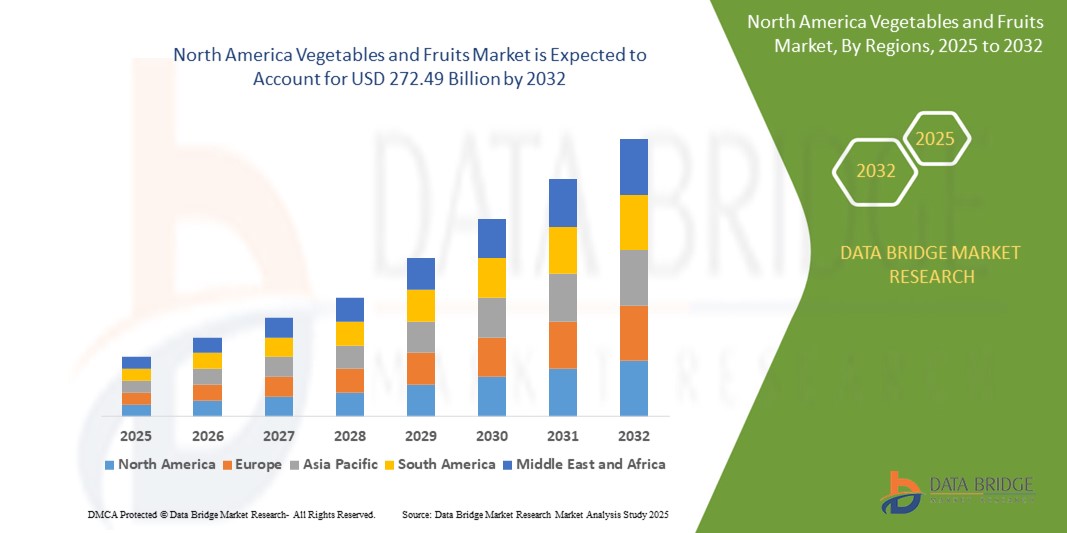
What is the North America Vegetables and Fruits Market Size and Growth Rate?
- The North America vegetables and fruits market size was valued at USD 145.05 billion in 2024 and is expected to reach USD 272.49billion by 2032, at a CAGR of 3.90% during the forecast period
- Vegetables and fruits are an important part of a healthy diet as they contain important vitamins, minerals, and plant chemicals. Owing to several advantages associated with consumption of fruits and vegetables, the demand for the product will be raising in the coming years
- Growing urbanization and increased adoption of healthy lifestyle, growing demand for organic vegetables and fruits over conventional ones, and increasing consumption of canned and frozen food are expected to drive the market growth in the coming years
What are the Major Takeaways of Vegetables and Fruits Market?
- The growing preference for organic and locally sourced vegetables and fruits is driven by consumers' desire for fresher, environmentally friendly, and sustainably produced food
- Consumer interest in functional foods and superfoods has led to the incorporation of nutrient-dense vegetables and fruits in products designed to provide specific health benefits and boost nutritional content
- U.S. vegetables and fruits market dominated North America’s market with 63,45% share in 2024, driven by rising health awareness, strong retail infrastructure, and growing demand for organic produce
- The Canada vegetables and fruits market is expected to register the fastest CAGR in North America from 2025 to 2032, growing health consciousness, expanding multicultural dietary preferences, and government efforts to promote sustainable agriculture
- The vegetable type segment dominated the market with the largest revenue share of 58.6% in 2024, owing to widespread daily consumption, especially in emerging economies where vegetables form a staple part of the diet
Report Scope and Vegetables and Fruits Market Segmentation
|
Attributes |
Vegetables and Fruits Key Market Insights |
|
Segments Covered |
|
|
Countries Covered |
North America
|
|
Key Market Players |
|
|
Market Opportunities |
|
|
Value Added Data Infosets |
In addition to the insights on market scenarios such as market value, growth rate, segmentation, geographical coverage, and major players, the market reports curated by the Data Bridge Market Research also include in-depth expert analysis, pricing analysis, brand share analysis, consumer survey, demography analysis, supply chain analysis, value chain analysis, raw material/consumables overview, vendor selection criteria, PESTLE Analysis, Porter Analysis, and regulatory framework. |
What is the Key Trend in the Vegetables and Fruits Market?
“Digital Transformation in Fresh Produce Supply Chains”
- A significant trend shaping the North America vegetables and fruits market is the integration of digital technologies—including AI, IoT, and blockchain—across the fresh produce supply chain. These innovations are enhancing traceability, reducing food waste, and improving operational efficiency
- For instance, companies such as Fresh Del Monte Produce and Total Produce have invested in smart logistics platforms that use real-time tracking to monitor temperature, humidity, and transit time—ensuring optimal freshness upon delivery
- Blockchain is being used to create transparent, tamper-proof records of product origin and handling. For instance, IBM Food Trust has partnered with leading growers to ensure traceability from farm to shelf, building consumer confidence
- AI-powered forecasting tools are enabling better demand planning, reducing overproduction and spoilage. Retailers use predictive analytics to align inventory with consumer behavior and weather patterns
- Smart packaging technologies, such as QR-coded labels and freshness indicators, offer end-users visibility into product origin, harvest date, and condition. These value-added features appeal to health-conscious and sustainability-focused consumers
- As digital solutions become more accessible, both large suppliers and smaller producers are adopting them to streamline operations and differentiate their offerings in a highly competitive market
What are the Key Drivers of Vegetables and Fruits Market?
- Health awareness and the growing preference for plant-based diets are key drivers propelling demand for fresh produce across both developed and emerging markets
- For instance, Total Produce has reported increased consumer interest in organic and locally sourced fruits and vegetables, reflecting changing dietary patterns post-pandemic
- Urbanization, rising disposable incomes, and busy lifestyles are boosting demand for pre-packaged, ready-to-eat, and convenient produce options, especially in the U.S., U.K., and Canada
- Government initiatives promoting fruit and vegetable consumption through nutrition programs and subsidies are further supporting market growth. In India, campaigns such as “Eat Right India” are helping improve public awareness of balanced diets
- Technological advancements in controlled environment agriculture (CEA), including hydroponics and vertical farming, are increasing production yields while minimizing land and water usage. This is especially crucial in land-scarce regions such as the Middle East and urban centers
Which Factor is challenging the Growth of the Vegetables and Fruits Market?
- Post-harvest losses and spoilage continue to challenge the growth of the vegetables and fruits market, especially in regions lacking cold chain infrastructure
- According to the FAO, nearly 45% of fruits and vegetables produced globally are wasted—largely due to inadequate storage, handling, and transportation. This results in both economic and environmental losses
- Price volatility caused by climatic variability, pests, and supply chain disruptions impacts farmer incomes and market pricing, leading to instability in availability and cost
- For instance, unseasonal rainfall in India during 2024 disrupted onion and tomato supplies, causing sudden price hikes and shortages across urban market
- Limited access to technology and market intelligence in rural areas hampers smallholder participation in high-value markets. The digital divide remains a barrier for many growers
- Tackling these issues through investment in cold storage, rural logistics, and training for growers on modern agricultural practices will be essential to ensure consistent supply and reduce waste across the chain
How is the Vegetables and Fruits Market Segmented?
The market is segmented on the basis of type, product type, category, packaging, end user, and distribution channel.
- By Type
On the basis of type, the vegetables and fruits market is segmented into vegetable type and fruit type. The vegetable type segment dominated the market with the largest revenue share of 58.6% in 2024, owing to widespread daily consumption, especially in emerging economies where vegetables form a staple part of the diet. The availability of a wide variety of vegetables across multiple preservation formats such as fresh, frozen, and canned supports their dominance in retail and food service sectors.
The fruit type segment is anticipated to witness the fastest growth rate of 20.4% from 2025 to 2032, driven by the growing demand for healthy snacks, rising popularity of fruit-based beverages, and increased emphasis on functional nutrition. The expansion of fruit consumption is also fueled by innovations in packaging and processing that enhance shelf life and convenience.
- By Product Type
On the basis of product type, the market is segmented into fresh, canned, frozen, dried & dehydrated, purees and paste, concentrates, and others. The fresh segment led the market with the highest revenue share of 41.3% in 2024, driven by consumer preference for unprocessed, nutrient-rich produce. The increasing popularity of farmers' markets, organic farming, and short supply chains further supports the fresh segment's dominance.
The frozen segment is projected to grow at the fastest CAGR from 2025 to 2032, due to extended shelf life, seasonal availability, and preservation of nutritional content. Consumers increasingly favor frozen fruits and vegetables for their convenience and ease of meal preparation, particularly in urban and time-constrained households.
- By Category
The market is bifurcated into vegetables and fruits by category. The vegetables segment accounted for the largest market share of 55.8% in 2024, owing to their fundamental role in global diets and strong demand from the food processing industry. Government programs promoting vegetable consumption and increased emphasis on plant-based diets have further strengthened the market position.
The fruits segment is expected to grow at the highest rate between 2025 and 2032, due to rising awareness of their antioxidant properties, increased fruit juice consumption, and their incorporation in a wide variety of health foods and snacks.
- By Packaging
On the basis of packaging, the vegetables and fruits market is segmented into pouches, tray, bags, cans, jar, boxes, and others. The pouches segment dominated the market with a revenue share of 28.7% in 2024, driven by its lightweight nature, portability, and cost-effective production. Pouches are highly favored in both fresh-cut and processed segments due to ease of use and reduced storage space requirements.
The tray segment is forecasted to grow at the fastest CAGR from 2025 to 2032, largely attributed to its increasing usage in ready-to-eat and pre-packed products. Trays offer excellent product visibility and protection, especially in retail formats, thereby driving their adoption in fresh and convenience food packaging.
- By End User
On the basis of end user, the market is divided into retail/household and food service. The retail/household segment held the dominant market share of 62.5% in 2024, as a result of rising at-home consumption, increasing health consciousness, and the expansion of modern retail outlets offering extensive product ranges.
The food service segment is projected to experience the fastest growth from 2025 to 2032, driven by the growth of the HoReCa (hotel, restaurant, and catering) sector, demand for pre-prepped ingredients, and an increase in institutional and QSR consumption of fruits and vegetables.
- By Distribution Channel
On the basis of distribution channel, the market is segmented into store-based retailers and non-store-based retailers. The store-based segment accounted for the largest revenue share of 70.2% in 2024, propelled by the dominance of supermarkets, hypermarkets, and specialty food stores that offer wide assortments and fresh stock replenishment.
The non-store-based retailer segment, which includes online platforms, is set to register the fastest CAGR from 2025 to 2032, owing to growing e-commerce penetration, improved cold-chain logistics, and rising consumer inclination towards doorstep delivery of fresh produce. Subscriptions and digital grocery platforms are especially appealing to younger, tech-savvy consumers.
Which Region Holds the Largest Share of the Vegetables and Fruits Market?
- U.S. vegetables and fruits market dominated North America’s market with 63,45% share in 2024, driven by rising health awareness, strong retail infrastructure, and growing demand for organic produce
- Consumers in the region increasingly prefer nutrient-rich diets and are gravitating toward plant-based foods, contributing to higher consumption of fresh and value-added fruits and vegetables
- Favorable government initiatives promoting healthy eating habits, coupled with the presence of leading produce distributors and extensive cold chain logistics, further bolster market growth across the region
Canada Vegetables and Fruits Market Insight
The Canada vegetables and fruits market is projected to expand steadily during the forecast period, driven by growing health consciousness, expanding multicultural dietary preferences, and government efforts to promote sustainable agriculture. Canadian consumers are increasingly opting for pesticide-free, local, and seasonal produce. Investments in greenhouse farming and vertical agriculture are also contributing to year-round availability and price stabilization, thereby enhancing accessibility across urban and rural regions.
Mexico Vegetables and Fruits Market Insight
The Mexico vegetables and fruits market is experiencing strong growth due to its prominent role as both a leading exporter and a major domestic consumer of fresh produce. A favorable climate, low labor costs, and vast agricultural land make Mexico a key supplier of fruits and vegetables to the U.S. and Canada. Domestically, rising incomes, dietary shifts toward healthier food, and growth in modern retail formats are driving market expansion. Government programs supporting rural farming and sustainable production also play a pivotal role in strengthening supply chains and boosting exports.
Which are the Top Companies in Vegetables and Fruits Market?
The vegetables and fruits industry is primarily led by well-established companies, including:
- Total Produce (Ireland)
- Fresh Del Monte Produce Inc (U.S.)
- Nationwide Produce Plc (U.K.)
- STIRFRESH (Kenya)
- Kühne + Heitz (U.S.)
- Wealmoor Ltd (U.K.)
- Abbey View Produce (U.K.)
- Agrial (France)
- Burgess Farms (U.S.)
- Kiril Mischeff (U.K.)
- Kettle Produce Ltd (U.K.)
- Fruktana (Serbia)
- IQF Foods Private Ltd. (India)
- Fresh Fruits Company (U.A.E.)
- DGM Growers (U.S.)
- RBOrganic Ltd (U.K.)
What are the Recent Developments in North America Vegetables and Fruits Market?
- In January 2023, Dole Food Company, Inc. launched a new golden pineapple variety that is sweeter, juicier, and more aromatic, catering to consumer demand for an enhanced pineapple experience. This premium fruit is sustainably cultivated in Costa Rica and is available at select supermarkets across the U.S. and Canada. This launch reflects the company’s commitment to innovation and consumer satisfaction in the fresh produce segment
- In January 2023, Dole Food Company, Inc. revealed that several of its subsidiaries had signed an agreement to sell the Fresh Vegetables Division to an affiliate of Fresh Express Incorporated, a fully owned subsidiary of Chiquita Holdings. The division includes operations for whole produce and salad products such as lettuce, broccoli, cauliflower, and celery. This strategic move enables Dole to streamline its operations and focus on core fruit categories
- In December 2022, Fresh Del Monte Produce, Inc. introduced the Del Monte Zero pineapple, its first-ever carbon-neutral certified pineapple variety. The product is available in North American and select European markets and complements existing lines such as Del Monte Gold and HoneyGlow. This launch highlights the company’s focus on sustainability and environmentally conscious offerings
- In July 2022, Sunkist Growers, Inc. launched "The Official Orange of American Summer" campaign to promote Californian Valencia oranges. As part of this initiative, the company offered an 8-pound combo bag and themed display bins for better in-store visibility. This campaign aimed to boost seasonal demand and strengthen brand positioning during the summer months
- In January 2021, C.H. Robinson entered the consumer-facing fresh produce market with the launch of its Robinson Fresh brand. Leveraging its long-standing expertise in sourcing and transporting fresh produce, the company now offers fruits and vegetables directly under its own label. This move marked C.H. Robinson’s expansion into branded consumer goods within the fresh food industry

- Interactive Data Analysis Dashboard
- Company Analysis Dashboard for high growth potential opportunities
- Research Analyst Access for customization & queries
- Competitor Analysis with Interactive dashboard
- Latest News, Updates & Trend analysis
- Harness the Power of Benchmark Analysis for Comprehensive Competitor Tracking
North America Vegetables And Fruits Market, Supply Chain Analysis and Ecosystem Framework
To support market growth and help clients navigate the impact of geopolitical shifts, DBMR has integrated in-depth supply chain analysis into its North America Vegetables And Fruits Market research reports. This addition empowers clients to respond effectively to global changes affecting their industries. The supply chain analysis section includes detailed insights such as North America Vegetables And Fruits Market consumption and production by country, price trend analysis, the impact of tariffs and geopolitical developments, and import and export trends by country and HSN code. It also highlights major suppliers with data on production capacity and company profiles, as well as key importers and exporters. In addition to research, DBMR offers specialized supply chain consulting services backed by over a decade of experience, providing solutions like supplier discovery, supplier risk assessment, price trend analysis, impact evaluation of inflation and trade route changes, and comprehensive market trend analysis.
Data collection and base year analysis are done using data collection modules with large sample sizes. The stage includes obtaining market information or related data through various sources and strategies. It includes examining and planning all the data acquired from the past in advance. It likewise envelops the examination of information inconsistencies seen across different information sources. The market data is analysed and estimated using market statistical and coherent models. Also, market share analysis and key trend analysis are the major success factors in the market report. To know more, please request an analyst call or drop down your inquiry.
The key research methodology used by DBMR research team is data triangulation which involves data mining, analysis of the impact of data variables on the market and primary (industry expert) validation. Data models include Vendor Positioning Grid, Market Time Line Analysis, Market Overview and Guide, Company Positioning Grid, Patent Analysis, Pricing Analysis, Company Market Share Analysis, Standards of Measurement, Global versus Regional and Vendor Share Analysis. To know more about the research methodology, drop in an inquiry to speak to our industry experts.
Data Bridge Market Research is a leader in advanced formative research. We take pride in servicing our existing and new customers with data and analysis that match and suits their goal. The report can be customized to include price trend analysis of target brands understanding the market for additional countries (ask for the list of countries), clinical trial results data, literature review, refurbished market and product base analysis. Market analysis of target competitors can be analyzed from technology-based analysis to market portfolio strategies. We can add as many competitors that you require data about in the format and data style you are looking for. Our team of analysts can also provide you data in crude raw excel files pivot tables (Fact book) or can assist you in creating presentations from the data sets available in the report.













