The global electric vehicle market is experiencing rapid growth, driven by several positive factors. Governments worldwide are implementing supportive policies and incentives, further boosting the market growth. Technological advancements and expanding charging infrastructure enhance the convenience and viability of electric vehicles. Additionally, the growing focus on reducing greenhouse gas emissions and combating climate change creates a favorable environment for the continued expansion of the global electric vehicle market.
Access Full Report at https://www.databridgemarketresearch.com/reports/global-electric-vehicle-market
Data Bridge Market Research analyses that the Electric Vehicle Market is expected to grow to USD 3, 37,263.41 million in 2022, and is expected to reach USD 14, 84,355.71 million by 2030, growing at a CAGR of 20.35% during the forecast period of 2023 to 2030. The increasing awareness of environmental issues, such as air pollution and climate change, has led to a growing demand for electric vehicles as a cleaner and greener alternative to traditional combustion engine vehicles. Electric vehicles produce zero tailpipe emissions, contributing to a significant reduction in greenhouse gas emissions and improving air quality.
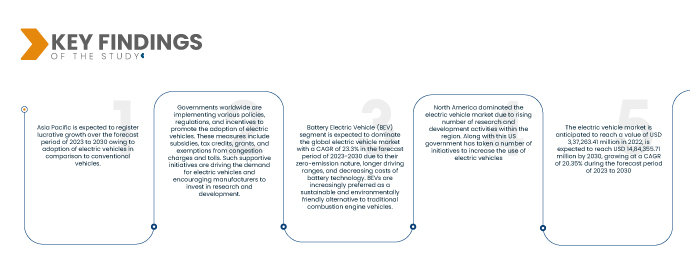
Key Findings of the Study
Growing charging infrastructure is expected to drive the market's growth rate
The expansion of charging infrastructure plays a pivotal role in driving the growth of the electric vehicle market. Investments in charging stations, both public and private, improve convenience and alleviate range anxiety, allowing electric vehicle owners to charge their vehicles easily. The establishment of fast-charging networks enables rapid charging, making electric vehicles more practical for long-distance travel. Furthermore, integrating charging infrastructure into urban planning ensures accessibility and promotes the widespread adoption of electric vehicles in cities and communities.
Report Scope and Market Segmentation
Report Metric
|
Details
|
Forecast Period
|
2023 to 2030
|
Base Year
|
2022
|
Historic Years
|
2021 (Customizable to 2015-2020)
|
Quantitative Units
|
Revenue in USD Million, Volumes in Units, Pricing in USD
|
Segments Covered
|
Component (Battery Cells and Packs, On-Board Charger, Infotainment System, Reducer, Fuel Stack, Power Control Unit, Battery Management System, Fuel Processor, Power Conditioner, Air Compressor, Humidifier, Others), Type (Battery Electric Vehicle, Plug-in Hybrid Electric Vehicle, and Fuel Cell Electric Vehicle), Vehicle Type (Passenger Cars, Two Wheelers, Commercial Vehicles), Propulsion Type (Plug-In Hybrid Electric Vehicles (PHEVs), Battery Electric Vehicles (BEVs), Hybrid Electric Vehicles (HEVs), and Fuel Cell Electric Vehicles (FCEVs), Charging Station Type (Normal Charging, Super Charging), Vehicle Class (Low-Priced, Mid-Priced, Luxury), Power Train (Parallel Hybrid, Series Hybrid, Combined Hybrid), Top Speed (<125 MPH, >125 MPH), Vehicle Drive Type (Front Wheel Drive, Rear Wheel Drive, All Wheel Drive), Vehicle Connectivity (Vehicle to Building, Vehicle to Grid, Vehicle to Vehicle, Vehicle to Everything), End Use (Private, Commercial Fleets)
|
Countries Covered
|
U.S., Canada and Mexico in North America, Germany, France, U.K., Netherlands, Switzerland, Belgium, Russia, Italy, Spain, Turkey, Rest of Europe in Europe, China, Japan, India, South Korea, Singapore, Malaysia, Australia, Thailand, Indonesia, Philippines, Rest of Asia-Pacific (APAC) in the Asia-Pacific (APAC), Saudi Arabia, U.A.E, South Africa, Egypt, Israel, Rest of Middle East and Africa (MEA) as a part of Middle East and Africa (MEA), Brazil, Argentina and Rest of South America as part of South America.
|
Market Players Covered
|
Ford Motor Company (U.S.), General Motors (U.S.), AUDI AG. (Germany), Kia India Private Ltd. (South Korea), Renault Group (France), Peugeot Motor Company plc (France), SAIC Motor Corporation Limited (China), Tesla (U.S.), Daimler Truck AG. (Germany), BMW AG (Germany), Hyundai Motor Company (South Korea), BYD Company Ltd. (China), Continental AG (Germany), Toyota Motor Sales, U.S.A., Inc. (Japan), Nissan Motor Co., Ltd. (Japan), Volkswagen AG (Germany), AB Volvo (Sweden), Honda Motor Co., Ltd. (Japan), Stellantis NV (Netherlands)
|
Data Points Covered in the Report
|
In addition to the market insights such as market value, growth rate, market segments, geographical coverage, market players, and market scenario, the market report curated by the Data Bridge Market Research team includes in-depth expert analysis, import/export analysis, pricing analysis, production consumption analysis, and pestle analysis.
|
Segment Analysis:
The electric vehicle market is segmented on the basis of components, type, vehicle type, propulsion type, charging station type, vehicle class, power train, top speed, vehicle drive type, vehicle connectivity and end use.
- On the basis of component, the electric vehicle market is segmented into battery cells and packs, on-board charger, infotainment system, reducer, fuel stack, power control unit, battery management system, fuel processor, power conditioner, air compressor, humidifier, others. Battery cells and packs segment is expected to dominate the global electric vehicle market with a CAGR of 24.5% in the forecast period of 2023-2030 due to their crucial role in powering electric vehicles. Advances in energy density, longevity, and cost reduction have made them essential for the growing demand for electric mobility and renewable energy storage.
In 2023, the battery cells and packs segment is expected to dominate the global electric vehicle market
In 2023, the battery cells and packs segment is expected to dominate the global electric vehicle market owing to their essential function in driving electric cars. They are now necessary to meet the rising demand for electric mobility and renewable energy storage due to improvements in energy density, longevity, and cost reduction with a CAGR of 24.5% in the forecast period of 2023-2030.
- On the basis of type, the electric vehicle market is segmented into battery electric vehicle, plug-in hybrid electric vehicle, and fuel cell electric vehicle. The battery electric vehicle (BEV) segment is expected to dominate the global electric vehicle market with a CAGR of 23.3% in the forecast period of 2023-2030 due to their zero-emission nature, longer driving ranges, and decreasing costs of battery technology. BEVs are increasingly preferred as a sustainable and environmentally friendly alternative to traditional combustion engine vehicles.
- On the basis of vehicle type, the electric vehicle market is segmented into passenger cars, two wheelers, commercial vehicles. Passenger cars segment is expected to dominate the global electric vehicle market with a CAGR of 24.5% in the forecast period of 2023-2030 due to their widespread usage for personal transportation. They cater to the needs of individuals and families, offering comfort, convenience, and a wide range of features and options, making them the most common vehicle type on the roads.
In 2023, the passenger cars segment is expected to dominate the global electric vehicle market
In 2023, the passenger Cars segment is expected to dominate the global electric vehicle market owing to their widespread use as a means of transportation for people. They are the most typical type of vehicle on the roads because they cater to the needs of both individuals and families while providing comfort, convenience, and a variety of features and options with a CAGR of 24.5% in the forecast period of 2023-2030.
- On the basis of propulsion type (plug-in hybrid electric vehicles (PHEVS), battery electric vehicles (BEVS), hybrid electric vehicles (HEVS), and fuel cell electric vehicles (FCEVS), charging station type (normal charging, super charging. Battery electric vehicle (BEV) segment is expected to dominate the global electric vehicle market with a CAGR of 23.3% in the forecast period of 2023-2030 due to their zero-emission nature, lower operating costs, improving infrastructure, and technological advancements, making them increasingly attractive and viable options for eco-conscious consumers.
- On the basis of vehicle class, the electric vehicle market is segmented into low-priced, mid-priced, luxury. The mid-Priced segment is expected to dominate the global electric vehicle market with a CAGR of 23.8% in the forecast period of 2023-2030 due to their balance of affordability and quality, offering a competitive combination of features, performance, and comfort that appeals to a wide range of consumer
- On the basis of power train, the electric vehicle market is segmented into parallel hybrid, series hybrid, and combined hybrid. Series Hybrid segment is expected to dominate the global electric vehicle market with with a CAGR of 22.3% in the forecast period of 2023-2030 due to its ability to combine an internal combustion engine with an electric motor. This configuration offers improved fuel efficiency, reduced emissions, and the flexibility to switch between power sources, providing a balanced approach to hybrid vehicle technology.
- On the basis of top speed, the electric vehicle market is segmented into <125 mph, >125 mph. The segment of vehicles with a top speed of >125 MPH dominates the automotive market due to the demand for high-performance and sports cars. These vehicles cater to enthusiasts seeking exhilarating acceleration, higher horsepower, and top speeds for a thrilling driving experience.
- On the basis of vehicle drive type, the electric vehicle market is segmented into front wheel drive, rear wheel drive, and all-wheel drive. The segment of vehicles with front-wheel drive (FWD) dominates the automotive market due to its cost-effectiveness, better fuel efficiency, and compact design. FWD provides good traction and handling for everyday driving, making it a popular choice for a wide range of vehicles, including sedans, hatchbacks, and compact SUVs.
- On the basis of vehicle connectivity, the electric vehicle market is segmented into vehicle to building, vehicle to grid, vehicle to vehicle, vehicle to everything. The segment of vehicle connectivity dominated by "vehicle to vehicle" (V2V) communication due to its potential for enhancing road safety. V2V enables vehicles to exchange information, such as speed and position, to avoid collisions and improve traffic flow, making it a critical technology for future intelligent transportation systems.
- بناءً على الاستخدام النهائي، يُقسّم سوق المركبات الكهربائية إلى أساطيل خاصة وتجارية. يهيمن قطاع الاستخدام النهائي الخاص على سوق السيارات نظرًا للطلب الكبير على وسائل النقل الشخصية. تُلبّي المركبات الخاصة احتياجات وتفضيلات الأفراد، مُوفّرةً الراحة والمرونة وخيارات التخصيص، مما يجعلها الخيار الأمثل لمعظم المستهلكين.
اللاعبون الرئيسيون
تعترف شركة Data Bridge Market Research بالشركات التالية باعتبارها اللاعبين الرئيسيين في سوق المركبات الكهربائية: SAIC Motor Corporation Limited (الصين)، Tesla (الولايات المتحدة)، Daimler Truck AG (ألمانيا)، BMW AG (ألمانيا)، Hyundai Motor Company (كوريا الجنوبية)، BYD Company Ltd. (الصين)، Continental AG (ألمانيا)، Toyota Motor Sales، USA، Inc. (اليابان).

تطوير السوق
- في عام ٢٠٢١، كشفت شركة BYD في تشونغتشينغ عن أربعة طرازات جديدة من السيارات الكهربائية مزودة ببطاريات Blade. وتشمل الطرازات الجديدة المتوفرة بميزات أمان متطورة للبطاريات: Qin Plus EV، وE2 2021 EV، وTang EV، وSong Plus EV. ستجذب هذه الطرازات الجديدة المزودة بميزات أمان متطورة للبطاريات عددًا كبيرًا من العملاء، مما سيُسرّع من توسع السوق.
- في عام ٢٠٢١، وبالتعاون مع FAW وSAIC، عرضت فولكس فاجن سيارتيها الكهربائيتين ID.6 Crozz وID.6 X بسبعة مقاعد في الصين. تتوفر هاتان السيارتان بسعتين مختلفتين للبطارية، ٥٨ كيلوواط/ساعة و٧٧ كيلوواط/ساعة. وهذا من شأنه أن يلبي احتياجات المستهلكين المتنوعة ويساعد على توسيع السوق.
التحليل الإقليمي
جغرافيًا، البلدان التي يغطيها تقرير سوق المركبات الكهربائية هي الولايات المتحدة وكندا والمكسيك في أمريكا الشمالية وألمانيا وفرنسا والمملكة المتحدة وهولندا وسويسرا وبلجيكا وروسيا وإيطاليا وإسبانيا وتركيا وبقية أوروبا في أوروبا والصين واليابان والهند وكوريا الجنوبية وسنغافورة وماليزيا وأستراليا وتايلاند وإندونيسيا والفلبين وبقية دول آسيا والمحيط الهادئ (APAC) في منطقة آسيا والمحيط الهادئ (APAC) والمملكة العربية السعودية والإمارات العربية المتحدة وجنوب إفريقيا ومصر وإسرائيل وبقية دول الشرق الأوسط وأفريقيا (MEA) كجزء من الشرق الأوسط وأفريقيا (MEA) والبرازيل والأرجنتين وبقية دول أمريكا الجنوبية كجزء من أمريكا الجنوبية.
وفقًا لتحليل Data Bridge Market Research:
أمريكا الشمالية هي المنطقة المهيمنة في سوق السيارات الكهربائية خلال الفترة المتوقعة 2023-2030
تُعزى هيمنة أمريكا الشمالية على سوق السيارات الكهربائية إلى عدة عوامل. فقد شهدت المنطقة طرح تقنيات متقدمة وأنشطة بحث وتطوير واسعة، مما عزز الابتكار ودفع عجلة نمو السوق. إضافةً إلى ذلك، نفّذت الحكومة الأمريكية مبادرات متنوعة، مثل الحوافز الضريبية والمنح واستثمارات البنية التحتية، لتشجيع تبني السيارات الكهربائية. وقد ساهمت هذه الإجراءات الداعمة في ريادة المنطقة في سوق السيارات الكهربائية.
من المتوقع أن تكون منطقة آسيا والمحيط الهادئ أسرع المناطق نموًا في سوق السيارات الكهربائية في الفترة المتوقعة 2023-2030
تشهد منطقة آسيا والمحيط الهادئ نموًا ملحوظًا في سوق السيارات الكهربائية بفضل الدعم الحكومي ودعم تبني هذه السيارات. وقد اتخذت العديد من دول المنطقة تدابير مثل دعم مشتري السيارات الكهربائية ومبادرات لتعزيز تركيب البنية التحتية لشحنها. تشجع هذه الإجراءات الحكومية الداعمة المستهلكين على التحول إلى السيارات الكهربائية، وتعالج بعض العوائق، مثل ارتفاع التكاليف الأولية وضعف البنية التحتية للشحن، مما يعزز نمو سوق السيارات الكهربائية في منطقة آسيا والمحيط الهادئ.
لمزيد من المعلومات التفصيلية حول تقرير سوق المركبات الكهربائية ، انقر هنا - https://www.databridgemarketresearch.com/reports/global-electric-vehicle-market