What is the Personal Care Market Size and Growth Rate?
- As per Data Bridge Market Research analysis, the personal care market was valued at USD 728.60 billion in 2025 and is projected to reach USD 1,401.60 billion by 2033, growing at a CAGR of 8.50% from 2026 to 2033.
- The market is experiencing robust growth driven by rising consumer spending on grooming and wellness, increasing demand for science-backed and premium products, and expanding adoption of personal care across skin care, hair care, oral care, and fragrances among women, men, and younger consumers.
- The increasing shift toward dermatologist-backed skincare, personalized routines, and digital-first purchasing, combined with growing penetration of e-commerce and social commerce in emerging economies, is supporting market adoption. Personal care innovation is being applied across skin care products, deodorants, and oral care, offering consumers greater efficacy, convenience, and self-expression while helping brands build loyalty through premium and clean-label ranges.
Market Size & Forecast
- Global Market Value (2025): USD 728.60 Billion
- Expected Market Value (2033): USD 1,401.60 Billion
- Forecast CAGR (2026–2033): 8.50%
- Leading Region in 2025: North America
- Fastest Growing Region: Asia Pacific
What are the Major Takeaways of the Personal Care Market?
- North America dominated the personal care market with the largest revenue share of 31.78% in 2025, supported by high per-capita beauty spending, a strong presence of global brands, and widespread adoption of premium skin care, hair care, and grooming products across mass and prestige channels.
- Asia-Pacific is expected to be the fastest-growing region at a CAGR of 10.24% from 2026 to 2033, fueled by rising disposable incomes, expanding urban populations, strong beauty culture in China, India, Japan, and South Korea, and fast-growing e-commerce.
- The skin care segment led the market with a 33.64% share in 2025, driven by growing awareness of sun protection, anti-aging, and dermatologist-recommended routines.
- Hair care is the fastest-growing product type, projected to register a CAGR of 10.46%, reflecting the surge in demand for scalp care, treatments, and premium hair repair products.
- The mass segment dominated the category with a 61.38% revenue share in 2025, led by affordability, broad availability, and strong everyday-use demand across all income groups.
- Supermarkets/hypermarkets accounted for 38.92% of the market share in 2025, preferred by consumers for one-stop shopping, promotions, and broad brand assortment.
- The online retail segment is the fastest-growing distribution channel category, with a CAGR of 12.84%, driven by direct-to-consumer brands, social commerce, and growing personalization.
Report Scope and Personal Care Market Segmentation
|
Attributes |
Personal Care Key Market Insights |
|
Segments Covered |
|
|
Countries Covered |
North America
Europe
Asia-Pacific
Middle East and Africa
South America
|
|
Key Market Players |
|
|
Market Opportunities |
|
|
Value Added Data Infosets |
In addition to the insights on market scenarios such as market value, growth rate, segmentation, geographical coverage, and major players, the market reports curated by the Data Bridge Market Research also include in-depth expert analysis, pricing analysis, brand share analysis, consumer survey, demography analysis, supply chain analysis, value chain analysis, raw material/consumables overview, vendor selection criteria, PESTLE Analysis, Porter Analysis, and regulatory framework. |
What is the Key Trend in the Personal Care Market?
- Personal care is shifting toward science-backed, dermatologist-endorsed, and ingredient-led products, as consumers look for visible results, skin and scalp health benefits, and transparency in formulations, blurring the line between beauty, wellness, and healthcare.
- For instance, in February 2026, according to L’Oréal, its Dermatological Beauty division delivered like-for-like sales growth of 5.50% in 2025, led by brands such as La Roche-Posay and CeraVe, while group sales reached €44.05 billion, up 4.00% like-for-like, highlighting strong consumer pull for science-based skincare and dermo-cosmetic products.
- Premium and prestige formats, particularly in hair care and fragrance, are gaining share as consumers trade up for treatments, serums, and sensorial products that deliver salon-like or clinical performance at home.
- Brands are also expanding into men’s grooming, gender-neutral products, and personalized regimens, supported by data, AI-driven diagnostics, and direct engagement with consumers through digital and social platforms.
- For instance, in October 2026, according to Unilever, its Beauty & Wellbeing business group delivered underlying sales growth of 5.70% in the third quarter of 2026, with Hair Care accelerating at double-digit rates, helped by Dove, Vaseline, and prestige brand K18, demonstrating how premium and treatment-led hair care is reshaping the personal care category.
- As dermatological science, personalization, premiumization, and digital engagement continue to advance, personal care products are expected to expand beyond conventional hygiene into targeted, wellness-oriented, and experience-led solutions across all consumer segments.
What are the Key Drivers of the Personal Care Market?
- Rising disposable incomes, urbanization, and growing awareness of grooming and wellness have significantly increased consumer spending on skin care, hair care, oral care, and fragrance products worldwide.
- For instance, in February 2026, according to L’Oréal’s 2025 annual results presentation, e-commerce growth in the global beauty market was four times that of brick-and-mortar retail, while the weight of e-commerce in emerging markets rose by 400 basis points in 2025, underscoring how digital channels are widening access to personal care products.
- Younger consumers, social media influence, and the popularity of multi-step routines are encouraging frequent product trial and trading up, supporting both volume and value growth across mass and premium categories.
- For instance, in October 2026, according to Cosmetics Business, Unilever’s Personal Care business group recorded underlying sales growth of 6.30% in the third quarter of 2026, with 3.80% from volume, including high-single-digit growth in emerging markets and mid-single-digit growth in the U.S., indicating broad-based demand for everyday personal care products.
- Expanding male grooming, wider availability of dermatologist-recommended brands, and continuous product innovation are also widening the consumer base and supporting premiumization across regions.
What Factors Are Challenging the Growth of the Personal Care Market?
- Personal care companies must comply with evolving ingredient, labeling, safety-substantiation, and facility-registration rules across regions, increasing compliance costs and time to market, particularly for small and emerging brands.
- For instance, in September 2026, according to Pattern, the U.S. Food and Drug Administration (FDA) clarified on September 9, 2026 that it does not issue certificates or verification letters confirming cosmetic facility registration or product listing under the Modernization of Cosmetics Regulation Act (MoCRA), adding documentation responsibilities for brands, retailers, and contract manufacturers.
- Fluctuating commodity, packaging, and logistics costs can pressure margins and force price increases, which may weaken demand among price-sensitive consumers and encourage switching to value or private-label alternatives.
- Intense competition from established multinationals, indie brands, and direct-to-consumer start-ups raises marketing and innovation costs, making it difficult for new entrants to build visibility and sustain loyalty.
- For instance, in November 2026, according to Nairametrics, Unilever Nigeria’s Personal Care sales fell 20.50% to ₦11.40 billion in the third quarter of 2026, while Beauty & Wellbeing sales declined 2.20% to ₦6.62 billion and nine-month Personal Care revenue slipped 3.50% to ₦42.37 billion, illustrating how uneven consumer demand in some emerging markets can constrain personal care growth.
- Growing consumer scrutiny of ingredients, sustainability claims, and animal testing also requires continuous reformulation and transparent communication, which can increase development costs and slow product launches for global personal care brands.
How is the Personal Care Market Segmented?
The personal care market is segmented on the basis of product, category, distribution channel, and end user.
- By Product
On the basis of product, the personal care market is segmented into skin care, hair care, oral care, bath & shower, fragrances & deodorants, and others. The skin care segment dominated the market with 33.64% share in 2025, supported by growing awareness of sun protection, anti-aging, and barrier-repair routines. Skin care products are used daily across age groups and are available across mass, dermatological, and prestige tiers. Innovation in active ingredients, sensitive-skin formulations, and clinically tested products is strengthening demand. Strong brand trust and wide availability across physical and digital channels continue to reinforce the segment’s leadership.
The hair care segment is projected to register the fastest growth at a CAGR of 10.46% from 2026 to 2033, driven by rising demand for scalp care, treatments, and premium hair repair products. Hair care allows consumers to address specific concerns such as damage, thinning, and dryness through targeted formulations. Its applications include shampoos, conditioners, masks, serums, and styling products. Growing popularity of salon-quality at-home treatments is creating additional demand across premium and mass segments. Expansion of professional-grade and prestige hair brands is improving value growth. Rising e-commerce reach is also improving category penetration.
- By Category
On the basis of category, the personal care market is segmented into mass and premium. The mass segment dominated the market with 61.38% share in 2025, supported by affordability, broad availability, and strong everyday-use demand across all income groups. Mass products are sold through supermarkets, convenience stores, and online platforms, ensuring wide consumer reach. Large brands frequently introduce value packs and local variants to serve diverse consumer needs. Their strong distribution networks and brand recognition continue to sustain volume leadership, particularly in emerging economies where first-time users are entering the category.
The premium segment is projected to register the fastest growth at a CAGR of 11.27% from 2026 to 2033, supported by increasing consumer willingness to trade up for treatments, serums, and sensorial products. Premium offerings emphasize clinical performance, high-quality ingredients, and refined sensory experiences. Growing demand for prestige fragrance, luxury skincare, and professional hair care is creating additional opportunities. Social media and influencer endorsements are accelerating discovery of premium brands. Investments in science-backed innovation and sustainable packaging are strengthening brand differentiation. Rising disposable incomes across Asia-Pacific and the Middle East are further supporting premiumization.
- By Distribution Channel
On the basis of distribution channel, the personal care market is segmented into supermarkets/hypermarkets, specialty stores, online retail, pharmacies & drug stores, and others. The supermarkets/hypermarkets segment dominated the distribution channel category with 38.92% share in 2025, supported by consumer preference for one-stop shopping, promotions, and broad brand assortment. Large-format retailers offer prominent shelf space across skin care, hair care, oral care, and deodorants. Loyalty programs, multi-buy offers, and private-label ranges encourage repeat purchases. Retailers are also expanding beauty sections and testers to attract consumers seeking affordable premium products.
The online retail segment is projected to register the fastest growth at a CAGR of 12.84% from 2026 to 2033, driven by direct-to-consumer brands, social commerce, and growing personalization. Digital platforms allow brands to showcase ingredients, reviews, and tutorials, helping consumers make informed choices. Subscription models and automated replenishment improve retention for everyday products. Livestream shopping and influencer-led campaigns are expanding reach, particularly in Asia-Pacific. Growing smartphone penetration and faster delivery networks are further supporting online adoption across emerging and developed markets.
- By End User
On the basis of end user, the personal care market is segmented into women, men, and unisex. The women segment dominated the end-user category with 63.45% share in 2025, supported by high usage frequency across skin care, hair care, fragrance, and body care routines. Women remain the primary target for innovation in anti-aging, sun care, and treatment-led products. Strong brand engagement and high receptivity to new launches support repeat purchases. Growing interest in wellness, ingredient transparency, and sustainable packaging is encouraging women to trade up to higher-value offerings.
The men segment is projected to register the fastest growth at a CAGR of 10.58% from 2026 to 2033, driven by rising grooming awareness, expanding product ranges, and growing acceptance of skin care and hair care among men. Brands are launching dedicated lines for shaving, skin care, body wash, and deodorants with simplified routines and natural ingredients. Digital marketing and subscription models are improving reach among younger male consumers. Acquisitions of male grooming brands by global companies are strengthening distribution and innovation. Growing urban lifestyles and workplace grooming norms are further supporting category expansion.
Which Region Holds the Largest Share of the Personal Care Market?
- North America dominated the personal care market with the largest revenue share of 31.78% in 2025, supported by high per-capita beauty spending, a strong presence of global brands, and widespread adoption of premium skin care, hair care, and grooming products across mass and prestige channels.
- The region also benefits from high consumer awareness of ingredients, strong demand for dermatologist-recommended products, and the presence of established manufacturers, retailers, and fast-growing direct-to-consumer brands. Increasing use of personal care products across skin care, hair care, grooming, and wellness, along with strong e-commerce and social commerce activity, continues to strengthen North America’s position in the global market.
U.S. Personal Care Market Insight
The U.S. personal care market is witnessing strong growth due to rising demand for dermatologist-backed skincare, premium hair care, and men’s grooming products, along with strong consumer engagement with digital and social platforms. The country’s mature retail ecosystem, which includes mass merchants, specialty beauty retailers, and e-commerce platforms, supports rapid commercialization of new brands. In addition, growing emphasis on ingredient transparency, clean formulations, and regulatory compliance is shaping product development across mass and prestige categories.
Asia-Pacific Personal Care Market Insight
The Asia-Pacific personal care market is expected to witness rapid growth, driven by rising disposable incomes, expanding urban populations, and strong beauty culture across countries such as China, India, and Japan. Growing demand for sun care, hair care, premium skin care, and fragrances is supporting regional market expansion. In addition, the region’s fast-growing e-commerce, livestream retail, and local brand innovation are accelerating demand for personal care products.
Japan Personal Care Market Insight
The Japan personal care market is witnessing consistent growth due to strong consumer preference for high-quality, functional, and gentle formulations, particularly in skin care and hair care. Consumers are increasingly adopting anti-aging, sun protection, and sensitive-skin products that emphasize safety and efficacy. Moreover, strong demand for compact, premium packaging and advanced ingredient technologies, combined with leading domestic beauty companies, is further contributing to market growth in Japan.
China Personal Care Market Insight
The China personal care market is growing rapidly, driven by rising household incomes, expanding urban populations, and increasing adoption of premium skin care, hair care, and fragrance products. Growing use of e-commerce and livestream retail is significantly boosting product reach and brand visibility. In addition, strong domestic brands, increasing demand for dermatological and science-backed products, and rapid product innovation are positioning China as a key growth market for personal care across Asia-Pacific.
U.K. Personal Care Market Insight
The U.K. personal care market is experiencing steady growth, supported by increasing adoption of premium skin care, clean beauty, and men’s grooming products among health-conscious consumers. Retailers, pharmacies, and online platforms are expanding assortments of dermatologist-recommended and sustainable personal care brands. Furthermore, growing awareness of ingredients, social media influence, and sustainability commitments from leading manufacturers is supporting wider adoption of advanced personal care solutions in the U.K.
Germany Personal Care Market Insight
The Germany personal care market is expanding steadily due to the country’s strong consumer focus on product safety, dermatological efficacy, and ingredient quality. Consumers are increasingly adopting skin care, hair care, and body care products with proven performance and sustainable packaging. Continuous advancements in formulation science, along with the presence of leading domestic manufacturers and strict European cosmetic regulations, are further driving market growth in Germany.
Which are the Top Companies in Personal Care Market?
The personal care industry is primarily led by well-established companies, including:
- L’Oréal S.A. (France)
- Unilever PLC (U.K.)
- Procter & Gamble Company (U.S.)
- The Estée Lauder Companies Inc. (U.S.)
- Beiersdorf AG (Germany)
- Colgate-Palmolive Company (U.S.)
- Kao Corporation (Japan)
- Shiseido Company, Limited (Japan)
- Kenvue Inc. (U.S.)
- Henkel AG & Co. KGaA (Germany)
- Coty Inc. (U.S.)
- LG Household & Health Care Ltd. (South Korea)
- Amorepacific Corporation (South Korea)
- Natura Cosméticos S.A. (Brazil)
- Haleon plc (U.K.)
- Edgewell Personal Care Company (U.S.)
- Godrej Consumer Products Limited (India)
- Church & Dwight Co., Inc. (U.S.)
- Mary Kay Inc. (U.S.)
- Oriflame Cosmetics AG (Switzerland)
What are Latest Developments in Personal Care Market?
- In February 2026, L’Oréal reported 2025 sales of €44.05 billion, up 4.00% like-for-like and 1.30% reported, with an operating margin of 20.20%, and announced that it would increase its stake in Galderma to participate in the fast-growing aesthetics market, a key adjacency to its beauty business, according to the company’s annual results release.
- In October 2026, Unilever reported third-quarter 2026 underlying sales growth of 6.30% in Personal Care, with 3.80% from volume and 2.40% from price, while Beauty & Wellbeing grew 5.70% on turnover of €3.50 billion, supported by double-digit growth in Hair Care and strong performance from power brands such as Dove and Vaseline.
- In June 2025, Unilever acquired male grooming brand Dr. Squatch for $1.50 billion. According to Cosmetics Business, the brand was included in Unilever’s underlying sales growth from September 2025 and grew at double-digit rates in the third quarter of 2026, strengthening Unilever’s position in men’s personal care.
- In June 2025, L’Oréal signed an agreement to acquire a majority stake in British premium skincare brand Medik8, as reported in its half-year results release of July 2025, adding a science-backed premium brand with strong potential for global growth to the Dermatological Beauty division’s portfolio.
- In November 2026, Henkel reported that its Hair business area grew organically by 4.00% in the third quarter of 2026. According to Personal Care Insights, sales were supported by the Olaplex and Not Your Mother’s acquisitions, and Henkel estimates that its five 2026 acquisitions will generate roughly €2.00 billion in annual sales by 2030.
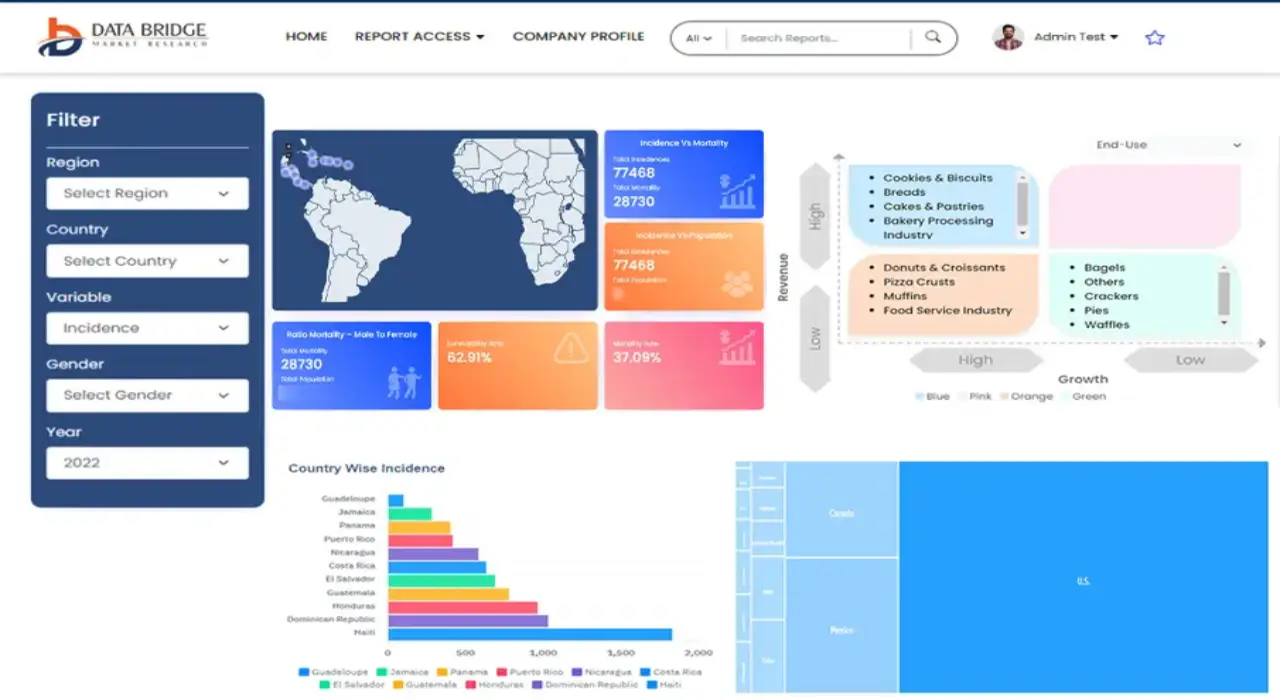
- Interactive Data Analysis Dashboard
- Company Analysis Dashboard for high growth potential opportunities
- Research Analyst Access for customization & queries
- Competitor Analysis with Interactive dashboard
- Latest News, Updates & Trend analysis
- Harness the Power of Benchmark Analysis for Comprehensive Competitor Tracking
Data collection and base year analysis are done using data collection modules with large sample sizes. The stage includes obtaining market information or related data through various sources and strategies. It includes examining and planning all the data acquired from the past in advance. It likewise envelops the examination of information inconsistencies seen across different information sources. The market data is analysed and estimated using market statistical and coherent models. Also, market share analysis and key trend analysis are the major success factors in the market report. To know more, please request an analyst call or drop down your inquiry.
The key research methodology used by DBMR research team is data triangulation which involves data mining, analysis of the impact of data variables on the market and primary (industry expert) validation. Data models include Vendor Positioning Grid, Market Time Line Analysis, Market Overview and Guide, Company Positioning Grid, Patent Analysis, Pricing Analysis, Company Market Share Analysis, Standards of Measurement, Global versus Regional and Vendor Share Analysis. To know more about the research methodology, drop in an inquiry to speak to our industry experts.
Data Bridge Market Research is a leader in advanced formative research. We take pride in servicing our existing and new customers with data and analysis that match and suits their goal. The report can be customized to include price trend analysis of target brands understanding the market for additional countries (ask for the list of countries), clinical trial results data, literature review, refurbished market and product base analysis. Market analysis of target competitors can be analyzed from technology-based analysis to market portfolio strategies. We can add as many competitors that you require data about in the format and data style you are looking for. Our team of analysts can also provide you data in crude raw excel files pivot tables (Fact book) or can assist you in creating presentations from the data sets available in the report.