



Global Organic Baby Toiletries Market Segmentation, By Product (Skin Care, Bathing Products, Diapers,WipesCuidado del cabello, y otros), Canal de distribución (Supermercados e hipermercados, tiendas especializadas, en línea y otros), Formulación (Liquid, Cream y Gel), Usuario final (Infants and Toddlers) - Tendencias de la industria y pronóstico a 2032
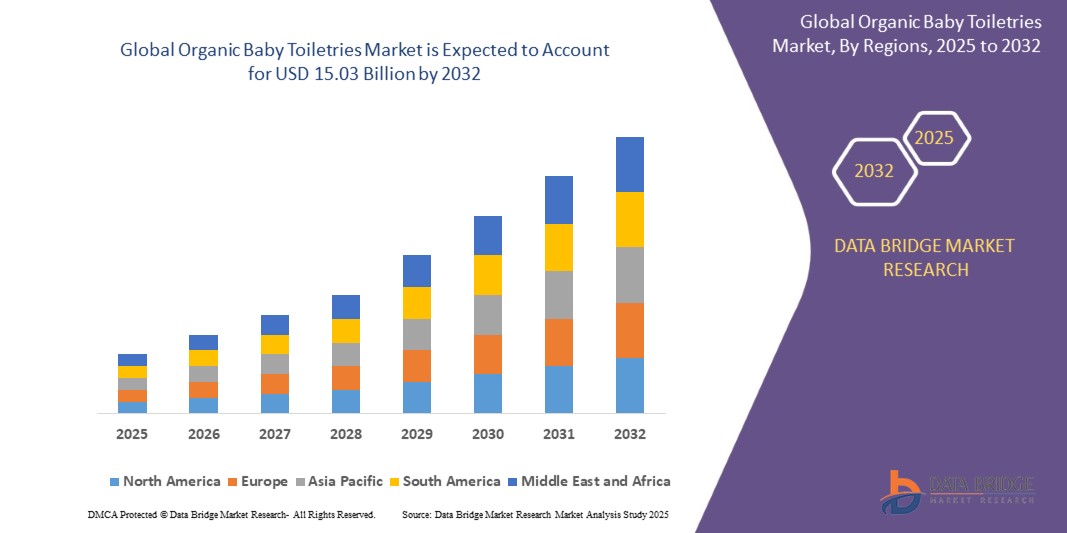
Azulejos de bebé orgánico tamaño del mercado
- El mercado mundial de las industrias biológicas del bebé se valoró enUSD 8.00 billion in 2024y se espera que alcanceUSD 15.03 billion by 2032
- Durante el período de previsión de 2025 a 2032 es probable que el mercado crezca en unCAGR of 8.20%,impulsado principalmente por la sensibilización de los padres sobre productos naturales y sin productos químicos
- Este crecimiento se ve impulsado por el aumento de las preocupaciones sobre la sensibilidad de la piel infantil y la creciente preferencia por alternativas sostenibles y ecológicas
Análisis del mercado de las industrias biológicas del bebé
- Elproductos sanitarios orgánicosha ganado popularidad generalizada debido al aumentosensibilización de los padresy la creciente demandasoluciones naturales de cuidado de la pielque garanticenseguridad y nutriciónpara bebés. Innovaciones modernas, comoformulaciones basadas en plantasyenvasado biodegradable, han hecho más accesible el cuidado del bebé orgánico, impulsando la expansión del mercado en varias regiones
- La demandasanitarios orgánicos para bebéses considerablemente impulsado por el crecimientopreferencia por productos libres de productos químicos, casos cada vez mayoressensibilidades de la piel infantil, y la expansiónTendencias de la paternidad ecológicaen todo el mundo
- Norteamérica domina el mercado, principalmente debido al alto gasto de consumo enproductos de cuidado infantil premium, la presencia de lídermarcas ecológicas de cuidado de la piel, y apoyo crecienteinnovación de productos sostenibles
- Por ejemplo, enEstados Unidos, la demanda de artículos de aseo para bebés orgánicosha aumentado, con los minoristas que informan de un aumento constante de ventas en segmentos premium y de mercado masivo. La región continúa impulsando la innovación, con fabricantesfórmulas hipoalergénicasycuidado de la piel del bebé certificado veganpara satisfacer las expectativas de los consumidores en evolución
- A nivel mundial,segmento de los bebés orgánicosrangos entre las categorías de mayor crecimiento encuidado infantil, con avances comoformulaciones sin agua, probiótico- cuidado de la piel infundida, yembalaje reciclablesolucionesjugar un papel fundamental en la expansión del mercado
Report Scope and Organic Baby Toiletries Market Segmentation
| Atributos | Orgánica de productos para bebés |
| Segmentos cubiertos |
|
| Países cubiertos | América del Norte
Europa
Asia y el Pacífico
Oriente Medio y África
América del Sur
|
| Principales jugadores del mercado |
|
| Oportunidades de mercado |
|
| Valor añadido Data Infosets | In addition to the insights on market scenarios such as market value, growth rate, segmentation, geographical coverage, and major players, the market reports curated by the Data Bridge Market Research also include in-depth expert analysis, pricing analysis, brand share analysis, consumer survey, demography analysis, supply chain analysis, value chain analysis, raw material/consumables overview, vendedor selection criteria, PESTLE Analysis, Porter Analysis, and regulatory framework |
Tendencias del mercado del bebé orgánico
“La creciente demanda de productos de cuidado natural y funcional del bebé”
- Una de las principales tendencias en el mundoproductos sanitarios orgánicoses la preferencia creciente parasoluciones naturales y multifuncionales de cuidado de la piel, impulsado por el aumento de la conciencia de los padres y el cambio haciaformulaciones libres de sustancias químicas
- Estas innovaciones incluyen:ingredientes basados en plantasyenvasado biodegradable, asegurandoseguridad, sostenibilidad y mayor nutriciónpara la piel infantil mientras atiende a consumidores eco-conscientes
- Por ejemplo, muchos líderesbaby care marcasestán lanzandoproductos orgánicos de cuidado de la piel, tales como hidratantes con protección solar ylociones de bebé infundidas con probióticos, abordando diversas preocupaciones de la piel con una sola formulación
- Los fabricantes también están integrandoformulaciones sin aguaysoluciones de embalaje reciclable, reducción del impacto ambiental al tiempo que mejora la longevidad de los productos y la usabilidad
- Esta tendencia está transformando lababy care industry, haciendo más artículos de aseo orgánicosaccesible, sostenible y preferido por los padres modernos en todo el mundo
Organic Baby Toiletries Market Dynamics
Conductor
“Incremento de la preferencia parental para productos de bebé sin productos químicos”
- Creciendoconciencia de la sensibilidad de la piel infantily el daño potencial causado por ingredientes sintéticos han llevado a los padres a preferirsanitarios orgánicos y naturales
- La demandano tóxico, hipoalergénico y dermatológicamente probadolos productos de cuidado del bebé están aumentando, ya que los consumidores buscanformulaciones suaves y eficacesque garanticen el bienestar infantil
- Los órganos reguladores apoyanproductos para bebés libres de químicos, empujando marcas para desarrollaralternativas ecológicas y basadas en plantasque se ajusten a las normas de seguridad en evolución
Por ejemplo,
- En marzo de 2024,El bebé de Johnsonamplia su línea orgánica de cuidado de la piellociones basadas en plantas y champús sin lágrimas, satisfacer la creciente demanda de formulaciones suaves
- En noviembre de 2023,The Moms Co.Introduccióncertificado de lavado orgánico bebé y loción, catering para los padres que buscancuidado natural, sin toxinapara bebés
- En julio de 2023,Mustelalanzadagel de limpieza ecológica, hecho coningredientes biodegradables, reforzando el cambio haciasoluciones sostenibles para el cuidado del bebé.
- Conpriorización de la seguridad y la sostenibilidad, elproductos sanitarios orgánicosse espera que sea testigo del crecimiento continuo, lo que da lugar a nuevas innovaciones enproductos naturales y libres de químicos
Oportunidad
“Expanding Retail and E-Commerce Presence for Organic Baby Toiletries”
- La disponibilidad cada vez mayor desanitarios orgánicos para bebésa través demarketplaces en línea, tiendas especializadas y cadenas minoristas importantesestá creando importantes oportunidades de crecimiento
- Las marcas están aprovechandomodelos directos a consumidores (DTC), servicios de suscripción y estrategias de marketing digital para mejorar el alcance del cliente y la lealtad de la marca
- El ascensoembalaje sostenible y líneas de productos reparablesestá atrayendo a consumidores ecoconscientes, impulsando la expansión del mercado
Para Instance,
- En febrero de 2024,Honest Companyasociado con grandes minoristas comoWalmart y Targetpara ampliar la presencia en tienda de sugama de cuidado de bebés orgánicos, impulsar la accesibilidad
- En septiembre de 2023,Madre Tierra Orgánicalanzadaplataforma dedicada al comercio electrónico, permitiendo ventas directas de suartículos de aseo para bebés basados en plantasofreciendo descuentos basados en suscripción
- En junio de 2023,Pipette BabyIntroducciónexclusivo paquete en línea, promoviendo suproductos de cuidado de la piel del bebé certificados por el GTEa los primeros consumidores digitales
- Con lacreciente influencia del comercio electrónico y la expansión minorista, elproductos sanitarios orgánicosestá establecido para experimentar un crecimiento sostenido, impulsado pormayor accesibilidad, comodidad del consumidor y estrategias de compromiso digital
Restraint/Challenge
“High Production Costs and Price Sensitivity among Consumers”
- El uso deingredientes orgánicos premium, embalaje ecológico y métodos de producción sostenibles aumenta significativamenteGastos de fabricación, haciendosanitarios orgánicos para bebésmás caro que las alternativas convencionales
- La sensibilidad de los precios sigue siendo un desafío, como muchos consumidores, especialmente enmercados conscientes de precios, dude en pagar una prima porproductos naturales de cuidado del bebéa pesar de sus beneficios
- Sensibilización limitada del consumidor yconceptos erróneos sobre certificaciones orgánicasadopción más lenta, que requiere que las marcas inviertan fuertemente enactividades de educación y comercialización
Para Instance,
- En enero de 2024,Babyganicstenía querevisar su estrategia de fijación de preciosdespués de enfrentar la resistencia de los consumidores conscientes del presupuesto, introduciendo tamaños de paquetes más pequeños y asequibles
- En octubre de 2023,Bees de Burt Babyamplia su línea de productos con unagama de cuidado de la piel orgánica de gama media, catering para un público más amplio sin comprometer la calidad del ingrediente
- En mayo de 2023,Mamaearthlanzadacampaña educativadestacando los beneficiossanitarios orgánicos para bebés, abordando el escepticismo del consumidor y justificando los precios de prima
- ConCosto de las cuestiones relativas a la limitación de la adopción en masa, las empresas deben equilibrarasequibilidad y sostenibilidad, asegurandosanitarios orgánicos para bebéspermanecer accesible mientras se mantienecalidad del producto y fuente ética
Organic Baby Toiletries Market Scope
El mercado se segmenta sobre la base del producto, canal de distribución, formulaciones y usuario final.
| Segmentation | Subsegmentation |
| Por producto |
|
| Por canal de distribución |
|
| Por fórmulas |
|
| Por Usuario final |
|
Organic Baby Toiletries Market Regional Analysis
“América del Norte es la Región Dominante en el mercado de las industrias biológicas del bebé”
- América del Norteposee la mayor cuota de mercado en el mundoArtículos de higiene del bebé orgánicomercado, impulsado por el aumento de la concienciaingredientes naturales, creciente demandaformulaciones libres de sustancias químicas, y una preferencia crecienteProductos para bebé ecológicos
- ElEE.UU.lidera la región debido al fuerte interés del consumidor encuidado orgánico, una red bien establecida detiendas de bebés especiales, y crecientes inversiones enfabricación sostenible
- La disponibilidad deformulaciones hipoalergénicas, incluidotoallitas basadas en plantasypañales biodegradables, ha impulsado aún más la expansión del mercado
- In addition, increasing concerns oversensibilidad de la piel, ventas crecientes a través deplataformas de comercio electrónico, y creciente influencia decelebrity endorsementscontribuir al crecimiento delArtículos de higiene del bebé orgánicomercado en América del Norte
“Se prevé que Asia-Pacífico registrará la tasa de crecimiento más alta”
- Asia y el Pacíficose prevé que presenciará el más altoCAGRen elArtículos de higiene del bebé orgánicomercado, impulsado por el aumento de la concienciacuidado del bebé, creciente demandaproductos para bebés libres de químicos, y una preferencia crecienteembalaje sostenible
- Países comoChina, Japón e Indiaestán liderando el mercado debido al fuerte interés del consumidor enformulaciones orgánicas, la ampliación de la distribución al por menor, y la influencia detendencias de las redes sociales
- El rápido crecimiento deplataformas de comercio electrónico, junto con innovaciones continuas eningredientes basados en plantas, está acelerando aún más la expansión del mercado
- In addition, government initiatives promotingSalud infantil, aumento de las inversiones endesarrollo de productos naturales, y creciente adopción desanitarios hipoalergénicoscontribuyen al rápido desarrollo delArtículos de higiene del bebé orgánicomercadoAsia y el Pacífico
El mercado competitivo paisaje proporciona detalles por competidor. Los detalles incluidos son la visión general de las empresas, las finanzas de las empresas, los ingresos generados, el potencial de mercado, la inversión en investigación y desarrollo, las nuevas iniciativas de mercado, la presencia mundial, los sitios e instalaciones de producción, las capacidades de producción, las fortalezas y debilidades de las empresas, el lanzamiento de productos, la anchura y amplitud de los productos, el dominio de las aplicaciones. Los puntos de datos arriba proporcionados sólo están relacionados con el enfoque de las empresas relacionados con el mercado.
Los principales líderes del mercado que operan en el mercado son:
- Earth Mama (U.S.)
- California Baby (Estados Unidos)
- Orgánicas del bebé de la naturaleza (U.S.)
- The Honest Company, Inc. (U.S.)
- Green People (U.K.)
- Ayablu Incorporated (U.S.)
- LittleTwig (U.S.)
- ERBAVIVA (Estados Unidos)
- Babyganics (U.S.)
- Charlie Banana (Hong Kong)
- Seventh Generation Inc. (U.S.)
- Abejas de Burt (U.S.)
- Avalon Natural Products, Inc. (U.S.)
- Procter and Gamble (U.S.)
- Weleda (Suiza)
- Kenvue Brands LLC (Estados Unidos)
- Cotton Babies, Inc. (U.S.)
- CeraVe (Estados Unidos)
- Coconut Hedgehog (U.K.)
- Laboratoires Expanscience (Francia)
Últimas novedades en el mercado mundial de productos ecológicos para bebés
- En noviembre de 2024,The Good Glamm Groupcompleta la adquisición completa deThe Moms Co., finalizando su participación mayoritaria adquirido inicialmente en 2021. Esto marca la salida completa de los fundadores e inversores de la empresa, aunque los detalles financieros de la transacción permanecen sin revelar
- En agosto de 2024,Nala's Babylanzadaen Sainsbury, trayendo su gama de cuidado de piel infantil totalmente reciclable, aprobada por dermatólogo, aprobada por pediatra, libre de crueldad, vegana y totalmente reciclable al minorista. La marca está creciendo rápidamente su presencia en las principales cadenas minoristas de U.K.
- En enero de 2024,PureBornAmpliación enEuropa, fortaleciendo su presencia a través de una asociación con el distribuidor suizo Laboratoire Naturel. La empresa, conocida por sus pañales hipoalergénicos compuestos con hasta 43% de bambú orgánico, introdujo un sitio web europeo dedicado con portales específicos para cada país para la accesibilidad de productos sin costura
- En octubre de 2023,Birch BabeIntroducciónla colección Birch Baby, con tres productos de cuidado de piel natural, vegano y sin fragancia hechos con ingredientes orgánicos. Además, el 1% de las ventas de esta gama apoyará la Fundación David Suzuki, reforzando el compromiso de la marca con la sostenibilidad
- En agosto de 2023,Terralanzada supañales y toallitas de planta premium en EE.UU. y Canadá, que ofrece 85% de materiales basados en plantas con absorbencia de 360 grados y más de 12 horas de protección de la humedad
SKU-
Obtenga acceso en línea al informe sobre la primera nube de inteligencia de mercado del mundo

- Panel de análisis de datos interactivo
- Panel de análisis de empresas para oportunidades con alto potencial de crecimiento
- Acceso de analista de investigación para personalización y consultas
- Análisis de la competencia con panel interactivo
- Últimas noticias, actualizaciones y análisis de tendencias
- Aproveche el poder del análisis de referencia para un seguimiento integral de la competencia
Metodología de investigación
La recopilación de datos y el análisis del año base se realizan utilizando módulos de recopilación de datos con muestras de gran tamaño. La etapa incluye la obtención de información de mercado o datos relacionados a través de varias fuentes y estrategias. Incluye el examen y la planificación de todos los datos adquiridos del pasado con antelación. Asimismo, abarca el examen de las inconsistencias de información observadas en diferentes fuentes de información. Los datos de mercado se analizan y estiman utilizando modelos estadísticos y coherentes de mercado. Además, el análisis de la participación de mercado y el análisis de tendencias clave son los principales factores de éxito en el informe de mercado. Para obtener más información, solicite una llamada de un analista o envíe su consulta.
La metodología de investigación clave utilizada por el equipo de investigación de DBMR es la triangulación de datos, que implica la extracción de datos, el análisis del impacto de las variables de datos en el mercado y la validación primaria (experto en la industria). Los modelos de datos incluyen cuadrícula de posicionamiento de proveedores, análisis de línea de tiempo de mercado, descripción general y guía del mercado, cuadrícula de posicionamiento de la empresa, análisis de patentes, análisis de precios, análisis de participación de mercado de la empresa, estándares de medición, análisis global versus regional y de participación de proveedores. Para obtener más información sobre la metodología de investigación, envíe una consulta para hablar con nuestros expertos de la industria.
Personalización disponible
Data Bridge Market Research es líder en investigación formativa avanzada. Nos enorgullecemos de brindar servicios a nuestros clientes existentes y nuevos con datos y análisis que coinciden y se adaptan a sus objetivos. El informe se puede personalizar para incluir análisis de tendencias de precios de marcas objetivo, comprensión del mercado de países adicionales (solicite la lista de países), datos de resultados de ensayos clínicos, revisión de literatura, análisis de mercado renovado y base de productos. El análisis de mercado de competidores objetivo se puede analizar desde análisis basados en tecnología hasta estrategias de cartera de mercado. Podemos agregar tantos competidores sobre los que necesite datos en el formato y estilo de datos que esté buscando. Nuestro equipo de analistas también puede proporcionarle datos en archivos de Excel sin procesar, tablas dinámicas (libro de datos) o puede ayudarlo a crear presentaciones a partir de los conjuntos de datos disponibles en el informe.











