



Asia-Pacific Japanese Restaurant Market Segmentation, By Cuisine Type(Traditional Japanese Cuisine, Specialty Japanese Cuisine, and Modern Japanese Cuisine), Service Type (Quick Service Restaurants (QSR), Full Service Restaurants, and Take-Out Counters/Outlets), Restaurant Category (Standalone Restaurants and Chain/Franchise Model), Restaurant Model (Takeaway, Home Delivery, and Dine-In), Sales Channel (Physical Outlets and Delivery Online Restaurants/Ghost Kitchen) - Industry Trends and Forecast to 2031
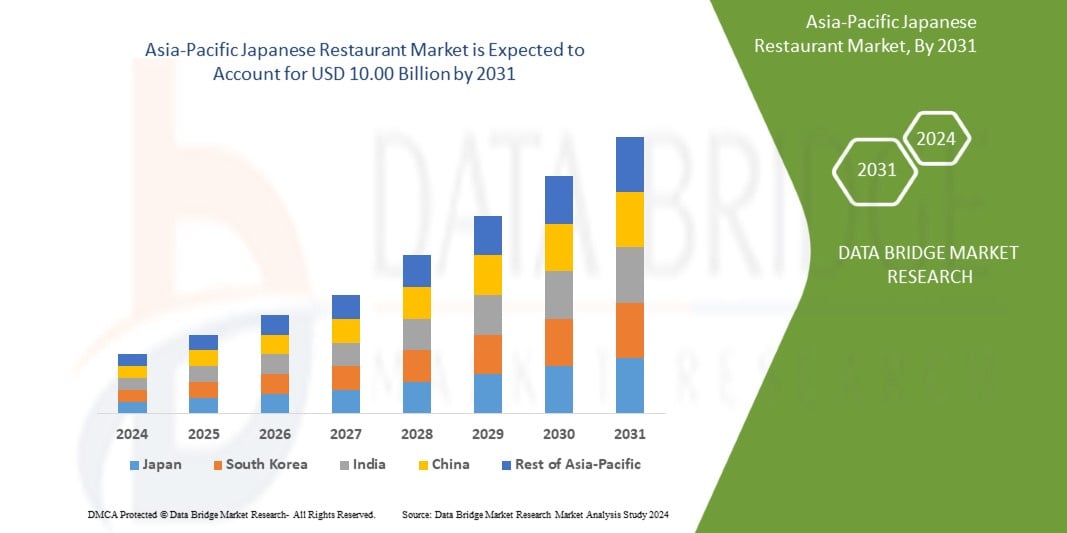
Asia-Pacific Japanese Restaurant Market Analysis
Increasing awareness of health benefits related to Japanese food is driving the market growth. Innovation in menu offerings provides opportunities in the market. Moreover, increase in popularity of the dish sushi is driving market growth.
Asia-Pacific Japanese Restaurant Market Size
The Asia-Pacific Japanese restaurant market is expected to reach USD 10.00 billion by 2031 from USD 7.55 billion in 2023, growing with a substantial CAGR of 3.62% in the forecast period of 2024 to 2031.
Asia-Pacific Market Trends
“Increasing Awareness of Health Benefits Related to Japanese Food Drives the Asia-Pacific Japanese Restaurant Market”
The Asia-Pacific Japanese restaurant market is experiencing significant growth, driven by the increasing awareness of the health benefits associated with Japanese cuisine. Japanese cuisine, renowned for its emphasis on fresh, high-quality ingredients and balanced nutrition, aligns well with the growing Asia-Pacific focus on health and wellness. Traditional dishes such as sushi, sashimi, and miso soup are not only flavorful but also low in fat and high in essential nutrients. Sushi, for example, features lean proteins like fish and nutrient-rich vegetables, while miso soup provides probiotics beneficial for digestive health. The health benefits of these foods are becoming more widely recognized, leading to a surge in consumer interest. The growing awareness of Japanese cuisine's health benefits also contributes to its appeal in diverse markets. Consumers in various regions are exploring Japanese food not only for its taste but also for its positive impact on overall health. This shift is particularly evident in regions where there is a rising trend of health-oriented eating habits, such as North America and Europe. Japanese restaurants in these areas are seeing increased patronage as they cater to the demand for healthier dining options.
As more people become health-conscious, they are increasingly seeking out dining options that align with their wellness goals. Japanese restaurants are capitalizing on this trend by highlighting the nutritional advantages of their menus. Many establishments like Sushi Gen Enterprises, Sushi Nozawa Group RE&S and others now emphasize their use of fresh, natural ingredients and traditional cooking methods that retain the maximum nutritional value of the food. This focus on health is not just limited to traditional dishes but extends to modern interpretations and fusion cuisines that integrate Japanese principles with other healthy culinary traditions.
Report Scope and Market Segmentation
|
Attributes |
Asia-Pacific Key Market Insights |
|
Segmentation |
By Cuisine Type: Traditional Japanese Cuisine, Specialty Japanese Cuisine, and Modern Japanese Cuisine By Service Type: Quick Service Restaurants (QSR), Full Service Restaurants, and Take-Out Counters/Outlets By Restaurant Category: Standalone Restaurants and Chain/Franchise Model By Restaurant Model: Takeaway, Home Delivery, and Dine-In By Sales Channel: Physical Outlets and Delivery Online Restaurants/Ghost Kitchen |
|
Countries Covered |
China, Japan, India, South Korea, Singapore, Indonesia, Thailand, Philippines, Australia and New Zealand, Malaysia, and Rest of Asia-Pacific |
|
Key Market Players |
Katsu-Ya Group, Inc (U.S.), Wokcano Asian Restaurant & Bar.(U.S.), 893 Ryōtei Berlin (Germany), Chiba Japanese Restaurant (U.S.), Tsujita Artisan Noodle (Japan), Sushi Den (U.S.), Florilège (Japan), Kaiten Zushi (U.S.), Kura Sushi USA (U.S.), Narisawa (Japan), RE&S (Singapore), Sazenka (Japan), Sushi A Go (U.S.), Sushi Gen Enterprises (U.S.), Sushi Nozawa Group (U.S.), Sushiya (India), Takami Sushi & Robata Restaurant (U.S.), Tatsu Ramen LLC (U.S.), Yamashiro Hollywood (U.S.), among others |
|
Market Opportunities |
|
|
Value Added Data Infosets |
In addition to the insights on market scenarios such as market value, growth rate, segmentation, geographical coverage, and major players, the market reports curated by the Data Bridge Market Research also include in-depth expert analysis, pricing analysis, brand share analysis, consumer survey, demography analysis, supply chain analysis, value chain analysis, raw material/consumables overview, vendor selection criteria, PESTLE Analysis, Porter Analysis, and regulatory framework. |
Asia-Pacific Japanese Restaurant Market Definition
A Japanese restaurant is an establishment that specializes in serving traditional Japanese cuisine, characterized by its emphasis on fresh, high-quality ingredients and meticulous preparation techniques. The menu typically features a variety of dishes, including sushi, sashimi, tempura, ramen, and other items that reflect Japan's diverse culinary heritage. Japanese restaurants often prioritize authenticity, incorporating traditional cooking methods and presentation styles, such as sushi rolls and bento boxes, to deliver a genuine dining experience. The ambiance of these restaurants often reflects Japanese aesthetics, with a focus on simplicity, elegance, and attention to detail. Service in Japanese restaurants is generally attentive and respectful, aiming to enhance the overall dining experience. In recent years, many Japanese restaurants have also embraced modern innovations, such as online ordering and sustainable practices, to meet the evolving preferences of Asia-Pacific consumers.
Asia-Pacific Japanese Restaurant Market Dynamics
Drivers
- The Increase in Popularity of the Dish Sushi
The rising popularity of sushi is a significant factors for the Asia-Pacific Japanese restaurant market, influencing consumer preferences and expanding market reach. Sushi, a staple of Japanese cuisine, has experienced a surge in Asia-Pacific popularity due to its alignment with health trends, versatility, and integration into mainstream food culture. One of the primary factors driving this trend is sushi’s reputation as a healthy and convenient food option. With its emphasis on fresh fish, vegetables, and rice, sushi is often perceived as a nutritious choice. The growing awareness of health and wellness has led many consumers to seek out healthier alternatives to traditional fast food. Sushi’s low-calorie, high-protein, and omega-3-rich profile aligns well with these dietary preferences, making it an attractive option for health-conscious diners. As a result, sushi has become an essential in many diets around the world, driving increased demand for Japanese restaurants. Along with it the rise of sushi's popularity is also supported by its versatility and adaptability. Sushi can be customized to suit various tastes and dietary needs, including vegetarian and gluten-free options. This flexibility allows sushi to cater to a wide range of consumer preferences, further enhancing its appeal. The introduction of innovative sushi rolls and fusion creations has also helped to attract a diverse audience, from traditionalists to those seeking novel culinary experiences. This adaptability has facilitated the expansion of sushi offerings in both traditional Japanese restaurants and new, contemporary dining establishments. In addition the mainstream acceptance of sushi has also played a crucial role in its market influence. Sushi has become a common fixture in cities around the world, from New York and London to Sydney and Tokyo. Its presence in popular media, including television shows, social media, and food blogs, has elevated sushi to a prominent position in Asia-Pacific food culture. This increased visibility has led to a broader acceptance of sushi as a mainstream dining option, attracting customers who may not have previously considered Japanese cuisine.
For Instance,
- In 2024, according to World Metrics, the Asia-Pacific sushi market has experienced substantial growth, with the industry valued at over USD 27 billion. This surge highlights the increasing popularity of sushi, driving a significant rise in the number of Japanese restaurants and contributing to the expansion of Japanese dining experiences worldwide
The Recognition of Japanese Cuisine as a UNESCO Intangible Cultural Heritage
The designation of Japanese cuisine as a UNESCO intangible cultural heritage highlights its traditional practices, unique preparation methods, and cultural significance. This acknowledgment not only elevates the profile of Japanese food but also generates heightened Asia-Pacific interest. Consumers are increasingly drawn to Japanese cuisine due to its rich history, authenticity, and the craftsmanship associated with its preparation. As a result, there is a growing demand for authentic Japanese dining experiences, which directly benefits Japanese restaurants worldwide.
The UNESCO recognition also enhances the Asia-Pacific appeal of Japanese cuisine by positioning it as a symbol of cultural sophistication and culinary excellence. This status attracts food enthusiasts and cultural tourists who seek to experience the authentic flavors and traditional techniques that are now internationally celebrated. Japanese restaurants, therefore, benefit from increased foot traffic and consumer interest driven by this prestigious endorsement. Furthermore, the Asia-Pacific focus on preserving intangible cultural heritage aligns with broader trends in cultural tourism and experiential dining. As travelers become more interested in immersing themselves in local traditions and cultural practices, Japanese cuisine’s UNESCO status makes it a compelling choice. Restaurants that offer traditional Japanese dishes and emphasize their heritage connection are likely to attract both international tourists and local consumers who are eager to engage with culturally significant culinary experiences.
For instance,
- In February 2024, according to an article published by the Star Advertiser, the Asia-Pacific interest in Japan’s traditional cuisine, recognized as a UNESCO intangible cultural heritage, continues to rise. The recognition of Japanese cuisine by UNESCO enhances its prestige and appeal, encouraging more diners to explore and appreciate its cultural and historical significance, which in turn fuels the growth and popularity of Japanese dining establishments across the globe
Opportunities
- Innovation in Menu Offerings
Innovation in menu offerings presents a significant opportunity for the Asia-Pacific Japanese restaurant market, possessing growth and capturing new customer segments. As the dining landscape evolves, Japanese restaurants have the chance to differentiate themselves by embracing creative and diverse menu options that appeal to modern consumers. One of the key opportunities lies in the adaptation of traditional Japanese dishes to contemporary tastes and dietary preferences. For example sushi, traditionally consisting of raw fish and rice, has evolved to include a variety of ingredients and styles, such as vegetarian rolls, fusion creations, and even sushi burritos. This innovation allows Japanese restaurants to cater to a broader audience, including those with dietary restrictions or a preference for unique flavor combinations. By offering diverse and inventive menu items, restaurants can attract a wider range of customers and increase their market appeal.
Another opportunity for menu innovation is the integration of Asia-Pacific culinary trends with Japanese cuisine. Japanese restaurants are increasingly incorporating elements from other culinary traditions, resulting in exciting new dishes that blend flavors and techniques. For instance the fusion of Japanese and Mediterranean ingredients can create unique dishes like sushi with hummus or miso-glazed lamb. These cross-cultural innovations not only attract adventurous eaters but also position Japanese restaurants as trendsetters in the Asia-Pacific dining scene.
For instance,
- In 2018, according to the Economic Times, the Japanese restaurant market saw significant innovation with the introduction of sushi doughnuts and sushi burritos. These novel creations, which blend traditional sushi ingredients with new formats, such as a doughnut-shaped sushi or a burrito-style wrap, reflect a growing trend towards inventive menu offerings
Collaboration With local Cultural Events and Festivals
Collaboration with local cultural events and festivals represents a significant opportunity for the Asia-Pacific Japanese restaurant market, fostering growth and expanding market reach. These collaborations allow Japanese restaurants to enhance their visibility, engage with diverse audiences, and strengthen their brand presence in both established and emerging markets.
Participating in cultural events and festivals enables Japanese restaurants to introduce their cuisine to new customer segments. Events such as food festivals, cultural fairs, and community celebrations attract large and varied audiences, providing a platform for restaurants to showcase their offerings. For instance, a Japanese restaurant setting up a booth at a multicultural food festival can reach attendees who may be unfamiliar with Japanese cuisine. By offering sample dishes or special event menus, restaurants can attract potential customers, generate interest, and encourage them to visit the restaurant for a full dining experience. These collaborations help Japanese restaurants build brand recognition and establish a positive reputation within the community. When restaurants align themselves with popular local events, they benefit from the event's promotional efforts, including marketing materials, social media mentions, and local media coverage. This association can boost the restaurant's visibility and credibility, leading to increased interest and foot traffic. For instance, a Japanese restaurant partnering with a prominent local cultural festival may be featured in event advertisements and receive mentions in local news outlets, boosting its profile among potential diners.
Restraints/Challenges
- High Cost of Ingredients for Japanese Cuisine
Japanese cuisine, known for its emphasis on fresh and high-quality ingredients, often relies on specialized items such as premium-grade sushi-grade fish, rare vegetables, and imported condiments. Such as, ingredients like bluefin tuna, used in high-end sushi, and seasonal items such as Matsutake mushrooms, are not only expensive but also subject to fluctuations in availability and price. The high cost of these ingredients impacts the overall cost structure of Japanese restaurants, leading to increased menu prices and potentially reduced consumer demand. The high costs of ingredients can particularly strain smaller or independent Japanese restaurants. These establishments may struggle to absorb the cost increases without significantly raising menu prices, which could discourage budget-conscious customers. Additionally, the volatility in ingredient prices can lead to inconsistent menu pricing and availability. For instance, fluctuations in the Asia-Pacific market for seafood due to overfishing, environmental changes, or supply chain disruptions can cause sudden increases in costs.
The impact of high ingredient costs extends beyond the restaurant level to affect consumer perceptions and behavior. When menu prices rise due to increased ingredient costs, consumers may perceive the restaurant as less affordable or value-for-money. This perception can lead to decreased support and lower overall sales. Moreover, the high cost of authentic Japanese ingredients can limit the ability of restaurants to offer a diverse menu, potentially reducing their appeal to a broader audience.
- Intense Competition from Italian and Chinese Cuisine
The Asia-Pacific Japanese restaurant market faces significant challenges due to intense competition from Italian and Chinese cuisines. Both Italian and Chinese dining options are deeply entrenched in Asia-Pacific food culture, presenting formidable rivals to Japanese restaurants as they vie for consumer attention and market share. One primary challenge is the saturation of Italian and Chinese cuisines in the Asia-Pacific dining market. Italian cuisine, with its diverse range of dishes such as pasta, pizza, and risotto, and Chinese cuisine, known for its extensive variety including dim sum, noodles, and stir-fries, are widely available and deeply entrenched in many countries. This widespread availability creates a high level of competition for Japanese restaurants, which must differentiate
themselves to capture consumer interest. The prevalence of these cuisines means that Japanese restaurants face the difficulty of standing out in a crowded market where familiar and popular options dominate.
Along with it, the cost of entry and operational challenges associated with maintaining a Japanese restaurant can be significant challenge. Italian and Chinese restaurants often benefit from economies of scale due to their larger presence and established supply chains. In contrast, Japanese restaurants may face higher costs for sourcing authentic ingredients and specialized equipment, which can impact their pricing and profitability. For instance, high-quality sushi-grade fish and premium soy sauces are expensive and require careful handling which may increases operational costs. This disparity in operational efficiency can make it difficult for Japanese
restaurants to compete on price, especially in markets where cost is a key consideration for consumers.
Impact and Current Market Scenario of Raw Material Shortage and Shipping Delays
Data Bridge Market Research offers a high-level analysis of the market and delivers information by keeping in account the impact and current market environment of raw material shortage and shipping delays. This translates into assessing strategic possibilities, creating effective action plans, and assisting businesses in making important decisions.
표준 보고서 외에도 예상 배송 지연 등의 조달 수준에 대한 심층 분석, 지역별 유통업체 매핑, 상품 분석, 생산 분석, 가격 매핑 추세, 소싱, 카테고리 성과 분석, 공급망 위험 관리 솔루션, 고급 벤치마킹 및 조달 및 전략적 지원을 위한 기타 서비스를 제공합니다.
경제 침체가 제품 가격 및 가용성에 미치는 영향 예상
경제 활동이 둔화되면 산업이 어려움을 겪기 시작합니다. 경기 침체가 제품의 가격 책정 및 접근성에 미치는 예상 효과는 DBMR에서 제공하는 시장 통찰력 보고서 및 인텔리전스 서비스에서 고려됩니다. 이를 통해 고객은 일반적으로 경쟁사보다 한 발 앞서 나가고, 매출과 수익을 예측하고, 손익 지출을 추정할 수 있습니다.
아시아 태평양 일본식 레스토랑 시장 범위
시장은 요리 유형, 서비스 유형, 레스토랑 범주, 레스토랑 모델 및 판매 채널을 기준으로 5개의 주목할 만한 세그먼트로 세분화됩니다. 이러한 세그먼트 간의 성장은 산업의 빈약한 성장 세그먼트를 분석하고 사용자에게 핵심 시장 응용 프로그램을 식별하기 위한 전략적 결정을 내리는 데 도움이 되는 귀중한 시장 개요와 시장 통찰력을 제공하는 데 도움이 됩니다.
전통 일본 요리
- 전통 일본 요리, 요리 유형별
- 초밥
- 초밥, 종류별
- 컨베이어 벨트
- 컨베이어 없음
- 스시, 체인점
- 지역 레스토랑
- 국제 체인점
- 스시, 식당별
- 퀵서비스
- 풀서비스 레스토랑
- 테이크아웃 카운터/매점
- 초밥, 종류별
- 라면
- 라멘, 레스토랑 모드
- 테이크어웨이
- 택배 배달
- 다이닝 인
- 라멘, 설립에 따라
- 퀵서비스
- 풀서비스 레스토랑
- 테이크아웃 카운터/매점
- 라멘, 레스토랑 모드
- 튀김
- 레스토랑 모드의 튀김
- 테이크어웨이
- 택배 배달
- 다이닝 인
- 튀김, 설립에 따라
- 퀵서비스
- 풀서비스 레스토랑
- 테이크아웃 카운터/매점
- 레스토랑 모드의 튀김
- 사시미
- 사시미, 레스토랑 모드
- 테이크어웨이
- 택배 배달
- 다이닝 인
- 사시미, 설립에 따라
- 퀵서비스
- 풀서비스 레스토랑
- 테이크아웃 카운터/매점
- 사시미, 레스토랑 모드
- 가이세키
- 레스토랑 모드의 카이세키
- 테이크어웨이
- 택배 배달
- 다이닝 인
- 가이세키, 설립에 따라
- 퀵서비스
- 풀서비스 레스토랑
- 테이크아웃 카운터/매점
- 레스토랑 모드의 카이세키
- 우동/소바
- 우동/소바, 레스토랑 모드별
- 테이크어웨이
- 택배 배달
- 다이닝 인
- 우동/소바, 업체별
- 퀵서비스
- 풀서비스 레스토랑
- 테이크아웃 카운터/매점
- 우동/소바, 레스토랑 모드별
- 기타
- 기타, 레스토랑 모드별
- 테이크어웨이
- 택배 배달
- 다이닝 인
- 기타, 설립에 따라
- 퀵서비스
- 풀서비스 레스토랑
- 테이크아웃 카운터/매점
- 기타, 레스토랑 모드별
- 초밥
특선 일본 요리
- 특선 일본 요리, 종류별
- 야키토리
- 철판구이
- 기타
- 레스토랑 모드별 특선 일본 요리
- 테이크어웨이
- 택배 배달
- 다이닝 인
- 레스토랑 모드별 특선 일본 요리
- 퀵서비스
- 풀서비스 레스토랑
- 테이크아웃 카운터/매점
- 모던 일본 요리
- 모던 일본 요리, 유형별
- 퓨전일본식
- 현대 일본 요리
- 모던 일본 요리, 유형별
- 모던 일식, 레스토랑 모드
- 테이크어웨이
- 택배 배달
- 다이닝 인
- 현대 일본 요리, 설립자별
- 퀵서비스
- 풀서비스 레스토랑
- 테이크아웃 카운터/매점
서비스 유형
- 퀵서비스 레스토랑(QSR)
- 풀서비스 레스토랑
- 테이크아웃 카운터/매점
레스토랑 카테고리
- 독립형 레스토랑
- 체인/프랜차이즈 모델
레스토랑 모델
- 테이크어웨이
- 택배 배달
- 다이닝 인
판매 채널
- 물리적 매장
- 배달 온라인 레스토랑/고스트 키친
아시아 태평양 시장 지역 분석
시장은 요리 유형, 서비스 유형, 레스토랑 카테고리, 레스토랑 모델, 판매 채널을 기준으로 5개의 주요 세그먼트로 구분됩니다.
이 시장에서 다루는 국가는 중국, 일본, 인도, 한국, 싱가포르, 인도네시아, 태국, 필리핀, 호주, 뉴질랜드, 말레이시아, 그리고 나머지 아시아 태평양 지역입니다.
일본은 잘 구축된 인프라, 첨단 처리 기술, 다른 지역에 비해 높은 수준의 투자 등으로 시장에서 우위를 점하고 가장 빠르게 성장하는 국가가 될 것으로 예상되며, 이를 통해 시장 성장이 더욱 촉진될 것으로 기대됩니다.
보고서의 국가 섹션은 또한 개별 시장 영향 요인과 국내 시장의 현재 및 미래 트렌드에 영향을 미치는 규제 변화를 제공합니다. 다운스트림 및 업스트림 가치 사슬 분석, 기술 트렌드 및 포터의 5가지 힘 분석, 사례 연구와 같은 데이터 포인트는 개별 국가의 시장 시나리오를 예측하는 데 사용되는 몇 가지 포인터입니다. 또한 아시아 태평양 브랜드의 존재 및 가용성과 지역 및 국내 브랜드와의 대규모 또는 희소한 경쟁으로 인해 직면한 과제, 국내 관세 및 무역 경로의 영향이 국가 데이터에 대한 예측 분석을 제공하는 동안 고려됩니다.
아시아 태평양 시장 점유율
시장 경쟁 구도는 경쟁자에 대한 세부 정보를 제공합니다. 포함된 세부 정보는 회사 개요, 회사 재무, 창출된 수익, 시장 잠재력, 연구 개발 투자, 새로운 시장 이니셔티브, 아시아 태평양 지역 입지, 생산 현장 및 시설, 생산 용량, 회사의 강점과 약점, 제품 출시, 제품 폭과 범위, 애플리케이션 우세입니다. 제공된 위의 데이터 포인트는 시장과 관련된 회사의 초점에만 관련이 있습니다.
시장에서 운영되는 아시아 태평양 시장 리더는 다음과 같습니다.
- Katsu-Ya Group, Inc (미국)
- Wokcano Asian Restaurant & Bar.(미국),
- 893 Ryōtei Berlin(독일),
- 치바 일본식 레스토랑(미국)
- 쓰지타 장인 국수(일본)
- 스시덴(미국)
- 플로릴레주(일본)
- 카이텐즈시(미국)
- 쿠라스시 USA(US)
- 나리사와(일본)
- RE&S(싱가포르)
- 사젠카(일본)
- 스시 아 고고(미국)
- 스시 젠 엔터프라이즈(미국)
- 스시 노자와 그룹(미국)
- 스시야(인도)
- 타카미 스시 & 로바타 레스토랑(미국)
- 타츠라멘 유한회사(미국)
- 야마시로 헐리우드(미국)
아시아 태평양 일본 레스토랑 시장의 최신 동향
- 2024년 5월, Sushi Den은 기대를 모았던 런치 서비스를 재런칭한다고 발표했습니다. 또한, Sushi Den과 Izakaya Den에 새롭게 추가된 OTOTO는 오전 11시부터 오후 2시까지 즐거운 일요일 브런치를 시작했습니다. 이 회사는 고객과 함께 이 새로운 장을 공유하고 이번 시즌의 신선한 제품을 함께 즐기기를 기대합니다.
- 2024년 5월, Kura Sushi USA는 2024년 5월 1일부터 6월 30일까지 Dragon Ball Super 테마의 Bikkura Pon 프로모션을 시작했습니다. 이 콜라보레이션은 한정판 아크릴 스탠드 키체인과 에나멜 핀을 포함한 독점적인 Dragon Ball Super 상품을 특징으로 했습니다. 어둠 속에서 빛나는 희귀한 Goku 키체인은 한정된 수량으로 제공되었습니다. 6월 5-9일, Rewards 회원은 레스토랑에서 70달러를 지출하면 Dragon Ball Super 그래픽 티셔츠를 받았습니다. 빨대와 끈이 포함된 Dragon Ball Super 병 세트는 6월 1일부터 16달러에 제공되었습니다. Bikkura Pon Prize System은 15개의 접시를 즐길 때마다 Dragon Ball Super 테마 상품을 보상으로 제공했습니다.
- 2023년 12월, Kura Sushi USA, Inc.는 Bikkura Pon 경품으로 세계 최초의 플라스틱 없는 생분해성 종이 캡슐인 ecopon을 출시했습니다. K2 Station Co., Ltd., Rengo Co., Ltd., Daiho Industrial Co., Ltd.에서 개발한 ecopon 캡슐은 전분과 종이 펄프로 만들어져 폴리프로필렌에 비해 CO2 배출량을 3분의 1로 줄였습니다. 새로운 캡슐은 2024년 12월 1일부터 2025년 1월 31일까지 Peanuts® Bikkura Pon 콜라보레이션으로 데뷔합니다. 이 이니셔티브는 종이 빨대와 기타 친환경적 관행으로 전환한 후 Kura Sushi가 지속 가능성에 대한 노력을 반영합니다. 자세한 내용은 kurasushi.com/sustainability를 방문하세요.
- 2023년 10월, Kura Sushi USA, Inc.는 Peanuts Worldwide LLC와 협력하여 2024년 12월 1일부터 2025년 1월 31일까지 특별한 Bikkura Pon 프로모션을 진행합니다. 식사 손님은 피규어 키체인, 캔 배지, 스누피와 찰리 브라운과 같은 캐릭터가 있는 마이크로파이버 천을 포함한 독점적인 Peanuts 테마 상품을 즐길 수 있습니다. 손님은 초밥 접시 15개마다 Peanuts x Kura Sushi 상품을 받고, 상품 시스템을 통해서만 구할 수 있는 희귀한 스누피 피규어 키체인을 받습니다. 2024년 1월 3일~7일 사이에 70달러를 지출하는 Rewards 회원은 Peanuts에서 영감을 받은 컵 세트를 받습니다. Kura Sushi는 또한 이 프로모션을 위해 ecopon의 생분해성 캡슐을 사용하고 있습니다.
SKU-
세계 최초의 시장 정보 클라우드 보고서에 온라인으로 접속하세요

- 대화형 데이터 분석 대시보드
- 높은 성장 잠재력 기회를 위한 회사 분석 대시보드
- 사용자 정의 및 질의를 위한 리서치 분석가 액세스
- 대화형 대시보드를 통한 경쟁자 분석
- 최신 뉴스, 업데이트 및 추세 분석
- 포괄적인 경쟁자 추적을 위한 벤치마크 분석의 힘 활용
목차
1 서론
1.1 연구 목적
1.2 시장 정의
1.3 개요
1.4 제한 사항
1.5 대상 시장
2 시장 세분화
2.1 대상 시장
2.2 지리적 범위
연구에 2.3년이 고려됨
2.4 통화 및 가격
2.5 DBMR TRIPOD 데이터 검증 모델
2.6 다변량 모델링
2.7 주요 여론 선도자와의 1차 인터뷰
2.8 DBMR 시장 위치 그리드
2.9 DBMR 공급업체 점유율 분석
2.1 2차 소스
2.11 가정
3 요약
4가지 프리미엄 인사이트
4.1 공급망 분석
4.1.1 개요
4.1.2 원자재 공급업체
4.1.3 유통업체
4.1.4 물류 제공자
4.1.5 레스토랑 운영자
5 시장 개요
5.1 드라이버
5.1.1 일본 음식과 관련된 건강상의 이점에 대한 인식 증가로 아시아 태평양 일본 레스토랑 시장이 성장하고 있습니다.
5.1.2 스시(SUSHI) 요리의 인기 증가
5.1.3 일본 요리의 유네스코 무형문화유산 인정
5.1.4 일본 대중 문화의 영향
5.2 제약
5.2.1 식품 오염, 제품의 안전 및 품질 위험
5.2.2 일본 요리 재료의 높은 비용
5.3 기회
5.3.1 메뉴 제공의 혁신
5.3.2 지역 문화 행사 및 축제와의 협력
5.4 과제
5.4.1 이탈리아와 중국 요리의 치열한 경쟁
5.4.2 진정성 유지 및 인력 부족
6 아시아 태평양 일본 레스토랑 시장, 요리 유형별
6.1 개요
6.2 전통 일본 요리
6.2.1 초밥
6.2.2 라멘
6.2.3 템푸라
6.2.4 사시미
6.2.5 가이세키
6.2.6 우동/소바
6.2.7 기타
6.3 특선 일본 요리
6.4 현대 일본 요리
7 아시아 태평양 일본 레스토랑 시장, 서비스 유형별
7.1 개요
7.2 패스트푸드점(QSR)
7.3 풀서비스 레스토랑
7.4 테이크아웃 카운터/매점
8 아시아 태평양 일본 레스토랑 시장, 레스토랑 카테고리별
8.1 개요
8.2 독립형 레스토랑
8.3 체인/프랜차이즈 모델
9 아시아 태평양 일본 레스토랑 시장, 레스토랑 모델별
9.1 개요
9.2 테이크어웨이
9.3 택배 배송
9.4 식사
10 아시아 태평양 일본식 레스토랑 시장, 판매 채널별
10.1 개요
10.2 물리적 출구
10.3 배달 온라인 레스토랑/고스트 키친
11 아시아 태평양 일본 레스토랑 시장, 지역별
11.1 아시아 태평양
11.1.1 일본
11.1.2 중국
11.1.3 대한민국
11.1.4 태국
11.1.5 인도네시아
11.1.6 필리핀
11.1.7 호주 및 뉴질랜드
11.1.8 말레이시아
11.1.9 인도
11.1.10 싱가포르
11.1.11 아시아 태평양의 나머지 지역
12 아시아 태평양 일본식 레스토랑 시장: 회사 환경
12.1 회사 점유율 분석: 아시아 태평양
13 SWOT 분석
14 회사 프로필
14.1 가츠야 그룹 주식회사
14.1.1 회사 스냅샷
14.1.2 회사 점유율 분석
14.1.3 제품 포트폴리오
14.1.4 최근 업데이트
14.2 WOKCANO 아시아 레스토랑 & 바
14.2.1 회사 스냅샷
14.2.2 회사 점유율 분석
14.2.3 제품 포트폴리오
14.2.4 최근 업데이트
14.3 893 료테이 베를린
14.3.1 회사 스냅샷
14.3.2 회사 점유율 분석
14.3.3 제품 포트폴리오
14.3.4 최근 개발
14.4 치바 일본식 레스토랑
14.4.1 회사 스냅샷
14.4.2 회사 점유율 분석
14.4.3 제품 포트폴리오
14.4.4 최근 개발
14.5 츠지타 아티산 누들.
14.5.1 회사 스냅샷
14.5.2 회사 점유율 분석
14.5.3 제품 포트폴리오
14.5.4 최근 개발
14.6 스시덴
14.6.1 회사 스냅샷
14.6.2 제품 포트폴리오
14.6.3 최근 개발
14.7 플로릴레주
14.7.1 회사 스냅샷
14.7.2 제품 포트폴리오
14.7.3 최근 개발
14.8 카이텐즈시
14.8.1 회사 스냅샷
14.8.2 제품 포트폴리오
14.8.3 최근 개발
14.9 쿠라스시 USA
14.9.1 회사 스냅샷
14.9.2 수익 분석
14.9.3 제품 포트폴리오
14.9.4 최근 개발
14.1 나리사와
14.10.1 회사 스냅샷
14.10.2 제품 포트폴리오
14.10.3 최근 개발
14.11 부동산
14.11.1 회사 스냅샷
14.11.2 수익 분석
14.11.3 제품 포트폴리오
14.11.4 최근 개발 사항
14.12 사젠카
14.12.1 회사 스냅샷
14.12.2 제품 포트폴리오
14.12.3 최근 업데이트
14.13 스시 어 고고
14.13.1 회사 스냅샷
14.13.2 제품 포트폴리오
14.13.3 최근 개발
14.14 SUSHI GEN ENTERPRISES
14.14.1 회사 스냅샷
14.14.2 제품 포트폴리오
14.14.3 최근 업데이트
14.15 스시노자와 그룹
14.15.1 회사 스냅샷
14.15.2 제품 포트폴리오
14.15.3 최근 업데이트
14.16 스시야
14.16.1 회사 스냅샷
14.16.2 제품 포트폴리오
14.16.3 최근 업데이트
14.17 다카미 스시 & 로바타 레스토랑
14.17.1 회사 스냅샷
14.17.2 제품 포트폴리오
14.17.3 최근 개발
14.18 타츠라멘 유한회사
14.18.1 회사 스냅샷
14.18.2 제품 포트폴리오
14.18.3 최근 업데이트
14.19 야마시로 할리우드
14.19.1 회사 스냅샷
14.19.2 제품 포트폴리오
14.19.3 최근 개발 사항
15 설문지
16 관련 보고서
표 목록
표 1 아시아 태평양 일본식 레스토랑 시장, 요리 유형별, 2022-2031 (USD 천)
표 2 아시아 태평양 지역 일본 전통 요리의 일본 레스토랑 시장 유형별, 2022-2031년 (USD 천)
표 3 아시아 태평양 지역별 일본식 레스토랑 시장에서의 전통 일본 요리, 지역별, 2022-2031 (USD 천)
표 4 아시아 태평양 지역 일본 레스토랑 시장의 스시 종류별, 2022-2031 (USD 천)
표 5 아시아 태평양 지역 일본 레스토랑 시장의 스시, 체인별, 2022-2031 (USD 천)
표 6 아시아 태평양 지역 일본 레스토랑 시장에서의 스시, 레스토랑 형태별, 2022-2031 (USD 천)
표 7 2022-2031년 일본 레스토랑 시장에서의 아시아 태평양 스시(업체별) (USD 천)
표 8 아시아 태평양 지역 일본 레스토랑 시장의 라면, 레스토랑 형태별, 2022-2031 (USD 천)
표 9 2022-2031년 일본 레스토랑 시장에서의 아시아 태평양 라멘, 사업체 유형별 (USD 천)
표 10 아시아 태평양 지역의 일본 레스토랑 시장에서의 튀김, 레스토랑 형태별, 2022-2031 (USD 천)
표 11 2022-2031년 업소 유형별 일본 레스토랑 시장에서의 아시아 태평양 튀김(USD 천)
표 12 아시아 태평양 지역 사시미, 일본 레스토랑 시장, 레스토랑 형태별, 2022-2031 (USD 천)
표 13 2022-2031년 사업체 유형별 일본 레스토랑 시장의 아시아 태평양 사시미(USD 천)
표 14 아시아 태평양 가이세키, 일본 레스토랑 시장, 레스토랑 형태별, 2022-2031 (USD 천)
표 15 2022-2031년 일본 레스토랑 시장에서의 아시아 태평양 가이세키(업소 유형별) (USD 천)
표 16 아시아 태평양 지역 일본 레스토랑 시장에서의 우동/소바, 레스토랑 형태별, 2022-2031 (USD 천)
표 17 아시아 태평양 지역 일본식 레스토랑 시장의 우동/소바, 사업체 유형별, 2022-2031년 (USD 천 달러)
표 18 아시아 태평양 기타 일본 레스토랑 시장, 레스토랑 형태별, 2022-2031 (USD 천)
표 19 아시아 태평양 기타 일본 레스토랑 시장, 설립 유형별, 2022-2031 (USD 천)
표 20 아시아 태평양 지역별 일본식 레스토랑 시장에서의 특선 일본 요리, 지역별, 2022-2031, (USD 천)
표 21 아시아 태평양 지역 일본식 레스토랑 시장에서의 특선 일본 요리, 유형별, 2022-2031 (USD 천)
표 22 아시아 태평양 특선 일본 요리, 일본 레스토랑 시장에서 레스토랑 형태별, 2022-2031 (USD 천)
표 23 아시아 태평양 지역 일본식 레스토랑 시장에서의 일본식 특선 요리, 업소 유형별, 2022-2031년 (USD 천 달러)
표 24 아시아 태평양 지역 일본식 레스토랑 시장에서의 현대 일본 요리, 지역별, 2022-2031 (USD 천)
표 25 아시아 태평양 현대 일본 요리, 일본 레스토랑 시장 유형별, 2022-2031 (USD 천)
표 26 아시아 태평양 현대 일본 요리, 일본 레스토랑 시장에서 레스토랑 형태별, 2022-2031 (USD 천)
표 27 아시아 태평양 지역 일본식 레스토랑 시장의 현대 일본식, 설립 유형별, 2022-2031 (USD 천)
표 28 아시아 태평양 일본식 레스토랑 시장, 제품 유형별, 2022-2031 (USD 천 달러)
표 29 2022-2031년 지역별 일본 레스토랑 시장의 아시아 태평양 패스트푸드 레스토랑(QSR) (USD 천 달러)
표 30 2022-2031년 지역별 일본 레스토랑 시장의 아시아 태평양 풀서비스 레스토랑(USD 천)
표 31 2022-2031년 지역별 일본 레스토랑 시장의 아시아 태평양 테이크아웃 카운터/매장(USD 천)
표 32 아시아 태평양 일본 레스토랑 시장, 레스토랑 카테고리별, 2022-2031 (USD 천)
표 33 2022-2031년 지역별 일본 레스토랑 시장의 아시아 태평양 독립형 레스토랑(USD 천)
표 34 2022-2031년 지역별 일본 레스토랑 시장의 아시아 태평양 체인/프랜차이즈 모델 (USD 천)
표 35 아시아 태평양 일본식 레스토랑 시장, 성격별, 2022-2031 (USD 천)
표 36 2022-2031년 지역별 일본 레스토랑 시장의 아시아 태평양 테이크어웨이(USD 천)
표 37 2022-2031년 지역별 일본 레스토랑 시장의 아시아 태평양 홈 딜리버리(USD 천)
표 38 아시아 태평양 지역 일본식 레스토랑 시장, 지역별, 2022-2031 (USD 천)
표 39 아시아 태평양 일본식 레스토랑 시장, 판매 채널별, 2022-2031년(USD 천 달러)
표 40 아시아 태평양 지역 일본 레스토랑 시장의 물리적 매장 수, 지역별, 2022-2031 (USD 천)
표 41 아시아 태평양 지역 일본 레스토랑 시장의 온라인 배달, 지역별, 2022-2031 (USD 천)
표 42 아시아 태평양 일본 레스토랑 시장, 국가별, 2022-2031 (USD 천)
표 43 아시아 태평양 일본식 레스토랑 시장, 요리 유형별, 2022-2031 (USD 천 달러)
표 44 아시아 태평양 지역 일본 전통 요리의 일본 레스토랑 시장 유형별, 2022-2031년(USD 천 달러)
표 45 아시아 태평양 지역 일본 레스토랑 시장의 스시 종류별, 2022-2031 (USD 천 달러)
표 46 아시아 태평양 지역 일본 레스토랑 시장의 스시, 체인별, 2022-2031 (USD 천)
표 47 아시아 태평양 지역의 일본 레스토랑 시장에서의 스시, 레스토랑 형태별, 2022-2031 (USD 천)
표 48 아시아 태평양 지역 일본 레스토랑 시장의 스시, 설립별, 2022-2031 (USD 천)
표 49 아시아 태평양 라면의 일본 레스토랑 시장, 레스토랑 형태별, 2022-2031 (USD 천)
표 50 아시아 태평양 일본 레스토랑 시장의 라면, 2022-2031년 설립별 (USD 천)
표 51 아시아 태평양 지역의 일본 레스토랑 시장에서의 튀김, 레스토랑 형태별, 2022-2031 (USD 천)
표 52 일본 레스토랑 시장에서 아시아 태평양 튀김, 2022-2031년 설립별 (USD 천)
표 53 아시아 태평양 사시미 일본 레스토랑 시장, 레스토랑 형태별, 2022-2031 (USD 천)
표 54 아시아 태평양 지역 일본 레스토랑 시장의 사시미, 설립별, 2022-2031 (USD 천)
표 55 아시아 태평양 가이세키, 일본 레스토랑 시장, 레스토랑 형태별, 2022-2031 (USD 천)
표 56 아시아 태평양 지역 일식당 시장의 가이세키, 2022-2031년 설립별(USD 천)
표 57 아시아 태평양 지역 일본 레스토랑 시장에서의 우동/소바, 레스토랑 형태별, 2022-2031 (USD 천)
표 58 아시아 태평양 지역 일본식 레스토랑 시장의 우동/소바, 2022-2031년 설립별 (USD 천)
표 59 아시아 태평양 기타 일본 레스토랑 시장, 레스토랑 모드별, 2022-2031 (USD 천)
표 60 아시아 태평양 기타 일본 레스토랑 시장, 설립별, 2022-2031 (USD 천)
표 61 아시아 태평양 특선 일본 요리, 일본 레스토랑 시장에서 유형별, 2022-2031 (USD 천)
표 62 아시아 태평양 특선 일본 요리, 일본 레스토랑 시장에서, 레스토랑 형태별, 2022-2031 (USD 천)
표 63 아시아 태평양 지역 일본식 레스토랑 시장에서의 일본식 특선 요리, 2022-2031년 설립 기준 (USD 천 달러)
표 64 아시아 태평양 현대 일본 요리, 일본 레스토랑 시장 유형별, 2022-2031 (USD 천)
표 65 아시아 태평양 현대 일본 요리, 일본 레스토랑 시장에서, 레스토랑 형태별, 2022-2031 (USD 천)
표 66 아시아 태평양 현대 일본식 레스토랑 시장, 설립별, 2022-2031 (USD 천)
표 67 아시아 태평양 일본식 레스토랑 시장, 서비스 유형별, 2022-2031 (USD 천)
표 68 아시아 태평양 일본식 레스토랑 시장, 레스토랑 카테고리별, 2022-2031 (USD 천)
표 69 아시아 태평양 일본 레스토랑 시장, 레스토랑 모델별, 2022-2031 (USD 천)
표 70 아시아 태평양 일본식 레스토랑 시장, 판매 채널별, 2022-2031 (USD 천)
표 71 일본 일본 레스토랑 시장, 요리 유형별, 2022-2031 (USD 천 달러)
표 72 일본 레스토랑 시장에서의 일본 전통 일본 요리, 유형별, 2022-2031 (USD 천 달러)
표 73 일본 레스토랑 시장에서의 일본 스시, 유형별, 2022-2031 (USD 천)
표 74 일본 레스토랑 시장에서의 일본 스시, 체인별, 2022-2031 (USD 천)
표 75 일본 레스토랑 시장에서의 일본 스시, 레스토랑 형태별, 2022-2031 (USD 천)
표 76 일본 레스토랑 시장에서의 일본 스시, 설립별, 2022-2031 (USD 천)
표 77 일본 레스토랑 시장에서의 일본 라멘, 레스토랑 형태별, 2022-2031 (USD 천)
표 78 일본 레스토랑 시장에서의 일본 라멘, 2022-2031년 설립별 (USD 천)
표 79 일본 레스토랑 시장에서의 일본 튀김, 레스토랑 형태별, 2022-2031 (USD 천)
표 80 일본 레스토랑 시장에서의 일본 튀김, 2022-2031년 설립별 (USD 천)
표 81 일본 레스토랑 시장에서의 일본 사시미, 레스토랑 형태별, 2022-2031 (USD 천)
표 82 일본 레스토랑 시장에서의 일본 사시미, 설립별, 2022-2031 (USD 천)
표 83 일본 레스토랑 시장에서의 일본 가이세키, 레스토랑 형태별, 2022-2031 (USD 천)
표 84 일본 레스토랑 시장에서의 일본 가이세키, 설립별, 2022-2031 (USD 천)
표 85 일본 레스토랑 시장에서의 일본 우동/소바, 레스토랑 형태별, 2022-2031 (USD 천)
표 86 일본식 레스토랑 시장에서의 일본 우동/소바, 2022-2031년 설립별 (USD 천)
표 87 일본 기타 일본 레스토랑 시장, 레스토랑 형태별, 2022-2031 (USD 천)
표 88 일본 기타 일본 레스토랑 시장, 설립별, 2022-2031 (USD 천)
표 89 일본 특선 일본 요리, 일본 레스토랑 시장에서 유형별, 2022-2031 (USD 천)
표 90 일본 특선 일본 요리, 일본 레스토랑 시장에서의 레스토랑 형태별, 2022-2031 (USD 천)
표 91 일본식 레스토랑 시장에서의 일본 특선 일본식, 설립별, 2022-2031 (USD 천)
표 92 일본식 레스토랑 시장에서의 일본 현대 일본 요리, 유형별, 2022-2031 (USD 천 달러)
표 93 일본식 레스토랑 시장에서의 일본 현대 일본 요리, 레스토랑 형태별, 2022-2031 (USD 천)
표 94 일본식 레스토랑 시장에서의 일본 현대식, 설립별, 2022-2031 (USD 천)
표 95 일본 일본식 레스토랑 시장, 서비스 유형별, 2022-2031 (USD 천)
표 96 일본 일본 레스토랑 시장, 레스토랑 카테고리별, 2022-2031 (USD 천)
표 97 일본 일본 레스토랑 시장, 레스토랑 모델별, 2022-2031 (USD 천)
표 98 일본 일본식 레스토랑 시장, 판매 채널별, 2022-2031 (USD 천)
표 99 중국 일본식 레스토랑 시장, 요리 유형별, 2022-2031 (USD 천)
표 100 중국 전통 일본 요리, 일본 레스토랑 시장에서 유형별, 2022-2031 (USD 천)
표 101 2022-2031년 유형별 일본 레스토랑 시장에서의 중국 스시(USD 천)
표 102 체인별 일본 레스토랑 시장에서의 중국 스시, 2022-2031 (USD 천)
표 103 레스토랑 모드별 일본 레스토랑 시장에서의 중국 스시, 2022-2031 (USD 천)
표 104 일본 레스토랑 시장에서의 중국 스시, 설립별, 2022-2031 (USD 천)
표 105 중국 라면, 일본 레스토랑 시장에서, 레스토랑 형태별, 2022-2031 (USD 천)
표 106 2022-2031년 일본 레스토랑 시장에서의 중국 라멘(USD 천)
표 107 레스토랑 모드별 일본 레스토랑 시장에서의 중국식 튀김, 2022-2031 (USD 천)
표 108 일본 레스토랑 시장에서의 중국식 튀김, 2022-2031년 설립별 (USD 천)
표 109 레스토랑 모드별 일본 레스토랑 시장에서의 중국 사시미, 2022-2031 (USD 천)
표 110 일본 레스토랑 시장에서의 중국 사시미, 2022-2031년 설립별 (USD 천)
표 111 중국 카이세키, 일본 레스토랑 시장에서 레스토랑 형태별, 2022-2031 (USD 천)
표 112 2022-2031년 설립별 일본 레스토랑 시장에서의 중국 가이세키(USD 천)
표 113 중국 우동/소바, 일본 레스토랑 시장에서, 레스토랑 형태별, 2022-2031 (USD 천)
표 114 중국 우동/소바 일본 레스토랑 시장, 설립별, 2022-2031 (USD 천)
표 115 중국 기타 일본 레스토랑 시장, 레스토랑 모드별, 2022-2031 (USD 천)
표 116 중국 기타 일본 레스토랑 시장, 설립 기준, 2022-2031 (USD 천)
표 117 2022-2031년 유형별 일본 레스토랑 시장에서 중국 특선 일본 요리 (USD 천)
표 118 중국 특선 일본 요리, 일본 레스토랑 시장에서 레스토랑 형태별, 2022-2031 (USD 천)
표 119 중국 특선 일본식 레스토랑 시장에서의 일본식 전문점, 2022-2031년 설립 기준 (USD 천)
표 120 중국 현대 일본 요리, 일본 레스토랑 시장에서 유형별, 2022-2031 (USD 천)
표 121 중국 현대 일본 요리, 일본 레스토랑 시장에서, 레스토랑 형태별, 2022-2031 (USD 천)
표 122 중국 현대 일본식 레스토랑 시장, 설립별, 2022-2031 (USD 천)
표 123 중국 일본식 레스토랑 시장, 서비스 유형별, 2022-2031 (USD 천)
표 124 중국 일본식 레스토랑 시장, 레스토랑 카테고리별, 2022-2031 (USD 천)
표 125 중국 일본 레스토랑 시장, 레스토랑 모델별, 2022-2031 (USD 천)
표 126 중국 일본식 레스토랑 시장, 판매 채널별, 2022-2031 (USD 천)
표 127 한국 일식 레스토랑 시장, 요리 유형별, 2022-2031 (USD 천)
표 128 한국 전통 일본 요리, 일본 레스토랑 시장에서 유형별, 2022-2031 (USD 천)
표 129 2022-2031년 유형별 일본 레스토랑 시장에서의 한국 스시(USD 천)
표 130 체인별 일본 레스토랑 시장에서의 한국 스시, 2022-2031 (USD 천)
표 131 레스토랑 모드별 일본 레스토랑 시장에서의 한국 스시, 2022-2031 (USD 천)
표 132 2022-2031년 일본 레스토랑 시장에서의 한국 스시, 설립별 (USD 천)
표 133 레스토랑 모드별 일본 레스토랑 시장에서의 한국 라멘, 2022-2031 (USD 천)
표 134 일본 레스토랑 시장에서의 한국 라멘, 2022-2031년 설립별 (USD 천)
표 135 레스토랑 모드별 일본 레스토랑 시장에서의 한국식 덴푸라, 2022-2031년(USD 천 달러)
표 136 2022-2031년 일본 레스토랑 시장에서의 한국식 튀김(천 달러)
표 137 레스토랑 모드별 일본 레스토랑 시장에서의 한국 사시미, 2022-2031 (USD 천)
표 138 2022-2031년 설립별 일본 레스토랑 시장에서의 한국 사시미(USD 천)
표 139 2022-2031년 레스토랑 형태별 일본 레스토랑 시장에서의 한국 가이세키(USD 천)
표 140 일본 레스토랑 시장에서의 한국 가이세키, 설립별, 2022-2031 (USD 천)
표 141 한국 우동/소바, 일본 레스토랑 시장에서, 레스토랑 형태별, 2022-2031 (USD 천)
표 142 2022-2031년 일본 레스토랑 시장에서의 한국 우동/소바(업체 수 기준) (USD 천 달러)
표 143 한국 기타 일본 레스토랑 시장, 레스토랑 형태별, 2022-2031 (USD 천)
표 144 한국 기타 일본식 레스토랑 시장, 설립 기준, 2022-2031 (USD 천)
표 145 한국 특선 일본 요리, 일본 레스토랑 시장에서 유형별, 2022-2031 (USD 천)
표 146 한국 특선 일본 요리, 일본 레스토랑 시장에서, 레스토랑 형태별, 2022-2031 (USD 천)
표 147 한국 특선 일식 레스토랑 시장에서의 일식, 설립별, 2022-2031 (USD 천)
표 148 한국 현대 일본 요리의 일본 레스토랑 시장 유형별, 2022-2031 (USD 천)
표 149 한국 현대 일본 요리, 일본 레스토랑 시장에서, 레스토랑 형태별, 2022-2031 (USD 천)
표 150 한국 현대 일본식 레스토랑 시장 내 일본식 레스토랑의 수, 2022-2031년(USD 천)
표 151 한국 일식 레스토랑 시장, 서비스 유형별, 2022-2031 (USD 천)
표 152 한국 일식 레스토랑 시장, 레스토랑 카테고리별, 2022-2031 (USD 천)
표 153 한국 일식 레스토랑 시장, 레스토랑 모델별, 2022-2031 (USD 천)
표 154 한국 일식 레스토랑 시장, 판매 채널별, 2022-2031 (USD 천)
표 155 태국 일본 레스토랑 시장, 요리 유형별, 2022-2031 (USD 천)
표 156 태국 전통 일본 요리, 일본 레스토랑 시장에서 유형별, 2022-2031 (USD 천)
표 157 일본 레스토랑 시장에서의 태국 스시, 유형별, 2022-2031 (USD 천)
표 158 체인별 일본 레스토랑 시장에서의 태국 스시, 2022-2031 (USD 천)
표 159 레스토랑 모드별 일본 레스토랑 시장에서의 태국 스시, 2022-2031 (USD 천)
표 160 일본 레스토랑 시장에서의 태국 스시, 설립별, 2022-2031 (USD 천)
표 161 태국 라면, 일본 레스토랑 시장에서, 레스토랑 형태별, 2022-2031 (USD 천)
표 162 일본 레스토랑 시장에서의 태국 라멘, 2022-2031년 설립별 (USD 천)
표 163 레스토랑 모드별 일본 레스토랑 시장에서의 태국 튀김, 2022-2031 (USD 천)
표 164 일본 레스토랑 시장에서의 태국 튀김, 2022-2031년 설립별 (USD 천)
표 165 태국 사시미, 일본 레스토랑 시장에서, 레스토랑 형태별, 2022-2031 (USD 천)
표 166 일본 레스토랑 시장에서의 태국 사시미, 2022-2031년 설립별 (USD 천)
표 167 태국 카이세키, 일본 레스토랑 시장에서, 레스토랑 형태별, 2022-2031 (USD 천)
표 168 태국 가이세키 일본 레스토랑 시장, 설립별, 2022-2031 (USD 천)
표 169 태국 우동/소바, 일본 레스토랑 시장에서, 레스토랑 형태별, 2022-2031 (USD 천)
표 170 태국 우동/소바 일본 레스토랑 시장, 설립별, 2022-2031 (USD 천)
표 171 태국 기타 일본 레스토랑 시장, 레스토랑 모드별, 2022-2031 (USD 천)
표 172 일본 레스토랑 시장의 태국 기타 업체, 설립 기준, 2022-2031 (USD 천)
표 173 태국 특선 일본 요리, 일본 레스토랑 시장에서 유형별, 2022-2031 (USD 천)
표 174 태국 특선 일본 요리, 일본 레스토랑 시장에서, 레스토랑 형태별, 2022-2031 (USD 천)
표 175 태국 특선 일본식 레스토랑 시장에서의 일본식, 설립별, 2022-2031 (USD 천)
표 176 태국 현대 일본 요리, 일본 레스토랑 시장에서 유형별, 2022-2031 (USD 천)
표 177 태국 현대 일본 요리, 일본 레스토랑 시장에서, 레스토랑 모드별, 2022-2031 (USD 천)
표 178 태국 현대 일본식 레스토랑 시장, 설립별, 2022-2031 (USD 천)
표 179 태국 일본식 레스토랑 시장, 서비스 유형별, 2022-2031 (USD 천 달러)
표 180 태국 일본 레스토랑 시장, 레스토랑 카테고리별, 2022-2031 (USD 천)
표 181 태국 일본 레스토랑 시장, 레스토랑 모델별, 2022-2031 (USD 천)
표 182 태국 일본식 레스토랑 시장, 판매 채널별, 2022-2031 (USD 천)
표 183 인도네시아 일본식 레스토랑 시장, 요리 유형별, 2022-2031 (USD 천)
표 184 인도네시아 전통 일본 요리, 일본 레스토랑 시장에서 유형별, 2022-2031 (USD 천)
표 185 인도네시아 일본 레스토랑 시장에서의 스시, 유형별, 2022-2031 (USD 천)
표 186 인도네시아 일본 레스토랑 시장에서의 스시, 체인별, 2022-2031 (USD 천)
표 187 인도네시아 일본 레스토랑 시장에서의 스시, 레스토랑 형태별, 2022-2031 (USD 천)
표 188 인도네시아 일본 레스토랑 시장에서의 스시, 설립별, 2022-2031 (USD 천)
표 189 인도네시아 라면, 일본 레스토랑 시장에서, 레스토랑 형태별, 2022-2031 (USD 천)
표 190 인도네시아 일본 레스토랑 시장에서의 라멘, 2022-2031년 설립별 (USD 천)
표 191 인도네시아 덴푸라, 일본 레스토랑 시장에서, 레스토랑 형태별, 2022-2031 (USD 천)
표 192 인도네시아 일본 레스토랑 시장에서의 튀김, 2022-2031년 설립별 (USD 천)
표 193 인도네시아 사시미, 일본 레스토랑 시장에서, 레스토랑 형태별, 2022-2031 (USD 천)
표 194 인도네시아 사시미 일본 레스토랑 시장, 설립별, 2022-2031 (USD 천)
표 195 인도네시아 카이세키, 일본 레스토랑 시장에서, 레스토랑 형태별, 2022-2031 (USD 천)
표 196 인도네시아 일식 레스토랑 시장에서의 카이세키, 2022-2031년 설립별 (USD 천)
표 197 인도네시아 우동/소바, 일본식 레스토랑 시장, 레스토랑 형태별, 2022-2031 (USD 천)
표 198 인도네시아 일본식 레스토랑 시장에서의 우동/소바, 2022-2031년 설립별 (USD 천)
표 199 인도네시아 기타 일본 레스토랑 시장, 레스토랑 모드별, 2022-2031 (USD 천)
표 200 인도네시아 기타 일본 레스토랑 시장, 설립별, 2022-2031 (USD 천)
표 201 인도네시아 특선 일본 요리, 일본 레스토랑 시장에서 유형별, 2022-2031 (USD 천)
표 202 인도네시아 특선 일본 요리, 일본 레스토랑 시장에서, 레스토랑 형태별, 2022-2031 (USD 천)
표 203 인도네시아 일본식 레스토랑 시장에서의 특선 일본식, 설립별, 2022-2031 (USD 천)
표 204 인도네시아 일본식 레스토랑 시장에서의 현대 일본 요리, 유형별, 2022-2031 (USD 천)
표 205 인도네시아 현대 일본 요리, 일본 레스토랑 시장에서, 레스토랑 형태별, 2022-2031 (USD 천)
표 206 인도네시아 일본식 레스토랑 시장에서의 현대 일본식, 설립별, 2022-2031 (USD 천)
표 207 인도네시아 일본식 레스토랑 시장, 서비스 유형별, 2022-2031 (USD 천)
표 208 인도네시아 일본식 레스토랑 시장, 레스토랑 카테고리별, 2022-2031 (USD 천)
표 209 인도네시아 일본 레스토랑 시장, 레스토랑 모델별, 2022-2031 (USD 천)
표 210 인도네시아 일본식 레스토랑 시장, 판매 채널별, 2022-2031 (USD 천)
표 211 필리핀 일본식 레스토랑 시장, 요리 유형별, 2022-2031 (USD 천)
표 212 필리핀 일본 레스토랑 시장에서의 전통 일본 요리, 유형별, 2022-2031 (USD 천)
표 213 필리핀 일본 레스토랑 시장에서의 스시, 유형별, 2022-2031 (USD 천)
표 214 필리핀 일본 레스토랑 시장에서의 스시, 체인별, 2022-2031 (USD 천)
표 215 필리핀 일본 레스토랑 시장에서의 스시, 레스토랑 형태별, 2022-2031 (USD 천)
표 216 필리핀 일본 레스토랑 시장에서의 스시, 설립별, 2022-2031 (USD 천)
표 217 필리핀 라면, 레스토랑 형태별 일본 레스토랑 시장, 2022-2031 (USD 천)
표 218 필리핀 일본 레스토랑 시장에서의 라면, 2022-2031년 설립별 (USD 천)
표 219 필리핀의 일본 레스토랑 시장에서의 덴푸라, 레스토랑 형태별, 2022-2031 (USD 천)
표 220 필리핀 일본 레스토랑 시장에서의 덴푸라, 설립별, 2022-2031 (USD 천)
표 221 필리핀 사시미, 레스토랑 모드별 일본 레스토랑 시장, 2022-2031 (USD 천)
표 222 필리핀 일본 레스토랑 시장에서의 사시미, 설립별, 2022-2031 (USD 천)
표 223 필리핀의 일식 레스토랑 시장에서의 가이세키, 레스토랑 형태별, 2022-2031 (USD 천)
표 224 필리핀의 일본식 레스토랑 시장에서의 가이세키, 설립별, 2022-2031 (USD 천)
표 225 필리핀 우동/소바, 일본식 레스토랑 시장, 레스토랑 형태별, 2022-2031 (USD 천)
표 226 필리핀 일본식 레스토랑 시장에서의 우동/소바, 2022-2031년 설립별 (USD 천)
표 227 필리핀 기타 일본 레스토랑 시장, 레스토랑 모드별, 2022-2031 (USD 천)
표 228 필리핀 기타 일본 레스토랑 시장, 설립별, 2022-2031 (USD 천)
표 229 필리핀 특선 일본 요리, 일본 레스토랑 시장에서 유형별, 2022-2031 (USD 천)
표 230 필리핀 특선 일본 요리, 일본 레스토랑 시장에서 레스토랑 형태별, 2022-2031 (USD 천)
표 231 필리핀 일본식 레스토랑 시장에서의 특선 일본식, 설립별, 2022-2031 (USD 천)
표 232 필리핀 일본식 레스토랑 시장에서의 현대 일본 요리, 유형별, 2022-2031 (USD 천)
표 233 필리핀의 일본식 레스토랑 시장에서의 현대 일본 요리, 레스토랑 형태별, 2022-2031 (USD 천)
표 234 필리핀 일본식 레스토랑 시장에서의 현대 일본식, 설립별, 2022-2031 (USD 천)
표 235 필리핀 일본식 레스토랑 시장, 서비스 유형별, 2022-2031 (USD 천)
표 236 필리핀 일본식 레스토랑 시장, 레스토랑 카테고리별, 2022-2031 (USD 천)
표 237 필리핀 일본 레스토랑 시장, 레스토랑 모델별, 2022-2031 (USD 천)
표 238 필리핀 일본식 레스토랑 시장, 판매 채널별, 2022-2031 (USD 천)
표 239 호주 및 뉴질랜드 일본식 레스토랑 시장, 요리 유형별, 2022-2031 (USD 천 달러)
표 240 호주 및 뉴질랜드의 일본식 레스토랑 시장에서의 전통 일본 요리, 유형별, 2022-2031 (USD 천 달러)
표 241 2022-2031년 유형별 일본 레스토랑 시장에서의 호주 및 뉴질랜드 스시(USD 천 달러)
표 242 호주 및 뉴질랜드의 일본 레스토랑 시장에서의 스시, 체인별, 2022-2031 (USD 천)
표 243 호주 및 뉴질랜드의 일본 레스토랑 시장에서의 스시, 레스토랑 형태별, 2022-2031 (USD 천)
표 244 호주 및 뉴질랜드의 일본 레스토랑 시장에서의 스시, 설립별, 2022-2031 (USD 천)
표 245 호주 및 뉴질랜드의 일본식 레스토랑 시장에서의 라면, 레스토랑 형태별, 2022-2031 (USD 천)
표 246 호주 및 뉴질랜드의 일본식 레스토랑 시장에서의 라면, 2022-2031년 설립 기준 (USD 천 달러)
표 247 호주와 뉴질랜드의 일본식 레스토랑 시장에서의 튀김, 레스토랑 형태별, 2022-2031 (USD 천)
표 248 호주 및 뉴질랜드의 일본 레스토랑 시장에서의 튀김, 2022-2031년 설립 기준 (USD 천)
표 249 호주 및 뉴질랜드 사시미 일본 레스토랑 시장, 레스토랑 형태별, 2022-2031 (USD 천)
표 250 호주 및 뉴질랜드 사시미 일본 레스토랑 시장, 설립별, 2022-2031 (USD 천)
표 251 호주와 뉴질랜드의 일식 레스토랑 시장에서의 가이세키, 레스토랑 형태별, 2022-2031 (USD 천)
표 252 호주 및 뉴질랜드의 일본식 레스토랑 시장에서의 가이세키, 설립별, 2022-2031 (USD 천)
표 253 호주 및 뉴질랜드의 일본식 레스토랑 시장에서의 우동/소바, 레스토랑 형태별, 2022-2031 (USD 천 달러)
표 254 호주 및 뉴질랜드의 일본식 레스토랑 시장에서의 우동/소바, 2022-2031년 설립 기준 (USD 천 달러)
표 255 호주 및 뉴질랜드 기타 일본 레스토랑 시장, 레스토랑 형태별, 2022-2031 (USD 천)
표 256 호주 및 뉴질랜드 기타 일본 레스토랑 시장, 설립 기준, 2022-2031 (USD 천)
표 257 호주 및 뉴질랜드 특선 일본 요리, 일본 레스토랑 시장에서 유형별, 2022-2031 (USD 천 달러)
표 258 호주 및 뉴질랜드 특선 일본 요리, 일본 레스토랑 시장에서, 레스토랑 형태별, 2022-2031 (USD 천)
표 259 호주 및 뉴질랜드의 일본식 레스토랑 시장에서의 특선 일본식, 설립별, 2022-2031 (USD 천)
표 260 호주 및 뉴질랜드의 일본식 레스토랑 시장에서의 현대 일본 요리, 유형별, 2022-2031 (USD 천)
표 261 호주 및 뉴질랜드의 일본식 레스토랑 시장에서의 현대 일본 요리, 레스토랑 형태별, 2022-2031 (USD 천)
표 262 호주 및 뉴질랜드의 일본식 레스토랑 시장에서의 현대 일본식, 설립별, 2022-2031 (USD 천)
표 263 호주 및 뉴질랜드 일본식 레스토랑 시장, 서비스 유형별, 2022-2031 (USD 천 달러)
표 264 호주 및 뉴질랜드 일본식 레스토랑 시장, 레스토랑 카테고리별, 2022-2031 (USD 천)
표 265 호주 및 뉴질랜드 일본 레스토랑 시장, 레스토랑 모델별, 2022-2031 (USD 천)
표 266 호주 및 뉴질랜드 일본식 레스토랑 시장, 판매 채널별, 2022-2031 (USD 천 달러)
표 267 말레이시아 일본식 레스토랑 시장, 요리 유형별, 2022-2031 (USD 천 달러)
표 268 말레이시아 전통 일본 요리, 일본 레스토랑 시장에서 유형별, 2022-2031 (USD 천)
표 269 말레이시아 일본 레스토랑 시장에서의 스시, 유형별, 2022-2031 (USD 천)
표 270 말레이시아 일본 레스토랑 시장에서의 스시, 체인별, 2022-2031 (USD 천)
표 271 말레이시아 일본 레스토랑 시장에서의 스시, 레스토랑 형태별, 2022-2031 (USD 천)
표 272 말레이시아 일본 레스토랑 시장에서의 스시, 설립별, 2022-2031 (USD 천)
표 273 말레이시아 라면, 일본 레스토랑 시장에서, 레스토랑 형태별, 2022-2031 (USD 천)
표 274 말레이시아 일본식 레스토랑 시장에서의 라멘, 2022-2031년 설립별 (USD 천)
표 275 말레이시아의 일본식 레스토랑 시장에서의 덴푸라, 레스토랑 형태별, 2022-2031 (USD 천)
표 276 말레이시아의 일본식 레스토랑 시장에서의 덴푸라, 2022-2031년 설립별 (USD 천)
표 277 말레이시아 사시미, 일본 레스토랑 시장에서, 레스토랑 형태별, 2022-2031 (USD 천)
표 278 말레이시아 사시미 일본 레스토랑 시장, 설립별, 2022-2031 (USD 천)
표 279 말레이시아 카이세키, 일본식 레스토랑 시장에서, 레스토랑 형태별, 2022-2031 (USD 천)
표 280 말레이시아 가이세키 일본 레스토랑 시장, 설립별, 2022-2031 (USD 천)
표 281 말레이시아 우동/소바, 일본식 레스토랑 시장, 레스토랑 형태별, 2022-2031 (USD 천)
표 282 말레이시아 우동/소바 일본식 레스토랑 시장, 설립별, 2022-2031 (USD 천)
표 283 말레이시아 기타 일본 레스토랑 시장, 레스토랑 모드별, 2022-2031 (USD 천)
표 284 말레이시아 기타 일본 레스토랑 시장, 설립별, 2022-2031 (USD 천)
표 285 말레이시아 특선 일본 요리, 일본 레스토랑 시장에서 유형별, 2022-2031 (USD 천)
표 286 말레이시아 특선 일본 요리, 일본 레스토랑 시장에서, 레스토랑 형태별, 2022-2031 (USD 천)
표 287 말레이시아 특선 일본식 레스토랑 시장에서의 일본식 전문점, 2022-2031년 설립 기준 (USD 천)
표 288 말레이시아 현대 일본 요리, 일본 레스토랑 시장에서 유형별, 2022-2031 (USD 천)
표 289 말레이시아 현대 일본 요리, 일본 레스토랑 시장에서, 레스토랑 형태별, 2022-2031 (USD 천)
표 290 말레이시아 현대 일본식 레스토랑 시장, 설립별, 2022-2031 (USD 천)
표 291 말레이시아 일본식 레스토랑 시장, 서비스 유형별, 2022-2031 (USD 천 달러)
표 292 말레이시아 일본 레스토랑 시장, 레스토랑 카테고리별, 2022-2031 (USD 천)
표 293 말레이시아 일본 레스토랑 시장, 레스토랑 모델별, 2022-2031 (USD 천)
표 294 말레이시아 일본식 레스토랑 시장, 판매 채널별, 2022-2031 (USD 천)
표 295 인도 일본식 레스토랑 시장, 요리 유형별, 2022-2031 (USD 천)
표 296 인도 전통 일본 요리, 일본 레스토랑 시장, 유형별, 2022-2031 (USD 천)
표 297 인도 일본 레스토랑 시장에서의 스시, 유형별, 2022-2031 (USD 천)
표 298 인도 일본 레스토랑 시장에서의 스시, 체인별, 2022-2031 (USD 천)
표 299 인도 일본 레스토랑 시장에서의 스시, 레스토랑 형태별, 2022-2031 (USD 천)
표 300 인도 일본 레스토랑 시장에서의 스시, 설립별, 2022-2031 (USD 천)
표 301 인도 라면, 일본 레스토랑 시장에서, 레스토랑 형태별, 2022-2031 (USD 천)
표 302 일본 레스토랑 시장에서의 인도 라멘, 2022-2031년 설립별 (USD 천)
표 303 인도 덴푸라, 일본 레스토랑 시장에서, 레스토랑 형태별, 2022-2031 (USD 천)
표 304 인도의 일본 레스토랑 시장에서의 튀김, 설립별, 2022-2031 (USD 천)
표 305 인도 사시미, 일본 레스토랑 시장에서, 레스토랑 형태별, 2022-2031 (USD 천)
표 306 인도 사시미 일본 레스토랑 시장, 설립별, 2022-2031 (USD 천)
표 307 인도 카이세키, 일본 레스토랑 시장에서, 레스토랑 형태별, 2022-2031 (USD 천)
표 308 인도의 일본식 레스토랑 시장에서의 가이세키, 설립별, 2022-2031 (USD 천)
표 309 인도 우동/소바, 일본 레스토랑 시장, 레스토랑 형태별, 2022-2031 (USD 천)
표 310 인도 우동/소바 일본 레스토랑 시장, 설립별, 2022-2031 (USD 천)
표 311 인도 기타 일본 레스토랑 시장, 레스토랑 모드별, 2022-2031 (USD 천)
표 312 인도 기타 일본 레스토랑 시장, 설립별, 2022-2031 (USD 천)
표 313 인도 특선 일본 요리, 일본 레스토랑 시장에서 유형별, 2022-2031 (USD 천)
표 314 인도 특선 일본 요리, 일본 레스토랑 시장에서, 레스토랑 형태별, 2022-2031 (USD 천)
표 315 인도 특선 일본식 레스토랑 시장에서의 일본식 전문점, 2022-2031년 설립 기준(USD 천)
표 316 인도 일본식 레스토랑 시장에서의 현대 일본 요리, 유형별, 2022-2031 (USD 천)
표 317 인도 현대 일본 요리, 일본 레스토랑 시장에서, 레스토랑 모드별, 2022-2031 (USD 천)
표 318 인도 현대 일본식 레스토랑 시장, 설립별, 2022-2031 (USD 천)
표 319 인도 일본식 레스토랑 시장, 서비스 유형별, 2022-2031 (USD 천)
표 320 인도 일본식 레스토랑 시장, 레스토랑 카테고리별, 2022-2031 (USD 천)
표 321 인도 일본식 레스토랑 시장, 레스토랑 모델별, 2022-2031 (USD 천)
표 322 인도 일본식 레스토랑 시장, 판매 채널별, 2022-2031 (USD 천)
표 323 싱가포르 일본식 레스토랑 시장, 요리 유형별, 2022-2031 (USD 천)
표 324 2022-2031년 유형별 일본 레스토랑 시장에서 싱가포르 전통 일본 요리(USD 천)
표 325 싱가포르 일본식 레스토랑 시장에서의 스시, 유형별, 2022-2031 (USD 천)
표 326 싱가포르 일본 레스토랑 시장에서의 스시, 체인별, 2022-2031 (USD 천)
표 327 싱가포르 스시의 일본 레스토랑 시장, 레스토랑 형태별, 2022-2031 (USD 천)
표 328 싱가포르 일본 레스토랑 시장에서의 스시, 설립별, 2022-2031 (USD 천)
표 329 레스토랑 모드별 일본 레스토랑 시장에서의 싱가포르 라멘, 2022-2031 (USD 천)
표 330 일본 레스토랑 시장에서의 싱가포르 라멘, 2022-2031년 설립별 (USD 천)
표 331 싱가포르 튀김, 일본 레스토랑 시장에서, 레스토랑 형태별, 2022-2031 (USD 천)
표 332 일본 레스토랑 시장에서 싱가포르 덴푸라, 2022-2031년 설립별 (USD 천)
표 333 싱가포르 사시미, 일본 레스토랑 시장에서, 레스토랑 형태별, 2022-2031 (USD 천)
표 334 싱가포르 사시미 일본 레스토랑 시장, 설립별, 2022-2031 (USD 천)
표 335 싱가포르 카이세키, 일본식 레스토랑 시장에서, 레스토랑 형태별, 2022-2031 (USD 천)
표 336 싱가포르 가이세키, 일본식 레스토랑 시장, 설립별, 2022-2031 (USD 천)
표 337 싱가포르 우동/소바, 일본식 레스토랑 시장, 레스토랑 형태별, 2022-2031 (USD 천)
표 338 싱가포르 우동/소바 일본식 레스토랑 시장, 설립별, 2022-2031 (USD 천)
표 339 싱가포르 기타 일본 레스토랑 시장, 레스토랑 모드별, 2022-2031 (USD 천)
표 340 싱가포르 기타 일본 레스토랑 시장, 설립별, 2022-2031 (USD 천)
표 341 싱가포르 특선 일본 요리, 일본 레스토랑 시장에서 유형별, 2022-2031 (USD 천)
표 342 싱가포르 특선 일본 요리, 일본 레스토랑 시장에서, 레스토랑 형태별, 2022-2031 (USD 천)
표 343 싱가포르 특선 일본식 레스토랑 시장에서의 일본식 전문점, 2022-2031년 설립 기준 (USD 천)
표 344 싱가포르 일본식 레스토랑 시장에서의 현대 일본 요리, 유형별, 2022-2031 (USD 천)
표 345 싱가포르 현대 일본 요리, 일본 레스토랑 시장에서, 레스토랑 형태별, 2022-2031 (USD 천)
표 346 싱가포르 일본식 레스토랑 시장에서의 현대 일본식, 설립별, 2022-2031 (USD 천)
표 347 싱가포르 일본식 레스토랑 시장, 서비스 유형별, 2022-2031 (USD 천 달러)
표 348 싱가포르 일본식 레스토랑 시장, 레스토랑 카테고리별, 2022-2031 (USD 천)
표 349 싱가포르 일본식 레스토랑 시장, 레스토랑 모델별, 2022-2031 (USD 천)
표 350 싱가포르 일본식 레스토랑 시장, 판매 채널별, 2022-2031 (USD 천)
표 351 아시아 태평양 지역 일본식 레스토랑 시장 나머지 지역, 요리 유형별, 2022-2031년(USD 천 달러)
그림 목록
그림 1 아시아 태평양 일본 레스토랑 시장
그림 2 아시아 태평양 일본 레스토랑 시장: 데이터 삼각 측량
그림 3 아시아 태평양 일본 레스토랑 시장: DROC 분석
그림 4 아시아 태평양 일본 레스토랑 시장: 아시아 태평양 대 지역 시장 분석
그림 5 아시아 태평양 일본 레스토랑 시장: 회사 연구 분석
그림 6 아시아 태평양 일본 레스토랑 시장: 다변량 모델링
그림 7 아시아 태평양 일본 레스토랑 시장: 인터뷰 인구 통계
그림 8 아시아 태평양 일본식 레스토랑 시장: DBMR 시장 위치 그리드
그림 9 아시아 태평양 일본 레스토랑 시장: 공급업체 점유율 분석
그림 10 아시아 태평양 일본 레스토랑 시장: 세분화
그림 11 아시아 태평양 지역은 아시아 태평양 일본 레스토랑 시장을 지배할 것으로 예상되며 예측 기간 동안 가장 높은 CAGR로 성장할 것으로 예상됩니다.
그림 12 아시아 태평양 일본 레스토랑 시장, 요리 유형별, 2023
그림 13 아시아 태평양 일본 레스토랑 시장 요약
그림 14 아시아 태평양 일본 레스토랑 시장을 위한 경쟁적 전략적 결정
그림 15 일본 대중 문화의 영향은 2024-2031년 예측 기간 동안 아시아 태평양 일본 레스토랑 시장을 주도할 것으로 예상됩니다.
그림 16 전통 일본 요리 부문은 2024년과 2031년에 아시아 태평양 일본 레스토랑 시장에서 가장 큰 점유율을 차지할 것으로 예상됩니다.
그림 17 아시아 태평양 지역은 2024-2031년 예측 기간 동안 아시아 태평양 일본 레스토랑 시장에서 가장 빠르게 성장하는 시장입니다.
가치 사슬 분석 55
그림 18 아시아 태평양 일본 레스토랑 시장의 가치 사슬 분석
그림 19 DROC 분석
그림 20 아시아 태평양 일본식 레스토랑 시장: 요리 유형별, 2023년
그림 21 아시아 태평양 일본식 레스토랑 시장: 서비스 유형별, 2023년
그림 22 아시아 태평양 일본 레스토랑 시장: 레스토랑 카테고리별, 2023년
그림 23 아시아 태평양 일본 레스토랑 시장: 레스토랑 모델별, 2023
그림 24 아시아 태평양 일본식 레스토랑 시장: 판매 채널별, 2023년
그림 25 아시아 태평양 일본 레스토랑 시장: 스냅샷(2023)
그림 26 아시아 태평양 일본식 레스토랑 시장: 회사 점유율 2023(%)

연구 방법론
데이터 수집 및 기준 연도 분석은 대규모 샘플 크기의 데이터 수집 모듈을 사용하여 수행됩니다. 이 단계에는 다양한 소스와 전략을 통해 시장 정보 또는 관련 데이터를 얻는 것이 포함됩니다. 여기에는 과거에 수집한 모든 데이터를 미리 검토하고 계획하는 것이 포함됩니다. 또한 다양한 정보 소스에서 발견되는 정보 불일치를 검토하는 것도 포함됩니다. 시장 데이터는 시장 통계 및 일관된 모델을 사용하여 분석하고 추정합니다. 또한 시장 점유율 분석 및 주요 추세 분석은 시장 보고서의 주요 성공 요인입니다. 자세한 내용은 분석가에게 전화를 요청하거나 문의 사항을 드롭하세요.
DBMR 연구팀에서 사용하는 주요 연구 방법론은 데이터 마이닝, 시장에 대한 데이터 변수의 영향 분석 및 주요(산업 전문가) 검증을 포함하는 데이터 삼각 측량입니다. 데이터 모델에는 공급업체 포지셔닝 그리드, 시장 타임라인 분석, 시장 개요 및 가이드, 회사 포지셔닝 그리드, 특허 분석, 가격 분석, 회사 시장 점유율 분석, 측정 기준, 글로벌 대 지역 및 공급업체 점유율 분석이 포함됩니다. 연구 방법론에 대해 자세히 알아보려면 문의를 통해 업계 전문가에게 문의하세요.
사용자 정의 가능
Data Bridge Market Research는 고급 형성 연구 분야의 선두 주자입니다. 저희는 기존 및 신규 고객에게 목표에 맞는 데이터와 분석을 제공하는 데 자부심을 느낍니다. 보고서는 추가 국가에 대한 시장 이해(국가 목록 요청), 임상 시험 결과 데이터, 문헌 검토, 재생 시장 및 제품 기반 분석을 포함하도록 사용자 정의할 수 있습니다. 기술 기반 분석에서 시장 포트폴리오 전략에 이르기까지 타겟 경쟁업체의 시장 분석을 분석할 수 있습니다. 귀하가 원하는 형식과 데이터 스타일로 필요한 만큼 많은 경쟁자를 추가할 수 있습니다. 저희 분석가 팀은 또한 원시 엑셀 파일 피벗 테이블(팩트북)로 데이터를 제공하거나 보고서에서 사용 가능한 데이터 세트에서 프레젠테이션을 만드는 데 도움을 줄 수 있습니다.











