



Global Mineral Supplements Market Segmentation, By Application (Pharmaceuticals, Food and Beverages, and Others), Formulation (Capsule, Tablet, Powder, Liquid/Gel, and Others), Sales Channel (Pharmacies & Drug Stores, Supermarkets & Hypermarkets, and Online Channels) Product (Calcium, Magnesium, Iron, Potassium, Zinc, Chromium, Selenium, and Others), End-User (Adult Women, Adult Men, Senior Citizens, and Others) – Industry Trends and Forecast to 2032
Mineral Supplements Market Analysis
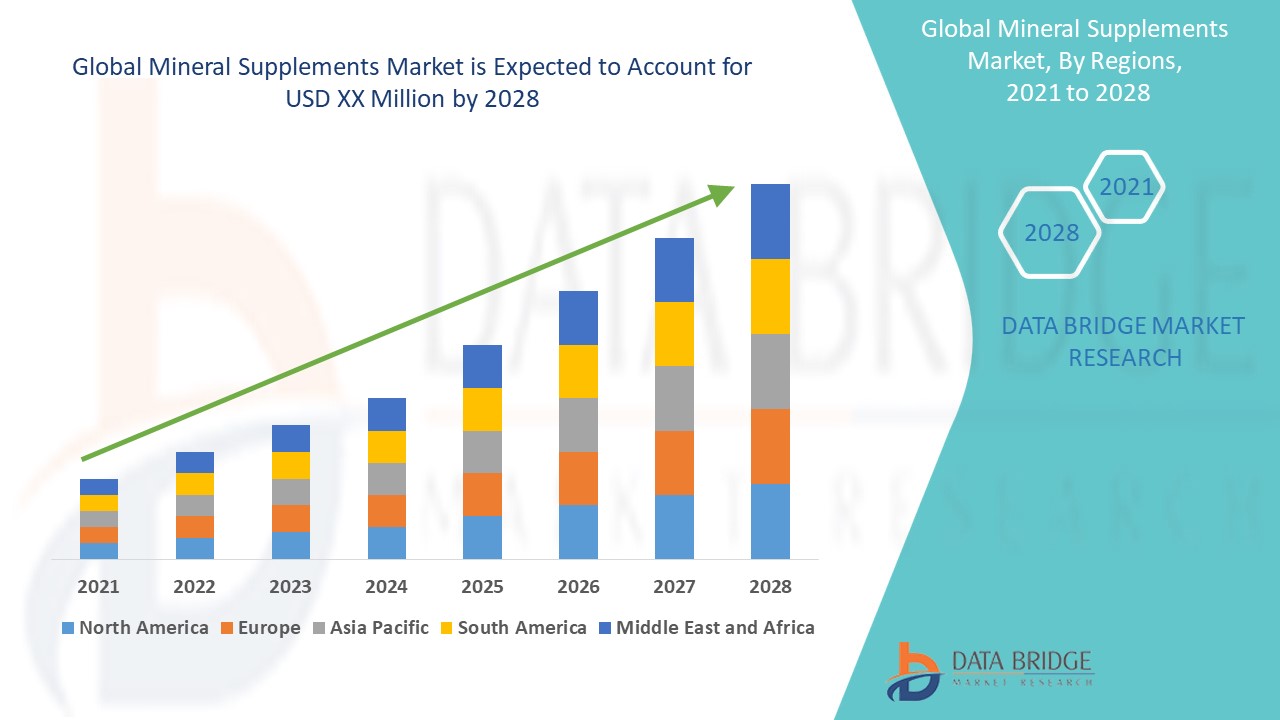
The mineral supplements market has been experiencing robust growth due to increasing consumer awareness about health and wellness, along with a rising prevalence of chronic diseases such as diabetes and osteoporosis. Mineral supplements, including calcium, magnesium, zinc, and iron, are widely used to address nutritional gaps and enhance overall health. Advances in the market include the development of innovative formulations that offer improved bioavailability, ensuring better absorption and efficacy. Companies are focusing on using high-quality, sustainably sourced ingredients and complying with stringent regulatory standards to meet consumer expectations for safe and effective products. Recent advancements also include the introduction of personalized supplements, which cater to individual nutritional needs based on age, gender, lifestyle, and health status. This trend is driven by digital health technologies and advancements in genetic research, allowing tailored supplementation plans. In addition, the rise of clean-label products, with transparent ingredient lists and minimal artificial additives, has further boosted consumer trust. The market is expanding across regions, with North America leading due to its strong demand for preventive health solutions, while South America is projected to grow rapidly due to increasing health awareness and improved accessibility to supplements.
Mineral Supplements Market Size
The global mineral supplements market size was valued at USD 17.27 billion in 2024 and is projected to reach USD 30.70 billion by 2032, with a CAGR of 7.45% during the forecast period of 2025 to 2032. In addition to the insights on market scenarios such as market value, growth rate, segmentation, geographical coverage, and major players, the market reports curated by the Data Bridge Market Research also include depth expert analysis, patient epidemiology, pipeline analysis, pricing analysis, and regulatory framework.
Mineral Supplements Market Trends
“Growing Demand for Personalized Nutrition”
A key trend in the mineral supplements market is the growing demand for personalized nutrition, driven by advancements in technology and health awareness. Consumers are increasingly looking for tailored mineral supplements that meet their specific health needs, whether for bone health, heart health, or overall wellness. This trend is evident in products such as personalized vitamin packs that include targeted minerals such as calcium for bone strength or magnesium for muscle relaxation and stress reduction. For instance, companies such as Care/of offer custom supplement plans based on individual health assessments, allowing consumers to receive precisely what their bodies’ need. The use of artificial intelligence and genetic testing has further enhanced the development of these customized products, helping consumers choose supplements that align with their age, lifestyle, and health conditions. This shift is redefining how mineral supplements are marketed and consumed, emphasizing the importance of personalized, high-quality, and scientifically backed formulations.
Report Scope and Mineral Supplements Market Segmentation
|
Attributes |
Mineral Supplements Key Market Insights |
|
Segments Covered |
|
|
Countries Covered |
U.S., Canada and Mexico in North America, Germany, France, U.K., Netherlands, Switzerland, Belgium, Russia, Italy, Spain, Turkey, Rest of Europe in Europe, China, Japan, India, South Korea, Singapore, Malaysia, Australia, Thailand, Indonesia, Philippines, Rest of Asia-Pacific (APAC) in the Asia-Pacific (APAC), Saudi Arabia, U.A.E., South Africa, Egypt, Israel, Rest of Middle East and Africa (MEA) as a part of Middle East and Africa (MEA), Brazil, Argentina and Rest of South America as part of South America |
|
Key Market Players |
Omega Protein Corporation (U.S.), Bio-Botanica (U.S.), BioPharma (U.S.), Pharmavite (U.S.), dsm-firmenich (Switzerland), Nu Skin Enterprises (U.S.), Herbalife International of America, Inc (U.S.), Glanbia PLC (Ireland), Pure Encapsulations, LLC (U.S.), BASF (Germany), Amway (U.S.), Bayer AG (Germany), Dow (U.S.), Otsuka Holdings Co., Ltd. (Japan), NaturaLife Asia Co., Ltd (Thailand), Epax (Norway), Himalaya Wellness Company (India), Ricola (Switzerland), Orkla (Norway), Abbott (U.S.), Nestlé (Switzerland), and Cargill, Incorporated (U.S.) |
|
Market Opportunities |
|
|
Value Added Data Infosets |
In addition to the insights on market scenarios such as market value, growth rate, segmentation, geographical coverage, and major players, the market reports curated by the Data Bridge Market Research also include depth expert analysis, patient epidemiology, pipeline analysis, pricing analysis, and regulatory framework. |
Mineral Supplements Market Definition
Mineral supplements are dietary products that provide essential minerals such as calcium, magnesium, zinc, iron, potassium, and selenium that may be lacking or insufficient in a person's diet. These supplements are designed to support various bodily functions, including bone health, muscle function, immune system support, and overall metabolic processes.
Mineral Supplements Market Dynamics
Drivers
- Rising Geriatric Population
The rising geriatric population is a significant driver for the mineral supplements market, as older adults often face increased nutritional needs and higher risks of mineral deficiencies. According to the United Nations, the global population aged 60 and above is expected to nearly double from 1 billion in 2020 to 1.4 billion by 2030, emphasizing the growing demand for health-supporting products. This demographic shift is leading to a surge in the consumption of mineral supplements, as older adults seek to maintain bone density, muscle function, and overall vitality. For instance, calcium and vitamin D supplements are commonly used to prevent osteoporosis, a condition that affects millions of seniors worldwide. The demand for supplements tailored to support heart health, cognitive function, and immune system strength is also rising. As a result, the mineral supplements market is expanding, driven by the need to cater to the health requirements of this aging population.
- Rising Preventive Healthcare Awareness
The rise in awareness about preventive healthcare is a major driver for the mineral supplements market, as more people are prioritizing proactive measures to maintain their health and prevent chronic diseases. According to a survey conducted by the National Center for Complementary and Integrative Health, approximately 57% of U.S. adults use dietary supplements, reflecting a growing trend toward preventive health strategies. This shift is fueled by increased access to health information through digital media and public health campaigns that emphasize the importance of nutrition in disease prevention. For instance, the demand for calcium and vitamin D supplements has surged as consumers seek to reduce their risk of osteoporosis and promote bone health, especially among aging populations. In addition, supplements such as magnesium and zinc are popular for their roles in supporting immune function and reducing inflammation. This growing awareness has led to significant growth in the mineral supplements market, as consumers actively incorporate them into their daily wellness routines.
Opportunities
- Increasing Research and Development (R&D) Activities
The increase in research and development (R&D) activities in the mineral supplements sector presents a significant market opportunity, as it drives innovation and the creation of advanced, effective products that meet evolving consumer demands. Companies are investing heavily in R&D to improve the bioavailability of minerals, develop unique formulations, and ensure the use of sustainable and high-quality ingredients. For instance, research into microencapsulation technology is helping create supplements that deliver minerals more efficiently to the body. This type of innovation has led to the development of mineral supplements that are easier to digest and absorb, enhancing their efficacy and appeal to health-conscious consumers. In addition, advancements in personalized nutrition, supported by R&D, allow companies to create products tailored to individual health needs based on genetics, age, and lifestyle. These developments help meet the specific requirements of consumers and position companies to capitalize on the growing trend of personalized health solutions, expanding their market reach and potential.
- Growing Technological Advancements and Modernization in Healthcare Techniques
The rise in technological advancements and modernization in healthcare techniques is creating a significant opportunity for growth in the mineral supplements market. Innovations such as mobile health apps, wearable fitness trackers, and digital health platforms have made it easier for consumers to monitor their health and recognize nutrient deficiencies, fueling the demand for targeted mineral supplements. For instance, apps that track dietary intake and suggest personalized supplementation plans are helping consumers make more informed choices about their health. Additionally, advancements in production technology, such as the use of nanotechnology, are improving the bioavailability of minerals, making supplements more effective. Companies leveraging these technological developments can create products that meet consumer expectations for convenience, effectiveness, and precision. This integration of technology and modernization in healthcare techniques allows companies to reach a wider audience and cater to the growing demand for science-backed, high-quality supplements, thereby enhancing their market potential.
Restraints/Challenges
- Rise in the Dearth of Quality Checks and Inappropriate Labeling
The rise in the dearth of quality checks and inappropriate labeling is a significant challenge for the mineral supplements market, as it undermines consumer confidence and can pose serious health risks. Inadequate quality control can lead to the sale of products that do not meet safety standards or contain inconsistent levels of active ingredients, reducing their effectiveness and potentially causing adverse effects. For instance, supplements that are mislabeled may contain undisclosed allergens, incorrect dosages, or harmful additives, putting consumers at risk. In 2020, the U.S. FDA issued warnings to several supplement manufacturers for misleading labeling and products that failed to meet quality standards. This lack of regulation can make it difficult for consumers to make informed decisions and can damage the reputation of reputable brands that adhere to stringent quality measures, ultimately hampering the overall market growth.
- Increase in the Availability of Counterfeit Products
The increase in the availability of counterfeit products poses a significant challenge to the mineral supplements market, as it undermines consumer trust and poses health risks. Counterfeit supplements often contain substandard or harmful ingredients, lack proper labeling, and fail to provide the intended nutritional benefits, leading to potential health complications for consumers. For instance, there have been cases where counterfeit calcium supplements have been found to contain toxic substances or contaminants that can lead to serious health issues. The presence of such products can damage the reputation of legitimate brands and create hesitation among consumers when choosing supplements, hindering the market expansion.
This market report provides details of new recent developments, trade regulations, import-export analysis, production analysis, value chain optimization, market share, impact of domestic and localized market players, analyses opportunities in terms of emerging revenue pockets, changes in market regulations, strategic market growth analysis, market size, category market growths, application niches and dominance, product approvals, product launches, geographic expansions, technological innovations in the market. To gain more info on the market contact Data Bridge Market Research for an Analyst Brief, our team will help you take an informed market decision to achieve market growth.
Mineral Supplements Market Scope
The market is segmented on the basis of application, formulation, sales channel, product, and end-users. The growth amongst these segments will help you analyse meagre growth segments in the industries and provide the users with a valuable market overview and market insights to help them make strategic decisions for identifying core market applications.
Application
- Pharmaceuticals
- Food and Beverages
- Others
Formulation
- Capsule
- Tablet
- Powder
- Liquid/Gel
- Others
Sales Channel
- Pharmacies & Drug Stores
- Supermarkets & Hypermarkets
- Online Channels
Product
- Calcium
- Magnesium
- Iron
- Potassium
- Zinc
- Chromium
- Selenium
- Others
End-User
- Adult Women
- Adult Men
- Senior Citizens
- Others
Mineral Supplements Market Regional Analysis
The market is analysed and market size insights and trends are provided by country, application, formulation, sales channel, product, and end-users as referenced above.
The countries covered in the market report are U.S., Canada and Mexico in North America, Germany, France, U.K., Netherlands, Switzerland, Belgium, Russia, Italy, Spain, Turkey, Rest of Europe in Europe, China, Japan, India, South Korea, Singapore, Malaysia, Australia, Thailand, Indonesia, Philippines, Rest of Asia-Pacific (APAC) in the Asia-Pacific (APAC), Saudi Arabia, U.A.E., South Africa, Egypt, Israel, Rest of Middle East and Africa (MEA) as a part of Middle East and Africa (MEA), Brazil, Argentina and Rest of South America as part of South America.
North America dominates the mineral supplements market, driven by growing awareness of the importance of preventive healthcare among the population. The region has seen a significant rise in health-conscious behaviors, encouraging the adoption of dietary supplements to maintain overall well-being. Additionally, the increasing prevalence of chronic diseases such as cancer and diabetes has heightened the demand for supplements that address specific nutritional deficiencies. These factors collectively contribute to North America's dominance in the global mineral supplements market.
South America is anticipated to witness the fastest compound annual growth rate (CAGR) in the mineral supplements market during the forecast period. This rapid growth is attributed to the rising awareness of the benefits of dietary supplements in promoting health and addressing nutritional gaps. Additionally, increasing disposable incomes and expanding access to healthcare products are driving the adoption of mineral supplements across the region. These factors position South America as a key emerging market with significant growth potential in the coming years.
The country section of the report also provides individual market impacting factors and changes in regulation in the market domestically that impacts the current and future trends of the market. Data points such as down-stream and upstream value chain analysis, technical trends and porter's five forces analysis, case studies are some of the pointers used to forecast the market scenario for individual countries. Also, the presence and availability of global brands and their challenges faced due to large or scarce competition from local and domestic brands, impact of domestic tariffs and trade routes are considered while providing forecast analysis of the country data.
Mineral Supplements Market Share
The market competitive landscape provides details by competitor. Details included are company overview, company financials, revenue generated, market potential, investment in research and development, new market initiatives, global presence, production sites and facilities, production capacities, company strengths and weaknesses, product launch, product width and breadth, application dominance. The above data points provided are only related to the companies' focus related to market.
Mineral Supplements Market Leaders Operating in the Market Are:
- Omega Protein Corporation (U.S.)
- Bio-Botanica (U.S.)
- BioPharma (U.S.)
- Pharmavite (U.S.)
- dsm-firmenich (Switzerland)
- Nu Skin Enterprises (U.S.)
- Herbalife International of America, Inc (U.S.)
- Glanbia PLC (Ireland)
- Pure Encapsulations, LLC (U.S.)
- BASF (Germany)
- Amway (U.S.)
- Bayer AG (Germany)
- Dow (U.S.)
- Otsuka Holdings Co., Ltd. (Japan)
- NaturaLife Asia Co., Ltd (Thailand)
- Epax (Norway)
- Himalaya Wellness Company (India)
- Ricola (Switzerland)
- Orkla (Norway)
- Abbott (U.S.)
- Nestlé (Switzerland)
- Cargill, Incorporated (U.S.)
Latest Developments in Mineral Supplements Market
- In February 2024, Medella Springs Healthcare introduced AddiVance, a stimulant-free dietary supplement designed to address nutritional imbalances linked to lack of focus and impulsive behavior. The product, made with high-quality ingredients from cGMP facilities and manufactured at FDA-registered facilities in the U.S., strengthens the region's prominence in the supplement market
- In September 2023, Sanofi acquired the U.S.-based health and wellness brand Qunol, which specializes in mineral supplements. This strategic acquisition aims to enhance Sanofi's consumer healthcare segment
- In April 2023, Pharmavite opened a new 225,000-square-foot manufacturing facility in the U.S. to support the production of its two brands, Nature Made and MegaFood. Both brands include mineral supplements in their product offerings
- In March 2023, Optimum Nutrition, a sports nutrition brand under Glanbia PLC, partnered with the Gaelic Players Association for a three-year collaboration. The initiative aims to provide nutritional products, including mineral supplements, to adult players, potentially boosting demand for such products
- In September 2022, Abbott launched Ensure with HMB, a nutritional supplement containing 32 essential nutrients such as calcium, protein, and vitamin D. This product, formulated with HMB (β-hydroxy-β-methyl butyrate), is designed to help improve muscle and bone strength by combating muscle loss and restoring energy
SKU-
세계 최초의 시장 정보 클라우드 보고서에 온라인으로 접속하세요

- 대화형 데이터 분석 대시보드
- 높은 성장 잠재력 기회를 위한 회사 분석 대시보드
- 사용자 정의 및 질의를 위한 리서치 분석가 액세스
- 대화형 대시보드를 통한 경쟁자 분석
- 최신 뉴스, 업데이트 및 추세 분석
- 포괄적인 경쟁자 추적을 위한 벤치마크 분석의 힘 활용
연구 방법론
데이터 수집 및 기준 연도 분석은 대규모 샘플 크기의 데이터 수집 모듈을 사용하여 수행됩니다. 이 단계에는 다양한 소스와 전략을 통해 시장 정보 또는 관련 데이터를 얻는 것이 포함됩니다. 여기에는 과거에 수집한 모든 데이터를 미리 검토하고 계획하는 것이 포함됩니다. 또한 다양한 정보 소스에서 발견되는 정보 불일치를 검토하는 것도 포함됩니다. 시장 데이터는 시장 통계 및 일관된 모델을 사용하여 분석하고 추정합니다. 또한 시장 점유율 분석 및 주요 추세 분석은 시장 보고서의 주요 성공 요인입니다. 자세한 내용은 분석가에게 전화를 요청하거나 문의 사항을 드롭하세요.
DBMR 연구팀에서 사용하는 주요 연구 방법론은 데이터 마이닝, 시장에 대한 데이터 변수의 영향 분석 및 주요(산업 전문가) 검증을 포함하는 데이터 삼각 측량입니다. 데이터 모델에는 공급업체 포지셔닝 그리드, 시장 타임라인 분석, 시장 개요 및 가이드, 회사 포지셔닝 그리드, 특허 분석, 가격 분석, 회사 시장 점유율 분석, 측정 기준, 글로벌 대 지역 및 공급업체 점유율 분석이 포함됩니다. 연구 방법론에 대해 자세히 알아보려면 문의를 통해 업계 전문가에게 문의하세요.
사용자 정의 가능
Data Bridge Market Research는 고급 형성 연구 분야의 선두 주자입니다. 저희는 기존 및 신규 고객에게 목표에 맞는 데이터와 분석을 제공하는 데 자부심을 느낍니다. 보고서는 추가 국가에 대한 시장 이해(국가 목록 요청), 임상 시험 결과 데이터, 문헌 검토, 재생 시장 및 제품 기반 분석을 포함하도록 사용자 정의할 수 있습니다. 기술 기반 분석에서 시장 포트폴리오 전략에 이르기까지 타겟 경쟁업체의 시장 분석을 분석할 수 있습니다. 귀하가 원하는 형식과 데이터 스타일로 필요한 만큼 많은 경쟁자를 추가할 수 있습니다. 저희 분석가 팀은 또한 원시 엑셀 파일 피벗 테이블(팩트북)로 데이터를 제공하거나 보고서에서 사용 가능한 데이터 세트에서 프레젠테이션을 만드는 데 도움을 줄 수 있습니다.











