Global Cartilage Hair Hypoplasia Market Segmentation, By Common Features (Immunodeficiency with Short-Limbed Drawfism, Short Stature, Hirschsprung Disease, and Susceptibility to Hematologic Malignancies), Cause (Thiamine Deficiency, Alcohol Use Disorder, and Genetic), Drug Type (Branded and Generic), Route of Administration (Oral and Injectable), End Users (Hospitals, Specialty Clinics, Home Healthcare, and Others), Distribution Channel (Hospital Pharmacy, Retail Pharmacy, Online Pharmacy, and Others) – Industry Trends and Forecast to 2031
Cartilage Hair Hypoplasia Market Analysis
The Cartilage-Hair Hypoplasia (CHH) market is focused on treatments for this rare genetic disorder, which affects skeletal development, immune function, and hair growth. Current treatments target symptom management rather than a cure, with primary therapies including immunoglobulin replacement, bone marrow transplantation, and growth hormone therapy to address immune and growth deficiencies. Market growth is driven by rising awareness, advanced genetic research, and ongoing developments in gene therapy, which offers potential breakthroughs for hereditary conditions such as CHH. Major players in the market are investing in genetic research and innovative therapeutic approaches to better manage CHH symptoms. North America and Europe hold the largest market share due to robust healthcare infrastructure and research funding, but there is growing potential in Asia-Pacific with increasing healthcare investments. Additionally, strategic collaborations between biotech firms and research institutions aim to advance treatment options, potentially altering the market landscape in the coming years. As healthcare trends continue to prioritize personalized and rare disease treatment, the CHH market may see steady growth aligned with advances in genomics.
Cartilage Hair Hypoplasia Market Size
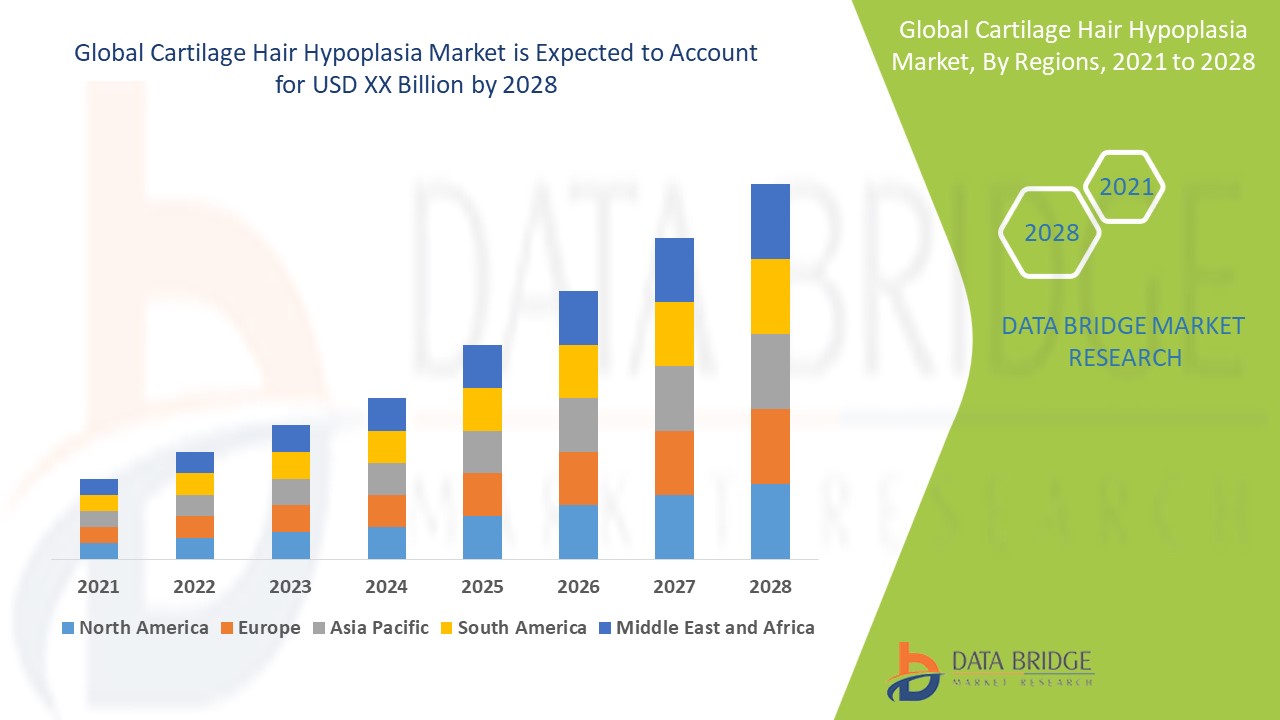
The global cartilage hair hypoplasia market size was valued at USD 65.24 million in 2023 and is projected to reach USD 151.87 million by 2031, with a CAGR of 11.14% during the forecast period of 2024 to 2031. In addition to the insights on market scenarios such as market value, growth rate, segmentation, geographical coverage, and major players, the market reports curated by the Data Bridge Market Research also include depth expert analysis, patient epidemiology, pipeline analysis, pricing analysis, and regulatory framework.
Cartilage Hair Hypoplasia Market Trends
“Rising Adoption of Personalized Medicine”
The Cartilage Hair Hypoplasia (CHH) market is witnessing significant growth, driven by advancements in genetic diagnostics and increased awareness of the disorder. A notable trend is the rise of personalized medicine, focusing on tailored treatments that address specific genetic profiles of CHH patients. For instance, the development of targeted therapies aims to improve immune function and support skeletal health, enhancing the overall quality of life. Companies such as Amgen and Novartis are investing in research to create effective treatments, highlighting the potential for innovative solutions in managing this rare genetic disorder. As collaboration between research institutions and pharmaceutical companies strengthens, the CHH market is expected to expand further, providing hope for those affected.
Report Scope and Cartilage Hair Hypoplasia Market Segmentation
|
Attributes |
Cartilage Hair Hypoplasia Key Market Insights |
|
Segments Covered |
|
|
Countries Covered |
U.S., Canada and Mexico in North America, Germany, France, U.K., Netherlands, Switzerland, Belgium, Russia, Italy, Spain, Turkey, Rest of Europe in Europe, China, Japan, India, South Korea, Singapore, Malaysia, Australia, Thailand, Indonesia, Philippines, Rest of Asia-Pacific (APAC) in the Asia-Pacific (APAC), Saudi Arabia, U.A.E., South Africa, Egypt, Israel, Rest of Middle East and Africa (MEA) as a part of Middle East and Africa (MEA), Brazil, Argentina and Rest of South America as part of South America |
|
Key Market Players |
Amgen Inc. (U.S.), Amneal Pharmaceuticals LLC (U.S.), BioLineRx Ltd. (Israel), Johnson & Johnson Services, Inc. (U.S.), General Mills, Inc. (U.S.), Glenmark Pharmaceuticals Limited (India), Zydus Group (India), Merck & Co. (U.S.), Bayer AG (Germany), Takeda Pharmaceutical Company Ltd (Japan), Astellas Pharma, Inc. (Japan), Lilly (U.S.), Abbott (U.S.), Viatris Inc. (U.S.), Panacea Biotec (India), Novartis AG (Switzerland), Bristol-Myers Squibb Company (U.S.), Cipla (India), GSK (U.K.), Dr. Reddy’s Laboratories Ltd (India), and Baxter (U.S.) |
|
Market Opportunities |
|
|
Value Added Data Infosets |
In addition to the insights on market scenarios such as market value, growth rate, segmentation, geographical coverage, and major players, the market reports curated by the Data Bridge Market Research also include depth expert analysis, patient epidemiology, pipeline analysis, pricing analysis, and regulatory framework. |
Cartilage Hair Hypoplasia Market Definition
Cartilage Hair Hypoplasia (CHH) is a rare genetic disorder characterized by skeletal dysplasia, immune system deficiencies, and hair growth abnormalities. It results from mutations in the RMRP gene, affecting cartilage and hair development. Individuals with CHH often present with short stature, increased susceptibility to infections, and distinct hair textures. Early diagnosis and intervention are crucial for managing symptoms and improving quality of life.
Cartilage Hair Hypoplasia Market Dynamics
Drivers
- Growing Awareness of Cartilage Hair Hypoplasia
The growing awareness of cartilage hair hypoplasia (CHH) among healthcare professionals and families has significantly contributed to earlier diagnoses, resulting in more patients being identified and treated. According to the National Organization for Rare Disorders (NORD), there are over 7,000 rare diseases in the U.S., and increasing awareness initiatives have played a critical role in identifying these conditions more effectively. For instance, a study published in National Institute of Health noted that improved awareness among pediatricians about genetic conditions has led to more timely referrals and diagnoses, particularly for rare diseases such as CHH, which often go unrecognized due to their rarity. This trend drives the demand for specific treatments and supportive care, as timely diagnosis allows for earlier intervention, improving patient outcomes and driving the overall market for CHH-related therapies and resources.
- Increasing Support from Non-Profit Organizations
Support from non-profit organizations and patient advocacy groups has been pivotal in driving awareness and funding for research into cartilage hair hypoplasia (CHH) and other rare diseases. Organizations such as the National Organization for Rare Disorders (NORD) play a crucial role in advocating for research funding, supporting patients and families, and facilitating connections between researchers and those affected by rare diseases. For instance, NORD's Rare Disease Research Grant program has funded numerous projects aimed at understanding rare genetic disorders, which has led to significant advancements in diagnosis and treatment options. For instance, National Organization for Rare Disorders announced more than USD 100,000 in grant funding available for rare disease research, highlighting the growing recognition of the importance of these conditions. This increased funding not only enhances research efforts but also raises public awareness, ultimately contributing to market growth for CHH therapies and support services.
Opportunities
- Increasing Advancements in Genetic Testing Techniques
Advancements in genetic testing techniques have significantly enhanced the diagnosis of Cartilage Hair Hypoplasia (CHH), allowing for quicker and more accurate identification of the condition. For instance, next-generation sequencing (NGS) services has revolutionized genetic diagnostics, enabling simultaneous analysis of multiple genes associated with CHH and other related disorders. A study published in Nature Reviews Genetics reported that NGS reduced the diagnostic odyssey for patients with rare diseases from several years to just a few weeks in many cases. This rapid identification aids in timely treatment and stimulates research and development of targeted therapies and personalized medicine approaches. As pharmaceutical companies and research institutions increasingly focus on developing specific treatments tailored to genetic profiles, the market for CHH therapies is expected to grow significantly.
- Increasing Supportive Regulatory Frameworks
Supportive regulatory frameworks for rare diseases, such as the Orphan Drug Act in the U.S. and the European Union's Orphan Medicinal Products Regulation, have significantly improved market opportunities for companies developing therapies for cartilage hair hypoplasia (CHH). These regulations provide incentives such as tax credits, grants, and extended market exclusivity for drug developers, encouraging investment in research and development for rare conditions. For instance, the FDA has implemented the Breakthrough Therapy Designation, which expedites the development and review of drugs that show promise for serious conditions. As a result, the increasing focus on regulatory support for rare diseases enhances the speed at which new therapies can reach patients and stimulates interest from biopharmaceutical companies in the CHH market, ultimately leading to greater availability of effective treatments.
Restraints/Challenges
- High Research and Development (R&D) Costs
High research and development (R&D) costs present a significant challenge for the market of Cartilage Hair Hypoplasia (CHH), as these expenses can be prohibitively high, especially for rare diseases. The intricate process of developing new therapies involves substantial investments in clinical trials, regulatory compliance, and post-marketing studies. For instance, reports indicate that the costs to develop a new drug can be extraordinarily high, including the expenses incurred from unsuccessful trials. This financial burden can deter companies from pursuing treatments for CHH, as they may struggle to secure adequate funding, particularly when the patient population is small and the market potential is limited. Moreover, the lengthy timelines associated with R&D can further complicate funding efforts, as investors may be hesitant to commit resources to projects with uncertain outcomes. This challenge affects the development of effective therapies for CHH and contributes to the overall scarcity of treatment options available for patients suffering from this rare condition.
- Small Patient Population for Cartilage Hair Hypoplasia
The small patient population for Cartilage Hair Hypoplasia (CHH), classified as a rare disease, poses a significant market challenge by deterring pharmaceutical companies from investing in research and development. The rarity of CHH limits the potential market size, leading to concerns about the return on investment for new therapies. For instance, a study published in Nature Reviews Drug Discovery highlighted that only about 5% of drugs developed for rare diseases ever make it to market, primarily due to the high costs and low patient enrollment in clinical trials. This issue is exacerbated by the need for extensive clinical trials to demonstrate efficacy and safety, which can be particularly challenging when the available patient pool is small. As a result, the limited interest from pharmaceutical companies can slow the development of new treatments for CHH, leaving many patients without effective options, ultimately hampering the overall development of the market.
This market report provides details of new recent developments, trade regulations, import-export analysis, production analysis, value chain optimization, market share, impact of domestic and localized market players, analyses opportunities in terms of emerging revenue pockets, changes in market regulations, strategic market growth analysis, market size, category market growths, application niches and dominance, product approvals, product launches, geographic expansions, technological innovations in the market. To gain more info on the market contact Data Bridge Market Research for an Analyst Brief, our team will help you take an informed market decision to achieve market growth.
Cartilage Hair Hypoplasia Market Scope
The market is segmented on the basis of common features, cause, drug type, route of administration, end users, and distribution channel. The growth amongst these segments will help you analyse meagre growth segments in the industries and provide the users with a valuable market overview and market insights to help them make strategic decisions for identifying core market applications.
Common Features
- Immunodeficiency with Short-Limbed Dwarfism
- Short Stature
- Hirschsprung Disease
- Susceptibility to Hematologic Malignancies
Cause
- Thiamine Deficiency
- Alcohol Use Disorder
- Genetic Factors
Drug Type
- Branded
- Generic
Route of Administration
- Oral
- Injectable
End Users
- Hospitals
- Specialty Clinics
- Home Healthcare
- Others
Distribution Channel
- Hospital Pharmacy
- Retail Pharmacy
- Online Pharmacy
- Others
Cartilage Hair Hypoplasia Market Regional Analysis
The market is analysed and market size insights and trends are provided by country, common features, cause, drug type, route of administration, end users, and distribution channel as referenced above.
The countries covered in the market report are U.S., Canada and Mexico in North America, Germany, France, U.K., Netherlands, Switzerland, Belgium, Russia, Italy, Spain, Turkey, Rest of Europe in Europe, China, Japan, India, South Korea, Singapore, Malaysia, Australia, Thailand, Indonesia, Philippines, Rest of Asia-Pacific (APAC) in the Asia-Pacific (APAC), Saudi Arabia, U.A.E., South Africa, Egypt, Israel, Rest of Middle East and Africa (MEA) as a part of Middle East and Africa (MEA), Brazil, Argentina and Rest of South America as part of South America.
North America holds the largest market share, driven by high healthcare expenditure and the availability of advanced medical facilities. The region benefits from widespread insurance coverage, enabling a significant portion of the population to afford expensive treatments. Additionally, well-established healthcare infrastructure and strong government support further bolster the market's growth. These factors collectively position North America as a leading region in the healthcare industry.
The country section of the report also provides individual market impacting factors and changes in regulation in the market domestically that impacts the current and future trends of the market. Data points such as down-stream and upstream value chain analysis, technical trends and porter's five forces analysis, case studies are some of the pointers used to forecast the market scenario for individual countries. Also, the presence and availability of global brands and their challenges faced due to large or scarce competition from local and domestic brands, impact of domestic tariffs and trade routes are considered while providing forecast analysis of the country data.
Cartilage Hair Hypoplasia Market Share
The market competitive landscape provides details by competitor. Details included are company overview, company financials, revenue generated, market potential, investment in research and development, new market initiatives, global presence, production sites and facilities, production capacities, company strengths and weaknesses, product launch, product width and breadth, application dominance. The above data points provided are only related to the companies' focus related to market.
Cartilage Hair Hypoplasia Market Leaders Operating in the Market Are:
- Amgen Inc. (U.S.)
- Amneal Pharmaceuticals LLC (U.S.)
- BioLineRx Ltd. (Israel)
- Johnson & Johnson Services, Inc. (U.S.)
- General Mills, Inc. (U.S.)
- Glenmark Pharmaceuticals Limited (India)
- Zydus Group (India)
- Merck & Co. (U.S.)
- Bayer AG (Germany)
- Takeda Pharmaceutical Company Ltd (Japan)
- Astellas Pharma, Inc. (Japan)
- Lilly (U.S.)
- Abbott (U.S.)
- Viatris Inc. (U.S.)
- Panacea Biotec (India)
- Novartis AG (Switzerland)
- Bristol-Myers Squibb Company (U.S.)
- Cipla (India)
- GSK (U.K.)
- Dr. Reddy’s Laboratories Ltd (India)
- Baxter (U.S.)
SKU-
Obtenha acesso online ao relatório sobre a primeira nuvem de inteligência de mercado do mundo
- Painel interativo de análise de dados
- Painel de análise da empresa para oportunidades de elevado potencial de crescimento
- Acesso de analista de pesquisa para personalização e customização. consultas
- Análise da concorrência com painel interativo
- Últimas notícias, atualizações e atualizações Análise de tendências
- Aproveite o poder da análise de benchmark para um rastreio abrangente da concorrência
Metodologia de Investigação
A recolha de dados e a análise do ano base são feitas através de módulos de recolha de dados com amostras grandes. A etapa inclui a obtenção de informações de mercado ou dados relacionados através de diversas fontes e estratégias. Inclui examinar e planear antecipadamente todos os dados adquiridos no passado. Da mesma forma, envolve o exame de inconsistências de informação observadas em diferentes fontes de informação. Os dados de mercado são analisados e estimados utilizando modelos estatísticos e coerentes de mercado. Além disso, a análise da quota de mercado e a análise das principais tendências são os principais fatores de sucesso no relatório de mercado. Para saber mais, solicite uma chamada de analista ou abra a sua consulta.
A principal metodologia de investigação utilizada pela equipa de investigação do DBMR é a triangulação de dados que envolve a mineração de dados, a análise do impacto das variáveis de dados no mercado e a validação primária (especialista do setor). Os modelos de dados incluem grelha de posicionamento de fornecedores, análise da linha de tempo do mercado, visão geral e guia de mercado, grelha de posicionamento da empresa, análise de patentes, análise de preços, análise da quota de mercado da empresa, normas de medição, análise global versus regional e de participação dos fornecedores. Para saber mais sobre a metodologia de investigação, faça uma consulta para falar com os nossos especialistas do setor.
Personalização disponível
A Data Bridge Market Research é líder em investigação formativa avançada. Orgulhamo-nos de servir os nossos clientes novos e existentes com dados e análises que correspondem e atendem aos seus objetivos. O relatório pode ser personalizado para incluir análise de tendências de preços de marcas-alvo, compreensão do mercado para países adicionais (solicite a lista de países), dados de resultados de ensaios clínicos, revisão de literatura, mercado remodelado e análise de base de produtos . A análise de mercado dos concorrentes-alvo pode ser analisada desde análises baseadas em tecnologia até estratégias de carteira de mercado. Podemos adicionar quantos concorrentes necessitar de dados no formato e estilo de dados que procura. A nossa equipa de analistas também pode fornecer dados em tabelas dinâmicas de ficheiros Excel em bruto (livro de factos) ou pode ajudá-lo a criar apresentações a partir dos conjuntos de dados disponíveis no relatório.