


Asia-Pacific Lymphangioleiomyomatosis (LAM) Market Size
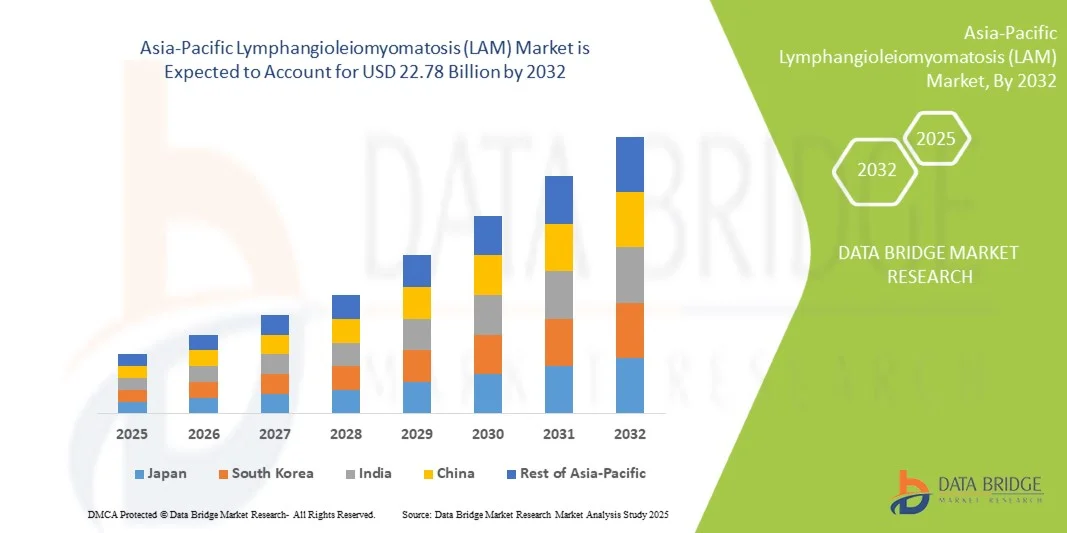
- The Asia-Pacific Lymphangioleiomyomatosis (LAM) market size was valued at USD 16.14 million in 2024 and is expected to reach USD 22.78 million by 2032, at a CAGR of 4.40% during the forecast period
- The market growth is largely fueled by increasing disease awareness, improved diagnostic capability, and expanded access to treatment options in emerging Asia‑Pacific economies
- Furthermore, rising demand for targeted and accessible therapies, combined with growing healthcare investment in countries such as China and Japan, is establishing LAM treatment solutions as a more viable option in the region. These converging factors are accelerating uptake of LAM interventions, thereby significantly boosting the industry’s growth
Asia-Pacific Lymphangioleiomyomatosis (LAM) Market Analysis
- Lymphangioleiomyomatosis (LAM) therapies and diagnostics, addressing a rare progressive lung disease, are increasingly vital components of respiratory healthcare in both clinical and research settings in Asia‑Pacific countries due to their potential to improve patient outcomes, enable early detection, and integrate with specialized healthcare services
- The escalating demand for LAM solutions is primarily fueled by increasing disease awareness, improvements in diagnostic technologies, and growing access to targeted therapies across emerging Asia‑Pacific countries
- Japan dominated the Asia‑Pacific LAM market with the largest revenue share of 38% in 2024, characterized by advanced healthcare infrastructure, high adoption of rare disease diagnostics, and the presence of key industry players, with the country experiencing substantial growth in LAM diagnosis and treatment availability, driven by innovations from both established pharmaceutical companies and specialized biotech startups
- China is expected to be the fastest-growing country in the LAM market during the forecast period, due to increasing healthcare investments, rising patient awareness, and expanding access to advanced treatment options
- Treatment segment dominated the Asia‑Pacific LAM market with a market share of 62.9% in 2024, driven by rising adoption of therapies for managing both Tuberous Sclerosis Complex (TSC-LAM) and Sporadic LAM, along with increasing awareness of complications such as pneumothorax and chylothorax, which require clinical intervention
Report Scope and Asia-Pacific Lymphangioleiomyomatosis (LAM) Market Segmentation
|
Attributes |
Asia-Pacific Lymphangioleiomyomatosis (LAM) Key Market Insights |
|
Segments Covered |
|
|
Countries Covered |
Asia-Pacific
|
|
Key Market Players |
|
|
Market Opportunities |
|
|
Value Added Data Infosets |
In addition to the insights on market scenarios such as market value, growth rate, segmentation, geographical coverage, and major players, the market reports curated by the Data Bridge Market Research also include in-depth expert analysis, patient epidemiology, pipeline analysis, pricing analysis, and regulatory framework |
Asia-Pacific Lymphangioleiomyomatosis (LAM) Market Trends
“Enhanced Disease Management Through Diagnostic and Treatment Integration”
- A significant and accelerating trend in the Asia-Pacific LAM market is the integration of advanced diagnostics and targeted therapies, improving early detection and personalized treatment outcomes for patients with Tuberous Sclerosis Complex (TSC-LAM) and Sporadic LAM
- For instance, the Sirolimus oral therapy can be combined with high-resolution CT imaging for continuous monitoring of disease progression, enabling physicians to adjust treatment regimens proactively
- Integration of diagnostics and therapy allows for better management of complications such as pneumothorax and chylothorax, while also optimizing patient follow-ups and hospital visits. For instance, specialized LAM centers in Japan leverage combined diagnostic-treatment protocols to enhance patient quality of life
- This seamless integration facilitates centralized patient management, enabling hospitals, specialty clinics, and diagnostic centers to coordinate care efficiently and reduce delays in treatment initiation
- The trend toward more comprehensive, patient-centric care is fundamentally reshaping expectations for rare lung disease management, with companies such as Chiesi and GlaxoSmithKline developing integrated treatment pathways combining oral and parenteral therapies with continuous monitoring
- The demand for integrated LAM diagnostics and therapy solutions is growing rapidly across Asia-Pacific countries such as Japan, China, and India, as healthcare providers increasingly prioritize personalized and efficient care for patients
Asia-Pacific Lymphangioleiomyomatosis (LAM) Market Dynamics
Driver
“Growing Need Due to Rising Disease Awareness and Advanced Healthcare Access”
- The increasing prevalence of rare lung disease awareness, coupled with expanding healthcare infrastructure in Asia-Pacific countries, is a significant driver for the heightened demand for LAM diagnostics and therapies
- For instance, in March 2024, Chiesi Pharmaceuticals launched a targeted outreach program in Japan to raise awareness among pulmonologists about LAM treatment and early detection strategies
- As patients and clinicians become more aware of LAM complications such as chylothorax and pneumothorax, demand for advanced diagnostic tools, imaging, and treatment solutions grows substantially
- Furthermore, the growing availability of specialized LAM clinics and research centers is making advanced therapies and diagnostics more accessible, ensuring comprehensive patient management
- The convenience of oral and parenteral treatment options, combined with hospital- and clinic-based monitoring, is key to improving treatment adherence and outcomes, thereby propelling market growth in countries such as China, Japan, and India
- For instance, government-supported rare disease programs in South Korea have increased patient access to LAM therapies, boosting overall market adoption and awareness
- Rising collaborations between pharmaceutical companies and hospitals across Asia-Pacific are facilitating clinical trials and educational programs, further driving the adoption of LAM treatments and diagnostics
Restraint/Challenge
“Limited Awareness and High Treatment Costs”
- Concerns surrounding limited knowledge of LAM among healthcare providers and patients pose a significant challenge to broader market penetration across Asia-Pacific countries
- For instance, delayed diagnosis due to misidentification as other pulmonary conditions has reduced early treatment opportunities in India and South Korea
- Addressing these awareness gaps through physician education, patient outreach programs, and national rare disease policies is crucial for increasing adoption of LAM therapies. Furthermore, the relatively high cost of treatment regimens, including sirolimus and diagnostic imaging, can be a barrier for price-sensitive patients, particularly in developing Asia-Pacific countries
- While treatment accessibility is improving, the premium cost of advanced therapies may still hinder uptake for patients without insurance coverage or government support
- Overcoming these challenges through awareness campaigns, patient support programs, and subsidized therapy options will be vital for sustained growth of the Asia-Pacific LAM market
- For instance, lack of insurance coverage for rare disease treatment in some regions continues to restrict patient access to high-cost LAM therapies, slowing market expansion
- Regulatory hurdles and delayed approval of new therapies in countries such as India and China pose additional challenges, affecting timely availability and adoption of innovative LAM treatments
Asia-Pacific Lymphangioleiomyomatosis (LAM) Market Scope
The market is segmented on the basis of disease type, type, complications, route of administration, end user, and distribution channel.
- By Disease Type
On the basis of disease type, the Asia‑Pacific LAM market is segmented into tuberous sclerosis complex (TSC-LAM) and sporadic LAM. The TSC-LAM segment dominated the market in 2024 with the largest revenue share, driven by its higher prevalence in diagnosed patients and the associated need for continuous monitoring and management. Patients with TSC-LAM often require regular imaging and therapy interventions to manage disease progression and prevent complications such as pneumothorax and chylothorax. The segment benefits from increased awareness programs, especially in countries such as Japan and South Korea, where early detection initiatives are active. Pharmaceutical companies focus heavily on TSC-LAM for clinical trials and drug approvals, contributing to higher adoption of therapies and diagnostic services. Hospitals and specialty clinics prioritize TSC-LAM treatment due to the complex care requirements. Government and rare disease programs in countries such as China also support this segment, further solidifying its market dominance.
The Sporadic LAM segment is anticipated to witness the fastest growth rate during 2025–2032, fueled by rising diagnosis in adult female populations across China and India. Sporadic LAM patients are increasingly benefiting from improved imaging techniques and enhanced access to targeted therapies. The growing awareness of rare lung disorders and training for pulmonologists contribute to earlier detection and better disease management. Clinical research and collaborations between local hospitals and international biotech firms are expanding treatment options. The segment is also witnessing adoption in home healthcare monitoring programs, allowing patients to track symptoms and medication adherence. The increased use of diagnostic centers specializing in rare diseases further supports the rapid growth of this segment.
- By Type
On the basis of type, the market is segmented into diagnosis and treatment. The Treatment segment dominated the market in 2024, capturing the largest revenue share of 62.9%, due to increasing adoption of mTOR inhibitors and other targeted therapies. Treatment is the primary intervention for managing disease progression and preventing serious complications. Hospitals and specialty clinics are the main end users for therapy administration. The demand for treatments is also supported by clinical guidelines that recommend timely pharmacological intervention after diagnosis. Pharmaceutical companies in Japan, China, and South Korea are actively launching new therapy options. Increasing patient awareness and physician training programs enhance adoption rates, driving sustained market dominance.
The Diagnosis segment is expected to witness the fastest CAGR from 2025 to 2032, driven by technological advancements such as high-resolution CT scans, genetic testing, and biomarker-based detection methods. Early diagnosis is critical for improving treatment outcomes and reducing severe complications. Growing awareness among pulmonologists and primary care providers in emerging Asia-Pacific countries facilitates increased patient referrals to diagnostic centers. Investment in advanced imaging infrastructure and laboratory capabilities further accelerates market adoption. The rise in screening programs and rare disease registries also contributes to the segment’s rapid growth. Patients increasingly seek early testing due to better insurance coverage and government support programs.
- By Complications
On the basis of complications, the market is segmented into pneumothorax, chylothorax, kidney tumor, pleural effusions, swelling & fluid build-up, and others. The Pneumothorax segment dominated the market in 2024, driven by its high incidence among LAM patients and the urgent clinical intervention often required. Treatment and diagnostic focus on pneumothorax include hospitalization, imaging, and procedural interventions to prevent recurrence. Hospitals and specialty clinics are the primary end users. Awareness campaigns and physician training have increased recognition and early management of pneumothorax. The segment also sees substantial R&D investment from pharmaceutical companies for prevention and treatment. Growing prevalence data in Japan and China further supports dominance. Patient monitoring and follow-up programs ensure continued market uptake.
The Chylothorax segment is anticipated to witness the fastest growth from 2025 to 2032 due to increasing detection and awareness of lymphatic complications in LAM patients. The availability of minimally invasive treatment options, such as dietary therapy, drainage, and pharmacological management, supports rapid adoption. Hospitals and specialty clinics are expanding capabilities to manage chylothorax effectively. Diagnostic imaging and biomarker research are increasing detection rates. Government healthcare initiatives in China, India, and South Korea promote early management of lymphatic complications. Patient education on symptom monitoring further drives segment growth.
- By Route of Administration
On the basis of route of administration, the market is segmented into oral and parenteral. The Oral segment dominated the market in 2024, driven by widespread use of oral mTOR inhibitors such as sirolimus, which are convenient and suitable for long-term management. Oral therapies are preferred in hospitals, specialty clinics, and home healthcare settings due to ease of administration. The segment benefits from patient adherence programs and ongoing monitoring for dose optimization. Pharmaceutical firms focus on improving formulations and bioavailability. Regulatory approvals in Japan and China prioritize oral therapy availability. Education programs for physicians and patients increase adoption rates.
The Parenteral segment is expected to witness the fastest CAGR during 2025–2032, fueled by the introduction of injectable therapies for severe or rapidly progressing LAM cases. Parenteral treatments allow precise dosing and rapid therapeutic effect. Hospitals and specialty clinics are the main administration points. Clinical trials in China, Japan, and India are expanding indications for parenteral therapy. New formulations and infusion protocols enhance patient comfort and compliance. The rise of hospital-based treatment programs for complex cases further accelerates adoption. Training programs for healthcare professionals improve safety and efficacy, supporting segment growth.
- By End User
On the basis of end user, the market is segmented into hospitals, specialty clinics, diagnostic centers, home healthcare, and others. The Hospitals segment dominated the market in 2024, holding the largest revenue share, as hospitals are primary centers for diagnosis, treatment, and management of LAM complications. Hospitals provide infrastructure for imaging, therapy administration, and patient monitoring. Government policies in Japan, China, and South Korea support hospital-based treatment programs. High patient volume and comprehensive care capabilities maintain dominance. Collaboration with pharmaceutical firms ensures steady therapy supply. Awareness and rare disease programs often target hospitals as key intervention points.
The Specialty Clinics segment is expected to witness the fastest growth from 2025 to 2032, driven by increasing focus on rare disease management and personalized care. Specialty clinics provide targeted treatment plans, follow-up monitoring, and access to clinical trials. Advanced diagnostics and therapy protocols are increasingly offered at clinics in urban centers of China, Japan, and India. Growing physician expertise and patient preference for specialized care support rapid adoption. Integration with home healthcare monitoring further enhances patient management. Expansion of clinic networks in emerging cities contributes to segment growth.
- By Distribution Channel
On the basis of distribution channel, the market is segmented into direct tender, hospital pharmacies, retail pharmacies, online pharmacies, and others. The Direct Tender segment dominated the market in 2024, driven by large-volume purchases by hospitals and government healthcare programs. Direct tender ensures timely and cost-effective supply of LAM therapies to healthcare facilities. It also facilitates bulk procurement of oral and parenteral medications for multiple centers. Governments and hospital networks in China and Japan leverage direct tender to maintain stock levels. Supplier contracts often include monitoring and training programs, supporting continued adoption. Pharmaceutical firms prioritize direct tender for high-value therapies.
The Online Pharmacies segment is expected to witness the fastest growth from 2025 to 2032, fueled by rising e-commerce adoption, telemedicine programs, and patient convenience in urban areas. Online pharmacies allow home delivery of oral therapies and support prescription refills. Patient preference for remote access to medications is increasing in India and South Korea. Integration with mobile health apps enhances adherence tracking. Government policies supporting digital healthcare platforms accelerate segment adoption. Partnerships between pharmaceutical companies and online platforms improve logistics and accessibility.
Asia-Pacific Lymphangioleiomyomatosis (LAM) Market Regional Analysis
- Japan dominated the Asia‑Pacific LAM market with the largest revenue share of 38% in 2024, characterized by advanced healthcare infrastructure, high adoption of rare disease diagnostics, and the presence of key industry players
- Patients and healthcare providers in the region highly value the availability of integrated diagnostics and treatment solutions, which allow early detection, continuous monitoring, and improved management of complications such as pneumothorax and chylothorax
- This widespread adoption is further supported by government initiatives for rare disease support, growing investments in healthcare facilities, and the presence of specialized LAM clinics, establishing Japan as a leading country for both diagnosis and therapy of LAM
The Japan LAM Market Insight
The Japan LAM market is gaining momentum due to advanced healthcare infrastructure, high awareness of rare diseases, and strong adoption of specialized diagnostic and treatment services. Hospitals and specialty clinics in Japan offer comprehensive management programs for TSC-LAM and Sporadic LAM patients, integrating diagnostics, therapy, and follow-up monitoring. The government and rare disease programs provide additional support, ensuring timely access to medications and clinical interventions. Furthermore, the presence of key pharmaceutical companies conducting research and clinical trials in Japan is driving innovation and adoption of therapies. Aging patient populations and increased urbanization are also expected to further stimulate market growth in both residential and clinical care settings.
China LAM Market Insight
The China LAM market is expected to grow rapidly due to rising disease awareness, expanding healthcare infrastructure, and increasing access to specialized diagnostics and therapies. Hospitals and specialty centers are focusing on early detection and management of complications such as pneumothorax and chylothorax. Government initiatives supporting rare disease treatment and growing patient advocacy programs are boosting market adoption. The integration of clinical trials and patient monitoring programs enhances treatment outcomes and adherence. Moreover, local manufacturing and increased availability of oral and parenteral therapies improve affordability and accessibility for patients across urban and semi-urban regions.
India LAM Market Insight
The India LAM market accounted for a significant revenue share in Asia-Pacific in 2024, attributed to growing healthcare awareness, expanding hospital networks, and increasing adoption of advanced diagnostic tools. India is witnessing rising detection of both TSC-LAM and Sporadic LAM cases, with hospitals and diagnostic centers providing specialized care. The push for rare disease programs, government support, and the availability of affordable therapies from domestic and international pharmaceutical companies are key factors propelling the market. In addition, telemedicine and home healthcare monitoring programs are facilitating better patient follow-up and treatment adherence, enhancing market growth.
South Korea LAM Market Insight
The South Korea LAM market is projected to grow steadily due to rising awareness of rare lung diseases and expanding access to specialized healthcare services. Hospitals and specialty clinics in urban areas provide comprehensive care for TSC-LAM and Sporadic LAM patients, including diagnostics, therapy, and complication management. Government-backed rare disease initiatives and patient support programs are enhancing access to therapies. The adoption of advanced imaging technologies and home monitoring programs improves early diagnosis and ongoing treatment outcomes. Pharmaceutical companies are actively conducting clinical trials and launching new therapies in the country
Asia-Pacific Lymphangioleiomyomatosis (LAM) Market Share
The Asia-Pacific Lymphangioleiomyomatosis (LAM) industry is primarily led by well-established companies, including:
- Pfizer Inc. (U.S.)
- Novartis AG (Switzerland)
- Takeda Pharmaceutical Company Limited (Japan)
- GSK plc (U.K.)
- AstraZeneca (U.K.)
- Boehringer Ingelheim International GmbH (Germany)
- Cipla Ltd. (India)
- Sun Pharmaceutical Industries Ltd. (India)
- CSL Limited (Australia)
- Sanofi (France)
- Dr. Reddy’s Laboratories Ltd. (India)
- Hikma Pharmaceuticals PLC (U.K.)
- Zydus Pharma (India)
- Terumo Corporation (Japan)
- Intas Pharmaceuticals Ltd. (India)
- Apotex Inc. (Canada)
- Amneal Pharmaceuticals LLC (U.S.)
- Home Oxygen Company (U.S.)
- CareDx, Inc. (U.S.)
What are the Recent Developments in Asia-Pacific Lymphangioleiomyomatosis (LAM) Market?
- In February 2025, A Chinese‐led cross‑sectional survey of 121 diagnosed LAM patients explored their illness cognition and perception in Mandarin‑speaking Asia, underscoring the need for psychosocial support and education in Asia‑Pacific LAM care
- In December 2024, A Japanese study showed that patients with LAM in Japan had a significantly elevated risk of lung cancer. This highlights growing concern about comorbidities in the Asia‑Pacific LAM population and may drive increased screening/management in the region
- In October 2023, The Japanese regulatory authority Pharmaceuticals and Medical Devices Agency (PMDA) published a review report indicating that the drug Sirolimus tablets 1 mg for LAM had been under review for new dosage/indication, formalising its path for expanded use in Japan
- In May 2023, A European Respiratory Society journal article reported unexpected airway hyper‑reactivity associated with sirolimus therapy in LAM patients. the findings influence treatment strategies globally including in Asia‑Pacific‑regions where sirolimus is used prompting greater caution in monitoring respiratory side‑effects
- In May 2022, A Korean multicenter retrospective study of 54 Korean LAM patients found that those treated initially with mTOR inhibitors had significantly lower risk of disease progression than those under observation. This supports earlier therapeutic intervention in Asia‑Pacific LAM patients

- Interactive Data Analysis Dashboard
- Company Analysis Dashboard for high growth potential opportunities
- Research Analyst Access for customization & queries
- Competitor Analysis with Interactive dashboard
- Latest News, Updates & Trend analysis
- Harness the Power of Benchmark Analysis for Comprehensive Competitor Tracking
Data collection and base year analysis are done using data collection modules with large sample sizes. The stage includes obtaining market information or related data through various sources and strategies. It includes examining and planning all the data acquired from the past in advance. It likewise envelops the examination of information inconsistencies seen across different information sources. The market data is analysed and estimated using market statistical and coherent models. Also, market share analysis and key trend analysis are the major success factors in the market report. To know more, please request an analyst call or drop down your inquiry.
The key research methodology used by DBMR research team is data triangulation which involves data mining, analysis of the impact of data variables on the market and primary (industry expert) validation. Data models include Vendor Positioning Grid, Market Time Line Analysis, Market Overview and Guide, Company Positioning Grid, Patent Analysis, Pricing Analysis, Company Market Share Analysis, Standards of Measurement, Global versus Regional and Vendor Share Analysis. To know more about the research methodology, drop in an inquiry to speak to our industry experts.
Data Bridge Market Research is a leader in advanced formative research. We take pride in servicing our existing and new customers with data and analysis that match and suits their goal. The report can be customized to include price trend analysis of target brands understanding the market for additional countries (ask for the list of countries), clinical trial results data, literature review, refurbished market and product base analysis. Market analysis of target competitors can be analyzed from technology-based analysis to market portfolio strategies. We can add as many competitors that you require data about in the format and data style you are looking for. Our team of analysts can also provide you data in crude raw excel files pivot tables (Fact book) or can assist you in creating presentations from the data sets available in the report.












