


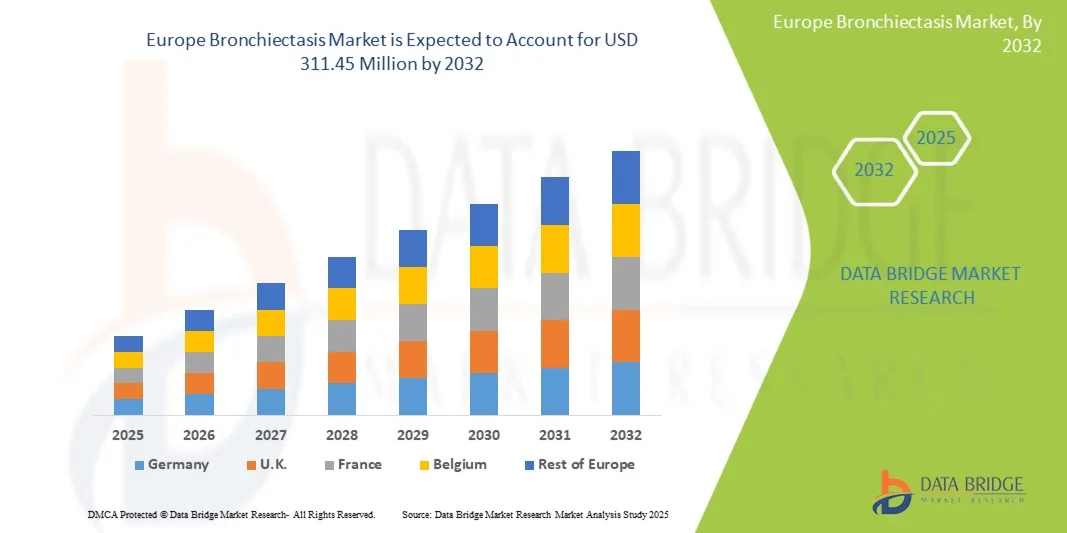
Europe Bronchiectasis Market Size
- The Europe bronchiectasis market size was valued at USD 201.41 million in 2024 and is expected to reach USD 311.45 million by 2032, at a CAGR of 5.6% during the forecast period
- The market growth is primarily driven by the rising prevalence of chronic respiratory diseases, increasing awareness for early diagnosis, and advancements in diagnostic and therapeutic interventions for bronchiectasis across Europe
- In addition, the expanding adoption of personalized treatment approaches, coupled with increasing healthcare infrastructure and government initiatives for respiratory health, is positioning Europe as a key region for bronchiectasis management. These factors are collectively propelling the demand for innovative therapies, thereby supporting sustained market growth
Europe Bronchiectasis Market Analysis
- Bronchiectasis, a chronic respiratory condition characterized by permanent dilation of the bronchi, is increasingly recognized as a significant health concern in Europe due to its impact on patient quality of life, recurrent infections, and healthcare burden, driving demand for advanced diagnostic and therapeutic solutions
- The rising prevalence of respiratory infections, growing awareness of early diagnosis, and increasing adoption of guideline-based treatment protocols are primary factors fueling the market growth in the region
- U.K. dominated the European bronchiectasis market with the largest revenue share of 39.2% in 2024, supported by advanced healthcare infrastructure, higher patient awareness, and strong presence of key pharmaceutical and medical device players. The U.K. witnessed substantial growth in hospital and outpatient bronchiectasis care, bolstered by innovations in inhaled therapies and personalized treatment approaches
- Germany is expected to be the fastest-growing country in the European bronchiectasis market during the forecast period, driven by improving healthcare access, rising healthcare spending, and increasing adoption of advanced diagnostic technologies
- Inhalation segment dominated the European bronchiectasis market with a market share of 42% in 2024, attributed to their proven efficacy in reducing exacerbations, improving lung function, and aligning with patient-centric treatment approaches
Report Scope and Europe Bronchiectasis Market Segmentation
|
Attributes |
Europe Bronchiectasis Key Market Insights |
|
Segments Covered |
|
|
Countries Covered |
Europe
|
|
Key Market Players |
|
|
Market Opportunities |
|
|
Value Added Data Infosets |
In addition to the insights on market scenarios such as market value, growth rate, segmentation, geographical coverage, and major players, the market reports curated by the Data Bridge Market Research also include in-depth expert analysis, pricing analysis, brand share analysis, consumer survey, demography analysis, supply chain analysis, value chain analysis, raw material/consumables overview, vendor selection criteria, PESTLE Analysis, Porter Analysis, and regulatory framework. |
Europe Bronchiectasis Market Trends
“Increasing Adoption of Digital Health and Remote Monitoring”
- A prominent trend in the European bronchiectasis market is the growing integration of digital health tools, including remote monitoring devices and telemedicine platforms, to enhance patient management and adherence
- For instance, ResMed’s myAirway platform allows patients to track symptoms, receive reminders for medication, and communicate remotely with healthcare providers for proactive care
- Digital solutions enable healthcare professionals to monitor lung function, track exacerbations, and provide timely interventions, improving clinical outcomes and reducing hospital visits
- The use of connected inhaler devices and smart nebulizers helps patients optimize therapy adherence while allowing real-time data collection for personalized treatment plans
- This trend towards digital health integration is transforming patient expectations for bronchiectasis care, encouraging pharmaceutical and medical device companies such as Pari Pharma to develop connected therapy solutions
- Integration of AI-driven predictive analytics in patient monitoring is emerging, helping clinicians anticipate exacerbations and optimize individualized treatment strategies
- The adoption of telemonitoring and remote patient management is increasing across hospitals and home-care settings, driven by the need for efficient disease management and improved quality of life
Europe Bronchiectasis Market Dynamics
Driver
“Rising Prevalence and Awareness of Bronchiectasis”
- The increasing prevalence of bronchiectasis in Europe, particularly among aging populations and patients with chronic respiratory conditions, is a key driver of market growth
- For instance, in March 2024, GlaxoSmithKline initiated awareness campaigns and physician education programs across the U.K. to promote early diagnosis and guideline-based treatment
- Rising awareness among healthcare professionals and patients is facilitating early detection, timely interventions, and improved treatment adherence, driving demand for advanced therapies
- Enhanced availability of diagnostic tools, such as high-resolution CT scans and sputum culture testing, is improving disease management and treatment personalization
- Increasing investment in research and development for novel therapies, including biologics and anti-inflammatory agents, is expanding the treatment pipeline and market potential
- Supportive government initiatives and reimbursement policies for chronic respiratory disease management in countries such as Germany and France are encouraging broader access to bronchiectasis therapies
- The growing focus on patient-centric care and targeted therapeutic strategies, including inhaled antibiotics and mucolytic agents, is further boosting market adoption across clinical and home-care settings
Restraint/Challenge
“Treatment Complexity and High Therapy Costs”
- The complexity of managing bronchiectasis, involving multiple medications, inhalation therapies, and regular clinical monitoring, poses a significant challenge to market growth
- For instance, patients on long-term inhaled antibiotic therapy may require frequent dose adjustments and hospital visits, creating adherence difficulties and increased healthcare burden
- High costs associated with advanced therapies and diagnostic procedures can limit patient access, particularly in countries with constrained healthcare budgets or lower insurance coverage
- Side effects from certain treatments, such as gastrointestinal discomfort or bronchospasm from inhaled medications, may reduce patient compliance and treatment continuity
- Addressing these challenges through patient education, reimbursement support programs, and simplified treatment regimens is crucial for improving adherence and sustaining market expansion
- Limited awareness among patients about disease management options can delay treatment initiation, further complicating therapy outcomes and reducing market penetration
- Variability in healthcare infrastructure and specialist availability across European countries can create disparities in diagnosis and treatment, posing an additional barrier to uniform market growth
Europe Bronchiectasis Market Scope
The market is segmented on the basis of disease type, severity, type, drug type, route of administration, end user, and distribution channel.
- By Disease Type
On the basis of disease type, the Europe bronchiectasis market is segmented into CF (Cystic Fibrosis) bronchiectasis and Non-CF bronchiectasis. The Non-CF bronchiectasis segment dominated the market with the largest revenue share in 2024, driven by its higher prevalence across adult and elderly populations in Europe. Patients with Non-CF bronchiectasis often require long-term management including inhaled antibiotics, physiotherapy, and hospital-based care, which contributes to higher market demand. Early diagnosis and growing awareness of Non-CF bronchiectasis have further accelerated treatment adoption. The segment also benefits from government initiatives supporting chronic respiratory disease management and reimbursement programs in countries such as the U.K., Germany, and France. Clinical guidelines promoting standardized treatment protocols and the increasing adoption of digital monitoring tools further boost market growth in this subsegment. The robust pipeline of inhaled therapies and personalized treatment solutions enhances the dominance of Non-CF bronchiectasis in the European market.
The CF bronchiectasis segment is expected to witness the fastest growth during 2025–2032, driven by increasing survival rates of cystic fibrosis patients due to advanced therapies. Improved diagnosis through genetic screening and newborn programs has expanded the patient pool requiring targeted therapies. The adoption of novel CFTR modulators and inhaled antibiotic treatments is fueling market expansion. Patient-centric digital health platforms also support adherence and monitoring, creating demand for integrated care solutions. In addition, partnerships between biotech companies and hospitals to provide specialized CF care are accelerating market growth. Rising awareness among healthcare professionals about optimized CF management strategies further contributes to the segment’s growth trajectory.
- By Severity
On the basis of severity, the Europe bronchiectasis market is segmented into mild to moderate and moderate-to-severe bronchiectasis. The moderate-to-severe segment dominated the market in 2024, accounting for the largest revenue share due to the increased frequency of exacerbations and higher healthcare resource utilization in these patients. Hospitalizations, repeated antibiotic therapy, and intensive monitoring contribute to higher market spending. Patients with moderate-to-severe bronchiectasis often require multidisciplinary care involving pulmonologists, respiratory therapists, and advanced diagnostics, driving demand for specialized treatment solutions. The availability of advanced inhaled and parenteral therapies targeting severe cases further strengthens this segment. Government-funded chronic disease programs and reimbursement policies in countries such as Germany and France facilitate better access to care. In addition, digital health tools are increasingly used to monitor and manage severe cases, enhancing patient outcomes and market dominance.
The mild-to-moderate segment is expected to witness the fastest growth during the forecast period, fueled by early diagnosis, increased awareness, and preventive treatment interventions. Patients in this segment benefit from proactive monitoring and inhaled therapy regimens, reducing disease progression. Digital adherence tools and remote monitoring platforms encourage consistent treatment, expanding market adoption. Awareness campaigns by pharmaceutical companies and respiratory associations are promoting timely intervention. Home-based care solutions and patient education programs further accelerate market growth. The segment also benefits from improved access to diagnostic imaging and spirometry in outpatient clinics, enhancing early-stage management.
- By Type
On the basis of type, the Europe bronchiectasis market is segmented into diagnosis and treatment. The treatment segment dominated the market with the largest revenue share in 2024 due to the chronic nature of bronchiectasis and continuous need for pharmacological interventions, physiotherapy, and inhalation therapies. Increased adoption of guideline-recommended therapies, such as inhaled antibiotics and mucolytics, drives market demand. Hospitals and home-care services form key treatment delivery channels, boosting revenues. The growing prevalence of moderate-to-severe cases requiring long-term care enhances the segment’s dominance. Integration of digital health platforms for treatment adherence further supports market growth. Advanced treatment options, such as biologics, are increasingly being introduced, strengthening market leadership.
The diagnosis segment is expected to witness the fastest growth during the forecast period, driven by the rising emphasis on early detection to prevent disease progression. High-resolution CT scans, sputum culture analysis, and pulmonary function tests are increasingly adopted in clinical practice. Screening programs in high-risk populations and advancements in diagnostic imaging contribute to faster identification of bronchiectasis. Technological improvements in portable diagnostic devices also encourage outpatient and home-based monitoring. Partnerships between diagnostic companies and healthcare providers are accelerating early-stage disease identification. Early diagnosis enables timely intervention, reducing hospitalizations and enhancing patient outcomes, propelling market expansion.
- By Drugs Type
On the basis of drugs type, the Europe bronchiectasis market is segmented into branded and generics. The branded drugs segment dominated the market in 2024, driven by patented inhaled antibiotics and CFTR modulators with proven efficacy in reducing exacerbations and improving lung function. Pharmaceutical companies invest in marketing and patient support programs, enhancing adoption rates. The presence of comprehensive clinical trials demonstrating superior outcomes with branded therapies further strengthens market dominance. Branded therapies are often preferred in hospitals and specialized clinics due to reliability, standardized dosing, and availability of digital support programs. Reimbursement policies in countries such as the U.K., Germany, and France support access to branded therapies. Innovation in drug formulations, including dry-powder inhalers and nebulized solutions, continues to reinforce the dominance of branded drugs.
The generics segment is expected to witness the fastest growth during the forecast period, attributed to the rising focus on cost-effective treatment options and increasing healthcare expenditure constraints. Patented drug expirations have enabled the introduction of generic alternatives, expanding market access. Growing adoption in emerging European countries with price-sensitive populations is driving demand. Generics are increasingly used in outpatient and home-care settings, promoting widespread utilization. Support from healthcare insurance schemes for generic therapies encourages substitution. Increasing awareness among physicians about equivalent efficacy and safety of generics also accelerates market growth.
- By Route of Administration
On the basis of route of administration, the Europe bronchiectasis market is segmented into oral, parenteral, and inhalation. The inhalation segment dominated the market with the largest revenue share of 42% in 2024, driven by its direct delivery to the lungs, improved efficacy, and reduced systemic side effects. Inhaled antibiotics and bronchodilators are widely prescribed for both CF and Non-CF bronchiectasis patients. Hospitals and home-care providers actively adopt inhalation therapies, contributing to market growth. Digital nebulizers and connected inhalers further enhance adherence and monitoring. Clinical guidelines recommend inhalation as a preferred route for moderate-to-severe cases, supporting segment dominance. The availability of advanced inhalation devices with patient-friendly designs strengthens market leadership.
The oral segment is expected to witness the fastest growth during the forecast period, driven by convenience, ease of administration, and increasing development of novel oral antibiotics and anti-inflammatory agents. Patients prefer oral medications for mild-to-moderate cases and home-based care. Pharmaceutical innovations in sustained-release and combination oral therapies support adherence. Increased awareness among physicians of the benefits of oral therapy in early-stage bronchiectasis promotes adoption. Growing outpatient management and telehealth support for oral treatments accelerate segment growth. Expansion of generic oral drugs further encourages widespread utilization.
- By End User
On the basis of end user, the Europe bronchiectasis market is segmented into hospitals, clinics, home healthcare, and others. The hospital segment dominated the market with the largest revenue share in 2024, driven by the high prevalence of moderate-to-severe cases requiring inpatient care, multidisciplinary management, and advanced treatment delivery. Hospitals are key adopters of inhaled therapies, diagnostic tools, and digital monitoring devices. Reimbursement schemes and government support in European countries encourage hospital-based treatment. Partnerships with pharmaceutical companies for clinical trials and patient support programs further strengthen hospital dominance. Hospitals also serve as primary centers for patient education and telemonitoring initiatives.
The home healthcare segment is expected to witness the fastest growth during the forecast period, driven by rising demand for patient-centric care, convenience, and cost-effective treatment outside hospital settings. Remote monitoring tools, connected inhalers, and telemedicine platforms facilitate efficient home management. Increasing prevalence of mild-to-moderate cases and early diagnosis programs support home-care adoption. Collaboration between home healthcare providers and pharmaceutical companies promotes therapy adherence. Growing awareness of self-administered inhalation and oral therapies accelerates market expansion. Digital health integration and reimbursement support programs further boost segment growth.
- By Distribution Channel
On the basis of distribution channel, the Europe bronchiectasis market is segmented into hospital pharmacy, retail pharmacy, online pharmacy, and others. The hospital pharmacy segment dominated the market with the largest revenue share in 2024, driven by the direct availability of advanced therapies, including inhaled antibiotics and biologics, for inpatient and outpatient care. Hospitals ensure proper administration, monitoring, and adherence support, enhancing demand. Established relationships with pharmaceutical companies allow efficient distribution of branded drugs. Reimbursement coverage and government programs in European countries strengthen hospital pharmacy dominance. Hospital pharmacies also serve as key centers for patient education and support services.
The online pharmacy segment is expected to witness the fastest growth during the forecast period, fueled by increasing digital adoption, convenience, and home delivery services. Patients and caregivers increasingly prefer online platforms for prescription fulfillment and therapy management. Telemedicine consultations often integrate with online pharmacies for seamless therapy access. Rising awareness about generic alternatives and cost-effective options further drives online sales. Digital platforms provide real-time tracking, reminders, and support for therapy adherence. Expansion of regulatory approval for online drug distribution enhances market growth.
Europe Bronchiectasis Market Regional Analysis
- U.K. dominated the Europe bronchiectasis market with the largest revenue share of 39.2% in 2024, supported by advanced healthcare infrastructure, higher patient awareness, and strong presence of key pharmaceutical and medical device players
- Patients and healthcare providers in the region prioritize advanced treatment options, guideline-based management, and integration of digital health tools to improve monitoring and adherence, enhancing the adoption of therapies and diagnostic solutions
- This widespread adoption is further supported by government healthcare initiatives, reimbursement support, and strong presence of key pharmaceutical and medical device companies, establishing the U.K. as a central hub for bronchiectasis care and innovation in Europe
The U.K. Bronchiectasis Market Insight
The U.K. bronchiectasis market dominated Europe in 2024 with the largest revenue share, driven by increasing awareness of respiratory health, the adoption of guideline-based management protocols, and rising prevalence of moderate-to-severe cases. Healthcare providers are implementing advanced treatment regimens, including inhaled antibiotics and digital adherence tools, to improve patient outcomes. The U.K.’s robust healthcare infrastructure, combined with favorable reimbursement policies, continues to stimulate market growth. Moreover, the integration of telemedicine and home-care solutions enhances accessibility and convenience for patients, further strengthening market dominance.
Germany Bronchiectasis Market Insight
The Germany bronchiectasis market is expected to witness the fastest growth in Europe during the forecast period, fueled by the rising prevalence of chronic respiratory disorders, increasing awareness among physicians, and growing adoption of advanced diagnostic and therapeutic solutions. Germany’s focus on healthcare innovation, clinical research, and patient-centric care promotes the use of personalized treatment strategies. Integration of digital health tools, home-based monitoring, and hospital-based care solutions is becoming increasingly prevalent, aligning with local expectations for high-quality respiratory management. The presence of key domestic pharmaceutical and medical device companies further supports rapid market expansion.
France Bronchiectasis Market Insight
The France bronchiectasis market is gaining momentum due to increasing prevalence of chronic lung conditions, rising awareness of early diagnosis, and adoption of guideline-based treatment protocols. Patients in France are increasingly seeking therapies that improve lung function and reduce exacerbations, including inhaled antibiotics and mucolytic agents. Government support programs, reimbursement policies, and advanced healthcare infrastructure facilitate market expansion. The use of home-care management and telemonitoring solutions is being increasingly implemented to enhance patient adherence and clinical outcomes. In addition, collaborations between healthcare providers and pharmaceutical companies promote innovative treatment strategies.
Italy Bronchiectasis Market Insight
The Italy bronchiectasis market accounted for a significant revenue share in Europe in 2024, driven by growing recognition of chronic respiratory diseases and increasing adoption of advanced therapies. Hospitals and outpatient clinics are expanding bronchiectasis management programs, including inhaled therapies and physiotherapy interventions. Rising patient awareness and access to digital monitoring platforms are supporting early diagnosis and effective disease management. Collaborations between pharmaceutical companies and healthcare providers to improve treatment adherence and clinical outcomes are key factors propelling market growth. Furthermore, the adoption of patient-centric care models and telehealth platforms enhances convenience and long-term disease management.
Europe Bronchiectasis Market Share
The Europe Bronchiectasis industry is primarily led by well-established companies, including:
- Insmed Incorporated (U.S.)
- Boehringer Ingelheim International GmbH (Germany)
- Sanofi (France)
- Grünenthal (Germany)
- Verona Pharma plc (U.K.)
- Pulmocide (U.K.)
- MorphoSys AG (Germany)
- CHIESI Farmaceutici S.p.A. (Italy)
- ALK-Abelló A/S (Denmark)
- Regend Therapeutics (China)
- AATec Medical GmbH (U.S.)
- Novartis AG (Switzerland)
- Pfizer Inc. (U.S.)
- AstraZeneca (U.K.)
- Bristol-Myers Squibb Company (U.S.)
- AbbVie Inc. (U.S.)
- Johnson & Johnson Services, Inc. (U.S.)
- Eli Lilly and Company (U.S.)
- Gilead Sciences, Inc. (U.S.)
What are the Recent Developments in Europe Bronchiectasis Market?
- In September 2025, the European Respiratory Society published its updated clinical practice guideline for managing adult bronchiectasis. This evidence-based framework emphasizes personalized treatment strategies, early diagnosis, and multidisciplinary care to enhance patient outcomes across Europe
- In June 2025, international respiratory societies united to observe World Bronchiectasis Day, emphasizing the importance of cross-border collaboration to address underreporting and underdiagnosis of bronchiectasis. The campaign aimed to raise awareness and improve early diagnosis and long-term management of the disease, particularly in regions with limited healthcare resources
- In May 2025, the EMA approved brensocatib (marketed as Brinsupri) as the first oral, once-daily treatment for non-cystic fibrosis bronchiectasis in adults and children aged 12 years and older. This approval marks a significant milestone, providing a novel therapeutic option for patients with this chronic lung disease
- In March 2025, the 4th European Bronchiectasis Workshop convened leading experts to discuss cutting-edge research on the prevention, diagnosis, and treatment of bronchiectasis. The event highlighted recent advancements in therapeutic options and emphasized the need for continued innovation in managing this complex respiratory condition
- In February 2025, Insmed announced its plans to submit regulatory filings for brensocatib in the European Union, United Kingdom, and Japan, with commercial launches anticipated in 2026, pending approval. This strategic move aims to expand access to this innovative treatment for bronchiectasis patients outside the United States

- Interactive Data Analysis Dashboard
- Company Analysis Dashboard for high growth potential opportunities
- Research Analyst Access for customization & queries
- Competitor Analysis with Interactive dashboard
- Latest News, Updates & Trend analysis
- Harness the Power of Benchmark Analysis for Comprehensive Competitor Tracking
Data collection and base year analysis are done using data collection modules with large sample sizes. The stage includes obtaining market information or related data through various sources and strategies. It includes examining and planning all the data acquired from the past in advance. It likewise envelops the examination of information inconsistencies seen across different information sources. The market data is analysed and estimated using market statistical and coherent models. Also, market share analysis and key trend analysis are the major success factors in the market report. To know more, please request an analyst call or drop down your inquiry.
The key research methodology used by DBMR research team is data triangulation which involves data mining, analysis of the impact of data variables on the market and primary (industry expert) validation. Data models include Vendor Positioning Grid, Market Time Line Analysis, Market Overview and Guide, Company Positioning Grid, Patent Analysis, Pricing Analysis, Company Market Share Analysis, Standards of Measurement, Global versus Regional and Vendor Share Analysis. To know more about the research methodology, drop in an inquiry to speak to our industry experts.
Data Bridge Market Research is a leader in advanced formative research. We take pride in servicing our existing and new customers with data and analysis that match and suits their goal. The report can be customized to include price trend analysis of target brands understanding the market for additional countries (ask for the list of countries), clinical trial results data, literature review, refurbished market and product base analysis. Market analysis of target competitors can be analyzed from technology-based analysis to market portfolio strategies. We can add as many competitors that you require data about in the format and data style you are looking for. Our team of analysts can also provide you data in crude raw excel files pivot tables (Fact book) or can assist you in creating presentations from the data sets available in the report.












