


Europe Human Microbiome Market Overview
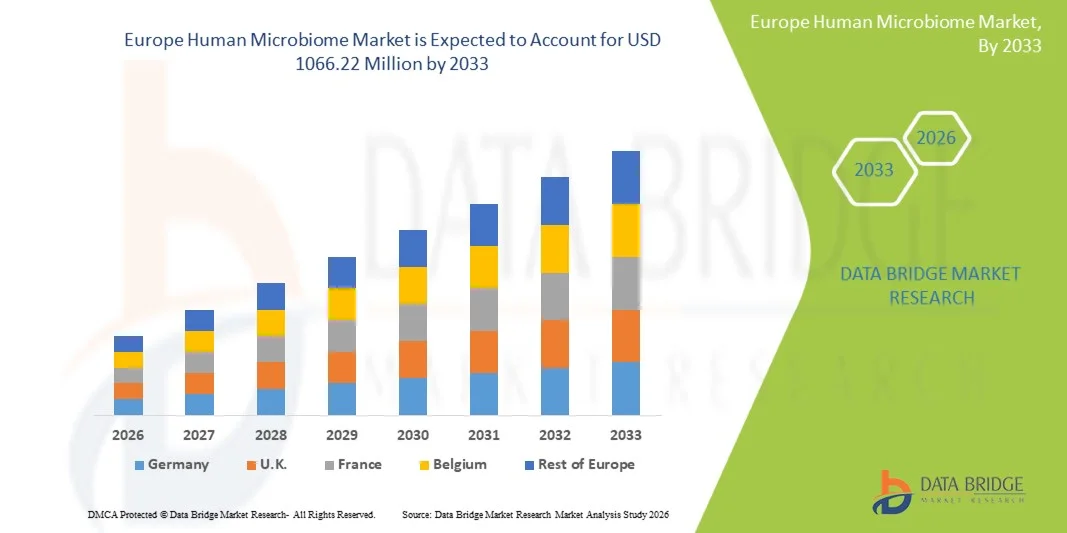
"As per Data Bridge Market Research Analysis the valued at USD 249.63 Million in 2025 and is projected to reach USD 1066.22 Million by 2033, growing at a CAGR of 19.90% from 2026 to 2033. The Human Microbiome market is experiencing consistent growth driven by rising demand for microbiome-based therapeutics, increasing advancements in genomic sequencing technologies, and expanding applications across healthcare, pharmaceuticals, nutrition, and personalized medicine.
The growing understanding of the role of the human microbiome in maintaining health and influencing diseases, combined with increasing research investments in microbiome-based diagnostics, probiotics, and precision medicine solutions, is encouraging pharmaceutical companies, biotechnology firms, and research institutions to adopt advanced microbiome technologies. The rising prevalence of chronic diseases, increasing focus on preventive healthcare, and advancements in next-generation sequencing, metagenomics, and bioinformatics are accelerating the development of microbiome-based therapies and personalized treatment approaches. In addition, growing collaborations between research organizations and biotechnology companies are supporting innovation and expanding the adoption of human microbiome solutions globally.
Market Size & Forecast
- Europe Market Value (2025): USD 249.63 Million
- Expected Market Value (2033): USD 1066.22 Million
- Forecast CAGR (2026–2033): 19.90%
- Leading Region in 2025: U.K.
- Fastest Growing Region: Germany
Key Market Trends & Insights
- The U.K. dominated the Europe Human Microbiome market with the largest revenue share of 34.26% in 2025, supported by strong research capabilities, advanced biotechnology infrastructure, increasing investments in microbiome-based therapeutics, and growing collaborations between academic institutions, pharmaceutical companies, and healthcare organizations.
- The Therapeutic segment dominated the market with a share of 67.41% in 2025 owing to growing utilization of microbiome-based therapies for gastrointestinal disorders, metabolic diseases, immune-related conditions, and infectious diseases.
- Germany is expected to be the fastest-growing country in the Europe Human Microbiome market, projected to register a CAGR of 8.1% from 2026 to 2033, driven by rising investments in life sciences research, expanding clinical microbiome studies, increasing adoption of precision medicine approaches, and strong government support for biotechnology innovation.
- Probiotics and Live Biotherapeutic Products (LBPs) represented the fastest-growing product category, projected to grow at a CAGR from 2026 to 2033, fueled by increasing demand for microbiome-based therapies, rising clinical validation of beneficial bacterial strains, and growing consumer awareness regarding digestive and immune health.
- Therapeutics applications accounted for the largest market share in 2025, supported by increasing development of microbiome-based treatments for conditions such as inflammatory bowel disease, metabolic disorders, and infectious diseases.
- Research & Academic Institutes emerged as a major end-user segment with significant adoption in 2025, driven by expanding microbiome research programs, genomic sequencing advancements, and increasing government-funded studies across Europe.
Report Scope and Europe Human Microbiome Market Segmentation
|
Attributes |
Human Microbiome Key Market Insights |
|
Segments Covered |
|
|
Countries Covered |
|
|
Key Market Players |
|
|
Market Opportunities |
|
|
Value Added Data Infosets |
|
What is the Key Trend in the Europe Human Microbiome Market?
Trend: Rising Adoption of Microbiome-Based Therapies and Personalized Healthcare
The Human Microbiome market is witnessing strong growth due to increasing research activities, rising awareness of microbiome-based health solutions, and growing adoption of personalized medicine approaches. Pharmaceutical companies, biotechnology firms, and academic institutions are increasingly focusing on microbiome analysis, live biotherapeutic products (LBPs), and microbiome-modulating therapies to address chronic diseases. Advances in next-generation sequencing (NGS), metagenomics, and bioinformatics are enabling deeper understanding of microbial communities and their role in human health. Research centers and biotechnology companies are also expanding clinical studies focused on gut microbiome interventions for conditions such as inflammatory bowel disease (IBD), metabolic disorders, and immune-related diseases. The increasing commercialization of microbiome-based diagnostics and therapeutics is creating new growth opportunities across healthcare and life sciences sectors.
Europe Human Microbiome Market Dynamics
Key Market Driver: Increasing Investment in Microbiome Research and Precision Medicine
The growing adoption of precision medicine and increasing investments in microbiome research are major drivers of the Human Microbiome market. Research organizations, and pharmaceutical companies are supporting large-scale microbiome studies to identify disease biomarkers, develop targeted therapies, and improve patient-specific treatment strategies.
For instance, the European Commission has supported life sciences research initiatives under programs such as Horizon Europe, encouraging innovation in biotechnology, genomics, and healthcare research. In addition, the increasing use of microbiome sequencing technologies is helping researchers analyze microbial diversity and its relationship with diseases, accelerating the development of microbiome-based therapeutics.
Key Restraint/Challenge: Regulatory Complexity and High Development Costs for Microbiome-Based Products
A significant challenge in the Europe Human Microbiome market is the complex regulatory pathway for microbiome-based therapeutics and live biotherapeutic products. Unlike conventional pharmaceuticals, microbiome products involve living microorganisms, creating challenges related to classification, manufacturing consistency, safety evaluation, and clinical validation. The development process requires extensive clinical trials, advanced sequencing technologies, and specialized manufacturing capabilities, increasing research and commercialization costs. Smaller biotechnology companies and academic spin-offs often face difficulties in scaling production and meeting regulatory requirements across different European markets.
For instance, microbiome-based therapies require strict quality control measures to ensure stability, microbial composition accuracy, and reproducible therapeutic outcomes, which can increase time-to-market and investment requirements.
Key Market Opportunity: Expansion of Microbiome-Based Therapeutics and AI-Driven Microbiome Analysis
The integration of artificial intelligence, advanced analytics, and genomic technologies presents a significant opportunity for the Europe Human Microbiome market. AI-based platforms can analyze complex microbiome datasets, identify disease-associated microbial patterns, and support the discovery of novel therapeutic targets. The development of next-generation probiotics, fecal microbiota transplantation (FMT)-based therapies, and engineered microbial therapeutics is creating new commercialization opportunities.
For instance, in 2022, the approval of Rebyota (fecal microbiota spores, live-brpk) by the U.S. Food and Drug Administration highlighted the growing global acceptance of microbiome-based therapies and strengthened interest in microbiome-derived treatments. Although initially approved in the U.S., such developments have accelerated research and investment activities globally, including Europe.
Europe Human Microbiome Market Scope
The Human Microbiome market is segmented on the basis of product, application, disease, technology, type, end user, and distributor.
- By Product
On the basis of product, the Europe Human Microbiome market is segmented into probiotics, prebiotics, diagnostic tests, drugs, supplements, fecal microbiota transplant, and others. The Probiotics segment dominated the market with a share of 33.84% in 2025 due to widespread consumer awareness regarding gut health, increasing adoption of preventive healthcare solutions, and growing use of probiotic formulations for digestive, metabolic, and immune health management. The segment benefits from strong product availability across retail and clinical channels, extensive scientific research supporting probiotic efficacy, and rising demand for functional foods and dietary supplements. Increasing investments by biotechnology and nutrition companies in advanced probiotic formulations are further supporting market expansion. Growing healthcare expenditure and consumer preference for natural health solutions continue to reinforce the leading position of this segment .
The Fecal Microbiota Transplant (FMT) segment is expected to witness the fastest CAGR of 9.2% from 2026 to 2033, driven by increasing clinical evidence supporting its effectiveness in microbiome restoration and treatment of recurrent gastrointestinal disorders. Growing regulatory support, rising research activities, and expanding use of microbiome-based therapeutics are accelerating adoption. Healthcare providers and research institutions are increasingly evaluating FMT for broader therapeutic applications, supporting rapid segment growth.
- By Application
On the basis of application, the Europe Human Microbiome market is segmented into therapeutic and diagnostic. The Therapeutic segment dominated the market with a share of 67.41% in 2025 owing to growing utilization of microbiome-based therapies for gastrointestinal disorders, metabolic diseases, immune-related conditions, and infectious diseases. Rising investments in microbiome drug development, increasing clinical trials, and strong pharmaceutical industry participation are supporting market growth. The growing focus on personalized medicine and targeted treatment approaches is further strengthening demand. Expanding commercialization of microbiome therapeutics across Europe is reinforcing segment dominance.
The Diagnostic segment is projected to register the fastest CAGR of 8.8% from 2026 to 2033, driven by increasing adoption of microbiome profiling, next-generation sequencing technologies, and precision healthcare solutions. Growing demand for early disease detection, personalized diagnostics, and microbiome-based biomarker identification is supporting segment expansion. Improvements in genomic technologies and bioinformatics capabilities are further accelerating market growth.
- By Disease
On the basis of disease, the Europe Human Microbiome market is segmented into infectious disease, dermatological disorders, autoimmune disorders, metabolic disorders, gastrointestinal disorders, cancer, mental disorders, Clostridioides difficile infection, primary hyperoxaluria, and others. The Gastrointestinal Disorders segment dominated the market with a share of 29.73% in 2025 due to the strong association between gut microbiota and digestive health. Increasing prevalence of inflammatory bowel disease, irritable bowel syndrome, and other gastrointestinal conditions is driving demand for microbiome-based interventions. Growing research validating microbiome-targeted therapies and rising patient awareness regarding gut health are supporting segment expansion. Extensive use of probiotics and microbiome therapeutics in gastrointestinal care continues to strengthen market leadership.
The Cancer segment is expected to witness the fastest CAGR of 9.5% from 2026 to 2033, driven by increasing research on microbiome influence on cancer progression, immunotherapy response, and treatment outcomes. Growing investments in oncology-focused microbiome research and rising clinical trials evaluating microbiome-based cancer therapies are supporting rapid growth. Advances in precision medicine are further accelerating adoption.
- By Technology
On the basis of technology, the Europe Human Microbiome market is segmented into genomics, proteomics, and metabolomics. The Genomics segment dominated the market with a share of 51.62% in 2025 owing to widespread adoption of next-generation sequencing technologies and microbiome profiling applications. Increasing use of genomic analysis in microbiome research, diagnostics, and therapeutic development is supporting segment growth. Academic institutions, pharmaceutical companies, and biotechnology firms continue to invest heavily in genomics-based microbiome studies. Advancements in sequencing accuracy and declining costs are reinforcing segment dominance.
The Metabolomics segment is projected to register the fastest CAGR of 8.7% from 2026 to 2033, driven by growing demand for functional analysis of microbial activity and host-microbiome interactions. Increasing applications in biomarker discovery, drug development, and personalized healthcare are supporting rapid adoption. Expanding research investments are further contributing to growth. In addition, advancements in mass spectrometry and analytical technologies are improving the accuracy of metabolite profiling and enabling deeper understanding of microbiome-related disease mechanisms. The increasing focus on precision medicine and identification of metabolic signatures for early disease detection is further accelerating segment expansion. Moreover, rising collaborations between biotechnology companies, pharmaceutical firms, and academic research institutions are supporting innovation and development of advanced metabolomics-based microbiome solutions.
- By Type
On the basis of type, the Europe Human Microbiome market is segmented into small molecule and biologic. The Biologic segment dominated the market with a share of 61.28% in 2025 due to increasing development of live biotherapeutic products, microbiome-derived biologics, and advanced therapeutic solutions. Strong clinical pipelines, growing regulatory support, and increasing investment from pharmaceutical companies are supporting segment growth. The rising focus on targeted treatment approaches and precision medicine is further strengthening demand. Expanding commercialization activities continue to reinforce market leadership.
The Biologic segment is also expected to witness the fastest CAGR of 9.1% from 2026 to 2033, driven by ongoing innovation in microbiome therapeutics, increasing clinical trial activity, and growing demand for advanced biologic treatment options. Rising research funding and strategic collaborations are accelerating product development and market adoption. In addition, increasing development of live biotherapeutic products and microbiome-derived biologics is creating new opportunities for targeted disease management. Growing focus on personalized medicine and immune-based therapies is further supporting the adoption of biologic microbiome solutions. Furthermore, advancements in biotechnology platforms and regulatory support for novel microbiome-based therapies are encouraging pharmaceutical companies to expand their product pipelines.
- By End User
On the basis of end user, the Europe Human Microbiome market is segmented into hospital pharmacies, retail pharmacies, online pharmacies, hypermarkets/supermarkets, clinics, and others. The Hospital Pharmacies segment dominated the market with a share of 37.85% in 2025 owing to increasing prescription and administration of microbiome-based therapeutics through hospital settings. Hospitals play a critical role in managing complex gastrointestinal, infectious, and immune-related conditions that require specialized treatments. Growing patient inflow, advanced healthcare infrastructure, and rising adoption of innovative therapies are supporting segment growth. Strong physician involvement in microbiome treatment decisions further reinforces dominance.
The Online Pharmacies segment is expected to witness the fastest CAGR of 8.9% from 2026 to 2033, driven by increasing digital healthcare adoption, growing e-commerce penetration, and rising consumer preference for convenient purchasing options. Expansion of online healthcare platforms and improved accessibility to microbiome products are accelerating segment growth. In addition, the increasing availability of probiotics, supplements, and microbiome-based healthcare products through digital platforms is improving consumer reach across Europe. The integration of telemedicine services and online consultations is further supporting the adoption of microbiome-related products and personalized healthcare solutions. Moreover, rising investments by e-pharmacy companies in advanced delivery networks, product authentication, and customer engagement platforms are enhancing market penetration. Growing awareness regarding preventive healthcare and self-care practices is expected to further strengthen the growth of online pharmacy channels.
- By Distributor
On the basis of distributor, the Europe Human Microbiome market is segmented into direct tender and retail sales. The Retail Sales segment dominated the market with a share of 58.93% in 2025 due to extensive availability of probiotics, prebiotics, supplements, and microbiome-related healthcare products through pharmacies, supermarkets, and online channels. Strong consumer demand for preventive healthcare and wellness products is supporting segment expansion. Established distribution networks and growing awareness regarding gut health are reinforcing market leadership.
The Direct Tender segment is projected to register the fastest CAGR of 8.3% from 2026 to 2033, driven by increasing procurement activities by hospitals, healthcare systems, research institutions, and government healthcare programs. Rising adoption of microbiome therapeutics in clinical settings and expanding public healthcare initiatives are supporting growth across Europe. In addition, increasing demand for bulk procurement of advanced microbiome-based drugs, diagnostic solutions, and therapeutic products is creating new opportunities for direct distribution channels. Growing collaborations between healthcare providers, pharmaceutical companies, and research organizations are further strengthening institutional purchasing activities. Furthermore, rising government investments in healthcare modernization and personalized medicine programs are expected to accelerate the adoption of direct tender distribution models.
Europe Human Microbiome Market Regional Analysis
The Europe Human Microbiome market remains one of the leading global markets, supported by strong biotechnology infrastructure, increasing investments in life sciences research, and growing adoption of microbiome-based diagnostics and therapeutics. The region benefits from advanced healthcare systems, strong academic research networks, and increasing collaborations between pharmaceutical companies, biotechnology firms, and research institutions. Rising focus on precision medicine, genomic analysis, and development of live biotherapeutic products (LBPs) is accelerating the adoption of human microbiome solutions across Europe. Increasing investments in microbiome sequencing technologies, clinical research programs, and personalized healthcare approaches are further supporting market expansion. Countries across Europe are focusing on understanding the role of microbiome composition in diseases such as gastrointestinal disorders, metabolic conditions, and immune-related diseases, creating new opportunities for microbiome-based product development.
U.K. Human Microbiome Market Insight
The U.K. dominated the Europe Human Microbiome market with the largest revenue share of 34.26% in 2025, supported by strong research capabilities, advanced biotechnology infrastructure, increasing investments in microbiome-based therapeutics, and growing collaborations between academic institutions, pharmaceutical companies, and healthcare organizations. The country has emerged as a major hub for microbiome research due to the presence of leading universities, clinical research centers, and biotechnology companies working on microbiome sequencing, microbial therapeutics, and precision healthcare solutions. Increasing adoption of advanced genomic technologies and rising focus on personalized medicine are driving demand for microbiome-based applications in healthcare and pharmaceutical development. Furthermore, initiatives supporting life sciences innovation and translational research are strengthening the U.K.’s position in the European Human Microbiome market. The growing number of clinical studies evaluating microbiome interventions for conditions such as inflammatory bowel disease, metabolic disorders, and immune-related diseases is expected to further support market growth.
Germany Human Microbiome Market Insight
The Germany Human Microbiome market is projected to be the fastest-growing country in Europe, registering a CAGR of 8.1% from 2026 to 2033, driven by rising investments in life sciences research, expanding clinical microbiome studies, increasing adoption of precision medicine approaches, and strong government support for biotechnology innovation. Germany’s strong pharmaceutical and biotechnology ecosystem, combined with its advanced healthcare infrastructure, is creating favorable conditions for microbiome research and commercialization. The country is witnessing increasing investments in microbiome-based therapeutics, diagnostic technologies, and research platforms aimed at improving disease understanding and treatment outcomes. Growing collaborations between research institutes, universities, and pharmaceutical companies are accelerating the development of next-generation microbiome solutions. In addition, Germany’s focus on biotechnology innovation, personalized healthcare, and advanced clinical research is expected to position the country as a key growth engine for the Europe Human Microbiome market during the forecast period.
Which are the Top Companies in Human Microbiome Market?
The Human Microbiome industry is primarily led by well-established companies, including:
- Seres Therapeutics, Inc. (U.S.)
- Ferring Pharmaceuticals (Switzerland)
- Vedanta Biosciences, Inc. (U.S.)
- Enterome (France)
- Microbiome Insights Inc. (Canada)
- MaaT Pharma (France)
- PharmaBiome AG (Switzerland)
- 4D pharma plc (U.K.)
- Optibiotix Health plc (U.K.)
- Yakult Honsha Co., Ltd. (Japan)
- DuPont de Nemours, Inc. (U.S.)
- Nestlé Health Science (Switzerland)
- Chr. Hansen Holding A/S (Denmark)
- Lallemand Inc. (Canada)
- Bifodan A/S (Denmark)
- Novozymes A/S (Denmark)
- Lonza Group AG (Switzerland)
- Evotec SE (Germany)
- BioGaia AB (Sweden)
- ADM (Archer Daniels Midland Company) (U.S.)
- Symrise AG (Germany)
- DSM-Firmenich AG (Switzerland/Netherlands)
- Bayer AG (Germany)
- Merck KGaA (Germany)
- F. Hoffmann-La Roche Ltd. (Switzerland)
- Novartis AG (Switzerland)
- Pfizer Inc. (U.S.)
- Sanofi (France)
- GSK plc (U.K.)
- AstraZeneca plc (U.K.)
- Johnson & Johnson (U.S.)
- QIAGEN N.V. (Netherlands)
- Illumina, Inc. (U.S.)
- BioMérieux SA (France)
- Eurofins Scientific SE (Luxembourg)
- Genetic Analysis AS (Norway)
- Microba Life Sciences Limited (Australia)
- Metagenomi Technologies (U.S.)
- Second Genome Inc. (U.S.)
Latest Developments in Europe Human Microbiome Market
- In April 2023, Seres Therapeutics, Inc., a leading microbiome therapeutics company, announced that the U.S. FDA approved VOWST™ (fecal microbiota spores, live-brpk), the first orally administered microbiota-based therapeutic for the prevention of recurrent Clostridioides difficile infection (CDI) in adults following antibacterial treatment. The approval represented a major milestone for the human microbiome market by advancing microbiome-based therapies from research platforms into commercial healthcare applications
- In May 2023, Seres Therapeutics announced the receipt of a USD125 million milestone payment from Nestlé Health Science following the FDA approval of VOWST. The milestone highlighted increasing commercial interest and investment in microbiome-based therapeutics and strengthened the development pathway for future microbiome medicines targeting infectious and chronic diseases
- In June 2023, Seres Therapeutics and Nestlé Health Science announced the commercial availability of VOWST in the United States, enabling patients with recurrent CDI to access the first FDA-approved orally administered microbiota-based therapeutic. The launch accelerated adoption of microbiome therapies and demonstrated the growing clinical importance of microbiome restoration approaches
- In April 2024, MaaT Pharma presented new preclinical data for MaaT034, a microbiome ecosystem therapy designed to improve patient responses to immunotherapies. The company highlighted the potential of synthetic microbiota products in oncology applications, supporting the expansion of microbiome-based solutions beyond gastrointestinal disorders into cancer treatment strategies
- In May 2024, Vedanta Biosciences announced enrollment of the first patient in its Phase 3 RESTORATiVE303 study evaluating VE303, an orally administered defined bacterial consortium therapy candidate for prevention of recurrent Clostridioides difficile infection. The development marked continued advancement of next-generation live biotherapeutic products within the human microbiome therapeutics landscape
- In July 2024, MaaT Pharma announced a positive first review by the independent Data Safety Monitoring Board (DSMB) for its Phase 2b PHOEBUS clinical trial evaluating MaaT033 in patients receiving allogeneic hematopoietic stem cell transplantation. The progress supported continued development of microbiome ecosystem therapies for improving outcomes in oncology and immune-related conditions
- In September 2024, MaaT Pharma reported continued progress in its microbiome therapy pipeline, including advancement of clinical programs focused on cancer immunology and immune modulation. The company’s developments reflected increasing industry focus on microbiome-based approaches for complex diseases beyond traditional probiotic applications

- Interactive Data Analysis Dashboard
- Company Analysis Dashboard for high growth potential opportunities
- Research Analyst Access for customization & queries
- Competitor Analysis with Interactive dashboard
- Latest News, Updates & Trend analysis
- Harness the Power of Benchmark Analysis for Comprehensive Competitor Tracking
Data collection and base year analysis are done using data collection modules with large sample sizes. The stage includes obtaining market information or related data through various sources and strategies. It includes examining and planning all the data acquired from the past in advance. It likewise envelops the examination of information inconsistencies seen across different information sources. The market data is analysed and estimated using market statistical and coherent models. Also, market share analysis and key trend analysis are the major success factors in the market report. To know more, please request an analyst call or drop down your inquiry.
The key research methodology used by DBMR research team is data triangulation which involves data mining, analysis of the impact of data variables on the market and primary (industry expert) validation. Data models include Vendor Positioning Grid, Market Time Line Analysis, Market Overview and Guide, Company Positioning Grid, Patent Analysis, Pricing Analysis, Company Market Share Analysis, Standards of Measurement, Global versus Regional and Vendor Share Analysis. To know more about the research methodology, drop in an inquiry to speak to our industry experts.
Data Bridge Market Research is a leader in advanced formative research. We take pride in servicing our existing and new customers with data and analysis that match and suits their goal. The report can be customized to include price trend analysis of target brands understanding the market for additional countries (ask for the list of countries), clinical trial results data, literature review, refurbished market and product base analysis. Market analysis of target competitors can be analyzed from technology-based analysis to market portfolio strategies. We can add as many competitors that you require data about in the format and data style you are looking for. Our team of analysts can also provide you data in crude raw excel files pivot tables (Fact book) or can assist you in creating presentations from the data sets available in the report.













