


5-Alpha Reductase Deficiency Market Size
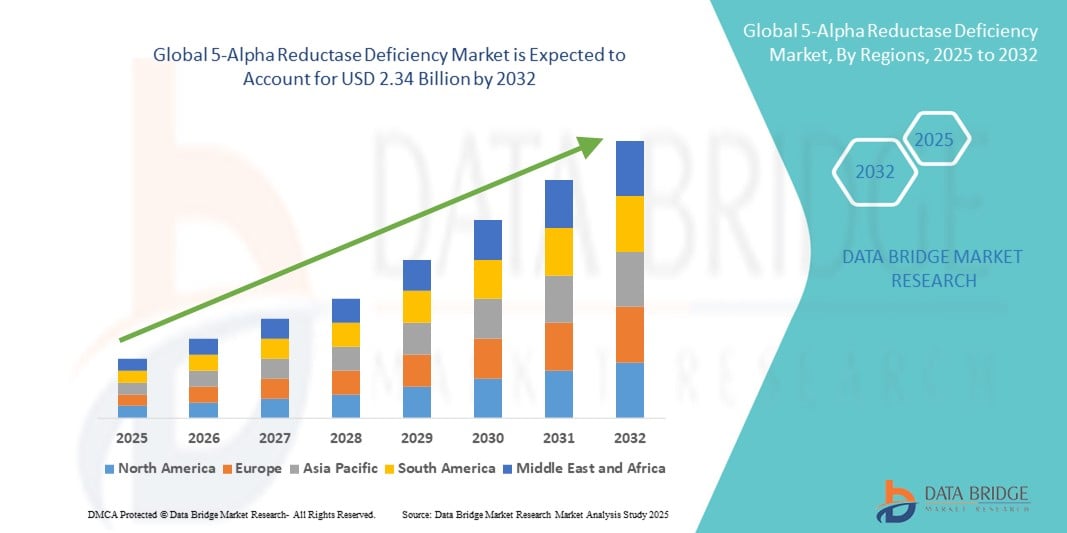
- The global 5-alpha reductase deficiency market size was valued at USD 1.33 billion in 2024 and is expected to reach USD 2.34 billion by 2032, at a CAGR of 7.30% during the forecast period
- The market growth is largely fueled by rising awareness, improved diagnostic capabilities, and increasing research initiatives aimed at understanding and managing rare genetic disorders such as 5-alpha reductase deficiency
- Furthermore, growing investment in personalized medicine and hormone replacement therapies is establishing targeted treatments as the standard care approach. These converging factors are driving greater diagnosis rates and therapeutic advancements, thereby significantly boosting the industry’s growth
5-Alpha Reductase Deficiency Market Analysis
- 5-alpha reductase deficiency, a rare autosomal recessive disorder affecting sexual development in genetic males, is gaining increasing recognition in medical genetics and endocrinology due to advancements in diagnostic technologies and a growing emphasis on rare disease management across global healthcare systems
- The escalating demand in this market is primarily fueled by heightened awareness, improved accessibility to genetic testing, and increasing clinical focus on personalized treatment approaches, especially hormone replacement therapy and surgical interventions tailored to individual patient needs
- North America dominated the 5-alpha reductase deficiency market with the largest revenue share of 39.9% in 2024, attributed to advanced diagnostic infrastructure, active research on androgen disorders, and widespread availability of specialized care, with the U.S. leading in patient screening, early detection programs, and treatment advancements
- Asia-Pacific is expected to be the fastest growing region in the 5-alpha reductase deficiency market during the forecast period, supported by rising healthcare investments, expanding access to genetic diagnostics, and increasing awareness through rare disease advocacy and newborn screening initiatives
- Gene Sequencing segment dominated the 5-alpha reductase deficiency market by diagnosis type with a market share of 33.3% in 2024, driven by its high accuracy in identifying SRD5A2 gene mutations and its growing adoption in clinical diagnostics for early and precise confirmation of the condition
Report Scope and 5-Alpha Reductase Deficiency Market Segmentation
|
Attributes |
5-Alpha Reductase Deficiency Key Market Insights |
|
Segments Covered |
|
|
Countries Covered |
North America
Europe
Asia-Pacific
Middle East and Africa
South America
|
|
Key Market Players |
|
|
Market Opportunities |
|
|
Value Added Data Infosets |
In addition to the insights on market scenarios such as market value, growth rate, segmentation, geographical coverage, and major players, the market reports curated by the Data Bridge Market Research also include in-depth expert analysis, pricing analysis, brand share analysis, consumer survey, demography analysis, supply chain analysis, value chain analysis, raw material/consumables overview, vendor selection criteria, PESTLE Analysis, Porter Analysis, and regulatory framework. |
5-Alpha Reductase Deficiency Market Trends
Increased Emphasis on Genetic Testing and Personalized Medicine
- A significant and accelerating trend in the global 5-alpha reductase deficiency market is the rising adoption of advanced genetic testing technologies and the integration of personalized medicine approaches. These trends are enabling earlier and more accurate diagnosis, as well as more individualized treatment strategies tailored to patient-specific genetic profiles
- For instance, next-generation sequencing (NGS) is increasingly used in diagnosing SRD5A2 gene mutations, allowing for high-precision identification of the disorder. Clinical platforms such as Invitae and GeneDx offer targeted genetic panels that include 5-alpha reductase deficiency, improving diagnostic access globally
- The trend towards personalized therapy is leading to more refined hormone replacement regimens based on individual hormonal needs and genetic variations. This targeted approach enhances treatment effectiveness and reduces side effects. Moreover, surgical decisions and psychosocial support strategies are also being guided by personalized care models
- The incorporation of 5-alpha reductase deficiency into rare disease registries and digital health platforms enables real-time patient tracking, facilitates clinical research, and supports long-term care planning. As awareness campaigns and advocacy from patient organizations grow, early identification through family history screening is also gaining traction
- These advancements are fundamentally reshaping clinical protocols and expectations in managing rare endocrine disorders. As a result, biotech firms and genetic testing companies are investing in expanding their diagnostic offerings and collaborating with academic institutions to accelerate discovery in androgen-related conditions
- The demand for early, accurate, and individualized diagnostic and therapeutic options is rising rapidly across healthcare systems globally, particularly as rare disease management becomes a greater public health priority
5-Alpha Reductase Deficiency Market Dynamics
Driver
Rising Awareness and Diagnostic Advancements in Rare Genetic Disorders
- The increasing focus on rare genetic disorders within public health policy and clinical research is a major driver fueling the growth of the global 5-alpha reductase deficiency market
- For instance, organizations such as Global Genes and EURORDIS are working to improve education, funding, and accessibility to genetic diagnostics, contributing to improved awareness and earlier diagnosis of conditions such as 5-alpha reductase deficiency
- Advancements in molecular biology, particularly the availability of cost-effective and high-accuracy gene sequencing methods, are allowing healthcare providers to identify SRD5A2 gene mutations with higher confidence
- Government support through rare disease policies, newborn screening expansion, and inclusion of 5-alpha reductase deficiency in diagnostic guidelines are further encouraging early and accurate intervention
- As clinicians and endocrinologists become more familiar with the condition, especially in neonatal and adolescent care settings, targeted therapies and comprehensive care models are being adopted more widely, enhancing patient outcomes and standardizing care protocols
Restraint/Challenge
Limited Awareness, Misdiagnosis, and Socio-Cultural Sensitivity
- A significant challenge in the global 5-alpha reductase deficiency market is the limited awareness among general practitioners and patients, which often leads to misdiagnosis or delayed diagnosis, particularly in low-resource regions
- Due to the rarity and complexity of the condition, symptoms are sometimes mistaken for other disorders of sexual development (DSDs), resulting in inappropriate treatments or unnecessary surgical interventions
- For instance, in a study published in the Journal of Pediatric Endocrinology and Metabolism, it was found that nearly 42% of individuals with 5-alpha reductase deficiency in Southeast Asia were initially misdiagnosed with androgen insensitivity syndrome, leading to delays in appropriate hormone therapy and psychological support
- Cultural and social stigmas related to gender identity and atypical sexual development can hinder affected families from seeking medical attention, particularly in conservative regions, limiting access to accurate diagnosis and ongoing care
- The lack of standardized care protocols in many countries, combined with limited access to genetic counseling and hormone therapies, poses a barrier to effective long-term management
- Overcoming these challenges will require enhanced medical training, public health education, integration of the condition into pediatric and neonatal screening guidelines, and increased access to affordable diagnostic and treatment services through government and NGO support
5-Alpha Reductase Deficiency Market Scope
The market is segmented on the basis of diagnosis, treatment, age of onset, and end-users.
- By Diagnosis
On the basis of diagnosis, the 5-alpha reductase deficiency market is segmented into chromosome analysis, gene sequencing, hormone tests, imaging tests, genetic screening, and others. The gene sequencing segment dominated the market with the largest revenue share of 33.3% in 2024, driven by its superior accuracy in detecting SRD5A2 gene mutations responsible for the disorder. With next-generation sequencing (NGS) becoming more accessible and cost-effective, healthcare providers are increasingly relying on genetic tests to confirm diagnosis, especially in newborns or children with ambiguous genitalia.
The genetic screening segment is anticipated to witness the fastest growth rate of 20.3% from 2025 to 2032, fueled by rising inclusion of rare genetic disorders in newborn screening programs and family planning initiatives. Increasing governmental and institutional support for early diagnosis is contributing to the demand for genetic screening panels that include 5-alpha reductase deficiency.
- By Treatment
On the basis of treatment, the 5-alpha reductase deficiency market is segmented into surgery, hormone replacement therapy (HRT), and others. The hormone replacement therapy segment held the largest revenue share of 45.6% in 2024, as it remains the standard first-line intervention to address androgen deficiency and support appropriate physical development in affected individuals. HRT is widely adopted due to its non-invasive nature and ability to support both physiological and psychological well-being in patients.
The surgery segment is projected to witness the fastest CAGR of 18.5% from 2025 to 2032, particularly due to increased demand for gender-affirming and corrective procedures in adolescents and adults. Surgical interventions are often tailored to the patient’s chosen gender identity and are growing in clinical acceptance as part of comprehensive treatment plans.
- By Age of Onset
On the basis of age of onset, the 5-alpha reductase deficiency market is segmented into neonatal, infancy, childhood, and adolescent. The neonatal segment dominated the market with the largest revenue share of 38.3% in 2024, as most cases are identified shortly after birth due to visible signs such as ambiguous genitalia, prompting immediate diagnostic evaluations and interventions. Early diagnosis ensures timely hormone therapy and improved outcomes.
The adolescent segment is expected to register the fastest growth rate of 19.1% from 2025 to 2032, as some cases remain undiagnosed until puberty when symptoms such as underdeveloped secondary sexual characteristics become apparent, leading to increased diagnostic testing and treatment demand in this age group.
- By End-Users
On the basis of end-users, the 5-alpha reductase deficiency market is segmented into hospitals, specialty clinics, and others. The hospitals segment accounted for the largest revenue share of 52.1% in 2024, supported by the availability of multidisciplinary teams and advanced diagnostic tools in hospital settings. Hospitals remain the primary centers for diagnosis, surgical procedures, hormone administration, and long-term monitoring.
The specialty clinics segment is expected to experience the fastest CAGR of 17.4% from 2025 to 2032, driven by increasing referrals to endocrinology and genetic counseling centers offering specialized care for rare disorders such as 5-alpha reductase deficiency. These clinics often provide more personalized care and counseling services tailored to individual patient needs.
5-Alpha Reductase Deficiency Market Regional Analysis
- North America dominated the 5-alpha reductase deficiency market with the largest revenue share of 39.9% in 2024, attributed to advanced diagnostic infrastructure, active research on androgen disorders, and widespread availability of specialized care, with the U.S. leading in patient screening, early detection programs, and treatment advancements
- Patients and clinicians in the region benefit from access to cutting-edge diagnostic technologies, including next-generation sequencing and hormone profiling, which enable early and accurate identification of the condition
- This high adoption is further supported by ongoing clinical research, favorable reimbursement policies, and proactive rare disease advocacy efforts, positioning North America as a leader in early detection, personalized treatment, and comprehensive care for individuals affected by 5-alpha reductase deficiency
U.S. 5-Alpha Reductase Deficiency Market Insight
The U.S. 5-alpha reductase deficiency market captured the largest revenue share of 78.6% in 2024 within North America, fueled by widespread access to genetic testing, strong clinical research infrastructure, and robust rare disease advocacy networks. The U.S. healthcare system supports early diagnosis through advanced technologies such as next-generation sequencing, while endocrinologists and genetic counselors play a key role in guiding treatment. Ongoing efforts to integrate rare diseases into pediatric screening and personalized care models continue to drive early intervention and improved outcomes.
Europe 5-Alpha Reductase Deficiency Market Insight
The Europe 5-alpha reductase deficiency market is projected to expand at a steady CAGR throughout the forecast period, driven by increasing awareness of rare genetic disorders and standardized clinical practices across EU healthcare systems. The region benefits from collaborative rare disease networks, enhanced diagnostic accessibility, and public health policies that support early screening. Growth is observed in both public and private healthcare facilities, with a rising number of endocrinology centers adopting genetic testing protocols for improved patient care.
U.K. 5-Alpha Reductase Deficiency Market Insight
The U.K. 5-alpha reductase deficiency market is anticipated to grow at a notable CAGR during the forecast period, supported by NHS initiatives focused on rare disease diagnosis, newborn screening expansion, and increased investment in genomic medicine. Rising public awareness, medical training programs, and growing access to hormone therapy services encourage timely diagnosis and long-term management. The UK’s leadership in rare disease registries and data integration also strengthens patient outcomes and clinical research capabilities.
Germany 5-Alpha Reductase Deficiency Market Insight
The Germany 5-alpha reductase deficiency market is expected to expand at a considerable CAGR, driven by the country’s advanced healthcare infrastructure, public coverage of rare disease treatments, and emphasis on precision diagnostics. Germany’s strong presence of research institutions and clinical genetics programs facilitates early identification and evidence-based care. Increasing collaboration between hospitals and academic centers further supports the standardization of treatment pathways, especially for pediatric and adolescent patients.
Asia-Pacific 5-Alpha Reductase Deficiency Market Insight
The Asia-Pacific 5-alpha reductase deficiency market is poised to grow at the fastest CAGR of 22.7% during 2025 to 2032, driven by rising healthcare awareness, improved access to genetic testing, and expanding healthcare infrastructure in countries such as China, India, and Japan. Government-led rare disease programs and increased investment in diagnostics are key growth drivers. Growing efforts to integrate genetic screening in neonatal care and increasing support from international health organizations are broadening the market’s reach across the region.
Japan 5-Alpha Reductase Deficiency Market Insight
The Japan 5-alpha reductase deficiency market is gaining momentum due to the country’s progressive approach to personalized medicine and advanced healthcare technologies. Japan’s focus on early detection through national genetic screening initiatives and its well-established endocrinology specialty networks support consistent patient identification and care. The aging healthcare system’s emphasis on pediatric and lifelong disease management is such asly to increase the availability of tailored treatment plans and support services.
India 5-Alpha Reductase Deficiency Market Insight
The India 5-alpha reductase deficiency market accounted for the largest revenue share in Asia Pacific in 2024, driven by increased awareness, urbanization, and the rising availability of affordable diagnostic services. India’s expanding network of private diagnostic laboratories, along with government-backed rare disease policies and newborn screening pilot programs, are enabling earlier detection. In addition, the country’s growing pool of endocrinologists and genetic counselors is improving access to comprehensive care across urban and semi-urban regions.
5-Alpha Reductase Deficiency Market Share
The 5-Alpha Reductase Deficiency industry is primarily led by well-established companies, including:
- Pfizer Inc. (U.S.)
- GSK (U.K.)
- F. Hoffmann-La Roche Ltd (Switzerland)
- Merck & Co., Inc. (U.S.)
- Novartis AG (Switzerland)
- Sanofi (France)
- Bayer AG (Germany)
- AbbVie Inc. (U.S.)
- Johnson & Johnson and its affiliates (U.S.)
- Teva Pharmaceutical Industries Ltd. (Israel)
- Sun Pharmaceutical Industries Ltd. (India)
- Cipla Limited (India)
- Zydus Lifesciences Limited (India)
- Intas Pharmaceuticals Ltd. (India)
- Invitae Corporation (U.S.)
- Blueprint Genetics Oy (Finland)
- Labcorp (U.S.)
- Ambry Genetics Corporation (U.S.)
- Centogene N.V. (Germany)
- Mayo Clinic Laboratories (U.S.)

- Interactive Data Analysis Dashboard
- Company Analysis Dashboard for high growth potential opportunities
- Research Analyst Access for customization & queries
- Competitor Analysis with Interactive dashboard
- Latest News, Updates & Trend analysis
- Harness the Power of Benchmark Analysis for Comprehensive Competitor Tracking
Data collection and base year analysis are done using data collection modules with large sample sizes. The stage includes obtaining market information or related data through various sources and strategies. It includes examining and planning all the data acquired from the past in advance. It likewise envelops the examination of information inconsistencies seen across different information sources. The market data is analysed and estimated using market statistical and coherent models. Also, market share analysis and key trend analysis are the major success factors in the market report. To know more, please request an analyst call or drop down your inquiry.
The key research methodology used by DBMR research team is data triangulation which involves data mining, analysis of the impact of data variables on the market and primary (industry expert) validation. Data models include Vendor Positioning Grid, Market Time Line Analysis, Market Overview and Guide, Company Positioning Grid, Patent Analysis, Pricing Analysis, Company Market Share Analysis, Standards of Measurement, Global versus Regional and Vendor Share Analysis. To know more about the research methodology, drop in an inquiry to speak to our industry experts.
Data Bridge Market Research is a leader in advanced formative research. We take pride in servicing our existing and new customers with data and analysis that match and suits their goal. The report can be customized to include price trend analysis of target brands understanding the market for additional countries (ask for the list of countries), clinical trial results data, literature review, refurbished market and product base analysis. Market analysis of target competitors can be analyzed from technology-based analysis to market portfolio strategies. We can add as many competitors that you require data about in the format and data style you are looking for. Our team of analysts can also provide you data in crude raw excel files pivot tables (Fact book) or can assist you in creating presentations from the data sets available in the report.












