


Acanthoma Treatment Market Size
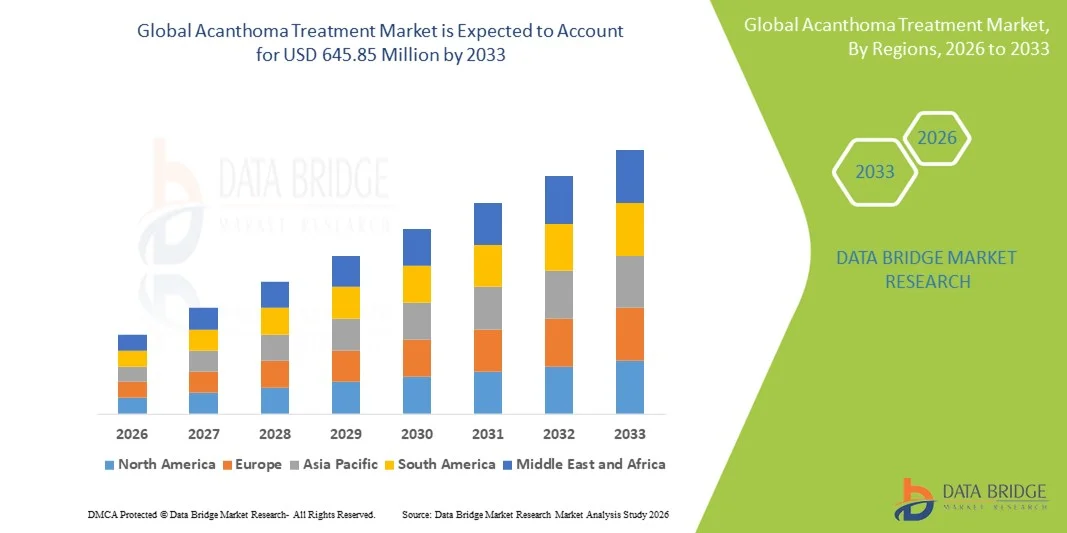
- The global acanthoma treatment market size was valued at USD 433.82 million in 2025 and is expected to reach USD 645.85 million by 2033, at a CAGR of 5.10% during the forecast period
- The market growth is largely fueled by rising prevalence of skin conditions, increased awareness of skin health, and advances in diagnostic and treatment techniques such as cryotherapy, laser therapy, and surgical excision, leading to more accessible and effective management in both clinical and home settings
- Furthermore, growing consumer and clinician demand for safe, effective, and cosmetically favorable treatments for benign skin lesions is establishing acanthoma treatment as the preferred solution for skin lesion management. These converging factors are accelerating the adoption of advanced treatment solutions, thereby significantly boosting the industry's growth
Acanthoma Treatment Market Analysis
- Acanthoma treatments, including surgical excision, cryotherapy, laser therapy, and photodynamic therapy, are increasingly vital components of dermatology care in both clinical and outpatient settings due to their effectiveness, minimally invasive nature, and improved cosmetic outcomes
- The escalating demand for acanthoma treatment is primarily fueled by rising prevalence of benign skin lesions, increasing awareness of skin health, and growing patient preference for safe, effective, and aesthetically favorable treatment options
- North America dominated the acanthoma treatment market with the largest revenue share of 38.1% in 2025, characterized by high healthcare spending, advanced dermatology infrastructure, and strong presence of key market players, with the U.S. experiencing substantial growth due to early adoption of advanced treatment technologies and increased dermatology clinic visits
- Asia-Pacific is expected to be the fastest growing region in the acanthoma treatment market during the forecast period, driven by increasing healthcare access, rising awareness of skin disorders, and growing disposable incomes
- Surgical excision segment dominated the acanthoma treatment market with a market share of 41.9% in 2025, driven by its high efficacy, established clinical acceptance, and reliability in completely removing lesions with minimal recurrence
Report Scope and Acanthoma Treatment Market Segmentation
|
Attributes |
Acanthoma Treatment Key Market Insights |
|
Segments Covered |
|
|
Countries Covered |
North America
Europe
Asia-Pacific
Middle East and Africa
South America
|
|
Key Market Players |
|
|
Market Opportunities |
|
|
Value Added Data Infosets |
In addition to the insights on market scenarios such as market value, growth rate, segmentation, geographical coverage, and major players, the market reports curated by the Data Bridge Market Research also include in-depth expert analysis, patient epidemiology, pipeline analysis, pricing analysis, and regulatory framework |
Acanthoma Treatment Market Trends
Minimally Invasive and Cosmetic-Oriented Treatments
- A significant and accelerating trend in the global acanthoma treatment market is the increasing adoption of minimally invasive procedures such as laser therapy, cryotherapy, and photodynamic therapy, enhancing treatment efficacy and cosmetic outcomes
- For instance, Fractional CO₂ laser therapy is being increasingly used to remove acanthomas with minimal scarring, preserving skin aesthetics and improving patient satisfaction
- Advanced treatment modalities enable dermatologists to target lesions more precisely while reducing recovery time, discomfort, and risk of recurrence, thereby improving overall patient experience
- The integration of treatment planning software and imaging tools allows clinicians to map lesions accurately, monitor progress, and deliver personalized therapy protocols for better outcomes
- This trend towards minimally invasive, cosmetically favorable, and technology-driven treatments is reshaping patient expectations for skin lesion management
- The demand for acanthoma treatments that are safe, effective, and aesthetically acceptable is growing rapidly across dermatology clinics and outpatient settings, as patients increasingly prioritize appearance and convenience
- Increasing collaboration between dermatology device manufacturers and clinics is accelerating the adoption of next-generation treatment systems in urban and metropolitan areas
- Growing social media influence and patient-driven awareness about cosmetic outcomes is motivating more individuals to seek professional treatment for acanthomas earlier
Acanthoma Treatment Market Dynamics
Driver
Rising Prevalence of Skin Lesions and Awareness
- The increasing incidence of benign skin lesions, coupled with growing awareness of skin health, is a significant driver for heightened demand for acanthoma treatments
- For instance, in March 2024, a study published in the Journal of Dermatology highlighted rising acanthoma cases among adults over 40, emphasizing early treatment importance
- As patients seek safe and effective removal options, procedures such as cryotherapy, laser therapy, and surgical excision offer reliable solutions with minimal recurrence
- Furthermore, increasing awareness campaigns by dermatology associations are educating patients about early detection and available treatments, driving clinic visits and treatment adoption
- Convenience, aesthetic outcomes, and minimally invasive options are making modern acanthoma treatments increasingly popular among patients seeking professional dermatology care
- The expansion of teledermatology services allows patients in remote areas to consult specialists and receive early diagnosis, boosting treatment adoption
- Technological advancements in imaging and lesion mapping devices are enhancing precision in treatment delivery, encouraging dermatologists to adopt newer solutions
Restraint/Challenge
High Treatment Costs and Limited Access in Emerging Regions
- The relatively high cost of advanced acanthoma treatments, such as laser therapy or photodynamic therapy, poses a challenge to widespread adoption, particularly in developing regions
- For instance, laser-based acanthoma removal can cost several hundred dollars per session, which may be prohibitive for price-sensitive patients
- Limited availability of specialized dermatology clinics and trained professionals in certain regions further restricts access to advanced treatment options
- Insurance coverage for acanthoma treatments is often limited, leading patients to delay or forgo treatment due to out-of-pocket expenses
- Addressing these challenges through cost-effective treatment alternatives, insurance support, and expansion of dermatology infrastructure will be crucial for market growt
- Variability in regulatory approvals for new devices and treatment protocols across countries slows down the introduction of innovative therapies in some markets
- Patient hesitation due to fear of side effects, post-treatment scarring, or improper procedure execution remains a barrier to wider adoption, particularly among first-time treatment seekers
Acanthoma Treatment Market Scope
The market is segmented on the basis of type, treatment, diagnosis, dosage, route of administration, end-users, and distribution channel.
- By Type
On the basis of type, the acanthoma treatment market is segmented into epidermolytic acanthoma, acantholytic acanthoma, melanoacanthoma, and clear cell acanthoma. The epidermolytic acanthoma segment dominated the market with the largest revenue share of 35% in 2025, driven by its higher prevalence among adults and strong clinical recognition. Dermatologists prioritize treatment for epidermolytic acanthomas due to their distinct presentation and standardized treatment protocols. The segment also benefits from advanced modalities such as CO₂ laser therapy and cryotherapy that are highly effective. Patient awareness and early diagnosis further contribute to the segment’s dominance. Clinics and hospitals prefer standardized procedures for epidermolytic acanthoma, ensuring predictable outcomes and minimal recurrence. Research studies focusing on epidermolytic acanthoma support continuous innovation in treatment solutions, sustaining market leadership.
The melanoacanthoma segment is anticipated to witness the fastest growth rate of 10.8% from 2026 to 2033, fueled by rising aesthetic concerns and increased detection in dermatology clinics. This type, often pigmented and cosmetically sensitive, drives demand for minimally invasive and laser-based treatment solutions. Growing patient preference for safe and scar-free procedures further propels this segment’s adoption. Awareness campaigns highlighting cosmetic benefits of treatment encourage early intervention, especially in urban areas. Technological advancements in imaging and lesion mapping support precise treatment, enhancing outcomes for melanoacanthoma patients. The segment is also boosted by increasing dermatologist training programs and urban patient education initiatives.
- By Treatment
On the basis of treatment, the market is segmented into fluorouracil, cryosurgery, carbon dioxide laser therapy, surgical excision, and others. The surgical excision segment dominated the market with a 41.9% share in 2025, owing to its high efficacy in complete lesion removal and low recurrence rates. It is considered the gold standard for acanthoma management, widely preferred by dermatologists. Surgical excision ensures predictable outcomes and is compatible with most lesion types. Hospitals and specialized dermatology clinics favor excision due to its proven track record and minimal complications. Insurance coverage in developed countries also supports its adoption. Continuous research and clinical guidelines reinforce surgical excision as a primary choice, maintaining its dominance.
The carbon dioxide laser therapy segment is expected to witness the fastest CAGR of 11% from 2026 to 2033, driven by increasing demand for minimally invasive, cosmetic-friendly treatments. Laser therapy offers precision, minimal downtime, and reduced scarring. Urban populations and dermatology clinics increasingly adopt laser-based procedures. Growing awareness of laser efficacy in pigmented or hard-to-access lesions enhances market penetration. Technological advancements in laser systems and portable devices further support segment growth. Patient preference for faster recovery and better aesthetics accelerates adoption in both clinics and hospitals.
- By Diagnosis
On the basis of diagnosis, the market is segmented into skin biopsy and others. The skin biopsy segment dominated with a 72% revenue share in 2025, as it remains the most reliable method for accurate lesion identification and differentiation from malignant conditions. Biopsy-guided diagnosis allows clinicians to select the most appropriate treatment modality and minimize complications. Widespread adoption in clinics and hospitals, along with standardized protocols, supports dominance. High accuracy and reproducibility make skin biopsy indispensable. Training programs and awareness campaigns encourage early biopsy adoption. Improvements in biopsy tools further enhance patient comfort and clinician preference.
The others segment, including dermoscopy and imaging-based techniques, is expected to witness the fastest growth with a CAGR of 12% from 2026 to 2033, driven by increasing adoption of non-invasive, rapid diagnostic tools. Patients prefer non-invasive diagnostics due to minimal discomfort. Clinics integrate dermoscopy and advanced imaging into routine check-ups. AI-assisted lesion analysis and teledermatology are accelerating adoption. Urban and technologically advanced regions lead the growth. These technologies also help improve early detection, supporting better treatment outcomes.
- By Dosage
On the basis of dosage, the market is segmented into injection, cream, and others. The cream segment dominated the market with a 45% share in 2025, due to non-invasive application, high patient compliance, and suitability for home-based therapy. Topical creams such as fluorouracil are widely prescribed for smaller lesions or cosmetically sensitive areas. Patients prefer creams for pain-free treatment and convenience. Clinics recommend creams for early-stage acanthomas and combination therapies. Awareness programs and branded topical formulations support segment dominance. Continuous innovation in formulation enhances efficacy, supporting market growth.
The injection segment is expected to witness the fastest growth at a CAGR of 10.5% from 2026 to 2033, driven by intralesional therapies for resistant or recurrent lesions. Injectable treatments offer precise dosing and targeted effects. Hospitals and specialized clinics increasingly adopt injection-based therapies. Clinical studies demonstrate enhanced outcomes with combination injectable protocols. Patient demand for effective, localized treatment supports adoption. Expansion of training for dermatologists in intralesional methods accelerates growth.
- By Route of Administration
On the basis of route of administration, the market is segmented into intravenous, topical, and others. The topical segment dominated with a 52% share in 2025, owing to widespread use of creams and gels for localized treatment, convenience, and minimal side effects. Topical administration is patient-friendly and suitable for outpatient treatment. Dermatologists recommend it for early or cosmetically sensitive lesions. Ease of self-application and low risk of systemic side effects support adoption. Pharmaceutical companies continue to innovate with more effective topical formulations. Urban and semi-urban regions show higher uptake due to convenience.
The intravenous segment is expected to witness the fastest growth at a CAGR of 9.8% from 2026 to 2033, fueled by systemic therapies in severe or multiple lesion cases. Hospitals adopt IV formulations for targeted therapy. Clinical research supports efficacy in difficult-to-treat lesions. Patient monitoring and hospital infrastructure improvements facilitate adoption. Combination therapy protocols enhance outcomes. The segment growth is supported by increasing awareness of advanced hospital treatments.
- By End-Users
On the basis of end-users, the market is segmented into clinic, hospital, and others. The clinics segment dominated with a 49% market share in 2025, due to the growing number of dermatology and cosmetic clinics offering advanced acanthoma treatment solutions. Clinics provide outpatient procedures, accessibility, and cosmetic-focused services. Patient convenience, proximity, and cost-effectiveness drive clinic preference. Clinics adopt minimally invasive techniques faster than hospitals. Awareness campaigns and early diagnosis encourage visits to clinics. Urban population density also supports higher clinic-based treatment adoption.
The hospitals segment is expected to witness the fastest CAGR of 10.2% from 2026 to 2033, driven by advanced surgical excision and laser therapy for severe or multiple lesions. Hospitals offer comprehensive care, post-operative monitoring, and access to sophisticated technologies. Collaboration between hospitals and dermatology centers accelerates growth. Rising patient preference for clinically supervised treatment supports expansion. Hospitals also provide combined treatment options for complex cases. Technological adoption and improved hospital infrastructure strengthen market uptake.
- By Distribution Channel
On the basis of distribution channel, the market is segmented into hospital pharmacy, retail pharmacy, and online pharmacy. The retail pharmacy segment dominated with a 55% market share in 2025, due to the widespread availability of topical creams and prescription-based treatment kits. Patients prefer retail pharmacies for accessibility, brand familiarity, and quick procurement. Pharmacists provide guidance on proper use, enhancing compliance. Urban areas show high adoption due to convenience. Pharmaceutical marketing and promotions further support dominance. Availability of branded formulations also strengthens growth.
The online pharmacy segment is expected to witness the fastest CAGR of 12% from 2026 to 2033, driven by growing e-commerce adoption, doorstep delivery, and discreet purchase of cosmetic treatments. Online pharmacies allow access to prescription and OTC treatment options. Teledermatology integration boosts demand. Increasing internet penetration in urban and semi-urban regions accelerates growth. Patient preference for privacy and convenience drives adoption. Digital marketing campaigns support awareness and sales expansion.
Acanthoma Treatment Market Regional Analysis
- North America dominated the acanthoma treatment market with the largest revenue share of 38.1% in 2025, characterized by high healthcare spending, advanced dermatology infrastructure, and strong presence of key market players, with the U.S. experiencing substantial growth due to early adoption of advanced treatment technologies and increased dermatology clinic visits
- Patients and dermatologists in the region prioritize effective and cosmetically favorable treatment options, including surgical excision, laser therapy, and cryotherapy, for optimal outcomes
- The widespread adoption is further supported by well-established healthcare facilities, high disposable incomes, and strong insurance coverage, making advanced acanthoma treatments accessible in both clinical and hospital settings
U.S. Acanthoma Treatment Market Insight
The U.S. acanthoma treatment market captured the largest revenue share of 82% in 2025 within North America, fueled by rising awareness of skin health, increasing prevalence of benign skin lesions, and strong healthcare infrastructure. Patients are increasingly prioritizing minimally invasive and cosmetically favorable treatments such as CO₂ laser therapy, cryotherapy, and surgical excision. The growing trend of outpatient dermatology clinics, combined with high insurance coverage and availability of advanced treatment technologies, further propels market growth. Moreover, ongoing research, early detection campaigns, and patient education programs significantly contribute to the expansion of the market.
Europe Acanthoma Treatment Market Insight
The Europe acanthoma treatment market is projected to expand at a substantial CAGR throughout the forecast period, primarily driven by increasing skin health awareness, urbanization, and rising demand for advanced dermatology procedures. Consumers are drawn to treatments that provide effective lesion removal with minimal scarring and downtime. The region is experiencing significant growth across dermatology clinics, hospitals, and cosmetic centers, with treatments being incorporated into both preventive care and elective cosmetic procedures. Strong healthcare systems and widespread adoption of minimally invasive technologies support market growth.
U.K. Acanthoma Treatment Market Insight
The U.K. acanthoma treatment market is anticipated to grow at a noteworthy CAGR during the forecast period, driven by increasing patient focus on cosmetic outcomes and early lesion removal. Concerns about skin lesions and aesthetics are encouraging both patients and dermatologists to adopt modern treatment modalities. The U.K.’s well-established healthcare infrastructure, combined with high awareness campaigns and adoption of advanced diagnostic tools such as dermoscopy, is expected to continue stimulating market growth. Clinics and hospitals are increasingly offering integrated treatment solutions, enhancing accessibility.
Germany Acanthoma Treatment Market Insight
The Germany acanthoma treatment market is expected to expand at a considerable CAGR during the forecast period, fueled by high awareness of dermatology care and the growing preference for minimally invasive procedures. Germany’s well-developed healthcare infrastructure, combined with emphasis on innovation and research, promotes adoption of treatments such as CO₂ laser therapy and photodynamic therapy. Hospitals and specialized dermatology clinics are increasingly offering advanced treatment options. Rising patient demand for cosmetic-friendly procedures and early lesion detection further strengthens market growth.
Asia-Pacific Acanthoma Treatment Market Insight
The Asia-Pacific acanthoma treatment market is poised to grow at the fastest CAGR of 11% during 2026–2033, driven by increasing urbanization, rising disposable incomes, and technological advancements in countries such as China, Japan, and India. Growing awareness of skin health, expanding dermatology infrastructure, and adoption of minimally invasive treatment solutions are key drivers. Government initiatives promoting healthcare access, along with increasing availability of advanced treatment technologies in urban centers, are further accelerating growth. Emerging economies are witnessing higher adoption of modern dermatology procedures in both clinics and hospitals.
Japan Acanthoma Treatment Market Insight
The Japan acanthoma treatment market is gaining momentum due to the country’s advanced healthcare system, high awareness of cosmetic dermatology, and demand for minimally invasive treatments. The adoption of laser therapy and cryotherapy is growing rapidly in outpatient clinics and hospitals. Aging population and increasing focus on aesthetics are fueling demand for user-friendly, effective, and safe treatment solutions. Integration of advanced diagnostic tools such as dermoscopy and imaging supports early detection and improved treatment outcomes.
India Acanthoma Treatment Market Insight
The India acanthoma treatment market accounted for the largest market revenue share in Asia-Pacific in 2025, attributed to increasing skin health awareness, rapid urbanization, and rising disposable incomes. India’s expanding dermatology clinic network and growing adoption of advanced, minimally invasive treatment options are key growth factors. Awareness campaigns and early diagnosis initiatives are encouraging patients to seek timely treatment. Availability of cost-effective treatments and support from domestic manufacturers further propel market growth in both urban and semi-urban regions.
Acanthoma Treatment Market Share
The Acanthoma Treatment industry is primarily led by well-established companies, including:
- Lumenis Be Ltd., (Israel)
- Alma Lasers, (Israel)
- Cutera, Inc., (U.S.)
- Cynosure, Inc., (U.S.)
- Quanta System S.p.A. (Italy)
- Syneron Medical Ltd. (Israel)
- Solta Medical, Inc. (U.S.)
- Fotona d.o.o., (Slovenia)
- Sciton, Inc., (U.S.)
- Aerolase Corporation, (U.S.)
- Lutronic Corporation, (South Korea)
- Asclepion Laser Technologies GmbH, (Germany)
- Venus Concept Inc. (Canada)
- BISON Medical Co., Ltd., (South Korea)
- El.En. S.p.A., (Italy)
- Sharplight Technologies Ltd., (U.K.)
- DEKA M.E.L.A. S.r.l., (Italy)
- Heine Optotechnik GmbH & Co. KG, (Germany)
- Canfield Scientific, Inc. (U.S.)
- Olympus Corporation (Japan)
What are the Recent Developments in Global Acanthoma Treatment Market?
- In September 2025, a study on Clear Cell Acanthoma (CCA) reported detailed dermatoscopic characteristics correlated with histopathology from three cases reinforcing non‑invasive dermoscopy as a valuable diagnostic tool for accurate lesion identification without immediate reliance on invasive biopsy
- In May 2024, a case report documented a Subungual Acantholytic Dyskeratotic Acanthoma a very rare localization of acanthoma below the nail expanding the known anatomical spectrum of acanthoma presentations and highlighting diagnostic challenges for atypical lesions
- In April 2024, a publication described a Giant Clear Cell Acanthoma (CCA) involving multiple and unusually large lesions a scenario not commonly reported underscoring that acanthomas can present with greater clinical variability than traditionally recognized
- In April 2023, a report on Post‑Pemphigus Acanthomata described a hyperkeratotic plaque presenting as an isolated acanthoma‑type lesion, highlighting diagnostic complexity when acanthomas arise in atypical pathological contexts
- In October 2022, a case titled Clear Cell Acanthoma (CCA) with malignant cytologic features was documented a lesion initially diagnosed as benign CCA regrew after biopsy, and on excision showed cellular pleomorphism, atypical mitoses and other features. This challenges the traditional classification of CCA as strictly benign, prompting

- Interactive Data Analysis Dashboard
- Company Analysis Dashboard for high growth potential opportunities
- Research Analyst Access for customization & queries
- Competitor Analysis with Interactive dashboard
- Latest News, Updates & Trend analysis
- Harness the Power of Benchmark Analysis for Comprehensive Competitor Tracking
Data collection and base year analysis are done using data collection modules with large sample sizes. The stage includes obtaining market information or related data through various sources and strategies. It includes examining and planning all the data acquired from the past in advance. It likewise envelops the examination of information inconsistencies seen across different information sources. The market data is analysed and estimated using market statistical and coherent models. Also, market share analysis and key trend analysis are the major success factors in the market report. To know more, please request an analyst call or drop down your inquiry.
The key research methodology used by DBMR research team is data triangulation which involves data mining, analysis of the impact of data variables on the market and primary (industry expert) validation. Data models include Vendor Positioning Grid, Market Time Line Analysis, Market Overview and Guide, Company Positioning Grid, Patent Analysis, Pricing Analysis, Company Market Share Analysis, Standards of Measurement, Global versus Regional and Vendor Share Analysis. To know more about the research methodology, drop in an inquiry to speak to our industry experts.
Data Bridge Market Research is a leader in advanced formative research. We take pride in servicing our existing and new customers with data and analysis that match and suits their goal. The report can be customized to include price trend analysis of target brands understanding the market for additional countries (ask for the list of countries), clinical trial results data, literature review, refurbished market and product base analysis. Market analysis of target competitors can be analyzed from technology-based analysis to market portfolio strategies. We can add as many competitors that you require data about in the format and data style you are looking for. Our team of analysts can also provide you data in crude raw excel files pivot tables (Fact book) or can assist you in creating presentations from the data sets available in the report.












