


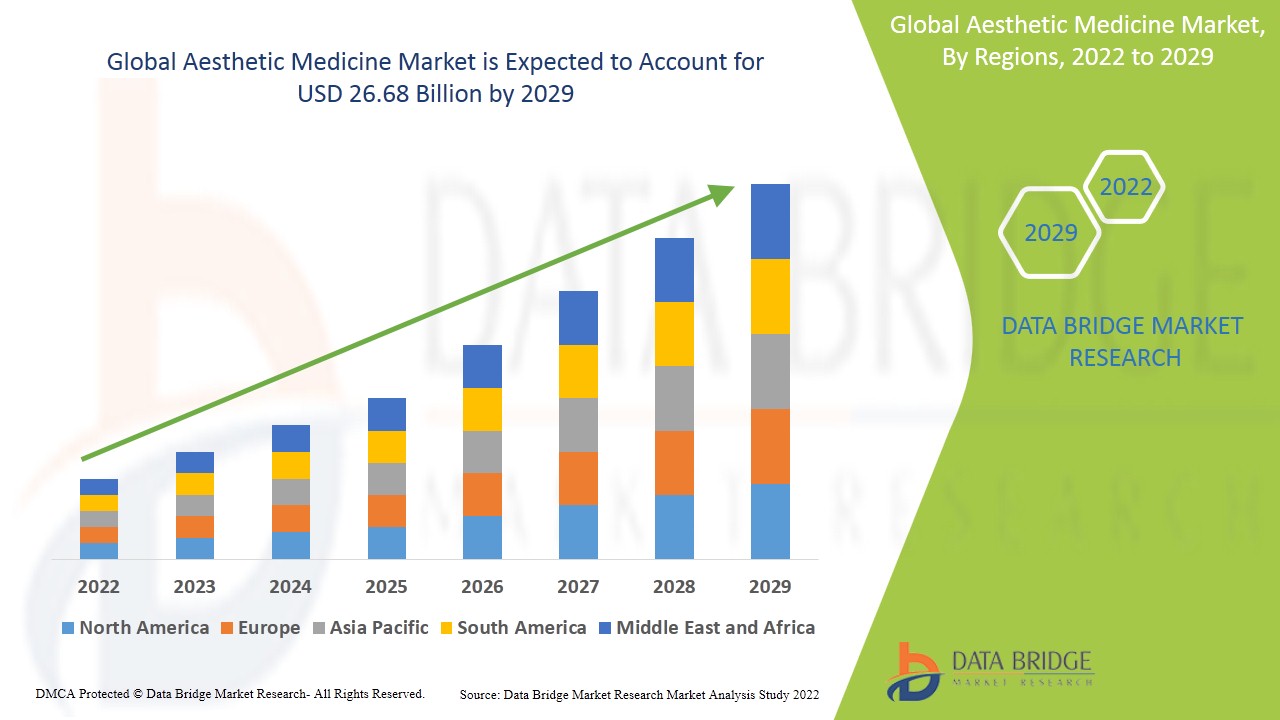
Aesthetic Medicine Market Analysis
The aesthetic medicine market has been growing steadily, driven by increasing demand for non-invasive procedures and a shift towards more accessible cosmetic treatments. This market encompasses a variety of procedures aimed at improving appearance, including both surgical and non-surgical treatments. The non-surgical segment has gained significant traction, with treatments such as Botox, dermal fillers, and laser therapy becoming widely popular due to their lower cost, shorter recovery times, and effective results.
The aesthetic medicine market includes a diverse range of products, such as energy-based devices, anti-wrinkle products, and implants, which are used to address various cosmetic concerns such as wrinkles, sagging skin, and volume loss. The demand for anti-aging treatments, in particular, continues to rise as consumers seek solutions for maintaining a youthful appearance.
Medical spas and beauty centers have become the primary end-users of aesthetic treatments, offering a range of services from skin rejuvenation to body contouring. Hospitals and clinics also play a role in providing more invasive procedures such as cosmetic surgeries. The market is characterized by rapid technological advancements, with continuous innovations leading to safer, more effective procedures. As the market continues to expand, more people are gaining access to aesthetic treatments, making them an integral part of modern healthcare and beauty routines.
Aesthetic Medicine Market Size
The aesthetic medicine market size was valued at USD 17.07 billion in 2024 and is projected to reach USD 34.87 billion by 2032, with a CAGR of 9.34% during the forecast period of 2025 to 2032. In addition to the insights on market scenarios such as market value, growth rate, segmentation, geographical coverage, and major players, the market reports curated by the Data Bridge Market Research also include depth expert analysis, patient epidemiology, pipeline analysis, pricing analysis, and regulatory framework.
Aesthetic Medicine Market Trends
"Growing Interest in Personalized Treatments”
The growing interest in personalized treatments within the aesthetic medicine market reflects a shift towards more individualized care. As patients seek results that are specifically tailored to their unique needs and preferences, aesthetic professionals are increasingly focusing on customization. This trend is driven by advancements in technology and a deeper understanding of how different skin types, facial structures, and body profiles respond to various treatments.
Personalized treatments allow for a more precise approach to cosmetic procedures. For instance, injectables such as botulinum toxin or dermal fillers can be customized to target specific areas, providing more natural-looking results. Similarly, laser treatments can be adapted to individual skin tones and conditions, ensuring optimal outcomes with minimal risk.
The trend is also influencing the consultation process, with more emphasis placed on thorough assessments of a patient's goals, lifestyle, and anatomy. This has led to the development of tools such as 3D imaging and diagnostic devices, which help professionals map out a treatment plan that is specifically suited to each individual.
Moreover, the rise in demand for personalized treatments reflects broader cultural shifts toward self-expression and individualized beauty. People are looking for treatments that enhance their natural features rather than making drastic changes, resulting in a more personalized, subtle approach to aesthetic enhancements. This trend is likely to continue growing as patients increasingly expect customized care that meets their exact needs.
Report Scope Aesthetic Medicine Market Segmentation
|
Attributes |
Aesthetic Medicine Key Market Insights |
|
Segments Covered
|
|
|
Countries Covered |
U.S., Canada and Mexico in North America, Germany, France, U.K., Netherlands, Switzerland, Belgium, Russia, Italy, Spain, Turkey, Rest of Europe in Europe, China, Japan, India, South Korea, Singapore, Malaysia, Australia, Thailand, Indonesia, Philippines, Rest of Asia-Pacific (APAC) in the Asia-Pacific (APAC), Saudi Arabia, U.A.E, South Africa, Egypt, Israel, Rest of Middle East and Africa (MEA) as a part of Middle East and Africa (MEA), Brazil, Argentina and Rest of South America as part of South America |
|
Key Market Players |
Johnson & Johnson Services, Inc. (U.S.), Galderma Laboratories, L.P. (Switzerland), Alma Lasers (Israel), AbbVie Inc. (U.S.), Lumenis Be Ltd. (Israel), Candela Corporation (U.S.), Dentsply Sirona (U.S.), Merz Pharma (Germany), Bausch Health Companies Inc. (Canada), SKIN TECH PHARMA GROUP (Spain), Obagi Cosmeceuticals LLC. (U.S.), ZO Skin Health, Inc. (U.S.), Teoxane (Switzerland), La Roche-Posay (France), Medik8 (U.K.), Abbott (U.S.) |
|
Market Opportunities |
|
|
Value Added Data Infosets |
In addition to the insights on market scenarios such as market value, growth rate, segmentation, geographical coverage, and major players, the market reports curated by the Data Bridge Market Research also include depth expert analysis, patient epidemiology, pipeline analysis, pricing analysis, and regulatory framework. |
Aesthetic Medicine Market Definition
Aesthetic medicine refers to a branch of medicine that focuses on improving a person’s appearance through non-surgical procedures. It involves a wide range of treatments designed to enhance or restore the aesthetic appearance of the skin, face, and body. These treatments can address issues such as wrinkles, fine lines, uneven skin tone, hair loss, and other age-related changes or cosmetic concerns.
Aesthetic Medicine Market Dynamics
Drivers
- Increasing Demand for Non-invasive Procedures
One of the key drivers of the aesthetic medicine market is the growing preference for non-invasive and minimally invasive cosmetic procedures. Patients are increasingly opting for treatments that offer effective results without the risks and recovery time associated with traditional surgeries. Procedures such as Botox, dermal fillers, and laser treatments provide immediate results with little to no downtime. This has led to a rise in demand across various demographics, particularly among individuals seeking to improve their appearance without the commitment and risks of surgery. The convenience, affordability, and relatively lower risk of non-invasive procedures are propelling the market forward.
- Rising Awareness of Aesthetic Treatments
With advancements in social media and marketing, there is greater awareness and acceptance of aesthetic treatments. People are more exposed to beauty trends, cosmetic treatments, and the potential benefits of enhancing their appearance through various procedures. The growing popularity of beauty influencers and celebrities who openly discuss their cosmetic procedures has helped normalize these treatments. As a result, individuals who may have previously been hesitant to seek out aesthetic procedures are becoming more comfortable, increasing the demand for aesthetic services. This greater awareness has created a broader consumer base, spanning different age groups and socio-economic classes.
Opportunities
- Technological Advancements
As technology continues to evolve, so do the options available within aesthetic medicine. The development of advanced treatment technologies, such as laser devices, robotic-assisted surgeries, and artificial intelligence-based consultation tools, provides significant opportunities for growth. These innovations enhance the precision and effectiveness of treatments, allowing practitioners to offer more customized and efficient solutions. New technologies such as high-intensity focused ultrasound (HIFU) and cryolipolysis are gaining traction for body contouring and skin tightening procedures. In addition, the integration of digital tools for patient management and consultation is creating new opportunities to improve customer experiences, further expanding the aesthetic market. Companies that invest in these technologies are likely to see increased demand as patients seek more advanced, safer, and efficient treatments.
- Growing Focus on Preventive Treatments
Preventive treatments in aesthetic medicine are becoming more popular, especially among younger individuals. People are increasingly seeking treatments that help maintain a youthful appearance and prevent signs of aging before they occur. Early intervention through Botox, dermal fillers, and other rejuvenation treatments can delay the appearance of wrinkles and sagging, leading to a broader consumer base. As more people view aesthetic treatments as part of their self-care regimen, the market is expected to experience a shift towards these preventive services, creating new growth opportunities for practitioners and manufacturers alike. Companies can leverage this trend by offering specialized products and treatments targeting early-stage cosmetic concerns.
Restraints/Challenges
- High Cost of Procedures
Despite the growing demand for aesthetic treatments, the high cost associated with many procedures remains a significant restraint in the market. Treatments such as dermal fillers, botulinum toxin injections, and laser therapies can be expensive, limiting access for many individuals, especially in developing regions or lower-income demographics. While non-invasive treatments are generally more affordable than surgical procedures, they still require significant financial investment, which may deter potential patients from seeking aesthetic services. In addition, some treatments need to be repeated regularly, leading to ongoing costs that can further discourage patients from committing to aesthetic procedures.
- Regulatory Concerns and Safety Issues
A major challenge facing the aesthetic medicine market is the regulation of procedures and products used in treatments. While aesthetic procedures are generally considered safe, complications can arise, especially when treatments are not administered by trained professionals. Instances of poor-quality products, unqualified practitioners, or unsafe procedures can lead to adverse effects, which can harm the reputation of the industry as a whole. Regulatory bodies are working to ensure that standards are met, but inconsistent regulations across different countries and regions create uncertainty for both consumers and providers. Overcoming these safety concerns and ensuring proper regulation is essential to the long-term success of the market.
This market report provides details of new recent developments, trade regulations, import-export analysis, production analysis, value chain optimization, market share, impact of domestic and localized market players, analyses opportunities in terms of emerging revenue pockets, changes in market regulations, strategic market growth analysis, market size, category market growths, application niches and dominance, product approvals, product launches, geographic expansions, technological innovations in the market. To gain more info on the market contact Data Bridge Market Research for an Analyst Brief, our team will help you take an informed market decision to achieve market growth.
Aesthetic Medicine Market Scope
The market is segmented on the basis of procedure type, product type, application, end-user, gender, and route of administration growth amongst these segments will help you analyze meagre growth segments in the industries and provide the users with a valuable market overview and market insights to help them make strategic decisions for identifying core market applications.
Procedure Type
- Invasive Procedures
- Non-invasive Procedures
Product Type
- Energy-Based Devices
- Implants
- Anti-Wrinkle Products
Application
- Surgical
- Non-Surgical
End-User
- Medical Spas and Beauty Centres
- Hospitals and Clinics
- Home Use
Gender
- Males
- Females
Route of Administration
- Oral
- Topical
Aesthetic Medicine Market Regional Analysis
The market is analysed and market size insights and trends are provided by country, procedure type, product type, application, end-user, gender, and route of administration as referenced above.
The countries covered in the market report are U.S., Canada, Mexico in North America, Germany, Sweden, Poland, Denmark, Italy, U.K., France, Spain, Netherland, Belgium, Switzerland, Turkey, Russia, Rest of Europe in Europe, Japan, China, India, South Korea, New Zealand, Vietnam, Australia, Singapore, Malaysia, Thailand, Indonesia, Philippines, Rest of Asia-Pacific (APAC) in Asia-Pacific (APAC), Brazil, Argentina, Rest of South America as a part of South America, U.A.E, Saudi Arabia, Oman, Qatar, Kuwait, South Africa, Rest of Middle East and Africa (MEA) as a part of Middle East and Africa (MEA).
North America dominates the aesthetic medicine market due to the high prevalence of cosmetic procedures and the availability of skilled professionals within the region. The demand for both non-invasive and minimally invasive aesthetic treatments, such as botulinum toxin injections, dermal fillers, and laser therapies, is particularly high in North America. The region's advanced healthcare infrastructure and a growing population seeking aesthetic enhancements have contributed to its position as the leader in the market. In addition, with increasing awareness and interest in maintaining youthful appearances, North America continues to see a steady demand for aesthetic procedures, solidifying its dominant market share.
Asia-Pacific on the other hand, is the fastest-growing market for aesthetic medicine. This growth can be attributed to a rising patient population, particularly due to the increasing rates of obesity, which is a significant risk factor for the condition. Furthermore, the region has been witnessing substantial advancements in healthcare technology, making diagnostic tools and treatment options more accessible. As countries in the Asia-Pacific region continue to improve their healthcare infrastructure, the demand for effective Aesthetic Medicine treatments is expected to surge, positioning this region as a rapidly expanding market in the coming years.
The country section of the report also provides individual market impacting factors and changes in regulation in the market domestically that impacts the current and future trends of the market. Data points such as down-stream and upstream value chain analysis, technical trends and porter's five forces analysis, case studies are some of the pointers used to forecast the market scenario for individual countries. Also, the presence and availability of global brands and their challenges faced due to large or scarce competition from local and domestic brands, impact of domestic tariffs and trade routes are considered while providing forecast analysis of the country data.
Aesthetic Medicine Market Share
The market competitive landscape provides details by competitor. Details included are company overview, company financials, revenue generated, market potential, investment in research and development, new market initiatives, global presence, production sites and facilities, production capacities, company strengths and weaknesses, product launch, product width and breadth, application dominance. The above data points provided are only related to the companies' focus related to market.
Aesthetic Medicine Market Leaders Operating in the Market Are:
- Johnson & Johnson Services, Inc. (U.S.)
- Galderma Laboratories, L.P. (Switzerland)
- Alma Lasers (Israel)
- AbbVie Inc. (U.S.)
- Lumenis Be Ltd. (Israel)
- Candela Corporation (U.S.)
- Dentsply Sirona (U.S.)
- Merz Pharma (Germany)
- Bausch Health Companies Inc. (Canada)
- SKIN TECH PHARMA GROUP (Spain)
- Obagi Cosmeceuticals LLC. (U.S.)
- ZO Skin Health, Inc. (U.S.)
- Teoxane (Switzerland)
- La Roche-Posay (France)
- Medik8 (U.K.)
- Abbott (U.S.)
Latest Developments in Aesthetic Medicine Market
- In March 2025, Galderma will present extensive updates at the American Academy of Dermatology (AAD) Annual Meeting. The company will share new data on Nemluvio (nemolizumab), demonstrating its benefits in treating prurigo nodularis and atopic dermatitis. In addition, updates will be provided on Restylane, Sculptra, and Relfydess, highlighting advancements in aesthetic treatments, including synergistic effects and long-term efficacy. These innovations aim to improve patient outcomes, offering new solutions for sensitive skin, acne, and aging skin. The updates underscore Galderma's leadership in dermatology and its continued growth in the market
- In January 2025, Allergan Aesthetics launched its new AA Signature Program at IMCAS 2025, designed to redefine patient-centric, multimodal treatment plans. This program aims to offer personalized treatment regimens by combining advanced aesthetic solutions such as BOTOX and JUVÉDERM, with a focus on enhancing results through customized approaches. The initiative is expected to improve patient satisfaction by tailoring treatments to individual needs, addressing various aesthetic concerns, and achieving natural-looking outcomes. This program underscores Allergan's commitment to innovation and enhancing patient experience in the aesthetic field
- In March 2024, AbbVie and Allergan Aesthetics will present new data at the American Academy of Dermatology (AAD) Annual Meeting. The data includes efficacy and safety results from various treatments, such as RINVOQ (upadacitinib) for atopic dermatitis, and SKYRIZI (risankizumab-rzaa) for psoriasis. AbbVie will also introduce Phase 2 data for lutikizumab (ABT-981) in hidradenitis suppurativa. Allergan Aesthetics will highlight BOTOX Cosmetic for platysma prominence and JUVÉDERM VOLUMA XC for temple hollowing. These updates aim to advance dermatology and aesthetics, offering new treatment options and improving patient outcomes
- In January 2023, Galderma presented new data at IMCAS 2023, showcasing the effectiveness and safety of its Sculptra treatment. This injectable poly-L-lactic acid (PLLA) is FDA-approved for facial rejuvenation and helps stimulate collagen production to restore fullness and firmness in the face. The results of the Sculptra Cheek Wrinkle study demonstrated long-lasting effects with significant aesthetic improvement, enhanced patient satisfaction, and improved skin quality over a 24-month period. In addition, Galderma shared positive findings from its Alluzience (abobotulinumtoxinA) phase IV STAR study, highlighting high patient satisfaction and longer-lasting effects for treating glabellar lines. These innovations aim to provide more effective, patient-centric aesthetic treatments

- Interactive Data Analysis Dashboard
- Company Analysis Dashboard for high growth potential opportunities
- Research Analyst Access for customization & queries
- Competitor Analysis with Interactive dashboard
- Latest News, Updates & Trend analysis
- Harness the Power of Benchmark Analysis for Comprehensive Competitor Tracking
Data collection and base year analysis are done using data collection modules with large sample sizes. The stage includes obtaining market information or related data through various sources and strategies. It includes examining and planning all the data acquired from the past in advance. It likewise envelops the examination of information inconsistencies seen across different information sources. The market data is analysed and estimated using market statistical and coherent models. Also, market share analysis and key trend analysis are the major success factors in the market report. To know more, please request an analyst call or drop down your inquiry.
The key research methodology used by DBMR research team is data triangulation which involves data mining, analysis of the impact of data variables on the market and primary (industry expert) validation. Data models include Vendor Positioning Grid, Market Time Line Analysis, Market Overview and Guide, Company Positioning Grid, Patent Analysis, Pricing Analysis, Company Market Share Analysis, Standards of Measurement, Global versus Regional and Vendor Share Analysis. To know more about the research methodology, drop in an inquiry to speak to our industry experts.
Data Bridge Market Research is a leader in advanced formative research. We take pride in servicing our existing and new customers with data and analysis that match and suits their goal. The report can be customized to include price trend analysis of target brands understanding the market for additional countries (ask for the list of countries), clinical trial results data, literature review, refurbished market and product base analysis. Market analysis of target competitors can be analyzed from technology-based analysis to market portfolio strategies. We can add as many competitors that you require data about in the format and data style you are looking for. Our team of analysts can also provide you data in crude raw excel files pivot tables (Fact book) or can assist you in creating presentations from the data sets available in the report.













