


Aicardi Syndrome Treatment Market Size
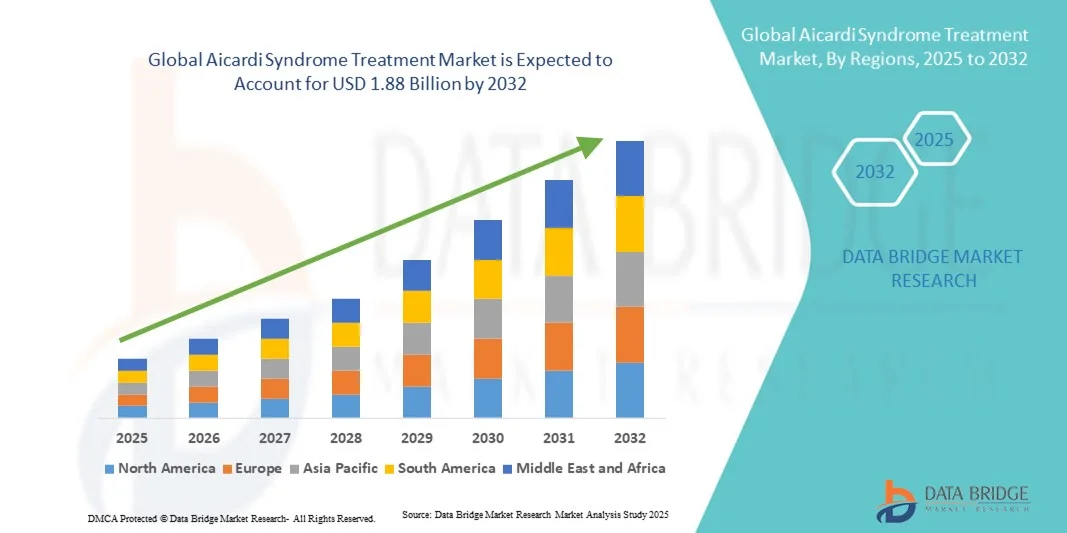
- The global Aicardi Syndrome treatment market size was valued at USD 1.40 billion in 2024 and is expected to reach USD 1.88 billion by 2032, at a CAGR of 3.80% during the forecast period
- The market growth is largely fueled by the increasing prevalence of Aicardi Syndrome, growing awareness among healthcare professionals, and advancements in therapeutic interventions and supportive care options, leading to improved diagnosis and management of the condition.
- Furthermore, rising patient demand for specialized, effective, and targeted treatment solutions is encouraging pharmaceutical and biotech companies to invest in innovative therapies. These converging factors are accelerating the adoption of advanced treatment approaches, thereby significantly boosting the industry’s growth
Aicardi Syndrome Treatment Market Analysis
- Aicardi Syndrome treatments, including advanced diagnostic tools and therapeutic interventions, are increasingly vital for early detection and effective management of this rare neurological disorder, improving patient outcomes and quality of life
- The escalating demand for Aicardi Syndrome treatments is primarily fueled by growing awareness among healthcare professionals and caregivers, advancements in genetic and imaging diagnostics, and the rising focus on personalized management strategies for related complications such as microcephaly, lymphedema, and mental retardation
- North America dominated the Aicardi Syndrome treatment market with the largest revenue share of 43% in 2024, driven by advanced healthcare infrastructure, high adoption of innovative diagnostics and therapies, and the presence of key pharmaceutical and biotech companies actively investing in novel treatments for rare disorders
- Asia-Pacific is expected to be the fastest-growing region in the Aicardi Syndrome treatment market during the forecast period, supported by increasing healthcare access, rising awareness of rare genetic disorders, and expansion of specialized pediatric care centers in urban regions
- The treatment segment dominated the market with a share of 65.3% in 2024, driven by the critical need for managing seizures, neurological symptoms, and developmental complications associated with Aicardi Syndrome, as well as the growing focus on personalized therapeutic interventions and supportive care for affected patients
Report Scope and Aicardi Syndrome Treatment Market Segmentation
|
Attributes |
Aicardi Syndrome Treatment Key Market Insights |
|
Segments Covered |
|
|
Countries Covered |
North America
Europe
Asia-Pacific
Middle East and Africa
South America
|
|
Key Market Players |
|
|
Market Opportunities |
|
|
Value Added Data Infosets |
In addition to the insights on market scenarios such as market value, growth rate, segmentation, geographical coverage, and major players, the market reports curated by the Data Bridge Market Research also include in-depth expert analysis, pricing analysis, brand share analysis, consumer survey, demography analysis, supply chain analysis, value chain analysis, raw material/consumables overview, vendor selection criteria, PESTLE Analysis, Porter Analysis, and regulatory framework. |
Aicardi Syndrome Treatment Market Trends
Advancements in Genetic and Targeted Therapies
- A significant and accelerating trend in the global Aicardi Syndrome treatment market is the development of gene-based and targeted therapeutic interventions, significantly enhancing patient outcomes and quality of life
- For instance, emerging therapies such as antisense oligonucleotides and small molecule modulators are being investigated to address specific genetic mutations associated with Aicardi Syndrome
- Advances in precision medicine allow treatments to be tailored to individual patient profiles, enabling more effective management of seizures, motor impairments, and neurological complications
- The integration of novel diagnostic biomarkers with treatment planning facilitates early intervention and more personalized care, improving prognosis and patient monitoring
- This trend towards innovative, gene-focused, and patient-specific therapies is reshaping expectations for Aicardi Syndrome care. Consequently, companies are investing in pipeline therapies targeting underlying genetic causes
- The demand for advanced therapeutic solutions is growing rapidly across pediatric neurology centers and specialized hospitals, as caregivers increasingly seek treatments that improve long-term developmental outcomes
- Telemedicine and digital health platforms are being increasingly integrated for remote patient monitoring and therapy adherence, creating new avenues for treatment delivery and follow-up care. Collaborations between biotech firms and academic research institutions are accelerating clinical trials and development of novel treatment modalities, expanding the market’s innovation landscape
Aicardi Syndrome Treatment Market Dynamics
Driver
Rising Awareness and Increasing Diagnosis Rates
- The increasing awareness of Aicardi Syndrome among healthcare professionals and caregivers, coupled with advancements in diagnostic techniques, is a significant driver of heightened demand for treatments
- For instance, in March 2024, a leading pediatric neurology institute announced the implementation of next-generation genetic screening programs for early detection of rare disorders including Aicardi Syndrome
- As early diagnosis improves, patients can receive timely therapeutic interventions, mitigating severe neurological and developmental complications
- Furthermore, growing recognition of rare genetic disorders by medical societies and advocacy groups is promoting the adoption of treatment protocols and specialized care centers
- The rising prevalence of rare neurological disorders, combined with parental demand for effective treatment strategies, is driving the expansion of clinical services and therapeutic research
- Increased government funding and incentives for rare disease research and orphan drug development are supporting market growth and innovation
- Awareness campaigns by non-profit organizations and patient advocacy groups are facilitating early diagnosis and better patient support, thereby increasing the adoption of treatment services
Restraint/Challenge
High Treatment Costs and Limited Specialized Centers
- The high cost of advanced treatments and limited availability of specialized pediatric neurology centers pose significant challenges to broader market penetration
- For instance, patients in developing regions often face difficulty accessing targeted therapies due to financial constraints and scarce specialist resources
- Limited insurance coverage for rare disease treatments further restricts patient access, while the complexity of managing neurological and developmental symptoms increases the burden on healthcare providers
- Developing cost-effective therapeutic solutions and expanding specialized care networks is crucial to improving market accessibility and treatment adoption
- Addressing these challenges through healthcare policy support, patient assistance programs, and increased funding for rare disease research will be vital for sustained market growth
- Variability in clinical outcomes due to heterogeneity in patient conditions can hinder standardized treatment adoption and increase reliance on personalized care protocols
- Lack of trained healthcare professionals specializing in rare neurological disorders remains a key constraint, affecting both diagnosis and long-term treatment management
Aicardi Syndrome Treatment Market Scope
The market is segmented on the basis of type, related disorders, population, end-users, and distribution channels.
- By Type
On the basis of type, the Aicardi Syndrome treatment market is segmented into diagnosis and treatment. The treatment segment dominated the market with the largest market revenue share of 65.3% in 2024, driven by the critical need to manage seizures, neurological symptoms, and developmental complications associated with the disorder. Patients require ongoing therapeutic interventions, including anti-epileptic medications, supportive therapies, and physiotherapy, making treatment the primary revenue contributor. Hospitals and specialty clinics increasingly adopt structured treatment protocols, enhancing the segment’s market dominance. In addition, caregiver demand for improved patient outcomes and quality of life further fuels growth. The segment benefits from continuous R&D investment in targeted therapies and gene-based interventions. Pharmaceutical and biotech companies focus on pipeline therapies for rare disorders, reinforcing the treatment segment’s leading position.
The diagnostic segment is expected to witness the fastest CAGR from 2025 to 2032, driven by advances in genetic testing, neuroimaging, and early detection technologies. Early diagnosis allows timely intervention, improving patient outcomes and enabling personalized treatment plans. Growing awareness among pediatricians and neurologists is accelerating adoption of diagnostic tools. The segment also benefits from increasing screening programs and rare disease registries, supporting faster patient identification. Improved accessibility of advanced diagnostic centers in urban regions is contributing to rapid market expansion. Furthermore, integration with telemedicine platforms allows remote monitoring and consultation, enhancing the segment’s growth potential.
- By Related Disorders
On the basis of related disorders, the market is segmented into microcephaly, lymphedema, mental retardation, and others. The microcephaly segment dominated the market in 2024, driven by its high prevalence in Aicardi Syndrome patients and the severe developmental challenges it presents. Management of microcephaly-related symptoms requires continuous clinical monitoring, therapeutic support, and parental guidance, which fuels demand for specialized treatments. Treatment protocols often include physiotherapy, speech therapy, and seizure management, contributing to the segment’s dominance. Hospitals and specialty clinics prioritize microcephaly care due to its complexity, ensuring consistent revenue streams. Advancements in early neurodevelopmental screening also support the segment’s leading position. Clinical research focusing on microcephaly-associated neurological deficits further reinforces its dominance.
The mental retardation segment is expected to witness the fastest growth during the forecast period, driven by increasing awareness of cognitive impairments in Aicardi Syndrome. Early intervention programs, cognitive therapy, and educational support systems are increasingly implemented in specialized centers. Caregivers are seeking structured management plans to improve patient independence and social development. Technological integration in therapy, such as digital learning tools and tele-rehabilitation, supports segment growth. The rising focus on comprehensive care, including both medical and educational support, further accelerates adoption. Government and NGO initiatives promoting awareness of cognitive disabilities enhance the segment’s expansion prospects.
- By Population
On the basis of population, the market is segmented into female and male. The female segment dominated the market with a share of 88% in 2024, as Aicardi Syndrome occurs almost exclusively in females due to its X-linked dominant inheritance pattern. This high prevalence drives consistent demand for specialized treatment and monitoring services. Female patients require a combination of therapeutic interventions, seizure management, and supportive care, making them the primary focus for healthcare providers. Hospitals, specialty clinics, and pediatric neurology centers prioritize female patient care due to the disorder’s severity. Increased funding for rare genetic disorders predominantly affecting females further strengthens the segment. Clinical research efforts targeting female-specific disease manifestations also contribute to its market dominance.
The male segment is expected to witness steady growth, primarily due to rare cases of mosaicism or atypical presentations. Though fewer in number, male patients require tailored care plans and supportive therapies, creating a niche demand. Awareness among clinicians regarding atypical male cases is improving early diagnosis and treatment. The development of personalized treatment protocols and monitoring strategies supports segment expansion. Telemedicine adoption and caregiver training programs also aid in managing male patients effectively. The segment benefits from ongoing research into the genetic mechanisms that occasionally allow male survival.
- By End-Users
On the basis of end-users, the market is segmented into hospitals, specialty clinics, home healthcare, and others. The hospitals segment dominated the market in 2024, driven by their comprehensive infrastructure, availability of pediatric neurology specialists, and access to advanced diagnostic and treatment facilities. Hospitals provide multidisciplinary care including seizure management, physiotherapy, and genetic counseling, making them the primary revenue contributor. They are preferred by caregivers for their ability to manage complex cases and provide continuous monitoring. High patient inflow and established treatment protocols ensure consistent demand. Partnerships with pharmaceutical and biotech firms also support the hospitals segment by enabling access to innovative therapies. Furthermore, hospitals often participate in clinical trials, further consolidating their dominant position.
The home healthcare segment is expected to witness the fastest growth from 2025 to 2032, fueled by increasing caregiver preference for at-home supportive care and remote monitoring solutions. Home-based care allows patients to receive physiotherapy, seizure observation, and developmental support in familiar environments. The segment benefits from telemedicine platforms, mobile health devices, and digital monitoring tools, enhancing treatment adherence. Rising awareness about the benefits of home healthcare and reduced hospitalization costs are driving adoption. Home care services also provide personalized interventions, improving quality of life for patients and families. Expansion of professional home healthcare providers in urban and semi-urban regions supports rapid growth.
- By Distribution Channels
On the basis of distribution channels, the market is segmented into direct tender, hospital pharmacy, retail pharmacy, online pharmacy, and others. The hospital pharmacy segment dominated the market in 2024, driven by direct access to prescribed medications and therapies required for managing Aicardi Syndrome. Hospitals ensure reliable supply chains, adherence to treatment protocols, and monitoring of therapy outcomes, making hospital pharmacies the primary revenue contributor. They also facilitate access to specialized and orphan drugs that may not be widely available elsewhere. Integration with hospital care services ensures timely and accurate dispensing of medications. Partnerships with pharmaceutical companies further strengthen this channel. The established trust and convenience associated with hospital pharmacies consolidate their dominant position.
The online pharmacy segment is expected to witness the fastest growth during the forecast period, fueled by increasing e-commerce adoption and demand for home delivery of rare disease medications. Online pharmacies provide convenient access to specialized drugs that may be limited in local stores. They also support subscription-based delivery models and patient assistance programs, ensuring continuous treatment adherence. Telehealth integration allows prescriptions to be seamlessly managed online, improving patient convenience. Expansion of digital platforms and regulatory support for online drug distribution further accelerates adoption. This channel is increasingly preferred by caregivers in remote or underserved regions for timely access to therapies.
Aicardi Syndrome Treatment Market Regional Analysis
- North America dominated the Aicardi Syndrome treatment market with the largest revenue share of 43% in 2024, driven by advanced healthcare infrastructure, high adoption of innovative diagnostics and therapies, and the presence of key pharmaceutical and biotech companies actively investing in novel treatments for rare disorders
- Patients and caregivers in the region benefit from widespread availability of advanced diagnostic tools, specialized treatment centers, and multidisciplinary care programs, ensuring timely intervention and improved outcomes
- This dominance is further supported by high healthcare spending, a technologically advanced medical ecosystem, and strong presence of key pharmaceutical and biotech companies developing innovative therapies, establishing North America as the leading market for Aicardi Syndrome treatment in both clinical and research settings
U.S. Aicardi Syndrome Treatment Market Insight
The U.S. Aicardi Syndrome treatment market captured the largest revenue share of 82% in 2024 within North America, fueled by advanced healthcare infrastructure, widespread adoption of specialized pediatric neurology services, and high awareness among caregivers. Patients increasingly prioritize early diagnosis and access to comprehensive treatment plans for seizures, developmental delays, and neurological complications. The growing availability of clinical trials, gene-based therapies, and multidisciplinary care programs further propels the market. Moreover, the integration of telemedicine and digital health platforms for remote monitoring is significantly contributing to market expansion. Robust insurance coverage for rare disease treatments and strong government support enhance adoption across hospitals and specialty clinics.
Europe Aicardi Syndrome Treatment Market Insight
The Europe Aicardi Syndrome treatment market is projected to expand at a substantial CAGR throughout the forecast period, primarily driven by increasing awareness of rare genetic disorders and the availability of advanced diagnostic and treatment services. Urbanization, rising healthcare expenditure, and the demand for specialized pediatric care are fostering market adoption. European patients and caregivers are drawn to early intervention programs and multidisciplinary treatment approaches. The region is experiencing significant growth across hospitals and specialty clinics, with services being incorporated into both new pediatric care centers and rehabilitation facilities. Increasing support from rare disease advocacy groups further accelerates market growth.
U.K. Aicardi Syndrome Treatment Market Insight
The U.K. Aicardi Syndrome treatment market is anticipated to grow at a noteworthy CAGR during the forecast period, driven by the increasing adoption of specialized neurological care and the demand for comprehensive treatment solutions. In addition, growing awareness of rare diseases and government initiatives supporting orphan drug development encourage patients and caregivers to seek early diagnosis and targeted therapies. The U.K.’s well-developed healthcare infrastructure and strong research ecosystem are expected to continue stimulating market growth. Telehealth adoption and integration of digital patient monitoring further enhance accessibility and treatment adherence.
Germany Aicardi Syndrome Treatment Market Insight
The Germany Aicardi Syndrome treatment market is expected to expand at a considerable CAGR during the forecast period, fueled by rising awareness of rare neurological disorders and the demand for innovative treatment approaches. Germany’s well-established healthcare system and emphasis on clinical research promote the adoption of advanced diagnostics and therapies. Hospitals and specialty clinics prioritize early detection, personalized treatment plans, and multidisciplinary care. The integration of genetic testing, neuroimaging, and supportive therapies is increasingly prevalent, aligning with patient and caregiver expectations. Strong collaborations between academic institutions and biotech companies further drive market growth.
Asia-Pacific Aicardi Syndrome Treatment Market Insight
The Asia-Pacific Aicardi Syndrome treatment market is poised to grow at the fastest CAGR of 25% during 2025–2032, driven by increasing urbanization, rising healthcare access, and technological advancements in countries such as China, Japan, and India. The growing awareness of rare genetic disorders and expansion of pediatric neurology centers is driving adoption. In addition, government initiatives supporting rare disease diagnosis, treatment, and research are creating a favorable market environment. Improved affordability of diagnostic and therapeutic solutions, combined with rising caregiver awareness, further fuels growth. Expansion of telemedicine services and digital health platforms enhances patient monitoring and therapy adherence.
Japan Aicardi Syndrome Treatment Market Insight
The Japan Aicardi Syndrome treatment market is gaining momentum due to the country’s advanced healthcare system, high awareness of rare disorders, and demand for early diagnosis and personalized therapy. Patients and caregivers increasingly prefer specialized pediatric neurology centers offering multidisciplinary care. Integration of genetic testing, neuroimaging, and targeted therapeutic interventions is fueling growth. Japan’s aging population further increases the demand for accessible and effective treatment solutions. Clinical research initiatives and ongoing collaborations between hospitals and biotech firms enhance treatment innovation. Moreover, government support for rare disease programs accelerates adoption across residential and hospital settings.
India Aicardi Syndrome Treatment Market Insight
The India Aicardi Syndrome treatment market accounted for the largest market revenue share in Asia-Pacific in 2024, attributed to rapid urbanization, growing healthcare infrastructure, and increasing awareness among caregivers. India is witnessing expansion in specialized pediatric neurology centers and early diagnosis programs. Rising adoption of digital health platforms and telemedicine supports monitoring and treatment adherence. The availability of affordable diagnostic and therapeutic solutions, combined with government programs promoting rare disease care, is propelling market growth. Strong domestic healthcare providers and increasing caregiver awareness further enhance accessibility. The market is experiencing significant growth across hospitals, specialty clinics, and urban healthcare centers.
Aicardi Syndrome Treatment Market Share
The Aicardi Syndrome Treatment industry is primarily led by well-established companies, including:
- Pfizer Inc. (U.S.)
- Novartis AG (Switzerland)
- UCB S.A., (Belgium)
- Johnson & Johnson Services, Inc. (U.S.)
- GSK plc (U.K.)
- Sanofi (France)
- Lundbeck A/S (Denmark)
- Eisai Co., Ltd. (Japan)
- Teva Pharmaceuticals (Israel)
- Zogenix, Inc. (U.S.)
- AbbVie Inc. (U.S.
- GW Pharmaceuticals (U.K.)
- Biogen Inc. (U.S.)
- Marinus Pharmaceuticals, Inc. (U.S.)
- Gilead Sciences, Inc. (U.S.)
- Eli Lilly and Company (U.S.)
- Koninklijke Philips N.V. (Netherlands)
- CANON MEDICAL SYSTEMS CORPORATION (Netherlands)
- SOM Biotech (Spain)
What are the Recent Developments in Global Aicardi Syndrome Treatment Market?
- In March 2025, researchers from the Institute for Maternal and Child Health in Trieste, Italy, published a study in Frontiers in Pharmacology evaluating pharmacological therapies for Aicardi-Goutières Syndrome (AGS) using patient-derived neural stem cells. The study assessed the efficacy of various drug candidates in modulating the overactive immune response characteristic of AGS. Findings from this research contribute to the development of targeted therapies aimed at reducing neuroinflammation and neuronal damage in AGS patients
- In November 2024, ImmuneSensor Therapeutics announced that the U.S. Food and Drug Administration (FDA) granted both Orphan Drug Designation (ODD) and Rare Pediatric Disease Designation (RPDD) for their lead anti-inflammatory and autoimmunity drug candidate, IMSB301, for the treatment of Aicardi-Goutières Syndrome (AGS). IMSB301 is a novel, orally available small molecule cGAS inhibitor currently undergoing Phase 1 clinical trials in healthy volunteers
- In September 2024, a study published in Neurosurgical Review highlighted the transformative potential of artificial intelligence (AI) in managing Aicardi Syndrome. Researchers demonstrated that AI algorithms could analyze neuroimaging data to identify characteristic features of the syndrome, such as corpus callosum agenesis and chorioretinal lacunae. This capability allows for earlier and more accurate diagnosis, facilitating personalized surgical planning and improving patient outcomes
- In April 2024, researchers from the University of Sydney announced a breakthrough in treating Aicardi-Goutières Syndrome (AGS). Their study introduced an RNA-targeted therapy using antisense oligonucleotides to inhibit the interferon alpha receptor. This approach effectively reduced neuroinflammation and neuronal damage in mouse models, restoring blood-brain barrier integrity
- In May 2023, the Aicardi-Goutières Syndrome Advocacy Association announced the development of the AGS ECHO program. This initiative aims to democratize knowledge and expertise for caring for individuals affected by AGS, thereby improving clinical outcomes through enhanced provider education

- Interactive Data Analysis Dashboard
- Company Analysis Dashboard for high growth potential opportunities
- Research Analyst Access for customization & queries
- Competitor Analysis with Interactive dashboard
- Latest News, Updates & Trend analysis
- Harness the Power of Benchmark Analysis for Comprehensive Competitor Tracking
Data collection and base year analysis are done using data collection modules with large sample sizes. The stage includes obtaining market information or related data through various sources and strategies. It includes examining and planning all the data acquired from the past in advance. It likewise envelops the examination of information inconsistencies seen across different information sources. The market data is analysed and estimated using market statistical and coherent models. Also, market share analysis and key trend analysis are the major success factors in the market report. To know more, please request an analyst call or drop down your inquiry.
The key research methodology used by DBMR research team is data triangulation which involves data mining, analysis of the impact of data variables on the market and primary (industry expert) validation. Data models include Vendor Positioning Grid, Market Time Line Analysis, Market Overview and Guide, Company Positioning Grid, Patent Analysis, Pricing Analysis, Company Market Share Analysis, Standards of Measurement, Global versus Regional and Vendor Share Analysis. To know more about the research methodology, drop in an inquiry to speak to our industry experts.
Data Bridge Market Research is a leader in advanced formative research. We take pride in servicing our existing and new customers with data and analysis that match and suits their goal. The report can be customized to include price trend analysis of target brands understanding the market for additional countries (ask for the list of countries), clinical trial results data, literature review, refurbished market and product base analysis. Market analysis of target competitors can be analyzed from technology-based analysis to market portfolio strategies. We can add as many competitors that you require data about in the format and data style you are looking for. Our team of analysts can also provide you data in crude raw excel files pivot tables (Fact book) or can assist you in creating presentations from the data sets available in the report.












