


Aminosalicylates Market Size
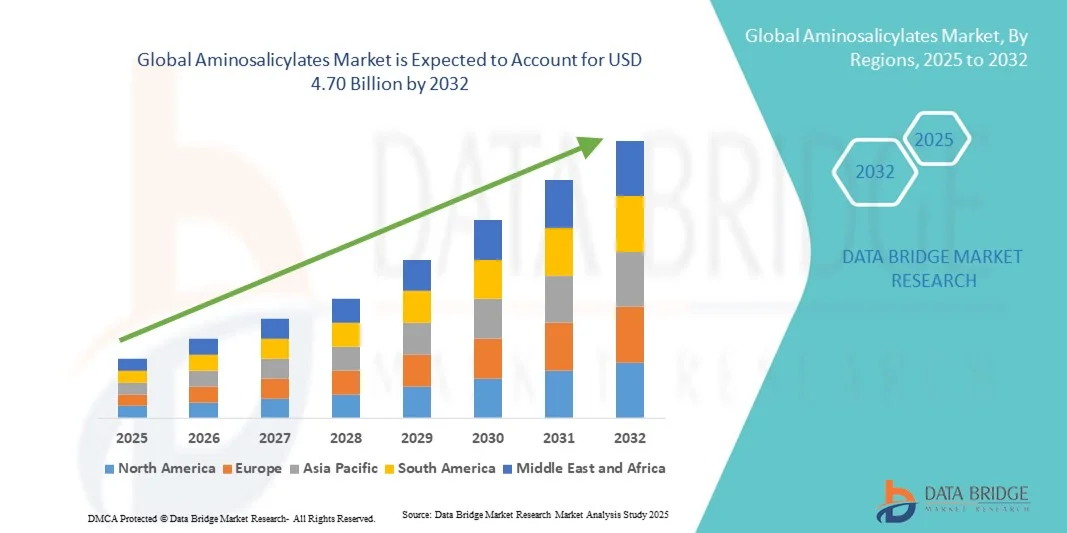
- The global aminosalicylates market size was valued at USD 2.80 billion in 2024 and is expected to reach USD 4.70 billion by 2032, at a CAGR of 6.70% during the forecast period
- The market growth is largely fueled by the rising prevalence of inflammatory bowel diseases (IBD) such as ulcerative colitis and Crohn’s disease, along with increasing awareness and early diagnosis of gastrointestinal disorders
- Furthermore, growing adoption of advanced formulations and patient-friendly delivery systems, coupled with the demand for effective long-term therapies, is positioning aminosalicylates as a preferred treatment option. These factors are collectively driving market expansion, thereby significantly enhancing the industry’s growth
Aminosalicylates Market Analysis
- Aminosalicylates, offering anti-inflammatory therapy primarily for inflammatory bowel diseases (IBD) and arthritis, are increasingly vital components of modern gastrointestinal and autoimmune disease management due to their targeted action, improved formulations, and patient-friendly treatment options
- The escalating demand for aminosalicylates is primarily fueled by the rising prevalence of IBD and arthritis, increasing awareness and early diagnosis of chronic inflammatory disorders, and a growing preference for effective long-term therapies
- North America dominated the aminosalicylates market with the largest revenue share of 42.5% in 2024, characterized by high healthcare spending, advanced healthcare infrastructure, and a strong presence of key pharmaceutical players, with the U.S. experiencing substantial growth in prescriptions and adoption of newer molecule types, driven by innovations in Mesalamine and Sulfasalazine formulations
- Asia-Pacific is expected to be the fastest growing region in the aminosalicylates market during the forecast period due to increasing prevalence of chronic inflammatory disorders, expanding healthcare access, and rising disposable incomes, coupled with growing awareness about effective disease management
- Mesalamine segment dominated the aminosalicylates market with a market share of 45.6% in 2024, driven by its proven efficacy in IBD management, safety profile, and widespread adoption across outpatient and hospital settings
Report Scope and Aminosalicylates Market Segmentation
|
Attributes |
Aminosalicylates Key Market Insights |
|
Segments Covered |
|
|
Countries Covered |
North America
Europe
Asia-Pacific
Middle East and Africa
South America
|
|
Key Market Players |
|
|
Market Opportunities |
|
|
Value Added Data Infosets |
In addition to the insights on market scenarios such as market value, growth rate, segmentation, geographical coverage, and major players, the market reports curated by the Data Bridge Market Research also include in-depth expert analysis, patient epidemiology, pipeline analysis, pricing analysis, and regulatory framework |
Aminosalicylates Market Trends
Emergence of Targeted and Extended-Release Formulations
- A significant and accelerating trend in the global aminosalicylates market is the development of targeted and extended-release formulations, which enhance drug delivery to inflamed regions of the gastrointestinal tract while minimizing systemic side effects
- For instance, Lialda (Mesalamine) utilizes multi-matrix technology to deliver the drug directly to the colon, improving patient compliance and treatment outcomes compared to conventional oral formulations
- Extended-release and delayed-release formulations also enable once-daily dosing, reducing pill burden for patients and supporting long-term maintenance therapy in inflammatory bowel disease (IBD). Furthermore, targeted delivery systems can improve efficacy for refractory or difficult-to-treat cases, enhancing overall patient adherence
- The seamless integration of these advanced formulations with existing treatment protocols facilitates personalized therapy, allowing physicians to optimize dosing regimens based on disease severity and patient-specific needs
- This trend towards more patient-friendly, targeted, and effective aminosalicylate therapies is fundamentally reshaping treatment expectations in IBD and arthritis management. Consequently, companies such as Shire and Pfizer are developing innovative Mesalamine and Olsalazine formulations with improved gastrointestinal targeting and sustained-release profiles
- The demand for such advanced formulations is growing rapidly across both hospital and outpatient settings, as patients and healthcare providers increasingly prioritize efficacy, safety, and ease of adherence
Aminosalicylates Market Dynamics
Driver
Rising Prevalence of Inflammatory Bowel Disease and Arthritis
- The increasing incidence of IBD and arthritis globally, coupled with improved disease awareness, is a significant driver for the heightened demand for aminosalicylates
- For instance, in March 2024, Pfizer reported increased Mesalamine prescriptions in North America, targeting both newly diagnosed IBD patients and those requiring long-term maintenance therapy. Such initiatives by leading pharmaceutical companies are expected to drive market growth in the forecast period
- As patients seek effective long-term management options, aminosalicylates provide targeted anti-inflammatory action, reducing relapse rates and improving quality of life compared to non-specific treatments
- Furthermore, the rising adoption of combination therapies and physician preference for well-established molecules such as Mesalamine and Sulfasalazine are making aminosalicylates the first-line therapy in IBD management
- Ease of administration, improved safety profile, and widespread availability across hospitals and retail pharmacies are key factors propelling the adoption of aminosalicylates in both developed and emerging markets. The growing trend of patient education and awareness campaigns further contributes to sustained market growth
- Increasing government initiatives and reimbursement programs to improve access to IBD and arthritis medications are supporting broader patient adoption and market expansion
- Growing investments in clinical research and development for novel aminosalicylate formulations and drug delivery technologies are stimulating innovation and attracting new market entrants
Restraint/Challenge
Adverse Effects and Regulatory Compliance Hurdles
- Concerns surrounding potential adverse effects, including gastrointestinal discomfort and rare hypersensitivity reactions, pose a significant challenge to broader market penetration. As aminosalicylates require adherence over long periods, side effects can reduce patient compliance and affect treatment outcomes
- For instance, post-marketing reports of rare nephrotoxicity with long-term Mesalamine therapy have made some clinicians cautious in prescribing high doses, impacting market growth in certain regions
- Addressing these safety concerns through clinical monitoring, patient counseling, and development of safer formulations is crucial for building physician and patient confidence. Companies such as Shire and Ferring emphasize safety data and patient support programs to reassure prescribers and patients. Additionally, stringent regulatory requirements for drug approval, especially for new formulations or combination therapies, can delay market entry and increase development costs
- While newer formulations aim to reduce adverse effects, perceived safety risks may still hinder adoption, particularly in pediatric or elderly populations
- Overcoming these challenges through enhanced clinical evidence, regulatory compliance, and patient education will be vital for sustained market growth in the global aminosalicylates sector
- Limited awareness and education about proper long-term use of aminosalicylates among patients in emerging markets can result in suboptimal adherence and lower treatment efficacy
Aminosalicylates Market Scope
The market is segmented on the basis of molecule type, disease type, and distribution channel.
- By Molecule Type
On the basis of molecule type, the aminosalicylates market is segmented into Mesalamine, Sulfasalazine, Balsalazide, and Olsalazine. The Mesalamine segment dominated the market with the largest revenue share of 45.6% in 2024, driven by its established efficacy and safety profile for treating inflammatory bowel disease (IBD). Physicians prefer Mesalamine due to its targeted anti-inflammatory action in the colon, minimizing systemic side effects and improving patient compliance. The segment also benefits from a wide range of formulations, including oral, delayed-release, and rectal options, making it versatile for various patient needs. Increasing patient awareness and insurance coverage in North America and Europe further reinforce its dominance. Mesalamine is widely adopted in both outpatient and hospital settings, and its proven clinical benefits over other molecules make it the preferred first-line therapy. The availability of generic versions has also improved affordability, expanding its reach in emerging markets.
The Balsalazide segment is anticipated to witness the fastest growth rate of 14.8% from 2025 to 2032, driven by its targeted delivery mechanism and increasing adoption in newly diagnosed IBD patients seeking maintenance therapy. Balsalazide’s prodrug formulation allows it to release Mesalamine directly in the colon, reducing side effects and enhancing efficacy. Growing clinical studies supporting its benefits and increasing patient preference for once-daily dosing contribute to market expansion. Rising awareness campaigns and physician recommendations in Asia-Pacific and Latin America are further boosting adoption. Additionally, new formulations with improved gastrointestinal tolerability are helping Balsalazide penetrate previously underserved patient segments.
- By Disease Type
On the basis of disease type, the market is segmented into inflammatory bowel disease (IBD) and arthritis. The IBD segment dominated the market with the largest revenue share of 61.2% in 2024, fueled by the rising prevalence of ulcerative colitis and Crohn’s disease globally. Aminosalicylates are considered a cornerstone therapy for IBD, particularly in long-term maintenance to prevent relapses. Increasing awareness, early diagnosis, and treatment adherence programs have contributed to stronger adoption. The segment also benefits from a high level of research focus, which has led to improved formulations and targeted therapies. Hospitals and specialty clinics are increasingly prescribing aminosalicylates as first-line therapy, further cementing its dominance. The growing geriatric population with a higher risk of IBD complications is also positively influencing demand.
The arthritis segment is expected to witness the fastest growth rate of 12.9% from 2025 to 2032, driven by increasing recognition of aminosalicylates for certain autoimmune arthritis subtypes and the exploration of new therapeutic combinations. Rising prevalence of autoimmune disorders and ongoing clinical trials for efficacy in arthritis management support market growth. Physician recommendations and patient interest in safer long-term therapy options are also contributing factors. Expanding healthcare infrastructure and insurance coverage in emerging markets are accelerating access to aminosalicylate treatments for arthritis patients. Additionally, growing patient awareness about disease-modifying benefits is increasing adoption rates.
- By Distribution Channel
On the basis of distribution channel, the market is segmented into retail pharmacies, hospital pharmacies, and online pharmacies. The retail pharmacies segment dominated the market with the largest revenue share of 50.3% in 2024, due to wide accessibility, established pharmacy networks, and high patient trust. Retail pharmacies allow convenient repeat purchases for maintenance therapy and provide pharmacists’ guidance on proper dosage and side effect management. Availability of both branded and generic aminosalicylates enhances affordability and strengthens market penetration. The segment benefits from strong urban presence and patient familiarity, particularly in North America and Europe. Loyalty programs, OTC counseling, and localized promotions further drive sales through retail channels. Patient preference for immediate access and personalized support contributes to its sustained dominance.
The online pharmacies segment is anticipated to witness the fastest CAGR of 18.4% from 2025 to 2032, fueled by rising e-commerce adoption, telemedicine integration, and growing preference for home delivery of prescription medications. Online pharmacies provide convenience for chronic patients who require repeat prescriptions without frequent visits to physical stores. Increasing smartphone penetration and digital payment adoption in emerging markets are accelerating this trend. E-prescription services and subscription models for long-term therapy further support market growth. The COVID-19 pandemic has also accelerated adoption of online channels for chronic disease management, providing a lasting shift in patient behavior.
Aminosalicylates Market Regional Analysis
- North America dominated the aminosalicylates market with the largest revenue share of 42.5% in 2024, characterized by high healthcare spending, advanced healthcare infrastructure, and a strong presence of key pharmaceutical players
- Patients and healthcare providers in the region highly value the efficacy, safety, and targeted delivery offered by aminosalicylates, along with a wide range of oral and rectal formulations for personalized treatment plans
- This widespread adoption is further supported by advanced healthcare infrastructure, high healthcare spending, and strong presence of key pharmaceutical companies, establishing aminosalicylates as a preferred therapy for both outpatient and hospital settings
U.S. Aminosalicylates Market Insight
The U.S. aminosalicylates market captured the largest revenue share of 78% in 2024 within North America, fueled by the rising prevalence of inflammatory bowel disease (IBD) and arthritis, along with growing awareness of early diagnosis and long-term disease management. Patients and healthcare providers are increasingly prioritizing therapies that offer targeted anti-inflammatory action with minimal side effects. The growing preference for oral delayed-release and targeted Mesalamine formulations, combined with high insurance coverage and well-established pharmaceutical distribution networks, further propels the market. Moreover, ongoing clinical studies and innovative drug delivery systems are significantly contributing to market expansion.
Europe Aminosalicylates Market Insight
The Europe aminosalicylates market is projected to expand at a substantial CAGR throughout the forecast period, primarily driven by rising IBD prevalence, increasing arthritis cases, and strong healthcare infrastructure. The adoption of advanced formulations and personalized treatment plans is fostering market growth. European patients are also drawn to therapies that offer long-term disease management, fewer side effects, and ease of adherence. The region is experiencing significant growth across hospitals, specialty clinics, and retail pharmacy networks, with aminosalicylates being incorporated into both new therapeutic protocols and updated treatment guidelines.
U.K. Aminosalicylates Market Insight
The U.K. aminosalicylates market is anticipated to grow at a noteworthy CAGR during the forecast period, driven by increasing awareness of IBD and arthritis, as well as the adoption of maintenance therapy for chronic management. Additionally, patient and physician focus on efficacy, safety, and targeted drug delivery is encouraging wider use of oral and rectal formulations. The U.K.’s well-developed healthcare infrastructure and strong pharmacy network, alongside growing e-prescription adoption, are expected to continue to stimulate market growth.
Germany Aminosalicylates Market Insight
The Germany aminosalicylates market is expected to expand at a considerable CAGR during the forecast period, fueled by increasing IBD prevalence, awareness of chronic disease management, and government support for healthcare access. Germany’s advanced healthcare infrastructure, coupled with a focus on clinical innovation and evidence-based treatment, promotes the adoption of advanced Mesalamine and Sulfasalazine formulations. The integration of personalized treatment plans and monitoring programs is also becoming increasingly prevalent, with strong patient preference for safe and effective therapies aligning with local medical guidelines.
Asia-Pacific Aminosalicylates Market Insight
The Asia-Pacific aminosalicylates market is poised to grow at the fastest CAGR of 22% during the forecast period of 2025 to 2032, driven by increasing prevalence of IBD and arthritis, rising disposable incomes, and expanding healthcare infrastructure in countries such as China, Japan, and India. The region's growing awareness about chronic disease management, supported by government health initiatives, is driving the adoption of aminosalicylates. Furthermore, as APAC expands access to advanced formulations and generics, affordability and availability of these therapies are increasing, reaching a wider patient base.
Japan Aminosalicylates Market Insight
The Japan aminosalicylates market is gaining momentum due to the country’s high awareness of gastrointestinal health, aging population, and demand for effective long-term therapies. The Japanese market emphasizes disease prevention and management, and the adoption of aminosalicylates is driven by increasing IBD diagnoses and hospital-based treatment protocols. Integration with clinical monitoring programs and personalized care plans is fueling growth. Moreover, Japan's focus on improving quality of life for elderly patients is such asly to spur demand for safer, easier-to-administer drug formulations in both outpatient and hospital settings.
India Aminosalicylates Market Insight
The India aminosalicylates market accounted for the largest market revenue share in Asia-Pacific in 2024, attributed to the country's rising IBD and arthritis cases, expanding middle class, and growing healthcare access. India stands as one of the fastest-growing markets for chronic disease management, and aminosalicylates are becoming increasingly popular in hospitals, specialty clinics, and retail pharmacies. Government health initiatives, increasing insurance coverage, and availability of affordable generic formulations, alongside strong domestic pharmaceutical manufacturing, are key factors propelling market growth in India.
Aminosalicylates Market Share
The Aminosalicylates industry is primarily led by well-established companies, including:
- Takeda Pharmaceutical Company Limited (Japan)
- Cosmo Pharmaceuticals. (Ireland)
- Dr. Falk Pharma GmbH (Germany)
- Ferring Pharmaceuticals Ltd (Switzerland)
- Aspen Pharmacare Australia Pty Ltd (Australia)
- Pfizer, Inc. (U.S.)
- Perrigo Company plc (Ireland)
- Salix Pharmaceuticals (U.S.)
- Amneal Pharmaceuticals LLC. (U.S.)
- AbbVie Inc. (U.S.)
- Johnson & Johnson Services, Inc. (U.S.)
- Teva Pharmaceuticals Industries Ltd. (Israel)
- Novartis AG (Switzerland)
- UCB S.A. (Belgium)
- Amgen Inc. (U.S.)
- Tillotts Pharma AG (Switzerland)
- Wallace Pharma (U.S.)
- Sun Pharmaceutical Industries Ltd (India)
What are the Recent Developments in Global Aminosalicylates Market?
- In February 2025, Amneal Pharmaceuticals, Inc. announced the launch of mesalamine 800 mg delayed release in the U.S. market. This launch addresses a complex product with limited suppliers and provides a new generic alternative to the reference brand of mesalamine
- In June 2024, a review paper reaffirmed the continuing value of mesalamine as a first‑line therapy for moderately active Ulcerative Colitis, highlighting its favorable safety profile and cost advantages over biologics, thereby supporting sustained market relevance of older aminosalicylates
- In December 2023, a prognostic model for clinically significant blood, liver or kidney toxicity during established sulfasalazine treatment was published, aiming to stratify patient risk and improve safety management in long‑term use of aminosalicylates
- In October 2023, Sanofi and Teva Pharmaceutical Industries Ltd. announced an exclusive collaboration to co‑develop and co‑commercialize their asset TEV’574 for the treatment of Ulcerative Colitis and Crohn’s Disease. The collaboration assigns Sanofi to lead the Phase 3 development program globally while Teva leads commercialization in Europe, Israel and selected countries; other markets involve royalty arrangements
- In July 2023, a translational study demonstrated that administration of Mesalamine (5‑ASA) markedly altered the gut microbiota in mice, and that the vertically‑transmitted microbiota from treated animals conferred protection against experimentally induced colitis, indicating a novel mechanism of action via microbiome modulation

- Interactive Data Analysis Dashboard
- Company Analysis Dashboard for high growth potential opportunities
- Research Analyst Access for customization & queries
- Competitor Analysis with Interactive dashboard
- Latest News, Updates & Trend analysis
- Harness the Power of Benchmark Analysis for Comprehensive Competitor Tracking
Data collection and base year analysis are done using data collection modules with large sample sizes. The stage includes obtaining market information or related data through various sources and strategies. It includes examining and planning all the data acquired from the past in advance. It likewise envelops the examination of information inconsistencies seen across different information sources. The market data is analysed and estimated using market statistical and coherent models. Also, market share analysis and key trend analysis are the major success factors in the market report. To know more, please request an analyst call or drop down your inquiry.
The key research methodology used by DBMR research team is data triangulation which involves data mining, analysis of the impact of data variables on the market and primary (industry expert) validation. Data models include Vendor Positioning Grid, Market Time Line Analysis, Market Overview and Guide, Company Positioning Grid, Patent Analysis, Pricing Analysis, Company Market Share Analysis, Standards of Measurement, Global versus Regional and Vendor Share Analysis. To know more about the research methodology, drop in an inquiry to speak to our industry experts.
Data Bridge Market Research is a leader in advanced formative research. We take pride in servicing our existing and new customers with data and analysis that match and suits their goal. The report can be customized to include price trend analysis of target brands understanding the market for additional countries (ask for the list of countries), clinical trial results data, literature review, refurbished market and product base analysis. Market analysis of target competitors can be analyzed from technology-based analysis to market portfolio strategies. We can add as many competitors that you require data about in the format and data style you are looking for. Our team of analysts can also provide you data in crude raw excel files pivot tables (Fact book) or can assist you in creating presentations from the data sets available in the report.












