Artificial Plants Market Size
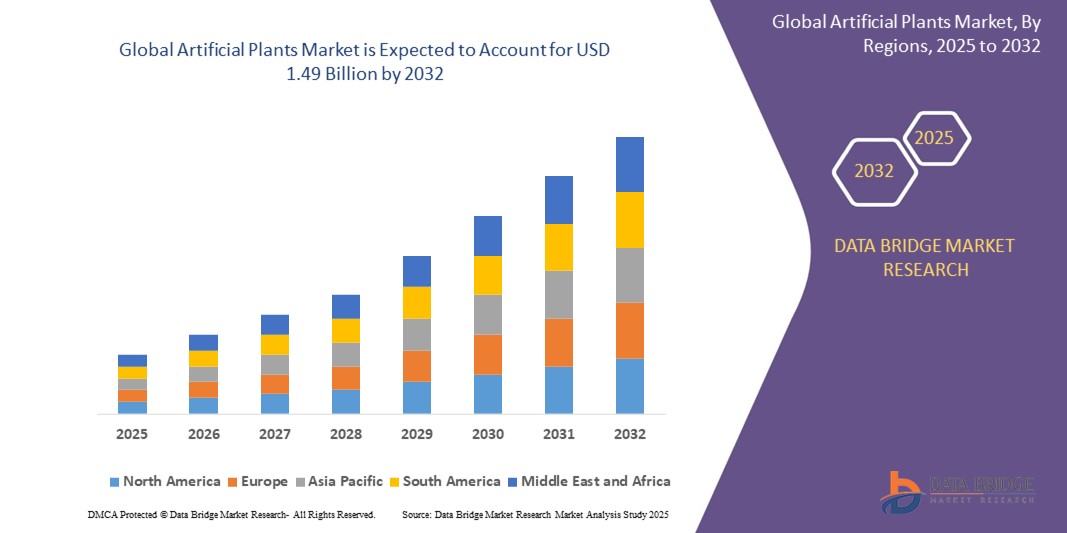
- The global artificial plants market was valued at USD 1.06 billion in 2024 and is expected to reach USD 1.49 billion by 2032
- During the forecast period of 2025 to 2032 the market is likely to grow at a CAGR of 4.40%, primarily driven by urbanization & space constraints
- This growth is driven by factors such as rising urban population, smaller living spaces and vertical gardens trend
Artificial Plants Market Analysis
- Artificial plants are imitation greenery made from materials such as silk, plastic, and latex, designed to replicate the appearance of real plants without requiring water, sunlight, or maintenance. They are commonly used for home decor, office spaces, and commercial settings, providing a long-lasting and cost-effective alternative to natural plants
- The industry is expanding due to the rising adoption of artificial greenery in homes, offices, hotels, and commercial spaces. As consumers look for long-lasting and cost-effective decor solutions, manufacturers are introducing artificial plants with realistic textures, sustainable materials, and innovative coatings that prevent fading and wear
- The shift toward environmentally friendly and highly realistic artificial plants is reshaping the market, with brands focusing on sustainable materials, smart designs, and improved manufacturing processes
- For instance, brands such as Nearly Natural and Vert Lifestyle are developing artificial plants made from recycled and biodegradable materials, responding to increasing consumer awareness of sustainability in home decor
- The artificial plants market is expected to experience continuous growth, driven by expanding e-commerce distribution, increased demand for biophilic design in modern interiors, and advancements in manufacturing techniques. As preferences shift toward maintenance-free, durable, and sustainable decorative solutions, brands are prioritizing product realism, innovation, and eco-conscious production methods to stay competitive in the evolving market
Report Scope and Artificial Plants Market Segmentation
|
Attributes |
Artificial Plants Key Market Insights |
|
Segments Covered |
|
|
Countries Covered |
North America
Europe
Asia-Pacific
Middle East and Africa
South America
|
|
Key Market Players |
|
|
Market Opportunities |
|
|
Value Added Data Infosets |
In addition to the insights on market scenarios such as market value, growth rate, segmentation, geographical coverage, and major players, the market reports curated by the Data Bridge Market Research also include in-depth expert analysis, pricing analysis, brand share analysis, consumer survey, demography analysis, supply chain analysis, value chain analysis, raw material/consumables overview, vendor selection criteria, PESTLE Analysis, Porter Analysis, and regulatory framework. |
Artificial Plants Market Trends
“Growing Demand for Sustainable & Eco-Friendly Artificial Plants”
- One prominent trend in the global artificial plants market is the growing demand for sustainable & eco-friendly artificial plants
- This trend is driven by the increasing consumer awareness of environmental impact, leading to a preference for artificial plants made from recycled materials, biodegradable components, and non-toxic coatings. As a result, manufacturers are developing products that reduce plastic waste while maintaining durability and realism
- For instance, Nearly Natural and Vert Lifestyle have introduced artificial plants crafted from recycled plastics and biodegradable elements, appealing to eco-conscious consumers who prioritize sustainability in home decor
- As sustainability becomes a key focus in interior design and commercial spaces, artificial plant brands are emphasizing eco-friendly materials, ethical sourcing, and recyclable packaging to strengthen their market position
- This shift is expected to drive further innovation in the artificial plants industry, with brands investing in advanced manufacturing techniques to enhance product realism while aligning with sustainable practices
Artificial Plants Market Dynamics
Driver
“Growing Popularity of Interior Design Trends”
- The increasing emphasis on modern interior design is a key driver of growth in the artificial plants market. As consumers and businesses focus on enhancing indoor aesthetics with greenery, the demand for artificial plants continues to rise
- This shift is particularly evident in regions such as North America, Europe, and Asia-Pacific, where architects, interior designers, and real estate developers incorporate artificial plants into residential, commercial, and hospitality spaces to create visually appealing environments
- With homeowners and businesses seeking stylish yet low-maintenance decor solutions, artificial plant manufacturers are innovating with hyper-realistic designs, UV-resistant coatings, and customizable arrangements that complement contemporary interiors
- The rising preference for biophilic design has led to significant investments in artificial green walls, vertical gardens, and premium faux foliage, catering to consumers who want the benefits of greenery without the upkeep of real plants
- As the demand for aesthetically pleasing interiors continues to grow, companies are leveraging this trend by collaborating with designers, launching trend-driven collections, and promoting artificial plants as an essential element of modern decor
For instance,
- Nearly Natural and Sharegreen have introduced high-end artificial plants that mimic real foliage, aligning with luxury interior design trends
- Vert Lifestyle has expanded its product line to include customizable artificial green walls, catering to the increasing demand for vertical gardens in urban spaces
- With increasing investments in interior design innovation, product realism, and eco-friendly materials, the artificial plants market is expected to expand further, driving advancements in sustainable production, versatile designs, and global market penetration
Opportunity
“Technological Advancements in Product Realism”
- The increasing demand for hyper-realistic artificial plants presents a significant opportunity for brands to differentiate themselves and attract design-conscious consumers
- Companies that invest in advanced manufacturing techniques such as 3D printing, high-definition texturing, and innovative polymer blends can enhance the authenticity of artificial plants, making them nearly indistinguishable from real foliage. In addition, improvements in UV-resistant and fire-retardant coatings can increase product durability while maintaining a natural appearance
- Advancements in material science and digital modeling further support this shift, enabling manufacturers to create highly detailed artificial plants that cater to premium home decor, commercial spaces, and luxury hospitality settings
For instance,
- Nearly Natural has introduced artificial plants with enhanced color gradients and realistic leaf textures, appealing to interior designers and upscale decor enthusiasts
- Brands such as Sharegreen and Vert Lifestyle are utilizing 3D printing technology to develop intricate plant structures with lifelike details, setting new standards in artificial greenery
- As consumer expectations for realism continue to rise, companies that embrace technological innovations will gain a competitive advantage, expand their market reach, and contribute to the evolution of high-quality artificial plants in interior and commercial design
Restraint/Challenge
“Environmental Concerns and Sustainability Challenges”
- The artificial plants industry faces increasing scrutiny due to concerns over plastic waste and environmental sustainability. Many artificial plants are made from non-biodegradable plastics and synthetic materials, which contribute to long-term waste and pollution
- As consumers become more environmentally conscious, there is a growing preference for sustainable home décor solutions, putting pressure on manufacturers to develop eco-friendly alternatives without compromising product quality and durability
- However, transitioning to biodegradable materials, recycled plastics, and sustainable production methods poses challenges due to higher costs, limited availability of eco-friendly raw materials, and the complexity of maintaining product longevity
For instance,
- Many traditional artificial plants are difficult to recycle due to the combination of different synthetic materials, making disposal a significant environmental issue
- As environmental concerns grow, manufacturers must invest in sustainable innovation, improve recyclability, and educate consumers on responsible disposal methods to maintain market relevance while addressing ecological challenges
Artificial Plants Market Scope
The market is segmented on the basis of product type, material type, end use, and distribution channel.
|
Segmentation |
Sub-Segmentation |
|
By Product Type |
|
|
By Material type |
|
|
By End Use |
|
|
By Distribution Channel
|
|
Artificial Plants Market Regional Analysis
“North America is the Dominant Region in the Artificial Plants Market”
- North America dominates the artificial plants market, driven by the increasing demand for artificial greenery in home décor, commercial spaces, and seasonal decorations. The preference for low-maintenance, long-lasting plant alternatives has fueled significant market growth
- The U.S. holds a significant share due to high consumer spending on interior aesthetics, frequent use of artificial plants in festivals and events, and a strong presence of premium artificial plant brands
- Technological advancements in manufacturing, such as 3D printing and high-quality polymer coatings, have enhanced product realism, making artificial plants more appealing to design-conscious consumers and businesses
- In addition, the rising popularity of biophilic design in corporate and hospitality sectors has further strengthened North America’s leading position in the artificial plants market
“Asia-Pacific is Projected to Register the Highest Growth Rate”
- The Asia-Pacific region is expected to witness the highest growth rate in the artificial plants market, driven by rapid urbanization, increasing disposable incomes, and evolving lifestyle preferences
- Countries such as China, India, and Japan are experiencing a surge in demand as consumers seek stylish yet low-maintenance home décor solutions that complement busy lifestyles
- The expanding middle-class population and rising interest in modern interior design trends are contributing to market expansion, with artificial plants becoming a preferred choice for apartments, offices, and public spaces
- As consumers in Asia-Pacific continue to prioritize convenience, aesthetics, and affordability, the artificial plants market is expected to see substantial growth, attracting investments from both local and international brands
Artificial Plants Market Share
The market competitive landscape provides details by competitor. Details included are company overview, company financials, revenue generated, market potential, investment in research and development, new market initiatives, global presence, production sites and facilities, production capacities, company strengths and weaknesses, product launch, product width and breadth, application dominance. The above data points provided are only related to the companies' focus related to market.
The Major Market Leaders Operating in the Market Are:
- TreeLocate (Europe) (U.K.)
- Greenhouse Software, Inc. (New York)
- Artificial Plant Co., Ltd. (China)
- Nearly Natural (U.S.)
- Plantscape, Inc. (U.S.)
- THE GREEN TURF (P) LTD. (India)
- Dongguan Hengxiang Simulation Plant Co., Ltd. (China)
- International TreeScapes (U.S.)
- YEAHFLOWER (China)
Latest Developments in Global Artificial Plants Market
- In April 2024, Alton Flowers N Gifts, a prominent artificial flower shop in Singapore, announced the expansion of its home décor collection to include a diverse range of artificial plants and dried flowers. This strategic move aims to broaden its market presence by catering to the rising demand for stylish, low-maintenance greenery in interior design. By introducing an extensive selection of lifelike artificial plants and preserved floral arrangements, the company seeks to appeal to modern consumers who prioritize aesthetics, convenience, and durability in home décor
- In December 2020, The Artificial Plants Shop launched its hand-tied artificial flower bouquet collection, expanding its offerings to meet the growing demand for long-lasting, low-maintenance floral decor. This move strengthened its market position by attracting consumers seeking realistic, reusable alternatives for home decor, events, and gifting, reinforcing its role in the artificial plants and flowers industry

- Interactive Data Analysis Dashboard
- Company Analysis Dashboard for high growth potential opportunities
- Research Analyst Access for customization & queries
- Competitor Analysis with Interactive dashboard
- Latest News, Updates & Trend analysis
- Harness the Power of Benchmark Analysis for Comprehensive Competitor Tracking
Data collection and base year analysis are done using data collection modules with large sample sizes. The stage includes obtaining market information or related data through various sources and strategies. It includes examining and planning all the data acquired from the past in advance. It likewise envelops the examination of information inconsistencies seen across different information sources. The market data is analysed and estimated using market statistical and coherent models. Also, market share analysis and key trend analysis are the major success factors in the market report. To know more, please request an analyst call or drop down your inquiry.
The key research methodology used by DBMR research team is data triangulation which involves data mining, analysis of the impact of data variables on the market and primary (industry expert) validation. Data models include Vendor Positioning Grid, Market Time Line Analysis, Market Overview and Guide, Company Positioning Grid, Patent Analysis, Pricing Analysis, Company Market Share Analysis, Standards of Measurement, Global versus Regional and Vendor Share Analysis. To know more about the research methodology, drop in an inquiry to speak to our industry experts.
Data Bridge Market Research is a leader in advanced formative research. We take pride in servicing our existing and new customers with data and analysis that match and suits their goal. The report can be customized to include price trend analysis of target brands understanding the market for additional countries (ask for the list of countries), clinical trial results data, literature review, refurbished market and product base analysis. Market analysis of target competitors can be analyzed from technology-based analysis to market portfolio strategies. We can add as many competitors that you require data about in the format and data style you are looking for. Our team of analysts can also provide you data in crude raw excel files pivot tables (Fact book) or can assist you in creating presentations from the data sets available in the report.