


What is the Balo Disease Treatment Market Size and Growth Rate?
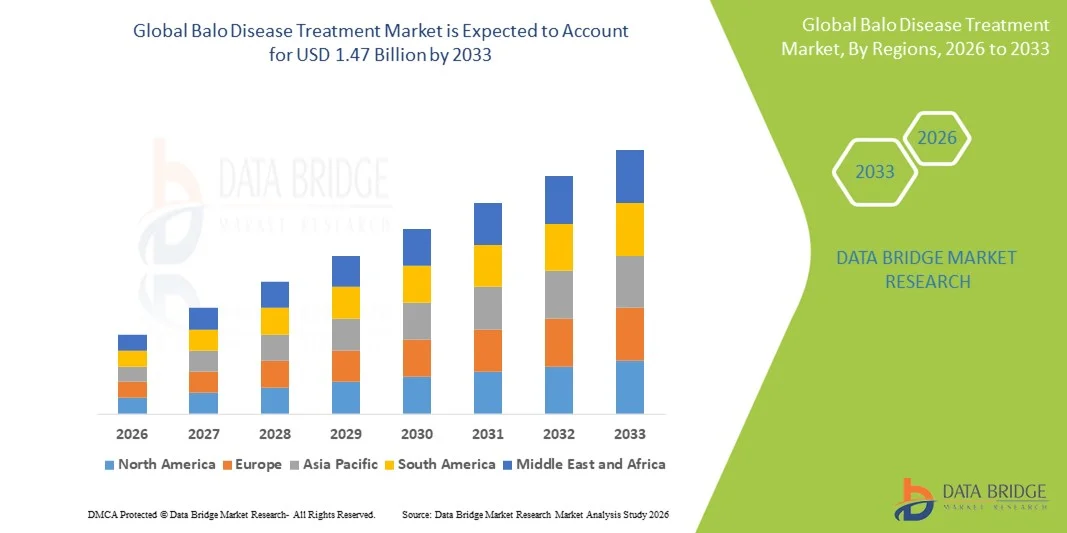
- As per Data Bridge Market Research Analysis the global Balo disease treatment market size was valued at USD 1.00 billion in 2025 and is expected to reach USD 1.47 billion by 2033, at a CAGR of c during the forecast period
- The market growth is largely driven by increasing clinical focus on early diagnosis and management of rare demyelinating disorders, alongside advancements in neuroimaging and immunomodulatory therapies that enhance treatment precision and improve patient outcomes
- Furthermore, rising patient awareness, expanding access to specialist neurological care, and growing adoption of targeted therapies are positioning Balo disease treatment as an important segment within the rare neurological disorders landscape. These converging factors are accelerating therapeutic innovation, thereby significantly boosting the industry's growth
Market Size & Forecast
- Global Market Value (2025): USD 1.00 Billion
- Expected Market Value (2033): USD 1.47 Billion
- Forecast CAGR (2026–2033): 5.00%
What are the Major Takeaways of Balo Disease Treatment Market?
- Balo disease treatment, encompassing corticosteroids, muscle relaxants, antidepressants, physical therapy, and occupational therapy, is becoming an increasingly important focus area in neurology due to the need for rapid symptom management and prevention of further demyelinating episodes, with MRI playing a central role in timely diagnosis and treatment planning
- The rising demand for Balo disease treatment is primarily fueled by improved diagnostic capabilities such as MRI and lumbar puncture, growing clinical awareness of rare demyelinating disorders, and an increasing emphasis on early intervention to reduce complications and enhance long-term patient outcomes
- North America dominated the Balo disease treatment market with the largest revenue share of 38.9% in 2025, supported by advanced neurology infrastructure, widespread access to MRI diagnostics, and strong adoption of immunosuppressive and corticosteroid-based therapies, with the U.S. witnessing significant treatment uptake driven by specialist neurological centers and clinical research advancements
- Asia-Pacific is expected to be the fastest-growing region during the forecast period due to expanding healthcare access, increasing detection rates of rare neurological disorders, and rising investment in advanced imaging technologies
- Corticosteroids segment dominated the Balo disease treatment market with a market share of 43.6% in 2025, attributed to their rapid efficacy in reducing inflammation, preventing lesion progression, and remaining the first-line treatment option for acute episodes
Report Scope and Balo Disease Treatment Market Segmentation
|
Attributes |
Balo Disease Treatment Key Market Insights |
|
Segments Covered |
|
|
Countries Covered |
North America
Europe
Asia-Pacific
Middle East and Africa
South America
|
|
Key Market Players |
|
|
Market Opportunities |
|
|
Value Added Data Infosets |
In addition to the insights on market scenarios such as market value, growth rate, segmentation, geographical coverage, and major players, the market reports curated by the Data Bridge Market Research also include in-depth expert analysis, patient epidemiology, pipeline analysis, pricing analysis, and regulatory framework |
What is the Key Trend in the Balo Disease Treatment Market?
Advancement in Early Diagnosis Through MRI and Neurological Imaging
- A significant and accelerating trend in the global Balo disease treatment market is the growing reliance on advanced MRI modalities and neuroimaging analytics to detect concentric demyelinating lesions earlier, enabling timely therapeutic intervention and better clinical management
- For instance, high-resolution MRI with diffusion-weighted and contrast-enhanced sequences is increasingly used in specialty neurology centers to differentiate Balo disease from multiple sclerosis or tumefactive lesions, significantly improving diagnostic accuracy
- AI-driven imaging tools are enabling clinicians to track lesion evolution, identify relapse risks earlier, and optimize treatment response monitoring; for instance, several research institutions are developing machine-learning MRI models that predict lesion progression and support personalized therapy decisions
- The integration of MRI-based insights with clinical symptoms and CSF biomarkers allows neurologists to develop more targeted treatment plans, improving outcomes in acute and chronic phases of the disease
- This trend toward more precise diagnostic workups and advanced neuro-imaging is reshaping expectations for rare demyelinating disorder management, encouraging manufacturers and research bodies to invest in imaging-supported therapeutic solutions
- The demand for imaging-guided care pathways is rapidly increasing across hospitals and neurology clinics, as physicians prioritize early detection, improved treatment precision, and optimized long-term disease monitoring for Balo disease patients
Balo Disease Treatment Market Dynamics
Driver
Growing Demand for Effective Therapies Owing to Increasing Diagnosis Rates
- The rising recognition of Balo disease among neurologists supported by advanced MRI capabilities, improved clinical awareness, and refined diagnostic criteria is a significant driver supporting higher treatment demand globally
- For instance, multiple tertiary care hospitals have begun integrating specific MRI protocols to identify concentric sclerosis lesions early, resulting in more diagnosed cases receiving timely interventions such as corticosteroids or immunomodulators
- As clinicians become more aware of symptom patterns such as acute neurological decline, seizures, or aphasia, the demand for rapid-action treatments including high-dose corticosteroids and plasma exchange continues to increase
- Furthermore, advancements in neurocritical care and improved patient monitoring are making hospitals better equipped to treat acute episodes, strengthening treatment uptake across developed and emerging regions
- The availability of multidisciplinary care encompassing neurologists, physiotherapists, and rehabilitation specialists is further enhancing therapeutic outcomes and driving consistent market growth
- The growing adoption of imaging-based diagnosis and tailored neurological therapy plans continues to expand the treated patient pool, reinforcing global market expansion
Restraint/Challenge
Limited Clinical Awareness and Diagnostic Complexity Among Rare Neurological Disorders
- Limited disease awareness among non-specialist physicians and the rarity of Balo disease pose a significant challenge to timely diagnosis and treatment initiation, thereby restraining market growth
- For instance, cases of concentric sclerosis are frequently misdiagnosed as aggressive multiple sclerosis or brain tumors in early evaluation stages, delaying appropriate treatment pathways
- The absence of standardized treatment guidelines and the variability in patient response to corticosteroids, immunosuppressants, or rehabilitation therapies remain a critical barrier to consistent clinical outcomes
- In addition, the scarcity of neurologists trained in rare demyelinating diseases, especially in developing regions, restricts timely intervention and advanced imaging access needed for accurate diagnosis
- High treatment costs, long-term therapy requirements, and limited insurance coverage for rare disease management further hinder patient access to appropriate care
- Addressing these challenges will require strengthened clinical training, expanded availability of advanced MRI technologies, and increased support for rare disease reimbursement frameworks
How is the Balo Disease Treatment Market Segmented?
The market is segmented on the basis of treatment, diagnosis, route of administration, symptoms, end-users, and distribution channel.
- By Treatment
On the basis of treatment, the market is segmented into corticosteroids, muscle relaxants, antidepressants, physical therapy, occupational therapy, and others. The Corticosteroids segment dominated the market with the largest revenue share of 43.6% in 2025, driven by its wide clinical acceptance as the first-line therapy for acute inflammatory episodes associated with Balo disease. Corticosteroids help rapidly reduce demyelination-related inflammation, making them essential in managing neurological deterioration. Their immediate therapeutic effect and inclusion in standard neuro-demyelinating treatment guidelines enhance their utilization across hospitals. Physicians also prefer corticosteroids due to established dosing protocols and proven outcome benefits in similar demyelinating conditions. Increasing availability of intravenous methylprednisolone and improved emergency neurologic care further support its dominance.
The Physical Therapy segment is anticipated to witness the fastest growth rate from 2026 to 2033, fueled by rising adoption of long-term rehabilitation approaches for functional recovery. As Balo disease can cause weakness, mobility issues, and coordination impairments, physical therapy plays a critical role in restoring daily functioning. Increasing global awareness of rehabilitation-based neurological care is accelerating its demand across clinics and specialty centers. Growing evidence supporting motor recovery through structured physiotherapy programs also reinforces adoption. In addition, advancements in neuro-rehabilitation technologies such as gait-training devices and robotic-assisted therapy are driving segment expansion.
- By Diagnosis
On the basis of diagnosis, the market is segmented into blood tests, lumbar puncture, mri, evoked potential (EP) test, and others. The MRI segment held the largest market revenue share in 2025, driven by its essential role in visualizing the characteristic concentric demyelinating lesions that define Balo disease. MRI provides the highest diagnostic accuracy due to its ability to differentiate Balo lesions from multiple sclerosis and other neurological disorders. The growing accessibility of advanced MRI systems, such as 3T and 7T scanners, enhances diagnostic speed and precision. Neurologists prefer MRI because it supports both diagnosis and disease progression monitoring, improving long-term care. Increasing investment in neuroimaging infrastructure across hospitals further strengthens its dominance.
The Lumbar Puncture segment is expected to witness the fastest CAGR from 2026 to 2033, driven by its growing diagnostic relevance in evaluating cerebrospinal fluid (CSF) biomarkers associated with demyelinating conditions. As physicians increasingly depend on CSF analysis to rule out infectious and autoimmune etiologies, lumbar puncture is becoming a critical secondary diagnostic tool. Rising use in combination with MRI to confirm atypical Balo presentations is boosting demand. Improved procedural safety, training programs, and availability in both tertiary and secondary care settings further support segment growth.
- By Route of Administration
On the basis of route of administration, the market is segmented into intramuscular, intravenous, oral, and others. The Intravenous route dominated the market with the largest revenue share in 2025, supported by extensive use of high-dose IV corticosteroids and IV immunotherapies for acute neurological episodes. Intravenous delivery ensures rapid drug action, crucial for managing severe demyelinating flare-ups and preventing complications. Hospitals widely prefer IV administration due to controlled dosing and better therapeutic response monitoring. The segment’s dominance is reinforced by well-established IV protocols in neurology and critical care settings. Advancements in infusion safety technologies and broader access to hospital-based IV therapy centers also contribute to its leadership.
The Oral route is anticipated to witness the fastest growth rate from 2026 to 2033, driven by growing patient preference for long-term oral symptomatic medications such as muscle relaxants and antidepressants. Oral therapies offer greater convenience, lower treatment costs, and improved adherence compared to injectable routes. Physicians increasingly rely on oral medications for ongoing symptom management post-acute treatment. Rising development of novel oral immunomodulators and improved telemedicine-based prescribing practices promote segment expansion.
- By Symptoms
On the basis of symptoms, the market is segmented into headache, seizures, muscle pain, weakness, aphasia, trouble with concentration, behavior changes, and others. The Weakness segment accounted for the largest market revenue share in 2025, as neurological weakness is one of the most frequently reported and clinically significant symptoms of Balo disease. The high prevalence of motor impairment drives increased medical consultations, diagnostic evaluations, and rehabilitative interventions. Hospitals and neurology clinics prioritize weakness management due to its direct impact on patient mobility and independence. Increasing deployment of neuro-rehabilitation and supportive therapies also contributes to dominance. The rising number of cases presenting with acute motor deficits during disease onset strengthens the segment’s leading position.
The Seizures segment is projected to experience the fastest growth from 2026 to 2033, fueled by rising recognition of seizure activity as a major neurological manifestation in Balo disease. Growing utilization of EEG monitoring and anti-seizure medications is driving demand within this segment. Improved diagnostic screening for seizure subtypes and supportive emergency care infrastructure enhance clinical outcomes. The adoption of advanced neuroimaging and neuro-monitoring technologies facilitates early detection and management. Increasing awareness of seizure-related risks among caregivers and clinicians further accelerates segment growth.
- By End-Users
On the basis of end-users, the market is segmented into clinics, hospitals, and others. The Hospital segment dominated the market with the largest revenue share in 2025, driven by their central role in acute neurological care, advanced diagnostic imaging availability, and access to multidisciplinary neurologic teams. Hospitals manage the majority of severe Balo cases requiring IV medications, MRI scans, and intensive monitoring. The presence of specialized neurology departments and emergency units enhances patient inflow. Increasing investment in neuro-care infrastructure and staff expansion supports hospital-based treatment delivery. Their capability to handle complex, rapidly progressing cases ensures continued dominance.
The Clinics segment is expected to experience the fastest growth rate from 2026 to 2033, supported by increasing inclination toward outpatient neurological care and long-term follow-up for chronic symptom management. Clinics facilitate accessible and cost-effective management for non-acute phases of the disease. Growing establishment of specialty neurological outpatient centers and rehabilitation clinics boosts adoption. Enhanced diagnostic availability in modern clinics and expansion of tele-neurology services accelerate segment growth.
- By Distribution Channel
On the basis of distribution channel, the market is segmented into hospital pharmacy, retail pharmacy, and online pharmacy. The Hospital Pharmacy segment accounted for the largest market revenue share in 2025, reflecting the high utilization of acute-care medications such as IV corticosteroids and emergency neurological drugs within hospitals. Hospital pharmacies ensure immediate access to critical treatments and support physician-prescribed regimens during inpatient care. Their integration with hospital diagnostic and monitoring systems improves medication safety and clinical coordination. Expansion of hospital neurology departments strengthens the segment's dominance.
The Online Pharmacy segment is projected to record the fastest CAGR from 2026 to 2033, driven by rising adoption of digital prescription services and home delivery of chronic medications used for symptom management. Increasing patient preference for convenience, reduced travel time, and price transparency supports segment growth. Growth in telemedicine prescriptions also boosts online channels. Enhanced regulatory frameworks for e-pharmacy operations across major markets further accelerate expansion.
Which Region Holds the Largest Share of the Balo Disease Treatment Market?
- North America dominated the Balo disease treatment market with the largest revenue share of 38.9% in 2025, supported by advanced neurology infrastructure, widespread access to MRI diagnostics, and strong adoption of immunosuppressive and corticosteroid-based therapies, with the U.S. witnessing significant treatment uptake driven by specialist neurological centers and clinical research advancements
- Patients in the region benefit from well-established neurological care networks, extensive adoption of immunomodulatory therapies, and the presence of leading research institutions actively involved in studying rare multiple sclerosis variants
- This high adoption is further supported by favorable reimbursement structures, strong healthcare spending, and increasing participation in clinical trials, positioning North America as the leading region in Balo disease diagnosis and treatment for both early-stage and progressive cases
U.S. Balo Disease Treatment Market Insight
The U.S. Balo disease treatment market captured the largest revenue share within North America in 2025, fueled by widespread access to advanced imaging centers and an increasing focus on rare neurological disease management. Clinicians are prioritizing rapid diagnosis using high-resolution MRI and cerebrospinal fluid analysis to initiate timely corticosteroid therapy. The rising number of specialized neurology clinics, growing use of immunosuppressants, and strong research activities around demyelinating diseases further propel market expansion. Moreover, national patient-support networks and awareness programs contribute significantly to improved diagnosis rates and clinical engagement.
Europe Balo Disease Treatment Market Insight
The Europe Balo disease treatment market is projected to expand at a substantial CAGR throughout the forecast period, primarily driven by strong investment in neurological research centers and robust clinical guidelines for managing demyelinating conditions. The region’s advanced hospital networks and emphasis on early MRI-based detection are fostering wider adoption of standardized treatment pathways. European countries are increasingly integrating multidisciplinary care—combining pharmacological treatment, physical therapy, and long-term monitoring—which enhances treatment outcomes. Growing patient awareness and improved access to specialty neurology care are further accelerating market growth.
U.K. Balo Disease Treatment Market Insight
The U.K. Balo disease treatment market is anticipated to grow at a noteworthy CAGR during the forecast period, driven by the rising prioritization of rare neurological disease diagnostics and improved access to advanced imaging technologies. Increasing awareness of demyelinating disorders among healthcare professionals is supporting timely identification and intervention. The U.K.’s established national health system and emphasis on evidence-based treatment protocols encourage the adoption of corticosteroid regimens, adjunct therapies, and rehabilitation services. In addition, expanding research collaborations and clinical studies are expected to further stimulate market growth.
Germany Balo Disease Treatment Market Insight
The Germany Balo disease treatment market is expected to expand at a considerable CAGR during the forecast period, fueled by the country’s strong focus on neurological innovation and technologically advanced medical infrastructure. Germany’s extensive MRI availability and stringent clinical quality standards support precise diagnosis and targeted therapies for Balo disease. The increasing preference for integrated neuro-rehabilitation programs, combined with adoption of immunomodulatory and supportive therapies, is strengthening market development. Growing public health initiatives and a strong research environment further reinforce Germany’s leading position in Europe.
Asia-Pacific Balo Disease Treatment Market Insight
The Asia-Pacific Balo disease treatment market is poised to grow at the fastest CAGR during the forecast period, driven by expanding healthcare infrastructure, rising awareness of demyelinating disorders, and growing access to advanced imaging technologies. Countries such as China, Japan, and India are rapidly improving neurological diagnostic capabilities, enabling earlier detection of rare conditions such as Balo disease. Increasing government healthcare investments and enhanced training for neurologists are contributing to improved patient outcomes. Furthermore, expanding pharmaceutical availability and growing adoption of corticosteroid-based treatment regimens are propelling market growth across the region.
Japan Balo Disease Treatment Market Insight
The Japan Balo disease treatment market is gaining momentum owing to the country’s advanced medical imaging ecosystem, strong neurology care standards, and aging population requiring close neurological monitoring. Japan’s physicians emphasize early MRI-based diagnosis and aggressive corticosteroid intervention to prevent disease progression. The growing integration of rehabilitation therapies, including physical and occupational therapy, is further supporting patient recovery. Moreover, Japan’s technologically driven healthcare system and focus on rare disease research continue to drive robust market expansion.
India Balo Disease Treatment Market Insight
The India Balo disease treatment market accounted for one of the largest shares within Asia-Pacific in 2025, attributed to the country’s rapidly developing healthcare infrastructure and rising clinical awareness of rare neurological disorders. Increased availability of MRI facilities and growing access to specialist neurologists are improving diagnostic timelines for Balo disease. The expanding middle class, coupled with government support for neurology care and improved pharmaceutical distribution networks, is driving treatment adoption. In addition, India’s strengthening medical education and growing private hospital sector are key contributors to market growth.
Which are the Top Companies in Balo Disease Treatment Market?
The Balo Disease Treatment industry is primarily led by well-established companies, including:
- Biogen Inc. (U.S.)
- Novartis AG (Switzerland)
- F. Hoffmann-La Roche Ltd. (Switzerland)
- Sanofi (France)
- Merck KGaA (Germany)
- Teva Pharmaceutical Industries Ltd. (Israel)
- Bristol-Myers Squibb Company (U.S.)
- Bayer AG (Germany)
- Acorda Therapeutics, Inc. (U.S.)
- Johnson & Johnson Services, Inc. (U.S.)
- Amgen Inc. (U.S.)
- UCB S.A. (Belgium)
- TG Therapeutics, Inc. (U.S.)
- Atara Biotherapeutics (U.S.)
- Immunic, Inc. (U.S.)
- Kyverna Therapeutics (U.S.)
- Clene Nanomedicine (U.S.)
- Anokion SA (Switzerland)
- GSK plc (U.K.)
- InnoCare Pharma (China)
What are Latest Developments in Balo Disease Treatment Market?
- In March 2025, a case-series study covering 10 patients treated between 2013 and 2024 reported that rituximab demonstrated sustained clinical and radiological stability in individuals with Baló’s concentric sclerosis, reinforcing its growing role as a preferred long-term immunotherapy option. The study highlighted notable reductions in relapse frequency and lesion progression, suggesting rituximab may offer a dependable maintenance strategy for this rare demyelinating condition
- In May 2025, pediatric neurologists documented two rare childhood cases (ages 11 and 15) presenting with Balo-type tumefactive demyelinating lesions, where diagnosis required sophisticated MRI sequencing and extensive immunologic testing. Both patients responded positively to aggressive immunotherapy, highlighting the importance of early recognition and individualized treatment in pediatric populations where Balo disease is exceptionally uncommon
- In December 2023, a long-term follow-up case study documented successful management of isolated Baló’s concentric sclerosis using rituximab, where the patient maintained neurological stability and MRI improvement over an extended period. This real-world evidence strengthened the clinical rationale for using B-cell–depleting therapies in treatment-resistant or recurrent Balo disease, where standardized guidelines are still lacking
- In October 2023, researchers published a challenging diagnostic case of a 26-year-old woman with Balo’s disease initially mistaken for viral encephalitis, due to overlapping symptoms such as seizures and progressive aphasia. The report emphasized the necessity of advanced MRI techniques and timely immunotherapy to avoid misdiagnosis and poor outcomes, underscoring the complexity of Balo disease in clinical settings
- In May 2022, neurologists reported a patient with relapsing-remitting multiple sclerosis who developed a Baló-such as tumefactive lesion, raising new debate on whether certain MS therapies might contribute to atypical demyelinating presentations. This case expanded the clinical understanding of treatment-related disease modulation, calling for increased vigilance when monitoring MS patients showing unusual radiological patterns

- Interactive Data Analysis Dashboard
- Company Analysis Dashboard for high growth potential opportunities
- Research Analyst Access for customization & queries
- Competitor Analysis with Interactive dashboard
- Latest News, Updates & Trend analysis
- Harness the Power of Benchmark Analysis for Comprehensive Competitor Tracking
Data collection and base year analysis are done using data collection modules with large sample sizes. The stage includes obtaining market information or related data through various sources and strategies. It includes examining and planning all the data acquired from the past in advance. It likewise envelops the examination of information inconsistencies seen across different information sources. The market data is analysed and estimated using market statistical and coherent models. Also, market share analysis and key trend analysis are the major success factors in the market report. To know more, please request an analyst call or drop down your inquiry.
The key research methodology used by DBMR research team is data triangulation which involves data mining, analysis of the impact of data variables on the market and primary (industry expert) validation. Data models include Vendor Positioning Grid, Market Time Line Analysis, Market Overview and Guide, Company Positioning Grid, Patent Analysis, Pricing Analysis, Company Market Share Analysis, Standards of Measurement, Global versus Regional and Vendor Share Analysis. To know more about the research methodology, drop in an inquiry to speak to our industry experts.
Data Bridge Market Research is a leader in advanced formative research. We take pride in servicing our existing and new customers with data and analysis that match and suits their goal. The report can be customized to include price trend analysis of target brands understanding the market for additional countries (ask for the list of countries), clinical trial results data, literature review, refurbished market and product base analysis. Market analysis of target competitors can be analyzed from technology-based analysis to market portfolio strategies. We can add as many competitors that you require data about in the format and data style you are looking for. Our team of analysts can also provide you data in crude raw excel files pivot tables (Fact book) or can assist you in creating presentations from the data sets available in the report.












