


Bickers Adams Edwards Syndrome Market Size
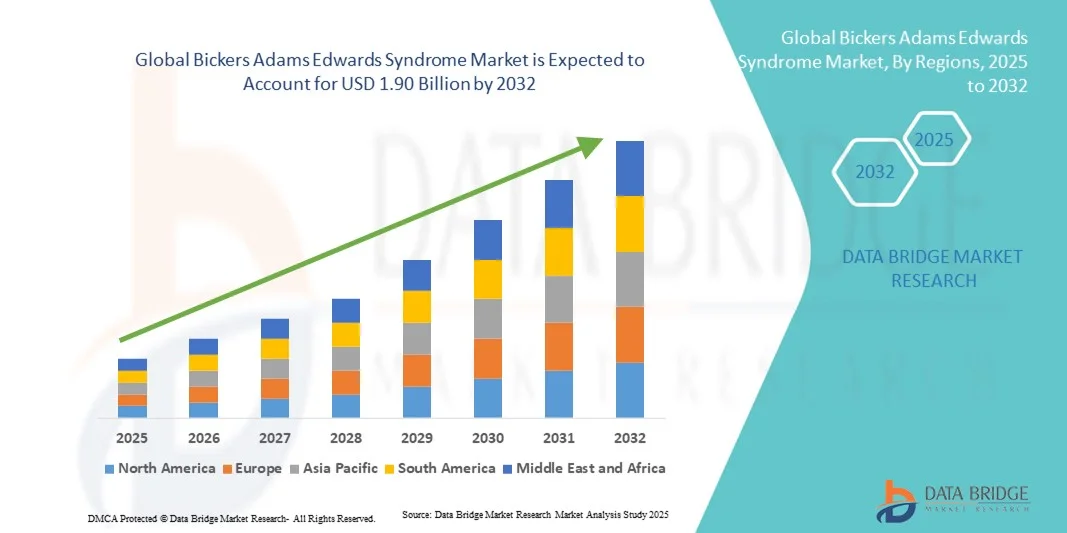
- The global Bickers Adams Edwards Syndrome market size was valued at USD 1.31 billion in 2024 and is expected to reach USD 1.90 billion by 2032, at a CAGR of 4.80% during the forecast period
- The market growth is primarily driven by increasing awareness and improved diagnostic capabilities for rare genetic disorders, alongside advancements in genomic sequencing and precision medicine technologies supporting early detection and management
- Furthermore, rising research initiatives aimed at understanding the genetic basis of Bickers-Adams-Edwards syndrome and developing targeted therapies are enhancing treatment prospects. These combined factors are fostering greater investment and innovation in the field, thereby propelling the market’s overall growth trajectory
Bickers Adams Edwards Syndrome Market Analysis
- Bickers-Adams-Edwards Syndrome, a rare congenital X-linked disorder characterized by developmental abnormalities such as hydrocephalus, intellectual disability, and adducted thumbs, is gaining increased research focus due to advancements in neurogenetic studies and improved diagnostic imaging technologies
- The market growth is being driven by rising awareness of genetic and neurological disorders, increased adoption of advanced neuroimaging techniques, and ongoing collaborations between research institutions and diagnostic centers aimed at improving early detection accuracy
- North America dominated the Bickers-Adams-Edwards Syndrome market with the largest revenue share of 42.6% in 2024, supported by strong diagnostic infrastructure, a growing number of rare disease research programs, and high accessibility to advanced MRI and CT technologies
- Asia-Pacific is expected to be the fastest-growing region during the forecast period due to improving healthcare systems, greater access to imaging diagnostics, and government efforts to expand rare disease registries and genomic testing capabilities
- The Magnetic Resonance Imaging (MRI) Scans segment dominated the Bickers-Adams-Edwards Syndrome market with a share of 46.7% in 2024, owing to its superior ability to detect structural brain abnormalities and provide detailed visualization essential for accurate diagnosis and treatment planning
Report Scope and Bickers Adams Edwards Syndrome Market Segmentation
|
Attributes |
Bickers Adams Edwards Syndrome Key Market Insights |
|
Segments Covered |
|
|
Countries Covered |
North America
Europe
Asia-Pacific
Middle East and Africa
South America
|
|
Key Market Players |
|
|
Market Opportunities |
|
|
Value Added Data Infosets |
In addition to the insights on market scenarios such as market value, growth rate, segmentation, geographical coverage, and major players, the market reports curated by the Data Bridge Market Research also include in-depth expert analysis, patient epidemiology, pipeline analysis, pricing analysis, and regulatory framework |
Bickers Adams Edwards Syndrome Market Trends
Advancements in Neuroimaging and Genomic Diagnostics Driving Early Detection
- A key and accelerating trend in the global Bickers-Adams-Edwards syndrome market is the increasing use of advanced neuroimaging and genomic diagnostic technologies to enhance early and accurate detection of this rare congenital disorder
- For instance, hospitals and research institutes are adopting high-resolution MRI protocols to detect brain abnormalities such as hydrocephalus more precisely, improving diagnostic confidence and enabling earlier intervention. Similarly, genetic laboratories are employing advanced molecular tools to identify mutations in the L1CAM gene, the primary cause of Bickers-Adams-Edwards syndrome
- These technological advancements not only improve diagnostic precision but also support the development of personalized management strategies. Genomic data integration helps clinicians understand disease progression patterns, while advanced imaging allows for detailed assessment of neurological development in affected infants
- Furthermore, collaborations between biotechnology firms and academic research centers are enhancing data sharing and accelerating biomarker discovery, paving the way for potential targeted therapies in the future
- This trend toward combining imaging and genomics represents a major shift in how rare neurological disorders are diagnosed and monitored, fostering a more proactive, technology-driven approach to patient care
- The growing use of AI-based analytics in imaging interpretation and mutation mapping is expected to further enhance diagnostic efficiency, reducing diagnostic delays and improving outcomes for patients with Bickers-Adams-Edwards syndrome.
Bickers Adams Edwards Syndrome Market Dynamics
Driver
Growing Focus on Rare Disease Research and Genetic Testing Expansion
- The global increase in rare disease research funding and the expanding accessibility of genetic testing are major drivers propelling the growth of the Bickers-Adams-Edwards syndrome market
- For instance, international initiatives such as the Global Alliance for Genomics and Health (GA4GH) and regional rare disease programs in the U.S. and Europe are promoting genomic screening and data sharing, directly contributing to improved diagnosis of disorders such as Bickers-Adams-Edwards syndrome
- Rising awareness of congenital neurodevelopmental conditions among clinicians and parents, along with improved healthcare policies supporting rare disease diagnostics, is also enhancing early detection rates
- Furthermore, advancements in MRI and CT imaging technologies are improving visualization of brain anomalies, while the expansion of newborn screening programs is helping identify genetic abnormalities earlier in life
- The combination of these factors is driving greater diagnostic precision, encouraging early clinical intervention, and supporting ongoing research into novel therapeutic pathways for this rare genetic condition
- Increasing collaborations between genetic testing firms and pediatric hospitals are further streamlining early diagnostic workflows, reducing time to diagnosis for affected infants
- Supportive government funding and rare disease frameworks, such as the U.S. Orphan Drug Act and the EU Rare Diseases Plan, are encouraging industry participation and investment in long-term research
Restraint/Challenge
High Diagnostic Costs and Limited Treatment Availability
- The high cost associated with advanced diagnostic tools such as MRI, CT, and genetic sequencing presents a major barrier to wider adoption, especially in low- and middle-income countries with limited healthcare infrastructure
- In addition, the absence of curative treatment options and the reliance on symptomatic and supportive care pose significant challenges to patients and caregivers, often leading to limited therapeutic progress
- For instance, while genetic testing has become more accessible in developed regions, its availability remains sparse in many parts of Asia and Africa, delaying diagnosis and management
- Furthermore, the low prevalence of Bickers-Adams-Edwards syndrome reduces commercial incentives for pharmaceutical investment, slowing the development of targeted therapies
- Addressing these challenges through increased funding for rare disease diagnostics, the introduction of cost-effective imaging solutions, and the expansion of international research collaborations will be critical to advancing clinical outcomes and fostering sustainable market growth
- Limited awareness among healthcare professionals and insufficient genetic counseling infrastructure in developing regions continue to impede timely diagnosis and effective patient management
- Moreover, ethical and regulatory challenges surrounding data privacy and cross-border sharing of genetic information may slow the adoption of global genomic research initiatives
Bickers Adams Edwards Syndrome Market Scope
The market is segmented on the basis of symptoms, diagnosis, and end users.
- By Symptoms
On the basis of symptoms, the Bickers-Adams-Edwards syndrome market is segmented into intellectual disability, adducted thumb, large head, and others. The Intellectual Disability segment dominated the market with the largest revenue share in 2024, owing to its high prevalence among diagnosed cases and its significance in early clinical identification of the disorder. Intellectual impairment is a primary hallmark of Bickers-Adams-Edwards syndrome and often prompts initial neurological evaluation and genetic testing. The segment’s growth is supported by improved awareness among pediatric neurologists and the growing use of neurodevelopmental assessment tools. In addition, the availability of specialized educational and therapy programs targeting cognitive deficits contributes to sustained market demand for diagnosis and management services in this category.
The Adducted Thumb segment is anticipated to witness the fastest growth rate from 2025 to 2032, driven by increasing diagnostic recognition of physical deformities as early indicators of the syndrome. The visible presence of thumb adduction at birth aids in faster clinical suspicion and referral for imaging and genetic testing. Growing awareness among pediatricians and orthopedists about the association between adducted thumb deformity and genetic neurological conditions is enhancing the detection rate. Moreover, improved orthopedic and rehabilitative interventions for managing limb deformities are contributing to higher clinical engagement and research activity within this segment.
- By Diagnosis
On the basis of diagnosis, the Bickers-Adams-Edwards syndrome market is segmented into Magnetic Resonance Imaging (MRI) Scans, CT Scans, and Others. The Magnetic Resonance Imaging (MRI) Scans segment dominated the market in 2024, holding the largest revenue share of 46.7% due to its superior capability in detecting structural brain abnormalities such as hydrocephalus and corpus callosum agenesis. MRI provides high-resolution imaging without radiation exposure, making it the preferred diagnostic method for infants and children. Advancements in neuroimaging technologies, including functional MRI and diffusion tensor imaging, are further enhancing diagnostic accuracy. The segment benefits from increased hospital infrastructure investments and the rising incorporation of AI-powered imaging analytics for precise diagnosis.
The CT Scans segment is expected to register the fastest CAGR during the forecast period (2025–2032) due to its growing accessibility and faster imaging capabilities. CT scans offer an effective alternative in emergency diagnostic settings and are widely used in developing regions where MRI availability may be limited. The affordability of CT imaging, combined with improvements in image resolution and reduced radiation dose technologies, is supporting its adoption. Furthermore, the increasing use of CT scans for prenatal and neonatal cranial assessment is anticipated to strengthen this segment’s market position in the coming years.
- By End Users
On the basis of end users, the Bickers-Adams-Edwards syndrome market is segmented into hospitals, clinics, homecare, specialty centers, and others. The Hospitals segment dominated the market with the largest share in 2024, driven by the presence of multidisciplinary teams, advanced diagnostic facilities, and established neurogenetic departments. Hospitals remain the primary centers for complex neurodevelopmental and genetic disorder management, offering MRI, CT, and genetic testing under one roof. The concentration of skilled neurologists and access to government-funded research programs further enhance patient diagnosis and management outcomes. In addition, hospitals serve as major data sources for ongoing rare disease registries, supporting both clinical and research advancements.
The Specialty Centers segment is projected to grow at the fastest rate from 2025 to 2032, owing to the increasing establishment of dedicated rare disease and genetic disorder clinics. These centers focus on personalized patient management, integrating genetic counseling, early intervention, and long-term monitoring services. The growing number of collaborations between specialty centers and research institutes is accelerating the identification of genotype-phenotype correlations. Furthermore, the expansion of pediatric neurology networks and teleconsultation services is making specialized care more accessible, particularly in underserved regions, thereby driving segment growth.
Bickers Adams Edwards Syndrome Market Regional Analysis
- North America dominated the Bickers-Adams-Edwards Syndrome market with the largest revenue share of 42.6% in 2024, supported by strong diagnostic infrastructure, a growing number of rare disease research programs, and high accessibility to advanced MRI and CT technologies
- Consumers and healthcare providers in the region emphasize early diagnosis, precision medicine, and multidisciplinary care approaches, which enhance patient outcomes and drive steady market growth
- The widespread implementation of newborn screening programs and insurance coverage for genetic testing further support North America’s leading position in this market, making it a hub for innovation and rare disease management
U.S. Bickers Adams Edwards Syndrome Market Insight
The U.S. Bickers-Adams-Edwards syndrome market captured the largest revenue share of 82% in 2024 within North America, driven by robust healthcare infrastructure and early adoption of advanced genetic testing technologies. Increased awareness of rare congenital disorders and strong government initiatives supporting rare disease research are propelling market growth. Major children’s hospitals and neurogenetic research centers in the U.S. are leading diagnostic advancements through comprehensive MRI and CT imaging programs. Furthermore, the expansion of newborn screening programs and the integration of AI-driven diagnostics in pediatric neurology are enhancing early detection rates, positioning the U.S. as the dominant contributor to regional revenue.
Europe Bickers-Adams-Edwards Syndrome Market Insight
The Europe Bickers-Adams-Edwards syndrome market is projected to expand at a notable CAGR throughout the forecast period, driven by improved rare disease identification frameworks and increased funding for genetic research. Stringent healthcare regulations, along with the European Reference Networks (ERNs) for rare diseases, are fostering cross-border collaborations and patient data sharing. Growing adoption of MRI and genetic sequencing technologies across hospitals in Germany, France, and the U.K. is enhancing diagnostic precision. In addition, initiatives such as Horizon Europe are accelerating rare disease innovation, contributing to Europe’s growing role in advancing Bickers-Adams-Edwards syndrome diagnostics and management.
U.K. Bickers-Adams-Edwards Syndrome Market Insight
The U.K. Bickers-Adams-Edwards syndrome market is anticipated to grow at a strong CAGR during the forecast period, fueled by the country’s national genomics strategy and investments in precision medicine. The NHS Genomic Medicine Service is significantly improving access to genetic testing, enabling early and accurate identification of rare neurological conditions. Furthermore, awareness campaigns and partnerships between clinical research centers and genetic laboratories are expanding the country’s diagnostic capabilities. The U.K.’s advanced healthcare ecosystem, coupled with robust data infrastructure and rare disease registries, continues to support the market’s steady expansion.
Germany Bickers-Adams-Edwards Syndrome Market Insight
The Germany Bickers-Adams-Edwards syndrome market is expected to grow at a considerable CAGR during the forecast period, underpinned by strong government support for rare disease research and diagnostic innovation. Germany’s advanced imaging infrastructure, supported by leading academic hospitals, ensures comprehensive access to MRI and CT technologies for early disease detection. The country’s emphasis on research-driven healthcare, coupled with growing public funding for genomics and biobanking projects, is fostering the development of new diagnostic methodologies. Moreover, patient advocacy networks and public health initiatives promoting early genetic counseling are further driving market growth.
Asia-Pacific Bickers-Adams-Edwards Syndrome Market Insight
The Asia-Pacific Bickers-Adams-Edwards syndrome market is projected to grow at the fastest CAGR of 23.6% from 2025 to 2032, driven by rising awareness of genetic disorders and expanding healthcare infrastructure in countries such as China, Japan, and India. Government-led digital health initiatives and growing access to advanced imaging systems are improving early diagnosis and treatment. The region’s growing participation in global rare disease research programs and the development of cost-effective diagnostic solutions are boosting market penetration. Moreover, the expansion of pediatric neurology units and genetic testing laboratories across urban centers is contributing significantly to regional market growth.
Japan Bickers-Adams-Edwards Syndrome Market Insight
The Japan Bickers-Adams-Edwards syndrome market is gaining momentum, driven by the nation’s strong technological base and precision medicine initiatives. High public investment in genomic research, alongside advanced MRI and CT imaging availability, supports accurate and early diagnosis. Japan’s aging population and robust focus on pediatric healthcare are promoting the expansion of rare disease programs across hospitals and universities. Furthermore, collaborations between research institutions and biotechnology firms are accelerating the identification of novel genetic markers, positioning Japan as a key player in regional market advancement.
India Bickers-Adams-Edwards Syndrome Market Insight
The India Bickers-Adams-Edwards syndrome market accounted for the largest revenue share in Asia-Pacific in 2024, supported by growing healthcare expenditure, rapid expansion of diagnostic laboratories, and improving access to MRI and genetic testing facilities. The government’s National Policy for Rare Diseases and public-private partnerships are strengthening early screening initiatives across hospitals. Increasing awareness among pediatricians and the integration of affordable imaging solutions are enhancing diagnostic capabilities in both urban and semi-urban regions. Moreover, India’s growing participation in international genetic research collaborations is further contributing to the market’s development and accessibility.
Bickers Adams Edwards Syndrome Market Share
The Bickers Adams Edwards Syndrome industry is primarily led by well-established companies, including:
- LIGACHEM BIOSCIENCES Inc. (South Korea)
- ONO PHARMACEUTICAL CO., LTD. (Japan)
- Rhaeos, Inc. (U.S.)
- CereVasc, Inc. (U.S.)
- Medtronic (U.S.)
- Integra LifeSciences Corporation (U.S.)
- Sophysa (France)
- B. Braun SE (Germany)
- Stryker (U.S.)
- Boston Scientific Corporation (U.S.)
- Elthera AG (Switzerland)
- Illumina, Inc. (U.S.)
- Natera, Inc. (U.S.)
- Invitae Corporation (U.S.)
- BGI Genomics Co., Ltd. (China)
- Zimmer Biomet (U.S.)
- NeuroPace, Inc. (U.S.)
- Bio-Rad Laboratories, Inc. (U.S.)
- QIAGEN. (Netherlands)
- Agilent Technologies, Inc. (U.S.)
What are the Recent Developments in Global Bickers Adams Edwards Syndrome Market?
- In October 2024, Ono Pharmaceutical signed a global license and research/collaboration agreement with LigaChem for LCB97, a preclinical antibody drug conjugate (ADC) targeting L1CAM; the deal gives Ono rights to LCB97 and access to LigaChem’s ConjuAll™ ADC platform. This is notable because L1CAM is the same molecule mutated in Bickers–Adams–Edwards syndrome
- In August 2024, researchers published development data on a new anti-L1CAM monoclonal antibody / ADC strategy, demonstrating renewed preclinical interest in L1CAM-targeted therapeutics and strengthening the rationale and IP around L1CAM as a drug target a development that indirectly increases scientific and biotech attention on L1CAM biology relevant to L1-syndromes
- In February 2023, Rhaeos, Inc. closed a US$10.5M Series A round to support the in-hospital launch of FlowSense, a non-invasive wearable shunt monitor for hydrocephalus (the device had previously received FDA Breakthrough Device designation). This product launch effort is directly relevant to hydrocephalus patient management
- In February 2023, LegoChem signed a license agreement with Elthera AG to acquire/develop a first-in-class monoclonal antibody that antibody lineage was later used by LigaChem as the basis for its L1CAM-directed ADC program (LCB97) and subsequent deals an for instance of how academic/biotech antibody licenses fed into L1CAM-targeted industrial programs
- In December 2021, CereVasc, Inc. announced publication of a first-in-human case report describing the eShunt system a minimally invasive endovascular biomimetic transdural shunt successfully used to treat communicating hydrocephalus; the report and company release marked an important device-development milestone for alternative hydrocephalus interventions

- Interactive Data Analysis Dashboard
- Company Analysis Dashboard for high growth potential opportunities
- Research Analyst Access for customization & queries
- Competitor Analysis with Interactive dashboard
- Latest News, Updates & Trend analysis
- Harness the Power of Benchmark Analysis for Comprehensive Competitor Tracking
Data collection and base year analysis are done using data collection modules with large sample sizes. The stage includes obtaining market information or related data through various sources and strategies. It includes examining and planning all the data acquired from the past in advance. It likewise envelops the examination of information inconsistencies seen across different information sources. The market data is analysed and estimated using market statistical and coherent models. Also, market share analysis and key trend analysis are the major success factors in the market report. To know more, please request an analyst call or drop down your inquiry.
The key research methodology used by DBMR research team is data triangulation which involves data mining, analysis of the impact of data variables on the market and primary (industry expert) validation. Data models include Vendor Positioning Grid, Market Time Line Analysis, Market Overview and Guide, Company Positioning Grid, Patent Analysis, Pricing Analysis, Company Market Share Analysis, Standards of Measurement, Global versus Regional and Vendor Share Analysis. To know more about the research methodology, drop in an inquiry to speak to our industry experts.
Data Bridge Market Research is a leader in advanced formative research. We take pride in servicing our existing and new customers with data and analysis that match and suits their goal. The report can be customized to include price trend analysis of target brands understanding the market for additional countries (ask for the list of countries), clinical trial results data, literature review, refurbished market and product base analysis. Market analysis of target competitors can be analyzed from technology-based analysis to market portfolio strategies. We can add as many competitors that you require data about in the format and data style you are looking for. Our team of analysts can also provide you data in crude raw excel files pivot tables (Fact book) or can assist you in creating presentations from the data sets available in the report.












