Circumvent the Tariff challenges with an agile supply chain Consulting
Supply Chain Ecosystem Analysis now part of DBMR Reports
Global Biofortification Market
Market Size in USD Billion
CAGR :
%
USD
127.24 Million
USD
239.03 Million
2024
2032
Forecast Period
2025 –2032
Market Size(Base Year)
USD
127.24 Million
Market Size (Forecast Year)
USD
239.03 Million
CAGR
%
Major Markets Players
Syngenta
BASF SE
DuPont
Bayer AG
LemnaTec GmbH
Global Biofortification Market Segmentation, By Crop Type (Sweet Potato, Cassava, Rice, Corn, Wheat, Beans, Pearl Millet, and Others), Targeted Nutrients (Iron, Zinc, Vitamins, Amino Acid, and Others), Gene Pool (Primary, Secondary, and Tertiary), Technique (Conventional Plant Breeding, Agronomy, and Genetic Technology) - Industry Trends and Forecast to 2032
Biofortification Market Size
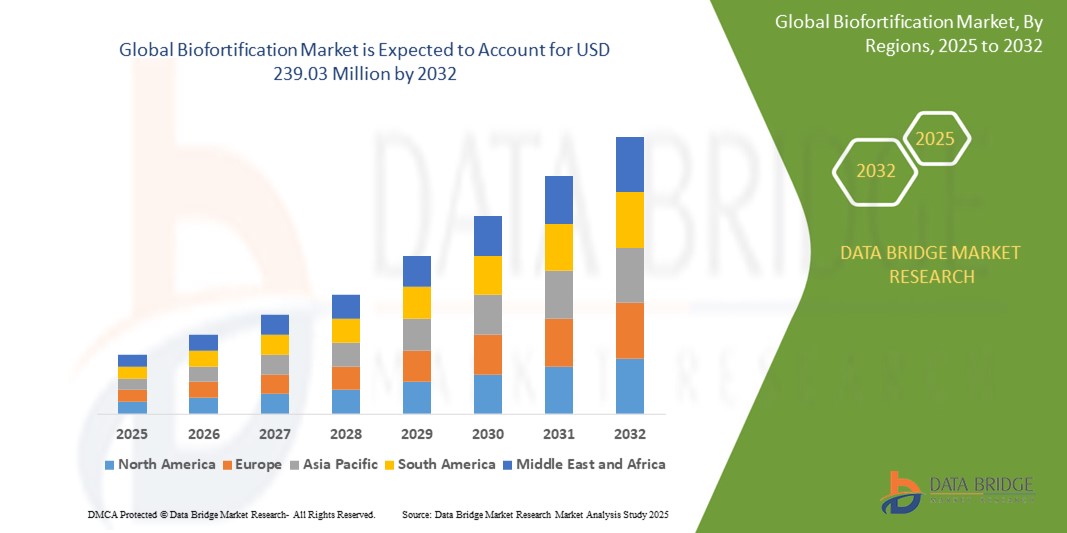
The global biofortification market size was valued at USD 127.24 million in 2024 and is expected to reach USD 239.03 million by 2032,at a CAGR of 8.20% during the forecast period
The market growth is largely fueled by the rising demand for nutrient-rich crops to combat malnutrition and enhance food security
Public health organizations and governments in developing countries are supporting biofortification programs to reduce micronutrient deficiencies. These initiatives are backed by funding, awareness campaigns, and research grants
Innovations such as CRISPR, marker-assisted selection, and gene editing are accelerating the development of biofortified varieties. These tools enhance efficiency and accuracy in incorporating key nutrients into staple crops
Biofortification Market Analysis
The global biofortification market is witnessing consistent demand due to a growing focus on improving the nutritional value of staple crops through natural enhancement techniques such as selective breeding or conventional methods without the use of synthetic interventions
This market trend reflects a steady shift in agricultural practices toward sustainable nutrition solutions, where stakeholders including farmers and food producers are increasingly adopting biofortified crops for their ability to deliver enhanced vitamins and minerals to populations at risk of micronutrient deficiencies, for instance through iron-enriched beans or zinc-fortified rice varieties
North America dominates the biofortification market with the largest revenue share of 35.05% in 2024, driven by a strong focus on nutritional innovation and widespread adoption of advanced agricultural practices
Asia-Pacific is expected to be the fastest growing region in the biofortification market during the forecast period with share of 10.05%, propelled by high rates of micronutrient deficiency, population growth, and increased government initiatives
The iron segment is expected to hold a substantial market share of 30%. Iron deficiency is a widespread global health issue, particularly in developing countries, leading to anemia and other health problems
Report Scope and Biofortification Market Segmentation
Attributes
Biofortification Key Market Insights
Segments Covered
By Crop Type: Sweet Potato, Cassava, Rice, Corn, Wheat, Beans, Pearl Millet, and Others
By Targeted Nutrients: Iron, Zinc, Vitamins, Amino Acid, and Others
By Gene Pool: Primary, Secondary, and Tertiary
By Technique: Conventional Plant Breeding, Agronomy, and Genetic Technology
In addition to the insights on market scenarios such as market value, growth rate, segmentation, geographical coverage, and major players, the market reports curated by the Data Bridge Market Research also include in-depth expert analysis, pricing analysis, brand share analysis, consumer survey, demography analysis, supply chain analysis, value chain analysis, raw material/consumables overview, vendor selection criteria, PESTLE Analysis, Porter Analysis, and regulatory framework.
Biofortification Market Trends
“Increasing Adoption of Nutrient-Rich Crop Varieties”
The market is experiencing significant growth due to increasing consumer awareness of the nutritional benefits of biofortified crops
Governments and international organizations are investing in biofortification programs to combat micronutrient deficiencies
Technological advancements in genetic engineering and conventional breeding techniques are enhancing the development of biofortified crops
Biofortified crops, such as iron-rich beans and zinc-enhanced wheat, are gaining popularity in regions with high rates of malnutrition
The market is expanding as biofortified crops become more accessible to farmers and consumers worldwide
For instance, in September 2024, the International Rice Research Institute announced the successful development of a new biofortified rice variety with enhanced zinc content, aimed at addressing zinc deficiency in developing countries
The biofortification market is poised for substantial growth, driven by technological innovations, increased awareness, and supportive policies, all contributing to improved global nutrition
Biofortification Market Dynamics
Driver
“Growing Consumer Demand for Sustainable and Ethical Products”
Consumer preference for sustainable and ethically produced products is rapidly increasing as more people become aware of the environmental and social impacts of their purchases, driven by widespread access to information and environmental advocacy
In the fashion and luxury sector, brands such as Stella McCartney and Gucci are responding by using eco-friendly materials and adopting transparent supply chains to meet consumer demand for responsible sourcing and fair trade
Younger generations such as millennials and Gen Z play a crucial role by favoring brands that prioritize social responsibility and sustainability, often willing to pay more for products that align with their values
Companies are innovating with sustainable certifications and alternative materials such as mushroom leather and recycled fabrics, combining luxury with environmental consciousness to attract discerning buyers
This growing demand fosters brand loyalty and opens new revenue opportunities as consumers increasingly support companies committed to ethical practices and transparent communication
Restraint/Challenge
“High Production Costs Limiting Market Accessibility”
High production costs linked to premium or specialized products create a significant barrier to market growth as expensive raw materials, skilled labor, and complex processes drive prices upward
These elevated costs limit accessibility, confining the market largely to affluent consumers and restricting broader market penetration among middle-income buyers
For instance, the use of sustainable materials or advanced technologies often requires costly research and sourcing, adding to overall expenses and product prices
Economic uncertainties increase price sensitivity, causing many potential buyers to delay or avoid luxury purchases, which restricts demand growth in key consumer segments
Companies must carefully balance maintaining exclusivity and quality while managing costs, as attempts to lower prices through cheaper materials risk harming brand reputation and consumer trust
Biofortification Market Scope
The market is segmented on the basis of crop type, targeted nutrients, gene pool, and technique.
By Crop Type
On the basis of crop type, the biofortification market is segmented into sweet potato, cassava, rice, corn, wheat, beans, pearl millet, and others. The sweet potato segment is projected to account for the largest share of the biofortification market. This is primarily due to the significant advancements in increasing its nutrient content, especially for orange-fleshed sweet potato (OFSP) which is rich in vitamin A. Sweet potatoes are a staple food in many regions, and their high carbohydrate content combined with enhanced nutritional value makes them a crucial crop for addressing micronutrient deficiencies.
The cereals segment (including rice, corn, and wheat) is anticipated to witness the fastest growth rate. This is driven by the fact that cereals are staple foods consumed by a vast majority of the global population, making them ideal targets for widespread nutritional improvement. Continued research and development in enhancing the micronutrient content of these widely consumed crops will fuel their rapid adoption and market expansion.
By Targeted Nutrients
On the basis of targeted nutrients, the biofortification market is segmented into iron, zinc, vitamins, amino acid, and others. The iron segment is expected to hold a substantial market share of 30%. Iron deficiency is a widespread global health issue, particularly in developing countries, leading to anemia and other health problems. Biofortification of staple crops with iron offers a sustainable and cost-effective solution to combat this deficiency, driving its significant market presence.
The vitamins segment is anticipated to witness the fastest CAGR. This growth is driven by the increasing awareness of vitamin deficiencies, such as vitamin a, in various populations and the rising demand for nutrient-dense foods. Biofortified crops rich in vitamins, such as vitamin a-enhanced sweet potatoes and maize, are gaining traction due to their direct impact on improving public health and reducing instances of related health issues.
By Gene Pool
On the basis of gene pool, the biofortification market is segmented into primary, secondary, and tertiary. The primary gene pool segment held the largest market share. This is because the primary gene pool consists of species that can readily cross with the cultivated crop and produce fertile offspring, making conventional plant breeding a more straightforward and widely accepted method for introducing desired traits, including nutrient enhancement.
The primary gene pool segment is also expected to witness the fastest growth rate. This is due to the continued advancements and efficiency of conventional breeding techniques. These methods are generally less contentious than genetic modification and are proving effective in enhancing nutrient content within the existing genetic diversity of staple crops, leading to faster and more widely adopted biofortified varieties.
By Technique
On the basis of technique, the biofortification market is segmented into conventional plant breeding, agronomy, and genetic technology. The conventional plant breeding segment held the largest market revenue share. This dominance is due to its established history, broader acceptance among consumers and regulatory bodies globally, and its proven success in developing numerous biofortified crop varieties by leveraging natural genetic variation.
The genetic technology segment is expected to witness the fastest CAGR. This growth is driven by ongoing advancements in biotechnological tools such as Crispr and other gene-editing techniques, which offer more precise and rapid ways to enhance crop nutritional content. As regulatory frameworks evolve and public acceptance increases, these advanced techniques hold immense potential for accelerating the development of highly nutritious crops.
Biofortification Market Regional Analysis
North America dominates the Biofortification market with the largest revenue share of 35.05% in 2024, driven by a strong focus on nutritional innovation and widespread adoption of advanced agricultural practices
The region has a well-established ecosystem of universities, biotech firms, and public health institutions actively developing and promoting biofortified crops to improve public health outcomes, particularly in vulnerable communities
Various federal programs and non-profit partnerships are encouraging the cultivation and consumption of biofortified crops, aiming to address hidden hunger and dietary deficiencies in schools, food banks, and community health efforts
U.S. Biofortification Market Insight
The U.S. biofortification market is growing steadily, with increased investments in agricultural biotechnology and a focus on improving nutritional security. Institutions and researchers are accelerating the development of biofortified crops to meet dietary needs, particularly among vulnerable populations. Consumer awareness around nutrition, supported by policy advocacy and educational programs, is helping drive acceptance and adoption across the region.
Europe Biofortification Market Insight
The Europe biofortification market is expanding gradually, shaped by a growing emphasis on sustainable agriculture and food innovation. Research organizations and government bodies are encouraging the use of biofortified crops to support public health goals. The region's well-established food systems and regulatory frameworks are enabling controlled adoption, especially in school feeding and public nutrition programs.
U.K. Biofortification Market Insight
The U.K. biofortification market is anticipated to grow at a noteworthy CAGR during the forecast period, driven by the escalating trend of home automation and a desire for heightened security and convenience. In addition, concerns regarding burglary and safety are encouraging both homeowners and businesses to choose keyless entry solutions. The UK’s embrace of connected devices, alongside its robust e-commerce and retail infrastructure, is expected to continue to stimulate market growth.
Germany Biofortification Market Insight
The Germany biofortification market is expected to expand at a considerable CAGR during the forecast period, fueled by increasing awareness of digital security and the demand for technologically advanced, eco-conscious solutions. Germany’s well-developed infrastructure, combined with its emphasis on innovation and sustainability, promotes the adoption of biofortifications, particularly in residential and commercial buildings. The integration of biofortifications with home automation systems is also becoming increasingly prevalent, with a strong preference for secure, privacy-focused solutions aligning with local consumer expectations.
Asia-Pacific Biofortification Market Insight
The Asia-pacific biofortification market is emerging as the fastest-growing region with share of 10.05%, propelled by high rates of micronutrient deficiency, population growth, and increased government initiatives in countries such as India, China, and the Philippines. Public health campaigns, seed distribution programs, and international funding are driving adoption among smallholder farmers and local communities. The region also benefits from strong agricultural infrastructure supporting large-scale implementation.
Japan Biofortification Market Insight
The Japan biofortification market is experiencing growing interest due to the country’s strong focus on health, aging population, and food innovation. While still in early stages compared to other regions, Japan is exploring the integration of biofortified crops to support its nutrition and wellness goals. With a culture that values functional foods and preventive healthcare, biofortified varieties are gradually being introduced through research initiatives and public-private partnerships.
China Biofortification Market Insight
The China biofortification market holds significant potential, fueled by the country's ongoing efforts to improve national nutrition and food security. With a large population affected by micronutrient deficiencies, China is investing in the development and distribution of biofortified crops such as zinc-rich rice and iron-fortified wheat. The government's strong support for agricultural innovation and public health programs is expected to drive widespread adoption, especially in rural and underserved regions.
Biofortification Market Share
The Biofortification industry is primarily led by well-established companies, including:
Latest Developments in Global Biofortification Market
In October 2021, Fedearroz introduced BioZn035, Colombia's first biofortified zinc rice, poised to meet significant demand in rural areas due to its health benefits, addressing nutritional deficiencies prevalent in the region
In July 2021, The Philippines legalized commercial cultivation of golden rice, genetically modified to produce beta-carotene, aimed at combating vitamin A deficiency among its population
In November 2020, HarvestPlus launched the CSDietary software on the Intake platform, pioneering the use of dietary data to shape evidence-based policies and programs targeting global nutrition challenges
In August 2020, Bayer AG partnered with the International Rice Research Institute (IRRI) to advance biofortified rice varieties, enhancing nutritional content to address food insecurity
In September 2020, BASF SE collaborated with the International Center for Tropical Agriculture (CIAT) to develop biofortified cassava varieties, enriching nutritional profiles to combat malnutrition in tropical regions
In July 2020, Syngenta AG partnered with the International Maize and Wheat Improvement Center (CIMMYT) to innovate biofortified maize varieties, aiming to enhance nutritional value and food security globally
SKU-
Get online access to the report on the World's First Market Intelligence Cloud
Interactive Data Analysis Dashboard
Company Analysis Dashboard for high growth potential opportunities
Research Analyst Access for customization & queries
Competitor Analysis with Interactive dashboard
Latest News, Updates & Trend analysis
Harness the Power of Benchmark Analysis for Comprehensive Competitor Tracking
Global Biofortification Market, Supply Chain Analysis and Ecosystem Framework
To support market growth and help clients navigate the impact of geopolitical shifts, DBMR has integrated in-depth supply chain analysis into its Global Biofortification Market research reports. This addition empowers clients to respond effectively to global changes affecting their industries. The supply chain analysis section includes detailed insights such as Global Biofortification Market consumption and production by country, price trend analysis, the impact of tariffs and geopolitical developments, and import and export trends by country and HSN code. It also highlights major suppliers with data on production capacity and company profiles, as well as key importers and exporters. In addition to research, DBMR offers specialized supply chain consulting services backed by over a decade of experience, providing solutions like supplier discovery, supplier risk assessment, price trend analysis, impact evaluation of inflation and trade route changes, and comprehensive market trend analysis.
Research Methodology
Data collection and base year analysis are done using data collection modules with large sample sizes. The stage includes obtaining market information or related data through various sources and strategies. It includes examining and planning all the data acquired from the past in advance. It likewise envelops the examination of information inconsistencies seen across different information sources. The market data is analysed and estimated using market statistical and coherent models. Also, market share analysis and key trend analysis are the major success factors in the market report. To know more, please request an analyst call or drop down your inquiry.
The key research methodology used by DBMR research team is data triangulation which involves data mining, analysis of the impact of data variables on the market and primary (industry expert) validation. Data models include Vendor Positioning Grid, Market Time Line Analysis, Market Overview and Guide, Company Positioning Grid, Patent Analysis, Pricing Analysis, Company Market Share Analysis, Standards of Measurement, Global versus Regional and Vendor Share Analysis. To know more about the research methodology, drop in an inquiry to speak to our industry experts.
Customization Available
Data Bridge Market Research is a leader in advanced formative research. We take pride in servicing our existing and new customers with data and analysis that match and suits their goal. The report can be customized to include price trend analysis of target brands understanding the market for additional countries (ask for the list of countries), clinical trial results data, literature review, refurbished market and product base analysis. Market analysis of target competitors can be analyzed from technology-based analysis to market portfolio strategies. We can add as many competitors that you require data about in the format and data style you are looking for. Our team of analysts can also provide you data in crude raw excel files pivot tables (Fact book) or can assist you in creating presentations from the data sets available in the report.
Claudio Rondena
Group Business Development & Strategic Marketing Director, C.O.C Farmaceutici SRL
"This morning we were involved in the first part, the data presentation of MKT analysis, selected abstract from your work. The board team was really impressed and very appreciated, as well."
David Manning - Thermo Fisher Scientific
Director, Global Strategic Accounts,
Dear Ricky, I want to thank you for the excellent market analysis (LIMS INSTALLED BASE DATA) that you and your team delivered, especially end of year on short notice.
Sachin and Shraddha captured the requirements, determined their path forward and executed quickly.
You, Sachin and Shraddha have been a pleasure to work with – very responsive, professional and thorough.
Your work is much appreciated.
Manager - Market Analytics,
Uriah D. Avila - Zeus Polymer Solutions
Thank you for all the assistance and the level of detail in the market report. We are very pleased with the results and the customization. We would like to continue to do business.
Business Development Manager,
(Pharmaceuticals Partner for Nasal Sprays) | Renaissance Lakewood LLC
DBMR was attentive and engaged while discussing the Global Nasal Spray Market. They understood what we were looking for and was able to provide some examples from the report as requested. DBMR Service team has been responsive as needed. Depending on what my colleagues were looking for, I will recommend your services and would be happy to stay connected in case we can utilize your research in the future.
Business Intelligence and Analytics,
Ipsen Biopharm Limited
We are impressed by the CENTRAL PRECOCIOUS PUBERTY (CPP) TREATMENT report - so a BIG thanks to you colleagues.
Competition Analyst,
Basler Web
I just wanted to share a quick note and let you know that you guys did a really good job. I’m glad I decided to work with you. I shall continue being associated with your company as long as we have market intelligence needs.
Marketing Director,
Buhler Group
It was indeed a good experience, would definitely recommend and come back for future prospects.
COO,
A global leader providing Drug Delivery Services
DBMR did an outstanding job on the Global Drug Delivery project, We were extremely impressed by the simple but comprehensive presentation of the study and the quality of work done. This report really helped us to access untapped opportunities across the globe.
Marketing Director,
Philips Healthcare
The study was customized to our targets and needs with well-defined milestones. We were impressed by the in-depth customization and inclusion of not only major but also minor players across the globe. The DBMR Market position grid helped us to analyze the market in different dimension which was very helpful for the team to get into the minute details.
Product manager,
Fujifilms
Thankful to the team for the amazing coordination, and helping me at the last moment with my presentation. It was indeed a comprehensive report that gave us revenue impacting solution enabling us to plan the right move.
Investor relations,
GE Healthcare
Thank you for the report, and addressing our needs in such short time. DBMR has outdone themselves in this project with such short timeframe.
Market Analyst,
Medincell
We found the results of this study compelling and will help our organization validate a market we are considering to enter. Thank you for a job well done.
Andrew - Senior Global Marketing Manager,
Medtronic (US)
I want to thank you for your help with this report – It’s been very helpful in our business planning and it well organized.
Amarildo - Manager, Global Strategic Alignment
MasterCard
We believe the work done by Data Bridge Team for our requirements in the North America Loyalty Management Market was fantastic and would love to continue working with your team moving forward.
Tor Hammer
Green Nexus LLc
Thank you for your quick response to this unfortunate circumstance. Please extend my thanks to your reach team. I will be contacting you in the future with further projects
I acknowledge the difficulty given by the very short warning for this report, and I think that its quality and your delivering time have been very satisfying.
Obviously, as a provider Data Bridge Market Research will be considered as a plus for future needs of Nippon Gases.
Yuki Kopyl (Asian Business Development Department)
UENO FOOD TECHNO INDUSTRY, LTD. (JAPAN)
Xylose report was very useful for our team. Thank you very much & hope to work with you again in the future