


Bone Healing Implants Market Size
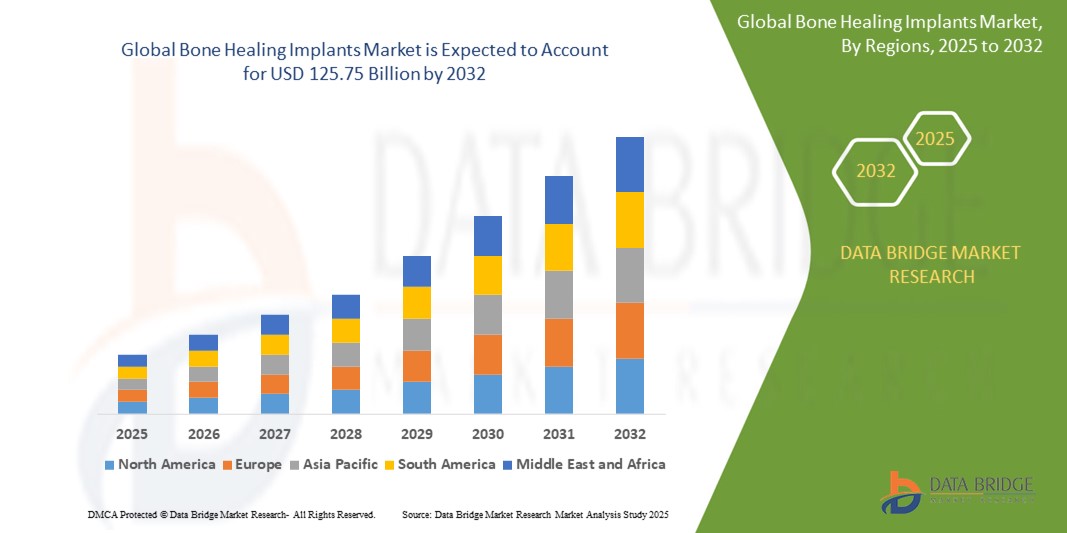
- The global bone healing implants market size was valued at USD 86.55 billion in 2024 and is expected to reach USD 125.75 billion by 2032, at a CAGR of 4.78% during the forecast period
- The market growth is largely fueled by the increasing geriatric population and the rising incidence of orthopedic injuries, leading to a greater demand for bone repair and regeneration procedures worldwide
- Furthermore, continuous advancements in implant technology, including novel biomaterials and designs, are establishing bone healing implants as crucial solutions for improving patient outcomes and reducing recovery times. These converging factors are accelerating the adoption of bone healing implants, thereby significantly boosting the industry's growth
Bone Healing Implants Market Analysis
- Bone healing implants, providing structural support and facilitating the natural regeneration of bone tissue, are increasingly essential tools in modern orthopedic medicine for treating fractures, deformities, and other skeletal injuries in patients of all ages across residential and healthcare settings due to their ability to improve healing outcomes and restore mobility
- The escalating demand for bone healing implants is primarily fueled by the growing global geriatric population, the rising incidence of traumatic injuries and musculoskeletal disorders, and an increasing preference for advanced surgical interventions to enhance recovery
- North America dominates in the bone healing implants market with a market share of 42.5% due to its advanced healthcare infrastructure, high adoption rates of surgical procedures, and the strong presence of leading medical device companies, with the U.S. experiencing substantial growth in implant procedures, particularly in trauma and sports medicine, driven by innovations in biomaterials and surgical techniques
- Asia-Pacific is expected to be the fastest-growing region in the bone healing implants market with a CAGR of 6.9% during the forecast period, due to increasing healthcare expenditure, a growing aging population, and rising awareness of advanced orthopedic treatments
- The reconstructive joint implants segment is expected to dominant share in the bone healing implants market with a market share of 47.4% due to the continuous need for effective solutions in fracture management and the wide range of devices available for various types of injuries
Report Scope and Bone Healing Implants Market Segmentation
|
Attributes |
Bone Healing Implants Key Market Insights |
|
Segments Covered |
|
|
Countries Covered |
North America
Europe
Asia-Pacific
Middle East and Africa
South America
|
|
Key Market Players |
|
|
Market Opportunities |
|
|
Value Added Data Infosets |
In addition to the insights on market scenarios such as market value, growth rate, segmentation, geographical coverage, and major players, the market reports curated by the Data Bridge Market Research also include in-depth expert analysis, pricing analysis, brand share analysis, consumer survey, demography analysis, supply chain analysis, value chain analysis, raw material/consumables overview, vendor selection criteria, PESTLE Analysis, Porter Analysis, and regulatory framework. |
Bone Healing Implants Market Trends
“Enhanced Precision and Personalization Through Advanced Technology”
- A significant and accelerating trend in the global bone healing implants market is the increasing incorporation of advanced technologies such as 3D printing and robotics in the design and surgical placement of these implants. This fusion of technologies is significantly enhancing the precision, customization, and efficiency of bone healing procedures
- For instance, Stryker's Tritanium 3D-printed implants offer porous structures designed to mimic natural bone, promoting better osseointegration. Similarly, robotic surgical systems such as Medtronic's Mazor X Stealth Edition assist surgeons in precisely placing spinal implants, leading to improved accuracy and reduced invasiveness
- The integration of 3D printing in bone healing implants enables the creation of patient-specific implants tailored to individual anatomical needs, potentially leading to better fit and outcomes. For instance, companies are developing custom-made cranial implants and complex fracture fixation devices using 3D printing. Furthermore, robotic assistance in surgery allows for more accurate implant placement, reduced surgical errors, and potentially faster recovery times for patients
- This trend towards more technologically advanced and personalized bone healing solutions is fundamentally reshaping the standards of care in orthopedic surgery. Consequently, companies such as Zimmer Biomet are investing in and developing robotic-assisted surgery platforms for joint replacement and trauma procedures, often involving bone healing implants
- The demand for bone healing implants that leverage advanced manufacturing and surgical technologies is growing rapidly across hospitals and specialized orthopedic centers, as healthcare professionals increasingly prioritize precision, efficiency, and improved patient outcomes
Bone Healing Implants Market Dynamics
Driver
“Growing Need Due to Rising Orthopedic Injuries and Aging Population”
- The increasing prevalence of orthopedic injuries across all age groups, coupled with the expanding global geriatric population susceptible to bone-related disorders, is a significant driver for the heightened demand for bone healing implants
- For instance, advancements in surgical techniques and implant materials are continuously being introduced by key players to address a wider range of orthopedic conditions and improve patient outcomes. Such innovations by leading companies are expected to drive the bone healing implants industry growth in the forecast period
- As the global population ages, the incidence of fractures, osteoporosis, and degenerative joint diseases rises, necessitating surgical interventions that often involve bone healing implants to restore function and alleviate pain
- Furthermore, the growing participation in sports and physical activities, along with a higher incidence of trauma from accidents, contributes to a greater need for effective fracture management and bone repair solutions provided by these implants
- The ability of bone healing implants to facilitate quicker recovery, restore mobility, and improve the quality of life for patients with orthopedic conditions are key factors propelling their adoption in hospitals and orthopedic centers worldwide. The increasing focus on minimally invasive surgical techniques and the development of more biocompatible and effective implant materials further contribute to market growth
Restraint/Challenge
“High Costs and Potential Surgical Complications Limiting Adoption”
- Concerns regarding the high cost of advanced bone healing implants and the potential for complications associated with surgical procedures pose a significant challenge to broader market access. The sophisticated materials and manufacturing processes involved in producing innovative implants can lead to higher prices compared to traditional fixation methods, raising concerns about affordability and reimbursement
- For instance, the use of novel biomaterials such as bioactive ceramics or patient-specific 3D-printed implants often increases the overall cost of the procedure. In addition, while advancements in surgical techniques have improved outcomes, the potential for complications such as infection, implant failure, or non-union can create apprehension among patients and healthcare providers
- Addressing these concerns through the development of cost-effective manufacturing techniques, value-based pricing models, and robust clinical evidence demonstrating the long-term efficacy and safety of advanced implants is crucial for wider adoption. Companies are focusing on research and development to improve implant longevity and reduce the risk of complications. Furthermore, clear communication of the benefits and risks associated with different implant options is essential for building trust among patients and physicians
- While technological advancements continue to enhance the performance of bone healing implants, the perceived high cost and the inherent risks associated with surgical interventions can still hinder widespread adoption, particularly in regions with limited healthcare budgets or for patients with concerns about surgical outcomes
- Overcoming these challenges through continuous innovation focused on cost reduction, enhanced implant safety profiles, and comprehensive patient education will be vital for sustained market growth and improved patient access to advanced bone healing solutions
Bone Healing Implants Market Scope
The market is segmented on the basis of type, devices, product type, material, and end user
- By Type
On the basis of type, the bone healing implants market is segmented into pins, wires, rods, screws, and plates. Screws held a significant market revenue share due to their widespread use in various orthopedic procedures for fracture fixation and stabilization. Their versatility and effectiveness in providing secure bone fixation drive their high demand across different applications
Rods are expected to witness a substantial growth rate, particularly in trauma and long bone fracture treatments. Their ability to provide intramedullary support and facilitate alignment during healing contributes to their increasing adoption by orthopedic surgeons
- By Devices
On the basis of device, the bone healing implants market is segmented into internal fixation devices and external fixation devices. Internal fixation devices held the largest market revenue share, driven by their direct application to the bone, providing stable and long-term support for healing. The preference for internal fixation in many fracture types and reconstructive surgeries contributes to its dominance
External fixation devices are expected to witness a steady growth rate, particularly in complex fractures, limb lengthening, and cases with soft tissue damage. Their ability to stabilize fractures externally, minimizing disruption to the injury site, makes them a crucial option in specific orthopedic scenarios
- By Product Type
On the basis of product type, the bone healing implants market can be segmented into spinal implants, dental implants, trauma and craniomaxillofacial implants, reconstructive joint implants, orthobiologics, and others. The reconstructive joint implants segment held the dominant share in the bone healing implants market with a market share of 47.4%, driven by the continuous need for effective solutions in managing joint degeneration and injuries, leading to a high volume of hip and knee replacement procedures that utilize bone healing principles
Spinal implants segment is expected to record the fastest growth rate with a CAGR of 6.5% from 2024 to 2032, driven by the increasing number of spinal surgeries and advancements in surgical techniques. Occupational hazards and age-related spinal disorders are fueling the demand for both spinal fusion and non-fusion implants. Innovations such as 3D-printed implants and robotic-assisted surgeries are improving surgical precision and recovery times, accelerating market growth
- By Material
On the basis of material, the bone healing implants market is segmented into metallic biomaterials, polymer biomaterials, ceramic biomaterials, natural biomaterials, and plastic coating biomaterials. Metallic biomaterials held the largest market revenue share due to their strength, durability, and biocompatibility, making them the standard for many load-bearing implants. The long history of successful use and continuous advancements in metal alloys contribute to their dominance
Ceramic biomaterials are expected to witness a notable growth rate, particularly in dental and certain orthopedic applications due to their excellent biocompatibility and wear resistance. Ongoing research into new ceramic formulations and their integration into different implant designs is driving their increasing adoption
- By End User
On the basis of end user, the bone healing implants market is segmented into clinics, hospitals, and others. Hospitals held the largest market revenue share due to the high volume of surgical procedures performed in these settings and their comprehensive infrastructure for orthopedic care. The concentration of specialized surgeons and advanced medical equipment in hospitals makes them the primary users of bone healing implants
Clinics are expected to witness a significant growth rate, particularly specialized orthopedic and ambulatory surgery centers, as more procedures are performed in outpatient settings. The increasing focus on cost-effectiveness and patient convenience is driving the shift of certain surgical procedures to clinic environments
Bone Healing Implants Market Regional Analysis
- North America dominates the bone healing implants market with the largest revenue share of 42.5% in 2024, driven by well-established healthcare infrastructure, high adoption rates of advanced surgical procedures, and a strong presence of leading medical device companies
- Healthcare professionals and patients in the region highly value the effectiveness of bone healing implants in improving patient outcomes, reducing recovery times, and restoring mobility following orthopedic injuries and degenerative conditions
- This widespread utilization is further supported by favorable reimbursement policies, a strong focus on research and development in the medical device sector, and a growing preference for advanced orthopedic treatments, establishing bone healing implants as a standard of care in both hospitals and specialized clinics
U.S. Bone Healing Implants Market Insight
The U.S. bone healing implants market captured a substantial revenue share within North America with 48.6% market share, driven by a high volume of orthopedic surgeries, advanced healthcare infrastructure, and favorable reimbursement policies. The increasing demand for minimally invasive procedures and the availability of cutting-edge implant technologies further propel market growth. The strong presence of key market players and continuous advancements in biomaterials contribute significantly to the market's expansion
Europe Bone Healing Implants Market Insight
The European bone healing implants market is projected to expand at a considerable rate, primarily driven by increasing healthcare expenditure and a growing geriatric population across various European countries. Stringent regulatory standards ensure the adoption of high-quality implants, while a rising preference for advanced orthopedic treatments in both hospitals and specialized clinics fuels market growth
U.K. Bone Healing Implants Market Insight
The U.K. bone healing implants market is anticipated to grow at a noteworthy pace, driven by an increasing prevalence of orthopedic disorders and a focus on healthcare services. Concerns regarding long recovery periods and the desire for improved surgical outcomes are encouraging the adoption of advanced bone healing solutions. The well-established healthcare system and patient access to innovative treatments support market growth.
Germany Bone Healing Implants Market Insight
The German bone healing implants market is expected to expand at a considerable rate, fueled by a strong healthcare infrastructure and a high awareness of advanced medical technologies. Germany's emphasis on quality and innovation in healthcare promotes the adoption of sophisticated bone healing implants in both residential and commercial buildings (referring to healthcare facilities). The integration of advanced surgical techniques and premium implant options is increasingly prevalent
Asia-Pacific Bone Healing Implants Market Insight
The Asia-Pacific bone healing implants market is poised to grow at the fastest rate with a CAGR of 6.9%, driven by increasing healthcare investments and a rapidly aging population in key countries such as China, Japan, and India. The rising incidence of trauma cases due to urbanization and industrialization, coupled with growing medical tourism, is fueling the demand for bone healing implants across the region
Japan Bone Healing Implants Market Insight
Japan bone healing implants market is gaining momentum due to the country’s advanced healthcare system and a significant elderly population requiring orthopedic care. The emphasis on high-quality medical treatments and the increasing adoption of minimally invasive surgical techniques drive the demand for sophisticated bone healing solutions in both residential (elderly care facilities) and hospital settings
India Bone Healing Implants Market Insight
India is expected to witness the highest compound annual growth rate (CAGR) in the bone healing implants market due to the rising incidence of trauma cases due to urbanization and industrialization, coupled with growing medical tourism
Bone Healing Implants Market Share
The bone healing implants industry is primarily led by well-established companies, including:
- Arthrex, Inc. (U.S.)
- NuVasive, Inc. (U.S.)
- Globus Medical, (U.S.)
- Integra LifeSciences Corporation (U.S.)
- Baxter (U.S.)
- AlloSource (U.S.)
- Smith + Nephew (U.K.)
- Medtronic (Ireland)
- Orthofix Medical Inc. (U.S.)
- TBF Tissue Engineering (France)
- OST Laboratoires (France)
- Zimmer Biomet (U.S.)
- Wright Medical Group N.V. (Netherlands)
- Stryker (U.S.)
- Geistlich Pharma AG (Switzerland)
- CONMED Corporation (U.S.)
- Johnson & Johnson Services, Inc. (U.S.)
Latest Developments in Global Bone Healing Implants Market
- In March 2025, Stryker, announced the expansion of its 3D-printed Tritanium portfolio with new porous implant designs aimed at enhancing bone ingrowth and accelerating fusion in spinal surgeries. This development underscores Stryker's commitment to leveraging additive manufacturing technologies to improve the biomechanical performance and patient outcomes of bone healing implants
- In March 2025, Medtronic received regulatory approval for its latest generation robotic-assisted surgery platform, which features enhanced precision and navigation capabilities for the placement of bone healing implants in complex trauma and spine procedures. This advancement highlights the increasing integration of robotics in orthopedic surgery to improve accuracy, reduce invasiveness, and potentially shorten patient recovery times
- In March 2025, Johnson & Johnson (DePuy Synthes) launched a new bioresorbable screw system made from advanced polymer materials designed for fracture fixation in pediatric patients. These implants gradually dissolve as the bone heals, eliminating the need for a second surgery for removal, addressing a significant need in pediatric orthopedics and demonstrating a focus on patient-centric solutions
- In February 2025, Zimmer Biomet announced a strategic partnership with a leading biotech firm to develop and commercialize novel bone growth factors that can be integrated with their existing portfolio of bone healing implants. This collaboration aims to enhance the biological healing process and improve outcomes in challenging fracture cases and bone regeneration procedures
- In January 2025, Smith+Nephew introduced a new generation of smart fracture fixation devices equipped with integrated sensors to monitor the healing progress in real-time. These devices can wirelessly transmit data to clinicians, allowing for more personalized post-operative care and early detection of potential complications, representing a step towards connected and data-driven orthopedic solutions

- Interactive Data Analysis Dashboard
- Company Analysis Dashboard for high growth potential opportunities
- Research Analyst Access for customization & queries
- Competitor Analysis with Interactive dashboard
- Latest News, Updates & Trend analysis
- Harness the Power of Benchmark Analysis for Comprehensive Competitor Tracking
Data collection and base year analysis are done using data collection modules with large sample sizes. The stage includes obtaining market information or related data through various sources and strategies. It includes examining and planning all the data acquired from the past in advance. It likewise envelops the examination of information inconsistencies seen across different information sources. The market data is analysed and estimated using market statistical and coherent models. Also, market share analysis and key trend analysis are the major success factors in the market report. To know more, please request an analyst call or drop down your inquiry.
The key research methodology used by DBMR research team is data triangulation which involves data mining, analysis of the impact of data variables on the market and primary (industry expert) validation. Data models include Vendor Positioning Grid, Market Time Line Analysis, Market Overview and Guide, Company Positioning Grid, Patent Analysis, Pricing Analysis, Company Market Share Analysis, Standards of Measurement, Global versus Regional and Vendor Share Analysis. To know more about the research methodology, drop in an inquiry to speak to our industry experts.
Data Bridge Market Research is a leader in advanced formative research. We take pride in servicing our existing and new customers with data and analysis that match and suits their goal. The report can be customized to include price trend analysis of target brands understanding the market for additional countries (ask for the list of countries), clinical trial results data, literature review, refurbished market and product base analysis. Market analysis of target competitors can be analyzed from technology-based analysis to market portfolio strategies. We can add as many competitors that you require data about in the format and data style you are looking for. Our team of analysts can also provide you data in crude raw excel files pivot tables (Fact book) or can assist you in creating presentations from the data sets available in the report.













