


Bruton’s Tyrosine Kinase (BKT) Market Size
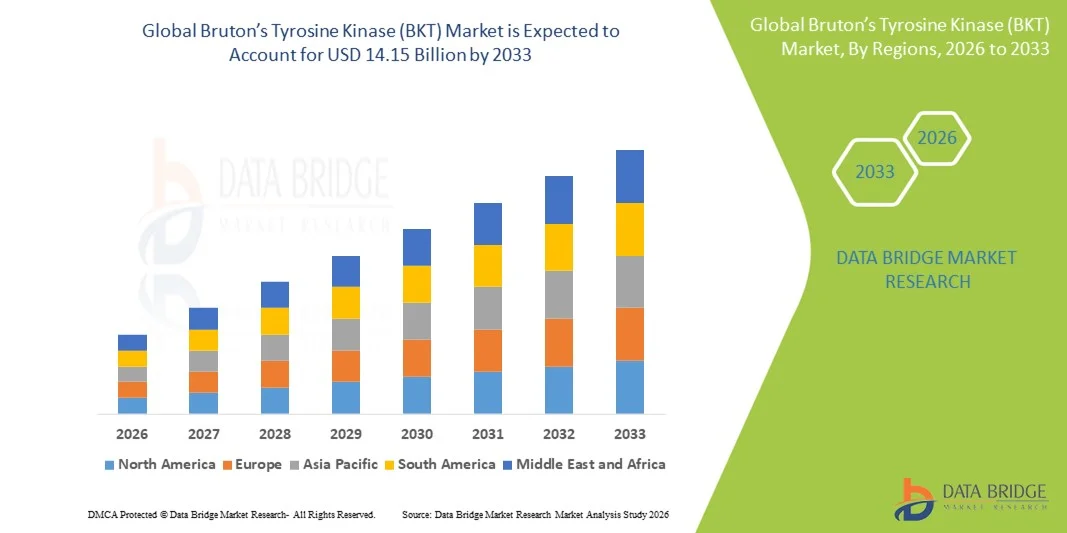
- The global Bruton’s Tyrosine Kinase (BKT) market size was valued at USD 8.11 billion in 2025 and is expected to reach USD 14.15 billion by 2033, at a CAGR of 7.20% during the forecast period
- The market growth is largely fueled by the increasing prevalence of B-cell malignancies and rising adoption of targeted oncology therapies, which continue to push demand for BTK inhibitors across global healthcare systems
- Furthermore, expanding clinical applications into autoimmune and inflammatory disorders, along with the development of next-generation, highly selective BTK inhibitors offering improved safety and efficacy, is establishing BTK inhibition as a preferred modern therapeutic strategy. These converging factors are accelerating the uptake of BTK-based treatments, thereby significantly boosting the industry’s growth
Bruton’s Tyrosine Kinase (BKT) Market Analysis
- Bruton’s Tyrosine Kinase (BTK) inhibitors, targeting B-cell receptor signaling, are increasingly vital components of modern oncology and hematology treatment protocols due to their high specificity, improved safety profiles, and ability to deliver durable clinical responses in patients with B-cell malignancies and select autoimmune disorders
- The escalating demand for BTK inhibitors is primarily fueled by the rising global incidence of B-cell leukemia, lymphomas, and other hematological malignancies, growing adoption of targeted therapies, and increasing preference among clinicians for orally administered, safer alternatives to conventional chemotherapy
- North America dominated the BTK inhibitor market with the largest revenue share of 43% in 2025, characterized by early adoption of precision oncology therapies, strong healthcare infrastructure, and a strong presence of key pharmaceutical innovators, with the U.S. experiencing substantial growth in BTK inhibitor prescriptions, particularly in hospitals and specialty clinics, driven by innovations in next-generation BTK therapies
- Asia-Pacific is expected to be the fastest-growing region in the BTK inhibitor market during the forecast period due to increasing prevalence of hematological cancers, expanding healthcare access, and rising investments in biopharmaceutical research and development
- B-cell leukemia segment dominated the BTK inhibitor market with a market share of 45.8% in 2025, driven by its high prevalence and established clinical treatment protocols
Report Scope and Bruton’s Tyrosine Kinase (BKT) Market Segmentation
|
Attributes |
Bruton’s Tyrosine Kinase (BKT) Key Market Insights |
|
Segments Covered |
|
|
Countries Covered |
North America
Europe
Asia-Pacific
Middle East and Africa
South America
|
|
Key Market Players |
|
|
Market Opportunities |
|
|
Value Added Data Infosets |
In addition to the insights on market scenarios such as market value, growth rate, segmentation, geographical coverage, and major players, the market reports curated by the Data Bridge Market Research also include in-depth expert analysis, patient epidemiology, pipeline analysis, pricing analysis, and regulatory framework |
Bruton’s Tyrosine Kinase (BKT) Market Trends
Expansion of Indications Beyond Oncology
- A significant and accelerating trend in the global BTK inhibitor market is the expansion of clinical applications beyond traditional B-cell malignancies into autoimmune and inflammatory disorders, including multiple sclerosis and chronic spontaneous urticaria
- For instance, BTK inhibitors such as evobrutinib and remibrutinib are being investigated in late-stage clinical trials for autoimmune conditions, showing potential to address previously unmet medical needs
- Next-generation BTK inhibitors are being designed with improved selectivity and safety profiles, enabling chronic administration for non-oncology indications without significant adverse effects
- The broader application of BTK inhibitors allows pharmaceutical companies to diversify revenue streams and reach larger patient populations, fundamentally altering the market landscape
- This trend is reshaping expectations among clinicians and patients for targeted therapies that can treat multiple conditions with a single mechanism of action. Demand for BTK inhibitors in non-oncology indications is expected to grow rapidly as regulatory approvals and clinical validations expand their labeled uses
- Increased collaboration between biotech firms and academic research institutions is accelerating innovation in BTK inhibitor development, particularly for rare and complex disorders
- Integration of digital health and real-world evidence platforms is enabling more precise patient monitoring, supporting the broader adoption of BTK inhibitors across diverse therapeutic areas
Bruton’s Tyrosine Kinase (BKT) Market Dynamics
Driver
Rising Prevalence of Hematological Malignancies and Adoption of Targeted Therapy
- The increasing global incidence of B-cell leukemia, lymphomas, and other hematological malignancies, combined with the preference for targeted therapies, is a significant driver for the adoption of BTK inhibitors
- For instance, in March 2025, AstraZeneca reported expanded BTK inhibitor prescriptions in chronic lymphocytic leukemia due to improved patient outcomes and broader clinical acceptance
- BTK inhibitors provide oral, targeted treatment options that reduce systemic toxicity compared to conventional chemotherapy, making them attractive to both physicians and patients
- Furthermore, growing awareness of personalized medicine and precision oncology supports the adoption of BTK-targeted therapies in hospitals and specialty clinics worldwide
- The convenience of oral administration, well-defined dosing protocols, and proven efficacy in relapsed or refractory cases are key factors accelerating BTK inhibitor uptake
- Increasing R&D investment in next-generation BTK inhibitors, alongside strategic collaborations, is expected to further drive market growth during the forecast period
- Expansion into emerging markets with rising healthcare infrastructure and growing awareness of hematological cancers presents additional growth opportunities for BTK inhibitors
- Increasing pipeline therapies and combination strategies with other targeted or immuno-oncology drugs are attracting investment and promoting wider adoption
Restraint/Challenge
Drug Resistance and High Treatment Costs
- The emergence of resistance mutations in patients receiving BTK inhibitors, along with high treatment costs, poses significant challenges to market expansion and long-term adoption
- For instance, clinical studies have reported C481S mutation-driven resistance in patients treated with first-generation BTK inhibitors, prompting the development of alternative therapies
- Addressing resistance requires next-generation BTK inhibitors with improved binding profiles, which can increase development costs and delay widespread adoption
- Furthermore, the high price of BTK inhibitors can limit access in developing regions and for uninsured or underinsured patients, restricting overall market penetration
- The need for continuous monitoring and combination therapies to overcome resistance adds complexity to treatment protocols and may deter some healthcare providers
- Overcoming these challenges through innovative drug design, patient assistance programs, and strategic pricing will be crucial for sustained market growth
- Stringent regulatory approval processes for new indications and combination therapies may delay market entry and limit short-term growth
- Potential adverse events and long-term safety concerns with chronic BTK inhibitor use may impact clinician prescribing behavior and patient adherence
Bruton’s Tyrosine Kinase (BKT) Market Scope
The market is segmented on the basis of diseases and end users.
- By Diseases
On the basis of disease, the BTK inhibitor market is segmented into B-cell leukemia, lymphomas, hematological malignancies, and graft-versus-host disease (GVHD). The B-cell leukemia segment dominated the market with the largest revenue share of 45.8% in 2025, driven by the high prevalence of chronic lymphocytic leukemia (CLL) and other B-cell leukemias globally. BTK inhibitors have become a first-line or preferred therapy in these patients due to their targeted action, oral administration, and proven efficacy in clinical trials. The segment benefits from well-established treatment guidelines and growing awareness among oncologists regarding BTK inhibitors’ benefits over traditional chemotherapy. Moreover, expansion of indications within leukemia subtypes is increasing patient access, further reinforcing the segment’s dominance. Pharmaceutical companies continue to focus on B-cell leukemia in their clinical pipelines, ensuring steady innovation and adoption. The large patient base, combined with established reimbursement frameworks in developed markets, contributes to sustained revenue generation in this segment.
The lymphomas segment is anticipated to witness the fastest growth rate during the forecast period, driven by the increasing prevalence of mantle cell lymphoma (MCL), diffuse large B-cell lymphoma (DLBCL), and other non-Hodgkin lymphomas. Advances in next-generation BTK inhibitors with improved selectivity and reduced adverse effects are expanding their use in lymphoma patients who were previously unsuitable for first-generation drugs. In addition, combination therapies involving BTK inhibitors and other targeted agents are showing promising results, accelerating uptake in both clinical trials and real-world settings. The segment growth is also supported by rising awareness among hematologists, improved diagnostic facilities, and emerging markets adopting advanced therapies. Expansion of hospital and specialty clinic networks in Asia-Pacific and Latin America further facilitates access, making lymphomas the fastest-growing disease segment.
- By End User
On the basis of end users, the BTK inhibitor market is segmented into hospitals, homecare, specialty clinics, and others. The hospitals segment dominated the market with the largest revenue share of 51.2% in 2025, owing to the centralized administration of BTK inhibitors, requirement for clinical supervision, and monitoring of adverse events. Hospitals remain the primary point of care for hematology-oncology patients, providing access to comprehensive treatment protocols, infusion services, and combination therapy regimens. Adoption is driven by the presence of specialized oncology departments, well-trained medical staff, and availability of supportive services such as laboratory diagnostics and imaging. In addition, hospitals in North America and Europe have strong reimbursement mechanisms for BTK inhibitor therapies, which encourages higher patient enrollment. Leading pharmaceutical companies often prioritize hospitals for drug launches, clinical trials, and patient support programs, further consolidating their dominance. The segment also benefits from ongoing collaborations between hospitals and biopharma companies to expand BTK inhibitor access and monitoring.
The specialty clinics segment is expected to witness the fastest growth rate during forecast period, as clinics focused on hematology, oncology, or autoimmune disorders increasingly adopt BTK inhibitors for outpatient management. These clinics offer convenience for patients requiring oral targeted therapies without hospitalization and can provide personalized monitoring of therapy response and side effects. Expansion of specialty clinics in emerging markets, coupled with increasing awareness among patients and physicians, is driving rapid adoption. The ability to deliver patient education, follow-up care, and combination therapy management efficiently in outpatient settings supports segment growth. Furthermore, partnerships with pharmaceutical companies for patient assistance programs enhance affordability and accessibility, accelerating the uptake of BTK inhibitors in specialty clinics globally.
Bruton’s Tyrosine Kinase (BKT) Market Regional Analysis
- North America dominated the BTK inhibitor market with the largest revenue share of 43% in 2025, characterized by early adoption of precision oncology therapies, strong healthcare infrastructure, and a strong presence of key pharmaceutical innovators
- Physicians and healthcare providers in the region prioritize BTK inhibitors due to their proven efficacy, oral administration, and reduced systemic toxicity compared to traditional chemotherapy, making them a preferred treatment option for patients with chronic lymphocytic leukemia, mantle cell lymphoma, and related disorders
- The strong presence of leading pharmaceutical companies, advanced healthcare infrastructure, and well-established reimbursement policies further support widespread adoption of BTK inhibitors in hospitals and specialty clinics
U.S. Bruton’s Tyrosine Kinase (BKT) Market Insight
The U.S. BTK inhibitor market captured the largest revenue share of 78% in 2025 within North America, fueled by the high prevalence of B-cell malignancies and the early adoption of targeted oncology therapies. Physicians increasingly prioritize BTK inhibitors due to their oral administration, proven efficacy, and reduced systemic toxicity compared to conventional chemotherapy. The growing trend of personalized medicine and precision oncology supports widespread uptake in hospitals and specialty clinics. Furthermore, robust insurance coverage and reimbursement policies make BTK therapies more accessible to patients. Clinical trial activity and pipeline expansions by major pharmaceutical companies are driving innovation and faster adoption. The strong healthcare infrastructure, coupled with centralized treatment protocols, ensures the U.S. remains the dominant market in North America.
Europe Bruton’s Tyrosine Kinase (BTK) Market Insight
The Europe BTK inhibitor market is projected to expand at a substantial CAGR throughout the forecast period, primarily driven by increasing prevalence of hematological malignancies and rising awareness of targeted therapy benefits. Stringent healthcare regulations and structured treatment guidelines in countries such as Germany, France, and Italy support the adoption of BTK inhibitors in hospitals and specialty clinics. The growth of oncology centers and improved diagnostic capabilities facilitate early detection and treatment. In addition, increasing patient awareness and access to innovative therapies are fueling adoption across both outpatient and hospital settings. European markets are also benefiting from collaborative R&D programs and government support for precision medicine initiatives.
U.K. Bruton’s Tyrosine Kinase (BTK) Market Insight
The U.K. BTK inhibitor market is anticipated to grow at a noteworthy CAGR during the forecast period, driven by rising B-cell malignancy cases and expanding precision oncology infrastructure. Growing adoption of oral targeted therapies among hematologists and oncologists, combined with patient preference for less invasive treatment regimens, supports market growth. Access to clinical trials and reimbursement schemes enhances the penetration of BTK inhibitors in both hospitals and specialty clinics. In addition, increasing partnerships between pharmaceutical companies and healthcare providers are improving awareness and access to advanced therapies. The U.K.’s well-developed healthcare system and adoption of digital health platforms further stimulate the market.
Germany Bruton’s Tyrosine Kinase (BTK) Market Insight
The Germany BTK inhibitor market is expected to expand at a considerable CAGR during the forecast period, fueled by rising awareness of B-cell malignancies and strong emphasis on innovative oncology therapies. Germany’s well-established healthcare infrastructure, advanced diagnostic facilities, and focus on early cancer detection promote BTK inhibitor adoption. Hospitals and specialty clinics are increasingly integrating targeted therapies into standard treatment protocols. The presence of leading pharmaceutical companies and clinical trial activities ensures the introduction of next-generation BTK inhibitors with improved efficacy and safety. Patient access programs and reimbursement coverage further support market growth in the country.
Asia-Pacific Bruton’s Tyrosine Kinase (BTK) Market Insight
The Asia-Pacific BTK inhibitor market is poised to grow at the fastest CAGR during the forecast period of 2026 to 2033, driven by increasing incidence of hematological malignancies, improving healthcare infrastructure, and rising awareness of targeted therapies. Countries such as China, Japan, and India are witnessing rapid adoption of BTK inhibitors in hospitals and specialty clinics. Government initiatives promoting healthcare access and precision medicine are accelerating market growth. In addition, expanding oncology centers and increasing availability of affordable BTK therapies contribute to faster adoption. The region’s growing population of diagnosed patients and increasing physician expertise in targeted therapies support continued market expansion.
Japan Bruton’s Tyrosine Kinase (BTK) Market Insight
The Japan BTK inhibitor market is gaining momentum due to high prevalence of B-cell malignancies, advanced healthcare infrastructure, and strong adoption of precision oncology. Integration of BTK inhibitors into established hospital and specialty clinic protocols supports wider patient access. Japanese physicians emphasize safer, oral therapies that reduce hospital visits, fueling demand. Clinical trials and approvals of next-generation BTK inhibitors are increasing treatment options for relapsed or refractory cases. The focus on patient-centered care and government-backed healthcare programs further stimulates market growth.
India Bruton’s Tyrosine Kinase (BTK) Market Insight
The India BTK inhibitor market accounted for the largest market revenue share in Asia-Pacific in 2025, attributed to rising incidence of hematological cancers, increasing healthcare awareness, and expanding oncology infrastructure. Growing accessibility of hospitals and specialty clinics equipped to administer targeted therapies enhances BTK inhibitor adoption. Government initiatives promoting affordable cancer care and the expansion of private healthcare facilities contribute to market growth. Increased patient awareness and adoption of oral targeted therapies also support market penetration. In addition, collaborations between pharmaceutical companies and healthcare providers facilitate wider distribution and treatment access across the country.
Bruton’s Tyrosine Kinase (BKT) Market Share
The Bruton’s Tyrosine Kinase (BKT) industry is primarily led by well-established companies, including:
- AbbVie Inc (U.S.)
- Johnson & Johnson Services, Inc. (U.S.)
- AstraZeneca (U.K.)
- Merck & Co., Inc. (U.S.)
- Eli Lilly and Company (U.S.)
- Gilead Sciences, Inc. (U.S.)
- Bristol Myers Squibb Company (U.S.)
- Takeda Pharmaceutical Company Limited (Japan)
- F. Hoffmann-La Roche Ltd (Switzerland)
- Novartis AG (Switzerland)
- Sanofi (France)
- TG Therapeutics, Inc. (U.S.)
- ONO PHARMACEUTICAL CO., LTD. (Japan)
- Sun Pharmaceutical Industries Ltd. (India)
- Aptose Biosciences, Inc. (Canada)
- ACEA Biosciences, Inc. (U.S.)
- Principia Biopharma (U.S.)
- Eternity Biotech, Inc. (U.S.)
- InnoCare (China)
What are the Recent Developments in Global Bruton’s Tyrosine Kinase (BKT) Market?
- In March 2025, Sanofi announced that the FDA accepted its regulatory submission for tolebrutinib with priority review for the indication of non relapsing secondary progressive multiple sclerosis (nrSPMS). If approved, tolebrutinib would be the first brain-penetrant BTK inhibitor to treat nrSPMS and address the accumulation of disability independently of relapses
- In January 2023, the U.S. FDA granted accelerated approval to pirtobrutinib (Jaypirca) for adult patients with relapsed or refractory mantle cell lymphoma (MCL) after at least two prior therapies, including a BTK inhibitor. This is significant because pirtobrutinib is a non-covalent (reversible) BTK inhibitor, offering an option for patients whose disease progressed on or became resistant to first-generation covalent BTK inhibitors
- In December 2022, at the 64th ASH (American Society of Hematology) meeting, Nurix presented more data on NX 2127, showing sustained BTK degradation and clinical activity in heavily pretreated CLL patients, including those with prior BTK resistance mutations. In a cohort of 23 CLL patients, 48% had BTK resistance mutations at baseline
- In October 2022, Merck KGaA / EMD Serono reported new long-term Phase II data for their BTK inhibitor evobrutinib in relapsing multiple sclerosis (RMS) from its open-label extension (OLE) study. Patients on 75 mg twice daily maintained very low annualized relapse rates (ARR ~0.09–0.13) during the OLE
- In October 2021, Nurix Therapeutics announced initial Phase 1a human data for NX 2127, a novel BTK degrader, in patients with relapsed/refractory B-cell malignancies. The data showed > 90% degradation of BTK at the 200 mg dose, proving the mechanism of action for their targeted protein degradation approach

- Interactive Data Analysis Dashboard
- Company Analysis Dashboard for high growth potential opportunities
- Research Analyst Access for customization & queries
- Competitor Analysis with Interactive dashboard
- Latest News, Updates & Trend analysis
- Harness the Power of Benchmark Analysis for Comprehensive Competitor Tracking
Data collection and base year analysis are done using data collection modules with large sample sizes. The stage includes obtaining market information or related data through various sources and strategies. It includes examining and planning all the data acquired from the past in advance. It likewise envelops the examination of information inconsistencies seen across different information sources. The market data is analysed and estimated using market statistical and coherent models. Also, market share analysis and key trend analysis are the major success factors in the market report. To know more, please request an analyst call or drop down your inquiry.
The key research methodology used by DBMR research team is data triangulation which involves data mining, analysis of the impact of data variables on the market and primary (industry expert) validation. Data models include Vendor Positioning Grid, Market Time Line Analysis, Market Overview and Guide, Company Positioning Grid, Patent Analysis, Pricing Analysis, Company Market Share Analysis, Standards of Measurement, Global versus Regional and Vendor Share Analysis. To know more about the research methodology, drop in an inquiry to speak to our industry experts.
Data Bridge Market Research is a leader in advanced formative research. We take pride in servicing our existing and new customers with data and analysis that match and suits their goal. The report can be customized to include price trend analysis of target brands understanding the market for additional countries (ask for the list of countries), clinical trial results data, literature review, refurbished market and product base analysis. Market analysis of target competitors can be analyzed from technology-based analysis to market portfolio strategies. We can add as many competitors that you require data about in the format and data style you are looking for. Our team of analysts can also provide you data in crude raw excel files pivot tables (Fact book) or can assist you in creating presentations from the data sets available in the report.












