


Byssinosis Treatment Market Size
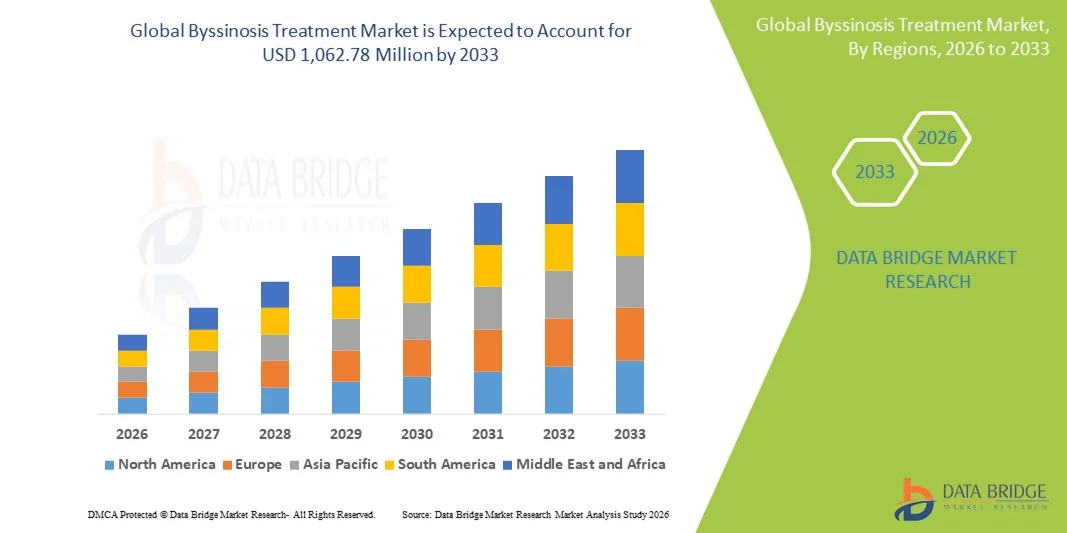
- The global byssinosis treatment market size was valued at USD 776.56 million in 2025 and is expected to reach USD 1,062.78 million by 2033, at a CAGR of 4.00% during the forecast period
- The market growth is primarily driven by the rising incidence of occupational respiratory disorders among textile, cotton processing, and industrial workers, along with increasing awareness of workplace safety and early medical intervention
- In addition, advancements in respiratory therapeutics, improved diagnostic capabilities, and expanding governmental regulations aimed at reducing exposure to harmful cotton dust are supporting higher adoption of treatment solutions. These combined factors are accelerating the demand for effective byssinosis management, thereby propelling overall market grow
Byssinosis Treatment Market Analysis
- Byssinosis treatment, involving bronchodilators, corticosteroids, respiratory therapy, and preventive occupational health measures, is becoming increasingly important across industrial and textile sectors due to rising awareness of dust-induced respiratory disorders and the need to safeguard worker health
- The growing demand for byssinosis treatment is primarily driven by increasing cases of cotton-dust–related lung disease among textile workers, stronger workplace safety regulations, and heightened emphasis on early diagnosis and long-term respiratory management
- North America dominated the byssinosis treatment market with the largest revenue share of 38.9% in 2025, supported by advanced healthcare infrastructure, strict occupational safety enforcement, and higher awareness regarding chronic respiratory diseases, with the U.S. showing strong adoption of therapeutic protocols and worker protection programs
- Asia-Pacific is expected to be the fastest-growing regional market during the forecast period due to its large textile production base, rising industrial workforce, and increasing governmental initiatives aimed at improving workplace air-quality standards
- The bronchodilator segment dominated the byssinosis treatment market with a market share of 42.6% in 2025, driven by its rapid symptom-relief capability, widespread clinical acceptance, and frequent use as first-line therapy for managing airway obstruction in affected workers
Report Scope and Byssinosis Treatment Market Segmentation
|
Attributes |
Byssinosis Treatment Key Market Insights |
|
Segments Covered |
|
|
Countries Covered |
North America
Europe
Asia-Pacific
Middle East and Africa
South America
|
|
Key Market Players |
|
|
Market Opportunities |
|
|
Value Added Data Infosets |
In addition to the insights on market scenarios such as market value, growth rate, segmentation, geographical coverage, and major players, the market reports curated by the Data Bridge Market Research also include in-depth expert analysis, patient epidemiology, pipeline analysis, pricing analysis, and regulatory framework |
Byssinosis Treatment Market Trends
Advancement of AI-Enabled Diagnostic & Monitoring Tools
- A significant and accelerating trend in the global byssinosis treatment market is the growing integration of AI-driven respiratory monitoring tools and automated diagnostic systems that help detect early signs of cotton-dust–related lung impairment and enhance patient management efficiency
- For instance, AI-powered spirometry platforms such as NuvoAir’s digital respiratory ecosystem enable remote lung-function monitoring and real-time clinical updates for workers exposed to textile-mill dust, supporting proactive disease intervention
- AI integration in respiratory health tools allows for improved pattern recognition, enhanced airflow-obstruction analysis, and more accurate prediction of disease progression; for instance, several digital respiratory solutions now use machine-learning algorithms to identify declining lung function earlier than traditional manual assessments
- The seamless integration of AI-based screening systems with occupational health programs allows centralized review of worker respiratory data, enabling clinicians to coordinate treatment plans alongside workplace safety assessments for more efficient disease prevention
- This trend toward intelligent, automated, and interconnected respiratory-care solutions is reshaping expectations for occupational lung-disease management, prompting companies such as MonitAir to introduce advanced monitoring platforms capable of alerting clinicians to deteriorating respiratory parameters in high-risk workers
- The demand for AI-enhanced respiratory-care tools is rapidly increasing across textile, cotton-processing, and industrial sectors as employers and healthcare providers prioritize early detection, continuous monitoring, and more comprehensive worker-health oversight
Byssinosis Treatment Market Dynamics
Driver
Growing Need Due to Rising Incidence of Occupational Respiratory Disorders
- The increasing prevalence of dust-induced respiratory conditions among textile and cotton-processing workers, coupled with stronger emphasis on workplace health monitoring, is a significant driver for the rising demand for effective byssinosis treatment
- For instance, in March 2025, several South Asian textile hubs expanded adoption of digital air-quality surveillance systems integrated with worker respiratory-screening programs, a move expected to support higher usage of early-intervention therapies
- As employers and industrial health authorities become more aware of chronic respiratory risks, treatments such as bronchodilators, corticosteroids, and structured pulmonary-rehabilitation programs are being adopted more widely to manage symptoms and reduce disease progression
- Furthermore, the growing focus on occupational safety compliance and initiatives promoting cleaner manufacturing environments are making byssinosis care a critical component of industrial health frameworks, supporting improved lung-health outcomes among exposed workers
- The availability of portable spirometry devices, digital lung-function trackers, and workplace health-management applications is accelerating adoption of respiratory-care solutions across developing and developed regions
- The shift toward comprehensive respiratory-wellness programs, supported by easier access to diagnostic tools and rising prioritization of worker protection, is contributing significantly to global market expansion
Restraint/Challenge
Skin Irritation Issues and Regulatory Compliance Hurdle
- Concerns surrounding the limited awareness of byssinosis symptoms among workers and employers, along with inconsistent enforcement of dust-exposure regulations, pose a major challenge to broader adoption of treatment programs
- For instance, reports from certain textile-producing regions highlight delayed medical consultation due to workers underestimating early respiratory symptoms, resulting in underdiagnosis and poor treatment uptake
- Addressing these issues through better workplace education, routine lung-function screening, and stricter enforcement of air-quality guidelines is essential for strengthening preventive care. Companies specializing in occupational health services increasingly emphasize worker-awareness initiatives and regular monitoring to improve disease detection and treatment adherence
- In addition, the cost associated with advanced diagnostic tools and chronic management medications can be a barrier for small-scale mills or low-income workers, particularly in developing regions where access to specialized respiratory care remains limited
- While cost-efficient diagnostic solutions are emerging, the perceived expense of long-term management can still hinder adherence among affected populations, especially where healthcare access is uneven
- Overcoming these challenges through improved regulatory enforcement, increased workplace education, and wider availability of affordable diagnostic and treatment options will be critical for sustained market growth
Byssinosis Treatment Market Scope
The market is segmented on the basis of treatment, diagnosis, route of administration, symptoms, end-users, and distribution channel.
- By Treatment
On the basis of treatment, the byssinosis treatment market is segmented into corticosteroids, bronchodilators, oxygen therapy, breathing exercise, and others. The bronchodilators segment dominated the market with the largest market revenue share of 42.6% in 2025, driven by its role as the primary symptomatic therapy for airflow obstruction in exposed workers. Bronchodilators provide rapid relief from wheeze and breathlessness, making them the first-line intervention in both acute and chronic presentations. Their wide availability, multiple formulation options (short- and long-acting), and inclusion in occupational health protocols secure steady demand across clinics and hospitals. Affordable generics and established clinical familiarity further reinforce clinician preference and patient adherence. Routine workplace screening programs that detect airflow limitation often lead directly to bronchodilator prescriptions, maintaining high utilization rates.
The corticosteroids segment is anticipated to witness the fastest growth rate from 2026 to 2033, fuelled by increasing emphasis on anti-inflammatory management to prevent progression to chronic fibrosis. Growing clinical endorsement of inhaled corticosteroids for earlier-stage disease, innovations in delivery systems, and combination inhaler adoption are expanding the addressable patient pool. Policy and occupational-health initiatives promoting early anti-inflammatory interventions are increasing prescriptions. Improved access to inhalation therapy in emerging markets and education on long-term outcomes support uptake. As diagnostic coverage expands and moderate-to-severe cases are identified sooner, corticosteroid utilization is projected to rise markedly across regions.
- By Diagnosis
On the basis of diagnosis, the market is segmented into pulmonary function tests, X-ray, and CT scan. The pulmonary function tests (PFTs) segment dominated the market with the largest revenue share in 2025 because PFTs are essential, first-line tools for detecting and monitoring airflow limitation in occupational surveillance. Portable spirometry enables on-site screening in textile plants, delivering immediate, actionable results that drive early interventions and follow-up care. Their cost-effectiveness, ease of deployment, and integration into routine employee health checks make PFTs the backbone of byssinosis diagnosis worldwide. Employers and occupational-health programs routinely rely on serial PFTs to track lung-function trends and trigger medical management. Faster results and expanding availability of validated handheld devices strengthen PFT dominance in both developed and emerging textile regions.
The CT scan segment is expected to register the fastest growth from 2026 to 2033, driven by increased use for detailed assessment of parenchymal changes and fibrosis that PFTs and X-rays may miss. Broader access to imaging infrastructure, adoption of low-dose CT protocols, and regulatory emphasis on definitive diagnosis for occupational claims are encouraging CT utilization. CT’s superior sensitivity for structural lung damage supports staging, prognosis, and therapeutic decision-making in chronic disease. Investment in regional imaging centers and hospital upgrades in textile-intensive geographies is expanding CT availability. As clinicians seek more precise diagnostic evidence, CT imaging is becoming a rapidly growing diagnostic tool in the market.
- By Route of Administration
On the basis of route of administration, the market is segmented into intramuscular, intravenous, oral, and others. The oral segment dominated the market in 2025 due to the convenience, affordability, and widespread use of orally administered bronchodilators and anti-inflammatory agents for chronic outpatient management. Oral formulations are particularly favored in low-resource settings and for long-term maintenance therapy where inhaler availability or technique is limited. Generics and well-established oral regimens make sustained treatment accessible to large worker populations. Primary-care providers and clinics commonly prescribe oral agents for mild-to-moderate symptoms, supporting broad market penetration. Patient preference for simple dosing and lower upfront costs reinforces oral route dominance across regions.
The intravenous segment is projected to be the fastest-growing route from 2026 to 2033, driven by increasing hospital-based management of severe or acute exacerbations requiring prompt systemic therapy. IV corticosteroids and bronchodilators provide rapid, reliable control in respiratory distress and are standard in emergency and critical-care settings. Growth in hospital capacity, emergency respiratory units, and standardized acute-care protocols is increasing IV utilization. Rising incidence of severe occupational lung episodes in some textile clusters is creating demand for hospital-administered therapies. Improvements in IV drug formulations and clinical pathways that prioritize early aggressive management are further accelerating this route’s adoption.
- By Symptoms
On the basis of symptoms, the market is segmented into fever, muscle and joint pain, shivering, tiredness, dry cough, and others. The dry cough segment dominated the market in 2025 as cough is the most prevalent and early-reported symptom prompting medical evaluation among textile workers. Dry cough’s high visibility and its role as an initial clinical trigger for occupational screening drive frequent clinical visits and treatment initiation. Managing cough is central to preventing further airway damage, so therapeutic pathways and monitoring often focus on this symptom. Workplace health programs commonly educate workers to report persistent cough, increasing diagnosis rates tied to this symptom. Pharmacologic and non-pharmacologic interventions that relieve cough remain core to early byssinosis care, sustaining market share.
The tiredness segment is expected to grow the fastest from 2026 to 2033 as clinicians increasingly recognize chronic fatigue as a marker of reduced lung function and systemic impact of byssinosis. Awareness campaigns and improved screening are shifting attention to non-specific symptoms such as fatigue that previously went unreported. Employers are integrating fatigue screening into occupational health checks, identifying cases earlier and prompting medical evaluation. Research linking chronic respiratory impairment to decreased work capacity is driving clinical focus on tiredness as a treatment-relevant symptom. As screening broadens beyond classic respiratory complaints, management of fatigue-related presentations is rising rapidly.
- By End-Users
On the basis of end-users, the market is segmented into clinic, hospital, and others. The hospital segment dominated the market in 2025 because hospitals provide comprehensive diagnostic, imaging, and acute-care services required for severe byssinosis and complex case management. Hospitals house pulmonary specialists, respiratory-therapy units, and emergency services that handle advanced presentations and long-term follow-up. They also serve as primary centers for occupational-disease certification, imaging, and multidisciplinary care coordination. Expansion of hospital infrastructure in textile-producing regions has increased accessibility to higher-level care, reinforcing hospital dominance. Referral systems that escalate complicated cases from clinics to hospitals ensure continued high hospital utilization.
The clinic segment is expected to be the fastest-growing end-user channel from 2026 to 2033, driven by expansion of community and occupational-health clinics near industrial zones for early detection and routine monitoring. Clinics offer lower-cost, faster-access care for mild-to-moderate cases and are increasingly equipped with portable diagnostic tools. Employer-sponsored clinics and on-site health services reduce barriers to screening and follow-up for workers. Policy initiatives promoting primary-care strengthening in emerging economies support clinic capacity building for respiratory health. As early-detection efforts scale, clinics will capture more patient volume and drive rapid growth.
- By Distribution Channel
On the basis of distribution channel, the market is segmented into hospital pharmacy, retail pharmacy, and online pharmacy. The hospital pharmacy segment dominated the market in 2025 because a significant share of byssinosis treatment especially acute and specialty medications—is dispensed directly through hospitals treating severe cases. Hospital pharmacies supply emergency medications, IV formulations, and post-discharge prescriptions, ensuring continuity of care for hospitalized workers. Centralized procurement and stock control in hospitals support reliable availability of key respiratory drugs. Hospitals also dispense long-term medications for chronic patients returning for follow-up, maintaining steady pharmacy throughput. The role of hospitals in occupational disease management and certification links treatment flow directly to hospital dispensaries.
The online pharmacy segment is projected to be the fastest-growing distribution channel from 2026 to 2033, propelled by rising digital adoption, telemedicine integration, and convenience for chronic medication refills. Workers in remote or industrial areas increasingly use online platforms for timely access to inhalers, oral medications, and monitoring devices. E-commerce enables subscription refills, price comparisons, and doorstep delivery benefits that improve adherence for long-term therapy. Major online pharmacy providers expanding respiratory portfolios and partnerships with telehealth services are accelerating channel growth. Improved internet penetration and regulatory acceptance of online drug dispensing in many markets uplift the online pharmacy CAGR.
Byssinosis Treatment Market Regional Analysis
- North America dominated the byssinosis treatment market with the largest revenue share of 38.9% in 2025, supported by advanced healthcare infrastructure, strict occupational safety enforcement, and higher awareness regarding chronic respiratory diseases, with the U.S. showing strong adoption of therapeutic protocols and worker protection programs
- The region benefits from widespread availability of pulmonary specialists, modern imaging technologies, and standardized clinical pathways that support early detection and comprehensive management of byssinosis
- High healthcare spending, employer-mandated respiratory screening programs, and strong adoption of inhaled therapies further reinforce market leadership by ensuring timely treatment access for affected workers
U.S. Byssinosis Treatment Market Insight
The U.S. byssinosis treatment market accounted for the largest share within North America in 2025, driven by comprehensive workplace safety regulations and employer-mandated respiratory surveillance. The country’s strong focus on occupational health enables early detection through advanced diagnostic tools such as spirometry and CT imaging. Growing acknowledgment of chronic dust-related respiratory risks among workers is pushing demand for corticosteroids, bronchodilators, and oxygen-assist therapies. Increasing adoption of digital respiratory monitoring in industrial settings is further supporting market growth. Moreover, enhanced healthcare access and insurance coverage for respiratory conditions significantly contribute to treatment availability across the U.S.
Europe Byssinosis Treatment Market Insight
The Europe byssinosis treatment market is projected to grow at a substantial CAGR over the forecast period, driven by strict worker-safety directives and long-standing regulatory frameworks governing occupational exposure. The region’s textile and manufacturing industries increasingly emphasize preventive health protocols, boosting demand for diagnostic and therapeutic solutions. Rising awareness of respiratory hazards and the need for standardized workplace monitoring systems further promote market expansion. European healthcare systems also ensure broad access to bronchodilators, corticosteroids, and routine lung-function assessments. In addition, ongoing industrial modernization and improved air-quality management practices are enhancing the focus on early intervention and long-term disease control.
U.K. Byssinosis Treatment Market Insight
The U.K. byssinosis treatment market is expected to grow at a noteworthy CAGR during the forecast period, supported by evolving workplace-safety standards and rising concern over occupational lung diseases. Increased reporting and monitoring of respiratory conditions within textile and industrial environments are encouraging earlier treatment adoption. The population’s heightened focus on health protection and regulatory compliance is driving demand for diagnostic imaging and pulmonary assessments. Wider access to primary and specialized respiratory care further supports treatment uptake. In addition, the U.K.’s focus on improving indoor air-quality standards is strengthening prevention, early detection, and ongoing management of byssinosis cases.
Germany Byssinosis Treatment Market Insight
The Germany byssinosis treatment market is set to expand at a considerable CAGR, driven by high awareness of occupational respiratory health and strong adherence to industrial safety regulations. The country’s advanced healthcare infrastructure supports widespread availability of diagnostic technologies, including pulmonary function testing and high-resolution imaging. Emphasis on workplace modernization and the reduction of airborne contaminants is contributing to greater preventive and therapeutic adoption. German industries’ commitment to maintaining safe working environments aligns with rising demand for bronchodilators, corticosteroids, and rehabilitation programs. Furthermore, Germany’s innovation-driven approach enhances the integration of digital respiratory monitoring solutions into routine worker health management.
Asia-Pacific Byssinosis Treatment Market Insight
The Asia-Pacific byssinosis treatment market is set to grow at the fastest CAGR during the forecast period, driven by the large concentration of textile and garment-manufacturing hubs across countries such as China, India, Bangladesh, and Vietnam. Rising incidence of dust-related respiratory disorders is prompting governments and employers to strengthen workplace safety standards. Increasing industrialization and expanding workforce populations heighten awareness of occupational health risks, supporting early diagnostic adoption. Growing healthcare expenditure, improved facility access, and rising implementation of lung-function screening are accelerating treatment uptake. In addition, regional regulatory reforms promoting safer manufacturing environments contribute to sustained growth in APAC.
Japan Byssinosis Treatment Market Insight
The Japan byssinosis treatment market is gaining traction due to the country’s strong focus on workplace health, technological sophistication, and demand for proactive disease management. Japan’s advanced diagnostic capabilities enable precise detection of lung-function decline among at-risk workers. Increasing reliance on digital health tools and connected monitoring devices enhances the accuracy of long-term respiratory management. The aging workforce and growing emphasis on industrial safety contribute to rising treatment adoption. Furthermore, the integration of hospital-based care with routine workplace screening supports timely intervention and strengthens overall market expansion.
India Byssinosis Treatment Market Insight
The India byssinosis treatment market accounted for the largest revenue share in Asia-Pacific in 2025, driven by the country’s extensive textile and cotton-processing sectors and rising incidence of dust-induced respiratory disorders. Growing government emphasis on improving occupational safety and expanding workplace monitoring programs is accelerating diagnosis and treatment adoption. Increasing availability of affordable medications, coupled with greater access to pulmonary specialists, supports broader market penetration. Rising health awareness among workers and employer-driven health initiatives are strengthening early-intervention efforts. In addition, India’s expanding hospital network and improved diagnostic infrastructure are contributing significantly to the market’s rapid growth trajectory.
Byssinosis Treatment Market Share
The Byssinosis Treatment industry is primarily led by well-established companies, including:
- AstraZeneca (U.K.)
- GSK plc (U.K.)
- Boehringer Ingelheim International GmbH. (Germany)
- Novartis AG (Switzerland)
- Merck & Co., Inc. (U.S.)
- Teva Pharmaceutical Industries Ltd. (Israel)
- Sanofi (France)
- Cipla Ltd (India)
- Chiesi Farmaceutici S.p.A. (Italy)
- Sunovion Pharmaceuticals Inc. (U.S.)
- Verona Pharma plc (U.K.)
- Theravance Biopharma (U.S.)
- Mundipharma International Limited. (U.K.)
- Amphastar Pharmaceuticals, Inc. (U.S.)
- Lallemand Pharma International (Canada)
- ALK-Abelló A/S (Denmark)
- F. Hoffmann La Roche Ltd (Switzerland)
- Viatris Inc. (U.S.)
- Regeneron Pharmaceuticals, Inc. (U.S.)
- Amgen Inc. (U.S.)
What are the Recent Developments in Global Byssinosis Treatment Market?
- In May 2025, a study published by the Cotton Ginners Association highlighted alarming health risks among cotton ginning workers reporting that up to 51% of workers showed signs of lung function decline consistent with byssinosis, due to very high cotton-dust exposure and poor ventilation in ginning facilities
- In February 2025, a publication in Eduvest – Journal of Universal Studies highlighted ongoing challenges in managing byssinosis, including gaps in diagnosis, suboptimal preventive strategies, and limited long-term treatment options. The paper argues for more robust occupational-health strategies to improve early detection and continuous management for exposed workers
- In June 2024, a quasi experimental educational intervention among cotton textile workers (reported in the International Journal of Novel Research and Development) significantly improved their knowledge about byssinosis prevention and cotton-dust hazards.The program included structured teaching and educational booklets, which led to better understanding among workers of how to reduce exposure and adopt preventive measures
- In April 2024, a systematic review and meta analysis published in the Journal of Association of Pulmonologists of Tamil Nadu estimated that the pooled prevalence of byssinosis among textile workers in India is 24%, suggesting that around 10 million workers may be affecte. This study is important because it quantifies the burden very significantly and underscores the urgent need for widespread respiratory surveillance, treatment programs, and preventative occupational-health measures
- In July 2022, a WHO EMRO published review reported alarmingly high byssinosis prevalence in several countries highlighting that byssinosis remains a major global public health challenge in developing textile economies. EMRO. This review underscores that byssinosis is not limited to one region it's a widespread issue in low- and middle-income textile-producing countries

- Interactive Data Analysis Dashboard
- Company Analysis Dashboard for high growth potential opportunities
- Research Analyst Access for customization & queries
- Competitor Analysis with Interactive dashboard
- Latest News, Updates & Trend analysis
- Harness the Power of Benchmark Analysis for Comprehensive Competitor Tracking
Data collection and base year analysis are done using data collection modules with large sample sizes. The stage includes obtaining market information or related data through various sources and strategies. It includes examining and planning all the data acquired from the past in advance. It likewise envelops the examination of information inconsistencies seen across different information sources. The market data is analysed and estimated using market statistical and coherent models. Also, market share analysis and key trend analysis are the major success factors in the market report. To know more, please request an analyst call or drop down your inquiry.
The key research methodology used by DBMR research team is data triangulation which involves data mining, analysis of the impact of data variables on the market and primary (industry expert) validation. Data models include Vendor Positioning Grid, Market Time Line Analysis, Market Overview and Guide, Company Positioning Grid, Patent Analysis, Pricing Analysis, Company Market Share Analysis, Standards of Measurement, Global versus Regional and Vendor Share Analysis. To know more about the research methodology, drop in an inquiry to speak to our industry experts.
Data Bridge Market Research is a leader in advanced formative research. We take pride in servicing our existing and new customers with data and analysis that match and suits their goal. The report can be customized to include price trend analysis of target brands understanding the market for additional countries (ask for the list of countries), clinical trial results data, literature review, refurbished market and product base analysis. Market analysis of target competitors can be analyzed from technology-based analysis to market portfolio strategies. We can add as many competitors that you require data about in the format and data style you are looking for. Our team of analysts can also provide you data in crude raw excel files pivot tables (Fact book) or can assist you in creating presentations from the data sets available in the report.












