


What is the Carpal Tunnel Syndrome Drug Market Size and Growth Rate?
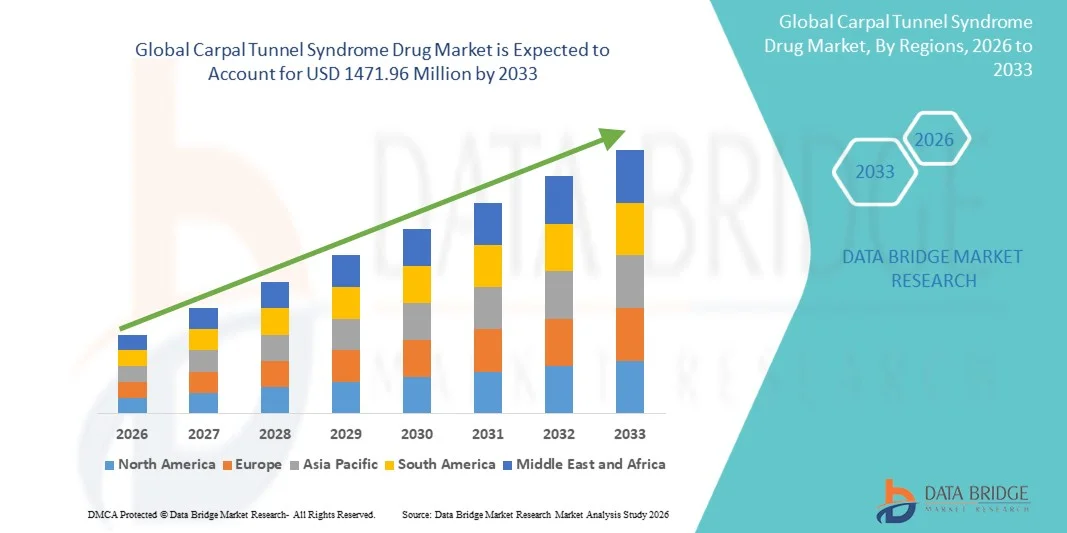
- As per Data Bridge Market Research Analysis the global Carpal Tunnel Syndrome Drug Market size was valued at USD 981.23 Million in 2025 and is expected to reach USD 1471.96 Million by 2033, at a CAGR of 5.20% during the forecast period
- The market growth is largely fueled by the increasing prevalence of repetitive strain injuries and occupational disorders, particularly among individuals engaged in prolonged computer use and manual work, leading to higher adoption of drug-based therapies for carpal tunnel syndrome across healthcare settings
- Furthermore, rising awareness regarding early diagnosis and non-surgical treatment options, along with growing demand for effective pain management and anti-inflammatory medications, is establishing Carpal Tunnel Syndrome Drug solutions as a key therapeutic approach. These converging factors are accelerating the uptake of Carpal Tunnel Syndrome Drug solutions, thereby significantly boosting the industry's growth
Market Size & Forecast
- Global Market Value (2025): USD 981.23 Million
- Expected Market Value (2033): USD 1471.96 Millio
- Forecast CAGR (2026–2033): 5.20%
Carpal Tunnel Syndrome Drug Market Analysis
- Carpal Tunnel Syndrome (CTS) drug therapies, including nonsteroidal anti-inflammatory drugs (NSAIDs), corticosteroids, and analgesics, are widely used to manage pain, inflammation, and nerve compression symptoms associated with CTS. These treatments play a crucial role in non-surgical management and improving patient quality of life
- The escalating demand for CTS drug therapies is primarily fueled by the rising prevalence of repetitive strain injuries, increasing screen time, and growing awareness regarding early diagnosis and conservative treatment approaches. In addition, advancements in pain management and anti-inflammatory therapies are further supporting market growth
- North America dominated the carpal tunnel syndrome drug market with the largest revenue share of 37.4% in 2025, characterized by high diagnosis rates, advanced healthcare infrastructure, and strong presence of key pharmaceutical companies. The U.S. continues to witness steady growth driven by increasing cases linked to occupational and lifestyle factors
- Asia-Pacific is expected to be the fastest growing region in the carpal tunnel syndrome drug market during the forecast period due to rising working population, increasing awareness of musculoskeletal disorders, and improving access to healthcare services in countries such as China and India
- The Oral segment dominated the largest market revenue share of 63.2% in 2025, driven by ease of administration and high patient compliance
Report Scope and Carpal Tunnel Syndrome Drug Market Segmentation
|
Attributes |
Carpal Tunnel Syndrome Drug Key Market Insights |
|
Segments Covered |
|
|
Countries Covered |
North America
Europe
Asia-Pacific
Middle East and Africa
South America
|
|
Key Market Players |
|
|
Market Opportunities |
|
|
Value Added Data Infosets |
|
What is the Key Trend in the Carpal Tunnel Syndrome Drug Market?
“Advancements in Targeted Drug Therapies and Non-Invasive Treatment Approaches”
- A significant and accelerating trend in the global Carpal Tunnel Syndrome Drug market is the growing development of targeted pharmacological therapies and non-invasive treatment approaches aimed at improving symptom relief and reducing the need for surgical intervention. These advancements are enhancing treatment effectiveness and patient comfort, particularly in early and moderate stages of the condition
- For instance, pharmaceutical companies are increasingly focusing on developing anti-inflammatory and neuroprotective drugs that specifically target median nerve compression and associated symptoms such as pain and numbness
- The use of corticosteroid injections and oral nonsteroidal anti-inflammatory drugs (NSAIDs) continues to evolve with improved formulations that offer prolonged relief and reduced side effects
- For instance, extended-release corticosteroid formulations are being utilized to provide longer-lasting symptom control, minimizing the frequency of repeat treatments
- Increasing adoption of combination therapies, including medications alongside physical therapy and wrist splinting, is improving overall treatment outcomes for patient
- For instance, clinicians often combine drug therapy with physiotherapy and ergonomic interventions to reduce nerve pressure and enhance recovery in working professionals
- This trend toward more patient-centric, minimally invasive, and targeted treatment strategies is reshaping the management of carpal tunnel syndrome across healthcare settings
- The demand for effective, non-surgical treatment options is growing steadily as patients seek faster recovery, reduced downtime, and improved quality of life
Carpal Tunnel Syndrome Drug Market Dynamics
Driver
“Increasing Prevalence of Repetitive Strain Injuries and Growing Awareness of Early Treatment”
- The rising incidence of repetitive strain injuries, particularly due to prolonged computer usage and occupational hand stress, is a major driver for the carpal tunnel syndrome drug market. Increasing cases among working professionals are significantly boosting demand for effective treatment options
- For instance, the growing adoption of desk-based jobs and digital work environments has led to a higher number of reported cases of wrist and nerve-related disorders globally
- Increasing awareness regarding early diagnosis and treatment is encouraging patients to seek timely medical intervention, reducing the progression of symptoms and improving treatment outcomes
- For instance, workplace wellness programs and occupational health initiatives are promoting early screening and management of musculoskeletal disorders, including carpal tunnel syndrome
- Advances in pharmacological therapies and improved accessibility to over-the-counter and prescription medications are further supporting market growth
- For instance, topical NSAID formulations and oral medications are widely available and commonly used for initial symptom management
- In addition, growing healthcare access and rising investments in outpatient and rehabilitation services are enhancing treatment availability across both developed and emerging markets
- For instance, clinics in urban areas are increasingly offering specialized hand therapy and drug-based treatment options for early-stage patients
Restraint/Challenge
“Limited Long-Term Efficacy of Drug Therapies and Preference for Surgical Intervention in Severe Cases”
- One of the key challenges in the carpal tunnel syndrome drug market is the limited long-term effectiveness of pharmacological treatments, particularly in severe or advanced cases where structural nerve compression persists
- For instance, patients with chronic carpal tunnel syndrome often experience only temporary relief from medications, eventually requiring surgical decompression procedures
- Repeated use of certain drug therapies, such as corticosteroid injections, may lead to potential side effects, limiting their long-term use
- For instance, excessive corticosteroid use can result in tissue weakening or other localized complications, restricting frequent administration
- Variability in patient response to drug treatments also poses a challenge, as not all individuals achieve the same level of symptom relief
- For instance, some patients may not respond adequately to NSAIDs or conservative drug therapies, necessitating alternative treatment approaches
- Addressing these challenges requires continued research into more effective long-term therapies, improved drug delivery mechanisms, and integration of pharmacological treatments with other therapeutic approaches
- For instance, ongoing clinical trials are exploring novel biologic therapies and regenerative medicine approaches to provide sustained relief and reduce reliance on surgery
Carpal Tunnel Syndrome Drug Market Scope
The market is segmented on the basis of mechanism of action, drugs, treatment, route of administration, distribution channel, and end-users.
• By Mechanism of Action
On the basis of mechanism of action, the Carpal Tunnel Syndrome Drug market is segmented into Analgesics, NSAIDs, Corticosteroids, and Others. The NSAIDs segment dominated the largest market revenue share of 39.4% in 2025, driven by their widespread use in reducing inflammation and relieving pain associated with carpal tunnel syndrome. NSAIDs such as ibuprofen are commonly prescribed as first-line treatments due to their effectiveness and accessibility. The increasing prevalence of repetitive strain injuries and occupational disorders significantly contributes to segment growth. Patients prefer NSAIDs for their quick symptom relief and over-the-counter availability. Healthcare providers recommend NSAIDs for mild to moderate cases, supporting high prescription rates. In addition, cost-effectiveness and ease of administration further enhance their adoption. Continuous demand from both developed and emerging markets drives growth. Pharmaceutical companies offer a wide range of formulations, improving accessibility. Increasing awareness about early-stage treatment also boosts demand. NSAIDs are often used in combination with other therapies, enhancing outcomes. Strong distribution networks ensure widespread availability. Overall, NSAIDs remain the dominant segment due to affordability, accessibility, and effectiveness.
The Corticosteroids segment is expected to witness the fastest CAGR of 8.7% from 2026 to 2033, driven by their high efficacy in reducing severe inflammation and nerve compression. Corticosteroids are often administered through injections, providing rapid and targeted relief. Increasing cases of moderate to severe carpal tunnel syndrome are boosting demand for corticosteroid treatments. Physicians prefer corticosteroids when NSAIDs fail to provide adequate relief. Technological advancements in injection techniques enhance precision and safety. Growing awareness regarding advanced treatment options supports adoption. Corticosteroids are increasingly used in outpatient and specialty clinic settings. The rising aging population further contributes to segment growth. In addition, improved healthcare access in emerging markets accelerates adoption. Favorable clinical outcomes drive patient preference. Research into improved formulations supports market expansion. Overall, corticosteroids are the fastest-growing segment due to effectiveness in severe cases and rapid symptom relief.
• By Drugs
On the basis of drugs, the market is segmented into Ibuprofen, Prednisone, Triamcinolone, and Others. The Ibuprofen segment dominated the largest market revenue share of 34.8% in 2025, driven by its widespread use as a first-line NSAID for pain and inflammation management. Ibuprofen is easily accessible as an over-the-counter drug, making it highly preferred among patients. Its affordability and effectiveness contribute significantly to its high adoption rate. Physicians commonly recommend ibuprofen for mild to moderate symptoms of carpal tunnel syndrome. Increasing awareness regarding early symptom management further supports demand. The drug’s safety profile and availability in multiple formulations enhance patient compliance. Strong retail and online pharmacy presence ensures accessibility. Rising cases of work-related musculoskeletal disorders also contribute to growth. Pharmaceutical companies continue to expand product availability globally. In addition, ibuprofen is frequently used in combination therapies. Continuous demand across regions supports market dominance. Overall, ibuprofen remains the leading drug segment due to accessibility and effectiveness.
The Triamcinolone segment is expected to witness the fastest CAGR of 9.1% from 2026 to 2033, driven by its increasing use in corticosteroid injections for targeted relief. Triamcinolone injections provide rapid reduction in inflammation and nerve compression. Physicians prefer it for patients with persistent or severe symptoms. Growing awareness regarding injection-based therapies supports adoption. The rise in outpatient procedures further contributes to demand. Technological advancements in drug delivery enhance treatment outcomes. Increasing patient preference for faster relief drives growth. Specialty clinics are increasingly adopting triamcinolone treatments. The expanding geriatric population further supports market expansion. In addition, improved healthcare infrastructure boosts accessibility. Research into improved formulations enhances effectiveness. Overall, triamcinolone is the fastest-growing segment due to targeted action and increasing clinical adoption.
• By Treatment
On the basis of treatment, the market is segmented into Medication, Integrative Therapy, and Surgery. The Medication segment dominated the largest market revenue share of 55.6% in 2025, driven by its role as the primary treatment approach for carpal tunnel syndrome. Medications provide effective symptom relief and are widely prescribed in early and moderate stages. Patients prefer non-invasive treatment options, supporting segment growth. Increasing awareness about early diagnosis boosts medication usage. Physicians commonly prescribe NSAIDs and corticosteroids for symptom management. The availability of multiple drug options enhances flexibility in treatment plans. Cost-effectiveness further drives adoption across regions. Strong pharmaceutical supply chains ensure accessibility. Medication is often combined with physical therapy, improving outcomes. Growing prevalence of occupational disorders contributes to demand. Continuous innovation in drug formulations supports growth. Overall, medication remains dominant due to convenience and effectiveness.
The Surgery segment is expected to witness the fastest CAGR of 7.8% from 2026 to 2033, driven by increasing cases of severe and treatment-resistant carpal tunnel syndrome. Surgical procedures such as carpal tunnel release provide long-term relief. Growing awareness regarding surgical benefits supports adoption. Technological advancements in minimally invasive techniques improve recovery time. Increasing number of outpatient surgical centers boosts accessibility. Surgeons are adopting advanced tools for precision and safety. Rising geriatric population further contributes to demand. Improved healthcare infrastructure in emerging markets supports growth. Favorable reimbursement policies also play a role. Surgery offers permanent solutions compared to temporary relief from medications. Increasing patient preference for definitive treatment drives growth. Overall, surgery is the fastest-growing segment due to effectiveness in severe cases.
• By Route of Administration
On the basis of route of administration, the market is segmented into Oral and Parenteral. The Oral segment dominated the largest market revenue share of 63.2% in 2025, driven by ease of administration and high patient compliance. Oral medications such as NSAIDs are widely prescribed for initial treatment. Patients prefer oral drugs due to convenience and non-invasive nature. The availability of over-the-counter options further supports demand. Healthcare providers recommend oral therapy as first-line treatment. Cost-effectiveness enhances adoption across regions. Strong distribution networks ensure accessibility. Increasing awareness about early treatment boosts usage. Oral drugs are often combined with other therapies. Pharmaceutical advancements improve drug efficacy. Rising prevalence of carpal tunnel syndrome supports demand. Overall, oral administration dominates due to convenience and accessibility.
The Parenteral segment is expected to witness the fastest CAGR of 8.5% from 2026 to 2033, driven by increasing use of injectable corticosteroids. Parenteral administration provides faster and targeted relief. Physicians prefer injections for moderate to severe cases. Technological advancements improve injection accuracy and safety. Growing adoption in specialty clinics supports growth. Increasing patient preference for quick relief contributes to demand. Expansion of outpatient services further boosts adoption. Rising awareness regarding advanced treatment options supports growth. Improved healthcare access enhances availability. In addition, parenteral therapies are often used when oral drugs fail. Overall, this segment is the fastest growing due to effectiveness and rapid action.
• By Distribution Channel
On the basis of distribution channel, the market is segmented into Hospital Pharmacy, Retail Pharmacy, and Online Pharmacy. The Retail Pharmacy segment dominated the largest market revenue share of 46.9% in 2025, driven by easy accessibility of over-the-counter medications. Patients prefer retail pharmacies for convenience and immediate availability. Increasing demand for self-medication supports segment growth. Strong presence across urban and rural areas enhances accessibility. Affordable pricing further drives adoption. Pharmacists play a key role in guiding treatment choices. Rising awareness about early symptom management boosts sales. Availability of multiple drug options supports demand. Retail pharmacies ensure continuous supply of medications. Increasing prevalence of mild cases contributes to growth. Overall, retail pharmacies dominate due to accessibility and convenience.
The Online Pharmacy segment is expected to witness the fastest CAGR of 10.6% from 2026 to 2033, driven by increasing digitalization and e-commerce growth. Patients prefer online platforms for convenience and home delivery. Competitive pricing attracts consumers. Growing internet penetration supports adoption. Expansion of telemedicine further boosts demand. Online platforms offer a wide range of products. Increasing awareness about digital healthcare supports growth. Regulatory improvements enhance trust. Rising preference for contactless services contributes to demand. Emerging markets show strong growth potential. Overall, online pharmacies are the fastest-growing segment due to convenience and accessibility.
• By End-Users
On the basis of end-users, the market is segmented into Hospitals, Homecare, Specialty Clinics, and Others. The Hospitals segment dominated the largest market revenue share of 44.7% in 2025, driven by availability of comprehensive diagnostic and treatment facilities. Hospitals handle moderate to severe cases requiring specialized care. Presence of skilled professionals ensures effective treatment. Advanced infrastructure supports surgical and non-surgical treatments. High patient inflow contributes to demand. Hospitals provide multidisciplinary care approaches. Increasing healthcare investments support growth. Strong reimbursement systems enhance accessibility. Integration of rehabilitation services boosts outcomes. Continuous monitoring ensures better patient management. Overall, hospitals dominate due to comprehensive care capabilities.
The Homecare segment is expected to witness the fastest CAGR of 9.4% from 2026 to 2033, driven by increasing preference for at-home treatment. Patients prefer homecare for comfort and cost-effectiveness. Growing aging population supports demand. Availability of home-based therapies enhances adoption. Technological advancements enable remote monitoring. Expansion of home healthcare services boosts growth. Increasing focus on patient convenience drives demand. Rising chronic conditions further contribute. Government initiatives support homecare adoption. Improved caregiver support systems enhance treatment. Overall, homecare is the fastest-growing segment due to convenience and evolving healthcare trends.
Carpal Tunnel Syndrome Drug Market Regional Analysis
- North America dominated the carpal tunnel syndrome drug market with the largest revenue share of 37.4% in 2025, characterized by high diagnosis rates, advanced healthcare infrastructure, and a strong presence of key pharmaceutical companies. The region continues to benefit from widespread awareness of musculoskeletal disorders, increasing incidence of repetitive strain injuries, and strong adoption of both prescription and over-the-counter treatment options
- Patients and healthcare providers in the region increasingly rely on early diagnosis and pharmacological management to control symptoms such as pain, inflammation, and nerve compression, which is supporting higher treatment uptake across outpatient and specialty care settings
- This growth is further supported by strong clinical research activity, favorable reimbursement frameworks, and continuous innovation in pain management and anti-inflammatory drug development, making North America a key revenue-contributing region in the global carpal tunnel syndrome drug market
U.S. Carpal Tunnel Syndrome Drug Market Insight
The U.S. carpal tunnel syndrome drug market captured a dominant revenue share within North America in 2025, driven by increasing cases linked to occupational and lifestyle factors such as prolonged computer use and repetitive hand movements. The country benefits from a well-established healthcare system, high patient awareness, and widespread access to diagnostic and treatment services. For instance, healthcare providers in the U.S. are increasingly prescribing NSAIDs and corticosteroid injections for early-stage symptom management. In addition, strong presence of pharmaceutical companies and ongoing clinical research initiatives are further supporting the availability of effective treatment options.
Europe Carpal Tunnel Syndrome Drug Market Insight
The Europe carpal tunnel syndrome drug market is projected to expand at a steady CAGR during the forecast period, supported by increasing awareness of musculoskeletal disorders and strong public healthcare systems. Rising focus on occupational health and early intervention strategies is encouraging patients to seek timely treatment. For instance, several European countries are implementing workplace health programs to address repetitive strain injuries. The region’s emphasis on improving quality of life and reducing work-related disabilities is further supporting market growth.
U.K. Carpal Tunnel Syndrome Drug Market Insight
The U.K. carpal tunnel syndrome drug market is anticipated to grow steadily during the forecast period, driven by increasing diagnosis rates and strong support from the National Health Service (NHS). For instance, NHS-backed initiatives are promoting early diagnosis and non-surgical treatment approaches for carpal tunnel syndrome. Growing awareness among patients and healthcare professionals regarding symptom management is further contributing to market expansion.
Germany Carpal Tunnel Syndrome Drug Market Insight
The Germany carpal tunnel syndrome drug market is expected to expand at a considerable CAGR during the forecast period, fueled by advanced healthcare infrastructure and high adoption of effective pharmacological therapies. For instance, German healthcare providers are increasingly utilizing combination treatments, including medications and physiotherapy, to manage symptoms effectively. The country’s focus on occupational health and rehabilitation is further driving market growth.
Asia-Pacific Carpal Tunnel Syndrome Drug Market Insight
The Asia-Pacific carpal tunnel syndrome drug market is expected to be the fastest growing region during the forecast period due to rising working population, increasing awareness of musculoskeletal disorders, and improving access to healthcare services in countries such as China and India. For instance, growing employment in IT and manufacturing sectors is contributing to higher incidence of repetitive strain injuries in the region. Expanding healthcare infrastructure and increasing availability of treatment options are further accelerating market growth.
Japan Carpal Tunnel Syndrome Drug Market Insight
The Japan carpal tunnel syndrome drug market is gaining momentum due to its aging population, advanced healthcare system, and increasing focus on managing chronic musculoskeletal conditions. For instance, Japanese healthcare providers are increasingly using conservative drug therapies and rehabilitation programs to manage symptoms in elderly patients. The country’s strong emphasis on preventive care and early intervention is further supporting market expansion.
China Carpal Tunnel Syndrome Drug Market Insight
The China carpal tunnel syndrome drug market accounted for a significant revenue share in Asia Pacific in 2025, driven by rapid urbanization, expanding workforce, and increasing awareness of occupational health conditions. For instance, hospitals and clinics in urban areas are increasingly diagnosing and treating carpal tunnel syndrome using pharmacological therapies. Strong government healthcare initiatives, rising healthcare expenditure, and improving access to medical services are further enhancing the availability and adoption of treatment options across the country.
Which are the Top Companies in Carpal Tunnel Syndrome Drug Market?
The Carpal Tunnel Syndrome Drug industry is primarily led by well-established companies, including:
- Pfizer Inc. (U.S.)
- Johnson & Johnson (U.S.)
- Bayer AG (Germany)
- GSK (U.K.)
- Sanofi (France)
- Novartis AG (Switzerland)
- AbbVie Inc. (U.S.)
- Merck & Co., Inc. (U.S.)
- Teva Pharmaceutical Industries Ltd. (Israel)
- Sun Pharmaceutical Industries Ltd. (India)
- Dr. Reddy’s Laboratories Ltd. (India)
- Cipla Ltd. (India)
- Lupin Limited (India)
- Aurobindo Pharma Ltd. (India)
- Zydus Lifesciences Ltd. (India)
- Glenmark Pharmaceuticals Ltd. (India)
- Hikma Pharmaceuticals PLC (U.K.)
- Viatris Inc. (U.S.)
- Sandoz Group AG (Switzerland)
- Endo International plc (Ireland)
Latest Developments in Global Carpal Tunnel Syndrome Drug Market
- In June 2021, clinical research studies evaluating platelet-rich plasma (PRP) and dextrose-based injection therapies for carpal tunnel syndrome gained traction, demonstrating improved symptom relief compared to traditional corticosteroid injections in certain patient populations, highlighting the shift toward regenerative and minimally invasive pharmacological approaches
- In September 2022, ongoing randomized clinical trials investigating ultrasound-guided corticosteroid injections versus alternative injectable therapies (such as 5% dextrose prolotherapy) showed increasing interest in optimizing drug delivery techniques for improved efficacy and safety in CTS treatment
- In August 2023, a comprehensive meta-analysis of local injection therapies confirmed that drug-based injection treatments significantly reduce symptoms and improve quality of life in patients with carpal tunnel syndrome, reinforcing the continued clinical importance of pharmacological interventions in early-stage disease management
- In May 2024, updated clinical practice guidance from orthopedic and medical bodies emphasized the role of corticosteroid injections as a first-line pharmacological treatment prior to surgical intervention, supporting continued adoption of drug-based management strategies in clinical settings
- In August 2025, a large-scale meta-analysis comparing corticosteroid injections with surgical intervention reported that while both approaches provide short-term relief, drug-based treatments remain widely used as an initial management option due to their minimally invasive nature and accessibility
- In August 2025, further clinical evaluations highlighted that local corticosteroid injection therapy continues to be a widely adopted treatment option, though long-term outcomes may require additional interventions, driving ongoing research into improved drug formulations and delivery systems

- Interactive Data Analysis Dashboard
- Company Analysis Dashboard for high growth potential opportunities
- Research Analyst Access for customization & queries
- Competitor Analysis with Interactive dashboard
- Latest News, Updates & Trend analysis
- Harness the Power of Benchmark Analysis for Comprehensive Competitor Tracking
Data collection and base year analysis are done using data collection modules with large sample sizes. The stage includes obtaining market information or related data through various sources and strategies. It includes examining and planning all the data acquired from the past in advance. It likewise envelops the examination of information inconsistencies seen across different information sources. The market data is analysed and estimated using market statistical and coherent models. Also, market share analysis and key trend analysis are the major success factors in the market report. To know more, please request an analyst call or drop down your inquiry.
The key research methodology used by DBMR research team is data triangulation which involves data mining, analysis of the impact of data variables on the market and primary (industry expert) validation. Data models include Vendor Positioning Grid, Market Time Line Analysis, Market Overview and Guide, Company Positioning Grid, Patent Analysis, Pricing Analysis, Company Market Share Analysis, Standards of Measurement, Global versus Regional and Vendor Share Analysis. To know more about the research methodology, drop in an inquiry to speak to our industry experts.
Data Bridge Market Research is a leader in advanced formative research. We take pride in servicing our existing and new customers with data and analysis that match and suits their goal. The report can be customized to include price trend analysis of target brands understanding the market for additional countries (ask for the list of countries), clinical trial results data, literature review, refurbished market and product base analysis. Market analysis of target competitors can be analyzed from technology-based analysis to market portfolio strategies. We can add as many competitors that you require data about in the format and data style you are looking for. Our team of analysts can also provide you data in crude raw excel files pivot tables (Fact book) or can assist you in creating presentations from the data sets available in the report.












