


What is the Chronic Ocular Surface Pain Market Size and Overview?
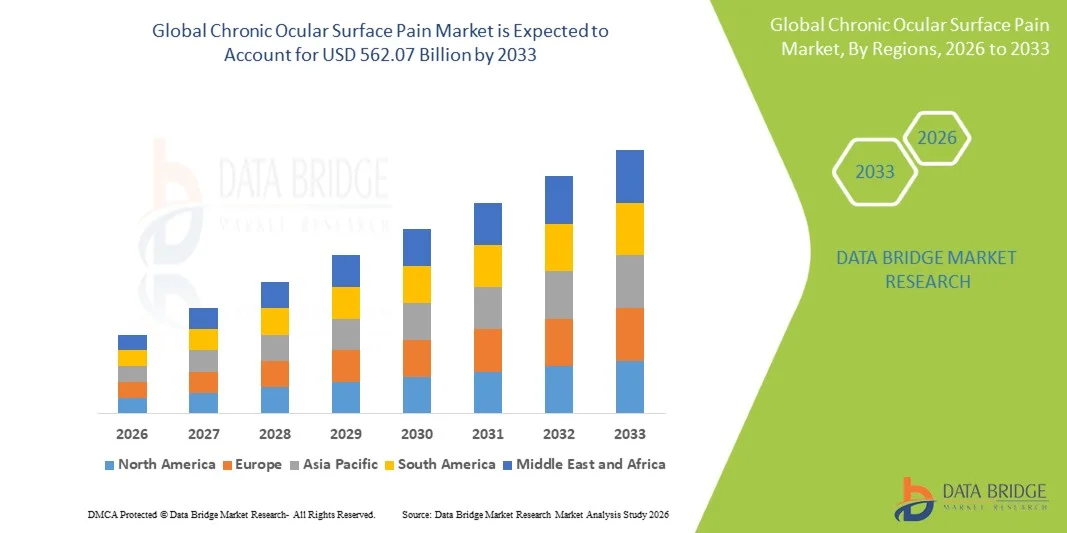
- As per Data Bridge Market Research analysis The global chronic ocular surface pain market size was valued at USD 360.74 billion in 2025 and is expected to reach USD 562.07 billion by 2033, at a CAGR of 5.70% during the forecast period
- The market growth is primarily driven by the increasing prevalence of ocular surface disorders such as dry eye disease, neuropathic corneal pain, and post-surgical complications, alongside a growing aging population more susceptible to chronic eye conditions
- Furthermore, advancements in diagnostic techniques, improved understanding of corneal nerve dysfunction, and the development of targeted therapies and pain management approaches are enhancing treatment outcomes, while rising patient awareness and demand for effective, long-term relief solutions are accelerating the adoption of specialized care in both clinical and hospital settings, thereby significantly supporting the expansion of the industry
Market Size & Forecast
- Global Market Value (2025): USD 360.74 billion
- Expected Market Value (2033): USD 562.07 billion
- Forecast CAGR (2026–2033):5.70%
What are the Major Takeaways of Chronic Ocular Surface Pain Market?
- Chronic ocular surface pain, a complex condition often linked with underlying inflammatory and neuropathic mechanisms, is gaining increasing clinical attention as a significant subset of ophthalmic disorders, with drug-based management playing a central role in alleviating symptoms and improving patient quality of life across both acute and long-term treatment settings
- The escalating demand for chronic ocular surface pain therapies is primarily driven by the rising prevalence of associated conditions such as glaucoma-related discomfort, migraines with ocular involvement, and sinusitis-linked eye pain, along with growing awareness among patients and healthcare providers regarding targeted pharmacological interventions for effective symptom control
- North America dominated the chronic ocular surface pain market with the largest revenue share of 38.6% in 2025, supported by advanced healthcare infrastructure, high diagnosis rates, strong adoption of prescription-based ophthalmic treatments, and the presence of leading pharmaceutical companies, with the U.S. witnessing substantial uptake of corticosteroids and NSAIDs for managing inflammation-driven ocular pain
- Asia-Pacific is expected to be the fastest growing region in the chronic ocular surface pain market during the forecast period due to increasing healthcare expenditure, a rapidly expanding patient population, improving access to ophthalmic care, and rising awareness of chronic eye conditions across emerging economies such as China and India
- Corticosteroids segment dominated the chronic ocular surface pain market in 2025 with a market share of 41.7%, attributed to their strong anti-inflammatory efficacy in managing ocular surface inflammation and pain, making them widely prescribed across multiple indications including post-inflammatory conditions and chronic pain associated with glaucoma and other ocular disorders
Report Scope and Chronic Ocular Surface Pain Market Segmentation
Attributes |
Chronic Ocular Surface Pain Key Market Insights |
|
Segments Covered |
|
|
Countries Covered |
North America
Europe
Asia-Pacific
Middle East and Africa
South America
|
|
Key Market Players |
|
|
Market Opportunities |
|
|
Value Added Data Infosets |
In addition to the insights on market scenarios such as market value, growth rate, segmentation, geographical coverage, and major players, the market reports curated by the Data Bridge Market Research also include in-depth expert analysis, patient epidemiology, pipeline analysis, pricing analysis, and regulatory framework |
What is the Key Trend in the Chronic Ocular Surface Pain Market?
“Advancements in Neuro-Targeted Therapies and Diagnostic Integration”
- A significant and accelerating trend in the global chronic ocular surface pain market is the growing focus on neuro-targeted therapies and the integration of advanced diagnostic tools to better understand neuropathic components of ocular pain, improving accuracy in identifying underlying causes and guiding personalized treatment approaches
- For instance, emerging treatments such as nerve-modulating agents and regenerative therapies are being explored alongside diagnostic technologies such as corneal nerve imaging and tear biomarker analysis to assess nerve dysfunction and inflammation
- Integration of multimodal diagnostic approaches enables clinicians to differentiate between nociceptive and neuropathic pain, allowing more precise treatment planning and reducing reliance on generalized symptomatic therapies
- The increasing collaboration between ophthalmology and neurology disciplines is facilitating the development of holistic care pathways that combine pharmacological treatments with nerve-focused interventions for improved patient outcomes
- This shift toward precision medicine in ocular pain management is reshaping clinical expectations, with companies and research institutions focusing on therapies that address both inflammation and nerve dysfunction simultaneously
- The demand for advanced diagnostic and targeted therapeutic solutions is growing rapidly across clinical settings as healthcare providers increasingly prioritize long-term efficacy and improved quality of life for patients with chronic ocular surface pain
- Increasing investment in clinical research and pipeline drugs targeting neuropathic ocular pain mechanisms is accelerating innovation, with several biotech and pharmaceutical companies focusing on first-in-class therapies to address unmet medical needs
Chronic Ocular Surface Pain Market Dynamics
Driver
“Rising Prevalence of Ocular Disorders and Growing Awareness of Advanced Treatment Options”
- The increasing prevalence of chronic ocular conditions such as dry eye disease, glaucoma-related pain, and migraine-associated ocular discomfort, coupled with growing awareness of available treatment options, is a major driver for the expansion of the chronic ocular surface pain market
- For instance, rising incidence of screen-induced eye strain and age-related ocular degeneration is contributing to a larger patient pool seeking specialized care and long-term pain management solutions
- As patients and healthcare providers become more informed about the limitations of conventional lubricants and over-the-counter remedies, there is a growing shift toward prescription-based therapies including corticosteroids and NSAIDs
- Furthermore, improvements in healthcare infrastructure and expanding access to ophthalmic services in both developed and emerging markets are enabling earlier diagnosis and intervention, supporting treatment adoption
- The increasing emphasis on patient-centric care and chronic disease management is encouraging the use of advanced therapeutics and regular monitoring to manage persistent ocular pain effectively
- These factors collectively are propelling market growth as demand rises for more effective, targeted, and sustainable treatment solutions across diverse patient populations
- Rising geriatric population globally is also contributing significantly, as older individuals are more susceptible to ocular surface disorders and require continuous management, thereby increasing the overall patient base
- Expanding pharmaceutical R&D investments and pipeline innovations focused on ocular pain management are further strengthening the availability of advanced and more effective treatment options in the market
Restraint/Challenge
“Diagnostic Complexity and Limited Treatment Efficacy in Neuropathic Cases”
- Challenges related to the accurate diagnosis of chronic ocular surface pain, particularly in cases involving neuropathic mechanisms, pose a significant barrier to effective treatment and broader market adoption
- For instance, many patients present with symptoms that do not correlate well with clinical signs, making it difficult for clinicians to identify the exact underlying cause and select appropriate therapy
- The lack of standardized diagnostic criteria and reliance on subjective patient reporting can lead to misdiagnosis or delayed treatment, affecting overall patient outcomes
- In addition, existing treatment options often provide partial or temporary relief, especially in neuropathic pain cases where conventional anti-inflammatory drugs may have limited effectiveness
- Variability in patient response to available therapies further complicates treatment protocols, requiring trial-and-error approaches that can prolong discomfort and increase healthcare costs
- Addressing these challenges through improved diagnostic tools, standardized evaluation frameworks, and development of more effective targeted therapies will be essential for enhancing clinical outcomes and supporting sustained market growth
- Limited awareness among primary care providers regarding specialized ocular pain conditions can result in underdiagnosis or inappropriate initial treatment, delaying access to effective care
- High cost and limited availability of advanced diagnostic procedures and novel therapies in certain regions further restrict timely and widespread adoption, particularly in emerging and resource-constrained markets
How is the Chronic Ocular Surface Pain Market Segmented?
The market is segmented on the basis of drug class, application, end-users, and distribution channel.
- By Drug Class
On the basis of drug class, the chronic ocular surface pain market is segmented into antibiotics, nonsteroidal anti-inflammatory (NSAID), corticosteroids, and others. The corticosteroids segment dominated the market with the largest market revenue share of 41.7% in 2025, driven by their potent anti-inflammatory action and widespread clinical use in managing moderate to severe ocular surface inflammation associated with chronic pain conditions. These drugs are highly effective in rapidly reducing swelling, redness, and discomfort, making them a preferred choice among ophthalmologists. Corticosteroids are extensively used in post-surgical care and chronic inflammatory eye diseases, where long-term symptom control is required. Their availability in multiple formulations such as eye drops and ointments enhances patient compliance and treatment flexibility. Strong inclusion in standard treatment guidelines and established physician trust further support their dominant position. In addition, their use in combination therapies with other drug classes reinforces their widespread adoption across hospitals and specialty clinics.
The antibiotics segment is expected to witness the fastest growth rate from 2026 to 2033, driven by the rising incidence of ocular infections and the increasing need for prophylactic treatments in post-operative cases. Growing surgical volumes in ophthalmology and expanding awareness regarding infection prevention are contributing to higher adoption of antibiotic therapies. Furthermore, the development of combination formulations that include antibiotics alongside anti-inflammatory agents is improving therapeutic outcomes and driving segment expansion.
- By Application
On the basis of application, the chronic ocular surface pain market is segmented into sinusitis, migraines, glaucoma, and others. The glaucoma segment dominated the market with the largest market revenue share in 2025, driven by the high global prevalence of glaucoma and its chronic progression, which often leads to persistent ocular discomfort and pain. Long-term use of intraocular pressure-lowering medications can also contribute to ocular surface irritation, further increasing the burden of pain in glaucoma patients. Continuous monitoring, regular treatment regimens, and frequent follow-ups make glaucoma a major application area for chronic ocular pain management therapies. Hospitals and specialty clinics frequently manage these patients with a combination of pharmacological and supportive treatments. The availability of established treatment protocols and strong physician awareness further supports the dominance of this segment.
The migraines segment is expected to witness the fastest growth rate from 2026 to 2033, driven by increasing recognition of the link between neurological conditions and ocular surface pain. Improved diagnostic capabilities and greater interdisciplinary collaboration between neurologists and ophthalmologists are enabling better identification of migraine-related ocular symptoms. Rising prevalence of migraines globally, along with growing awareness of associated ocular discomfort, is fueling demand for targeted therapies. In addition, advancements in migraine-specific treatments and supportive care are contributing to the rapid growth of this segment.
- By End-Users
On the basis of end-users, the chronic ocular surface pain market is segmented into hospitals, specialty clinics, homecare, and others. The hospitals segment dominated the market with the largest market revenue share in 2025, driven by the availability of advanced diagnostic infrastructure, specialized ophthalmologists, and comprehensive treatment facilities for managing complex ocular pain conditions. Hospitals are the primary centers for diagnosis, surgical procedures, and management of severe or chronic cases requiring multidisciplinary care. The presence of skilled healthcare professionals and access to a wide range of therapeutic options ensure effective patient management. Hospitals also handle a large volume of glaucoma and post-surgical patients, contributing significantly to demand for ocular pain treatments.
The specialty clinics segment is expected to witness the fastest growth rate from 2026 to 2033, driven by increasing patient preference for focused, outpatient-based, and personalized eye care services. These clinics offer shorter waiting times, specialized expertise, and advanced treatment approaches tailored to individual patient needs. The growing number of ophthalmology-focused clinics and expanding access to specialized care in urban and semi-urban areas are further supporting segment growth.
- By Distribution Channel
On the basis of distribution channel, the chronic ocular surface pain market is segmented into hospital pharmacy, retail pharmacy, online pharmacy, and others. The hospital pharmacy segment dominated the market with the largest market revenue share in 2025, driven by the high volume of prescriptions generated within hospital settings for patients undergoing diagnosis, surgical procedures, or specialized treatment. Hospital pharmacies ensure immediate access to prescribed medications, particularly for acute care and post-operative management of ocular conditions. They are closely integrated with hospital workflows, enabling efficient dispensing of drugs under physician supervision. The availability of specialized ophthalmic medications within hospital pharmacies further supports their dominant role.
The online pharmacy segment is expected to witness the fastest growth rate from 2026 to 2033, driven by increasing digital adoption in healthcare and growing consumer preference for convenience and home delivery services. Rising internet penetration, expansion of telemedicine platforms, and improved logistics networks are facilitating easier access to medications through online channels. Competitive pricing, subscription-based delivery models, and time-saving benefits are further encouraging patients to shift toward online pharmacy platforms, particularly in urban populations.
Chronic Ocular Surface Pain Market Regional Analysis
- North America dominated the chronic ocular surface pain market with the largest revenue share of 38.6% in 2025, supported by advanced healthcare infrastructure, high diagnosis rates, strong adoption of prescription-based ophthalmic treatments, and the presence of leading pharmaceutical companies
- Patients and healthcare providers in the region highly value early diagnosis, advanced treatment options, and the availability of innovative therapies such as corticosteroids, NSAIDs, and emerging neuro-targeted treatments for effective long-term pain management
- This widespread adoption is further supported by high healthcare expenditure, strong awareness regarding chronic eye conditions, and the presence of leading pharmaceutical companies and ophthalmology specialists, establishing chronic ocular surface pain management as a critical component of eye care in both residential and clinical settings
U.S. Chronic Ocular Surface Pain Market Insight
The U.S. chronic ocular surface pain market captured the largest revenue share of 81% in North America in 2025, fueled by the high prevalence of dry eye disease, glaucoma-related discomfort, and migraine-associated ocular pain, along with advanced healthcare infrastructure and widespread access to specialized ophthalmic care. Patients in the country increasingly prioritize early diagnosis and effective long-term treatment solutions, driving demand for prescription-based therapies such as corticosteroids and NSAIDs. The growing adoption of digital health tools, teleophthalmology services, and AI-assisted diagnostics is further enhancing disease identification and management. In addition, strong R&D investments by pharmaceutical companies and the presence of well-established clinical networks are contributing to the rapid adoption of innovative and targeted treatment approaches.
Europe Chronic Ocular Surface Pain Market Insight
The Europe chronic ocular surface pain market is projected to expand at a substantial CAGR throughout the forecast period, primarily driven by increasing prevalence of ocular disorders, rising geriatric population, and well-established healthcare systems across major countries. Strict regulatory frameworks ensure high standards of treatment, encouraging the adoption of clinically validated therapies for ocular pain management. Growing awareness among patients and healthcare providers regarding chronic eye conditions is supporting early diagnosis and intervention. The region is witnessing increasing demand across hospitals, specialty clinics, and outpatient care centers, with strong emphasis on evidence-based treatment protocols. In addition, expanding access to ophthalmic care and growing investments in healthcare infrastructure are contributing to steady market growth.
U.K. Chronic Ocular Surface Pain Market Insight
The U.K. chronic ocular surface pain market is anticipated to grow at a noteworthy CAGR during the forecast period, driven by increasing awareness of eye health, rising cases of chronic ocular conditions, and a strong focus on preventive healthcare. The country’s well-developed National Health Service (NHS) supports access to ophthalmic diagnostics and treatment services, enabling better management of chronic pain conditions. Growing adoption of advanced therapies and increasing referrals to specialty clinics are further supporting market expansion. In addition, the rising prevalence of digital screen usage and associated eye strain is contributing to higher incidence of ocular surface discomfort. Integration of digital health platforms and teleconsultations is also enhancing patient access to care.
Germany Chronic Ocular Surface Pain Market Insight
The Germany chronic ocular surface pain market is expected to expand at a considerable CAGR during the forecast period, fueled by strong healthcare infrastructure, high awareness of ophthalmic disorders, and increasing demand for advanced treatment options. Germany’s emphasis on innovation and precision medicine is promoting the adoption of targeted therapies for managing chronic ocular pain. The country’s aging population is also contributing to a higher prevalence of conditions such as glaucoma and dry eye disease. Hospitals and specialty clinics play a key role in diagnosis and treatment, supported by robust reimbursement systems. Furthermore, ongoing research activities and collaborations between academic institutions and pharmaceutical companies are enhancing the development of novel therapies.
Asia-Pacific Chronic Ocular Surface Pain Market Insight
The Asia-Pacific chronic ocular surface pain market is poised to grow at the fastest CAGR during the forecast period, driven by increasing urbanization, rising disposable incomes, and expanding access to healthcare services in countries such as China, Japan, and India. The region is witnessing a growing burden of ocular disorders due to lifestyle changes, increased screen exposure, and aging populations. Government initiatives aimed at improving healthcare infrastructure and expanding ophthalmic services are further supporting market growth. In addition, rising awareness about chronic eye conditions and availability of affordable treatment options are encouraging adoption across a broader patient base. The presence of emerging pharmaceutical manufacturers is also contributing to improved accessibility of therapies.
Japan Chronic Ocular Surface Pain Market Insight
The Japan chronic ocular surface pain market is gaining momentum due to its rapidly aging population, advanced healthcare system, and strong emphasis on precision medicine. The country has a high prevalence of age-related ocular conditions such as dry eye disease and glaucoma, contributing to sustained demand for chronic pain management therapies. Patients and healthcare providers in Japan prioritize early diagnosis and minimally invasive treatment approaches. Integration of advanced diagnostic technologies and increasing use of targeted pharmacological therapies are supporting market growth. In addition, the adoption of digital health solutions and increasing focus on improving quality of life among elderly populations are further driving demand for effective ocular pain treatments.
India Chronic Ocular Surface Pain Market Insight
The India chronic ocular surface pain market accounted for a significant market revenue share in Asia Pacific in 2025, attributed to the country’s large population base, increasing prevalence of ocular disorders, and growing awareness of eye health. Rapid urbanization, rising screen time, and changing lifestyles are contributing to a higher incidence of conditions such as dry eye disease and ocular discomfort. Expansion of healthcare infrastructure, increasing number of ophthalmology clinics, and growing availability of affordable treatment options are key factors driving market growth. Government initiatives focused on improving healthcare access, along with the rise of telemedicine and digital health platforms, are further enhancing diagnosis and treatment accessibility across urban and rural areas.
Chronic Ocular Surface Pain Market Share
The Chronic Ocular Surface Pain industry is primarily led by well-established companies, including:
- Alcon Inc. (Switzerland)
- AbbVie Inc. (U.S.)
- Novartis AG (Switzerland)
- Santen Pharmaceutical Co., Ltd. (Japan)
- Bausch Health Companies Inc. (Canada)
- Johnson & Johnson Services, Inc. (U.S.)
- Sun Pharmaceutical Industries Ltd. (India)
- OASIS Medical Inc. (U.S.)
- Akorn Operating Company LLC (U.S.)
- Alimera Sciences, Inc. (U.S.)
- GSK plc (U.K.)
- Nicox S.A. (France)
- Novaliq GmbH (Germany)
- Horus Pharma (France)
- Prestige Consumer Healthcare Inc. (U.S.)
- Sentiss Pharma Pvt. Ltd. (India)
- VISUfarma B.V. (Netherlands)
- AFT Pharmaceuticals Ltd (New Zealand)
- Otsuka Pharmaceutical Co., Ltd. (Japan)
- Carl Zeiss Meditec AG (Germany)
What are the Recent Developments in Global Chronic Ocular Surface Pain Market?
- In July 2025, Alcon announced the U.S. commercial launch of TRYPTYR (acoltremon ophthalmic solution) 0.003%, a new prescription treatment option for the signs and symptoms of dry eye disease (a major cause of chronic ocular surface pain), offering rapid stimulation of natural tear production and broader access to care for millions of sufferers
- In May 2025, EyeCool Therapeutics reported positive pilot study results for its investigational device ETX-4143, which gently cools the eye surface and significantly reduced patient-reported ocular surface pain scores, signaling progress in device-based pain relief approaches
- In May 2025, Grifols received FDA clearance of its Investigational New Drug (IND) application for GRF312 ophthalmic immunoglobulin drops, a potential new treatment for dry eye disease (a key contributor to chronic ocular surface pain), marking progress toward a novel biologic therapy in clinical evaluation
- In April 2025, the U.S. FDA declined approval of Aldeyra Therapeutics’ dry eye disease drug reproxalap, citing insufficient efficacy in reducing ocular discomfort a notable regulatory development in the chronic ocular surface pain/dry eye therapeutic landscape that impacts future treatment availability and clinical strategy
- In October 2024, the U.S. FDA designated Perfluorohexyloctane (Miebo) ophthalmic solution as a first-in-class medication for the treatment of the signs and symptoms of dry eye disease, highlighting regulatory progress for a novel therapeutic option that addresses underlying tear film instability and ocular surface discomfort associated with chronic pain

- Interactive Data Analysis Dashboard
- Company Analysis Dashboard for high growth potential opportunities
- Research Analyst Access for customization & queries
- Competitor Analysis with Interactive dashboard
- Latest News, Updates & Trend analysis
- Harness the Power of Benchmark Analysis for Comprehensive Competitor Tracking
Data collection and base year analysis are done using data collection modules with large sample sizes. The stage includes obtaining market information or related data through various sources and strategies. It includes examining and planning all the data acquired from the past in advance. It likewise envelops the examination of information inconsistencies seen across different information sources. The market data is analysed and estimated using market statistical and coherent models. Also, market share analysis and key trend analysis are the major success factors in the market report. To know more, please request an analyst call or drop down your inquiry.
The key research methodology used by DBMR research team is data triangulation which involves data mining, analysis of the impact of data variables on the market and primary (industry expert) validation. Data models include Vendor Positioning Grid, Market Time Line Analysis, Market Overview and Guide, Company Positioning Grid, Patent Analysis, Pricing Analysis, Company Market Share Analysis, Standards of Measurement, Global versus Regional and Vendor Share Analysis. To know more about the research methodology, drop in an inquiry to speak to our industry experts.
Data Bridge Market Research is a leader in advanced formative research. We take pride in servicing our existing and new customers with data and analysis that match and suits their goal. The report can be customized to include price trend analysis of target brands understanding the market for additional countries (ask for the list of countries), clinical trial results data, literature review, refurbished market and product base analysis. Market analysis of target competitors can be analyzed from technology-based analysis to market portfolio strategies. We can add as many competitors that you require data about in the format and data style you are looking for. Our team of analysts can also provide you data in crude raw excel files pivot tables (Fact book) or can assist you in creating presentations from the data sets available in the report.












