


What is the Cryptococcosis Treatment Market Size and Growth Rate?
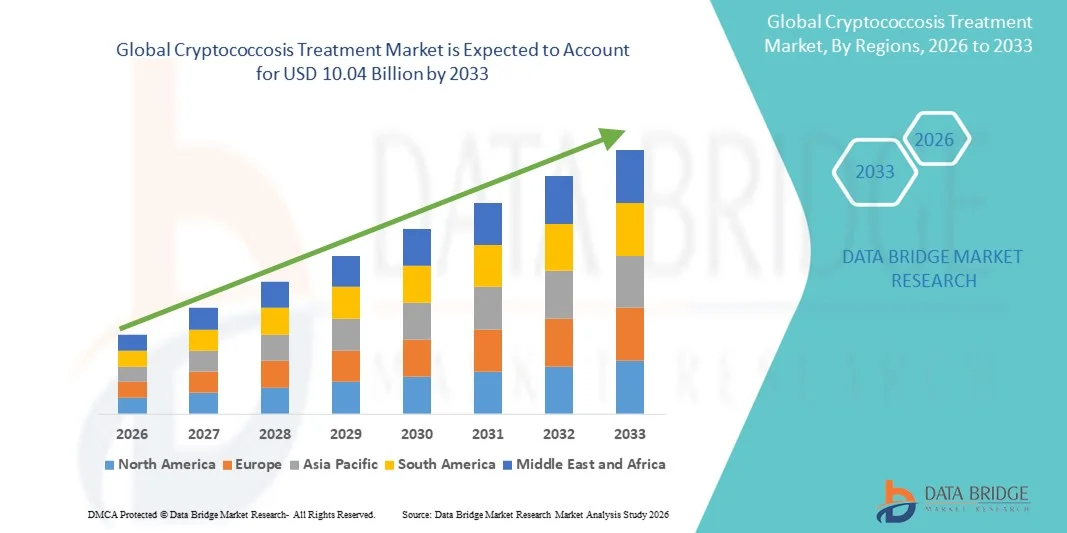
- As per Data Bridge Market Research Analysis the global cryptococcosis treatment market size was valued at USD 5.76 billion in 2025 and is expected to reach USD 10.04 billion by 2033, at a CAGR of 7.20% during the forecast period
- The market growth is largely fueled by the rising prevalence of cryptococcal infections, particularly among immunocompromised populations, including individuals with HIV/AIDS and transplant recipients. Advancements in antifungal therapies, improved diagnostic capabilities, and greater accessibility to healthcare services in developing regions are further accelerating market expansion. Increasing government and NGO-led initiatives aimed at reducing fungal infection–related mortality is also contributing significantly to the growing demand for effective cryptococcosis treatment options
- Furthermore, growing clinical awareness, rising investment in antifungal drug R&D, and the emergence of new treatment approaches—such as combination antifungal therapy and targeted formulations—are strengthening the adoption of Cryptococcosis Treatment solutions globally. The availability of improved lipid formulations, enhanced hospital infrastructure, and development of next-generation antifungal agents are creating strong momentum in the market, thereby significantly boosting the industry's growth
Market Size & Forecast
- Market Value (2025): USD 13.68 billion
- Expected Market Value (2033): USD 43.18 billion
- Forecast CAGR (2026–2033): 15.45%
What are the Major Takeaways of Cryptococcosis Treatment Market?
- Cryptococcosis Treatment, which includes antifungal therapies such as amphotericin B, flucytosine, and fluconazole, has become a critical component of infectious disease management, particularly for patients with HIV/AIDS, solid-organ transplants, and other immunocompromised conditions. The rising global burden of invasive fungal infections and improved clinical awareness are significantly driving market demand
- The escalating demand for cryptococcosis treatment solutions is primarily fueled by the increasing prevalence of HIV, growing availability of advanced diagnostic tools, and expanding government and NGO-led programs aimed at reducing fungal infection mortality worldwide. Rising investment in antifungal drug R&D and the introduction of improved formulations are further strengthening market growth
- North America dominated the cryptococcosis treatment market with the largest revenue share of 38.4% in 2025, supported by high healthcare expenditure, advanced infectious disease management infrastructure, widespread access to antifungal therapies, and significant research funding for fungal disease therapeutics. The U.S. continues to lead due to strong pharmaceutical presence and rapid adoption of newer antifungal regimens
- Asia-Pacific is expected to be the fastest-growing region in the cryptococcosis treatment market during the forecast period, projected to expand at an impressive CAGR of 15.8%, driven by a high burden of HIV infections, increasing awareness of fungal diseases, improving diagnostic capabilities, and growing investments in healthcare infrastructure across India, China, and Southeast Asia
- The Amphotericin B segment dominated the market with the largest revenue share of 38.5% in 2025, owing to its strong clinical efficacy against systemic cryptococcosis and its long-standing presence in treatment protocols
Report Scope and Cryptococcosis Treatment Market Segmentation
|
Attributes |
Cryptococcosis Treatment Key Market Insights |
|
Segments Covered |
|
|
Countries Covered |
North America
Europe
Asia-Pacific
Middle East and Africa
South America
|
|
Key Market Players |
|
|
Market Opportunities |
|
|
Value Added Data Infosets |
In addition to the insights on market scenarios such as market value, growth rate, segmentation, geographical coverage, and major players, the market reports curated by the Data Bridge Market Research also include in-depth expert analysis, patient epidemiology, pipeline analysis, pricing analysis, and regulatory framework. |
What is the Key Trend in the Cryptococcosis Treatment Market?
Growing Focus on Novel Antifungal Formulations and Combination Therapies
- A significant and accelerating trend in the global cryptococcosis treatment market is the increasing focus on developing novel antifungal formulations and combination therapies. Companies are investing in research to create drugs with improved bioavailability, reduced side effects, and enhanced efficacy for both HIV-associated and non-HIV-associated cryptococcal infections
- For instance, liposomal amphotericin B formulations are being optimized to allow shorter treatment durations while maintaining therapeutic effectiveness. Similarly, research into oral triazole derivatives aims to improve patient compliance and reduce hospitalization periods
- Combination therapies, such as amphotericin B paired with flucytosine, are gaining attention for their synergistic effects, improving survival rates in severe cryptococcal meningitis cases
- Furthermore, academic and pharmaceutical collaborations are enabling clinical trials to test new dosing strategies and formulations targeting difficult-to-treat patient populations
- This trend reflects a broader shift toward personalized and precision antifungal therapy, where treatment regimens are optimized based on patient characteristics, disease severity, and drug resistance profiles
- The increased adoption of these novel therapies is expected to improve patient outcomes while addressing limitations associated with traditional antifungal monotherapies, marking a significant evolution in the treatment landscape
Cryptococcosis Treatment Market Dynamics
Driver
Rising Incidence of Opportunistic Fungal Infections
- The growing prevalence of opportunistic fungal infections, particularly among immunocompromised populations such as HIV/AIDS patients, organ transplant recipients, and cancer patients, is a major driver for the cryptococcosis treatment market
- For instance, In April 2025, a leading pharmaceutical company highlighted the development of more potent and targeted antifungal agents to address increasing cases of cryptococcal meningitis in sub-Saharan Africa and Southeast Asia
- The rising global burden of HIV/AIDS and increasing use of immunosuppressive therapies for chronic conditions are driving demand for effective antifungal interventions
- Healthcare providers are prioritizing treatments that shorten hospital stays, reduce complications, and improve survival outcomes, thereby pushing pharmaceutical companies to expand their product pipelines
- Furthermore, growing awareness among clinicians about the importance of early intervention is accelerating the adoption of advanced antifungal therapies
- These factors collectively stimulate market growth, emphasizing the need for accessible, efficacious, and safe treatment options for diverse patient populations
Restraint/Challenge
High Treatment Costs, Limited Access, and Drug Toxicity Concerns
- The relatively high cost of advanced antifungal therapies, such as liposomal amphotericin B and combination regimens, poses a significant challenge for widespread market adoption, especially in low- and middle-income countries. Concerns regarding potential side effects, including nephrotoxicity, hepatotoxicity, anemia, and drug interactions, further limit usage in vulnerable populations
- Some patients require prolonged therapy, which increases the overall financial burden on healthcare systems and individuals, making treatment adherence difficult. Access to essential drugs remains limited in remote or under-resourced regions, creating disparities in treatment availability and leading to delayed interventions
- For instance, a 2024 report from the Global Fund highlighted that many HIV/AIDS patients in sub-Saharan Africa could not complete recommended cryptococcosis therapy due to high drug costs and limited availability
- Limited healthcare infrastructure and insufficient trained personnel in emerging markets hinder proper diagnosis and treatment, negatively impacting patient outcomes
- In 2023, an observational study in Southeast Asia noted delayed amphotericin B administration in hospitals due to stock shortages, contributing to higher mortality rates
- Strict regulatory frameworks and lengthy clinical trial requirements can delay the introduction of novel antifungal agents to the market
- Healthcare providers often balance the risk of toxicity against the benefits of treatment, which may delay therapy initiation or restrict use in specific patient cohorts
- Overcoming these barriers through the development of safer, cost-effective formulations, improved supply chain distribution, and government-supported access programs will be critical to sustaining market growth in the coming years
How is the Cryptococcosis Treatment Market Segmented?
The market is segmented on the basis of treatment and distribution channel.
- By Treatment
On the basis of treatment, the Cryptococcosis Treatment market is segmented into Amphotericin B, Amphocin, Fungizone, and others. The Amphotericin B segment dominated the market with the largest revenue share of 38.5% in 2025, owing to its strong clinical efficacy against systemic cryptococcosis and its long-standing presence in treatment protocols. Hospitals and specialty clinics frequently prefer Amphotericin B due to its broad-spectrum antifungal activity, making it a standard of care in both adults and pediatric patients. The segment also benefits from established manufacturing and supply chains, ensuring high availability across developed and emerging markets. Increasing awareness among healthcare professionals about its effectiveness and its inclusion in treatment guidelines further drive demand. Amphotericin B formulations, including liposomal and conventional forms, are widely used due to their proven efficacy and clinician familiarity. In addition, government and NGO programs promoting access in endemic regions support continued adoption. Its role in combination therapy for severe cases of cryptococcosis enhances its market dominance. The segment also sees consistent usage in HIV/AIDS patients, contributing to a stable revenue base.
The Amphocin segment is expected to witness the fastest CAGR of 22.1% from 2026 to 2033, driven by innovations in formulation and reduced toxicity profiles. Amphocin’s increasing adoption in outpatient settings and its suitability for targeted therapy provide a competitive advantage. Improved clinician awareness, coupled with rising incidence of antifungal-resistant infections, fuels market growth. Amphocin is particularly preferred in patients who require long-term therapy but are at higher risk of nephrotoxicity with Amphotericin B. Strategic partnerships and distribution expansions by key manufacturers also contribute to its rapid growth. Market expansion in emerging economies, where cryptococcosis prevalence is high, further supports adoption. Clinical studies demonstrating Amphocin’s efficacy and safety profile compared to conventional treatments are increasing its credibility. The ease of administration and availability of newer formulations enhance patient compliance and drive segment growth.
- By Distribution Channel
On the basis of distribution channel, the Cryptococcosis Treatment market is segmented into hospital pharmacies, mail order pharmacies, retail pharmacies & drug stores, and others. The hospital pharmacies segment dominated the market with a revenue share of 45.8% in 2025, driven by the critical care nature of cryptococcosis therapy requiring close medical supervision. Hospitals provide immediate access to intravenous treatments such as Amphotericin B and Fungizone, ensuring timely administration in life-threatening cases. The segment benefits from well-established procurement systems, bulk purchasing agreements, and insurance coverage, which ensure consistent supply and affordability. Critical care protocols in tertiary and specialty hospitals also prioritize hospital pharmacy channels for managing complex antifungal therapies. Patient monitoring, dosage adjustment, and safety considerations make hospital pharmacies the preferred choice for clinicians.
The retail pharmacies & drug stores segment is expected to witness the fastest CAGR of 20.5% from 2026 to 2033, fueled by the rising trend of outpatient care, home-based therapy, and increased accessibility of oral antifungal medications. Retail pharmacies allow patients to conveniently obtain maintenance therapy, especially in regions where hospitals may be overburdened. Growth is supported by expanding pharmacy networks, increasing awareness of cryptococcosis treatment, and rising self-administration of maintenance drugs post-hospitalization. The adoption of digital prescription services and improved supply chains enhances availability and compliance. Patient education initiatives and pharmacy-based counseling further drive segment growth, making retail pharmacies a fast-growing distribution channel.
Which Region Holds the Largest Share of the Cryptococcosis Treatment Market?
- North America dominated the cryptococcosis treatment market with the largest revenue share of 38.4% in 2025
- Supported by high healthcare expenditure, advanced infectious disease management infrastructure, widespread access to antifungal therapies, and significant research funding for fungal disease therapeutics
- The U.S. continues to lead due to strong pharmaceutical presence and rapid adoption of newer antifungal regimens
U.S. Cryptococcosis Treatment Market Insight
The U.S. cryptococcosis treatment market captured the largest revenue share in 2025 within North America, fueled by increasing prevalence of opportunistic fungal infections, growing patient awareness, and widespread availability of antifungal drugs such as Amphotericin B, Fluconazole, and Voriconazole. The country’s robust healthcare infrastructure, high diagnosis rates, and strong insurance coverage for infectious disease treatments further strengthen market growth.
Europe Cryptococcosis Treatment Market Insight
The Europe cryptococcosis treatment market is projected to expand at a substantial CAGR throughout the forecast period, primarily driven by increasing awareness of fungal infections, government initiatives for infectious disease control, and improved hospital care infrastructure. The region is witnessing growth across hospitals, specialty clinics, and home healthcare applications, with enhanced access to antifungal medications supporting market expansion.
U.K. Cryptococcosis Treatment Market Insight
The U.K. cryptococcosis treatment market is anticipated to grow at a noteworthy CAGR during the forecast period, driven by rising incidence of opportunistic infections, improved diagnostic facilities, and strong clinical adoption of next-generation antifungal therapies. Additionally, government healthcare programs, increasing patient awareness, and accessibility of treatment through hospital pharmacies and online channels are expected to continue stimulating market growth.
Germany Cryptococcosis Treatment Market Insight
The Germany cryptococcosis treatment market is expected to expand at a considerable CAGR during the forecast period, fueled by increasing healthcare spending, strong hospital and specialty clinic infrastructure, and early adoption of novel antifungal drugs. Germany’s emphasis on research and development, coupled with rising awareness of fungal infections, supports the growing demand for effective Cryptococcosis treatment regimens.
Asia-Pacific Cryptococcosis Treatment Market Insight
The Asia-Pacific cryptococcosis treatment market is poised to grow at the fastest CAGR of 15.8% during the forecast period of 2026 to 2033, driven by a high burden of HIV infections, increasing awareness of fungal diseases, improving diagnostic capabilities, and growing investments in healthcare infrastructure across India, China, and Southeast Asia.
China Cryptococcosis Treatment Market Insight
The China cryptococcosis treatment market accounted for the largest market revenue share in Asia-Pacific in 2025, attributed to the country’s high patient population, expanding healthcare infrastructure, and increasing availability of antifungal therapies. Growing awareness of opportunistic infections and strong government initiatives for infectious disease management further propel the market in China.
Which are the Top Companies in Cryptococcosis Treatment Market?
The Cryptococcosis Treatment industry is primarily led by well-established companies, including:
- Pfizer Inc. (U.S.)
- Gilead Sciences, Inc. (U.S.)
- Astellas Pharma Inc. (Japan)
- F. Hoffmann-La Roche Ltd (Switzerland)
- GlaxoSmithKline plc (U.K.)
- Novartis AG (Switzerland)
- Cipla Limited (India)
- Lupin Pharmaceuticals, Inc. (India)
- Teva Pharmaceutical Industries Ltd. (Israel)
- Amphastar Pharmaceuticals, Inc. (U.S.)
- Hikma Pharmaceuticals PLC (U.K.)
- Sandoz International GmbH (Switzerland)
- Merck & Co., Inc. (U.S.)
- Sun Pharmaceutical Industries Ltd. (India)
- Bristol-Myers Squibb Company (U.S.)
- Fresenius Kabi AG (Germany)
- Bayer AG (Germany)
- Sanofi S.A. (France)
- AbbVie Inc. (U.S.)
What are Latest Developments in Cryptococcosis Treatment Market?
- In August 2023, researchers at the University of Minnesota published results of the “EnACT” trial showing a new oral lipid‑nanocrystal formulation of amphotericin B for cryptococcal meningitis. This formulation demonstrated strong antifungal activity, good tolerability, and much lower toxicity than traditional IV amphotericin, potentially offering a safer, easier‑to-administer oral therapy
- In March 2024, a survey of North American infectious-disease physicians revealed that only a minority are using the single high-dose liposomal amphotericin B regimen (AMBITION‑cm), despite its proven noninferiority in trials. Many clinicians cited concerns about applicability to high-resource settings, and the fact that existing guidelines have not yet fully incorporated the newer induction strategy
- In August 2024, a pooled analysis of three clinical trials from Uganda demonstrated that daily liposomal amphotericin B plus flucytosine was noninferior to daily conventional amphotericin B deoxycholate with flucytosine in HIV‑associated cryptococcal meningitis, supporting wider use of liposomal formulations due to better safety
- In January 2024, South African health authorities updated their national review recommending liposomal amphotericin B plus flucytosine for induction therapy in cryptococcal meningitis, reflecting growing confidence in liposomal formulations for improved outcomes and reduced toxicity
- In February 2025, the World Health Organization launched a new Academy course focused on the management of cryptococcal disease in people living with HIV. The course covers updated treatment protocols, including liposomal amphotericin B use, and trains healthcare workers in practical administration and toxicity management, especially in resource-limited settings
- In April 2025, the Drugs for Neglected Diseases initiative (DNDi) announced a Phase II clinical trial in Malawi and Tanzania for a sustained-release formulation of flucytosine, designed to reduce dosing frequency from four times daily to twice daily, improving adherence in patients with cryptococcal meningitis

- Interactive Data Analysis Dashboard
- Company Analysis Dashboard for high growth potential opportunities
- Research Analyst Access for customization & queries
- Competitor Analysis with Interactive dashboard
- Latest News, Updates & Trend analysis
- Harness the Power of Benchmark Analysis for Comprehensive Competitor Tracking
Data collection and base year analysis are done using data collection modules with large sample sizes. The stage includes obtaining market information or related data through various sources and strategies. It includes examining and planning all the data acquired from the past in advance. It likewise envelops the examination of information inconsistencies seen across different information sources. The market data is analysed and estimated using market statistical and coherent models. Also, market share analysis and key trend analysis are the major success factors in the market report. To know more, please request an analyst call or drop down your inquiry.
The key research methodology used by DBMR research team is data triangulation which involves data mining, analysis of the impact of data variables on the market and primary (industry expert) validation. Data models include Vendor Positioning Grid, Market Time Line Analysis, Market Overview and Guide, Company Positioning Grid, Patent Analysis, Pricing Analysis, Company Market Share Analysis, Standards of Measurement, Global versus Regional and Vendor Share Analysis. To know more about the research methodology, drop in an inquiry to speak to our industry experts.
Data Bridge Market Research is a leader in advanced formative research. We take pride in servicing our existing and new customers with data and analysis that match and suits their goal. The report can be customized to include price trend analysis of target brands understanding the market for additional countries (ask for the list of countries), clinical trial results data, literature review, refurbished market and product base analysis. Market analysis of target competitors can be analyzed from technology-based analysis to market portfolio strategies. We can add as many competitors that you require data about in the format and data style you are looking for. Our team of analysts can also provide you data in crude raw excel files pivot tables (Fact book) or can assist you in creating presentations from the data sets available in the report.












