


Dental Restoration Materials Market Size
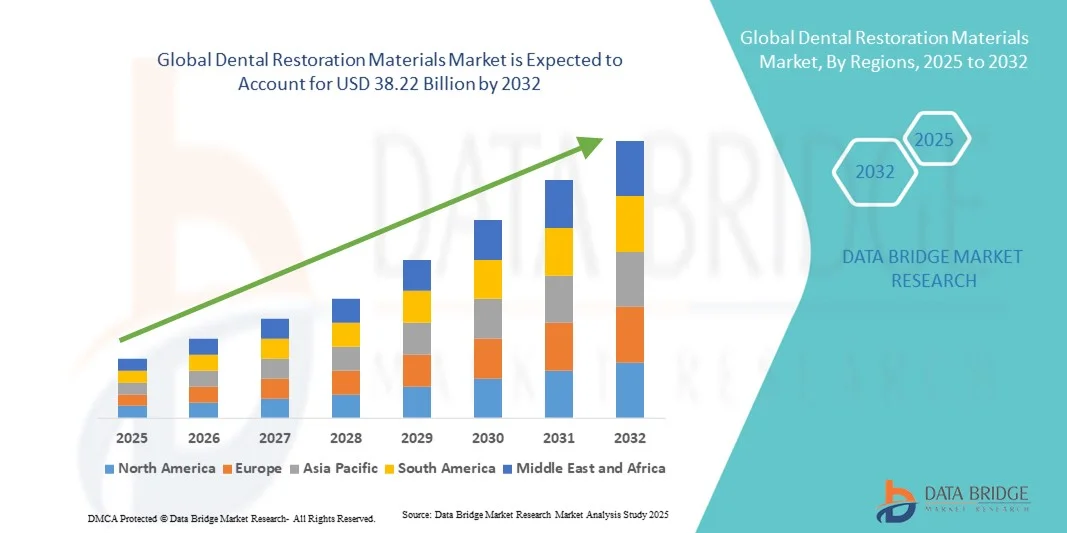
- The global dental restoration materials market size was valued at USD 22.89 billion in 2024 and is expected to reach USD 38.22 billion by 2032, at a CAGR of 6.62% during the forecast period
- The dental restoration materials market is primarily driven by the growing adoption of advanced dental technologies and continuous innovation in restorative dentistry materials, leading to improved treatment outcomes and patient satisfaction
- Furthermore, rising awareness regarding oral health, coupled with the increasing demand for durable, aesthetic, and biocompatible materials, is positioning dental restoration products as essential components of modern dental care. These converging factors are significantly accelerating the uptake of Dental Restoration Materials solutions, thereby boosting the overall growth of the industry
Dental Restoration Materials Market Analysis
- The Dental Restoration Materials market, comprising composites, amalgams, ceramics, and glass ionomers, is becoming an essential part of modern dentistry due to its ability to restore both functionality and aesthetics in damaged or decayed teeth. The growing prevalence of dental caries, rising focus on cosmetic dentistry, and continuous advancements in biomaterials are driving market growth
- The increasing demand for minimally invasive dental procedures and the introduction of advanced restorative materials with superior bonding strength, durability, and natural appearance are further fueling adoption across dental clinics and hospitals worldwide
- North America dominated the dental restoration materials market with the largest revenue share of 37% in 2024, supported by a strong network of dental practitioners, high healthcare spending, and early adoption of digital dentistry technologies. The U.S. leads the region, driven by an increasing number of restorative procedures, favourable reimbursement policies, and growing demand for aesthetic dental solutions
- Asia-Pacific is expected to be the fastest growing region in the dental restoration materials market during the forecast period, projected to expand at a CAGR, owing to rising disposable incomes, improving dental healthcare infrastructure, and growing awareness of oral health in countries such as China, India, and Japan
- The Direct restoration segment accounted for the largest market share of 56.2% in 2024, owing to its cost-effectiveness, single-visit convenience, and suitability for a wide range of cavity classes
Report Scope and Dental Restoration Materials Market Segmentation
|
Attributes |
Dental Restoration Materials Key Market Insights |
|
Segments Covered |
|
|
Countries Covered |
North America
Europe
Asia-Pacific
Middle East and Africa
South America
|
|
Key Market Players |
|
|
Market Opportunities |
|
|
Value Added Data Infosets |
In addition to the insights on market scenarios such as market value, growth rate, segmentation, geographical coverage, and major players, the market reports curated by the Data Bridge Market Research also include in-depth expert analysis, patient epidemiology, pipeline analysis, pricing analysis, and regulatory framework. |
Dental Restoration Materials Market Trends
Enhanced Performance and Aesthetic Advancements Through AI and Material Innovation
- A significant and accelerating trend in the global dental restoration materials market is the integration of artificial intelligence (AI) with advanced digital dentistry technologies such as CAD/CAM systems and 3D printing. This combination is revolutionizing treatment accuracy, customization, and overall clinical outcomes in restorative dentistry
- For instance, AI-powered design software in digital workflows allows dental professionals to create highly precise crowns, bridges, and implants tailored to each patient’s unique oral anatomy. Similarly, AI-assisted scanning technologies improve the accuracy of intraoral impressions, enhancing the quality and longevity of restorations
- The integration of AI also supports predictive analytics that help in identifying optimal restoration materials based on patient-specific parameters such as bite force, tooth structure, and enamel wear patterns. Furthermore, advancements in nanotechnology-enhanced composites and bioactive ceramics are allowing materials to mimic the natural properties of tooth enamel, improving both strength and aesthetics
- The seamless incorporation of AI with digital fabrication systems, such as 3D printers and milling units, enables efficient chairside production of dental restorations, significantly reducing turnaround time. Through these integrated solutions, dental professionals can manage scanning, design, and fabrication from a single digital platform, leading to a more streamlined and patient-centered experience
- This shift toward AI-driven, aesthetically advanced, and durable restorative materials is transforming expectations in both clinical and patient outcomes. Consequently, leading companies such as 3M, Dentsply Sirona, and Ivoclar Vivadent are investing heavily in developing next-generation dental composites and ceramics compatible with digital workflows
- The rising preference for minimally invasive and highly aesthetic restorations, supported by AI-enhanced diagnostic and design tools, continues to accelerate the growth of the Dental Restoration Materials market across hospitals, dental laboratories, and private clinics globally
Dental Restoration Materials Market Dynamics
Driver
Increasing Prevalence of Dental Disorders and Rising Adoption of Digital Dentistry
- The rising global incidence of dental caries, tooth loss, and other oral health disorders is driving the demand for advanced dental restoration materials that offer enhanced functionality and aesthetic appeal
- For instance, in April 2024, Dentsply Sirona launched its latest AI-powered CAD/CAM material optimization software designed to enhance the strength and translucency of ceramic restorations, reflecting the growing importance of digital integration in restorative dentistry. Such product advancements are expected to drive market growth over the forecast period
- As consumers become more aware of cosmetic and restorative dental procedures, there is a growing demand for materials that provide both visual appeal and long-term performance. Modern composites and glass ionomers with improved bonding agents are gaining popularity for their biocompatibility and durability
- Furthermore, the adoption of digital dentistry solutions, including 3D printing, AI-assisted design, and intraoral scanning, is making restoration processes faster and more accurate, while reducing patient discomfort and clinical errors
- The increased focus on chairside solutions, allowing dentists to fabricate restorations in a single visit, and the expanding use of nanocomposites with superior strength and polishability are key factors propelling market expansion across clinics and laboratories
Restraint/Challenge
High Cost of Advanced Materials and Limited Accessibility in Developing Regions
- The relatively high cost of advanced dental restoration materials, especially ceramic-based and nanocomposite materials, poses a challenge to widespread adoption, particularly in developing economies. In addition, the expenses associated with digital dentistry systems such as CAD/CAM units and 3D printers further increase overall treatment costs for clinics
- For instance, despite significant clinical benefits, digital workflow systems and AI-enabled tools remain cost-prohibitive for many smaller dental practices in emerging markets, limiting their ability to transition to modern restorative techniques
- Addressing these cost-related challenges through technological standardization, local manufacturing, and greater insurance coverage for dental restorations is essential for improving accessibility and affordability. In addition, a shortage of skilled professionals trained in digital restoration techniques also hinders full-scale adoption
- While material prices are gradually declining due to technological advances, the upfront investment for digital restoration equipment and premium materials remains a barrier. Furthermore, the lack of awareness among patients in rural or underdeveloped areas regarding modern dental restoration options adds to the challenge
- Overcoming these barriers through educational initiatives, cost-effective material innovations, and broader access to AI-based digital systems will be vital for sustaining the long-term growth of the Dental Restoration Materials market
Dental Restoration Materials Market Scope
The market is segmented on the basis of defect class type, restoration type, end user, product, application, and delivery.
- By Defect Class Type
On the basis of defect class type, the Dental Restoration Materials market is segmented into Class I, Class II, Class III, Class IV, Class V, and Class VI. The Class II segment dominated the largest market revenue share of 38.4% in 2024, driven by the high global prevalence of proximal caries and the frequent need for durable, esthetic restorations on molars and premolars. Class II lesions often require materials with superior wear resistance and adhesion, which has accelerated adoption of advanced resin-based composites and adhesive systems in both private and institutional dental practices. Increasing patient demand for tooth-colored restorations over amalgam has pushed clinicians to prefer composite solutions for Class II cavities, raising per-case material spend. Technological improvements in curing lights, bonding agents, and matrix systems have improved the longevity and predictability of Class II restorations, encouraging broader clinician uptake. Dental schools and continuing-education programs emphasize minimally invasive approaches for Class II restorations, further normalizing composite usage among new practitioners. Reimbursement and coding practices in many markets favor definitive restorative care over repeated temporary treatment, which amplifies the revenue associated with Class II procedures. Large dental chains and multi-clinic groups standardize on high-performance Class II materials, boosting bulk purchasing and supplier relationships. As a result, Class II remains the single largest revenue contributor across restorative material categories and geographies.
The Class V segment is expected to witness the fastest CAGR of 9.5% from 2025 to 2032, fueled by rising incidence of cervical abrasion, erosion and root-surface caries among aging populations and increasing salience of non-carious cervical lesions in esthetic dentistry. Advances in low-abrasivity bonding agents and fluoride-releasing restorative chemistries have made Class V restorations more reliable and longer lasting, encouraging expanded clinical use. The demographic shift toward older adults with exposed root surfaces and gingival recession has increased clinician demand for materials tailored to cervical lesions, which typically require superior marginal adhesion and sensitivity control. Manufacturers are launching specialized Class V kits and simplified adhesion protocols to reduce chair time and improve success rates in these challenging restorations. Pediatric use of glass ionomer for cervical lesions and preventive restorations is also contributing to volume growth in this class. Increasing awareness of minimally invasive interceptive care and early intervention for erosion-related defects is expanding the treatable patient pool for Class V solutions. Marketing efforts emphasizing esthetic, low-sensitivity outcomes for cervical restorations are driving patient acceptance and premium pricing for specialized products. As dental practices incorporate targeted prevention and monitoring for cervical lesions, recurring restorative demand in Class V is forecast to outpace many traditional categories.
- By Restoration Type
On the basis of restoration type, the market is segmented into Direct and Indirect restorations. The Direct restoration segment accounted for the largest market share of 56.2% in 2024, owing to its cost-effectiveness, single-visit convenience, and suitability for a wide range of cavity classes. Direct techniques leverage modern resin composites, efficient adhesive systems, and rapid light-curing technologies that reduce chair time and improve practice profitability per treatment episode. General dentists and hygienists commonly perform direct restorations during routine appointments, making direct materials a high-turnover consumable in clinics worldwide. The rise of same-day dentistry workflows and patient preference for quick aesthetic fixes has reinforced the dominance of direct restoratives. Supply-chain improvements in pre-filled syringes, bulk compules, and shade-matching systems have streamlined inventory and minimized waste, increasing margins for clinics. Training programs emphasize stratified protocols for direct restorations, which improves clinical outcomes and repeat business. Many payers and national schemes cover direct restorative care comprehensively, maintaining patient access and sustained procedural volume. For these reasons, direct restoration materials continue to generate the majority of global restorative material revenue.
The Indirect restoration segment is projected to grow at the fastest CAGR of 8.8% from 2025 to 2032, driven by expanding adoption of CAD/CAM workflows, digital impression systems, and advanced ceramic materials for crowns, inlays, onlays, and veneers. Chairside milling and outsourced digital laboratory services enable clinicians to offer highly aesthetic, durable indirect restorations with predictable margins, increasing demand for high-quality lab materials and prosthodontic consumables. Rising patient willingness to invest in durable, long-term prosthetic solutions and the growth of cosmetic dentistry boost indirect restoration volumes. The proliferation of private dental labs employing 3D printing and zirconia sintering equipment supports scale and cost competitiveness for indirect work. Implant-supported prosthetics and complex full-mouth rehabilitations also rely heavily on indirect restorations, fostering higher per-case revenue. Insurance products and financing options that cover prosthodontic work make indirect treatments more accessible to broader patient segments. As digital integration reduces turnaround time and error rates, both clinicians and patients increasingly prefer indirect options for higher-value restorative cases, accelerating market growth in this segment.
- By End User
On the basis of end user, the Dental Restoration Materials market is categorized into Hospitals, Dental Clinics, and Laboratories. The Dental Clinics segment dominated the market with a share of 48.9% in 2024, reflecting the large volume of routine restorative and cosmetic procedures performed in private practices and group clinics. Clinics often serve as primary access points for preventive and restorative care, performing high volumes of direct restorations, composite build-ups, and routine crown preparations that consume significant material quantities. The proliferation of multi-clinic chains and dental service organizations increases standardized procurement of restorative materials, driving consistent purchasing patterns and higher aggregate spend in clinic channels. Patient demand for fast, aesthetic solutions in an outpatient setting supports clinics’ outsized share of restorative material revenue. Clinics also invest in ergonomic delivery systems and chairside devices that favor certain material formats (compules, syringes), reinforcing supplier relationships. Continuing-education programs targeted at practicing dentists typically focus on chairside restorative techniques, increasing clinic adoption of the latest composites and adhesives. In many markets, clinics are the primary drivers of product trials and early adoption, which further consolidates their market leading position. Overall, dental clinics capture the bulk of volume and value across both direct and smaller indirect restorative procedures.
The Laboratories segment is expected to exhibit the fastest growth at a CAGR of 9.1% from 2025 to 2032, fueled by rapid expansion of digital labs, outsourcing of complex prosthodontic work, and investments in CAD/CAM and additive manufacturing technologies. Dental laboratories are increasingly producing high-value indirect restorations—zirconia crowns, PFM alternatives, layered ceramics and implant prostheses—which raises per-unit material consumption and revenue. The trend toward centralized lab workflows, driven by economies of scale and specialized expertise, supports higher throughput and more standardized material procurement. Collaboration between clinics and digital labs for seamless data transfer encourages more clinicians to prescribe lab-fabricated restorations rather than chairside equivalents, increasing lab demand. Growth in dental tourism and restorative referrals to specialty labs further boosts volumes. Laboratories are also a major market for powder and liquid delivery formats used in casting, staining and glazing, expanding the product mix they purchase. As lab automation improves capacity, the laboratory channel is set to outpace clinics in percentage growth.
- By Product
On the basis of product, the market is segmented into Amalgam, Resin-Based Composite, Glass Ionomer, Resin-Modified Glass Ionomer, and Porcelain-Fused-to-Metal (PFM). The Resin-Based Composite segment dominated the global market with the largest revenue share of 41.7% in 2024, due to its superior aesthetics, versatility across anterior and posterior restorations, and improving mechanical properties through nanofill and hybrid formulations. Patient preference for tooth-colored restorations and the clinical trend away from amalgam have driven adoption of composites across age groups and geographies. Continuous R&D has reduced polymerization shrinkage, improved wear resistance, and expanded shade systems, helping composites replace other materials in many indications. Dental manufacturers bundle composite systems with bonding agents and finishing kits, which increases per-case revenue and supply loyalty. Education and evidence supporting long-term outcomes for modern composites encourage clinicians to specify composite over metallic restoratives. Regulatory restrictions and environmental concerns around amalgam also feed composite market growth in several regions. Combined, these factors maintain resin composites as the top product category by revenue.
The Glass Ionomer segment is projected to register the fastest CAGR of 10.3% from 2025 to 2032, supported by its unique fluoride-release properties, chemical adhesion to tooth structure, and suitability for atraumatic restorative treatment and pediatric dentistry. Glass ionomers are increasingly used in minimally invasive and preventive contexts, including ART programs in low-resource settings, which broadens their market footprint. Improvements in resin-modified glass ionomer formulations have enhanced strength and handling, enabling substitution in more indications. Growing public-health initiatives that prioritize caries control in children and the elderly drive institutional procurement of glass ionomers. The material’s compatibility with bonding systems and its role in interim restorations and liner applications further expand consumption. As clinicians seek bioactive restorative solutions that reduce secondary caries risk, glass ionomer demand is expected to accelerate rapidly.
- By Application
On the basis of application, the Dental Restoration Materials market is segmented into Prosthodontics, Periodontics, Endodontics, and Others. The Prosthodontics segment held the largest market share of 46.5% in 2024, driven by the high global burden of tooth loss, rising geriatric populations, and growing demand for crowns, bridges, and implant-supported prostheses that require substantial restorative material inputs. Prosthodontic workflows consume both indirect materials (ceramics, alloys) and specialized luting cements, representing significant value per case. Advances in digital prosthodontics and the popularity of full-arch and implant rehabilitations have increased average treatment ticket sizes, boosting segment revenue. Cosmetic expectations and functional rehabilitation demands lead patients to invest in long-term prosthetic solutions, contributing to sustained market growth. Public and private insurance programs that cover prosthetic rehabilitation in select markets also support higher treatment volumes. The combination of demographic drivers and technological innovation ensures prosthodontics remains the leading application area for restorative materials.
The Endodontics segment is anticipated to record the fastest CAGR of 9.6% from 2025 to 2032, supported by the increasing number of root canal procedures and the need for durable post-endodontic restorations using fiber posts, adhesives, and esthetic composite cores. Improved endodontic techniques and rotary instrumentation have raised the success rate of root canal therapy, increasing the demand for reliable restorative materials that restore function and aesthetics post-treatment. Rising access to specialist endodontic services and higher patient willingness to save natural teeth rather than extract them drive restorative demand in this application. The development of bioactive core materials and improved bonding protocols for post placement further stimulates product uptake. As clinicians focus on long-term tooth preservation, post-endodontic restorative volumes and associated material consumption are set to grow faster than many other application categories.
- By Delivery
On the basis of delivery mode, the market is segmented into Powder, Liquid, and Syringe/Injection formats. The Syringe/Injection segment accounted for the largest market share of 44.8% in 2024, due to its controlled dispensing, reduced waste, and ease of use in direct restorative procedures. Pre-filled syringes and compule systems facilitate rapid shade selection and accurate placement, improving clinical workflow efficiency and reducing cross-contamination risks. Many composite and adhesive systems are formulated for syringe delivery to support single-operator efficiency and predictable incremental placement. Dental practices favor syringe formats for their convenience and compatibility with typical mid-chair inventory systems, which sustains high recurring purchases. Manufacturers increasingly offer syringe kits bundled with tips, liners and finishing tools to increase average order value. The result is a dominant delivery channel that aligns with modern chairside restorative practice.
The Powder segment is expected to witness the fastest CAGR of 8.7% from 2025 to 2032, driven by its extensive use in dental laboratories for alloy casting, ceramic powders for pressing and staining, and technical formulations requiring powder-liquid mixing. Growth in lab production of indirect restorations, increased outsourcing, and the continuing importance of technical ceramic systems support rising powder demand. Educational institutions and training labs also rely on powder formats for teaching and prototyping, sustaining baseline volumes. Innovations in powder particle engineering and hybrid powder formulations for 3D printing and pressing broaden application scope. As lab volumes and technical restoration complexity increase, powder consumption is forecast to grow at a faster pace than many liquid or syringe formats.
Dental Restoration Materials Market Regional Analysis
- North America dominated the dental restoration materials market with the largest revenue share of 37% in 2024, supported by a strong network of dental practitioners, high healthcare spending, and the early adoption of advanced digital dentistry technologies
- The region’s well-established dental care infrastructure and growing patient preference for aesthetic and minimally invasive restorative procedures are further contributing to market expansion
- Increasing awareness about oral health, coupled with the availability of technologically advanced materials such as nanocomposites and CAD/CAM ceramics, continues to drive demand across the region’s clinics and dental hospitals
U.S. Dental Restoration Materials Market Insight
The U.S. dental restoration materials market captured the largest revenue share in 2024 within North America, fueled by the rising prevalence of dental disorders, increasing demand for cosmetic dentistry, and high adoption of technologically advanced restorative solutions. The country’s strong reimbursement structure, expanding elderly population, and growing awareness of oral aesthetics are encouraging the use of innovative materials such as zirconia and composite resins. Additionally, the widespread integration of digital workflows, including CAD/CAM and 3D printing, is reshaping dental laboratories and clinical practices, further boosting the industry’s growth trajectory.
Europe Dental Restoration Materials Market Insight
The Europe dental restoration materials market is projected to expand at a significant CAGR during the forecast period, driven by growing dental tourism, aging demographics, and rising demand for high-performance and biocompatible restorative materials. The region’s regulatory emphasis on patient safety and product quality continues to encourage the use of certified, advanced materials in restorative procedures. Moreover, the adoption of digital dentistry technologies, such as intraoral scanners and 3D-printed restorations, is becoming increasingly common across countries like Germany, France, and the U.K., fostering innovation and efficiency in dental care delivery.
U.K. Dental Restoration Materials Market Insight
The U.K. dental restoration materials market is expected to grow at a healthy CAGR throughout the forecast period, primarily driven by increasing oral health awareness, expanding cosmetic dentistry trends, and supportive public dental health programs. The growing availability of advanced materials offering improved aesthetics and durability is encouraging adoption among dental practitioners. Furthermore, the country’s evolving regulatory landscape emphasizing high-quality restorative materials and digital workflows supports the shift toward modernized dental treatment environments.
Germany Dental Restoration Materials Market Insight
The Germany dental restoration materials market is anticipated to expand at a considerable CAGR during the forecast period, supported by the country’s strong dental manufacturing base, focus on innovation, and preference for eco-friendly and biocompatible materials. German clinics are increasingly integrating digital technologies such as CAD/CAM and 3D imaging for precision-based restorative procedures. High patient awareness regarding oral aesthetics, coupled with the presence of key industry players, positions Germany as a major contributor to Europe’s dental restoration materials market growth.
Asia-Pacific Dental Restoration Materials Market Insight
The Asia-Pacific dental restoration materials market is poised to grow at the fastest CAGR during the forecast period of 2025 to 2032, driven by rising disposable incomes, expanding dental care access, and growing awareness of oral health in countries such as China, India, and Japan. Rapid urbanization, the emergence of private dental clinics, and government initiatives promoting preventive dental care are accelerating regional market growth. Increasing adoption of advanced restorative solutions and digital dentistry tools is making restorative care more efficient and accessible across diverse patient populations.
Japan Dental Restoration Materials Market Insight
The Japan dental restoration materials market is experiencing robust growth due to an aging population, heightened focus on oral hygiene, and growing interest in aesthetic dentistry. The country’s advanced healthcare system and early adoption of high-end restorative materials, such as ceramics and hybrid composites, are fueling market expansion. Moreover, the integration of CAD/CAM technology and the preference for minimally invasive dental procedures continue to enhance efficiency and treatment outcomes.
China Dental Restoration Materials Market Insight
The China dental restoration materials market accounted for the largest market revenue share in Asia-Pacific in 2024, supported by expanding healthcare infrastructure, a growing middle-class population, and increasing investment in oral health awareness programs. The rising number of dental clinics and hospitals, along with the government’s focus on improving dental care accessibility, is stimulating market growth. The rapid adoption of digital dentistry, coupled with strong domestic manufacturing of restorative materials, is positioning China as a leading hub in the regional dental restoration materials industry.
Dental Restoration Materials Market Share
The Dental Restoration Materials industry is primarily led by well-established companies, including:
- 3M Company (U.S.)
- Dentsply Sirona Inc. (U.S.)
- Kuraray Noritake Dental Inc. (Japan)
- GC Corporation (Japan)
- Coltene Holding AG (Switzerland)
- Heraeus Kulzer GmbH (Germany)
- Shofu Dental Corporation (Japan)
- VOCO GmbH (Germany)
- DenMat Holdings, LLC (U.S.)
- SDI Limited (Australia)
- BISCO, Inc. (U.S.)
- Pentron Clinical Technologies (U.S.)
- Envista Holdings Corporation (U.S.)
- Danaher Corporation (U.S.)
- Angelus Indústria de Produtos Odontológicos S/A (Brazil)
- Tokuyama Dental Corporation (Japan)
- Kerr Corporation (U.S.)
Latest Developments in Global Dental Restoration Materials Market
- In January 2023, VITA Zahnfabrik launched VITA VM LC PRIMER, an enhanced bonding-agent system designed for extraoral fabrication of dental restorations. The product broadens bonding capabilities across various indications and became commercially available in March 2023
- In October 2023, Kerr Dental introduced SimpliShade Bulk Fill and SimpliShade Bulk Fill Flow composites. These materials streamline restorative workflows by allowing faster, simplified application while maintaining strength and esthetics
- In December 2024, Pulpdent Corporation launched ACTIVA BioACTIVE Bulk Flow, a next-generation bioactive bulk-fill restorative material. It offers superior handling, bioactivity, and improved efficiency for large-volume restorations, strengthening Pulpdent’s bioactive materials portfolio
- In February 2025, SprintRay Inc. unveiled two new restorative materials for its Digital Restoration Press platform. These include a ceramic-filled resin for temporary crowns and bridges and a capsule-based, “no-mess” printing workflow aimed at improving efficiency and precision in digital dentistry
- In April 2025, Dentsply Sirona celebrated 15 years of its SDR flow+ composite line, reaffirming its long-term clinical success and reliability. The milestone highlights the company’s continued innovation and leadership in restorative material solutions

- Interactive Data Analysis Dashboard
- Company Analysis Dashboard for high growth potential opportunities
- Research Analyst Access for customization & queries
- Competitor Analysis with Interactive dashboard
- Latest News, Updates & Trend analysis
- Harness the Power of Benchmark Analysis for Comprehensive Competitor Tracking
Data collection and base year analysis are done using data collection modules with large sample sizes. The stage includes obtaining market information or related data through various sources and strategies. It includes examining and planning all the data acquired from the past in advance. It likewise envelops the examination of information inconsistencies seen across different information sources. The market data is analysed and estimated using market statistical and coherent models. Also, market share analysis and key trend analysis are the major success factors in the market report. To know more, please request an analyst call or drop down your inquiry.
The key research methodology used by DBMR research team is data triangulation which involves data mining, analysis of the impact of data variables on the market and primary (industry expert) validation. Data models include Vendor Positioning Grid, Market Time Line Analysis, Market Overview and Guide, Company Positioning Grid, Patent Analysis, Pricing Analysis, Company Market Share Analysis, Standards of Measurement, Global versus Regional and Vendor Share Analysis. To know more about the research methodology, drop in an inquiry to speak to our industry experts.
Data Bridge Market Research is a leader in advanced formative research. We take pride in servicing our existing and new customers with data and analysis that match and suits their goal. The report can be customized to include price trend analysis of target brands understanding the market for additional countries (ask for the list of countries), clinical trial results data, literature review, refurbished market and product base analysis. Market analysis of target competitors can be analyzed from technology-based analysis to market portfolio strategies. We can add as many competitors that you require data about in the format and data style you are looking for. Our team of analysts can also provide you data in crude raw excel files pivot tables (Fact book) or can assist you in creating presentations from the data sets available in the report.













