Deodorant Stick Market Size
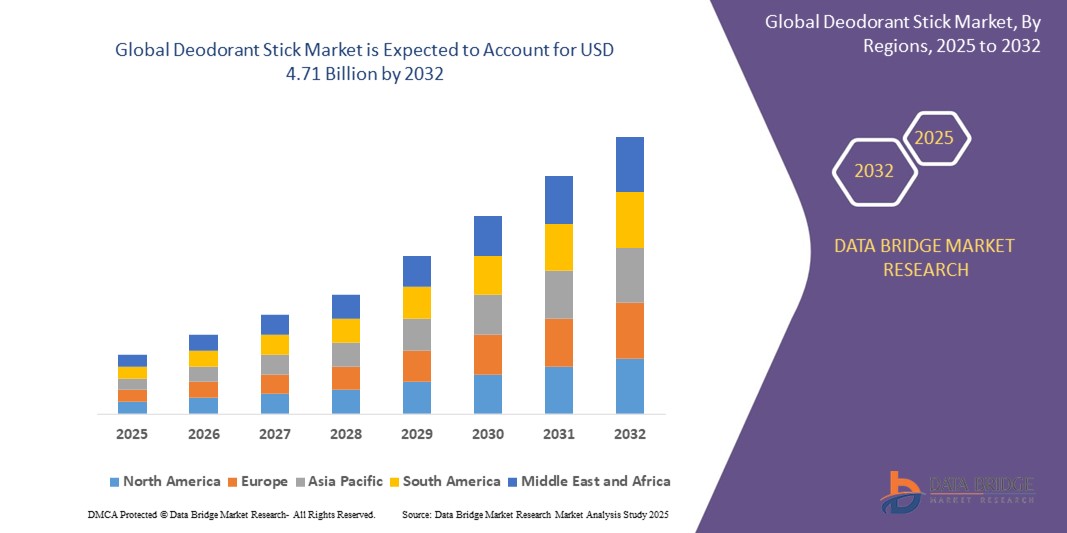
- The global deodorant stick market size was valued at USD 3.23 billion in 2024 and is expected to reach USD 4.71 billion by 2032, at a CAGR of 4.81% during the forecast period
- The market growth is largely fueled by increasing consumer awareness around personal hygiene and the shift toward long-lasting, skin-friendly deodorant products, leading to rising adoption across both developed and emerging regions
- Furthermore, growing demand for natural, aluminum-free, and gender-neutral formulations is reshaping product development, while evolving lifestyle habits and higher grooming standards are accelerating the use of deodorant sticks in daily routines, thereby significantly boosting the industry's growth
Deodorant Stick Market Analysis
- Deodorant sticks are solid-format personal care products designed to prevent body odor by neutralizing bacteria and offering fragrance, often applied directly to the underarms or other sweat-prone areas. These products are formulated using various active ingredients, including alcohol, essential oils, and antimicrobial agents
- The increasing preference for portable, residue-free, and skin-sensitive deodorants, alongside rising penetration of e-commerce and expanding product lines from major personal care brands, is driving consistent growth across both male and female consumer segments
- Europe dominated deodorant stick market with a share of 34.96% in 2024, due to high consumer demand for premium personal care products and a strong emphasis on hygiene and wellness
- Asia-Pacific is expected to be the fastest growing region in the deodorant stick market during the forecast period due to increasing awareness of personal hygiene, rising disposable incomes, and changing lifestyle habits across emerging economies
- Plastic segment dominated the market with a market share of 68.4% in 2024, due to its lightweight nature, cost efficiency, and wide applicability across both standard and travel-size formats. Plastic packaging supports a range of innovative shapes, dispensers, and labeling designs, which are especially advantageous for brand differentiation and shelf appeal. Its compatibility with both manual and automated filling processes makes plastic the preferred material for high-volume production across all price tiers
Report Scope and Deodorant Stick Market Segmentation
|
Attributes |
Deodorant Stick Key Market Insights |
|
Segments Covered |
|
|
Countries Covered |
North America
Europe
Asia-Pacific
Middle East and Africa
South America
|
|
Key Market Players |
|
|
Market Opportunities |
|
|
Value Added Data Infosets |
In addition to the insights on market scenarios such as market value, growth rate, segmentation, geographical coverage, and major players, the market reports curated by the Data Bridge Market Research also include in-depth expert analysis, pricing analysis, brand share analysis, consumer survey, demography analysis, supply chain analysis, value chain analysis, raw material/consumables overview, vendor selection criteria, PESTLE Analysis, Porter Analysis, and regulatory framework. |
Deodorant Stick Market Trends
“Increasing Preference for Natural and Organic Ingredients”
- Consumers are actively seeking deodorant sticks made with natural and organic ingredients, reflecting rising health consciousness and a shift toward “clean beauty.” Concerns about the potential risks of synthetic chemicals—such as parabens, aluminum compounds, and artificial fragrances—have led to strong demand for aluminum-free, paraben-free, and plant-based deodorant formulations
- For instance, brands such as Salt of the Earth Cosmetics Inc. have recently introduced deodorant balms with plastic-free, recyclable packaging, formulated without synthetic additives and specifically designed for sensitive skin. This innovation aims to address both sustainability and health demands in the market
- The popularity of vegan, cruelty-free, and eco-friendly products is growing, particularly in North America and Europe, where consumers increasingly expect ethical sourcing, transparency, and biodegradable or refillable packaging options
- Social media, wellness influencers, and e-commerce platforms are accelerating awareness and adoption, making natural deodorant sticks more accessible to a broad audience
- Technological advances are spurring the development of sweat-activated, long-wear formulas and hybrid deodorants that combine odor protection with skin-care benefits
- The market is projected to grow steadily through 2035, with global and regional brands launching new natural product lines and targeting younger, health-conscious demographics
Deodorant Stick Market Dynamics
Driver
“Rising Awareness of Personal Hygiene”
- Heightened awareness of personal hygiene and grooming is a primary driver, as consumers across all age groups prioritize products that offer freshness, odor control, and confidence throughout the day. Urbanization and busier lifestyles are amplifying this trend, with deodorant sticks providing a convenient, long-lasting solution for daily personal care
- For instance, key players such as Dove, Old Spice, and Degree have responded by expanding lines with specialized deodorant sticks that emphasize long-lasting protection, sweat resistance, and suitability for active lifestyles
- Deodorant sticks' convenient application and portability make them especially popular in regions with hot climates and among consumers who prefer quick, mess-free options
- Public health campaigns, greater access to information, and the influence of celebrity and lifestyle marketing are all raising standards for personal hygiene
- The market benefits from ongoing innovation, as manufacturers introduce new variants (such as anti-bacterial, fragrance-free, and sensitive skin options) to cater to evolving preferences
Restraint/Challenge
“Skin Sensitivity and Allergies”
- Skin sensitivities and allergies caused by common deodorant ingredients (such as fragrances, alcohol, aluminum salts, and parabens) are a significant restraint, leading many consumers to experience irritation, itching, or rashes
- For instance, complaints regarding skin reactions have prompted producers to launch hypoallergenic, alcohol-free, and dermatologist-tested deodorant sticks specifically targeting people with sensitive skin
- The increased prevalence of allergic contact dermatitis and consumer reluctance to try new products containing potential irritants is slowing the growth of traditional formulations while propelling demand for gentler alternatives
- Regulatory scrutiny of ingredient safety and labeling in personal care products is intensifying, pressuring manufacturers to reformulate products, improve transparency, and comply with stricter standards
- Market growth is further challenged by the need for brands to consistently balance efficacy—especially in “natural” or “free-from” versions—with skin-friendliness and consumer trust
Deodorant Stick Market Scope
The market is segmented on the basis of product type, packaging material, sales channel, and end user.
- By Product Type
On the basis of product type, the deodorant stick market is segmented into with-alcohol and alcohol-free variants. The with-alcohol segment dominated the largest market revenue share in 2024, attributed to its long-standing use in personal care products for its quick-drying, antibacterial, and preservative properties. Consumers in warm and humid climates often prefer alcohol-based deodorants for their immediate cooling effect and efficient odor control, especially during intense physical activity or extended outdoor exposure. Moreover, the broad availability of with-alcohol deodorant sticks across mainstream brands has sustained their strong foothold in both mass and premium segments.
The alcohol-free segment is anticipated to witness the fastest growth rate from 2025 to 2032, propelled by rising consumer preference for skin-friendly and non-irritating formulations. Growing awareness of potential skin sensitivity and allergies caused by alcohol-based products is driving demand for gentler alternatives, particularly among users with sensitive skin and adolescents. The expanding range of alcohol-free deodorants that incorporate natural or organic ingredients is also contributing to this segment's accelerated adoption, especially among health-conscious and eco-aware consumers.
- By Packaging Material
On the basis of packaging material, the deodorant stick market is categorized into plastic, metal, and glass. The plastic segment held the largest market revenue share of 68.4% in 2024 due to its lightweight nature, cost efficiency, and wide applicability across both standard and travel-size formats. Plastic packaging supports a range of innovative shapes, dispensers, and labeling designs, which are especially advantageous for brand differentiation and shelf appeal. Its compatibility with both manual and automated filling processes makes plastic the preferred material for high-volume production across all price tiers.
The metal segment is projected to register the fastest CAGR from 2025 to 2032, driven by increasing demand for sustainable and premium-feel packaging. As environmental regulations tighten and consumer scrutiny over single-use plastics intensifies, many brands are shifting toward recyclable or refillable metal containers. Metal packaging also resonates with the luxury and natural deodorant segments, where durability, reusability, and a minimalist aesthetic are strong selling points. This shift is further supported by retailers’ growing alignment with sustainability goals, encouraging innovation in eco-responsible packaging.
- By Sales Channel
On the basis of sales channel, the deodorant stick market is segmented into store-based retailing and online retailing. Store-based retailing dominated the largest revenue share in 2024, largely due to the established consumer behavior of purchasing personal care items through supermarkets, hypermarkets, and pharmacy chains. In-store shopping offers the advantage of immediate product access, the ability to physically inspect items, and the availability of bundled promotions or loyalty programs. Moreover, brick-and-mortar outlets remain especially popular in emerging markets, where digital penetration is still developing and impulse buying plays a key role in personal care purchases.
The online retailing segment is expected to witness the fastest growth from 2025 to 2032, driven by increasing internet penetration, mobile commerce growth, and consumer inclination toward convenience and home delivery. E-commerce platforms enable consumers to access a broader range of niche and international deodorant brands, especially those promoting natural, vegan, or specialty formulations. The rise of subscription models, targeted digital marketing, and influencer-led product discovery are also contributing to the surge in online deodorant stick purchases, particularly among Gen Z and millennial shoppers.
- By End User
On the basis of end user, the market is divided into men, women, and others. The men segment accounted for the largest share of the deodorant stick market in 2024, driven by high product usage frequency, brand loyalty, and strong demand for long-lasting and high-performance deodorants tailored to active lifestyles. Male grooming has evolved beyond basic hygiene, with a growing emphasis on personal fragrance and functional benefits, supporting the dominance of this segment.
The women segment is projected to experience the fastest growth rate from 2025 to 2032, fueled by a growing inclination toward customized, skin-sensitive, and aesthetically pleasing deodorant offerings. Increased participation of women in the workforce, rising disposable incomes, and expanding access to beauty and wellness content are encouraging higher spending on personal care, including deodorants. In addition, women-led interest in natural and cruelty-free products is further shaping innovation and product expansion within this segment.
Deodorant Stick Market Regional Analysis
- Europe dominated the deodorant stick market with the largest revenue share of 34.96% in 2024, driven by high consumer demand for premium personal care products and a strong emphasis on hygiene and wellness
- The region’s mature grooming culture, combined with growing preference for natural, alcohol-free, and dermatologically tested formulations, is significantly boosting the adoption of deodorant sticks
- In addition, increasing product availability across both retail chains and e-commerce platforms, supported by continuous product innovation and sustainable packaging initiatives by European brands, is contributing to the region’s market dominance
Germany Deodorant Stick Market Insight
The Germany deodorant stick market accounted for the largest revenue share in Europe in 2024, supported by high per capita spending on personal care and widespread adoption of organic and skin-sensitive formulations. German consumers are increasingly prioritizing ethical, eco-conscious deodorant brands, pushing manufacturers to expand their sustainable product lines. The country’s well-established retail infrastructure and emphasis on health and wellness further promote consistent product uptake.
U.K. Deodorant Stick Market Insight
The U.K. deodorant stick market is projected to grow at a robust CAGR during the forecast period, driven by shifting consumer preferences toward long-lasting and multifunctional products. The rising demand for gender-neutral and vegan deodorant offerings is influencing product development. Moreover, the strong presence of private-label and international brands across online and offline channels is enhancing accessibility and consumer choice.
North America Deodorant Stick Market Insight
The North America deodorant stick market is expected to expand steadily, backed by rising consumer focus on performance-based and personalized grooming solutions. The region is witnessing growing traction for natural and aluminum-free deodorants, especially among health-conscious millennials and Gen Z. In addition, widespread awareness of body odor prevention and proactive marketing by personal care brands support market expansion.
U.S. Deodorant Stick Market Insight
The U.S. deodorant stick market dominated North America with a revenue share in 2024, driven by the high usage rate of daily hygiene products and growing acceptance of clean-label, cruelty-free formulations. The increasing penetration of subscription models and DTC (direct-to-consumer) brands, coupled with retail innovation in formats and ingredients, is fostering continued growth across both male and female segments.
Asia-Pacific Deodorant Stick Market Insight
The Asia-Pacific deodorant stick market is projected to grow at the fastest CAGR from 2025 to 2032, fueled by increasing awareness of personal hygiene, rising disposable incomes, and changing lifestyle habits across emerging economies. As Western grooming trends gain popularity, the demand for deodorant sticks is expanding across urban and semi-urban regions. Local and international players are responding by launching region-specific products that cater to varying climatic and cultural preferences.
India Deodorant Stick Market Insight
The India deodorant stick market is gaining momentum, particularly among the youth population and urban middle class. Rising awareness about body odor and the shift from aerosol sprays to stick formats due to portability and longevity are driving adoption. The growing presence of international brands, combined with competitive pricing and expanding online distribution, is contributing to market growth.
China Deodorant Stick Market Insight
The China deodorant stick market is experiencing steady growth, supported by rising awareness of grooming routines and increasing penetration of international personal care brands. While traditional deodorants have historically seen limited use, evolving consumer behavior and urbanization are reshaping demand. Marketing efforts emphasizing skin benefits and natural ingredients are also helping drive acceptance of stick formats in the Chinese market.
Deodorant Stick Market Share
The deodorant stick industry is primarily led by well-established companies, including:
- Avon (U.S.)
- Beiersdorf AG (Germany)
- Colgate-Palmolive Company (U.S.)
- Adhesives Technologies India Private Limited (India)
- Procter & Gamble (U.S.)
- Unilever (U.K.)
- Mandom Corp (Japan)
- L'Oréal S.A. (France)
- Adidas America Inc. (U.S.)
- Calvin Klein (U.S.)
- Kao Corporation (Japan)
- The Estée Lauder Companies Inc. (U.S.)
- Playboy (U.S.)
- Chanel (France)
- Christian Dior SE (France)
- Godrej Consumer Products Limited (India)
- Church & Dwight Co., Inc. (U.S.)
- Yardley London (U.K.)
- Giorgio Armani S.p.A. (Italy)
- Toms of Maine, Inc. - (U.S.)
Latest Developments in Global Deodorant Stick Market
- In March 2025, Luna Daily expanded its body care portfolio with the launch of its All-Over Deodorant, an extra-strength, aluminum-free deodorant stick formulated with SYMDEO technology. Designed for use on multiple sweat-prone areas such as underarms, under-boob, inner thighs, and the back of the neck, the pH-balanced product offers long-lasting odor protection. This innovative multi-zone application approach is expected to strengthen Luna Daily’s position in the growing deodorant stick market by catering to evolving consumer preferences for versatile, skin-friendly, and high-performance personal care solutions
- In April 2024, Tom's of Maine unveiled its "Smell Good, Good" campaign, introducing a new line of deodorants and antiperspirants packaged in modern containers crafted from 100% recycled plastic. The innovative formulations are aluminum-free and incorporate naturally sourced aloe vera, promoting skin health. This launch reflects the brand’s commitment to sustainability while appealing to consumers seeking effective, eco-friendly personal care options
- In May 2021, Grove Collaborative expanded its personal care range by launching the first-ever 100% plastic-free deodorant and body care refill system. This groundbreaking initiative aligns with the company’s goal of achieving 100% plastic-free operations by 2025. By prioritizing sustainability, Grove Collaborative appeals to eco-conscious consumers seeking innovative solutions that reduce environmental impact while maintaining product efficacy
- In May 2021, Unilever PLC announced the transition of its Degree deodorant line to all-inclusive refillable packaging. This innovative approach aims to enhance convenience for consumers, especially those with visual impairments or upper limb motor disabilities. The design emphasizes ease of use and sustainability, significantly reducing virgin plastic waste by incorporating stainless steel and recycled materials in its eco- friendly packaging

- Interactive Data Analysis Dashboard
- Company Analysis Dashboard for high growth potential opportunities
- Research Analyst Access for customization & queries
- Competitor Analysis with Interactive dashboard
- Latest News, Updates & Trend analysis
- Harness the Power of Benchmark Analysis for Comprehensive Competitor Tracking
Data collection and base year analysis are done using data collection modules with large sample sizes. The stage includes obtaining market information or related data through various sources and strategies. It includes examining and planning all the data acquired from the past in advance. It likewise envelops the examination of information inconsistencies seen across different information sources. The market data is analysed and estimated using market statistical and coherent models. Also, market share analysis and key trend analysis are the major success factors in the market report. To know more, please request an analyst call or drop down your inquiry.
The key research methodology used by DBMR research team is data triangulation which involves data mining, analysis of the impact of data variables on the market and primary (industry expert) validation. Data models include Vendor Positioning Grid, Market Time Line Analysis, Market Overview and Guide, Company Positioning Grid, Patent Analysis, Pricing Analysis, Company Market Share Analysis, Standards of Measurement, Global versus Regional and Vendor Share Analysis. To know more about the research methodology, drop in an inquiry to speak to our industry experts.
Data Bridge Market Research is a leader in advanced formative research. We take pride in servicing our existing and new customers with data and analysis that match and suits their goal. The report can be customized to include price trend analysis of target brands understanding the market for additional countries (ask for the list of countries), clinical trial results data, literature review, refurbished market and product base analysis. Market analysis of target competitors can be analyzed from technology-based analysis to market portfolio strategies. We can add as many competitors that you require data about in the format and data style you are looking for. Our team of analysts can also provide you data in crude raw excel files pivot tables (Fact book) or can assist you in creating presentations from the data sets available in the report.