


What is the Diamond-Blackfan Anemia Treatment Market Size and Growth Rate?
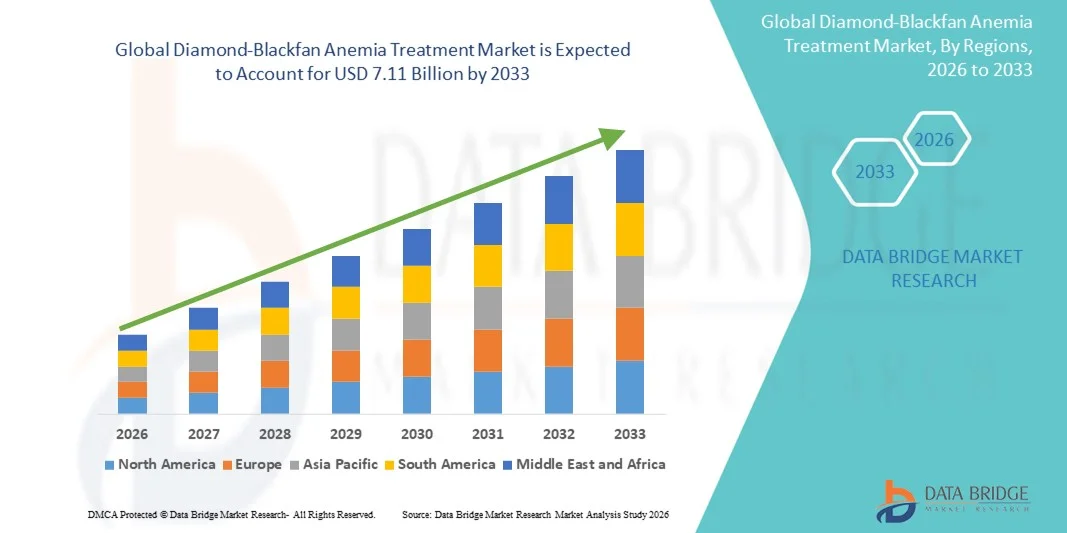
- As per Data Bridge Market Research Analysis the global diamond-blackfan anemia treatment market size was valued at USD 5.20 billion in 2025 and is expected to reach USD 7.11 billion by 2033, at a CAGR of 4.00% during the forecast period
- The market growth is largely fueled by increasing awareness of rare hematological disorders, improvements in genetic research, and the development of advanced treatment approaches such as corticosteroid therapy, blood transfusions, and stem cell transplantation for Diamond-Blackfan anemia. In addition, rising investments in rare disease research and better diagnostic capabilities are contributing to earlier detection and improved patient management
- Furthermore, growing support from government healthcare programs, patient advocacy groups, and ongoing clinical research focused on novel therapies is strengthening the treatment landscape for Diamond-Blackfan anemia. These converging factors are accelerating the uptake of Diamond-Blackfan Anemia treatment solutions, thereby significantly boosting the industry’s growth
Market Size & Forecast
- Global Market Value (2025): USD 5.20 billion
- Expected Market Value (2033): USD 7.11 billion
- Forecast CAGR (2026–2033): 4.00%
What are the Major Takeaways of Diamond-Blackfan Anemia Treatment Market?
- Diamond-Blackfan Anemia treatment, focusing on managing a rare inherited bone marrow failure disorder through therapies such as corticosteroids, blood transfusions, and hematopoietic stem cell transplantation, is becoming an essential part of pediatric and rare disease care due to increasing awareness, improved diagnostic techniques, and advancements in genetic research
- The escalating demand for diamond-blackfan anemia treatment is primarily fueled by the rising prevalence of rare genetic disorders, enhanced access to specialized healthcare services, growing investments in orphan drug development, and an increasing number of clinical trials focused on innovative and targeted therapies
- North America dominated the diamond-blackfan anemia Treatment market with the largest revenue share of 41.6% in 2025, characterized by strong healthcare infrastructure, high awareness levels, advanced genetic testing facilities, and the presence of leading research institutions, with the U.S. experiencing substantial growth in diamond-blackfan anemia treatment adoption, particularly in specialized hospitals and pediatric care centers supported by government funding and orphan drug incentives
- Asia-Pacific is expected to be the fastest growing region in the Diamond-Blackfan Anemia Treatment market during the forecast period due to increasing healthcare investments, improving diagnostics, growing awareness of rare diseases, and expanding access to advanced treatment options across developing countries
- The corticosteroids segment dominated the largest market revenue share of 41.5% in 2025, owing to its long-standing use as the first-line therapy for increasing red blood cell production in patients
Report Scope and Diamond-Blackfan Anemia Treatment Market Segmentation
|
Attributes |
Diamond-Blackfan Anemia Treatment Key Market Insights |
|
Segments Covered |
|
|
Countries Covered |
North America
Europe
Asia-Pacific
Middle East and Africa
South America
|
|
Key Market Players |
|
|
Market Opportunities |
|
|
Value Added Data Infosets |
|
What is the Key Trend in the Diamond-Blackfan Anemia Treatment Market?
Advancements in Targeted Therapies and Improved Diagnostic Approaches
- A significant and rapidly evolving trend in the global diamond-blackfan anemia treatment market is the increasing focus on targeted drug therapies and improved diagnostic techniques designed to better manage this rare genetic disorder. Diamond-Blackfan Anemia is a congenital condition characterized by the failure of the bone marrow to produce sufficient red blood cells, which has driven increased research into more effective and personalized treatment option
- For instance, recent developments in corticosteroid therapy optimization and combination treatment approaches have helped improve patient outcomes while reducing long-term side effects. In addition, advances in genetic testing technologies have enabled earlier and more accurate diagnosis of the condition, allowing timely initiation of treatment plans. The integration of advanced molecular diagnostics has improved disease classification and monitoring of treatment efficacy in affected patients
- Ongoing research into gene-based therapies and novel pharmacological agents is further reshaping the treatment landscape. Several research institutions and pharmaceutical companies are actively studying ribosomal protein gene mutations associated with Diamond-Blackfan Anemia, leading to the development of more targeted therapeutic approaches. These advancements are expected to significantly reduce dependency on long-term blood transfusions and minimize complications such as iron overload
- The growing understanding of the genetic mechanisms underlying the disease has also enabled improved patient stratification, allowing clinicians to select more precise and effective therapies. This personalized approach not only enhances treatment success but also reduces the risk of adverse effects associated with conventional therapies
- Furthermore, increasing awareness among healthcare professionals and parents regarding rare hematological disorders has led to higher diagnosis rates. Improved collaboration between pediatric specialists, geneticists, and hematologists is enhancing comprehensive disease management and strengthening the overall treatment ecosystem
- This continuous shift toward more advanced, precise, and patient-centered treatment strategies is significantly shaping the future of the Diamond-Blackfan Anemia Treatment market and contributing to steady growth in both developed and emerging healthcare systems
Diamond-Blackfan Anemia Treatment Market Dynamics
Driver
Rising Prevalence of Rare Blood Disorders and Increasing Access to Specialized Healthcare
- The growing recognition of rare genetic and hematological disorders, including Diamond-Blackfan Anemia, is a primary driver fueling the expansion of the treatment market. Improved awareness among medical professionals and the general population has led to more frequent screening, earlier diagnosis, and timely treatment initiation
- For instance, in April 2025, several international healthcare research organizations expanded their rare disease research funding programs, with a specific focus on inherited bone marrow failure syndromes. These initiatives are expected to accelerate drug development and improve access to advanced treatment options for Diamond-Blackfan Anemia patients during the forecast period
- With increased investment in neonatal and pediatric healthcare, more children are being accurately diagnosed and monitored from a young age. This, in turn, is driving long-term demand for effective therapeutic solutions, including corticosteroids, blood transfusion support, and bone marrow transplantation
- In addition, the expansion of specialized hematology and genetic care centers is improving patient access to expert treatment services. Hospitals and clinics are now better equipped to manage complex cases through multidisciplinary approaches, which has significantly enhanced treatment success rates
- Growth in government-funded rare disease programs, improved insurance coverage for genetic disorders, and rising healthcare spending across developed and developing regions are collectively propelling the Diamond-Blackfan Anemia Treatment market forward
- Continued advancements in medical research, along with strong support from non-profit organizations and rare disease advocacy groups, are accelerating innovations in treatment methodologies and improving patient quality of life
Restraint/Challenge
High Treatment Costs and Limited Availability of Advanced Therapies
- One of the major challenges in the Diamond-Blackfan Anemia Treatment market is the high cost associated with long-term disease management. Many patients require lifelong monitoring, repeated blood transfusions, and continuous medication, which places a significant financial burden on families and healthcare systems
- Bone marrow and stem cell transplantation, which may offer a potential cure in some cases, involve extremely high costs and are not easily accessible in low- and middle-income regions. This limits treatment availability for a large portion of the global patient population
- In addition, the rarity of the condition has resulted in limited commercial incentive for large-scale pharmaceutical development, which restricts the number of approved drugs specifically designed to target Diamond-Blackfan Anemia. This scarcity often forces clinicians to rely on off-label therapies, which may not be optimal for long-term treatment
- For instance, in June 2022, a patient advocacy report highlighted that families in India faced average treatment costs exceeding USD 25,000 per year for managing Diamond-Blackfan Anemia, making it unaffordable for most middle-class households. This instance underscores the financial barrier that persists despite growing awareness and treatment availability
- The shortage of specialized medical professionals experienced in managing rare genetic blood disorders further complicates disease management, especially in rural and underserved regions. Patients in these areas often face delayed diagnosis and inconsistent treatment quality
- Furthermore, prolonged dependence on blood transfusions increases the risk of secondary complications such as iron overload, which requires additional treatment and monitoring. These clinical challenges increase the overall burden of care
- Overcoming these restraints will require expanded investment in rare disease research, improved global access to specialized hematology services, and increased development of cost-effective treatment solutions specifically designed for Diamond-Blackfan Anemia patients. Strengthening international collaboration and patient support programs will also be critical in addressing these challenges and supporting sustainable market growth
How is the Diamond-Blackfan Anemia Treatment Market Segmented?
The market is segmented on the basis of treatment, diagnosis, end-users, and distribution channel.
- By Treatment
On the basis of treatment, the Diamond-Blackfan Anemia Treatment market is segmented into corticosteroids, chelation therapy, blood transfusions, stem cell transplant, and others. The corticosteroids segment dominated the largest market revenue share of 41.5% in 2025, owing to its long-standing use as the first-line therapy for increasing red blood cell production in patients. Corticosteroids are widely prescribed because they are effective in managing anemia symptoms, especially in pediatric patients, and are relatively accessible compared to advanced therapies. The global demand is further supported by their ease of administration, cost-effectiveness, and the availability of various formulations tailored for both children and adults. Physicians often rely on corticosteroids for initial treatment before exploring more complex interventions like stem cell transplantation. Moreover, ongoing clinical research to optimize dosage and reduce side effects is reinforcing their market dominance. The segment’s stability is underpinned by established clinical guidelines and strong patient familiarity, ensuring consistent prescription rates across key geographies.
The stem cell transplant segment is anticipated to witness the fastest growth rate with a CAGR of 18.3% from 2026 to 2033, driven by its potential to provide a curative outcome in severe cases. Increased awareness among clinicians and patients, advances in transplant techniques, and improved donor registries are fueling adoption. High success rates and longer-term remission outcomes make stem cell transplants an attractive option, particularly in developed regions with better healthcare infrastructure. Expansion of specialized hematology centers and government-supported programs for rare diseases is further boosting uptake. Ongoing research on reducing post-transplant complications and improving patient compatibility is expected to accelerate growth. The rising availability of matched donors through global registries and supportive insurance coverage also facilitates higher adoption rates. Patient advocacy groups promoting stem cell therapy awareness contribute to the increasing number of procedures performed annually.
- By Diagnosis
On the basis of diagnosis, the market is segmented into complete blood count, X-ray, ultrasound, genetic testing, biopsy, peripheral smear, and others. The complete blood count (CBC) segment held the largest revenue share of 38.7% in 2025, as it is a routine, cost-effective, and widely available method for detecting anemia and assessing red blood cell deficiencies. CBC tests are essential for initial diagnosis and ongoing monitoring of treatment efficacy. The widespread availability in clinics, hospitals, and diagnostic centers worldwide ensures high adoption. The test is simple to administer, offers rapid results, and guides physicians in treatment planning. Its reliability, familiarity among clinicians, and integration with standard laboratory workflows make it the dominant diagnostic method.
The genetic testing segment is expected to register the fastest CAGR of 20.1% from 2026 to 2033, owing to its ability to identify inherited mutations linked to Diamond-Blackfan Anemia. Increasing focus on personalized medicine, early diagnosis, and preventive care is driving demand. Genetic testing allows clinicians to tailor treatment strategies, anticipate complications, and counsel families regarding disease risk. Growing awareness among parents, combined with expanded availability of next-generation sequencing technologies, is fueling rapid adoption. Governments and private insurers in developed regions are increasingly covering genetic testing, supporting market growth. Rising research initiatives to uncover novel genetic variants further drive investment and usage.
- By End-Users
On the basis of end-users, the Diamond-Blackfan Anemia Treatment market is segmented into clinics, hospitals, and others. The hospital segment dominated with a revenue share of 46.3% in 2025, driven by the concentration of specialized hematology departments and comprehensive infrastructure for advanced therapies such as stem cell transplantation and blood transfusions. Hospitals serve as central hubs for severe and complex cases, providing integrated diagnostic and treatment services under professional supervision. They are equipped with advanced laboratory facilities for genetic testing, complete blood counts, and peripheral smears, which are critical for accurate diagnosis and treatment monitoring. Hospitals also offer inpatient care for patients requiring continuous monitoring during transfusions or post-transplant recovery. Partnerships with research centers and participation in clinical trials further strengthen hospitals’ dominant position. Access to trained hematologists, multidisciplinary teams, and high-quality supportive care ensures optimal patient outcomes. The segment benefits from government support and insurance coverage, enhancing patient access to high-cost therapies. Furthermore, hospitals provide educational programs for patients and caregivers, reinforcing treatment adherence. Ongoing investment in modern infrastructure, expansion of hematology wings, and adoption of best practice protocols contribute to sustaining this dominant revenue share.
The clinics segment is projected to witness the fastest CAGR of 15.7% from 2026 to 2033, driven by the rising trend of outpatient management of mild to moderate cases and the expansion of private specialty clinics in emerging markets. Clinics offer convenience, cost-effective treatment, and personalized monitoring for patients, reducing the need for hospitalization. They are increasingly integrating diagnostic tools such as point-of-care testing and portable ultrasound to enhance efficiency. The growing number of hematology-focused outpatient centers allows patients easier access to regular follow-ups and medication management, including corticosteroids and chelation therapy. Expansion of telemedicine and digital health platforms further supports clinics’ growth by enabling remote consultations and continuous patient engagement. Private clinics are actively collaborating with diagnostic labs to provide end-to-end care. Government initiatives promoting decentralized healthcare access and insurance coverage for outpatient treatments also fuel adoption. Enhanced patient education and counseling at clinics improve adherence to therapy schedules. The rising awareness of rare blood disorders and early detection programs contributes to the increasing footfall in clinics. All these factors collectively drive the high CAGR in this segment.
- By Distribution Channel
On the basis of distribution channel, the market is segmented into hospital pharmacy, retail pharmacy, and online pharmacy. The hospital pharmacy segment accounted for the largest revenue share of 52.4% in 2025, as hospitals dispense prescribed therapies directly to patients, ensuring proper dosage and regulated use of critical treatments like corticosteroids, blood transfusions, and chelation products. Hospital pharmacies maintain inventory of specialized medications required for acute care and emergency interventions. Integration with hospital IT systems allows real-time tracking of prescriptions and patient adherence, reducing the risk of errors. Trained pharmacists provide guidance on administration schedules, potential side effects, and drug interactions, which is critical for complex therapies. Hospitals often bundle pharmacy services with diagnostic and therapeutic care, offering convenience for patients. Government policies and hospital accreditation standards reinforce the reliability and trustworthiness of this distribution channel. Centralized procurement systems and collaborations with pharmaceutical manufacturers ensure consistent availability. Continuous training of pharmacy staff on rare disease management further strengthens their dominant position. In addition, hospital pharmacies benefit from bulk purchasing agreements and favorable reimbursement policies, securing their large market share.
The online pharmacy segment is expected to witness the fastest CAGR of 17.8% from 2026 to 2033, fueled by the increasing penetration of e-pharmacies and rising preference for home delivery of medications. Online platforms provide easy access to both common and specialized Diamond-Blackfan Anemia treatments, especially in remote or underserved areas. Convenience of ordering medicines digitally, subscription services for recurring prescriptions, and integration with telemedicine consultations enhance patient adherence. The growing trust in e-pharmacies, coupled with secure digital payment systems and verified supply chains, supports segment growth. Awareness campaigns by online retailers on rare blood disorders and proper therapy management also drive adoption. Expansion of logistics networks and rapid delivery systems reduces delays in treatment initiation. Regulatory approvals and collaborations with hospitals and clinics increase credibility. In addition, digital platforms provide patient education, reminders, and monitoring services, contributing to a seamless treatment experience. Rising smartphone and internet penetration, especially in emerging markets, further accelerates the adoption of online pharmacies, resulting in a higher CAGR compared to traditional channels.
Which Region Holds the Largest Share of the Diamond-Blackfan Anemia Treatment Market?
- North America dominated the diamond-blackfan anemia treatment market with the largest revenue share of 41.6% in 2025
- Supported by a strong healthcare infrastructure, high awareness levels about rare pediatric hematologic conditions, and the presence of advanced genetic testing facilities
- The U.S., in particular, is witnessing substantial growth in the adoption of corticosteroids, blood transfusions, and stem cell therapies, especially in specialized hospitals and pediatric care centers. Government funding, orphan drug incentives, and ongoing clinical research programs further bolster market expansion
U.S. Diamond-Blackfan Anemia Treatment Market Insight
The U.S. diamond-blackfan anemia treatment market captured the largest revenue share within North America in 2025. Growth is primarily driven by the country’s advanced healthcare ecosystem, availability of specialized pediatric treatment centers, and widespread adoption of standard-of-care therapies such as corticosteroids, transfusions, and stem cell transplantation. The increasing focus on rare disease research, awareness programs, and supportive regulatory frameworks for orphan drugs further contribute to the market’s expansion.
Europe Diamond-Blackfan Anemia Treatment Market Insight
The Europe diamond-blackfan anemia treatment market is projected to grow steadily over the forecast period, driven by the availability of well-equipped hospitals, increased awareness of rare blood disorders, and investment in pediatric hematology programs. Key countries such as Germany, France, and the U.K. are witnessing adoption of advanced therapies supported by clinical guidelines and government initiatives for rare disease management.
U.K. Diamond-Blackfan Anemia Treatment Market Insight
The U.K. diamond-blackfan anemia treatment market is expected to grow at a notable rate during the forecast period, supported by the adoption of innovative treatment therapies, high-quality healthcare infrastructure, and government-backed programs for rare disease awareness and management. Specialized pediatric centers and research institutions are also contributing to market growth.
Germany Diamond-Blackfan Anemia Treatment Market Insight
The Germany diamond-blackfan anemia treatment market is anticipated to expand at a considerable CAGR due to increasing awareness of rare hematologic disorders, strong healthcare infrastructure, and the presence of specialized hospitals and hematology clinics. The focus on early diagnosis, preventive care, and advanced therapeutic interventions is driving higher treatment adoption.
Asia-Pacific Diamond-Blackfan Anemia Treatment Market Insight
The Asia-Pacific diamond-blackfan anemia treatment market is poised to register the fastest CAGR during the forecast period, fueled by rising healthcare investments, expanding pediatric care infrastructure, growing awareness of rare diseases, and increasing adoption of advanced treatment therapies. Countries such as China, Japan, and India are witnessing improved access to corticosteroids, blood transfusions, and stem cell transplantation, along with enhanced diagnostic facilities and supportive government programs for rare disease management.
Japan Diamond-Blackfan Anemia Treatment Market Insight
The Japan diamond-blackfan anemia treatment market is gaining steady momentum due to the country’s highly developed healthcare system, strong focus on pediatric care, and widespread availability of hospital-based treatments. Increased screening during childhood, adherence to strict clinical guidelines, and advanced diagnostic technologies are supporting market growth.
China Diamond-Blackfan Anemia Treatment Market Insight
The China diamond-blackfan anemia treatment market accounted for a significant share in Asia-Pacific in 2025, driven by expanding healthcare infrastructure, growing awareness of rare hematologic conditions, establishment of specialized pediatric treatment centers, and government initiatives to improve access to orphan drugs and advanced treatment options. Increased adoption of therapies such as corticosteroids, blood transfusions, and stem cell transplants, along with rising clinical research and diagnostic advancements, are key growth factors in China.
Which are the Top Companies in Diamond-Blackfan Anemia Treatment Market?
The Diamond-Blackfan Anemia Treatment industry is primarily led by well-established companies, including:
• Novartis AG (Switzerland)
• Pfizer Inc. (U.S.)
• Novartis Gene Therapies (U.S.)
• Sanofi S.A. (France)
• Bristol-Myers Squibb (U.S.)
• Jazz Pharmaceuticals (U.S.)
• bluebird bio, Inc. (U.S.)
• Vertex Pharmaceuticals (U.S.)
• Acceleron Pharma (U.S.)
• Takeda Pharmaceutical Company (Japan)
• F. Hoffmann-La Roche AG (Switzerland)
• Biomarin Pharmaceutical Inc. (U.S.)
• Alexion Pharmaceuticals (U.S.)
• Sobi AB (Sweden)
• GlaxoSmithKline (U.K.)
• CSL Behring (Australia)
• Amgen Inc. (U.S.)
• Regeneron Pharmaceuticals (U.S.)
• Novimmune SA (Switzerland)
• Incyte Corporation (U.S.)
What are Latest Developments in Diamond-Blackfan Anemia Treatment Market?
- In July 2022, a collaboration was announced between a major pharmaceutical company and a biotech firm to explore novel therapeutic concepts for rare bone‑marrow failure disorders — including DBA — signaling renewed industry interest and potential infusion of resources into drug development for these orphan diseases
- In November 2024, researchers at Boston Children’s Hospital / Harvard Medical School announced a “universal” gene therapy for DBA — a lentiviral vector that restores expression of the key regulatory gene GATA1 in blood stem cells, irrespective of the patient’s specific mutation. This therapy corrected defective red‑blood‑cell production in lab models and patient-derived cells, offering the first single‑vector approach potentially applicable to all DBA genotypes
- In March 2025, a separate preclinical study from St. Jude Children’s Research Hospital demonstrated a lentiviral‑based gene therapy restoring functional copies of RPS19 (the most commonly mutated gene in DBA) to patient-derived hematopoietic stem cells. The corrected cells regained healthy red‑blood‑cell production and out‑competed defective cells — a proof‑of‑principle for a curative, autologous stem‑cell gene therapy aimed to reduce or eliminate lifelong transfusion dependency

- Interactive Data Analysis Dashboard
- Company Analysis Dashboard for high growth potential opportunities
- Research Analyst Access for customization & queries
- Competitor Analysis with Interactive dashboard
- Latest News, Updates & Trend analysis
- Harness the Power of Benchmark Analysis for Comprehensive Competitor Tracking
Data collection and base year analysis are done using data collection modules with large sample sizes. The stage includes obtaining market information or related data through various sources and strategies. It includes examining and planning all the data acquired from the past in advance. It likewise envelops the examination of information inconsistencies seen across different information sources. The market data is analysed and estimated using market statistical and coherent models. Also, market share analysis and key trend analysis are the major success factors in the market report. To know more, please request an analyst call or drop down your inquiry.
The key research methodology used by DBMR research team is data triangulation which involves data mining, analysis of the impact of data variables on the market and primary (industry expert) validation. Data models include Vendor Positioning Grid, Market Time Line Analysis, Market Overview and Guide, Company Positioning Grid, Patent Analysis, Pricing Analysis, Company Market Share Analysis, Standards of Measurement, Global versus Regional and Vendor Share Analysis. To know more about the research methodology, drop in an inquiry to speak to our industry experts.
Data Bridge Market Research is a leader in advanced formative research. We take pride in servicing our existing and new customers with data and analysis that match and suits their goal. The report can be customized to include price trend analysis of target brands understanding the market for additional countries (ask for the list of countries), clinical trial results data, literature review, refurbished market and product base analysis. Market analysis of target competitors can be analyzed from technology-based analysis to market portfolio strategies. We can add as many competitors that you require data about in the format and data style you are looking for. Our team of analysts can also provide you data in crude raw excel files pivot tables (Fact book) or can assist you in creating presentations from the data sets available in the report.












