


Erysipelas Market Size
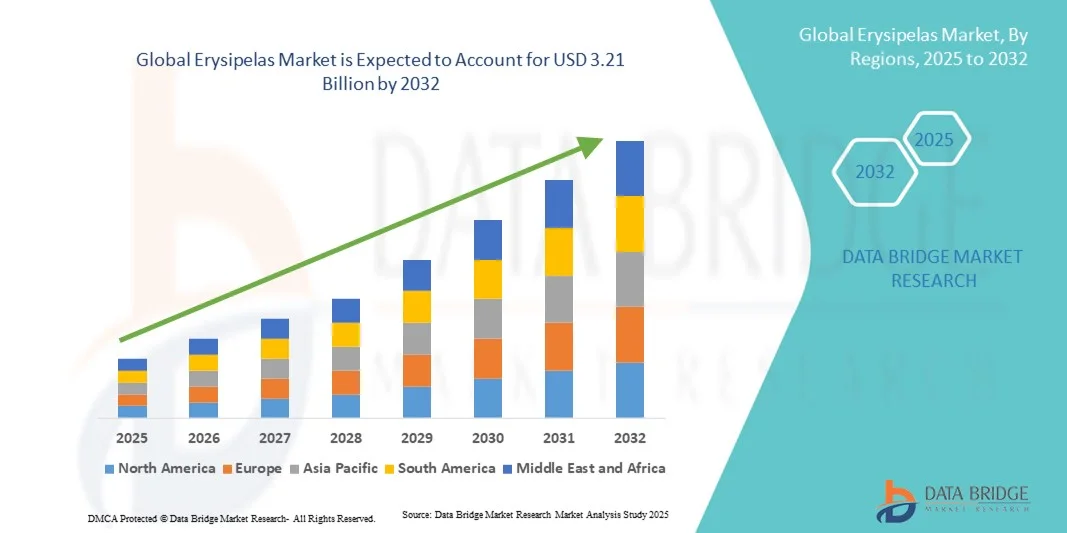
- The global Erysipelas market size was valued at USD 1.60 billion in 2024 and is expected to reach USD 3.21 billion by 2032, at a CAGR of 9.10% during the forecast period
- The market growth is primarily driven by the rising prevalence of bacterial skin infections, increasing awareness about early diagnosis and treatment, and advancements in antibiotic therapies that enhance patient outcomes
- In addition, growing healthcare infrastructure, improved access to medical facilities, and rising demand for effective and rapid treatment options are positioning Erysipelas management as a critical component of dermatological and infectious disease care. These factors collectively are propelling market adoption and supporting robust industry growth
Erysipelas Market Analysis
- Erysipelas, an acute bacterial skin infection primarily caused by Streptococcus species, is increasingly recognized as a significant dermatological and infectious disease concern due to its rapid onset, characteristic skin lesions, and potential for serious complications if untreated, impacting both outpatient and hospital care settings
- The rising prevalence of Erysipelas is primarily driven by an aging population, increasing incidence of comorbidities such as diabetes and obesity, and heightened awareness among healthcare providers about early diagnosis and effective treatment protocols
- North America dominated the Erysipelas market with the largest revenue share of 40.8% in 2024, characterized by advanced healthcare infrastructure, high awareness of infectious diseases, and widespread access to effective treatments, with the U.S. experiencing substantial growth in diagnosis and management due to proactive infection control programs and well-established outpatient care networks
- Asia-Pacific is expected to be the fastest growing region in the Erysipelas market during the forecast period due to improving healthcare access, growing public health awareness, and increasing investments in infection management programs
- Penicillin segment dominated the Erysipelas market with a market share of 46.2% in 2024, driven by its proven efficacy as the first-line treatment, broad clinical adoption, and availability in both hospital and community healthcare settings
Report Scope and Erysipelas Market Segmentation
|
Attributes |
Erysipelas Key Market Insights |
|
Segments Covered |
|
|
Countries Covered |
North America
Europe
Asia-Pacific
Middle East and Africa
South America
|
|
Key Market Players |
|
|
Market Opportunities |
|
|
Value Added Data Infosets |
In addition to the insights on market scenarios such as market value, growth rate, segmentation, geographical coverage, and major players, the market reports curated by the Data Bridge Market Research also include in-depth expert analysis, pricing analysis, brand share analysis, consumer survey, demography analysis, supply chain analysis, value chain analysis, raw material/consumables overview, vendor selection criteria, PESTLE Analysis, Porter Analysis, and regulatory framework. |
Erysipelas Market Trends
Increased Adoption of Rapid Diagnostic Tools and Telemedicine
- A significant and accelerating trend in the global Erysipelas market is the growing use of rapid diagnostic tests and telemedicine platforms, enabling faster detection and remote consultation for bacterial skin infections
- For instance, point-of-care PCR tests are being implemented in clinics to quickly identify Streptococcus infections, allowing timely initiation of antibiotic therapy
- Telemedicine platforms enable physicians to assess skin lesions via video consultations, prescribe appropriate treatment, and provide follow-up guidance, reducing hospital visits and improving patient compliance
- The integration of digital health solutions with Erysipelas management facilitates centralized patient monitoring, electronic health records tracking, and remote management of recurring infections
- This trend towards more accessible, real-time diagnostic and treatment solutions is reshaping patient care expectations, with healthcare providers increasingly adopting telehealth and rapid testing for effective infection management
- The demand for faster, technology-driven diagnostic and management solutions is growing rapidly across both hospital and outpatient settings, as patients and clinicians prioritize timely intervention and treatment efficacy
Erysipelas Market Dynamics
Driver
Rising Prevalence and Awareness of Bacterial Skin Infections
- The increasing incidence of Erysipelas, combined with growing awareness among healthcare providers and patients, is a significant driver for market growth
- For instance, in 2024, the CDC highlighted rising skin infection rates in older adults, prompting proactive antibiotic treatment programs in outpatient and hospital settings
- As awareness of early symptoms and complications grows, healthcare professionals are more such asly to diagnose and treat Erysipelas promptly, increasing the demand for effective antibiotics
- Furthermore, public health initiatives and educational campaigns on hygiene and infection prevention are making early diagnosis and treatment more common, particularly in high-risk populations
- The convenience and effectiveness of modern antibiotic therapies, combined with established treatment protocols, are key factors driving the adoption of Erysipelas management solutions across clinical settings
- Increasing investments in healthcare infrastructure and infection control programs further support the adoption of timely diagnosis and treatment interventions, accelerating market growth
Restraint/Challenge
Antibiotic Resistance and Limited Healthcare Access
- The growing prevalence of antibiotic-resistant Streptococcus strains poses a significant challenge to effective Erysipelas treatment and market expansion
- For instance, reports of penicillin-resistant strains in hospital settings have made physicians cautious in selecting first-line antibiotics, impacting treatment efficacy and patient outcomes
- Regions with limited healthcare access or underdeveloped medical infrastructure face delays in diagnosis and treatment, increasing complication risks and reducing overall market penetration
- Addressing antibiotic resistance requires development of new therapies, combination treatments, and adherence to proper prescription guidelines to ensure effectiveness
- In addition, disparities in healthcare affordability and availability of antibiotics can hinder treatment adoption, particularly in low-income and rural regions
- Overcoming these challenges through enhanced drug development, improved distribution networks, and public health education is crucial for sustained growth in the Erysipelas market
Erysipelas Market Scope
The market is segmented on the basis of drugs, application, and end-users.
- By Drugs
On the basis of drugs, the Erysipelas market is segmented into penicillin, erythromycin, roxithromycin, pristinamycin, vancomycin, and others. The Penicillin segment dominated the market with the largest market revenue share of 46.2% in 2024, driven by its proven efficacy as the first-line therapy for Streptococcus infections. Penicillin’s widespread clinical adoption, low cost, and availability in both hospital and outpatient settings make it the preferred choice among physicians. The segment also benefits from long-standing treatment guidelines recommending penicillin for uncomplicated Erysipelas, ensuring consistent usage. In addition, patient familiarity and minimal side effects enhance its adoption across various demographics. Hospitals and specialty clinics continue to rely heavily on penicillin due to its reliability and established therapeutic outcomes. The growing prevalence of bacterial skin infections further reinforces demand for penicillin-based treatments.
The Erythromycin segment is anticipated to witness the fastest growth rate of 18.5% from 2025 to 2032, driven by its suitability for patients allergic to penicillin and increasing awareness of alternative treatment options. Erythromycin is favored in outpatient and ambulatory care settings due to oral administration convenience. Rising adoption of Erythromycin in emerging markets, coupled with initiatives to improve access to effective antibiotics, contributes to its rapid market expansion. Moreover, combination therapies and formulations targeting resistant strains are expected to further boost Erythromycin’s growth.
- By Application
On the basis of application, the Erysipelas market is segmented into infective endocarditis, bursitis, arthritis, chronic leg swelling, post-streptococcal glomerulonephritis, cavernous sinus thrombosis, and others. The Chronic Leg Swelling segment dominated the market with a 32.4% share in 2024, primarily due to the high incidence of recurrent Erysipelas among patients with lymphedema and venous insufficiency. Chronic leg swelling creates a favorable environment for bacterial colonization, leading to repeated infections. Hospitals and specialty clinics often prioritize preventive and therapeutic interventions in these high-risk populations. Clinical protocols recommend targeted antibiotic therapy combined with edema management, increasing the market adoption of Erysipelas treatments. The segment’s dominance is further supported by the aging population and rising comorbidities such as diabetes and obesity. Public health awareness programs focusing on preventive care for chronic leg conditions also contribute to segment growth.
The Post-Streptococcal Glomerulonephritis segment is expected to witness the fastest growth rate of 19.2% during the forecast period, driven by increasing recognition of renal complications arising from untreated or recurrent Erysipelas infections. Early diagnosis and intervention are being prioritized in hospitals and specialty clinics, boosting demand for effective antibiotic regimens. Growing research on the correlation between skin infections and kidney disorders is also encouraging the adoption of treatment protocols targeting this complication. Emerging markets with expanding healthcare infrastructure are witnessing rising awareness about post-infectious sequelae, contributing to segment growth.
- By End-Users
On the basis of end-users, the Erysipelas market is segmented into hospitals, ambulatory surgical centers, specialty clinics, and others. The Hospitals segment dominated the market with a 52.6% share in 2024, attributed to the high patient load for severe Erysipelas cases requiring inpatient care and intravenous antibiotics. Hospitals offer comprehensive diagnostic and treatment facilities, including rapid lab testing, monitoring of complications, and adherence to standardized treatment protocols. The availability of skilled healthcare professionals and advanced medical infrastructure makes hospitals the primary treatment centers. Hospital preference for intravenous antibiotics for complicated or recurrent cases further drives this segment. The segment’s dominance is reinforced by increasing admissions for bacterial skin infections and government-led infection management programs.
The Specialty Clinics segment is expected to witness the fastest growth rate of 20.1% from 2025 to 2032, driven by the rising demand for outpatient care and targeted dermatological management. Specialty clinics focus on early diagnosis, patient education, and follow-up care, making them ideal for managing recurrent or mild Erysipelas infections. The expansion of specialty care centers in urban and semi-urban areas, combined with telemedicine integration, is increasing patient access. Clinics also adopt convenient oral antibiotic therapies, enhancing treatment compliance and market growth. Increasing awareness among patients about specialized care for skin infections further supports the segment’s rapid expansion.
Erysipelas Market Regional Analysis
- North America dominated the Erysipelas market with the largest revenue share of 40.8% in 2024, characterized by advanced healthcare infrastructure, high awareness of infectious diseases, and widespread access to effective treatments
- Patients and healthcare providers in the region increasingly prioritize early diagnosis, effective antibiotic treatments, and preventive care, contributing to higher treatment adoption rates
- This widespread market presence is further supported by advanced diagnostic facilities, high awareness of infectious diseases, and robust outpatient and hospital care networks, establishing effective Erysipelas management as a standard across both clinical and community settings
U.S. Erysipelas Market Insight
The U.S. Erysipelas market captured the largest revenue share of 82% in 2024 within North America, fueled by rising prevalence of bacterial skin infections and advanced healthcare infrastructure. Patients and healthcare providers increasingly prioritize early diagnosis, timely antibiotic treatment, and preventive care programs. The growing awareness of complications from untreated infections, combined with widespread access to outpatient and hospital care, further propels the market. Moreover, initiatives to improve infection control and rapid diagnostic adoption significantly contribute to market expansion. High patient compliance and robust insurance coverage also support the widespread use of Erysipelas therapies.
Europe Erysipelas Market Insight
The Europe Erysipelas market is projected to expand at a substantial CAGR throughout the forecast period, primarily driven by well-established healthcare systems and increasing awareness of skin infections. Rising urbanization and improved access to diagnostic tools are fostering timely treatment adoption. European healthcare providers emphasize early detection and management of bacterial infections to reduce complications. The market is seeing growth across both hospital and outpatient care settings, with Erysipelas treatments integrated into preventive and therapeutic programs. Increasing government health initiatives and public awareness campaigns further support market expansion.
U.K. Erysipelas Market Insight
The U.K. Erysipelas market is anticipated to grow at a noteworthy CAGR during the forecast period, driven by rising awareness of bacterial skin infections and the importance of early treatment. Concerns regarding recurrent infections and complications such as post-streptococcal sequelae are encouraging healthcare providers to adopt standardized treatment protocols. The U.K.’s robust healthcare infrastructure, combined with easy access to antibiotics and outpatient care, is expected to continue stimulating market growth. Public health campaigns emphasizing preventive care and proper hygiene practices further enhance treatment adoption.
Germany Erysipelas Market Insight
The Germany Erysipelas market is expected to expand at a considerable CAGR during the forecast period, fueled by increasing awareness of infectious disease management and advanced healthcare infrastructure. Germany’s emphasis on early diagnosis, treatment guidelines, and patient safety promotes the adoption of effective antibiotics. The integration of rapid diagnostic tools and outpatient care programs is improving treatment outcomes and reducing hospitalization rates. Healthcare providers are increasingly focusing on managing recurrent infections, particularly in high-risk populations such as elderly and diabetic patients. Preventive measures, awareness campaigns, and adherence to clinical protocols further support market growth.
Asia-Pacific Erysipelas Market Insight
The Asia-Pacific Erysipelas market is poised to grow at the fastest CAGR during the forecast period of 2025 to 2032, driven by rising prevalence of bacterial skin infections, increasing healthcare access, and government initiatives promoting infectious disease management. The region’s growing urban population and improving healthcare infrastructure are driving early diagnosis and timely treatment adoption. Moreover, rising awareness among patients and physicians regarding preventive care and treatment compliance is expanding the market. Affordable antibiotic therapies and expansion of specialty clinics are making treatments more accessible. Countries such as China, India, and Japan are witnessing rapid adoption of outpatient and hospital-based Erysipelas care programs.
Japan Erysipelas Market Insight
The Japan Erysipelas market is gaining momentum due to high healthcare standards, aging population, and increasing focus on preventive care. Japanese patients and healthcare providers prioritize early diagnosis, effective antibiotic therapy, and monitoring of recurrent infections. Integration of outpatient follow-up programs with hospital care enhances treatment adherence and reduces complications. Growing awareness of post-infectious sequelae, particularly among elderly patients, is driving demand for timely interventions. The healthcare system’s emphasis on patient safety and standardized treatment protocols supports market growth.
India Erysipelas Market Insight
The India Erysipelas market accounted for the largest market revenue share in Asia-Pacific in 2024, attributed to rising prevalence of bacterial skin infections, expanding healthcare infrastructure, and increasing public awareness. India is experiencing growing adoption of outpatient and hospital care programs, supported by government initiatives for infection control. Affordable antibiotic options and domestic pharmaceutical manufacturing are enhancing treatment accessibility. Rapid urbanization, rising disposable incomes, and the push for preventive healthcare are key factors propelling market growth. The market also benefits from increasing physician awareness and patient education regarding early diagnosis and management of Erysipelas.
Erysipelas Market Share
The Erysipelas industry is primarily led by well-established companies, including:
- Merck & Co., Inc. (U.S.)
- Johnson & Johnson and its affiliates (U.S.)
- Pfizer Inc. (U.S.)
- Novartis AG (Switzerland)
- GSK plc (U.K.)
- Melinta Therapeutics LLC (U.S.)
- Debiopharm (Switzerland)
- Paratek Pharmaceuticals, Inc. (U.S.)
- Cempra, Inc. (U.S.)
- Boehringer Ingelheim International GmbH (Germany)
- Zoetis Services LLC. (U.S.)
- Astellas Pharma Inc. (Japan)
- Baxter (U.S.)
- AbbVie Inc. (U.S.)
- Sanofi. (France)
- Bayer AG (Germany)
- Lilly USA, LLC. (U.S.)
- Amgen Inc. (U.S.)
What are the Recent Developments in Global Erysipelas Market?
- In July 2025, the CDC recommends low-dose penicillin for up to 12 months to prevent recurrent erysipelas in individuals with a history of the infection. This preventive treatment is well-tolerated and offers a cost-effective strategy to reduce recurrence rates
- In May 2025, a bibliometric analysis published in Frontiers in Medicine assessed global research trends in erysipelas from 2000 to 2024. The study identified key areas of focus, including risk factors, diagnostics, and therapies, and emphasized the need for continued collaboration and innovation to address challenges such as antibiotic resistance and recurrence
- In April 2025, the Southwest Devon Formulary issued updated guidelines for the treatment of cellulitis and erysipelas. The revisions included reducing antibiotic course durations to 5–7 days and introducing two additional second-line antibiotic options. These changes aim to enhance treatment efficacy and minimize antibiotic resistance
- In October 2024, a case report published in Medicine explored the use of acupuncture as an adjunctive treatment for lower limb erysipelas. The report suggested that acupuncture could be a potential alternative for patients who are intolerant to antibiotics or seek complementary therapies
- In August 2024, a study published in Frontiers in Medicine highlighted the growing advancements in erysipelas research, including insights into risk factors, diagnostics, and therapies. The study emphasized the need for continued collaboration and innovation to address challenges such as antibiotic resistance, recurrence, and accurate differentiation from similar conditions

- Interactive Data Analysis Dashboard
- Company Analysis Dashboard for high growth potential opportunities
- Research Analyst Access for customization & queries
- Competitor Analysis with Interactive dashboard
- Latest News, Updates & Trend analysis
- Harness the Power of Benchmark Analysis for Comprehensive Competitor Tracking
Data collection and base year analysis are done using data collection modules with large sample sizes. The stage includes obtaining market information or related data through various sources and strategies. It includes examining and planning all the data acquired from the past in advance. It likewise envelops the examination of information inconsistencies seen across different information sources. The market data is analysed and estimated using market statistical and coherent models. Also, market share analysis and key trend analysis are the major success factors in the market report. To know more, please request an analyst call or drop down your inquiry.
The key research methodology used by DBMR research team is data triangulation which involves data mining, analysis of the impact of data variables on the market and primary (industry expert) validation. Data models include Vendor Positioning Grid, Market Time Line Analysis, Market Overview and Guide, Company Positioning Grid, Patent Analysis, Pricing Analysis, Company Market Share Analysis, Standards of Measurement, Global versus Regional and Vendor Share Analysis. To know more about the research methodology, drop in an inquiry to speak to our industry experts.
Data Bridge Market Research is a leader in advanced formative research. We take pride in servicing our existing and new customers with data and analysis that match and suits their goal. The report can be customized to include price trend analysis of target brands understanding the market for additional countries (ask for the list of countries), clinical trial results data, literature review, refurbished market and product base analysis. Market analysis of target competitors can be analyzed from technology-based analysis to market portfolio strategies. We can add as many competitors that you require data about in the format and data style you are looking for. Our team of analysts can also provide you data in crude raw excel files pivot tables (Fact book) or can assist you in creating presentations from the data sets available in the report.












