What is the Facial Cleansers and Toners Market Size and Growth Rate?
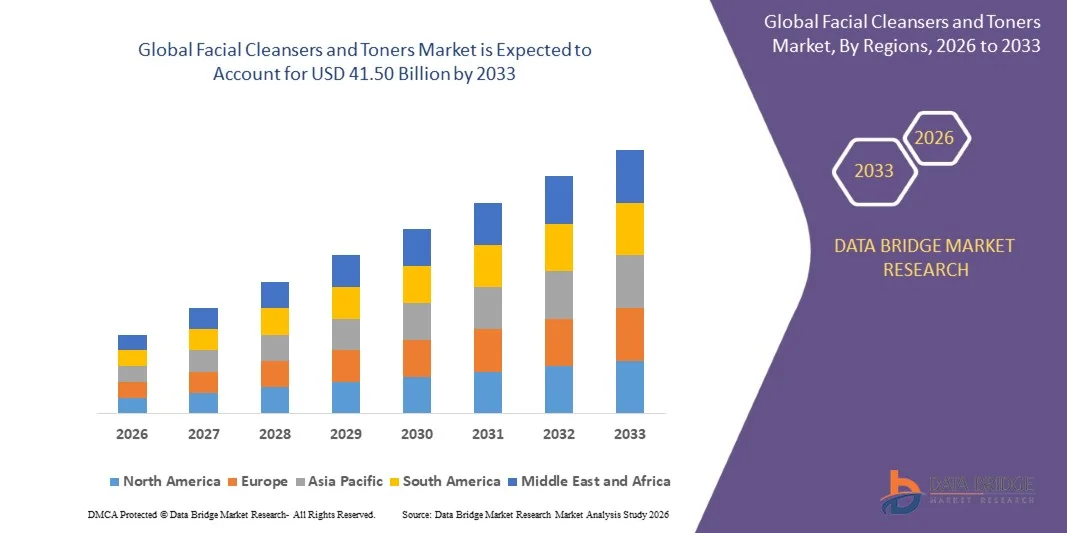
- As per Data Bridge Market Research analysis, the facial cleansers and toners market was valued at USD 27.04 Billion in 2025 and is projected to reach USD 41.50 Billion by 2033, growing at a CAGR of 5.50% from 2026 to 2033.
- The market is experiencing consistent growth driven by rising consumer awareness of daily skincare, increasing prevalence of skin concerns such as acne, dryness, and sensitivity, growing disposable incomes, and the expanding availability of cleansers and toners through online and specialist retail channels.
- The increasing preference for indie and dermatology-led brands, the shift toward barrier-friendly and pH-balanced formulations, and the rapid growth of e-commerce are supporting market adoption. Product innovation is visible across facial cleansers, cleansing balms, and electric facial cleansing devices, offering consumers greater convenience, targeted benefits, and personalized skincare routines for oily, dry, mixed, neutral, and sensitive skin.
Market Size & Forecast
- Global Market Value (2025): USD 27.04 Billion
- Expected Market Value (2033): USD 41.50 Billion
- Forecast CAGR (2026–2033): 5.50%
What are the Major Takeaways of the Facial Cleansers and Toners Market?
- North America dominated the facial cleansers and toners market with the largest revenue share of 31.85% in 2025, supported by high usage of skincare products among working women, strong presence of global brands, and well-developed drugstore and online retail networks.
- Asia-Pacific is expected to be the fastest-growing region at a CAGR of 6.74% from 2026 to 2033, fueled by increasing adoption of premium products, rising disposable incomes, and the influence of K-beauty and J-beauty routines.
- The cleansers segment led the type category with a 71.20% share in 2025, driven by their status as an essential, daily-use step in nearly every skincare routine.
- Toners are the fastest-growing type, projected to register a CAGR of 6.85%, reflecting demand for hydrating, pH-balancing, and multi-functional formulations.
- The oily skin segment dominated the skin characteristics category with a 29.40% revenue share in 2025, led by strong demand for oil-control and acne-care cleansing products; sensitive skin is the fastest-growing segment at a CAGR of 7.20%.
- The normal type accounted for 52.80% of the usage purpose category in 2025, while the efficacy type is the fastest-growing usage purpose, with a CAGR of 7.10%, driven by acne, brightening, and barrier-repair claims.
- Supermarkets/hypermarkets held 38.60% of the distribution channel category in 2025, whereas the online channel is the fastest-growing, with a CAGR of 8.30%; the personal end-user segment accounted for 84.30% of the market.
Report Scope and Facial Cleansers and Toners Market Segmentation
|
Attributes |
Facial Cleansers and Toners Key Market Insights |
|
Segments Covered |
|
|
Countries Covered |
North America
Europe
Asia-Pacific
Middle East and Africa
South America
|
|
Key Market Players |
|
|
Market Opportunities |
|
|
Value Added Data Infosets |
In addition to the insights on market scenarios such as market value, growth rate, segmentation, geographical coverage, and major players, the market reports curated by the Data Bridge Market Research also include in-depth expert analysis, pricing analysis, brand share analysis, consumer survey, demography analysis, supply chain analysis, value chain analysis, raw material/consumables overview, vendor selection criteria, PESTLE Analysis, Porter Analysis, and regulatory framework. |
What is the Key Trend in the Facial Cleansers and Toners Market?
- Facial cleansers and toners are increasingly evolving from basic hygiene products into skin-barrier-focused, multi-benefit products, combining ceramides, humectants, mild surfactants, and targeted actives to cleanse and treat concerns such as acne, dryness, and sensitivity in a single step.
- For instance, in August 2025, according to Chain Drug Review, CeraVe introduced its Balancing Air Foam Cleanser, a lightweight foam formulated with three skin-identical ceramides, allantoin, and glycolysine to cleanse dirt, oil, and impurities without disrupting the skin’s natural barrier, illustrating the shift toward gentle, dermatologist-developed formats.
- Texture and format innovation is gaining momentum, with air foams, cream-to-foam, balm, bar, and refillable formats being introduced to improve sensory appeal, reduce packaging, and differentiate in a crowded category.
- Sensitive-skin and derma-cosmetic positioning is expanding beyond home markets, as brands extend barrier-care ranges through pharmacies, drugstores, and online platforms in new regions.
- For instance, in August 2026, according to Premium Beauty News, Kao reported that retail sales of its Curél sensitive-skin brand in the U.K. had increased by 24% since the beginning of 2026, while the company aims to raise the brand’s revenue to 1.6 times its 2024 level by 2030, highlighting the commercial pull of barrier-focused skincare.
- As e-commerce, social media education, ingredient transparency, and personalization continue to advance, facial cleansers and toners are expected to expand beyond cleansing into daily skin-health maintenance, with growing roles for efficacy-driven and sensitive-skin products.
What are the Key Drivers of the Facial Cleansers and Toners Market?
- Rising awareness of daily skincare routines, combined with increasing urbanization, pollution exposure, and long hours of makeup and sunscreen use, has made facial cleansing and toning an essential, repeat-purchase habit across age groups and genders.
- For instance, in February 2025, according to the British Journal of Dermatology, a Global Burden of Disease analysis of individuals aged 10–24 years found that the global age-standardized prevalence rate of acne vulgaris rose from 8,563.4 to 9,790.5 per 100,000 population between 1990 and 2021, indicating a growing consumer base for acne-care and oil-control cleansers.
- Growing disposable incomes, expanding middle-class populations, and increased willingness to spend on premium and dermatologist-recommended products are shifting purchases toward higher-value cleansers and toners.
- For instance, in November 2025, according to JAAD International (via the National Library of Medicine), a study using 2021 Global Burden of Disease data with projections to 2031 reported that acne vulgaris peaks among adolescents aged 15–19 years, reinforcing sustained demand for targeted cleansing products among younger consumers.
- The rapid growth of online retail, influencer-led education, and direct-to-consumer brands is improving product discovery and accessibility, supporting faster adoption of niche and indie cleansers and toners.
What Factors Are Challenging the Growth of the Facial Cleansers and Toners Market?
- The high price of natural, organic, and premium formulations, along with strong brand-value premiums, can limit affordability for middle-income consumers and encourage trading down to mass or private-label alternatives.
- For instance, in August 2026, according to Cosmetics Business, Beiersdorf reported that group sales fell 3.5% to EUR 5 billion in the first half of 2026 and that consumer division sales declined 4% amid continued pressure on NIVEA, showing how a difficult market and intense competition can weigh even on established skincare brands.
- Intense competition among global conglomerates, regional brands, indie labels, and private labels is raising marketing and promotional spending, compressing margins, and shortening product lifecycles.
- Rising consumer scrutiny of ingredients, sustainability, and packaging is pushing manufacturers to reformulate products and redesign packs, increasing research and development costs and regulatory complexity.
- For instance, in January 2026, according to Global Cosmetics News, Beiersdorf launched NIVEA Creme Natural Touch, a vegan formula with 99% natural-origin ingredients in a tin made from recycled aluminum, reflecting the reformulation and packaging investment required to meet sustainability expectations.
- Supply-chain disruptions affecting surfactants, packaging materials, and logistics, along with counterfeit products on online marketplaces, may further restrain growth by raising costs and eroding consumer trust.
How is the Facial Cleansers and Toners Market Segmented?
The facial cleansers and toners market is segmented on the basis of type, skin characteristics, usage purpose, distribution channel, and end user.
- By Type
On the basis of type, the facial cleansers and toners market is segmented into cleansers and toners. The cleansers segment dominated the market with 71.20% share in 2025, supported by its position as the foundational step in daily skincare. Cleansers are available as foam-type, solvent-based, no-foam, and collagen-type products, allowing brands to address different skin needs and preferences. Mild, barrier-friendly formulas, together with makeup-removing and acne-care variants, are strengthening repeat purchases. Wide availability across mass, derma, and online channels also supports volumes.
The toners segment is projected to register the fastest growth at a CAGR of 6.85% from 2026 to 2033, driven by growing demand for hydrating, pH-balancing, soothing, and exfoliating products. Toners help restore skin balance after cleansing and prepare the skin for serums and moisturizers, which fits layered routines popularized by Korean and Japanese beauty. Alcohol-free and sensitive-skin formulas, along with ingredients such as niacinamide, hyaluronic acid, and centella, are widening appeal among younger consumers and men.
- By Skin Characteristics
On the basis of skin characteristics, the facial cleansers and toners market is segmented into neutral skin, dry skin, oily skin, mixed skin, and sensitive skin. The oily skin segment dominated the market with 29.40% share in 2025, supported by strong demand for oil-control, pore-clearing, and acne-care cleansing products, particularly in humid climates and among adolescents and young adults. Foaming and gel formats, along with salicylic acid and clay-based products, remain popular in this segment, and widespread skin concerns provide a stable base of repeat purchasers.
The sensitive skin segment is projected to register the fastest growth at a CAGR of 7.20% from 2026 to 2033, driven by increasing reports of skin reactivity, rising awareness of skin-barrier health, and the expansion of dermatology-endorsed brands. Fragrance-free, hypoallergenic, and ceramide-enriched cleansers and toners are gaining shelf space across pharmacies and online platforms. Dry, mixed, and neutral skin segments are expected to grow steadily, supported by hydration-focused and balancing formulations.
- By Usage Purpose
On the basis of usage purpose, the facial cleansers and toners market is segmented into normal type, scrub type, and efficacy type. The normal type segment dominated the market with 52.80% share in 2025, supported by everyday cleansing and toning needs that are met through affordable, widely available products. Mass-market brands, strong retail distribution, and frequent promotions keep these products accessible, and their mild formulations suit daily use by consumers of all ages and genders.
The efficacy type segment is projected to register the fastest growth at a CAGR of 7.10% from 2026 to 2033, driven by consumer preference for products that deliver visible results, such as acne control, brightening, anti-pollution, and barrier repair. Clinically tested claims, dermatologist recommendations, and active ingredients including salicylic acid, niacinamide, and ceramides are supporting premium pricing. The scrub type segment is expected to grow moderately, with gentler physical and enzymatic exfoliants replacing harsher granules.
- By Distribution Channel
On the basis of distribution channel, the facial cleansers and toners market is segmented into supermarkets/hypermarkets, specialist retailers, convenience stores, online channel, and other channels. The supermarkets/hypermarkets segment dominated the market with 38.60% share in 2025, supported by broad assortments, competitive pricing, bundled promotions, and the convenience of purchasing alongside household items. Strong in-store visibility and private-label ranges also help these outlets attract price-conscious shoppers in both developed and emerging markets.
The online channel is projected to register the fastest growth at a CAGR of 8.30% from 2026 to 2033, driven by rising smartphone and internet penetration, influencer-led education, subscription models, and direct-to-consumer brands. Online platforms offer wider product choice, ingredient information, user reviews, and personalized recommendations. Specialist retailers are expected to remain important for premium and derma brands, while convenience stores serve impulse and small-pack purchases.
- By End User
On the basis of end user, the facial cleansers and toners market is segmented into personal and commercial. The personal segment dominated the market with 84.30% share in 2025, supported by daily home use by consumers across age groups and genders. Rising grooming awareness among men, regular skincare routines among working women, and the growing use of products by teenagers are expanding the user base. Convenient pack sizes, travel formats, and subscription refills continue to strengthen household demand.
The commercial segment is projected to register the fastest growth at a CAGR of 6.40% from 2026 to 2033, driven by increasing use of cleansers and toners in salons, spas, dermatology clinics, and wellness centers. Professional treatments such as facials, peels, and pre- and post-procedure care require large-format products with consistent performance. Growth of the medical aesthetics and wellness tourism sectors, and the popularity of in-clinic regimens, is expected to support further adoption.
Which Region Holds the Largest Share of the Facial Cleansers and Toners Market?
- North America dominated the facial cleansers and toners market with the largest revenue share of 31.85% in 2025, supported by high usage of skincare products among the working women population, a strong presence of global brands, and well-developed drugstore, specialist, and online retail networks.
- The region also benefits from high consumer awareness of skin health, strong dermatology-led brand activity, and early adoption of new formats and ingredients. Growing demand for acne-care, sensitive-skin, and men’s grooming products continues to strengthen North America’s position, with the regional market expected to reach approximately USD 12,534.61 million by 2033.
U.S. Facial Cleansers and Toners Market Insight
The U.S. facial cleansers and toners market is witnessing strong growth due to high skincare awareness, strong dermatology-driven brands, and widespread availability across drugstores, mass retailers, and e-commerce platforms. Rising demand for acne-care, barrier-repair, and fragrance-free products, along with growing male grooming, is driving purchases. In addition, social media education, subscription models, and the popularity of ingredient-led brands are accelerating adoption of both daily and efficacy-focused cleansers and toners.
Asia-Pacific Facial Cleansers and Toners Market Insight
The Asia-Pacific facial cleansers and toners market is expected to witness rapid growth, expanding at a CAGR of 6.74% from 2026 to 2033, driven by increasing adoption of premium products, rising disposable incomes, and the influence of multi-step Korean and Japanese skincare routines across countries such as China, India, and Japan. Growing urban populations and digital retail are supporting expansion, with the regional share expected to rise from 27.15% in 2025 to 29.81% by 2033.
Japan Facial Cleansers and Toners Market Insight
The Japan facial cleansers and toners market is witnessing consistent growth due to a deeply rooted skincare culture, strong domestic brands, and continuous innovation in gentle, high-efficacy formulations. Sensitive-skin, moisturizing, and anti-aging cleansers and toners are popular, and consumers value product quality, safety, and sophisticated textures. Moreover, strong demand from older consumers and inbound tourism, along with exports of Japanese brands, is further contributing to market growth in Japan.
China Facial Cleansers and Toners Market Insight
The China facial cleansers and toners market is growing rapidly, driven by expanding urban middle-class consumption, strong e-commerce and live-streaming platforms, and increasing preference for functional skincare. Domestic brands are gaining share with science-backed, ingredient-focused offerings, while international brands continue to invest in localized launches. Rising skincare awareness among younger consumers and men is significantly boosting demand, positioning China as a key growth market across Asia-Pacific.
U.K. Facial Cleansers and Toners Market Insight
The U.K. facial cleansers and toners market is experiencing steady growth, supported by strong drugstore and online retail, high awareness of skin health, and rising interest in derma-cosmetic and sensitive-skin brands. Consumers increasingly seek gentle, fragrance-free products, and international barrier-care brands continue to expand distribution. Furthermore, growing attention to sustainable packaging and ingredient transparency is supporting wider adoption of premium cleansers and toners in the U.K.
Germany Facial Cleansers and Toners Market Insight
The Germany facial cleansers and toners market is expanding steadily due to the country’s strong consumer-goods base, high demand for dermatologically tested products, and well-developed pharmacy and drugstore networks. Consumers value safety, natural-origin ingredients, and sustainable packaging, and domestic manufacturers are expanding derma and acne-care ranges. Continuous product innovation, together with Germany’s focus on quality and regulatory compliance, is further driving market growth in the country.
Which are the Top Companies in Facial Cleansers and Toners Market?
The facial cleansers and toners industry is primarily led by well-established companies, including:
- L’Oréal S.A. (France)
- Unilever PLC (U.K.)
- Procter & Gamble (U.S.)
- Beiersdorf AG (Germany)
- Kao Corporation (Japan)
- Shiseido Company, Limited (Japan)
- The Estée Lauder Companies Inc. (U.S.)
- Kiehl’s (U.S.)
- The Mentholatum Company (U.S.)
- Johnson & Johnson Private Limited (India)
- Revlon, Inc. (U.S.)
- Shanghai Jahwa United Co., Ltd. (China)
- Pechoin (China)
- FANCL Corporation (Japan)
- Caudalie (France)
- Kenvue Inc. (U.S.)
- Galderma Group AG (Switzerland)
- Amorepacific Corporation (South Korea)
- Pierre Fabre Group (France)
- Colgate-Palmolive Company (U.S.)
What are Latest Developments in Facial Cleansers and Toners Market?
- In September 2026, Beiersdorf introduced Eucerin DERMOPURE CLINICAL PROBIOM8, a new skin care approach for acne-prone skin, as part of its effort to strengthen its Derma business and expand its dermatology-led portfolio.
- In August 2026, Kao Corporation announced that its global skincare brand Curél, built on biomimetic ceramide technology for sensitive and dry skin, will launch across the Nordics in September 2026 exclusively through KICKS and Matas, following introductions in the U.K. in 2019, Germany and France in 2025, and the Netherlands in May 2026.
- In June 2026, Kao Corporation announced the launch of Curél in the Netherlands exclusively at Etos Derma stores nationwide, marking another milestone in its skincare growth strategy in Europe, the Middle East, and Africa, with a focus on derma cosmetics and skin protection.
- In January 2026, Beiersdorf launched NIVEA Creme Natural Touch in Germany, the first line extension of NIVEA Creme, featuring a vegan formula with 99% natural-origin ingredients in a tin produced with recycled aluminum.
- In August 2025, L’Oréal’s CeraVe launched its Balancing Air Foam Cleanser in the U.S., its first cleanser dispensed as a lightweight foam, formulated with three skin-identical ceramides to cleanse without disrupting the skin barrier, as the brand celebrated 20 years since its founding.
- Interactive Data Analysis Dashboard
- Company Analysis Dashboard for high growth potential opportunities
- Research Analyst Access for customization & queries
- Competitor Analysis with Interactive dashboard
- Latest News, Updates & Trend analysis
- Harness the Power of Benchmark Analysis for Comprehensive Competitor Tracking
Data collection and base year analysis are done using data collection modules with large sample sizes. The stage includes obtaining market information or related data through various sources and strategies. It includes examining and planning all the data acquired from the past in advance. It likewise envelops the examination of information inconsistencies seen across different information sources. The market data is analysed and estimated using market statistical and coherent models. Also, market share analysis and key trend analysis are the major success factors in the market report. To know more, please request an analyst call or drop down your inquiry.
The key research methodology used by DBMR research team is data triangulation which involves data mining, analysis of the impact of data variables on the market and primary (industry expert) validation. Data models include Vendor Positioning Grid, Market Time Line Analysis, Market Overview and Guide, Company Positioning Grid, Patent Analysis, Pricing Analysis, Company Market Share Analysis, Standards of Measurement, Global versus Regional and Vendor Share Analysis. To know more about the research methodology, drop in an inquiry to speak to our industry experts.
Data Bridge Market Research is a leader in advanced formative research. We take pride in servicing our existing and new customers with data and analysis that match and suits their goal. The report can be customized to include price trend analysis of target brands understanding the market for additional countries (ask for the list of countries), clinical trial results data, literature review, refurbished market and product base analysis. Market analysis of target competitors can be analyzed from technology-based analysis to market portfolio strategies. We can add as many competitors that you require data about in the format and data style you are looking for. Our team of analysts can also provide you data in crude raw excel files pivot tables (Fact book) or can assist you in creating presentations from the data sets available in the report.