


What is the Fiducial Markers Size and Growth Rate?
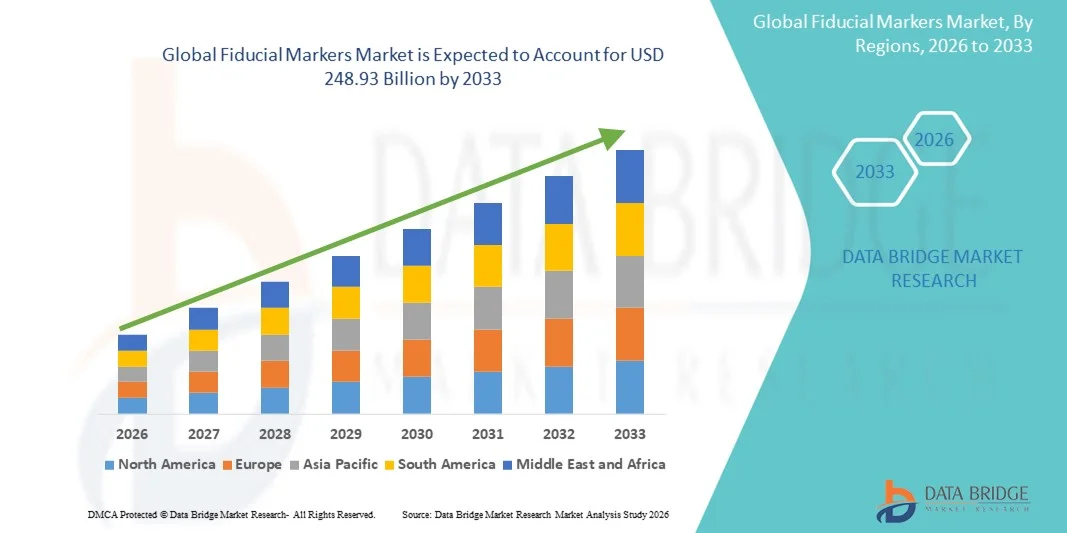
- As per Data Bridge Market Research Analysis the global fiducial markers market size was valued at USD 180.50 billion in 2025 and is expected to reach USD 248.93 billion by 2033, at a CAGR of 4.10% during the forecast period
- The market growth is largely fueled by the increasing adoption of precision-guided radiotherapy, image-guided surgeries, and advanced diagnostic imaging techniques, which has significantly expanded the use of fiducial markers across healthcare settings. As cancer cases continue to rise globally, the need for accurate tumor localization and improved treatment planning is driving healthcare providers to integrate fiducial markers into radiotherapy workflows, enhancing precision and reducing damage to surrounding tissues
- Furthermore, rising demand for minimally invasive procedures, improvements in imaging modalities such as CT, MRI, and ultrasound, and the growing preference for personalized treatment approaches are strengthening the role of fiducial markers across clinical applications. These converging factors are accelerating the adoption of fiducial marker solutions in oncology, gastroenterology, pulmonology, and urology, thereby significantly boosting the industry's overall growth
Market Size & Forecast
- Global Market Value (2025): USD 180.50 billion in 2025
- Expected Market Value (2033): USD 248.93 billion by 2033
- Forecast CAGR (2026–2033): 4.10%
Fiducial Markers Market Analysis
- Fiducial markers, which serve as highly precise reference points in medical imaging and radiation therapy, are becoming increasingly vital tools in modern oncology, diagnostic imaging, and image-guided surgical procedures. Their ability to enhance tumor localization, improve treatment accuracy, and support real-time tracking makes them essential across radiotherapy centers, hospitals, and specialty clinics
- The escalating demand for fiducial markers is primarily driven by the rising global incidence of cancer, rapid adoption of image-guided radiotherapy (IGRT), and a growing preference for minimally invasive procedures that require precise anatomical targeting. Increasing investments in advanced imaging technologies such as MRI, CT, and ultrasound further elevate their clinical importance, expanding usage across oncology, pulmonology, gastroenterology, and urology
- North America dominated the fiducial markers market with the largest revenue share of 40% in 2025, supported by advanced healthcare infrastructure, high adoption of precision-based radiotherapy systems, and strong presence of leading manufacturers offering gold, polymer, and liquid fiducial markers. The U.S. continues to experience substantial growth due to expanding cancer treatment centers, increasing radiation oncology procedures, and accelerated adoption of image-guided technologies for prostate, lung, liver, and pancreatic cancers
- Asia-Pacific is expected to be the fastest-growing region in the fiducial markers market during the forecast period, projected to record a CAGR driven by rising healthcare expenditure, expanding radiotherapy installations, and increasing government initiatives supporting early cancer diagnosis and advanced treatment planning. Growing awareness of IGRT benefits and improved access to modern imaging equipment are further accelerating regional market expansion
- The Hospitals segment dominated with a market share of 52.3% in 2025, supported by the large volume of cancer diagnosis and treatment procedures conducted in hospital settings
Report Scope and Fiducial Markers Market Segmentation
|
Attributes |
Fiducial Markers Key Market Insights |
|
Segments Covered |
|
|
Countries Covered |
North America
Europe
Asia-Pacific
Middle East and Africa
South America
|
|
Key Market Players |
|
|
Market Opportunities |
|
|
Value Added Data Infosets |
In addition to the insights on market scenarios such as market value, growth rate, segmentation, geographical coverage, and major players, the market reports curated by the Data Bridge Market Research also include in-depth expert analysis, patient epidemiology, pipeline analysis, pricing analysis, and regulatory framework. |
What is the Key Trend in the Fiducial Markers?
Advancements in Imaging Precision and Integration with AI-Enabled Diagnostic Platform
- A significant and accelerating trend in the global fiducial markers market is the growing integration of advanced imaging technologies, AI-assisted treatment planning systems, and precision-guided radiotherapy platforms. This deepening technological synergy is substantially enhancing clinical accuracy, enabling improved tumor localization, and supporting highly targeted therapeutic interventions across oncology practices worldwide
- For instance, modern polymer-based and biodegradable fiducial markers are being integrated into next-generation radiotherapy systems such as MR-guided linear accelerators and AI-driven contouring software. These innovations allow clinicians to achieve clearer soft-tissue visualization, minimize imaging artifacts, and perform more reliable patient tracking during treatment sessions. Similarly, radiopaque fiducial markers designed for compatibility with multimodal imaging—including CT, MRI, and ultrasound—offer clinicians enhanced flexibility in planning complex cases
- AI integration in fiducial marker–supported workflows enables automated tumor tracking, enhanced motion-management algorithms, and improved delineation accuracy during treatment planning. For example, several leading radiotherapy platforms now utilize AI-assisted image registration that intelligently interprets the position of implanted markers, enabling real-time adjustments during procedures such as stereotactic body radiotherapy (SBRT). Furthermore, AI-powered adaptive radiotherapy systems can analyze fiducial placement data to optimize fraction dosing and provide intelligent alerts when organ motion deviates from predicted patterns
- The seamless incorporation of fiducial markers into digital oncology ecosystems—including cloud-based treatment planning, automated contouring software, and integrated oncology information systems—facilitates centralized control and coordination across the patient care continuum. Through a single digital interface, clinicians can visualize marker positions, evaluate tumor shifts, and synchronize radiation beams with sub-millimeter accuracy, thereby improving workflow efficiency and treatment personalization
- This trend toward more intelligent, intuitive, and interoperable oncology solutions is fundamentally reshaping expectations in radiotherapy and interventional oncology. Consequently, companies such as CIVCO Radiotherapy, IZI Medical Products, and Carbon Medical Technologies are developing innovative marker designs, including fully biodegradable markers, flexible polymer strands, and MRI-compatible materials that enhance placement accuracy while reducing post-procedural complications
- The demand for fiducial markers that offer seamless integration with advanced imaging modalities, real-time tumor tracking, and AI-enhanced radiotherapy platforms is increasing rapidly across hospitals, oncology centers, and interventional radiology departments. As clinicians continue to prioritize precision, safety, and workflow automation, fiducial markers are becoming indispensable components in modern cancer diagnostics and treatment frameworks
Fiducial Markers Market Dynamics
Driver
Growing Need for Precision in Image-Guided Therapies and Rising Cancer Burden
- The increasing global incidence of cancer, coupled with the expanding adoption of precision-guided radiotherapy and minimally invasive oncology procedures, has emerged as a major driver for the accelerating demand for fiducial markers
- For instance, in April 2025, leading oncology solution providers announced advancements in real-time tumor tracking systems integrated with high-visibility fiducial markers to support improved accuracy in SBRT and proton therapy procedures. Such developments by key industry players are expected to significantly strengthen market growth during the forecast period
- As oncologists shift toward highly targeted treatment approaches—such as cyberknife therapy, intensity-modulated radiation therapy (IMRT), stereotactic radiosurgery (SRS), and brachytherapy—fiducial markers provide indispensable benefits, including enhanced tumor visualization, reduced treatment margins, and improved dose delivery precision
- Furthermore, the rising adoption of non-invasive and minimally invasive techniques is making fiducial markers a standard requirement in tumor localization, especially in cancers of the prostate, breast, pancreas, lung, and liver. Their compatibility with multimodal imaging enables clinicians to adapt treatment plans dynamically and monitor tumor movement with greater certainty
- The growing focus on personalized medicine, along with the increased availability of polymer-based, gold-based, and bioresorbable fiducial markers, is further driving market expansion. Their improved biocompatibility, lower migration risk, and enhanced imaging clarity are contributing to their widespread use in both diagnostic and therapeutic settings
Restraint/Challenge
Concerns Regarding Migration, Procedural Risks, and High Associated Costs
- Concerns surrounding marker migration, procedure-related complications, and the overall cost burden associated with advanced radiotherapy solutions pose notable challenges to broader fiducial marker adoption. As placement typically requires interventional radiology procedures, issues such as infection, bleeding, or improper positioning can impact clinical outcomes and patient safety
- For instance, documented cases of fiducial marker migration in lung and abdominal procedures have raised awareness among clinicians about the need for improved marker materials and fixation technologies, making some centers cautious regarding widespread adoption in high-motion organs
- Addressing these clinical concerns through improved marker design—such as textured surfaces, deployable anchors, and bioresorbable materials—remains essential to enhancing reliability and minimizing risk. Companies emphasize safety-optimized designs, rigorous sterilization protocols, and validated imaging compatibility to build confidence among healthcare providers
- In addition, the relatively high cost of premium polymer-based, MRI-visible, and advanced gold fiducial markers—combined with the cost of associated imaging and insertion procedures—can limit adoption, particularly in lower-income regions or in facilities with restricted oncology budgets. While more economical options are emerging, high-precision marker systems designed for cutting-edge radiotherapy equipment remain expensive
- Although technological innovations are gradually reducing costs, financial constraints, reimbursement limitations, and the perceived complexity of marker-guided workflows continue to be barriers for smaller hospitals and oncology centers. Overcoming these challenges through improved cost-efficiency, clinician training, and the development of more affordable marker systems will be essential for sustaining widespread market adoption
Fiducial Markers Market Scope
The market is segmented on the basis of type, application, modality, and disease site.
- By Type
On the basis of type, the Fiducial Markers market is segmented into Polymer-Based Markers, Metal-Based Markers, and Others. The Metal-Based Markers segment dominated the market with a revenue share of 48.6% in 2025, driven by their high radiopacity, stability, and compatibility with multiple imaging modalities such as CT, MRI, and X-ray systems. Metal fiducials provide superior visibility during image-guided radiotherapy (IGRT), ensuring precise tumor targeting. Their durability makes them suitable for long treatment cycles, especially in prostate, lung, and liver cancer therapies. Hospitals prefer metal markers due to their reliability in stereotactic body radiotherapy (SBRT) and stereotactic radiosurgery (SRS). Increasing cancer prevalence and rising adoption of advanced radiotherapy systems support demand. Continuous technological advancements enhance implantation techniques. Their high compatibility with automated treatment planning systems encourages use. The segment also benefits from strong adoption in developed markets with advanced oncology infrastructures. Widespread clinical approval and proven performance strengthen dominance. Cancer centers rely heavily on metal markers for improving treatment accuracy. Metal-based fiducials remain the standard choice in precision oncology procedures.
The Polymer-Based Markers segment is expected to witness the fastest CAGR of 18.2% from 2026 to 2033, driven by increasing demand for MRI-friendly markers that eliminate imaging artefacts. Polymer markers are gaining popularity because they reduce signal distortion, making them ideal for soft tissue imaging and MRI-guided radiotherapy. Their biocompatibility enhances patient comfort and reduces risk of inflammation. Advancements in bioabsorbable polymer technologies appeal to clinicians seeking markers that do not require removal. Adoption is supported by their ease of implantation and compatibility with multimodal imaging procedures. Polymer markers are becoming important for delicate anatomical regions, including breast and head-and-neck sites. Improved manufacturing processes provide better shape consistency and marker stability. The segment benefits from a surge in MRI-guided cancer treatment centers. Increasing preference for non-metallic solutions in sensitive patients fuels demand. Rapid integration in next-generation radiotherapy techniques boosts growth. Research institutions influence adoption with ongoing validation studies. Emerging markets support growth with new investments in MRI-based therapies.
- By Application
On the basis of application, the Fiducial Markers market is segmented into Hospitals, Radiotherapy Centers, Cancer Research Institutes, and Others. The Hospitals segment dominated with a market share of 52.3% in 2025, supported by the large volume of cancer diagnosis and treatment procedures conducted in hospital settings. Hospitals widely use fiducial markers to enhance targeting accuracy during radiotherapy and minimally invasive tumor tracking procedures. Increasing investments in advanced treatment technologies strengthen demand. Hospitals also prefer fiducials for pre-treatment imaging, motion management, and tumor mapping across various disease sites. Rising cancer incidences globally increase the need for routine IGRT and SBRT procedures. Hospitals maintain long-term supplier agreements with marker manufacturers, ensuring consistent procurement. The segment is further driven by growing adoption of hybrid imaging systems like PET-CT and MRI-Linac. Multidisciplinary oncology teams rely on fiducials for highly precise planning. Large tertiary care centers dominate usage due to advanced infrastructure. Hospitals also use markers in post-treatment follow-up imaging. Expansion of oncology departments worldwide reinforces market leadership.
The Radiotherapy Centers segment is expected to witness the fastest CAGR of 17.9% from 2026 to 2033, driven by the rapid expansion of dedicated cancer treatment facilities globally. Radiotherapy centers rely heavily on fiducial markers for IGRT, SBRT, proton therapy, CyberKnife, and MRI-guided radiation therapy. Specialized oncology centers push demand due to high treatment volumes and advanced clinical workflows. Increased adoption of automated positioning systems amplifies marker usage. Growth is supported by rising installations of next-generation radiotherapy equipment. Fiducials help centers achieve higher treatment precision, reducing healthy tissue exposure. Many radiotherapy networks follow standardized protocols mandating marker use. Growing preference for outpatient cancer treatments enhances demand. The segment gains traction due to shorter treatment cycles requiring repeated imaging verification. Investments in decentralized radiotherapy centers expand usage. Rapid clinical innovation encourages continuous integration of fiducials across modalities. The shift toward hypofractionated treatment techniques drives higher need for precise localization tools.
- By Modality
On the basis of modality, the market is segmented into CT/CBCT, CyberKnife, Linac, MRI, Proton Therapy, and Tomotherapy. The CT/CBCT segment dominated the market with a 39.4% share in 2025, as CT-based planning remains the global standard for radiation therapy preparation. CT/CBCT systems provide clear visualization of metal and polymer fiducials, enabling accurate tumor localization. Their widespread availability across hospitals and radiotherapy centers strengthens dominance. CT-guided implantation techniques further enhance reliability. High usage in prostate, lung, abdominal, and pelvic cancer treatments drives demand. CT/CBCT’s ability to capture 3D tumor geometry improves treatment planning precision. Frequent pre-treatment scans require stable and visible fiducials. Clinical guidelines from major oncology organizations support CT-based marker placement. CT-based IGRT systems integrate easily with marker-tracking algorithms. The modality is preferred for initial planning and adaptive radiotherapy. Increasing global installations of CBCT-enabled Linac systems reinforce the segment. Adoption remains strong in both developed and developing markets.
The CyberKnife segment is expected to witness the fastest CAGR of 19.6% from 2026 to 2033, owing to the growing popularity of robotic radiosurgery. CyberKnife treatments heavily rely on fiducial markers for real-time tumor tracking, especially in lung, prostate, liver, and pancreatic cancers. The system’s ability to compensate for patient and tumor motion increases the necessity of marker implantation. Global expansion of CyberKnife centers boosts market penetration. Its advanced image-guided mechanisms deliver highly precise radiation beams, making fiducials essential for accuracy. The technique’s preference for minimally invasive, high-dose treatments accelerates usage. Clinical studies demonstrate improved outcomes with marker-guided CyberKnife therapy. Increasing adoption in emerging oncology hubs supports growth. The system is used for complex cases unsuitable for traditional surgery, increasing marker demand. Upgrades in robotic radiosurgery platforms further integrate fiducial tracking. Rising awareness among clinicians enhances adoption. The segment gains additional momentum from cancer programs emphasizing precision oncology.
- By Disease Site
On the basis of disease site, the market is segmented into Head and Neck, Breast, Lung, Abdomen, Prostate, Kidney, Cervix, and Others. The Prostate segment dominated the market with a 42.8% share in 2025, as prostate cancer treatments widely depend on fiducial markers for accurate tumor localization during IGRT and SBRT. Prostate tumors shift due to bladder and rectal movement, making marker placement essential for precision. High global prevalence of prostate cancer supports steady demand. Clinical protocols recommend fiducials for nearly all definitive radiation treatments. Prostate fiducials are used in CT, CBCT, CyberKnife, and MRI-guided therapies. Hospitals and radiotherapy centers maintain consistent procurement due to high case volumes. Growing adoption of hypofractionated radiotherapy increases reliance on markers. Markers improve dose delivery accuracy, minimizing gastrointestinal and urinary side effects. The segment benefits from increasing awareness of early screening programs. Research supports strong clinical outcomes with fiducial-guided prostate therapy. Large oncology networks standardize their use across treatment protocols. Prostate marker implantation is cost-effective and clinically validated, ensuring dominance.
The Lung cancer segment is expected to witness the fastest CAGR of 18.7% from 2026 to 2033, driven by the increasing need for precise tumor tracking in high-motion anatomical regions. Lung tumors move significantly with respiration, making fiducial markers essential for accurate targeting during SBRT and CyberKnife treatments. Rising incidence of lung cancer globally expands the patient pool. Advanced radiotherapy techniques require markers to manage respiratory motion. Growing use of robotic radiosurgery accelerates adoption. Clinicians increasingly use fiducials for metastatic lung lesions as well. Lung marker placement enhances treatment safety by reducing dose exposure to surrounding tissues. The segment benefits from improvements in bronchoscopic marker implantation methods. Expansion of thoracic oncology programs increases demand. Clinical evidence supports improved local control rates with marker-guided therapy. Integration with motion-compensation algorithms sustains future growth. Use in recurrent lung tumors and high-risk cases adds to demand. Emerging markets adopt lung fiducials as radiotherapy infrastructure grows.
Fiducial Markers Market Regional Analysis
- North America dominated the fiducial markers market with the largest revenue share of 40% in 2025
- Supported by advanced healthcare infrastructure, high adoption of precision-based radiotherapy systems, and the strong presence of leading manufacturers offering gold, polymer, and liquid fiducial markers
- The market continues to experience substantial growth due to expanding cancer treatment centers, increasing radiation oncology procedures, and accelerated adoption of image-guided technologies for prostate, lung, liver, and pancreatic cancers
U.S. Fiducial Markers Market Insight
The U.S. fiducial markers market captured the largest revenue share in 2025 within North America, fueled by the rapid adoption of advanced radiotherapy and imaging systems. The growth is driven by increasing investments in oncology centers, rising demand for precision treatment planning, and widespread availability of high-quality fiducial markers. Additionally, hospitals and research institutes are increasingly focusing on minimally invasive procedures, boosting the demand for accurate and biocompatible markers.
Europe Fiducial Markers Market Insight
The Europe fiducial markers market is projected to expand at a substantial CAGR during the forecast period, primarily driven by government initiatives promoting advanced cancer treatment, stringent regulatory standards, and increasing adoption of IGRT across hospitals and cancer centers. The region is witnessing significant growth in both private and public healthcare facilities, with increasing awareness of treatment accuracy and patient safety fueling market demand.
U.K. Fiducial Markers Market Insight
The U.K. fiducial markers market is anticipated to grow at a noteworthy CAGR during the forecast period, driven by expanding oncology services, increased cancer screening programs, and rising demand for precision radiotherapy. Government-led cancer care initiatives, alongside the adoption of technologically advanced markers in hospitals and research institutes, are expected to sustain long-term market growth.
Germany Fiducial Markers Market Insight
The Germany fiducial markers market is expected to expand at a considerable CAGR during the forecast period, fueled by well-established healthcare infrastructure, strong focus on oncology research, and growing adoption of advanced radiation therapy techniques. Hospitals are increasingly implementing IGRT, stereotactic body radiotherapy (SBRT), and proton therapy, creating significant demand for high-precision fiducial markers for tumor localization.
Asia-Pacific Fiducial Markers Market Insight
The Asia-Pacific fiducial markers market is expected to grow at the fastest CAGR during the forecast period, driven by rising healthcare expenditure, expansion of radiotherapy installations, and growing government initiatives supporting early cancer diagnosis and advanced treatment planning. Countries such as China, India, and Japan are witnessing increasing awareness of IGRT benefits and improved access to modern imaging and radiotherapy equipment, which is further accelerating market expansion.
Japan Fiducial Markers Market Insight
The Japan fiducial markers market is gaining momentum due to the country’s high focus on advanced oncology care, growing number of cancer treatment centers, and increasing utilization of precision-based radiotherapy. The aging population and emphasis on minimally invasive cancer treatment procedures are driving demand for reliable and accurate fiducial markers across hospitals and research facilities.
China Fiducial Markers Market Insight
The China fiducial markers market accounted for the largest market revenue share in Asia-Pacific in 2025, attributed to the country’s rapid expansion of cancer treatment infrastructure, growing middle-class population, and increasing awareness of precision radiotherapy benefits. The government’s initiatives to modernize oncology centers and support early cancer detection are contributing to rising demand for high-quality fiducial markers, while domestic manufacturing capabilities are enhancing accessibility and affordability.
Which are the Top Companies in Fiducial Markers?
The Fiducial Markers industry is primarily led by well-established companies, including:
• Varian Medical Systems (U.S.)
• Elekta AB (Sweden)
• IBA Dosimetry (Germany)
• CIRS, Inc. (U.S.)
• Best Medical International (U.S.)
• CIVCO Medical Solutions (U.S.)
• PTW-Freiburg (Germany)
• Qfix (U.S.)
• Medtronic (Ireland)
• Accuray, Inc. (U.S.)
• Micropos Medical (Switzerland)
• Oncology Systems Limited (U.K.)
Latest Developments in Global Fiducial Markers Market
- In January 2024, Carbon Medical Technologies, Inc. (CMT) announced that it had secured a group‑purchasing agreement with Premier, Inc., enabling Premier’s member hospitals and healthcare providers to access CMT’s BiomarC Fiducial Marker product line under negotiated pricing. This move is aimed at increasing the use of fiducial markers in radiation therapy and improving access broadly across U.S. oncology centers
- In July 2024, a market‑research report from Future Market Insights (FMI) reinforced that the global fiducial markers market is expected to grow at a CAGR of 10.3% from 2023 to 2033, projecting a valuation of about USD 408.3 million by 2033. This projection reflects heightened demand stemming from growing adoption of advanced radiotherapy techniques and broader use of image‑guided tumor localization
- In October 2023, the same FMI-derived estimate was reaffirmed in a public report indicating that the market — then valued at around USD 153.6 million — is on a robust growth trajectory, driven by increased deployment of precision radiotherapies like image‑guided radiotherapy (IGRT), stereotactic radiosurgery (SRS), and intensity-modulated radiotherapy (IMRT), all of which rely on fiducial markers for accurate tumor targeting

- Interactive Data Analysis Dashboard
- Company Analysis Dashboard for high growth potential opportunities
- Research Analyst Access for customization & queries
- Competitor Analysis with Interactive dashboard
- Latest News, Updates & Trend analysis
- Harness the Power of Benchmark Analysis for Comprehensive Competitor Tracking
Data collection and base year analysis are done using data collection modules with large sample sizes. The stage includes obtaining market information or related data through various sources and strategies. It includes examining and planning all the data acquired from the past in advance. It likewise envelops the examination of information inconsistencies seen across different information sources. The market data is analysed and estimated using market statistical and coherent models. Also, market share analysis and key trend analysis are the major success factors in the market report. To know more, please request an analyst call or drop down your inquiry.
The key research methodology used by DBMR research team is data triangulation which involves data mining, analysis of the impact of data variables on the market and primary (industry expert) validation. Data models include Vendor Positioning Grid, Market Time Line Analysis, Market Overview and Guide, Company Positioning Grid, Patent Analysis, Pricing Analysis, Company Market Share Analysis, Standards of Measurement, Global versus Regional and Vendor Share Analysis. To know more about the research methodology, drop in an inquiry to speak to our industry experts.
Data Bridge Market Research is a leader in advanced formative research. We take pride in servicing our existing and new customers with data and analysis that match and suits their goal. The report can be customized to include price trend analysis of target brands understanding the market for additional countries (ask for the list of countries), clinical trial results data, literature review, refurbished market and product base analysis. Market analysis of target competitors can be analyzed from technology-based analysis to market portfolio strategies. We can add as many competitors that you require data about in the format and data style you are looking for. Our team of analysts can also provide you data in crude raw excel files pivot tables (Fact book) or can assist you in creating presentations from the data sets available in the report.













