


What is the Gastroprotective Molecules Market Size and Growth Rate?
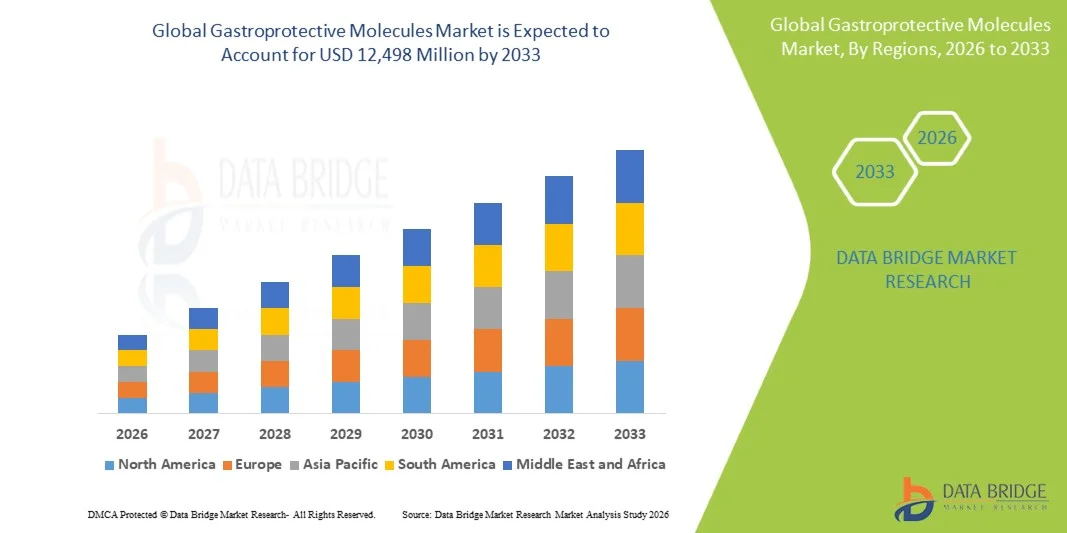
- As per market analysis, the Global Gastroprotective Molecules Market was valued at USD 9,684 Million in 2025 and is projected to reach USD 12,498 Million by 2033, growing at a CAGR of 4.60% from 2026 to 2033.
- The market is witnessing steady growth driven by the increasing prevalence of gastrointestinal disorders, rising incidence of gastroesophageal reflux disease (GERD) and peptic ulcers, growing use of non-steroidal anti-inflammatory drugs (NSAIDs), and increasing awareness regarding the prevention and treatment of gastric acid-related conditions.
- Increasing demand for effective acid-suppressing therapies, growing adoption of proton pump inhibitors (PPIs) and potassium-competitive acid blockers (P-CABs), rising healthcare expenditure, and advancements in gastroprotective drug formulations are encouraging pharmaceutical companies to invest in new molecule development, combination therapies, improved drug-delivery systems, and broader distribution networks.
Market Size & Forecast
- Market Value (2025): USD 9,684 Million
- Expected Market Value (2033): USD 1249.8 Million
- Forecast CAGR (2026–2033): 4.60%
- Leading Region in 2025: North America
- Fastest Growing Region: Asia-Pacific
What are the Major Takeaways of the Gastroprotective Molecules Market?
- North America dominated the Gastroprotective Molecules Market with a 38.1% revenue share in 2025, supported by the high prevalence of GERD and peptic ulcer disease, established healthcare infrastructure, high pharmaceutical expenditure, and widespread adoption of gastroprotective therapies.
- Asia-Pacific is expected to witness the fastest growth at a CAGR of 7.3% from 2026 to 2034, supported by the increasing prevalence of gastrointestinal disorders, expanding healthcare access, rising pharmaceutical expenditure, and growing adoption of gastroprotective treatments. The region accounted for 24.6% of the market in 2025.
- Proton Pump Inhibitors (PPIs) dominated the market by molecule class, accounting for 58.4% of revenue in 2025. The segment is projected to grow at a CAGR of 5.4% from 2026 to 2034, driven by extensive use in GERD, peptic ulcer disease, Zollinger–Ellison syndrome, H. pylori eradication therapies, and gastroprotection during long-term medication use.
- H2-Receptor Antagonists accounted for 26.3% of the market in 2025 and are projected to grow at a CAGR of 4.1% from 2026 to 2034. Demand is supported by their use in mild-to-moderate GERD, nocturnal acid breakthrough, and other acid-related gastrointestinal conditions.
- Antacids represented 15.3% of the market in 2025 and are projected to register a CAGR of 3.8% from 2026 to 2034, supported by their widespread OTC availability, rapid symptomatic relief, and continued demand for the management of intermittent heartburn and acid-related symptoms.
- Online pharmacies are expected to witness faster growth during the forecast period, supported by increasing e-commerce penetration, home-delivery services, greater access to OTC gastrointestinal medicines, and growing consumer preference for convenient pharmaceutical purchasing channels.
Report Scope and Gastroprotective Molecules Market Segmentation
|
Attributes |
Gastroprotective Molecules Key Market Insights |
|
Segments Covered |
|
|
Countries Covered |
North America
Europe
Asia-Pacific
Middle East and Africa
South America
|
|
Key Market Players |
|
|
Market Opportunities |
|
|
Value Added Data Infosets |
In addition to the insights on market scenarios such as market value, growth rate, segmentation, geographical coverage, and major players, the market reports curated by the Data Bridge Market Research also include in-depth expert analysis, patient epidemiology, pipeline analysis, pricing analysis, and regulatory framework. |
What is the Key Trend in the Gastroprotective Molecules Market?
- Gastroprotective Molecules manufacturers are increasingly focusing on advanced acid-suppressive therapies, including potassium-competitive acid blockers (P-CABs), to provide faster, more potent, and sustained control of gastric acid secretion compared with conventional therapies.
- P-CAB-based therapies are gaining traction as healthcare providers seek alternative treatment options for patients with GERD, erosive esophagitis, peptic ulcer disease, and inadequate response to conventional proton pump inhibitors (PPIs).
- For instance, in May 2025, vonoprazan has emerged as a key P-CAB molecule, with approvals and expanding clinical applications supporting its adoption across acid-related gastrointestinal disorders and H. pylori eradication therapies.
- Manufacturers are also developing combination therapies and differentiated formulations, including P-CAB-based combinations with antibiotics for H. pylori treatment, as well as patient-friendly oral formulations designed to improve treatment convenience and adherence.
- As patients and healthcare providers increasingly prioritize rapid symptom control, treatment effectiveness, convenience, and targeted gastrointestinal therapies, advanced gastroprotective molecules, P-CABs, combination products, and innovative formulations are expected to become increasingly important across the global gastrointestinal therapeutics market.
What are the Key Drivers of the Gastroprotective Molecules Market?
- Increasing Prevalence of Gastrointestinal Disorders: The rising prevalence of GERD, peptic ulcers, gastritis, dyspepsia, and other acid-related gastrointestinal disorders is increasing the demand for gastroprotective molecules for symptom management and disease treatment.
- Growing Use of Gastroprotective Therapies with NSAIDs: Increasing use of non-steroidal anti-inflammatory drugs (NSAIDs) for chronic pain and inflammatory conditions is driving demand for gastroprotective therapies to reduce the risk of NSAID-associated gastric injury and ulcers.
- Advancements in Acid-Suppressive Therapies: Pharmaceutical companies are increasingly developing advanced molecules such as potassium-competitive acid blockers (P-CABs) to provide rapid and sustained acid suppression, creating demand beyond conventional proton pump inhibitors (PPIs).
- For instance, In April 2025, Sun Pharmaceutical Industries launched FEXUCLUE (fexuprazan) in India, a P-CAB indicated for adults with erosive esophagitis, highlighting continued innovation in acid-suppressive therapies.
- Growing Adoption of Proton Pump Inhibitors: PPIs such as omeprazole, esomeprazole, pantoprazole, lansoprazole, and rabeprazole remain widely used because of their established efficacy in acid-related gastrointestinal conditions, supporting continued market demand.
- Expansion of Combination Therapies: Pharmaceutical manufacturers are increasingly developing fixed-dose and combination therapies that integrate acid-suppressive molecules with antibiotics or other therapeutic agents, improving treatment convenience and supporting patient adherence.
- Increasing Healthcare Expenditure in Emerging Markets: Rising healthcare expenditure, improving access to pharmaceutical products, expanding hospital infrastructure, and greater awareness of gastrointestinal diseases across Asia-Pacific, Latin America, and the Middle East & Africa are supporting market expansion.
Which Factors are Challenging the Growth of the Gastroprotective Molecules Market?
- Long-term safety concerns associated with gastroprotective therapies can constrain market growth, particularly for prolonged use of proton pump inhibitors (PPIs), as concerns related to nutrient deficiencies, bone health, kidney-related complications, and other potential adverse effects can influence prescribing and patient behaviour.
- Increasing regulatory scrutiny of gastroprotective molecules is creating challenges for manufacturers, as stricter requirements related to drug safety, clinical efficacy, labelling, pharmacovigilance, and post-marketing surveillance can increase development costs and extend product approval timelines.
- Availability of low-cost generic PPIs and H2-receptor antagonists is intensifying price competition and limiting revenue growth for branded products. Generic alternatives provide cost-effective treatment options, particularly in price-sensitive emerging markets.
- Potential overuse and inappropriate prescribing of acid-suppressive medicines remains a concern, particularly where gastroprotective therapies are used for extended periods without appropriate clinical indications. Growing awareness among healthcare professionals regarding appropriate prescribing may restrict unnecessary medication use.
- Limited awareness and diagnosis of gastrointestinal disorders in developing markets can constrain market penetration, particularly in regions where access to gastroenterologists, diagnostic facilities, and specialized healthcare services remains limited.
- Competition from alternative treatment approaches and newer therapeutic options is increasing as pharmaceutical companies develop advanced acid-suppression therapies, combination treatments, and targeted gastrointestinal medicines. Manufacturers therefore face the challenge of demonstrating improved efficacy, safety, adherence, or clinical outcomes to differentiate newer gastroprotective molecules.
- As healthcare systems increasingly prioritize treatment safety, cost-effectiveness, appropriate prescribing, and long-term patient outcomes, manufacturers of gastroprotective molecules are expected to face greater pressure to demonstrate clinical value while controlling development and commercialization costs.
How is the Gastroprotective Molecules Market Segmented?
The market is segmented on the basis of Molecule/Class, Indication, Route of Administration, Dosage Form, Distribution Channel, End User .
- By Molecule/Class
On the basis of molecule/class, the Gastroprotective Molecules Market is segmented into Proton Pump Inhibitors (PPIs), H2-Receptor Antagonists (H2RAs), Potassium-Competitive Acid Blockers (P-CABs), Mucosal Protective Agents, Prostaglandin Analogues, Antacids, and Other Mucosal Protectants. The Proton Pump Inhibitors (PPIs) segment held the largest market revenue share of 58.4% in 2025, driven by their widespread use in GERD, peptic ulcer disease, gastritis, and other acid-related disorders.
The Potassium-Competitive Acid Blockers (P-CABs) segment is expected to witness the fastest growth during the forecast period, supported by rapid acid suppression, longer duration of action, increasing adoption of vonoprazan and other P-CAB molecules, and growing demand for alternatives to conventional PPIs.
- By Indication
On the basis of indication, the Gastroprotective Molecules Market is segmented into Peptic Ulcer Disease, Gastroesophageal Reflux Disease (GERD), Gastritis, NSAID-Induced Gastric Injury, Dyspepsia, Zollinger–Ellison Syndrome, and Other Gastrointestinal Disorders. The Gastroesophageal Reflux Disease (GERD) segment held a leading market position in 2025, supported by the increasing prevalence of GERD, growing diagnosis rates, lifestyle-related risk factors, and widespread use of acid-suppressive therapies.
The NSAID-Induced Gastric Injury segment is expected to witness significant growth during the forecast period, supported by increasing use of NSAIDs for chronic pain and inflammatory conditions and growing adoption of gastroprotective therapies to reduce gastrointestinal complications associated with long-term NSAID use.
- By Category
On the basis of category, the Gastroprotective Molecules Market is segmented into organic and conventional. The conventional segment held the largest market revenue share of 82.0% in 2025, supported by its broader availability, established supply chains, comparatively lower prices, and high consumption across major tea markets.
The organic segment is expected to witness faster growth at an estimated CAGR of 8.5% from 2026 to 2033, driven by increasing consumer awareness of clean-label products, concerns regarding pesticide residues, sustainable farming practices, and growing demand for naturally produced beverages. The broader market literature also identifies organic and conventional as key category classifications.
- By Route of Administration
On the basis of route of administration, the Gastroprotective Molecules Market is segmented into Oral, Parenteral, and Other Routes. The Oral segment held the largest market revenue share in 2025, driven by the convenience of administration, patient compliance, availability of tablets and capsules, and widespread use of oral gastroprotective medicines in outpatient treatment.
The Parenteral segment is expected to witness steady growth during the forecast period, supported by increasing utilization of injectable gastroprotective therapies in hospitalized patients, emergency gastrointestinal conditions, and patients unable to tolerate oral administration.
- By Dosage Form
On the basis of dosage form, the Gastroprotective Molecules Market is segmented into Tablets, Capsules, Oral Suspension/Syrup, Injectable, Chewable Tablets, and Other Forms. The Tablets segment accounted for a leading share of the market in 2025, supported by ease of administration, dosage accuracy, stability, convenient storage, and widespread availability across prescription and OTC products.
The Injectable segment is expected to register significant growth during the forecast period, supported by increasing hospital admissions involving severe gastrointestinal conditions and the need for rapid drug administration among patients who cannot take medicines orally.
- By Distribution Channel
On the basis of distribution channel, the Gastroprotective Molecules Market is segmented into Hospital Pharmacies, Retail Pharmacies, Online Pharmacies, Clinics & Healthcare Facilities, and Other Channels. The Retail Pharmacies segment represented a major distribution channel in 2025, supported by extensive pharmacy networks, widespread availability of gastroprotective medicines, and continued demand for prescription and OTC gastrointestinal treatments.
The Online Pharmacies segment is expected to witness significant growth during the forecast period, supported by increasing e-commerce penetration, home-delivery services, digital healthcare adoption, improved accessibility, and growing consumer preference for convenient pharmaceutical purchasing.
- By End User
On the basis of end user, the Gastroprotective Molecules Market is segmented into Hospitals, Clinics, Ambulatory Surgical Centers, Specialty Centers, and Homecare Settings. The Hospitals segment held the largest market revenue share in 2025, driven by the high volume of gastrointestinal disease diagnosis and treatment, availability of specialized healthcare professionals, and extensive utilization of gastroprotective therapies among hospitalized patients.
The Homecare Settings segment is expected to witness significant growth during the forecast period, supported by increasing management of chronic gastrointestinal disorders outside hospital settings, growing preference for outpatient treatment, improved access to oral therapies, and increasing adoption of convenient long-term medication regimens
Which Region Holds the Largest Share of the Gastroprotective Molecules Market?
- North America dominated the Gastroprotective Molecules Market with the largest revenue share of 38.1% in 2025, supported by the high prevalence of GERD, peptic ulcer disease, and other acid-related gastrointestinal disorders, well-established healthcare infrastructure, high pharmaceutical expenditure, and widespread adoption of gastroprotective therapies.
- Asia-Pacific is expected to witness the fastest growth at a CAGR of 7.3% from 2026 to 2034, supported by increasing gastrointestinal disease burden, rising healthcare expenditure, improving access to pharmaceutical treatments, growing awareness of digestive health, and expanding adoption of advanced gastroprotective molecules across China, Japan, India, and Southeast Asian markets.
U.S. Gastroprotective Molecules Market Insight
The U.S. Gastroprotective Molecules Market is supported by the high prevalence of gastrointestinal disorders, particularly GERD, peptic ulcer disease, and acid-related conditions. 65 million U.S. adults are affected by GERD, while around 110 million PPI prescriptions are filled annually across indications. Proton pump inhibitors remain the standard treatment, although newer P-CAB therapies such as vonoprazan are gaining adoption due to faster and more sustained acid suppression.
Europe Gastroprotective Molecules Market Insight
The Europe Gastroprotective Molecules Market is supported by the increasing prevalence of gastroesophageal reflux disease, peptic ulcers, gastritis, and other gastrointestinal disorders. Growing healthcare expenditure, established pharmaceutical infrastructure, and rising adoption of advanced acid-suppressive therapies are supporting market development. Increasing demand for effective and well-tolerated treatments, along with the introduction of potassium-competitive acid blockers (P-CABs) and combination therapies, is further creating opportunities for pharmaceutical manufacturers across European markets.
U.K. Gastroprotective Molecules Market Insight
The U.K. Gastroprotective Molecules Market is supported by the high prevalence of gastroesophageal reflux disease, peptic ulcers, and other acid-related gastrointestinal conditions. Increasing awareness of digestive health, established healthcare infrastructure, and widespread availability of prescription and over-the-counter therapies are supporting demand. Growing adoption of proton pump inhibitors and newer potassium-competitive acid blockers, alongside continued pharmaceutical innovation and improved diagnostic practices, is further contributing to market development.
Germany Gastroprotective Molecules Market Insight
Germany represents a significant market for gastroprotective molecules, supported by widespread use of proton pump inhibitors (PPIs) for GERD, gastritis, and other acid-related gastrointestinal disorders. During November 2020–October 2021, 2.87 billion PPI tablets were sold in Germany, with 97% distributed through prescriptions. The OTC PPI market also recorded an average annual growth of 14% over the preceding three-year period, highlighting continued demand for acid-suppressive therapies.
Asia-Pacific Gastroprotective Molecules Market Insight
The Asia-Pacific Gastroprotective Molecules Market is supported by the rising prevalence of gastrointestinal disorders, increasing healthcare expenditure, improving access to pharmaceutical treatments, and expanding healthcare infrastructure. China represents a major regional market, while India is emerging as an important growth opportunity due to its large patient population and expanding pharmaceutical sector. Growing demand for PPIs, H2-receptor antagonists, antacids, and newer acid-suppressive therapies is expected to strengthen regional market development.
Japan Gastroprotective Molecules Market Insight
Japan represents a significant market for gastroprotective molecules, supported by the high prevalence of GERD and continued adoption of acid-suppressive therapies. PPI usage increased from 1.8% in 2010 to 5.3% in 2019, while vonoprazan has gained adoption since its introduction in 2015. Japanese clinical guidelines also recognize vonoprazan and PPIs as important therapies for reflux esophagitis, supporting continued demand for advanced gastroprotective molecules.
China Gastroprotective Molecules Market Insight
China represents an important market for gastroprotective molecules, supported by the substantial burden of GERD, peptic ulcers, dyspepsia, and H. pylori infection. The increasing diagnosis of gastrointestinal disorders and expanding healthcare access are supporting demand for acid-suppressive therapies. PPIs remain widely used, while P-CABs are gaining attention as newer treatment options. China’s 2026 clinical consensus recognizes PPIs, P-CABs, H2RAs, antacids, and mucosal protectants as key therapies for acid-related diseases.
Which are the Top Companies in Gastroprotective Molecules Market?
The Gastroprotective Molecules industry is primarily led by well-established companies, including:
- AstraZeneca PLC (U.K.)
- Takeda Pharmaceutical Company Limited (Japan)
- Pfizer Inc. (U.S.)
- Bayer AG (Germany)
- Eisai Co., Ltd. (Japan)
- Sanofi S.A. (France)
- Teva Pharmaceutical Industries Ltd. (Israel)
- Viatris Inc. (U.S.)
- Sun Pharmaceutical Industries Ltd. (India)
- Dr. Reddy’s Laboratories Ltd. (India)
- Cipla Limited (India)
- Sandoz Group AG (Switzerland)
- Lupin Limited (India)
- Zydus Lifesciences Limited (India)
- Phathom Pharmaceuticals, Inc. (U.S.)
What are Latest Developments in Gastroprotective Molecules Market?
- In July 2025, personalized acid-suppression approaches are emerging, with research exploring individualized PPI dosing based on patient symptoms and treatment response. Such developments could support more targeted use of gastroprotective molecules and reduce unnecessary long-term acid-suppressive therapy.
- In September 2025, Dr. Reddy’s Laboratories launched Tegoprazan in India, introducing the potassium-competitive acid blocker (P-CAB) for the treatment of GERD and gastric ulcers. The launch reflects the increasing commercialization of newer acid-suppressive molecules beyond conventional PPIs.
- In December 2025, HK inno.N acquired the Japanese business rights for K-CAB (tegoprazan) from RaQualia Pharma, while also acquiring newly issued RaQualia shares and increasing its equity stake to 15.95%. The transaction strengthened HK inno.N’s control of K-CAB commercialization in Japan.
- In May 2025, Tabuk Pharmaceuticals expanded its strategic partnership with HK inno.N to commercialize K-CAB (tegoprazan) across six additional MENA markets, including Egypt, Sudan, Ethiopia, Morocco, Yemen, and Libya, expanding the partnership beyond its original 10-country territory.
- In June 2026, Onconic Therapeutics advanced the commercialization of Zacuvo in India after its Indian technology-transfer partner successfully completed a Phase 3 trial in erosive GERD and submitted a New Drug Application. Zacuvo is a P-CAB developed by Jeil Pharmaceutical and transferred to Onconic’s subsidiary.

- Interactive Data Analysis Dashboard
- Company Analysis Dashboard for high growth potential opportunities
- Research Analyst Access for customization & queries
- Competitor Analysis with Interactive dashboard
- Latest News, Updates & Trend analysis
- Harness the Power of Benchmark Analysis for Comprehensive Competitor Tracking
Data collection and base year analysis are done using data collection modules with large sample sizes. The stage includes obtaining market information or related data through various sources and strategies. It includes examining and planning all the data acquired from the past in advance. It likewise envelops the examination of information inconsistencies seen across different information sources. The market data is analysed and estimated using market statistical and coherent models. Also, market share analysis and key trend analysis are the major success factors in the market report. To know more, please request an analyst call or drop down your inquiry.
The key research methodology used by DBMR research team is data triangulation which involves data mining, analysis of the impact of data variables on the market and primary (industry expert) validation. Data models include Vendor Positioning Grid, Market Time Line Analysis, Market Overview and Guide, Company Positioning Grid, Patent Analysis, Pricing Analysis, Company Market Share Analysis, Standards of Measurement, Global versus Regional and Vendor Share Analysis. To know more about the research methodology, drop in an inquiry to speak to our industry experts.
Data Bridge Market Research is a leader in advanced formative research. We take pride in servicing our existing and new customers with data and analysis that match and suits their goal. The report can be customized to include price trend analysis of target brands understanding the market for additional countries (ask for the list of countries), clinical trial results data, literature review, refurbished market and product base analysis. Market analysis of target competitors can be analyzed from technology-based analysis to market portfolio strategies. We can add as many competitors that you require data about in the format and data style you are looking for. Our team of analysts can also provide you data in crude raw excel files pivot tables (Fact book) or can assist you in creating presentations from the data sets available in the report.













