What is the Global Geothermal Turbines Market Size and Growth Rate?
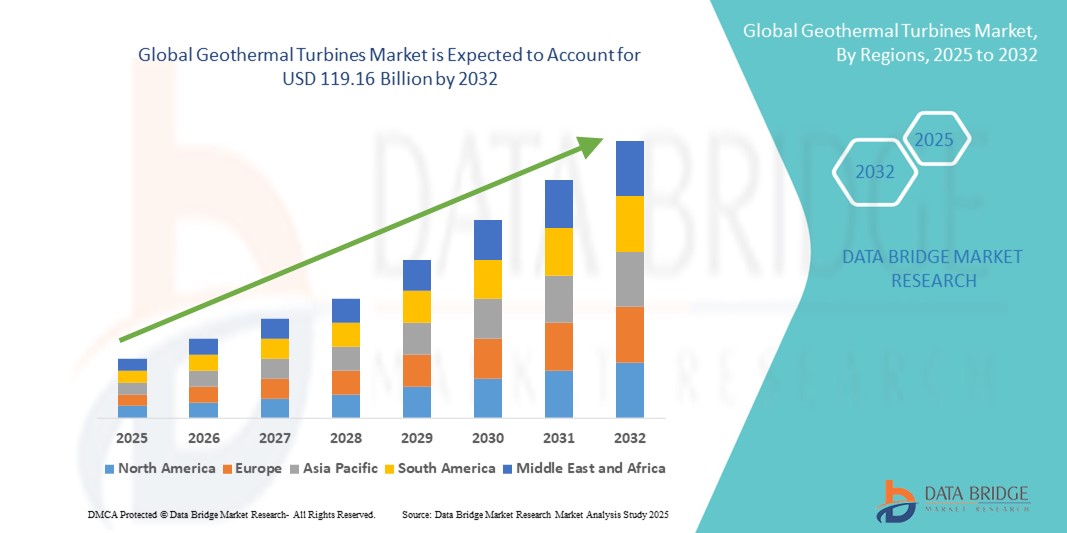
- The global geothermal turbines market size was valued at USD 72.00 billion in 2024 and is expected to reach USD 119.16 billion by 2032, at a CAGR of 6.50% during the forecast period
- The geothermal turbines market is characterized by a growing demand for sustainable energy solutions, with geothermal power emerging as a key contributor. Geothermal turbines harness the earth's natural heat to generate electricity through various technologies such as flash steam, binary cycle, and dry steam. With a focus on renewable energy sources, the market is witnessing increasing investments and technological advancements to exploit the vast potential of geothermal resources worldwide
- On the other hand, geothermal power generation is restricted to regions with accessible geothermal resources is anticipated to challenge the global geothermal turbines market growth
What are the Major Takeaways of Geothermal Turbines Market?
- Governments and regulatory bodies worldwide are increasingly implementing stringent mandates requiring a significant share of the energy mix to come from renewable sources. These mandates, often backed by incentives and policies, create a compelling business case for the deployment of geothermal turbines, aligning with the broader goal of reducing carbon emissions and fostering sustainable energy practices
- Under Renewable Energy Mandates, businesses and utilities face the imperative to diversify their energy portfolios with reliable and environmentally friendly sources. Geothermal turbines, harnessing the Earth's heat, offer a consistent and predictable renewable energy option, making them an attractive choice for meeting these mandates. As countries commit to reducing dependence on fossil fuels, the imperative to comply with renewable energy requirements positions geothermal turbines as strategic assets, contributing to a resilient and sustainable energy infrastructure
- North America dominated the geothermal turbines market with the largest revenue share of 43.15% in 2024, driven by growing investments in renewable energy infrastructure and increasing adoption of clean power technologies
- Asia-Pacific geothermal turbines market is expected to grow at the fastest CAGR of 7.12% from 2025 to 2032, fueled by rapid urbanization, rising industrialization, and expanding renewable energy initiatives in countries such as China, Japan, and India
- The flash steam segment dominated the market with the largest revenue share of 52.6% in 2024. This dominance is largely due to the flash steam turbine’s ability to efficiently convert high-temperature geothermal fluids into electricity, making it highly suitable for utility-scale power plants
Report Scope and Geothermal Turbines Market Segmentation
|
Attributes |
Geothermal Turbines Key Market Insights |
|
Segments Covered |
|
|
Countries Covered |
North America
Europe
Asia-Pacific
Middle East and Africa
South America
|
|
Key Market Players |
|
|
Market Opportunities |
|
|
Value Added Data Infosets |
In addition to the insights on market scenarios such as market value, growth rate, segmentation, geographical coverage, and major players, the market reports curated by the Data Bridge Market Research also include in-depth expert analysis, pricing analysis, brand share analysis, consumer survey, demography analysis, supply chain analysis, value chain analysis, raw material/consumables overview, vendor selection criteria, PESTLE Analysis, Porter Analysis, and regulatory framework. |
What is the Key Trend in the Geothermal Turbines Market?
Advanced Digitalization and Automation Integration
- A significant and rapidly growing trend in the global geothermal turbines market is the increasing integration of digital technologies, including advanced automation systems and real-time monitoring solutions. This evolution is enhancing operational efficiency, predictive maintenance, and overall plant reliability
- For instance, GE Renewable Energy’s geothermal turbines now incorporate IoT-enabled sensors that provide continuous data on turbine performance, enabling operators to optimize output and reduce downtime. Similarly, Mitsubishi Power offers smart turbine control systems that adjust operations dynamically based on environmental conditions
- The integration of AI and machine learning enables predictive analytics that foresee equipment wear and optimize maintenance schedules, minimizing unplanned outages and operational costs. This smart automation allows plants to improve energy output while reducing environmental impact
- The adoption of centralized digital control platforms enables seamless integration of geothermal turbines with broader power generation and grid management systems. Operators can remotely monitor multiple plants, adjust parameters, and respond quickly to grid demands, improving system flexibility and reliability
- This shift toward intelligent, connected geothermal turbine systems is transforming industry expectations, with companies such as Ormat Technologies developing smart turbines featuring adaptive controls and real-time diagnostics
- Demand for digitally integrated geothermal turbines is increasing globally, driven by the need for higher efficiency, reduced operational costs, and better environmental compliance in both emerging and established markets
What are the Key Drivers of Geothermal Turbines Market?
- Growing global demand for clean and renewable energy sources amid climate change concerns is a primary driver for geothermal turbine adoption. Governments and utilities are investing heavily in geothermal power projects to meet renewable energy targets
- In March 2024, Mitsubishi Power announced a strategic partnership to deploy advanced geothermal turbine solutions across Southeast Asia, aiming to expand clean energy infrastructure in the region. This reflects the industry’s growth momentum
- Advances in turbine technology have increased efficiency and capacity, making geothermal power more cost-competitive with fossil fuels. The ability to operate continuously as a base-load power source enhances its attractiveness
- Increased governmental incentives, tax credits, and funding programs encourage the development of new geothermal plants and upgrades to existing facilities, boosting turbine demand
- The expanding interest in hybrid power systems, combining geothermal turbines with solar or biomass, is also driving market growth by improving energy reliability and grid stability
Which Factor is challenging the Growth of the Geothermal Turbines Market?
- High upfront capital expenditure and long project development timelines present significant barriers to geothermal turbine market expansion, especially in developing countries. Initial costs can deter investors despite strong long-term returns
- Technical challenges such as resource variability, drilling risks, and complex site-specific requirements increase project uncertainty and financing difficulty
- Inadequate infrastructure and limited skilled workforce in some regions hinder the rapid deployment and efficient operation of geothermal turbines
- Environmental concerns including induced seismicity and water usage restrictions can delay projects and increase regulatory scrutiny, impacting growth
- To overcome these challenges, industry players are focusing on innovation in drilling technologies, modular turbine designs, and public-private partnerships to reduce risks and costs, fostering broader adoption of geothermal power solutions
How is the Geothermal Turbines Market Segmented?
The market is segmented on the basis of type, communication protocol, unlocking mechanism, and application.
- By Type
On the basis of type, the geothermal turbines market is segmented into flash steam, binary cycle, and dry steam. The flash steam segment dominated the market with the largest revenue share of 52.6% in 2024. This dominance is largely due to the flash steam turbine’s ability to efficiently convert high-temperature geothermal fluids into electricity, making it highly suitable for utility-scale power plants. Flash steam turbines are preferred for their reliability, efficiency, and cost-effectiveness in harnessing geothermal energy from deep, high-temperature reservoirs. In addition, many established geothermal plants worldwide utilize flash steam technology, which boosts its widespread adoption. The flash steam segment’s growth is further supported by ongoing investments in new geothermal power projects and retrofitting older plants for better efficiency.
Binary cycle turbines is the fastest growing segment, especially in regions with moderate geothermal resources or specialized applications, but they currently hold smaller shares compared to flash steam turbines.
- By Capacity
On the basis of capacity, the geothermal turbines market is segmented into low capacity (<1MW), medium capacity (1MW–10MW), and high capacity (>10MW). The high capacity segment accounted for the largest market share of 48.3% in 2024. This is primarily due to the growing demand for large-scale geothermal power plants that can supply significant electricity volumes to national grids. High-capacity turbines are economically beneficial because they offer better efficiencies and economies of scale, helping reduce the overall cost per unit of energy produced. These turbines are critical for countries focusing on renewable energy integration and carbon reduction targets. Medium and low-capacity turbines are typically used in smaller, decentralized applications such as remote industrial sites or community-based power generation.
The medium capacity segment is the fastest growing segment as governments and private players invest in distributed renewable energy projects that require scalable and flexible geothermal solutions.
- By Application
On the basis of application, the geothermal turbines market is segmented into electric power generation, direct use, and cogeneration. The electric power generation segment held the largest revenue share of 60.5% in 2024, reflecting the extensive use of geothermal turbines for clean electricity production. This application benefits from strong government incentives, increasing demand for sustainable energy, and the growing replacement of fossil-fuel-based power plants. Direct use applications, such as heating buildings or agricultural drying, are gaining traction in specific regions but currently represent a smaller market share.
Cogeneration, which combines power generation with heat recovery for industrial processes, is the fastest growing segment and is expanding in markets with both power and heat demand. Growing investments in geothermal infrastructure and technological advancements in turbine design further drive the electric power generation segment’s dominance, as it remains a cornerstone of the global renewable energy transition.
- By End Use
On the basis of end use, the geothermal turbines market is segmented into industrial, residential, agriculture, and others. The industrial segment led the market with a revenue share of 44.7% in 2024, largely due to geothermal energy’s extensive application in industrial heating, processing, and power needs. Industries such as food processing, chemical manufacturing, and paper production benefit significantly from geothermal turbines, which offer reliable and cost-effective energy while reducing carbon emissions.
Residential use is smaller but is the fastest growing segment especially in regions adopting geothermal heating and cooling systems for sustainable living. The agriculture sector also uses geothermal turbines for applications such as greenhouse heating and soil warming, supporting year-round production. The “others” category includes district heating and recreational uses, contributing modestly but expected to grow with increased awareness of geothermal energy’s versatility. The industrial sector’s leading position is backed by its significant energy demand and strong incentives to switch to greener alternatives.
Which Region Holds the Largest Share of the Geothermal Turbines Market?
- North America dominated the geothermal turbines market with the largest revenue share of 43.15% in 2024, driven by growing investments in renewable energy infrastructure and increasing adoption of clean power technologies
- Consumers and industries in the region highly prioritize efficient and sustainable energy solutions, supporting strong demand for geothermal turbines in power generation and industrial applications
- This dominance is further bolstered by supportive government policies, technological advancements, and the presence of major market players, making North America a key hub for geothermal energy development
U.S. Geothermal Turbines Market Insight
The U.S. geothermal turbines market captured the largest revenue share within North America in 2024, fueled by expanding geothermal power projects and federal incentives promoting renewable energy. The country’s commitment to decarbonization and energy security has led to increased adoption of geothermal turbines across utilities and industries. Moreover, technological improvements and cost reductions in turbine manufacturing are accelerating market growth. Robust infrastructure and ongoing research also support the U.S. market, positioning it as a leader in geothermal energy innovation.
Europe Geothermal Turbines Market Insight
The Europe geothermal turbines market is projected to grow steadily during the forecast period, driven by stringent environmental regulations and increased urbanization. European countries are increasingly incorporating geothermal power into their renewable energy mixes, supported by government subsidies and rising energy demand. Adoption in residential, commercial, and industrial sectors is strengthening, with a focus on sustainable and energy-efficient solutions. The region’s technological expertise and strong policy frameworks create a conducive environment for market expansion.
U.K. Geothermal Turbines Market Insight
The U.K. geothermal turbines market is expected to grow at a significant CAGR, supported by the nation’s clean energy goals and rising investments in low-carbon technologies. Increasing awareness of climate change and a growing renewable energy portfolio are driving geothermal turbine adoption. Furthermore, the country’s advanced energy infrastructure and growing interest in district heating and power generation projects fuel market growth.
Germany Geothermal Turbines Market Insight
Germany’s geothermal turbine market is anticipated to expand moderately, driven by demand for eco-friendly energy solutions and smart grid integration. The country’s focus on innovation, energy transition policies, and investments in geothermal research are key growth factors. Increasing applications in residential and commercial heating further support demand. Consumer preference for sustainable power sources and government backing will continue to propel market development.
Which Region is the Fastest Growing Region in the Geothermal Turbines Market?
Asia-Pacific geothermal turbines market is expected to grow at the fastest CAGR of 7.12% from 2025 to 2032, fueled by rapid urbanization, rising industrialization, and expanding renewable energy initiatives in countries such as China, Japan, and India. Growing government support for clean energy and smart infrastructure development is accelerating geothermal turbine adoption. In addition, the region’s increasing manufacturing capabilities and expanding middle-class populations contribute to broader market penetration and affordability of geothermal technologies.
Japan Geothermal Turbines Market Insight
Japan’s geothermal turbines market is gaining traction due to the country’s emphasis on technological innovation and energy security. Rapid urbanization and an aging population are increasing demand for efficient and easy-to-use geothermal power solutions. Integration with other smart energy systems and growing renewable energy targets also support market growth in both residential and commercial sectors.
China Geothermal Turbines Market Insight
China accounted for the largest revenue share in Asia-Pacific in 2024, driven by rapid economic growth, urbanization, and strong government policies promoting renewable energy. China’s focus on building smart cities and reducing carbon emissions encourages extensive deployment of geothermal turbines across industrial and residential applications. The presence of numerous domestic manufacturers and affordable technology options further boost market expansion.
Which are the Top Companies in Geothermal Turbines Market?
The geothermal turbines industry is primarily led by well-established companies, including:
- Toshiba Energy Systems & Solutions Corporation (Japan)
- Fuji Electric Co., Ltd. (Japan)
- Mitsubishi Power, Ltd. (Japan)
- Ormat Technologies Inc. (U.S.)
- Ansaldo Energia S.p.A. (Italy)
- Halliburton (U.S.)
- Turboden S.p.A (Italy)
- Exergy International Srl (Italy)
- Calpine Corporation (U.S.)
- Enel S.p.A. (Italy)
- General Electric Company (U.S.)
- ElectraTherm, Inc. (U.S.)
What are the Recent Developments in Global Geothermal Turbines Market?
- In October 2023, the U.S. Defense Department awarded Eavor a contract to supply power to a military base using an advanced geothermal system, marking a significant milestone in sustainable defense infrastructure development
- In October 2023, Bekaert and Toshiba signed a Memorandum of Understanding to establish a global partnership focused on MEA technology for PEM electrolysis, aiming to accelerate innovations in clean energy production
- In July 2022, Enel Green Power and Vulcan Energy reached an agreement to collaborate on geothermal lithium research, leveraging the "Cesano" license near Rome to combine expertise in geothermal energy and lithium extraction for expanded development opportunities
- In June 2022, EXERGY International Srl partnered with Geothermal Development & Investment Inc. to exclusively distribute turnkey geothermal power plants in Japan featuring advanced Organic Rankine Cycle (ORC) technology, enhancing Japan’s renewable energy capacity
- In April 2021, Ansaldo Energia secured a contract from Gruppo Arvedi to supply and upgrade a combined cycle plant in Servola, incorporating the latest AE64.3A gas turbine technology to boost efficiency, flexibility, and reduce emissions, reinforcing its leadership in power plant modernization

- Interactive Data Analysis Dashboard
- Company Analysis Dashboard for high growth potential opportunities
- Research Analyst Access for customization & queries
- Competitor Analysis with Interactive dashboard
- Latest News, Updates & Trend analysis
- Harness the Power of Benchmark Analysis for Comprehensive Competitor Tracking
Data collection and base year analysis are done using data collection modules with large sample sizes. The stage includes obtaining market information or related data through various sources and strategies. It includes examining and planning all the data acquired from the past in advance. It likewise envelops the examination of information inconsistencies seen across different information sources. The market data is analysed and estimated using market statistical and coherent models. Also, market share analysis and key trend analysis are the major success factors in the market report. To know more, please request an analyst call or drop down your inquiry.
The key research methodology used by DBMR research team is data triangulation which involves data mining, analysis of the impact of data variables on the market and primary (industry expert) validation. Data models include Vendor Positioning Grid, Market Time Line Analysis, Market Overview and Guide, Company Positioning Grid, Patent Analysis, Pricing Analysis, Company Market Share Analysis, Standards of Measurement, Global versus Regional and Vendor Share Analysis. To know more about the research methodology, drop in an inquiry to speak to our industry experts.
Data Bridge Market Research is a leader in advanced formative research. We take pride in servicing our existing and new customers with data and analysis that match and suits their goal. The report can be customized to include price trend analysis of target brands understanding the market for additional countries (ask for the list of countries), clinical trial results data, literature review, refurbished market and product base analysis. Market analysis of target competitors can be analyzed from technology-based analysis to market portfolio strategies. We can add as many competitors that you require data about in the format and data style you are looking for. Our team of analysts can also provide you data in crude raw excel files pivot tables (Fact book) or can assist you in creating presentations from the data sets available in the report.