


Hay-Wells Syndrome Treatment Market Size
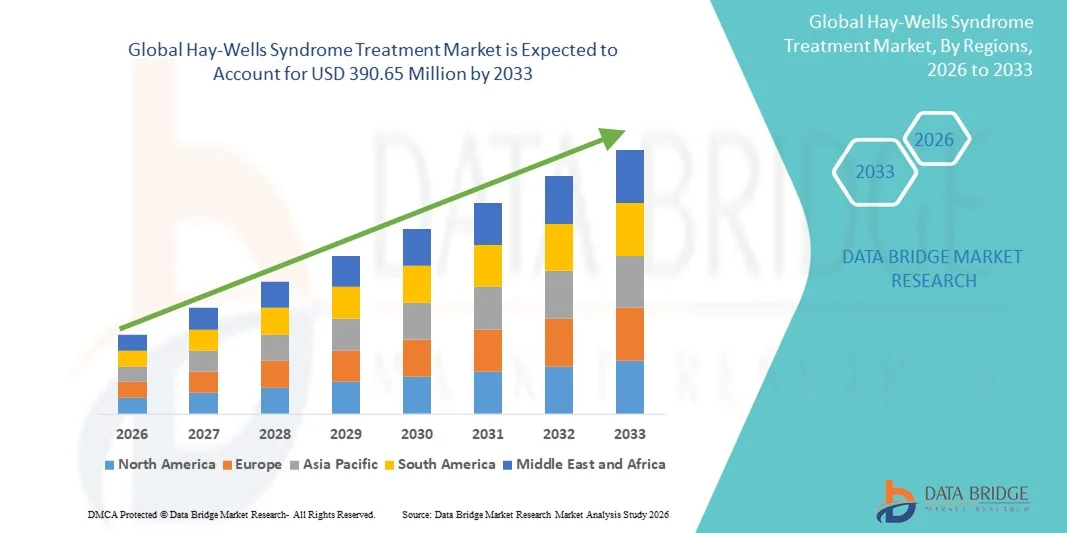
- The global Hay-Wells Syndrome treatment market size was valued at USD 266.43 million in 2025 and is expected to reach USD 390.65 million by 2033, at a CAGR of 4.90% during the forecast period
- The market growth is largely fueled by increasing awareness of rare genetic disorders, rising investments in research and development, and advancements in diagnostics and molecular genetic testing
- Furthermore, rising demand for surgical interventions, genetic counseling, and multidisciplinary care is establishing modern therapeutic approaches as the preferred management strategy for Hay‑Wells Syndrome. These converging factors are accelerating the uptake of treatment solutions, thereby significantly boosting the industry's growth
Hay-Wells Syndrome Treatment Market Analysis
- Hay‑Wells Syndrome treatment, including genetic counseling, surgery, and supportive interventions, is increasingly critical for managing this rare genetic disorder, addressing cleft palate, ankyloblepharon, and skin abnormalities, while improving patient quality of life
- The rising demand for Hay‑Wells Syndrome treatment is primarily driven by growing awareness of rare genetic disorders, advancements in molecular genetic diagnostics, and increased investment in rare-disease research and development
- North America dominated the Hay‑Wells Syndrome treatment market with the largest revenue share of 42.8% in 2025, supported by early adoption of advanced diagnostics, high healthcare expenditure, and strong presence of key biotechnology and healthcare providers
- Asia-Pacific is expected to be the fastest-growing region in the Hay‑Wells Syndrome treatment market during the forecast period due to improving healthcare infrastructure, rising awareness of rare genetic disorders, and better access to specialized care and diagnostic services
- Genetic counseling segment dominated the Hay‑Wells Syndrome treatment market with a market share of 44.6% in 2025, driven by its critical role in early diagnosis, family planning, and guiding personalized treatment strategies
Report Scope and Hay-Wells Syndrome Treatment Market Segmentation
|
Attributes |
Hay-Wells Syndrome Treatment Key Market Insights |
|
Segments Covered |
|
|
Countries Covered |
North America
Europe
Asia-Pacific
Middle East and Africa
South America
|
|
Key Market Players |
|
|
Market Opportunities |
|
|
Value Added Data Infosets |
In addition to the insights on market scenarios such as market value, growth rate, segmentation, geographical coverage, and major players, the market reports curated by the Data Bridge Market Research also include in-depth expert analysis, patient epidemiology, pipeline analysis, pricing analysis, and regulatory framework |
Hay-Wells Syndrome Treatment Market Trends
Advancements in Molecular Genetic Diagnostics
- A major trend in the global Hay‑Wells Syndrome treatment market is the increasing adoption of advanced molecular genetic testing techniques, enabling early and precise diagnosis of this rare disorder
- For instance, next-generation sequencing (NGS) panels are being utilized to detect mutations in the TP63 gene, which is critical for confirming Hay‑Wells Syndrome in newborns and at-risk families
- Genetic testing integration allows clinicians to better personalize treatment plans, anticipate potential complications, and coordinate multidisciplinary care approaches
- Enhanced diagnostic precision facilitates timely interventions, including surgical correction of cleft palate or ankyloblepharon and tailored supportive care for skin and nail abnormalities
- This trend towards more accurate, rapid, and accessible molecular diagnostics is redefining patient management and expectations in rare genetic disorder care
- The demand for advanced diagnostic solutions is rising globally, as families and healthcare providers seek earlier detection and improved long-term outcomes. For instance, integration of prenatal genetic screening is gaining traction, allowing parents and clinicians to make early-informed care decisions
- Collaboration between genetic testing companies and specialized clinics is expanding access to diagnostics and comprehensive care packages, further driving market adoption
Hay-Wells Syndrome Treatment Market Dynamics
Driver
Rising Awareness and Rare Disease Research Investments
- The growing awareness of rare genetic disorders and increasing investment in rare-disease research are significant drivers of market growth for Hay‑Wells Syndrome treatment
- For instance, biotech companies and research institutes are funding studies on TP63-related syndromes, enhancing knowledge of disease mechanisms and therapeutic approaches
- Increased awareness among clinicians and parents is leading to earlier diagnosis, timely surgical interventions, and improved supportive care for affected patients
- Furthermore, government initiatives and rare disease funding programs are expanding access to diagnostics and specialized care, driving treatment adoption
- Improved healthcare infrastructure and the integration of multidisciplinary care teams contribute to better disease management and rising market demand
- For instance, partnerships between hospitals and rare disease advocacy groups are promoting education and early intervention programs
- Technological advancements in telemedicine and digital health are enabling remote genetic counseling, increasing treatment reach and adoption globally
Restraint/Challenge
Limited Awareness and High Treatment Costs
- Limited awareness of Hay‑Wells Syndrome among general practitioners and the general public poses a significant challenge to timely diagnosis and treatment adoption
- For instance, patients in remote or underdeveloped regions often experience delays in diagnosis due to lack of access to genetic testing and specialist care
- The high cost of genetic testing, surgical interventions, and long-term multidisciplinary management can be prohibitive for many families, especially in developing countries
- These cost and access barriers hinder widespread adoption of comprehensive treatment solutions despite clinical necessity
- Addressing these challenges requires increased awareness campaigns, subsidized testing programs, and expansion of specialized healthcare services to improve accessibility and affordability
- For instance, lack of insurance coverage for rare disease treatments further restricts patient access in certain regions
- Shortage of trained specialists, including genetic counselors and rare disease surgeons, limits the ability to provide timely and effective care, posing an additional market challenge
Hay-Wells Syndrome Treatment Market Scope
The market is segmented on the basis of treatment, diagnosis, symptoms, end-users, and distribution channel.
- By Treatment
On the basis of treatment, the market is segmented into genetic counseling, surgery, and others. The genetic counseling segment dominated the market with the largest revenue of 44.6% share in 2025, driven by its critical role in early detection, family planning, and guiding personalized treatment strategies. Families and clinicians prioritize genetic counseling for timely identification of TP63 mutations, which allows early intervention and better management of complications such as cleft palate and ankyloblepharon. Genetic counseling also supports informed decisions regarding reproductive health and preventive care for siblings or future children. The increasing integration of telemedicine and remote counseling services has further boosted accessibility and adoption. Its prominence is reinforced by growing awareness programs and rare disease advocacy efforts, ensuring patients receive comprehensive guidance alongside clinical treatment.
The surgery segment is expected to witness the fastest growth rate during the forecast period, fueled by the increasing number of corrective procedures for cleft palate, ankyloblepharon, and nail or skin anomalies. Surgical interventions offer immediate and visible improvements in patient quality of life, which drives adoption among affected individuals. Advances in minimally invasive surgical techniques and post-operative care have enhanced patient outcomes and reduced recovery times. Rising investments in specialized surgical centers and the availability of multidisciplinary teams also contribute to growth. In addition, awareness of early surgical intervention benefits is expanding in emerging regions, where access to specialized care is improving.
- By Diagnosis
On the basis of diagnosis, the market is segmented into skin biopsy, molecular genetic testing, and prenatal diagnosis. The molecular genetic testing segment dominated in 2025, owing to its high accuracy in detecting TP63 gene mutations and ability to confirm Hay‑Wells Syndrome at an early stage. Molecular diagnostics enable clinicians to implement personalized treatment strategies, anticipate complications, and monitor disease progression. The growing availability of next-generation sequencing (NGS) and targeted gene panels has increased adoption in clinical settings. Healthcare providers are increasingly emphasizing early genetic screening to improve patient outcomes. Molecular testing also aids research initiatives by providing accurate patient data for rare disease studies. Furthermore, supportive government programs and rare disease advocacy groups promote access to these diagnostic tools globally.
The prenatal diagnosis segment is expected to witness the fastest growth during the forecast period, driven by increasing awareness of early detection options and the availability of advanced non-invasive prenatal testing. Prenatal diagnosis allows prospective parents to prepare for interventions immediately after birth, enhancing patient prognosis. It is gaining traction particularly in developed regions with strong prenatal care systems. The adoption is further encouraged by the integration of genetic counseling alongside prenatal testing, helping families make informed healthcare decisions. Technological advancements in fetal DNA analysis and prenatal imaging are expanding diagnostic accuracy and acceptance. Rising awareness campaigns and access to specialized diagnostic clinics in emerging markets also contribute to growth.
- By Symptoms
On the basis of symptoms, the market is segmented into absent fingernails and toenails, malformed or missing teeth, increased sensitivity to heat, hearing loss, cleft lip or palate, and others. The cleft lip or palate segment dominated in 2025, due to its visible and clinically significant nature, necessitating early surgical and multidisciplinary intervention. Patients with this symptom often require coordinated care including surgery, orthodontics, and speech therapy, driving demand for comprehensive treatment solutions. Awareness programs highlight the importance of early corrective surgery to improve functionality and aesthetics. Medical centers specializing in craniofacial surgery are increasingly integrating genetic counseling for holistic care. Early intervention reduces long-term complications and improves patient quality of life.
The absent fingernails and toenails segment is expected to witness the fastest growth during the forecast period, as it is increasingly recognized as a key diagnostic indicator of Hay‑Wells Syndrome and often requires specialized dermatological and reconstructive interventions. Rising awareness among dermatologists and pediatricians contributes to early identification and treatment. Cosmetic and functional interventions are improving patient satisfaction and adoption. Advances in dermatological care and nail reconstruction techniques are supporting market growth. In addition, combined symptom management with other supportive therapies enhances overall treatment effectiveness.
- By End-Users
On the basis of end-users, the market is segmented into clinics, hospitals, and others. The hospitals segment dominated in 2025, driven by the availability of specialized surgical teams, advanced diagnostic facilities, and multidisciplinary care units. Hospitals provide comprehensive treatment options including surgery, genetic counseling, and follow-up care. Patients and families prefer hospitals for complex cases requiring coordinated care across multiple specialties. The presence of experienced clinicians and access to rare disease centers reinforces hospital dominance. Collaboration with research institutes and rare disease advocacy groups also boosts hospital-based treatment adoption.
The clinics segment is expected to witness the fastest growth during the forecast period, fueled by the expansion of specialized genetic counseling and dermatology clinics offering targeted interventions. Clinics provide accessible, community-level care, especially in urban and semi-urban regions. Adoption is further driven by telemedicine services and home-based follow-up programs. Clinics also support early screening and preventive guidance, attracting patients seeking convenience and personalized attention. The growing number of private specialty clinics in emerging markets enhances market penetration and accessibility.
- By Distribution Channel
On the basis of distribution channel, the market is segmented into hospital pharmacy, retail pharmacy, and online pharmacy. The hospital pharmacy segment dominated in 2025, owing to its direct access to patients undergoing treatment in hospital settings, ensuring timely availability of medications and supportive care solutions. Hospital pharmacies facilitate seamless integration with clinical workflows, including prescriptions for pain management, infection control, and post-surgical care. Partnerships between hospitals and pharmaceutical suppliers ensure consistent supply of rare-disease medications. Patient trust in hospital-based dispensing reinforces dominance. Support from insurance coverage and hospital billing systems also contributes to market preference.
The online pharmacy segment is expected to witness the fastest growth during the forecast period, driven by increasing e-commerce penetration, convenience of doorstep delivery, and the growing use of digital health platforms. Online pharmacies provide access to rare disease medications in regions with limited hospital or retail infrastructure. Teleconsultation integration enables prescription fulfillment remotely, improving adherence to treatment. Rising awareness of digital healthcare solutions and increasing internet penetration in emerging markets further fuel growth. Online channels also offer cost-competitive options and enhanced privacy for patients seeking sensitive treatment solutions.
Hay-Wells Syndrome Treatment Market Regional Analysis
- North America dominated the Hay‑Wells Syndrome treatment market with the largest revenue share of 42.8% in 2025, supported by early adoption of advanced diagnostics, high healthcare expenditure, and strong presence of key biotechnology and healthcare providers
- Patients and healthcare providers in the region highly value the availability of comprehensive care, including genetic counseling, surgical interventions, and multidisciplinary management, which improves overall patient outcomes and quality of life
- This widespread adoption is further supported by strong research and development initiatives, increasing awareness of rare genetic disorders, and the presence of specialized treatment centers, establishing North America as a leading region for Hay‑Wells Syndrome management
U.S. Hay-Wells Syndrome Treatment Market Insight
The U.S. Hay‑Wells Syndrome treatment market captured the largest revenue share of 80% in 2025 within North America, driven by advanced healthcare infrastructure, early adoption of rare disease diagnostics, and high awareness among clinicians and patients. Families increasingly prioritize early genetic testing, timely surgical interventions, and access to multidisciplinary care teams. The widespread availability of specialized treatment centers and telemedicine services further supports market growth. Moreover, robust R&D investment by biotech companies and hospitals is enhancing treatment options and accessibility. The integration of genetic counseling and prenatal diagnosis is significantly contributing to improved patient outcomes and market expansion.
Europe Hay‑Wells Syndrome Treatment Market Insight
The Europe Hay‑Wells Syndrome treatment market is projected to expand at a substantial CAGR throughout the forecast period, primarily driven by increased awareness of rare genetic disorders and rising healthcare expenditure. Urbanization, coupled with well-developed healthcare infrastructure, is fostering the adoption of advanced diagnostics and treatment solutions. European patients and healthcare providers are attracted to the comprehensive care approaches, including genetic counseling, surgical interventions, and supportive therapies. The market is experiencing growth across both pediatric and adult populations, with treatment centers integrating rare disease care into standard clinical pathways. Government initiatives supporting rare disease research and early diagnosis are further bolstering market expansion.
U.K. Hay‑Wells Syndrome Treatment Market Insight
The U.K. Hay‑Wells Syndrome treatment market is anticipated to grow at a noteworthy CAGR during the forecast period, driven by rising awareness, early genetic testing adoption, and a demand for specialized multidisciplinary care. Concerns regarding congenital anomalies and improved patient outcomes are encouraging families and healthcare providers to adopt comprehensive treatment plans. The U.K.’s robust healthcare infrastructure, combined with strong collaboration between hospitals and rare disease advocacy groups, is supporting market growth. In addition, the integration of genetic counseling with prenatal and postnatal care is enhancing patient management and early intervention. Rising access to specialized clinics and digital health solutions is expected to continue stimulating market growth.
Germany Hay‑Wells Syndrome Treatment Market Insight
The Germany Hay‑Wells Syndrome treatment market is expected to expand at a considerable CAGR during the forecast period, fueled by increasing awareness of rare genetic disorders and advanced healthcare services. Germany’s well-developed medical infrastructure, emphasis on innovation, and availability of specialized treatment centers promote the adoption of comprehensive care, including surgery, genetic counseling, and supportive therapies. Early diagnosis through molecular genetic testing is gaining prominence, while hospitals and clinics are integrating multidisciplinary approaches to improve patient outcomes. The strong focus on rare disease research and collaboration between public and private healthcare institutions further supports market growth.
Asia-Pacific Hay‑Wells Syndrome Treatment Market Insight
The Asia-Pacific Hay‑Wells Syndrome treatment market is poised to grow at the fastest CAGR during the forecast period, driven by increasing healthcare awareness, rising disposable incomes, and expanding access to genetic testing and specialized care in countries such as China, India, and Japan. Growing urbanization, government initiatives supporting rare disease management, and improved healthcare infrastructure are boosting treatment adoption. Furthermore, telemedicine and online genetic counseling services are expanding access to remote regions. The availability of affordable treatment solutions and rising collaborations between local hospitals and international rare disease centers are accelerating market growth across APAC.
Japan Hay‑Wells Syndrome Treatment Market Insight
The Japan Hay‑Wells Syndrome treatment market is gaining momentum due to the country’s advanced healthcare system, strong emphasis on rare disease management, and early adoption of genetic diagnostics. Japanese families prioritize timely surgical and supportive interventions, while hospitals integrate multidisciplinary care approaches to optimize patient outcomes. The market is further driven by awareness programs and collaboration between hospitals, research institutes, and genetic counseling services. In addition, the increasing focus on precision medicine and early intervention is supporting the adoption of advanced treatment strategies in both pediatric and adult populations.
India Hay‑Wells Syndrome Treatment Market Insight
The India Hay‑Wells Syndrome treatment market accounted for the largest revenue share in Asia-Pacific in 2025, attributed to rising healthcare awareness, expanding medical infrastructure, and growing availability of specialized clinics. India is witnessing increasing adoption of genetic counseling, molecular genetic testing, and surgical interventions in both urban and semi-urban regions. Government initiatives supporting rare disease management and telemedicine services are enhancing access to treatment. The push toward specialized care centers and collaborations with international rare disease institutes are key factors propelling market growth. Affordable treatment options and growing awareness among clinicians and families are further accelerating adoption.
Hay-Wells Syndrome Treatment Market Share
The Hay-Wells Syndrome Treatment industry is primarily led by well-established companies, including:
- Johnson & Johnson Services, Inc. (U.S.)
- AbbVie Inc (U.S.)
- Novartis AG (Switzerland)
- Merck & Co., Inc. (U.S.)
- GSK plc (U.K.)
- Abbott (U.S.)
- AstraZeneca (U.K.)
- Medtronic (Ireland)
- Sun Pharmaceutical Industries Ltd. (India)
- F. Hoffmann-La Roche Ltd (Switzerland)
- Sanofi (France)
- Eli Lilly and Company (U.S.)
- Pfizer Inc (U.S.)
- Regeneron Pharmaceuticals (U.S.)
- Bristol-Myers Squibb Company (U.S.)
- Celgene Corporation (U.S.)
- Genex Pharmaceuticals (U.S.)
- NeuroGenix (U.S.)
- MedVance Labs (U.S.)
- VitaMed Solutions (U.S.)
What are the Recent Developments in Global Hay-Wells Syndrome Treatment Market?
- In January 2025, A peer‑reviewed article “Anthracyclines disaggregate and restore mutant p63 function: a potential therapeutic approach for AEC syndrome” was published. It reported that two existing FDA‑approved anthracycline compounds were discovered via high‑throughput screening to reduce mutant p63 protein aggregation in cell models and restore transcriptional function; the authors suggest a potential therapeutic strategy for treating the chronic skin erosions in AEC syndrome
- In July 2023, Researchers published a study showing that keratinocytes derived from induced pluripotent stem cells (iPSC) from AEC patients (with mutant TP63) have major defects in adhesion and migration. They used genome editing to correct the TP63 mutation in iPSCs, and found that in the corrected lines, key hemidesmosomal and focal adhesion proteins were restored
- In June 2023, A molecular‑modelling study was published on a four‑year-old girl with AEC syndrome harboring a de novo TP63 missense mutation (c.1799G>T; p.Gly600Val). The authors used structural bioinformatics to show how this mutation such asly disrupts the SAM-domain of p63, altering protein–protein interactions, which helps explain her clinical severity
- In September 2021, A case‑report article titled “Novel missense mutation of the TP63 gene in a newborn with Hay‑Wells/AEC syndrome: clinical report and follow‑up” was published. The study detailed a newborn presenting with characteristic features of AEC syndrome found to have a de novo missense mutation in the TP63 gene, followed multidisciplinary care. The authors emphasised early clinical‑suspicion, prompt genetic testing and long‑term multidisciplinary follow‑up
- In March 2021, The Fondazione Telethon (Italy) announced funding for a project titled “Novel therapeutic approaches for AEC syndrome ”, which aims to test two treatment strategies for skin lesions in AEC syndrome: (1) CRISPR/Cas9 correction of patient‑derived epidermal cells and (2) small‑molecule drugs identified by large‑scale screening

- Interactive Data Analysis Dashboard
- Company Analysis Dashboard for high growth potential opportunities
- Research Analyst Access for customization & queries
- Competitor Analysis with Interactive dashboard
- Latest News, Updates & Trend analysis
- Harness the Power of Benchmark Analysis for Comprehensive Competitor Tracking
Data collection and base year analysis are done using data collection modules with large sample sizes. The stage includes obtaining market information or related data through various sources and strategies. It includes examining and planning all the data acquired from the past in advance. It likewise envelops the examination of information inconsistencies seen across different information sources. The market data is analysed and estimated using market statistical and coherent models. Also, market share analysis and key trend analysis are the major success factors in the market report. To know more, please request an analyst call or drop down your inquiry.
The key research methodology used by DBMR research team is data triangulation which involves data mining, analysis of the impact of data variables on the market and primary (industry expert) validation. Data models include Vendor Positioning Grid, Market Time Line Analysis, Market Overview and Guide, Company Positioning Grid, Patent Analysis, Pricing Analysis, Company Market Share Analysis, Standards of Measurement, Global versus Regional and Vendor Share Analysis. To know more about the research methodology, drop in an inquiry to speak to our industry experts.
Data Bridge Market Research is a leader in advanced formative research. We take pride in servicing our existing and new customers with data and analysis that match and suits their goal. The report can be customized to include price trend analysis of target brands understanding the market for additional countries (ask for the list of countries), clinical trial results data, literature review, refurbished market and product base analysis. Market analysis of target competitors can be analyzed from technology-based analysis to market portfolio strategies. We can add as many competitors that you require data about in the format and data style you are looking for. Our team of analysts can also provide you data in crude raw excel files pivot tables (Fact book) or can assist you in creating presentations from the data sets available in the report.












