Circumvent the Tariff challenges with an agile supply chain Consulting
Supply Chain Ecosystem Analysis now part of DBMR Reports
Global Hematologic Malignancies Market
Market Size in USD Billion
CAGR :
%
USD
81.74 Billion
USD
191.11 Billion
2024
2032
Forecast Period
2025 –2032
Market Size(Base Year)
USD
81.74 Billion
Market Size (Forecast Year)
USD
191.11 Billion
CAGR
%
Major Markets Players
GlaxoSmithKline plc
Novartis AG
Bayer AG
Eli Lilly and Company
Merck &
Global Hematologic Malignancies Market Segmentation, By Type (Leukaemia, Lymphoma and Myeloma), Therapy Type (Chemotherapy, Immunotherapy, Targeted Therapy), Diagnosis (Blood Tests, Biopsy, Imaging Tests and Others), Route of Administration (Oral, Parenteral and Others), Dosage Form (Tablets, Capsules, Injections and Others), End-Users (Hospitals, Specialty Clinics, Homecare and Others), Distribution Channel (Hospital Pharmacy, Retail Pharmacy, Online Pharmacy and Others) - Industry Trends and Forecast to 2032
Hematologic Malignancies Market Size
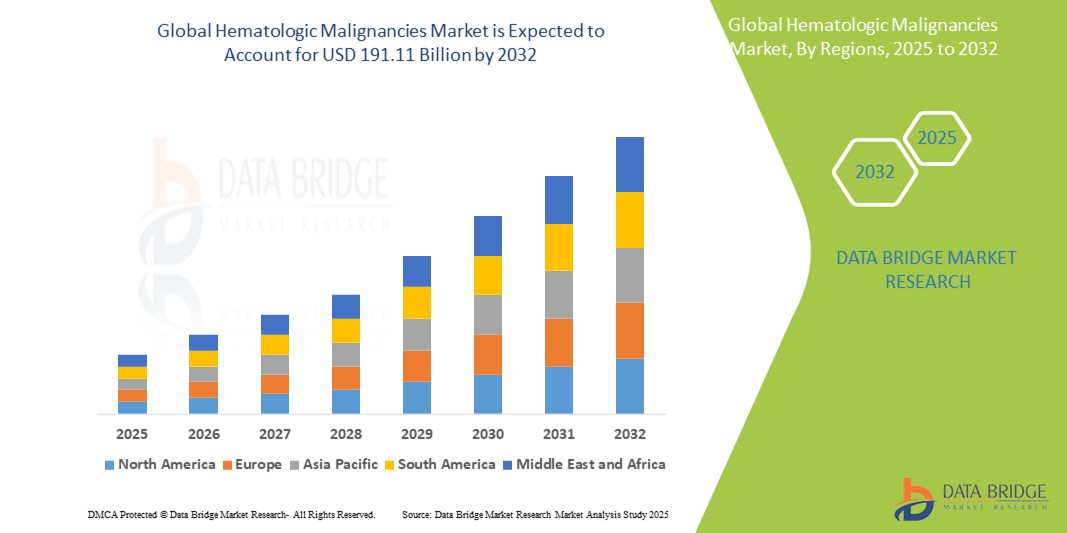
The global Hematologic Malignancies market was valued at USD 81.74 billion in 2024 and is expected to reach USD 191.11 billion by 2032
During the forecast period of 2025 to 2032 the market is likely to grow at a CAGR of 11.20%, primarily driven by the rising incidence of blood cancer
This growth is driven by factors such as the aging population, personalized treatment strategies based on genetic profiling and technological advancements
Hematologic Malignancies Market Analysis
Hematologic malignancies include cancers that affect the blood, bone marrow, lymph nodes, and spleen. The market for treatments and diagnostics of hematologic malignancies is driven by various factors, including the increasing prevalence of blood cancers, advancements in medical technologies, and improved awareness and diagnosis
The demand for hematologic malignancy treatments is significantly influenced by the rising incidence of blood cancers globally, particularly leukemia, lymphoma, and multiple myeloma. Advances in diagnostic tools and therapies have played a key role in both improving survival rates and increasing the number of patients seeking treatment. These cancers are especially prevalent among older populations, which is fueling demand for therapies
North America stands out as a dominant region in the global hematologic malignancies market, driven by its advanced healthcare infrastructure, high adoption of cutting-edge technologies, and substantial investments in research and development. In particular, the U.S. has witnessed a steady increase in the number of patients diagnosed with blood cancers, leading to a growing demand for advanced therapies such as CAR-T cell therapies, targeted therapies, and monoclonal antibodies
Hematologic malignancy treatments are among the most complex and costly in oncology, with immunotherapies such as CAR-T being highly effective but also expensive. This is prompting healthcare systems to adjust to the rising demand for blood cancer treatments by increasing their budget allocation for specialized therapies
The global hematologic malignancies market continues to grow rapidly, driven by an aging population, greater awareness, improved diagnostic capabilities, and groundbreaking treatments. The market’s future outlook is positive, with ongoing advancements in genetic profiling, immunotherapy, and targeted drugs
Report Scope and Hematologic Malignancies Market Segmentation
Attributes
Hematologic Malignancies Key Market Insights
Segments Covered
By Type: Leukaemia, Lymphoma and Myeloma
By Therapy Type: Chemotherapy, Immunotherapy and Targeted Therapy
By Diagnosis: Blood Tests, Biopsy, Imaging Tests and Others
By Route of Administration: Oral, Parenteral and Others
By Dosage Form: Tablets, Capsules, Injections and Others
By End User: Hospitals, Specialty Clinics, Homecare and Others
By Distribution Channel: Hospital Pharmacy, Retail Pharmacy, Online Pharmacy and Others
Expansion of Precision Medicine and Genetic Testing
Value Added Data Infosets
In addition to the insights on market scenarios such as market value, growth rate, segmentation, geographical coverage, and major players, the market reports curated by the Data Bridge Market Research also include import export analysis, production capacity overview, production consumption analysis, price trend analysis, climate change scenario, supply chain analysis, value chain analysis, raw material/consumables overview, vendor selection criteria, PESTLE Analysis, Porter Analysis, and regulatory framework.
Hematologic Malignancies Market Trends
“Increasing Adoption of Precision Medicine and Digital Integration”
One prominent trend in the global hematologic malignancies market is the growing adoption of precision medicine and digital integration. These advancements are enhancing the precision, accuracy, and effectiveness of treatments for blood cancers by enabling more personalized and targeted therapeutic approaches
Precision medicine in the hematologic malignancies market allows for treatments to be tailored based on a patient’s unique genetic makeup, such as mutations in genes such as FLT3 or IDH for acute myeloid leukemia (AML) and myelodysplastic syndromes (MDS). This approach significantly improves treatment outcomes by targeting specific cancer cells while minimizing damage to healthy tissues
Digital integration is also playing a key role in improving diagnosis, treatment planning, and monitoring of patients. Advanced diagnostic tools, such as next-generation sequencing (NGS) and liquid biopsy technologies, are enabling clinicians to gather comprehensive genetic information and make more informed decisions regarding treatment strategies
For instance, genomic profiling allows healthcare providers to assess which targeted therapies or immunotherapies are most likely to be effective based on the patient's molecular profile. This is particularly important for blood cancers, where treatment options are often specific to genetic mutations or alterations
Digital integration also facilitates real-time data sharing between healthcare providers, leading to improved collaboration, faster decision-making, and better overall management of patient care. In addition, the integration of artificial intelligence (AI) in imaging and diagnostics is aiding in the early detection and accurate classification of hematologic malignancies, ensuring timely intervention
This trend of precision medicine and digital tools is revolutionizing the hematologic malignancies treatment landscape, driving the demand for advanced diagnostics and personalized therapies. As these technologies become more widespread and accessible, they are likely to improve patient outcomes significantly and lead to continued growth in the market
Hematologic Malignancies Market Dynamics
Driver
“Growing Need Due to the Rising Prevalence of Blood Cancers”
The increasing prevalence of hematologic malignancies, such as leukemia, lymphoma, and multiple myeloma, is significantly contributing to the growing demand for advanced treatment options, including targeted therapies, immunotherapies, and diagnostic tools
As the global population ages, the incidence of blood cancers continues to rise, with older adults being more prone to conditions such as acute myeloid leukemia (AML) and non-Hodgkin lymphoma, which require specialized treatments and therapies
Leukemia, in particular, is one of the most common blood cancers globally, contributing to a growing need for precise and effective treatments that demand advanced diagnostics and personalized care
The advancements in targeted therapies (for instance BTK inhibitors for lymphoma) and immunotherapy (such as CAR-T cell therapies) have further highlighted the need for innovative approaches that provide high precision and tailored treatment options, ensuring better patient outcomes
As the demand for effective therapies continues to rise, healthcare systems and pharmaceutical companies are focused on providing cutting-edge solutions for the diagnosis and treatment of hematologic cancers
For instance:
In 2023, according to a report by the American Cancer Society, the global incidence of leukemia is projected to increase significantly over the next decade, highlighting the growing demand for both innovative treatments and advanced diagnostic tools in the hematologic malignancies market
By 2030, it is expected that blood cancers will become one of the leading causes of cancer-related deaths globally, emphasizing the urgency for enhanced medical interventions and advanced surgical and diagnostic technologies
The increasing prevalence of hematologic malignancies, such as leukemia and lymphoma, is driving the demand for advanced treatments and diagnostic tools, with a focus on precision medicine and immunotherapies such as CAR-T, as blood cancers are projected to become a leading cause of cancer-related deaths by 2030
Opportunity
“Advancing Treatment with Immunotherapy and Precision Medicine”
Immunotherapy and precision medicine offer significant opportunities for innovation within the hematologic malignancies market. These approaches allow for treatments to be tailored based on a patient’s genetic and molecular profile, increasing the effectiveness of therapies and minimizing side effects
CAR-T cell therapy, a type of immunotherapy, has shown immense promise in treating diseases such as B-cell lymphoma and acute lymphoblastic leukemia (ALL). The integration of genetic testing and biomarker analysis enables more personalized treatment regimens, enhancing patient outcomes and providing a more targeted approach to treatment
Artificial Intelligence (AI) and machine learning technologies are also playing a crucial role in analyzing genomic data, identifying potential genetic mutations, and predicting patient responses to treatments, further advancing precision medicine in the hematologic malignancies field
For instance:
In January 2025, according to a study published by JAMA Oncology, the ability of AI-based systems to analyze complex genetic profiles of blood cancer patients is improving the identification of optimal treatment strategies. These systems assist in predicting disease progression and therapy response, ensuring more personalized and efficient care
In November 2023, a study published in the National Library of Medicine highlighted that CAR-T therapies, combined with AI-powered diagnostics, are revolutionizing blood cancer treatment by offering better survival rates and more effective long-term management of blood cancers
Immunotherapy, precision medicine, and AI-driven technologies are transforming the hematologic malignancies market by enabling personalized treatments, enhancing patient outcomes, and improving the effectiveness of therapies such as CAR-T cell therapy
Restraint/Challenge
“High Treatment Costs and Accessibility”
The high cost of advanced blood cancer treatments, including CAR-T cell therapies, targeted drugs, and genetic testing, poses a significant challenge for market penetration, especially in low- and middle-income regions
Treatments for hematologic malignancies are often expensive, with some therapies costing hundreds of thousands of dollars per patient, creating financial barriers for both healthcare systems and patients
This substantial financial burden can limit access to cutting-edge treatments, particularly in developing countries, where healthcare infrastructure may be less robust and budgets for advanced treatments are limited
For instance:
In 2024, according to an article published by the World Health Organization (WHO), the cost of CAR-T therapy and other immunotherapies is a major barrier to healthcare accessibility, especially in regions where economic constraints hinder widespread adoption of these therapies
In 2023, a report from NCI (National Cancer Institute) revealed that the high cost of genomic profiling and targeted therapies often delays timely intervention, making it difficult for underserved populations to receive the necessary treatments, and further exacerbating health disparities in blood cancer care
The high cost of advanced blood cancer treatments, including CAR-T cell therapies and genetic testing, creates significant barriers to market access, particularly in low- and middle-income regions, where economic constraints and limited healthcare infrastructure delay treatment and exacerbate health disparities
Hematologic Malignancies Market Scope
The market is segmented on the basis of type, therapy type, diagnosis, route of administration, dosage form, end user, and distribution channel.
Segmentation
Sub-Segmentation
By Type
Leukaemia
Lymphoma
Myeloma
By Therapy Type
Chemotherapy
Immunotherapy
Targeted Therapy
By Diagnosis
Blood Tests
Biopsy
Imaging Tests
Others
By Route of Administration
Oral
Parenteral
Others
By Dosage Form
Tablets
Capsules
Injections
Others
By End User
Hospitals
Specialty Clinics
Homecare
Others
By Distribution Channel
Hospital Pharmacy
Retail Pharmacy
Online Pharmacy
Others
Hematologic Malignancies Market Regional Analysis
“North America is the Dominant Region in the Hematologic Malignancies Market”
North America holds a dominant position in the hematologic malignancies market, largely driven by its advanced healthcare infrastructure, high adoption of innovative medical technologies, and the presence of key pharmaceutical and biotech companies
U.S. continues to lead the market due to its strong healthcare system, well-established reimbursement policies, and substantial investment in research and development. This has contributed to the availability of cutting-edge treatments such as CAR-T therapies, targeted therapies, and genomic profiling
Furthermore, the increasing prevalence of hematologic cancers such as leukemia, lymphoma, and myeloma, coupled with the rising demand for personalized medicine, has significantly boosted the market in North America
The high healthcare expenditure and favorable regulatory environment in the U.S. further strengthen market growth, with a focus on improving patient outcomes and expanding access to innovative therapies
“Asia-Pacific is Projected to Register the Highest Growth Rate”
Asia-Pacific is projected to experience the highest growth rate in the hematologic malignancies market, fueled by rapid advancements in healthcare infrastructure, growing awareness of blood cancers, and an increasing number of patients seeking treatment
China, India, and Japan are emerging as key markets. The aging population in these countries is more susceptible to blood cancers, such as leukemia and lymphoma, which is driving the demand for effective therapies and diagnostic solutions
Japan is a critical market due to its advanced medical technologies, robust healthcare system, and increasing investments in cancer research and development. The country is also a leader in adopting precision medicine and immunotherapy approaches for treating hematologic malignancies
The region's growing focus on improving healthcare accessibility, combined with the expanding presence of global pharmaceutical and biotech companies, is expected to drive substantial market growth in the coming years
Hematologic Malignancies Market Share
The market competitive landscape provides details by competitor. Details included are company overview, company financials, revenue generated, market potential, investment in research and development, new market initiatives, global presence, production sites and facilities, production capacities, company strengths and weaknesses, product launch, product width and breadth, application dominance. The above data points provided are only related to the companies' focus related to market.
The Major Market Leaders Operating in the Market Are:
Latest Developments in Global Hematologic Malignancies Market
In January 2025, Gilead Sciences announced the commercial launch of its next-generation CAR-T cell therapy, Yescarta (axicabtagene ciloleucel), in the European Union following the receipt of a CE Mark. This innovative therapy treats relapsed or refractory large B-cell lymphoma (LBCL), providing a promising treatment option for patients who have failed other therapies. Yescarta’s advanced design allows for enhanced T-cell expansion and a more targeted approach to fighting blood cancers, improving patient outcomes by minimizing side effects
In October 2024, Bristol-Myers Squibb (BMS) presented new data at the ASH 2024 (American Society of Hematology) meeting on its Immuno-Oncology pipeline, including Opdivo (nivolumab) and Reblozyl (luspatercept) for myelodysplastic syndromes (MDS) and multiple myeloma. These treatments show significant improvements in response rates and overall survival, positioning BMS at the forefront of hematologic cancer treatments
In September 2024, Novartis presented promising findings at ASH 2024 for Kymriah (tisagenlecleucel), a CAR-T cell therapy, in treating acute lymphoblastic leukemia (ALL). The data demonstrated sustained long-term remission in both pediatric and adult patients, marking a significant step in the potential for gene therapies to change the treatment landscape for hematologic cancers
In September 2024, AbbVie launched its next-generation targeted therapy for chronic lymphocytic leukemia (CLL), Venclexta (venetoclax). The combination of venetoclax with rituximab showed substantial improvements in survival rates for patients with relapsed/refractory CLL, highlighting AbbVie’s continued innovation in the field of hematologic malignancies
SKU-
Get online access to the report on the World's First Market Intelligence Cloud
Interactive Data Analysis Dashboard
Company Analysis Dashboard for high growth potential opportunities
Research Analyst Access for customization & queries
Competitor Analysis with Interactive dashboard
Latest News, Updates & Trend analysis
Harness the Power of Benchmark Analysis for Comprehensive Competitor Tracking
Research Methodology
Data collection and base year analysis are done using data collection modules with large sample sizes. The stage includes obtaining market information or related data through various sources and strategies. It includes examining and planning all the data acquired from the past in advance. It likewise envelops the examination of information inconsistencies seen across different information sources. The market data is analysed and estimated using market statistical and coherent models. Also, market share analysis and key trend analysis are the major success factors in the market report. To know more, please request an analyst call or drop down your inquiry.
The key research methodology used by DBMR research team is data triangulation which involves data mining, analysis of the impact of data variables on the market and primary (industry expert) validation. Data models include Vendor Positioning Grid, Market Time Line Analysis, Market Overview and Guide, Company Positioning Grid, Patent Analysis, Pricing Analysis, Company Market Share Analysis, Standards of Measurement, Global versus Regional and Vendor Share Analysis. To know more about the research methodology, drop in an inquiry to speak to our industry experts.
Customization Available
Data Bridge Market Research is a leader in advanced formative research. We take pride in servicing our existing and new customers with data and analysis that match and suits their goal. The report can be customized to include price trend analysis of target brands understanding the market for additional countries (ask for the list of countries), clinical trial results data, literature review, refurbished market and product base analysis. Market analysis of target competitors can be analyzed from technology-based analysis to market portfolio strategies. We can add as many competitors that you require data about in the format and data style you are looking for. Our team of analysts can also provide you data in crude raw excel files pivot tables (Fact book) or can assist you in creating presentations from the data sets available in the report.
Claudio Rondena
Group Business Development & Strategic Marketing Director, C.O.C Farmaceutici SRL
"This morning we were involved in the first part, the data presentation of MKT analysis, selected abstract from your work. The board team was really impressed and very appreciated, as well."
David Manning - Thermo Fisher Scientific
Director, Global Strategic Accounts,
Dear Ricky, I want to thank you for the excellent market analysis (LIMS INSTALLED BASE DATA) that you and your team delivered, especially end of year on short notice.
Sachin and Shraddha captured the requirements, determined their path forward and executed quickly.
You, Sachin and Shraddha have been a pleasure to work with – very responsive, professional and thorough.
Your work is much appreciated.
Manager - Market Analytics,
Uriah D. Avila - Zeus Polymer Solutions
Thank you for all the assistance and the level of detail in the market report. We are very pleased with the results and the customization. We would like to continue to do business.
Business Development Manager,
(Pharmaceuticals Partner for Nasal Sprays) | Renaissance Lakewood LLC
DBMR was attentive and engaged while discussing the Global Nasal Spray Market. They understood what we were looking for and was able to provide some examples from the report as requested. DBMR Service team has been responsive as needed. Depending on what my colleagues were looking for, I will recommend your services and would be happy to stay connected in case we can utilize your research in the future.
Business Intelligence and Analytics,
Ipsen Biopharm Limited
We are impressed by the CENTRAL PRECOCIOUS PUBERTY (CPP) TREATMENT report - so a BIG thanks to you colleagues.
Competition Analyst,
Basler Web
I just wanted to share a quick note and let you know that you guys did a really good job. I’m glad I decided to work with you. I shall continue being associated with your company as long as we have market intelligence needs.
Marketing Director,
Buhler Group
It was indeed a good experience, would definitely recommend and come back for future prospects.
COO,
A global leader providing Drug Delivery Services
DBMR did an outstanding job on the Global Drug Delivery project, We were extremely impressed by the simple but comprehensive presentation of the study and the quality of work done. This report really helped us to access untapped opportunities across the globe.
Marketing Director,
Philips Healthcare
The study was customized to our targets and needs with well-defined milestones. We were impressed by the in-depth customization and inclusion of not only major but also minor players across the globe. The DBMR Market position grid helped us to analyze the market in different dimension which was very helpful for the team to get into the minute details.
Product manager,
Fujifilms
Thankful to the team for the amazing coordination, and helping me at the last moment with my presentation. It was indeed a comprehensive report that gave us revenue impacting solution enabling us to plan the right move.
Investor relations,
GE Healthcare
Thank you for the report, and addressing our needs in such short time. DBMR has outdone themselves in this project with such short timeframe.
Market Analyst,
Medincell
We found the results of this study compelling and will help our organization validate a market we are considering to enter. Thank you for a job well done.
Andrew - Senior Global Marketing Manager,
Medtronic (US)
I want to thank you for your help with this report – It’s been very helpful in our business planning and it well organized.
Amarildo - Manager, Global Strategic Alignment
MasterCard
We believe the work done by Data Bridge Team for our requirements in the North America Loyalty Management Market was fantastic and would love to continue working with your team moving forward.
Tor Hammer
Green Nexus LLc
Thank you for your quick response to this unfortunate circumstance. Please extend my thanks to your reach team. I will be contacting you in the future with further projects
I acknowledge the difficulty given by the very short warning for this report, and I think that its quality and your delivering time have been very satisfying.
Obviously, as a provider Data Bridge Market Research will be considered as a plus for future needs of Nippon Gases.
Yuki Kopyl (Asian Business Development Department)
UENO FOOD TECHNO INDUSTRY, LTD. (JAPAN)
Xylose report was very useful for our team. Thank you very much & hope to work with you again in the future