


Hiatal Hernia Treatment Market Size
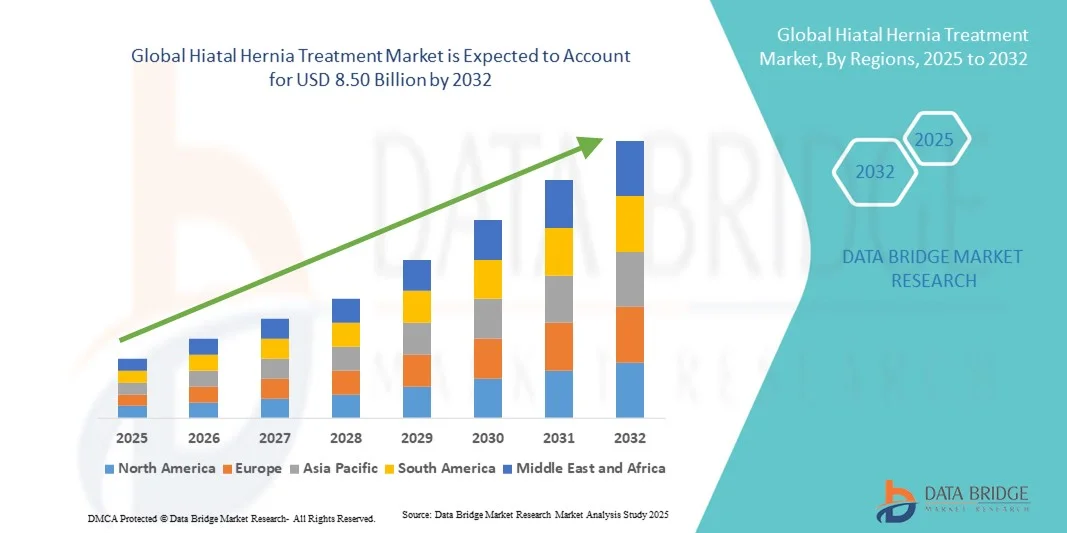
- The global hiatal hernia treatment market size was valued at USD 5.14 billion in 2024 and is expected to reach USD 8.50 billion by 2032, at a CAGR of 6.50% during the forecast period
- The market growth is largely fueled by the increasing prevalence of hiatal hernias, advancements in surgical techniques, and a rising demand for minimally invasive procedures, leading to improved patient outcomes and greater adoption of treatment options
- Furthermore, rising awareness among healthcare providers and patients, along with the development of innovative treatment options, is establishing hiatal hernia treatment as a key component of modern gastrointestinal care. These converging factors are accelerating the uptake of advanced therapies, thereby significantly boosting the industry's growth
Hiatal Hernia Treatment Market Analysis
- Hiatal hernia treatments, including medication, surgery, diet, and other therapeutic approaches, are increasingly vital components of gastrointestinal care in both hospitals and specialized clinics due to their effectiveness in alleviating symptoms, reducing complications, and improving patient quality of life
- The escalating demand for hiatal hernia treatments is primarily fueled by the rising prevalence of hiatal hernias, advancements in diagnostic techniques such as esophagogastroduodenoscopy, chest X-ray, esophageal manometry, and upper GI series, and growing patient preference for minimally invasive procedures and tailored treatment plans
- North America dominated the hiatal hernia treatment market with the largest revenue share of 38.5% in 2024, characterized by advanced healthcare infrastructure, high healthcare expenditure, and a strong presence of key medical device and pharmaceutical companies, with the U.S. experiencing substantial growth in both surgical procedures and medication usage, driven by innovations in surgical mesh, robotics, and postoperative care
- Asia-Pacific is expected to be the fastest growing region in the hiatal hernia treatment market during the forecast period due to improving healthcare facilities, rising patient awareness, and increasing healthcare investments
- Medication segment dominated the hiatal hernia treatment market with a market share of 41.7% in 2024, with tablets administered orally being the most common form, driven by their convenience, effectiveness, and widespread availability through hospital pharmacies, retail pharmacies, and online pharmacies
Report Scope and Hiatal Hernia Treatment Market Segmentation
|
Attributes |
Hiatal Hernia Treatment Key Market Insights |
|
Segments Covered |
|
|
Countries Covered |
North America
Europe
Asia-Pacific
Middle East and Africa
South America
|
|
Key Market Players |
|
|
Market Opportunities |
|
|
Value Added Data Infosets |
In addition to the insights on market scenarios such as market value, growth rate, segmentation, geographical coverage, and major players, the market reports curated by the Data Bridge Market Research also include in-depth expert analysis, pricing analysis, brand share analysis, consumer survey, demography analysis, supply chain analysis, value chain analysis, raw material/consumables overview, vendor selection criteria, PESTLE Analysis, Porter Analysis, and regulatory framework. |
Hiatal Hernia Treatment Market Trends
Rising Preference for Minimally Invasive and Robotic-Assisted Surgeries
- A significant and accelerating trend in the global hiatal hernia treatment market is the increasing adoption of minimally invasive and robotic-assisted surgical techniques, which reduce recovery times and postoperative complications
- For instance, laparoscopic Nissen fundoplication and robotic hiatal hernia repairs allow surgeons to perform precise procedures with smaller incisions, minimizing patient discomfort and hospital stay
- These advanced techniques are being increasingly integrated with imaging and navigation systems, enhancing surgical accuracy and patient outcomes
- Healthcare providers are investing in training programs and surgical robots to meet the growing patient demand for safer, faster, and more efficient procedures
- The trend towards less invasive interventions is fundamentally reshaping patient expectations and clinical standards, prompting hospitals and clinics to adopt state-of-the-art equipment and protocols
- The demand for minimally invasive and robotic-assisted hiatal hernia procedures is growing rapidly across both developed and emerging healthcare markets as patients increasingly prioritize faster recovery and reduced complications
Hiatal Hernia Treatment Market Dynamics
Driver
Increasing Prevalence of Hiatal Hernias and Patient Awareness
- The rising prevalence of hiatal hernias globally, coupled with growing awareness among patients regarding effective treatment options, is a significant driver for the increasing demand for hiatal hernia treatments
- For instance, in 2024, hospitals in North America reported a surge in hiatal hernia surgeries due to better diagnostic practices and early detection through endoscopy and imaging techniques
- As patients become more aware of symptoms and potential complications, they increasingly seek timely medical intervention, driving demand for both surgical and medication-based treatments
- Furthermore, advancements in diagnostic methods, such as esophagogastroduodenoscopy and upper GI series, are enabling more accurate and earlier diagnosis, boosting treatment adoption
- Healthcare providers are offering patient education programs and awareness campaigns to emphasize the benefits of early treatment, contributing to market growth
- The convenience and effectiveness of available treatment options, combined with increasing patient knowledge, are key factors propelling the adoption of hiatal hernia therapies across hospitals and clinics worldwide
Restraint/Challenge
High Cost of Advanced Surgical Procedures and Limited Accessibility
- The high cost of robotic-assisted and minimally invasive hiatal hernia surgeries, along with limited access in developing regions, poses a significant challenge to broader market penetration
- For instance, some advanced laparoscopic and robotic systems can cost hospitals several hundred thousand dollars, restricting availability to larger, urban medical centers
- The need for specialized surgical training and equipment further limits adoption in smaller clinics and rural healthcare settings, impacting overall market reach
- While insurance coverage for these procedures is improving, out-of-pocket costs remain high for many patients, creating a barrier to access
- Addressing these cost and accessibility challenges through affordable technologies, broader training programs, and improved insurance coverage is crucial for expanding market penetration
- Overcoming these challenges through cost reduction, increasing infrastructure in underserved areas, and patient awareness initiatives will be vital for sustained growth in the hiatal hernia treatment market
Hiatal Hernia Treatment Market Scope
The market is segmented on the basis of treatment, diagnosis, symptoms, dosage, route of administration, end-users, and distribution channels.
- By Treatment
On the basis of treatment, the hiatal hernia treatment market is segmented into medication, surgery, diet, and others. The medication segment dominated the market with the largest revenue share of 41.7% in 2024, driven by the widespread availability of antacids, proton pump inhibitors, and H2-receptor blockers. Patients often prioritize medication due to its non-invasive nature, ease of administration, and ability to provide rapid symptom relief. The market also benefits from the development of newer drugs with improved efficacy and reduced side effects. Medication-based treatment is widely recommended for mild to moderate cases, contributing to its dominant share. In addition, growing patient awareness and preference for home-based treatment solutions further reinforce the demand for pharmaceutical interventions. Hospitals, clinics, and pharmacies actively promote these medications, strengthening market penetration.
The surgery segment is anticipated to witness the fastest growth rate from 2025 to 2032, driven by increasing adoption of minimally invasive and laparoscopic procedures. Surgical interventions, such as Nissen fundoplication and hiatal hernia repair, are preferred for severe or recurrent cases, where medications alone are insufficient. Advancements in robotic-assisted surgeries and improved postoperative outcomes are boosting patient acceptance. Hospitals are investing in modern surgical equipment and training programs to meet this rising demand. Moreover, expanding healthcare infrastructure in emerging regions is enabling broader access to surgical options. Surgeons are increasingly recommending early intervention to prevent complications, which further drives the growth of the surgical segment.
- By Diagnosis
On the basis of diagnosis, the hiatal hernia treatment market is segmented into esophagogastroduodenoscopy, chest X-ray, esophageal manometry, upper GI series, and others. The esophagogastroduodenoscopy (EGD) segment dominated the market in 2024, owing to its high accuracy in visualizing the esophagus and stomach, enabling precise diagnosis and treatment planning. EGD allows physicians to detect hiatal hernias, assess severity, and identify associated complications such as reflux or ulcers. The procedure is widely used in hospitals and specialized clinics due to its minimally invasive nature and diagnostic reliability. Growing awareness among physicians about the advantages of EGD contributes to its high adoption rate. In addition, technological advancements in endoscopic imaging, such as high-definition scopes, have enhanced diagnostic precision. Its use in routine check-ups and preoperative assessments further strengthens its dominant position.
The esophageal manometry segment is expected to witness the fastest growth from 2025 to 2032, driven by its importance in evaluating esophageal motility and guiding treatment decisions. Manometry provides detailed information about esophageal pressure patterns, aiding in personalized treatment planning. Increasing prevalence of motility disorders associated with hiatal hernias is boosting the adoption of manometry. Hospitals and specialized gastroenterology centers are expanding access to these diagnostic services. Continuous innovation in catheter and sensor technology is improving procedure accuracy and patient comfort. Growing awareness among physicians and patients about the benefits of manometry in optimizing treatment outcomes is fueling market growth.
- By Symptoms
On the basis of symptoms, the hiatal hernia treatment market is segmented into regurgitation of food or liquids, heartburn, backflow of stomach acid, chest or abdominal pain, difficulty swallowing, feeling full soon after eating, shortness of breath, gastrointestinal bleeding, vomiting, and others. The heartburn segment dominated in 2024 due to its high prevalence among hiatal hernia patients and its impact on quality of life. Patients frequently seek treatment to alleviate this persistent and uncomfortable symptom, driving the adoption of medications and lifestyle interventions. Clinical guidelines prioritize heartburn management in hiatal hernia therapy, further reinforcing its dominance. Healthcare providers actively recommend treatment options targeting heartburn to prevent complications such as esophagitis. Awareness campaigns and patient education on managing reflux symptoms support continued market demand. Heartburn is also commonly used as a key indicator for early diagnosis and treatment intervention, contributing to its market share.
The difficulty swallowing (dysphagia) segment is expected to witness the fastest growth during the forecast period, driven by its association with advanced or complicated hiatal hernia cases. Increasing incidence of esophageal obstruction and strictures is prompting early clinical intervention. Surgeons and gastroenterologists recommend both medical and surgical treatments to relieve swallowing difficulties. Technological advancements in esophageal dilation and minimally invasive repairs improve patient outcomes. Growing patient awareness about potential complications of untreated dysphagia further boosts adoption. Hospitals and clinics are expanding specialized care for patients experiencing severe swallowing difficulties, supporting segment growth.
- By Dosage
On the basis of dosage, the hiatal hernia treatment market is segmented into tablet, injection, and others. The tablet segment dominated the market in 2024, as oral medications are the most convenient and widely prescribed form for managing hiatal hernia symptoms. Tablets are preferred for home-based treatment, allowing patients to self-administer therapy easily. Pharmaceutical companies continue to launch improved formulations with enhanced efficacy and minimal side effects. High patient compliance and cost-effectiveness contribute to the dominance of this segment. Hospital and retail pharmacies ensure wide availability of tablet-based medications, supporting market penetration. Regular prescriptions for chronic management of acid reflux and heartburn reinforce sustained demand.
The injection segment is expected to witness the fastest growth from 2025 to 2032, driven by targeted therapies in complicated or severe hiatal hernia cases. Intravenous administration is preferred for hospitalized patients requiring rapid symptom relief or post-surgical care. Advances in drug delivery systems and hospital-based treatment protocols are improving outcomes. Increasing awareness among healthcare professionals regarding injectable therapies supports adoption. Availability in specialized clinics and hospitals further boosts market growth. The use of injections in combination with other treatment approaches enhances overall efficacy, driving faster growth.
- By Route of Administration
On the basis of route of administration, the hiatal hernia treatment market is segmented into oral, intravenous, and others. The oral segment dominated in 2024 due to the high adoption of tablet-based medications for long-term management of hiatal hernia symptoms. Oral administration is convenient, non-invasive, and cost-effective, making it accessible to a wide patient population. Physicians frequently recommend oral therapy as first-line treatment for mild to moderate cases. Hospital and retail pharmacies ensure widespread availability, further strengthening its dominance. Patient adherence is higher due to ease of use and minimal disruption to daily life. Clinical studies supporting oral efficacy reinforce confidence among healthcare providers.
The intravenous segment is expected to witness the fastest growth from 2025 to 2032, driven by its use in hospital settings for acute or severe cases requiring rapid symptom control. IV therapy is essential in post-surgical recovery or for patients unable to tolerate oral medications. Hospitals are expanding capabilities to provide intravenous therapy efficiently. Medical professionals increasingly rely on IV administration for precise dosing and rapid action. Technological improvements in infusion systems enhance patient comfort and treatment outcomes. Rising hospitalization rates for complicated hiatal hernia cases support segment growth.
- By End-Users
On the basis of end-users, the hiatal hernia treatment market is segmented into clinic, hospital, and others. The hospital segment dominated in 2024 due to its capacity to provide comprehensive diagnostic and treatment services, including advanced surgeries and intravenous therapies. Hospitals often serve as the first point of contact for patients with severe hiatal hernia symptoms, offering multidisciplinary care. High patient volumes and specialized equipment contribute to market dominance. Healthcare infrastructure and physician expertise in hospitals support wide adoption of both surgical and medication-based treatments. Government and private hospitals drive growth through investments in advanced facilities and patient awareness programs. Hospitals also offer post-treatment monitoring, enhancing treatment effectiveness.
The clinic segment is expected to witness the fastest growth from 2025 to 2032, driven by increasing outpatient management of mild to moderate hiatal hernia cases. Clinics provide convenient access to medications, diet consultations, and follow-up care. Expansion of gastroenterology specialty clinics in urban and semi-urban areas is increasing accessibility. Clinics are increasingly equipped with diagnostic tools such as EGD and manometry, supporting comprehensive care. Awareness campaigns and preventive check-ups at clinics further boost patient inflow. Growing trust in outpatient care models contributes to faster adoption and market growth.
- By Distribution Channel
On the basis of distribution channel, the hiatal hernia treatment market is segmented into hospital pharmacy, retail pharmacy, and online pharmacy. The hospital pharmacy segment dominated the market in 2024 due to immediate availability of prescription medications and integration with hospital-based treatments. Hospital pharmacies ensure continuity of care post-diagnosis or surgery, supporting patient adherence. Strong partnerships with pharmaceutical manufacturers enhance supply reliability. Patient trust in hospital-provided medications reinforces dominance. Hospitals often provide counseling on proper usage and dosage, increasing therapeutic effectiveness. High-volume sales and repeat prescriptions further strengthen market share.
The online pharmacy segment is expected to witness the fastest growth from 2025 to 2032, driven by increasing digital adoption and preference for home delivery of medications. Patients seek convenience, discreet purchasing, and easy access to various brands. Telemedicine consultations further boost online pharmacy utilization. E-commerce platforms offer competitive pricing and subscription models, increasing affordability. Growth in internet penetration and smartphone usage enhances accessibility. Marketing initiatives by online pharmacies raise awareness of treatment availability, contributing to faster growth.
Hiatal Hernia Treatment Market Regional Analysis
- North America dominated the hiatal hernia treatment market with the largest revenue share of 38.5% in 2024, characterized by advanced healthcare infrastructure, high healthcare expenditure, and a strong presence of key medical device and pharmaceutical companies
- Patients and clinicians in the region prioritize advanced surgical procedures, minimally invasive techniques, and the availability of a wide range of medications, contributing to higher adoption rates of hiatal hernia treatments
- This widespread demand is further supported by well-established healthcare infrastructure, high healthcare expenditure, and the presence of key medical device and pharmaceutical companies, establishing hiatal hernia treatment as a standard component of gastrointestinal care in both hospitals and specialized clinics
U.S. Hiatal Hernia Treatment Market Insight
The U.S. hiatal hernia treatment market captured the largest revenue share of 62% in 2024 within North America, fueled by the increasing prevalence of hiatal hernias and widespread adoption of advanced diagnostic and surgical interventions. Patients and healthcare providers are prioritizing minimally invasive procedures, laparoscopic surgeries, and effective medication regimens to manage symptoms and improve quality of life. The growing awareness of early diagnosis and preventive care, combined with the availability of state-of-the-art medical facilities, further propels the market. Moreover, the presence of leading medical device and pharmaceutical companies enhances access to innovative treatment solutions, significantly contributing to market expansion.
Europe Hiatal Hernia Treatment Market Insight
The Europe hiatal hernia treatment market is projected to expand at a substantial CAGR throughout the forecast period, primarily driven by rising awareness of gastrointestinal health and increasing adoption of advanced treatment procedures. The region’s emphasis on early diagnosis, supported by healthcare infrastructure and clinical guidelines, fosters the use of both medication and surgical interventions. European patients are also drawn to minimally invasive and outpatient procedures, which offer faster recovery and reduced complications. The market is experiencing significant growth across hospitals, specialty clinics, and outpatient centers, with treatments being incorporated into routine gastrointestinal care and preventive health programs.
U.K. Hiatal Hernia Treatment Market Insight
The U.K. hiatal hernia treatment market is anticipated to grow at a noteworthy CAGR during the forecast period, driven by increasing patient awareness and demand for advanced treatment options. The rising prevalence of gastroesophageal reflux disease (GERD) and associated complications is encouraging patients to seek both medication and surgical interventions. In addition, the U.K.’s well-established healthcare system and robust clinical research infrastructure support the adoption of innovative therapies. Hospitals and specialized clinics are increasingly offering minimally invasive procedures, while national guidelines promote timely diagnosis and effective management, further stimulating market growth.
Germany Hiatal Hernia Treatment Market Insight
The Germany hiatal hernia treatment market is expected to expand at a considerable CAGR during the forecast period, fueled by increasing awareness of gastrointestinal disorders and the demand for technologically advanced treatment solutions. Germany’s well-developed healthcare infrastructure, combined with a strong focus on research and innovation, promotes the adoption of minimally invasive and robotic-assisted surgeries. The integration of advanced diagnostic tools, such as esophagogastroduodenoscopy and esophageal manometry, is becoming increasingly prevalent. Patients and healthcare providers are seeking effective, safe, and efficient solutions, aligning with local expectations for high-quality care.
Asia-Pacific Hiatal Hernia Treatment Market Insight
The Asia-Pacific hiatal hernia treatment market is poised to grow at the fastest CAGR of 8.2% during 2025 to 2032, driven by improving healthcare facilities, rising patient awareness, and increasing adoption of advanced surgical and medication-based treatments in countries such as China, Japan, and India. Government initiatives promoting healthcare access, coupled with increasing urbanization and disposable incomes, are supporting market expansion. The region’s growing inclination towards preventive care and early diagnosis is accelerating treatment adoption. Furthermore, expanding hospital networks and specialty clinics improve accessibility to advanced procedures, enhancing the overall market growth.
Japan Hiatal Hernia Treatment Market Insight
The Japan hiatal hernia treatment market is gaining momentum due to the country’s high healthcare standards, aging population, and demand for minimally invasive treatment options. Patients are increasingly seeking laparoscopic and robotic-assisted surgeries to reduce recovery times and manage chronic symptoms effectively. The integration of advanced diagnostic tools and post-operative care protocols is fueling market growth. In addition, rising awareness of gastrointestinal disorders and proactive healthcare-seeking behavior among patients support adoption in both residential and hospital-based settings.
India Hiatal Hernia Treatment Market Insight
The India hiatal hernia treatment market accounted for the largest market revenue share in Asia-Pacific in 2024, attributed to the country’s expanding healthcare infrastructure, rising patient awareness, and increasing adoption of advanced diagnostic and treatment technologies. India’s growing middle class, rapid urbanization, and government initiatives supporting healthcare accessibility are key factors driving market growth. Hospitals and specialty clinics are expanding capabilities to provide both medication and minimally invasive surgical options. The availability of cost-effective treatment solutions and increasing presence of domestic and international medical device providers further bolster market expansion.
Hiatal Hernia Treatment Market Share
The Hiatal Hernia Treatment industry is primarily led by well-established companies, including:
- Medtronic (Ireland)
- Medical Device Business Services, Inc (U.S.)
- BD (U.S.)
- W. L. Gore & Associates, Inc. (U.S.)
- Cook (U.S.)
- Integra LifeSciences Corporation (U.S.)
- AbbVie (U.S.)
- Baxter (U.S.)
- Getinge AB (Sweden)
- Olympus Corporation (Japan)
- The Cooper Companies, Inc. (U.S.)
- Insightra Medical, Inc. (U.S.)
- Cousin Biotech (France)
- Novus Scientific AB (Sweden)
- Tepha, Inc. (U.S.)
- Advanced Medical Solutions Group plc (U.K.)
- LEPU MEDICAL TECHNOLOGY (BEIJING) CO., LTD. (China)
- University Surgical Associates (U.S.)
- Capital Surgeons Group (U.S.)
What are the Recent Developments in Global Hiatal Hernia Treatment Market?
- In September 2025, OviTex announced the initiation of a clinical trial to evaluate the effectiveness of its resorbable mesh products, OviTex Core Resorbable and OviTex 1S Resorbable, in hiatal hernia repair. The study aims to assess the recurrence rate and post-operative complications associated with these materials, potentially offering a new option for reinforcing hiatal hernia repairs
- In June 2025, Levita Magnetics announced that the U.S. Food and Drug Administration (FDA) granted 510(k) clearance for its Magnetic Surgical System (MSS) combined with the MARS system. This approval expands the clinical use of the system to include minimally invasive bariatric and hiatal hernia repair procedures. The innovative Dynamic Magnetic Positioning technology enhances liver retraction, improving outcomes in complex cases with fewer incisions
- In June 2025, Implantica announced the launch of RefluxStop, a novel surgical treatment for gastroesophageal reflux disease (GERD) associated with hiatal hernia. The device aims to provide a safer and more effective alternative to traditional fundoplication procedures. Early clinical studies have shown promising results, with patients experiencing significant improvements in GERD symptoms
- In December 2024, the European Hernia Society (EHS) announced the organization of a two-day Advanced Minimally Invasive Surgery (MIS) Cadaveric Hiatal Hernia Course in Braga, Portugal, scheduled for March 2025. This course aims to provide surgeons with advanced training in the surgical treatment of hiatal hernias, combining theoretical knowledge with hands-on practice to enhance surgical skills and patient outcomes
- In January 2024, the Abdominal Core Health Quality Collaborative (ACHQC) announced the expansion of its Real-World Data Registry to include a new module focused on hiatal hernia and foregut surgery. This initiative aims to address the need for data-driven quality improvement in the surgical care of patients with hiatal hernias, providing valuable insights to enhance treatment strategies and patient outcomes

- Interactive Data Analysis Dashboard
- Company Analysis Dashboard for high growth potential opportunities
- Research Analyst Access for customization & queries
- Competitor Analysis with Interactive dashboard
- Latest News, Updates & Trend analysis
- Harness the Power of Benchmark Analysis for Comprehensive Competitor Tracking
Data collection and base year analysis are done using data collection modules with large sample sizes. The stage includes obtaining market information or related data through various sources and strategies. It includes examining and planning all the data acquired from the past in advance. It likewise envelops the examination of information inconsistencies seen across different information sources. The market data is analysed and estimated using market statistical and coherent models. Also, market share analysis and key trend analysis are the major success factors in the market report. To know more, please request an analyst call or drop down your inquiry.
The key research methodology used by DBMR research team is data triangulation which involves data mining, analysis of the impact of data variables on the market and primary (industry expert) validation. Data models include Vendor Positioning Grid, Market Time Line Analysis, Market Overview and Guide, Company Positioning Grid, Patent Analysis, Pricing Analysis, Company Market Share Analysis, Standards of Measurement, Global versus Regional and Vendor Share Analysis. To know more about the research methodology, drop in an inquiry to speak to our industry experts.
Data Bridge Market Research is a leader in advanced formative research. We take pride in servicing our existing and new customers with data and analysis that match and suits their goal. The report can be customized to include price trend analysis of target brands understanding the market for additional countries (ask for the list of countries), clinical trial results data, literature review, refurbished market and product base analysis. Market analysis of target competitors can be analyzed from technology-based analysis to market portfolio strategies. We can add as many competitors that you require data about in the format and data style you are looking for. Our team of analysts can also provide you data in crude raw excel files pivot tables (Fact book) or can assist you in creating presentations from the data sets available in the report.












