


What is the Home-Based Respiratory Devices Market Size and Growth Rate?
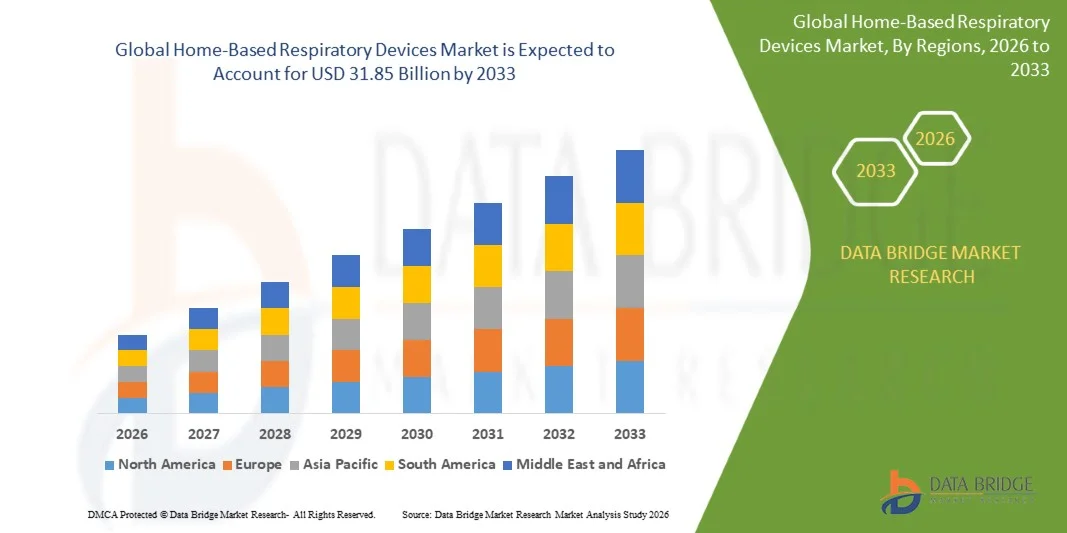
- As per Data Bridge Market Research analysis, the home-based respiratory devices market was valued at USD 18.68 billion in 2025 and is projected to reach USD 31.85 billion by 2033, growing at a CAGR of 6.90% from 2026 to 2033.
- The market is experiencing consistent growth driven by the increasing prevalence of chronic respiratory diseases, rising demand for home-based healthcare, an aging population, and technological advancements that are making respiratory devices more portable, convenient, and suitable for long-term use outside traditional healthcare facilities.
- The increasing burden of COPD, asthma, sleep apnea, and other chronic respiratory conditions, combined with the growing preference for home healthcare and remote respiratory management, is compelling patients and healthcare providers to adopt home-based respiratory devices. Portable oxygen concentrators, non-invasive ventilators, CPAP/BiPAP systems, nebulizers, and connected respiratory monitoring technologies are supporting the shift toward continuous and convenient respiratory care at home.
Market Size & Forecast
- Global Market Value (2025): USD 18.68 Billion
- Expected Market Value (2033): USD 31.85 Billion
- Forecast CAGR (2026–2033): 6.90%
- Leading Region in 2025: North America
- Fastest Growing Region: Asia Pacific
What are the Major Takeaways of the Home-Based Respiratory Devices Market?
- North America dominated the home-based respiratory devices market with the largest revenue share of 40.5% in 2025, supported by established home healthcare infrastructure, high healthcare spending, and broad adoption of respiratory therapy devices.
- Asia-Pacific is expected to be the fastest-growing region at a CAGR of 7.2% from 2026 to 2033, fueled by increasing healthcare expenditure, rising awareness of respiratory diseases, improving healthcare infrastructure, and growing demand for home-based respiratory care.
- The positive airway pressure (PAP) devices segment led the market with a 45.5% share in 2025, driven by widespread use of CPAP and BiPAP systems for home-based treatment of sleep apnea and other breathing disorders.
- Respiratory monitoring devices are the fastest-growing product type, projected to register a CAGR of 8.3%, reflecting the surge in demand for continuous monitoring of patients receiving respiratory treatment at home.
- The chronic obstructive pulmonary disease (COPD) segment dominated the indication category with a 40% revenue share in 2025, led by the high prevalence of COPD and the need for continuous respiratory management
- Adult accounted for 72% of the market share in 2025, preferred by the large adult population affected by COPD, sleep apnea, asthma, and other chronic respiratory conditions.
- The geriatric segment is the fastest-growing patient group category, with a CAGR of 8.0%, driven by the expanding elderly population and the higher incidence of chronic respiratory conditions among older individuals.
Report Scope and Home-Based Respiratory Devices Market Segmentation
|
Attributes |
Home-Based Respiratory Devices Key Market Insights |
|
Segments Covered |
|
|
Countries Covered |
North America
Europe
Asia-Pacific
Middle East and Africa
South America
|
|
Key Market Players |
|
|
Market Opportunities |
|
|
Value Added Data Infosets |
In addition to the insights on market scenarios such as market value, growth rate, segmentation, geographical coverage, and major players, the market reports curated by the Data Bridge Market Research also include in-depth expert analysis, patient epidemiology, pipeline analysis, pricing analysis, and regulatory framework. |
What is the Key Trend in the Home-Based Respiratory Devices Market?
- Home-based respiratory care is increasingly shifting toward connected and digitally monitored devices that enable clinicians to track therapy data remotely, improve adherence, identify problems earlier, and support timely intervention without requiring frequent hospital visits or repeated in-person assessments.
- For instance, in March 2025, ResMed announced a unified health-technology strategy centered on sleep, breathing, and care delivered in the home, building on its connected medical devices and digital health solutions to expand digitally enabled home respiratory care.
- Patients increasingly prefer portable, lightweight respiratory devices that allow greater mobility while maintaining prescribed therapy, encouraging manufacturers to reduce device size, improve battery performance, simplify interfaces, and develop equipment suitable for continuous use across home and everyday environments.
- Home respiratory devices are increasingly designed around comfort, usability, and convenience, with quieter operation, compact formats, simplified controls, flexible delivery systems, and patient-friendly interfaces helping individuals integrate long-term respiratory therapy into daily household routines more comfortably and supervision.
- Remote connectivity is becoming an important feature across CPAP, ventilatory, and respiratory monitoring devices, allowing therapy information to be transmitted to healthcare professionals and supporting data-driven adjustments, adherence management, troubleshooting, and follow-up outside traditional clinical settings for patients.
- For instance, in April 2025, ResMed made its FDA-cleared NightOwl home sleep apnea test available across the U.S., enabling obstructive sleep apnea testing from the patient's home and supporting the broader shift toward convenient, digitally enabled respiratory care outside traditional clinical settings.
- Growing demand for home-based chronic disease management is encouraging device makers to develop integrated respiratory solutions that combine oxygen delivery, ventilation, monitoring, connectivity, and portability, supporting more continuous care while reducing dependence on facility-based respiratory treatment across patients.
What are the Key Drivers of the Home-Based Respiratory Devices Market?
- The rising global burden of chronic respiratory diseases is increasing demand for respiratory management, including oxygen therapy, ventilation, nebulization, and monitoring technologies that can support patients outside hospitals and improve continuity of care in home settings over time.
- For instance, in July 2024, Tregidgo et al. published a review in Canadian Respiratory Journal showing that home NIV can improve clinical, patient-reported, and physiological outcomes in patients with chronic hypercapnic respiratory failure, while advances in ventilation devices, interfaces, and monitoring are supporting long-term home use.
- An aging population and increasing prevalence of COPD, asthma, and sleep-related breathing disorders are expanding the number of patients requiring sustained respiratory support, encouraging healthcare systems to shift appropriate treatment toward home-based and decentralized care models in homes.
- Advances in digital health, wireless connectivity, and remote monitoring are enabling clinicians to manage respiratory therapy more efficiently, improve adherence, identify changes in patient status, and reduce unnecessary follow-up visits through connected home respiratory devices during long-term treatment.
- Improved portability and battery technology are expanding the use of respiratory devices beyond stationary home treatment, enabling patients receiving oxygen therapy or ventilatory support to move more freely while maintaining prescribed respiratory treatment during activities safely and consistently.
- For instance, in April 2025, HME News reported that the shift toward home respiratory care was being driven by the aging population, technological advancements, and the growing prevalence of COPD, while manufacturers were expanding respiratory-device portfolios and integrating telehealth capabilities
- Growing healthcare-system emphasis on reducing hospital utilization and managing chronic diseases outside acute-care facilities is supporting adoption of home respiratory technologies that can provide continuous therapy, monitoring, and clinical support while potentially reducing avoidable healthcare-resource use more efficiently.
Which Factors are Challenging the Growth of the Home-Based Respiratory Devices Market?
- Advanced home respiratory devices can require substantial upfront spending for equipment, accessories, connectivity, maintenance, and replacement components, while reimbursement differences across countries can increase patient out-of-pocket costs and restrict adoption among price-sensitive households for users in many markets.
- For instance, in October 2024, an article published in Amyotrophic Lateral Sclerosis and Frontotemporal Degeneration found that difficulties with mask tolerance were among the main reasons for non-adherence to home NIV. The study also reported that adjusting to NIV could be challenging and burdensome for patients and caregivers.
- Home oxygen therapy can impose practical burdens because patients may need to manage tubing, charging, oxygen deliveries, equipment maintenance, caregiver assistance, and safety precautions, making long-term therapy complex and potentially reducing adherence or limiting daily activities at home.
- Device safety, reliability, and quality concerns can challenge adoption because respiratory equipment often provides essential therapy, meaning software faults, power interruptions, inaccurate measurements, or component failures can create serious clinical risks for vulnerable home patients overall during treatment.
- For instance, in June 2024, a study published in Heliyon examining 1,281 patients receiving home NIV found that lack of motivation accounted for 19% of treatment discontinuations, highlighting patient adherence as a limitation to sustained home respiratory-device use.
- Limited infrastructure and specialist support in some low- and middle-income markets can constrain home respiratory device deployment, particularly where diagnostic capacity, reimbursement, electricity reliability, trained respiratory professionals, maintenance services, and access to replacement equipment remain inadequate for patients.
How is the Home-Based Respiratory Devices Market Segmented?
The home-based respiratory devices market is segmented on the basis of product type, indication, patient group, and end user.
- By Product Type
On the basis of product type, the home-based respiratory devices market is segmented into positive airway pressure (PAP) devices, oxygen concentrators, ventilators, nebulizers, inhalers, respiratory monitoring devices, humidifiers, and other respiratory devices. The positive airway pressure (PAP) devices segment dominated the market with 45.5% share in 2025, owing to widespread use of CPAP and BiPAP systems for home-based treatment of sleep apnea and other breathing disorders. PAP devices provide effective non-invasive respiratory support and are suitable for long-term therapy in residential settings. Increasing diagnosis of obstructive sleep apnea is supporting demand for CPAP and BiPAP systems among home-care patients. Improvements in pressure control, mask comfort, humidification, connectivity, and remote monitoring are further improving patient acceptance. The availability of established distribution networks through sleep clinics, home healthcare providers, and medical equipment suppliers is also supporting adoption.
The respiratory monitoring devices segment is expected to register the fastest growth at 8.3% CAGR from 2026 to 2033, driven by increasing demand for continuous monitoring of patients receiving respiratory treatment at home. These devices enable patients and healthcare professionals to track respiratory parameters and identify changes in patient condition. Growing adoption of remote patient monitoring is expanding the role of respiratory monitoring beyond conventional clinical environments. Integration of wireless connectivity, mobile applications, cloud platforms, and telehealth services is improving the ability to transmit patient data to healthcare professionals. The increasing prevalence of chronic respiratory diseases is also creating demand for regular monitoring outside hospitals. Growing emphasis on early detection of respiratory deterioration is further supporting adoption.
- By Indication
On the basis of indication, the home-based respiratory devices market is segmented into chronic obstructive pulmonary disease (COPD), sleep apnea, asthma, respiratory failure, cystic fibrosis, and other respiratory conditions. The chronic obstructive pulmonary disease (COPD) segment dominated the market with 40% share in 2025, owing to the high prevalence of COPD and the need for continuous respiratory management. COPD patients commonly require oxygen therapy, nebulization, inhalation therapy, ventilation, and respiratory monitoring for long-term disease management. Increasing exposure to tobacco smoke and air pollution is contributing to the continuing respiratory disease burden. The aging population is also increasing the number of patients requiring long-term respiratory support. Home-based treatment allows stable COPD patients to manage their condition while reducing dependence on frequent clinical visits.
The sleep apnea segment is expected to witness the fastest growth at 8.9% CAGR from 2026 to 2033, driven by increasing awareness and diagnosis of obstructive sleep apnea. CPAP and BiPAP devices are widely used for managing sleep-related breathing disorders in home settings. Growing awareness of the health consequences associated with untreated sleep apnea is encouraging more patients to seek diagnosis and treatment. Technological improvements in PAP devices are enhancing comfort, pressure adjustment, humidification, connectivity, and treatment monitoring. Increasing acceptance of home-based sleep testing is also making diagnosis and subsequent therapy more accessible. The growing availability of connected devices allows healthcare professionals to remotely monitor treatment adherence and effectiveness.
- By Patient Group
On the basis of patient group, the home-based respiratory devices market is segmented into adult, geriatric, pediatric, and neonatal. The adult segment dominated the market with 72% share in 2025, supported by the large adult population affected by COPD, sleep apnea, asthma, and other chronic respiratory conditions. Adults represent a substantial patient base for home oxygen therapy, PAP devices, nebulizers, inhalers, ventilators, and respiratory monitoring systems. The prevalence of chronic respiratory disorders among adults continues to generate demand for long-term respiratory management. Increasing diagnosis of sleep apnea among adults is also supporting adoption of home-based PAP therapy. The availability of a broad range of respiratory devices designed for adult patients further strengthens the segment.
The geriatric segment is expected to register the fastest growth at 8.0% CAGR from 2026 to 2033, driven by the expanding elderly population and the higher incidence of chronic respiratory conditions among older individuals. Aging is associated with increased susceptibility to COPD, sleep apnea, respiratory failure, and other conditions requiring continuing respiratory support. Geriatric patients frequently require oxygen concentrators, PAP devices, ventilators, nebulizers, and monitoring equipment for long-term management. The growing shift toward home-based care is enabling stable elderly patients to receive respiratory treatment outside hospitals. Portable and easy-to-operate devices are also improving the feasibility of respiratory treatment for elderly patients and their caregivers. Remote monitoring technologies are allowing healthcare professionals to supervise respiratory conditions without requiring frequent in-person visits.
- By End User
On the basis of end user, the home-based respiratory devices market is segmented into home care settings, individual patients, home healthcare providers, long-term care facilities, and other end users. The home care settings segment dominated the market with 67.7% share in 2025, reflecting the central role of residential environments in the management of chronic respiratory conditions. Home care settings allow patients to receive oxygen therapy, PAP therapy, nebulization, ventilation, and respiratory monitoring without continuous hospitalization. The increasing prevalence of chronic respiratory diseases is expanding the number of patients requiring long-term respiratory treatment at home. Improvements in portable equipment and connected monitoring technologies are making home respiratory care increasingly practical. Healthcare providers are also encouraging home-based management for stable patients to improve continuity of care.
The home healthcare providers segment is expected to witness the fastest growth at 9.4% CAGR from 2026 to 2033, supported by increasing demand for professional respiratory care delivered outside hospitals. Home healthcare providers assist patients with respiratory-device setup, therapy management, maintenance, monitoring, and education. Their role is becoming increasingly important as respiratory devices incorporate connected technologies and require continuing management. Remote monitoring allows providers to follow therapy adherence and respiratory parameters while patients remain at home. The growing elderly population and increasing number of patients requiring long-term respiratory support are expanding demand for professional home healthcare services. Healthcare systems are also increasingly relying on home healthcare providers to support earlier discharge and ongoing disease management
Which Region Holds the Largest Share of the Home-Based Respiratory Devices Market?
- North America dominated the home-based respiratory devices market with the largest revenue share of 40.5% in 2025, supported by established home healthcare infrastructure, high healthcare spending, and broad adoption of respiratory therapy devices.
- The region also benefits from favorable reimbursement policies, high diagnosis rates of chronic respiratory diseases, and widespread availability of home-based oxygen therapy, PAP devices, and respiratory monitoring solutions. Increasing adoption of connected respiratory devices and remote patient monitoring, along with the growing preference for home-based treatment, continues to strengthen North America's leadership position in the global market.
U.S. Home-Based Respiratory Devices Market Insight
The U.S. home-based respiratory devices market is witnessing strong growth due to rising demand for long-term respiratory care, increasing prevalence of chronic respiratory diseases, and expanding adoption of home healthcare services. The country’s mature healthcare infrastructure, along with increasing use of oxygen concentrators, PAP devices, ventilators, nebulizers, and connected respiratory monitoring systems, is driving demand across home care and individual patient applications. In addition, growing emphasis on reducing hospital stays and managing chronic respiratory conditions through remote and home-based care is accelerating adoption of respiratory devices across the country.
Asia-Pacific Home-Based Respiratory Devices Market Insight
The Asia-Pacific home-based respiratory devices market is expected to witness rapid growth, driven by increasing healthcare expenditure, rising prevalence of respiratory diseases, and expanding home healthcare infrastructure across countries such as China, India, and Japan. Growing awareness regarding home-based respiratory treatment, increasing adoption of portable respiratory devices, and rising demand for cost-effective long-term care solutions are supporting regional market expansion. In addition, the growing elderly population, improving healthcare accessibility, and increasing adoption of remote patient monitoring technologies are accelerating respiratory-device adoption across residential and home healthcare settings.
Japan Home-Based Respiratory Devices Market Insight
The Japan home-based respiratory devices market is witnessing consistent growth due to rising demand for long-term respiratory care, an aging population, and increasing adoption of home healthcare services. Healthcare providers and patients are increasingly utilizing oxygen concentrators, PAP devices, ventilators, nebulizers, and respiratory monitoring systems for chronic respiratory disease management. Moreover, increasing integration of connected monitoring technologies and the country’s focus on reducing hospital dependency and supporting aging-in-place are further contributing to market growth.
China Home-Based Respiratory Devices Market Insight
The China home-based respiratory devices market is growing rapidly, driven by increasing healthcare expenditure, rising prevalence of respiratory diseases, and expanding access to home-based medical care. Growing adoption of oxygen concentrators, PAP devices, nebulizers, and respiratory monitoring systems across residential and home healthcare settings is significantly boosting market demand. In addition, rising awareness regarding chronic respiratory disease management, increasing healthcare infrastructure development, and rapid adoption of connected healthcare technologies are positioning China as one of the fastest-growing markets for home-based respiratory devices globally.
U.K. Home-Based Respiratory Devices Market Insight
The U.K. home-based respiratory devices market is experiencing steady growth, supported by rising demand for community-based respiratory care, increasing prevalence of chronic respiratory conditions, and expanding home healthcare services. Increasing utilization of oxygen therapy, PAP devices, nebulizers, and respiratory monitoring solutions is contributing to market growth, while the established healthcare system supports wider access to home-based respiratory treatment. Furthermore, integration of remote monitoring and digital healthcare technologies is improving respiratory disease management and supporting greater adoption of home-based devices across the U.K.
Germany Home-Based Respiratory Devices Market Insight
The Germany home-based respiratory devices market is expanding steadily due to the country’s advanced healthcare infrastructure, aging population, and increasing demand for long-term respiratory disease management. Healthcare providers and patients are increasingly utilizing PAP devices, oxygen concentrators, ventilators, nebulizers, and respiratory monitoring technologies for treatment outside hospitals. Continuous advancements in connected respiratory devices, remote monitoring, and home healthcare services, along with growing emphasis on patient-centered care and reducing hospital dependency, are further driving market growth in Germany.
Which are the Top Companies in Home-Based Respiratory Devices Market?
The home-based respiratory devices industry is primarily led by well-established companies, including:
- ResMed Inc. (U.S.)
- Koninklijke Philips N.V. (Netherlands)
- Fisher & Paykel Healthcare Limited (New Zealand)
- Drive DeVilbiss International (U.S.)
- Inogen, Inc. (U.S.)
- React Health (U.S.)
- Breas Medical AB (Sweden)
- BMC Medical Co., Ltd. (China)
- Apex Medical Corp. (Taiwan)
- Jiangsu Yuyue Medical Equipment & Supply Co., Ltd. (China)
- Löwenstein Medical SE & Co. KG (Germany)
- Drägerwerk AG & Co. KGaA (Germany)
- Hamilton Medical AG (Switzerland)
- Medtronic (Ireland)
- Invacare Holdings Corporation (U.S.)
- PARI GmbH (Germany)
- OMRON Healthcare, Inc. (U.S.)
- Nidek Medical India Pvt. Ltd. (India)
- Compumedics Limited (Australia)
- SomnoMed Limited (Australia)
What are Latest Developments in Home-Based Respiratory Devices Market?
- In April 2025, ResMed announced that its NightOwl home sleep apnea test was available across the U.S., providing an FDA-cleared solution for diagnosing obstructive sleep apnea from the patient’s home. The compact test is designed to simplify diagnosis and improve access to sleep apnea care, supporting the broader shift toward home-based respiratory and sleep-health management.
- In September 2024, ResMed announced the launch of its AirTouch N30i nasal mask, its first CPAP mask incorporating a fabric-wrapped frame. The new mask was designed with a soft, breathable, and moisture-wicking construction to improve comfort for people receiving CPAP therapy at home. The development highlights continued innovation in patient interfaces intended to improve acceptance and adherence to home-based respiratory treatment.
- In May 2023, Philips Respironics announced the completion of additional testing and risk assessments for its first-generation DreamStation CPAP and BiPAP sleep-therapy devices as part of its ongoing respiratory-device remediation program. The company reported that the assessment covered the first-generation DreamStation, System One, and DreamStation GO devices and involved independent certified testing laboratories and external experts. The development represented a significant step in the ongoing evaluation and remediation of home sleep and respiratory-care devices.
- In March 2022, Philips Respironics provided an update on its U.S. remediation program for affected CPAP, BiPAP, and mechanical ventilator devices. The company reported that it had shipped more than 650,000 replacement devices in the U.S. and was continuing its repair and replacement program while conducting additional testing in cooperation with the FDA. The development highlighted the importance of product safety, device remediation, and regulatory oversight within the home-based respiratory-device market
- In August 2021, ResMed launched the AirSense 11 PAP Series in the U.S., introducing a next-generation positive airway pressure device with digital features designed to support patients during home sleep-apnea therapy. The device incorporated features such as Personal Therapy Assistant, Care Check-In, remote software updates, and connectivity with ResMed’s digital health platforms. The launch demonstrated the growing integration of connected and digital technologies into home-based respiratory treatment.

- Interactive Data Analysis Dashboard
- Company Analysis Dashboard for high growth potential opportunities
- Research Analyst Access for customization & queries
- Competitor Analysis with Interactive dashboard
- Latest News, Updates & Trend analysis
- Harness the Power of Benchmark Analysis for Comprehensive Competitor Tracking
Data collection and base year analysis are done using data collection modules with large sample sizes. The stage includes obtaining market information or related data through various sources and strategies. It includes examining and planning all the data acquired from the past in advance. It likewise envelops the examination of information inconsistencies seen across different information sources. The market data is analysed and estimated using market statistical and coherent models. Also, market share analysis and key trend analysis are the major success factors in the market report. To know more, please request an analyst call or drop down your inquiry.
The key research methodology used by DBMR research team is data triangulation which involves data mining, analysis of the impact of data variables on the market and primary (industry expert) validation. Data models include Vendor Positioning Grid, Market Time Line Analysis, Market Overview and Guide, Company Positioning Grid, Patent Analysis, Pricing Analysis, Company Market Share Analysis, Standards of Measurement, Global versus Regional and Vendor Share Analysis. To know more about the research methodology, drop in an inquiry to speak to our industry experts.
Data Bridge Market Research is a leader in advanced formative research. We take pride in servicing our existing and new customers with data and analysis that match and suits their goal. The report can be customized to include price trend analysis of target brands understanding the market for additional countries (ask for the list of countries), clinical trial results data, literature review, refurbished market and product base analysis. Market analysis of target competitors can be analyzed from technology-based analysis to market portfolio strategies. We can add as many competitors that you require data about in the format and data style you are looking for. Our team of analysts can also provide you data in crude raw excel files pivot tables (Fact book) or can assist you in creating presentations from the data sets available in the report.













