


What is the Inhalers and Nebulizers Market Size and Growth Rate?
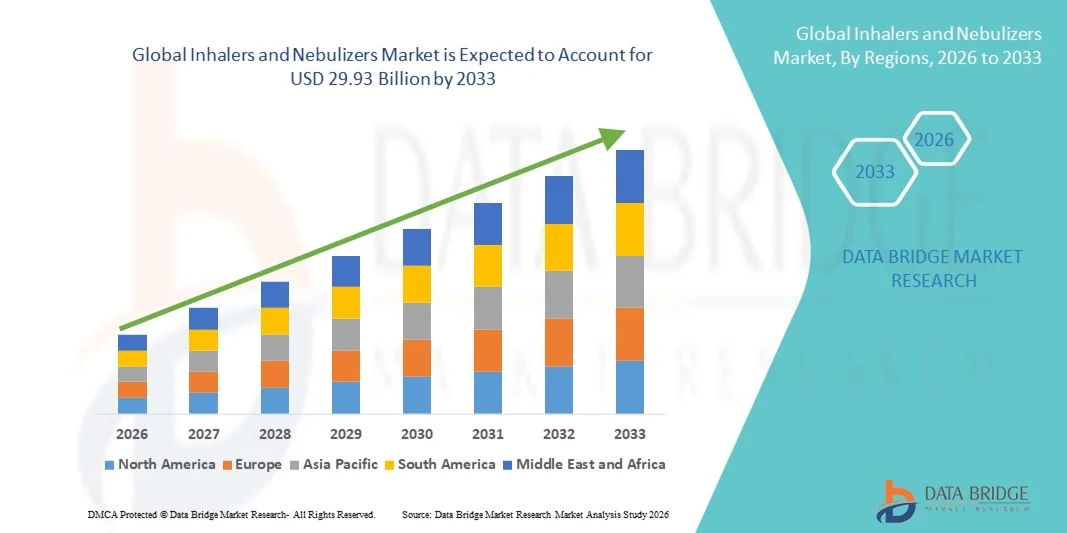
- As per Data Bridge Market Research Analysis the global inhalers and nebulizers market size was valued at USD 5.64 billion in 2025 and is expected to reach USD 29.93 billion by 2033, at a CAGR of 23.20% during the forecast period
- The market growth is primarily driven by the rising prevalence of chronic respiratory diseases such as asthma, chronic obstructive pulmonary disease (COPD), and bronchitis, along with increasing air pollution levels and tobacco exposure across both developed and developing regions
- In addition, growing awareness of early diagnosis, increasing adoption of home-based respiratory care devices, and continuous technological advancements in drug-device combination systems are positioning inhalers and nebulizers as essential components of modern respiratory therapy, thereby significantly accelerating overall market growth
Market Size & Forecast
- Global Market Value (2025): USD 5.64 Billion
- Expected Market Value (2033): USD 29.93 Billion
- Forecast CAGR (2026–2033): 23.20%
Inhalers and Nebulizers Market Analysis
- Inhalers and nebulizers, which enable targeted delivery of medications directly to the respiratory tract, are essential components of modern respiratory care across hospitals, clinics, and homecare settings due to their rapid therapeutic action, improved treatment efficacy, and suitability for both chronic and acute respiratory conditions
- The escalating demand for inhalers and nebulizers is primarily driven by the increasing prevalence of asthma, chronic obstructive pulmonary disease (COPD), and other respiratory disorders, along with rising air pollution levels, aging populations, and growing awareness regarding early diagnosis and long-term respiratory disease management
- North America dominated the inhalers and nebulizers market with the largest revenue share of 41.9% in 2025, supported by advanced healthcare infrastructure, high treatment penetration for respiratory diseases, and a strong presence of leading pharmaceutical and medical device manufacturers, with the U.S. witnessing robust adoption of advanced inhaler technologies and home-based nebulization therapies
- Asia-Pacific is expected to be the fastest growing region in the inhalers and nebulizers market during the forecast period due to rapid urbanization, deteriorating air quality, rising healthcare expenditure, and expanding access to respiratory care services across emerging economies
- The inhalers segment dominated the inhalers and nebulizers market with a market share of 70.4% in 2025, driven by their portability, ease of use, cost-effectiveness, and widespread prescription for long-term management of chronic respiratory diseases compared to traditional nebulizer systems
Report Scope and Inhalers and Nebulizers Market Segmentation
|
Attributes |
Inhalers and Nebulizers Key Market Insights |
|
Segments Covered |
|
|
Countries Covered |
North America
Europe
Asia-Pacific
Middle East and Africa
South America
|
|
Key Market Players |
|
|
Market Opportunities |
|
|
Value Added Data Infosets |
In addition to the insights on market scenarios such as market value, growth rate, segmentation, geographical coverage, and major players, the market reports curated by the Data Bridge Market Research also include in-depth expert analysis, patient epidemiology, pipeline analysis, pricing analysis, and regulatory framework |
What is the Key Trend in the Inhalers and Nebulizers Market?
Shift Toward Smart, Portable, and Patient-Centric Respiratory Devices
- A significant and accelerating trend in the global inhalers and nebulizers market is the growing shift toward portable, patient-centric, and technologically advanced respiratory devices that enhance treatment adherence and enable effective disease management outside traditional clinical settings
- For instance, smart inhalers launched by companies such as Propeller Health and Teva integrate sensors and mobile applications to track usage patterns, provide reminders, and share real-time data with healthcare providers to improve asthma and COPD outcomes
- Technological integration in inhalers and nebulizers enables features such as dose tracking, digital monitoring, and personalized treatment insights, helping physicians optimize therapy while supporting patients in maintaining consistent medication use
- The increasing adoption of portable and mesh nebulizers supports seamless respiratory care by allowing patients to administer treatments at home or while traveling, reducing dependency on hospital-based therapies and improving overall quality of life
- This trend toward more intelligent, compact, and user-friendly respiratory devices is reshaping patient expectations for convenience, accuracy, and long-term disease control across chronic respiratory care
- The demand for advanced inhalers and nebulizers with digital connectivity and enhanced portability is growing rapidly across both adult and pediatric patient populations, driven by rising chronic disease burden and homecare adoption
- Increasing adoption of breath-actuated and dry powder inhalers is gaining traction due to improved dosing accuracy and reduced dependency on patient coordination
Inhalers and Nebulizers Market Dynamics
Driver
Rising Burden of Respiratory Diseases and Growing Homecare Adoption
- The increasing prevalence of asthma, chronic obstructive pulmonary disease (COPD), and other respiratory disorders, coupled with the rising preference for home-based treatment, is a major driver fueling demand for inhalers and nebulizers globally
- For instance, pharmaceutical and medical device companies are expanding inhaler portfolios and nebulizer technologies to address the growing number of patients requiring long-term respiratory management and emergency relief therapies
- As patients and healthcare providers focus more on early intervention and continuous disease management, inhalers and nebulizers offer fast drug delivery, improved symptom control, and reduced hospitalization rates
- Furthermore, the growing shift toward homecare, supported by aging populations and pressure to reduce healthcare costs, is making portable inhalers and nebulizers essential components of respiratory treatment protocols
- The convenience of self-administration, rapid symptom relief, and compatibility with multiple drug formulations are key factors driving widespread adoption across hospitals, clinics, and homecare environments
- Expanding healthcare access in emerging economies is increasing diagnosis and treatment rates for respiratory conditions, directly supporting market expansion
- Favorable reimbursement policies for chronic respiratory disease management in developed regions are further accelerating the adoption of inhalers and nebulizers
Restraint/Challenge
Incorrect Device Usage and Cost Constraints
- Challenges related to incorrect inhaler technique, lack of patient training, and variability in drug delivery efficiency pose significant barriers to optimal treatment outcomes and broader market adoption
- For instance, multiple clinical observations indicate that improper inhaler usage can significantly reduce drug effectiveness, leading to poor disease control and increased healthcare burden
- Addressing these challenges through improved device design, patient education programs, and digital guidance features is critical for enhancing treatment efficacy and patient compliance
- While prices of basic inhalers and nebulizers are relatively affordable, advanced devices with smart features or specialized drug compatibility can be cost-prohibitive for patients in low- and middle-income regions
- Overcoming these challenges through simplified device designs, cost-effective innovations, and wider reimbursement coverage will be essential for sustained market growth
- Limited awareness about correct device selection among patients and caregivers can delay effective treatment initiation
- Regulatory requirements related to drug–device combination approvals can increase development timelines and costs for manufacturers
Inhalers and Nebulizers Market Scope
The market is segmented on the basis of product, indication, and distribution mode.
- By Product
On the basis of product, the global inhalers and nebulizers market is segmented into inhalers and nebulizers. The inhalers segment dominated the market with the largest revenue share of 70.4% in 2025, driven by their widespread use in the long-term management of chronic respiratory diseases such as asthma and COPD. Inhalers are preferred due to their portability, ease of use, precise dosing, and suitability for self-administration, which significantly improves patient adherence. Metered dose inhalers (MDIs) and dry powder inhalers (DPIs) are extensively prescribed across both developed and emerging markets, supported by strong physician preference and broad reimbursement coverage. Their cost-effectiveness compared to nebulizers further reinforces dominance, particularly in outpatient and homecare settings. Continuous innovation in inhaler design, including breath-actuated and smart inhalers, is also strengthening this segment’s market leadership.
The nebulizers segment is expected to witness the fastest growth during the forecast period, fueled by rising demand among pediatric, geriatric, and severe COPD patient populations who experience difficulty using inhalers. Nebulizers are increasingly adopted for acute exacerbations and hospital-based treatments, as they deliver medication over extended periods with minimal patient coordination. Technological advancements such as mesh nebulizers, which are quieter, more efficient, and portable, are expanding adoption in homecare environments. Growing preference for home-based respiratory therapy and increasing availability of compact nebulizer systems are further accelerating segment growth globally.
- By Indication
On the basis of indication, the market is segmented into asthma and chronic obstructive pulmonary disease (COPD). The asthma segment accounted for the largest market revenue share in 2025, driven by the high global prevalence of asthma across both pediatric and adult populations. Asthma management heavily relies on inhalers for both maintenance and rescue therapy, resulting in consistent and recurrent demand. Increasing awareness regarding early diagnosis, rising exposure to allergens and air pollution, and strong school-age and pediatric treatment programs further support segment dominance. The availability of a wide range of inhaled corticosteroids and combination therapies strengthens inhaler utilization in asthma care. Favorable reimbursement policies in developed regions also contribute to sustained market leadership of this segment.
The COPD segment is anticipated to register the fastest growth over the forecast period, owing to the rising aging population, increasing smoking rates, and prolonged exposure to occupational pollutants. COPD patients often require long-term and combination respiratory therapies, driving higher device usage rates over time. The growing shift toward home-based management of COPD and frequent need for nebulization during severe disease stages are accelerating demand. Increased diagnosis rates in emerging economies and expanding access to respiratory care services further support rapid growth in this segment.
- By Distribution Mode
On the basis of distribution mode, the inhalers and nebulizers market is segmented into hospital pharmacies, retail pharmacies, and online pharmacies. Hospital pharmacies dominated the market in 2025, supported by the high volume of respiratory treatments administered in hospital settings, particularly for acute asthma attacks and COPD exacerbations. Hospitals play a critical role in initiating respiratory therapies and prescribing inhalers or nebulizers during inpatient and emergency care. Strong physician oversight, immediate availability of advanced devices, and bundled treatment protocols reinforce the dominance of this segment. In addition, hospital pharmacies are primary channels for nebulizers and specialized respiratory devices.
Online pharmacies are expected to witness the fastest growth during the forecast period, driven by increasing digitalization of healthcare and growing patient preference for convenient medication access. The expansion of e-commerce platforms, rising adoption of telemedicine, and doorstep delivery services are significantly boosting online sales of inhalers and nebulizers. Chronic respiratory patients increasingly rely on online pharmacies for refill medications and homecare devices, supported by competitive pricing and subscription-based models. Improved regulatory frameworks and secure prescription verification systems are further accelerating the growth of this distribution channel.
Inhalers and Nebulizers Market Regional Analysis
- North America dominated the inhalers and nebulizers market with the largest revenue share of 41.9% in 2025, supported by advanced healthcare infrastructure, high treatment penetration for respiratory diseases, and a strong presence of leading pharmaceutical
- Patients and healthcare providers in the region place significant emphasis on effective disease management, early diagnosis, and access to advanced respiratory therapies, leading to widespread adoption of inhalers and nebulizers across hospitals and homecare settings
- This strong market position is further supported by high healthcare expenditure, strong presence of leading pharmaceutical and medical device companies, and growing adoption of home-based respiratory care solutions, establishing inhalers and nebulizers as essential components of respiratory treatment in both acute and chronic care environments
U.S. Inhalers and Nebulizers Market Insight
The U.S. inhalers and nebulizers market captured the largest revenue share of 82% in 2025 within North America, driven by the high prevalence of asthma and chronic obstructive pulmonary disease (COPD) and strong access to advanced respiratory care. Patients increasingly prioritize effective disease control through portable, easy-to-use inhalers and home-based nebulization therapies. The growing adoption of homecare devices, supported by telehealth services and digital monitoring tools, continues to propel market growth. Moreover, strong reimbursement frameworks and the presence of leading pharmaceutical and medical device manufacturers significantly contribute to sustained market expansion.
Europe Inhalers and Nebulizers Market Insight
The Europe inhalers and nebulizers market is projected to expand at a steady CAGR throughout the forecast period, primarily driven by rising respiratory disease burden and stringent clinical treatment guidelines. Increasing air pollution levels and aging populations are accelerating demand for long-term respiratory management solutions. European healthcare systems emphasize early diagnosis and preventive care, fostering consistent adoption of inhalers and nebulizers. Growth is observed across hospital, outpatient, and homecare settings, supported by favorable reimbursement policies and widespread access to respiratory therapies.
U.K. Inhalers and Nebulizers Market Insight
The U.K. inhalers and nebulizers market is anticipated to grow at a notable CAGR during the forecast period, supported by strong national asthma and COPD management programs. Rising awareness regarding correct inhaler usage and preventive respiratory care is driving demand across all age groups. The country’s well-established healthcare infrastructure and increasing adoption of home-based treatments are further supporting market growth. In addition, strong retail and online pharmacy networks enhance accessibility to inhalers and nebulizers nationwide.
Germany Inhalers and Nebulizers Market Insight
The Germany inhalers and nebulizers market is expected to expand at a considerable CAGR during the forecast period, driven by a strong focus on clinical efficiency and advanced medical technologies. High awareness of respiratory health, coupled with early diagnosis practices, supports sustained demand. Germany’s emphasis on precision medicine and adherence to treatment protocols promotes widespread adoption of advanced inhaler systems. The integration of innovative drug–device combinations aligns with the country’s preference for high-quality, regulated healthcare solutions.
Asia-Pacific Inhalers and Nebulizers Market Insight
The Asia-Pacific inhalers and nebulizers market is poised to grow at the fastest CAGR during the forecast period of 2026 to 2033, driven by rapid urbanization, rising pollution levels, and increasing healthcare expenditure in countries such as China, India, and Japan. Growing awareness of respiratory diseases and expanding access to healthcare services are accelerating diagnosis and treatment rates. Government initiatives aimed at strengthening healthcare infrastructure and improving chronic disease management further support market growth. In addition, the region’s expanding pharmaceutical manufacturing base is improving affordability and availability of inhalers and nebulizers.
Japan Inhalers and Nebulizers Market Insight
The Japan inhalers and nebulizers market is gaining momentum due to the country’s aging population and high prevalence of chronic respiratory conditions. Strong emphasis on precision healthcare and patient compliance is driving adoption of advanced inhaler technologies. The growing use of compact and home-friendly nebulizers supports long-term disease management, particularly among elderly patients. Integration of respiratory devices into homecare settings continues to fuel market growth in both residential and clinical environments.
India Inhalers and Nebulizers Market Insight
The India inhalers and nebulizers market accounted for the largest revenue share in Asia-Pacific in 2025, attributed to rising respiratory disease prevalence, rapid urbanization, and increasing air pollution levels. Expanding middle-class populations and improving healthcare access are driving higher diagnosis and treatment rates. Inhalers and nebulizers are increasingly adopted across hospitals, clinics, and homecare settings due to their cost-effectiveness and growing availability. Government health initiatives and strong domestic pharmaceutical manufacturing capabilities are key factors supporting sustained market expansion in India.
Which are the Top Companies in Inhalers and Nebulizers Market?
The Inhalers and Nebulizers industry is primarily led by well-established companies, including:
- GSK plc (U.K.)
- Koninklijke Philips N.V. (Netherlands)
- AstraZeneca (U.K.)
- Boehringer Ingelheim (Germany)
- Teva Pharmaceutical Industries Ltd. (Israel)
- Novartis AG (Switzerland)
- Cipla Ltd. (India)
- Omron Healthcare (Japan)
- PARI GmbH (Germany)
- 3M (U.S.)
- Sunovion Pharmaceuticals Inc. (U.S.)
- Chiesi Farmaceutici S.p.A (Italy)
- Vectura Group plc (U.K.)
- Beximco Pharmaceuticals Ltd. (Bangladesh)
- Lupin Limited (India)
- Glenmark Pharmaceuticals (India)
- NIPRO CORPORATION (Japan)
- Medizintechnik Hartwig GmbH (Germany)
- Medbryt (Poland)
What are the Recent Developments in Global Inhalers and Nebulizers Market?
- In December 2025, key innovations in inhaler and nebulizer design, such as Philips Medisize’s mesh nebulizer improvements and more efficient dry powder inhaler designs, were highlighted at the DDL 2025 drug delivery conference, showcasing industry focus on personalization and reduced dosing inefficiencies
- In October 2025, GSK announced positive pivotal Phase III results for its next-generation low-carbon Ventolin metered dose inhaler using an innovative low-carbon propellant, paving the way for regulatory submissions and broader sustainable inhaler adoption
- In July 2025, AstraZeneca’s eco-friendly version of its COPD inhaler Trixeo Aerosphere received backing from the European Medicines Agency’s CHMP, marking a significant regulatory step for a next-generation inhaler with a propellant that has drastically lower global warming potential, advancing sustainable respiratory care adoption
- In May 2025, Indian pharma company Lupin began using Honeywell’s Solstice Air low-global-warming-potential propellant in its respiratory inhalers, highlighting the industry’s move toward environmentally responsible inhaler solutions and reducing carbon footprint of respiratory treatment devices
- In March 2024, Onymos and Vapotherm announced a strategic partnership to build an IoT-enabled digital respiratory platform for Vapotherm’s HVT® 2.0 system and future devices, aiming to integrate connected care, remote data visualization and device management across respiratory therapy modalities

- Interactive Data Analysis Dashboard
- Company Analysis Dashboard for high growth potential opportunities
- Research Analyst Access for customization & queries
- Competitor Analysis with Interactive dashboard
- Latest News, Updates & Trend analysis
- Harness the Power of Benchmark Analysis for Comprehensive Competitor Tracking
Data collection and base year analysis are done using data collection modules with large sample sizes. The stage includes obtaining market information or related data through various sources and strategies. It includes examining and planning all the data acquired from the past in advance. It likewise envelops the examination of information inconsistencies seen across different information sources. The market data is analysed and estimated using market statistical and coherent models. Also, market share analysis and key trend analysis are the major success factors in the market report. To know more, please request an analyst call or drop down your inquiry.
The key research methodology used by DBMR research team is data triangulation which involves data mining, analysis of the impact of data variables on the market and primary (industry expert) validation. Data models include Vendor Positioning Grid, Market Time Line Analysis, Market Overview and Guide, Company Positioning Grid, Patent Analysis, Pricing Analysis, Company Market Share Analysis, Standards of Measurement, Global versus Regional and Vendor Share Analysis. To know more about the research methodology, drop in an inquiry to speak to our industry experts.
Data Bridge Market Research is a leader in advanced formative research. We take pride in servicing our existing and new customers with data and analysis that match and suits their goal. The report can be customized to include price trend analysis of target brands understanding the market for additional countries (ask for the list of countries), clinical trial results data, literature review, refurbished market and product base analysis. Market analysis of target competitors can be analyzed from technology-based analysis to market portfolio strategies. We can add as many competitors that you require data about in the format and data style you are looking for. Our team of analysts can also provide you data in crude raw excel files pivot tables (Fact book) or can assist you in creating presentations from the data sets available in the report.













