


Kallmann Syndrome Market Size
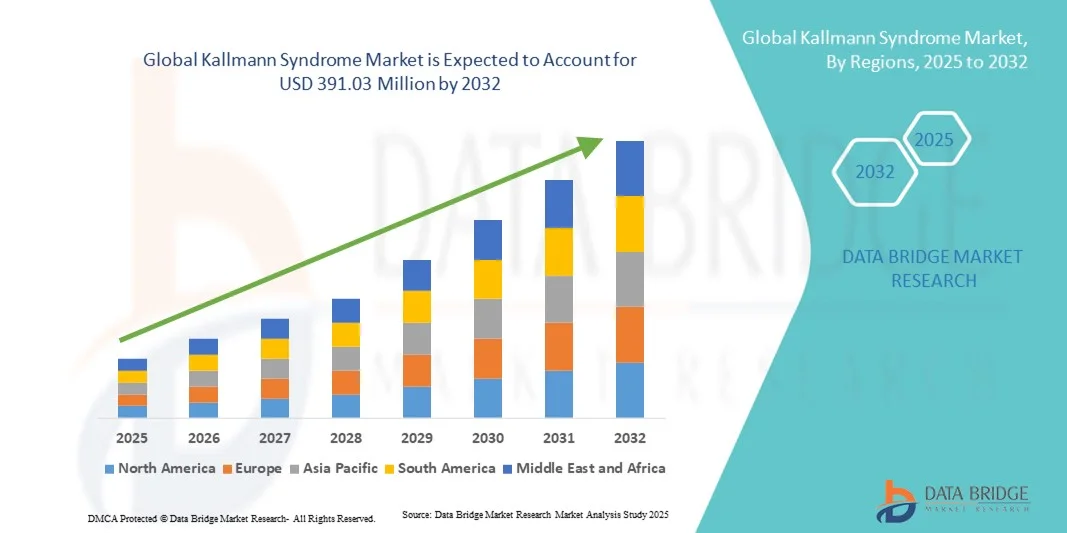
- The global Kallmann Syndrome market size was valued at USD 264.67 million in 2024 and is expected to reach USD 391.03 million by 2032, at a CAGR of 5.00% during the forecast period
- The market growth is largely fueled by the increasing prevalence of genetic and hormonal disorders and advancements in genetic testing and molecular diagnostics, which have enhanced early and accurate detection of Kallmann syndrome worldwide
- Furthermore, the growing awareness among healthcare professionals and patients, along with the development of novel hormone replacement therapies and precision medicine approaches, is driving higher diagnosis and treatment rates. These combined factors are accelerating the adoption of innovative therapeutic solutions, thereby significantly boosting the industry’s growth
Kallmann Syndrome Market Analysis
- Kallmann syndrome, a rare congenital and genetic disorder characterized by delayed or absent puberty and anosmia (loss of smell), is witnessing growing recognition in clinical and diagnostic fields due to advancements in molecular genetics, hormone evaluation, and early detection programs aimed at improving patient care and outcomes
- The increasing demand for effective diagnosis and treatment is primarily driven by rising awareness of genetic and endocrine disorders, greater access to specialized healthcare, and the integration of precision medicine and advanced diagnostic technologies across major healthcare systems
- North America dominated the Kallmann syndrome market with the largest revenue share of 39.8% in 2024, supported by a strong presence of specialized endocrinology centers, genetic testing facilities, and favorable healthcare reimbursement frameworks, particularly in the U.S
- Asia-Pacific is projected to be the fastest-growing region in the Kallmann syndrome market during the forecast period, attributed to expanding healthcare infrastructure, increased government support for rare disease management, and a surge in diagnostic awareness programs
- The genetic testing segment dominated the Kallmann syndrome market with a market share of 46.7% in 2024, driven by the rising use of next-generation sequencing (NGS), improved cost-effectiveness of genetic panels, and the growing emphasis on early and accurate disease identification
Report Scope and Kallmann Syndrome Market Segmentation
|
Attributes |
Kallmann Syndrome Key Market Insights |
|
Segments Covered |
|
|
Countries Covered |
North America
Europe
Asia-Pacific
Middle East and Africa
South America
|
|
Key Market Players |
|
|
Market Opportunities |
|
|
Value Added Data Infosets |
In addition to the insights on market scenarios such as market value, growth rate, segmentation, geographical coverage, and major players, the market reports curated by the Data Bridge Market Research also include in-depth expert analysis, patient epidemiology, pipeline analysis, pricing analysis, and regulatory framework |
Kallmann Syndrome Market Trends
Advancements in Genetic Testing and Personalized Hormone Therapy
- A significant and accelerating trend in the global Kallmann syndrome market is the rapid advancement in genetic testing technologies and personalized hormone replacement therapies, enabling earlier and more precise diagnosis and treatment approaches tailored to individual genetic profiles
- For instance, the adoption of next-generation sequencing (NGS) panels has allowed clinicians to identify mutations in genes such as KAL1, FGFR1, and PROKR2 more efficiently, helping to differentiate Kallmann syndrome from other hypogonadotropic conditions
- Integration of molecular diagnostics with endocrine evaluations is improving disease characterization and enabling the design of patient-specific treatment regimens, including optimized dosing for hormone therapy and fertility restoration
- Furthermore, digital health tools and tele-endocrinology platforms are enhancing patient monitoring and treatment adherence, offering improved access to ongoing care for individuals with rare disorders
- The growing collaboration between genomics companies and academic research centers is expediting the discovery of novel biomarkers and therapeutic targets, fostering innovation in both diagnostics and treatment
- This trend towards precision medicine and digital integration is reshaping expectations for rare disease management, pushing the industry toward more patient-centric and data-driven solutions
- Consequently, companies and research institutions are investing heavily in advanced genetic platforms and hormone therapies designed to improve quality of life and fertility outcomes for Kallmann syndrome patients
- The demand for genetically guided therapies and advanced diagnostic solutions is expanding rapidly, as healthcare systems worldwide recognize the importance of early intervention and long-term hormonal management
Kallmann Syndrome Market Dynamics
Driver
Growing Awareness and Advances in Rare Disease Diagnostics
- The rising awareness of rare endocrine disorders, supported by the expansion of genetic and hormonal diagnostic programs, is a major driver of growth in the Kallmann syndrome market
- For instance, in February 2024, Eurofins Genomics announced the launch of an expanded NGS-based diagnostic panel for congenital hypogonadotropic hypogonadism, enabling faster and more accurate identification of Kallmann syndrome
- As healthcare providers increasingly focus on genetic counseling and early detection, patients benefit from improved outcomes and access to personalized treatment pathway
- Furthermore, governmental and non-profit initiatives promoting rare disease awareness are strengthening diagnosis rates and clinical research participation
- The availability of advanced diagnostic tools and targeted hormone therapies is accelerating adoption across hospitals and specialized endocrine clinics
- Integration of genetic data into clinical practice supports long-term disease management, enhancing patient monitoring and reducing treatment delays
- Collaborative clinical studies and global registries are expanding the understanding of genotype–phenotype correlations, driving precision-based therapy design
- Increasing healthcare investments in rare genetic disorders across emerging markets are providing new opportunities for diagnostic companies and treatment providers
Restraint/Challenge
Limited Treatment Accessibility and High Diagnostic Costs
- Challenges related to the limited availability of specialized healthcare centers and the high cost of advanced genetic testing pose major barriers to widespread Kallmann syndrome diagnosis and treatment
- For instance, genetic testing panels and hormonal assays remain expensive in developing regions, restricting patient access to accurate and timely diagnosis
- Inconsistent reimbursement policies and a lack of awareness among primary care providers further delay referrals to endocrinologists and genetic specialists
- In addition, limited treatment options specifically approved for Kallmann syndrome constrain therapeutic innovation and long-term patient management
- The small patient population size makes large-scale clinical trials challenging, slowing the development of new targeted therapies
- Addressing these barriers through international collaborations, improved insurance coverage, and public–private partnerships will be critical for sustainable market expansion
- A shortage of trained genetic counselors and endocrinologists limits the delivery of specialized care, particularly in low- and middle-income countries
- Delays in regulatory approvals for rare disease therapies hinder the timely introduction of innovative hormone replacement and fertility restoration treatments
Kallmann Syndrome Market Scope
The market is segmented on the basis of categories, diagnostic method, end-users, and distribution channel.
- By Categories
On the basis of categories, the Kallmann syndrome market is segmented into congenital and genetic diseases, endocrine diseases, female reproductive diseases, and male reproductive diseases. The Congenital and Genetic Diseases segment dominated the market with the largest revenue share in 2024, owing to the inherent genetic basis of Kallmann syndrome and the increasing use of genomic sequencing for identifying mutations in genes such as KAL1, FGFR1, CHD7, and PROKR2. The growing focus on genetic counseling and family screening has further contributed to this segment’s dominance. Rising investments in rare genetic disorder research and improved accessibility of next-generation sequencing (NGS) panels have enhanced diagnostic precision, propelling market demand. In addition, ongoing public health initiatives emphasizing early diagnosis of congenital endocrine disorders are boosting segmental growth.
The Endocrine Diseases segment is anticipated to witness the fastest growth rate from 2025 to 2032, driven by the increasing recognition of Kallmann syndrome as part of a broader class of hormonal deficiencies. Expanding awareness of hormonal imbalance management and the growing adoption of hormone replacement therapy (HRT) for restoring reproductive function are accelerating the demand. The availability of advanced endocrinology services and hormonal monitoring technologies in both developed and emerging economies is expected to further fuel segment growth over the forecast period.
- By Diagnostic Method
On the basis of diagnostic method, the Kallmann syndrome market is segmented into hormone evaluation, olfactory function testing, and genetic testing. The Genetic Testing segment dominated the market with the largest share of 46.7% in 2024, attributed to the increasing use of molecular diagnostic techniques and next-generation sequencing for early detection. Genetic testing enables accurate identification of the underlying mutations responsible for the disorder, improving diagnostic confidence and treatment planning. The declining cost of genomic testing and the growing availability of specialized laboratories offering comprehensive panels are key contributors to segment dominance. Furthermore, collaborations between hospitals and biotech firms to expand genetic testing for rare disorders continue to strengthen this segment’s position.
The Hormone Evaluation segment is projected to grow at the fastest rate from 2025 to 2032, driven by its essential role in determining gonadotropin and sex hormone levels critical for diagnosis and treatment monitoring. Hormone assays serve as the first-line diagnostic approach in resource-limited settings and are increasingly being adopted alongside genetic analysis. The expansion of laboratory infrastructure, coupled with technological advancements in immunoassay and automated hormone testing systems, is expected to propel the growth of this segment over the forecast period.
- By End-Users
On the basis of end-users, the market is segmented into clinics, hospitals, diagnostic centres, home healthcare, and others. The Hospitals segment dominated the market in 2024, owing to their advanced infrastructure, multidisciplinary care capabilities, and access to endocrinologists and geneticists. Hospitals serve as the primary centers for both diagnosis and long-term treatment of Kallmann syndrome, offering hormone therapy, fertility support, and genetic counseling under one roof. The presence of specialized rare disease units and partnerships with academic research institutions also contribute to this segment’s dominance. Furthermore, hospitals often act as referral centers for complex cases, ensuring accurate diagnosis and coordinated management.
The Diagnostic Centres segment is expected to grow at the fastest rate during the forecast period due to the increasing availability of specialized genetic and hormonal testing services. Rising investments in molecular diagnostics and the expansion of private diagnostic networks offering rare disease panels are boosting this segment. In addition, the growing trend of early screening for congenital and endocrine disorders is encouraging more individuals to seek diagnostic testing outside hospital settings. Technological advancements such as AI-based test interpretation and remote reporting systems further support the segment’s rapid growth.
- By Distribution Channel
On the basis of distribution channel, the market is segmented into hospital pharmacy, retail pharmacy, and online pharmacy. The Hospital Pharmacy segment held the largest market share in 2024, primarily due to the centralized distribution of hormone replacement therapies and fertility medications prescribed for Kallmann syndrome management. Hospital pharmacies ensure regulated dispensing of prescription drugs, maintaining compliance with safety standards and patient monitoring protocols. Their integration with hospital endocrinology departments allows for timely therapy adjustments and adherence tracking, which strengthens this segment’s dominance. Moreover, hospital pharmacies often collaborate with pharmaceutical suppliers to manage hormone drug inventories efficiently.
The Online Pharmacy segment is anticipated to register the fastest growth from 2025 to 2032, supported by increasing digitalization in healthcare and patient preference for convenient medicine access. Growing awareness of telehealth services and online prescription fulfillment for hormone therapies is accelerating adoption. Online platforms offering patient assistance programs, doorstep delivery, and medication reminders are improving treatment adherence. In addition, expanding regulatory support for e-pharmacies in key regions such as North America and Europe is expected to drive the segment’s long-term growth trajectory.
Kallmann Syndrome Market Regional Analysis
- North America dominated the Kallmann syndrome market with the largest revenue share of 39.8% in 2024, supported by a strong presence of specialized endocrinology centers, genetic testing facilities, and favorable healthcare reimbursement frameworks, particularly in the U.S.
- Patients and healthcare providers in the region increasingly rely on genetic testing, hormone evaluation, and precision medicine approaches, supported by robust clinical research networks and the presence of specialized endocrinology centers
- This widespread adoption is further supported by favorable reimbursement frameworks, significant government and private funding for rare disease programs, and growing participation in patient registries and clinical trials, establishing North America as a leading hub for diagnosis, treatment, and innovation in Kallmann syndrome management
U.S. Kallmann Syndrome Market Insight
The U.S. Kallmann syndrome market captured the largest revenue share of 82% in 2024 within North America, driven by strong genetic testing infrastructure, advanced endocrinology research, and high awareness of rare hormonal disorders. The country’s emphasis on precision medicine, supported by the presence of leading biotechnology companies and specialized clinics, has significantly strengthened diagnostic and treatment access. The growing integration of telehealth platforms and hormone therapy management tools is improving patient outcomes. Moreover, the U.S. government’s initiatives promoting rare disease research and orphan drug development are further accelerating market expansion.
Europe Kallmann Syndrome Market Insight
The Europe Kallmann syndrome market is projected to expand at a substantial CAGR throughout the forecast period, fueled by growing public health initiatives, rare disease funding programs, and increasing collaboration between genetic research institutions. The region’s strong healthcare systems and commitment to early disease detection support widespread adoption of advanced diagnostic methods. Rising awareness of hormonal and reproductive disorders is fostering demand for accurate screening and hormone replacement therapy. Moreover, supportive regulatory frameworks for orphan drugs are expected to further boost market growth across major European countries.
U.K. Kallmann Syndrome Market Insight
The U.K. Kallmann syndrome market is anticipated to grow at a noteworthy CAGR during the forecast period, driven by an expanding focus on genetic medicine and government-backed rare disease strategies. Increased patient awareness, coupled with advanced genetic testing capabilities within the National Health Service (NHS), is facilitating timely diagnosis. For instance, national genomic initiatives are enabling better identification of congenital endocrine disorders. The country’s strong network of endocrinologists and reproductive health specialists further supports effective disease management, contributing to steady market expansion.
Germany Kallmann Syndrome Market Insight
The Germany Kallmann syndrome market is expected to expand at a considerable CAGR during the forecast period, supported by the nation’s leadership in biotechnology and genetic diagnostics. Germany’s robust healthcare infrastructure and investment in research collaborations are advancing precision-based approaches to endocrine disorders. The increasing adoption of next-generation sequencing and hormonal evaluation technologies is enhancing early detection rates. Moreover, government support for orphan drug development and patient advocacy programs is fostering accessibility to advanced treatment options across specialized hospitals and research centers.
Asia-Pacific Kallmann Syndrome Market Insight
The Asia-Pacific Kallmann syndrome market is poised to grow at the fastest CAGR of 24% from 2025 to 2032, driven by increasing healthcare awareness, diagnostic advancements, and improving access to genetic testing in countries such as China, Japan, and India. Growing government investments in rare disease management and expanding endocrinology networks are boosting early identification and treatment. The availability of cost-effective genetic testing solutions is broadening accessibility across urban and semi-urban regions. In addition, collaborations between global biotech firms and local research institutions are contributing to regional innovation and market expansion.
Japan Kallmann Syndrome Market Insight
The Japan Kallmann syndrome market is gaining momentum due to the country’s advanced healthcare infrastructure, focus on genetic research, and high public awareness of endocrine and reproductive health disorders. The growing prevalence of hormone-related conditions and widespread adoption of diagnostic automation are supporting strong market growth. For instance, Japan’s national initiatives on rare disease research are driving early screening and therapy development. Furthermore, an aging population and technological innovation in reproductive endocrinology are expected to further stimulate market demand.
India Kallmann Syndrome Market Insight
The India Kallmann syndrome market accounted for the largest revenue share in Asia-Pacific in 2024, driven by increasing healthcare investments, growing awareness of hormonal and genetic disorders, and expanding access to diagnostic services. The government’s focus on healthcare modernization and the development of rare disease policies are improving early diagnosis rates. The rise of private endocrinology clinics and genetic laboratories offering affordable testing solutions is further propelling growth. Moreover, India’s strong base of medical professionals and participation in international research collaborations are enhancing the overall treatment landscape for Kallmann syndrome.
Kallmann Syndrome Market Share
The Kallmann Syndrome industry is primarily led by well-established companies, including:
- Merck & Co., Inc. (U.S.)
- Pfizer Inc. (U.S.)
- Ferring Pharmaceuticals (Switzerland)
- Illumina, Inc. (U.S.)
- Thermo Fisher Scientific Inc. (U.S.)
- QIAGEN (Netherlands)
- Invitae Corporation (U.S.)
- Eurofins Scientific (Luxembourg)
- BGI Genomics (China)
- Myriad Genetics, Inc. (U.S.)
- PerkinElmer (U.S.)
- Labcorp. (U.S.)
- Myovant Sciences (U.S.)
- Takeda Pharmaceutical Company Limited (Japan)
- Abbott (U.S.)
- Bio-Rad Laboratories, Inc. (U.S.)
- Medtronic (Ireland)
- GSK plc (U.K.)
- Novo Nordisk A/S (Denmark)
What are the Recent Developments in Global Kallmann Syndrome Market?
- In April 2025, a study reported two male patients with KS caused by a novel mutation in the ANOS1 gene (c.90_100dupTGCTGCGCGGC, p.Arg34Leufs*25). The cases presented with delayed puberty, penile hypoplasia, olfactory dysfunction and low LH/FSH/androgen levels, with imaging showing small pituitary volumes and thin stalks. The novel mutation expands the known pathogenic spectrum of ANOS1
- In April 2025, another report described a boy with KS due to a balanced X-chromosomal pericentric inversion disrupting the ANOS1 gene. This cytogenetic finding is rare: rather than a simple point mutation, a structural chromosomal rearrangement caused KS. The breakpoints were mapped to intron 3 of ANOS1 and an intergenic region at Xq21.1, suggesting replication-based error mechanisms
- In April 2024, a single‐patient case study from China described a KS patient carrying both an IL17RD variant (c.2101G>A, p.Gly701Ser) inherited from the mother and a novel CPEB4 variant (c.1414C>T, p.Arg472*). The research provided detailed phenotype data: olfactory nerve deficits on MRI, slightly small pituitary gland, hormone deficiencies and whole-exome sequencing confirmation of the two variants
- In May 2023, a clinical case in Italy reported a male patient with KS carrying a novel variant in the KAL1/ANOS1 gene (p.R46H: c.137G>A) along with a CHD7 gene variant (p.L2806V). The patient had hypogonadotropic hypogonadism and anosmia, imaging showed absence of olfactory bulbs, and genetic analysis revealed two previously undescribed variants
- In June 2022, the study “Advances in Genetic Diagnosis of Kallmann Syndrome and Congenital Hypogonadotropic Hypogonadism” detailed how next-generation sequencing (NGS) and oligogenic inheritance models are shifting the diagnostic paradigm for KS. The review outlined that KS is highly heterogeneous both genetically and phenotypically, with ~40 % of cases having identifiable defects

- Interactive Data Analysis Dashboard
- Company Analysis Dashboard for high growth potential opportunities
- Research Analyst Access for customization & queries
- Competitor Analysis with Interactive dashboard
- Latest News, Updates & Trend analysis
- Harness the Power of Benchmark Analysis for Comprehensive Competitor Tracking
Data collection and base year analysis are done using data collection modules with large sample sizes. The stage includes obtaining market information or related data through various sources and strategies. It includes examining and planning all the data acquired from the past in advance. It likewise envelops the examination of information inconsistencies seen across different information sources. The market data is analysed and estimated using market statistical and coherent models. Also, market share analysis and key trend analysis are the major success factors in the market report. To know more, please request an analyst call or drop down your inquiry.
The key research methodology used by DBMR research team is data triangulation which involves data mining, analysis of the impact of data variables on the market and primary (industry expert) validation. Data models include Vendor Positioning Grid, Market Time Line Analysis, Market Overview and Guide, Company Positioning Grid, Patent Analysis, Pricing Analysis, Company Market Share Analysis, Standards of Measurement, Global versus Regional and Vendor Share Analysis. To know more about the research methodology, drop in an inquiry to speak to our industry experts.
Data Bridge Market Research is a leader in advanced formative research. We take pride in servicing our existing and new customers with data and analysis that match and suits their goal. The report can be customized to include price trend analysis of target brands understanding the market for additional countries (ask for the list of countries), clinical trial results data, literature review, refurbished market and product base analysis. Market analysis of target competitors can be analyzed from technology-based analysis to market portfolio strategies. We can add as many competitors that you require data about in the format and data style you are looking for. Our team of analysts can also provide you data in crude raw excel files pivot tables (Fact book) or can assist you in creating presentations from the data sets available in the report.












