


Kennedy’s Disease Treatment Market Size
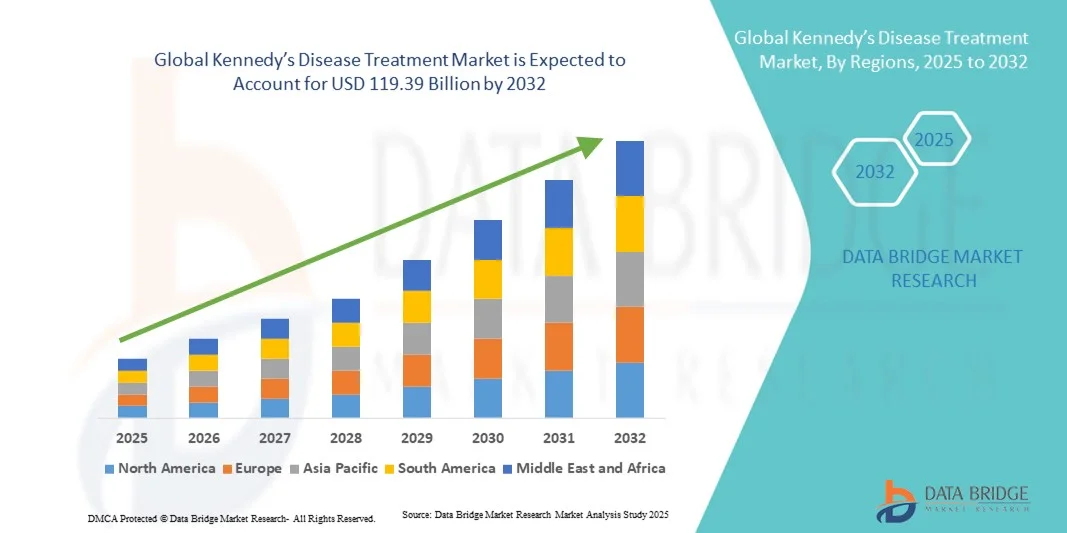
- The global Kennedy’s Disease Treatment market size was valued at USD 77.8 billion in 2024 and is expected to reach USD 119.39 billion by 2032, at a CAGR of 5.50% during the forecast period
- The market growth is largely fueled by increasing advancements in genetic research, enhanced understanding of neuromuscular disorders, and the rising adoption of innovative therapeutic approaches aimed at managing Kennedy’s Disease more effectively
- Furthermore, the growing focus on gene-based therapies, early diagnosis through molecular testing, and expanding clinical research collaborations among pharmaceutical companies and research institutions are accelerating the development of Kennedy’s Disease Treatment solutions, thereby significantly boosting the industry's growth
Kennedy’s Disease Treatment Market Analysis
- Kennedy’s Disease Treatment, focusing on managing the rare neuromuscular disorder caused by mutations in the androgen receptor (AR) gene, is gaining growing importance within the healthcare sector due to increasing awareness, improved genetic screening, and advancements in precision medicine
- The escalating demand for effective treatment options is primarily driven by the rising prevalence of X-linked spinal and bulbar muscular atrophy (SBMA), enhanced diagnostic capabilities, and ongoing research into gene and molecular therapies aimed at addressing the root cause of the condition
- North America dominated the Kennedy’s Disease Treatment market with the largest revenue share of 39.5% in 2024, attributed to advanced healthcare infrastructure, strong investment in rare disease research, and the presence of leading biotechnology and pharmaceutical companies engaged in neuromuscular disorder therapeutics. The U.S. continues to witness significant progress with clinical trials focused on androgen receptor antagonists and neuroprotective agents
- Asia-Pacific is expected to be the fastest-growing region in the Kennedy’s Disease Treatment market during the forecast period, expanding at a CAGR of 10.2%, driven by improving healthcare access, rising awareness about genetic disorders, and growing participation of research institutions in countries like Japan, China, and South Korea in rare disease-focused studies
- The medication segment accounted for the largest market revenue share of 49.9% in 2024, attributed to its central role in managing hormone-related symptoms and mitigating disease progression
Report Scope and Kennedy’s Disease Treatment Market Segmentation
|
Attributes |
Kennedy’s Disease Treatment Key Market Insights |
|
Segments Covered |
|
|
Countries Covered |
North America
Europe
Asia-Pacific
Middle East and Africa
South America
|
|
Key Market Players |
|
|
Market Opportunities |
|
|
Value Added Data Infosets |
In addition to the insights on market scenarios such as market value, growth rate, segmentation, geographical coverage, and major players, the market reports curated by the Data Bridge Market Research also include in-depth expert analysis, patient epidemiology, pipeline analysis, pricing analysis, and regulatory framework. |
Kennedy’s Disease Treatment Market Trends
Advancements in Gene Therapy and RNA-Based Therapeutics
- A significant and accelerating trend in the global Kennedy’s Disease Treatment market is the growing integration of gene therapy, RNA-based therapeutics, and precision medicine aimed at targeting the root cause of the disease rather than just managing symptoms. These approaches focus on correcting or silencing the mutant androgen receptor (AR) gene responsible for the neurodegenerative progression of Kennedy’s Disease
- For instance, in September 2024, PTC Therapeutics announced promising preclinical results from its spinal and bulbar muscular atrophy (SBMA) research program using antisense oligonucleotides (ASOs) designed to reduce toxic AR protein accumulation in affected tissues. Similarly, several academic collaborations across Japan, the U.S., and Europe have initiated exploratory gene-editing studies using CRISPR-Cas9 technology to selectively target pathogenic CAG repeat expansions in the AR gene
- The integration of AI in drug discovery platforms is also enhancing the speed and precision of therapeutic candidate identification for rare neuromuscular disorders like Kennedy’s Disease. Advanced AI-driven molecular modeling tools are helping researchers design safer and more effective small molecules that modulate AR expression or improve mitochondrial function
- Furthermore, the introduction of patient-derived stem cell models and induced pluripotent stem cell (iPSC) platforms is transforming preclinical testing by allowing more personalized and human-relevant screening of novel drug candidates. These technologies are enabling a better understanding of disease mechanisms and variability in drug responses among patients
- Biopharmaceutical companies and academic institutions are increasingly collaborating to accelerate translational research in this field. For instance, Ultragenyx Pharmaceutical and leading neurology research centers are jointly evaluating gene replacement therapies aimed at restoring normal AR function, showing significant promise in animal models
- This growing trend toward molecularly targeted, AI-assisted, and patient-specific therapies is reshaping the landscape of Kennedy’s Disease management. As these technologies progress, they hold the potential to shift treatment paradigms from symptomatic care toward true disease modification, marking a transformative phase in the fight against rare neurodegenerative disorders
Kennedy’s Disease Treatment Market Dynamics
Driver
Rising Focus on Rare Neuromuscular Disease Research and Precision Therapeutic
- The growing global emphasis on developing effective treatments for rare neuromuscular disorders, supported by increasing research funding and orphan drug designations, is a key driver of the Kennedy’s Disease Treatment market
- For instance, in February 2024, the National Institutes of Health (NIH) expanded its Rare Diseases Clinical Research Network (RDCRN) to include Kennedy’s Disease-focused studies, enabling greater data sharing, biomarker discovery, and multicenter clinical collaborations
- The rising adoption of precision medicine approaches, especially those targeting the underlying genetic mutations of spinal and bulbar muscular atrophy, is further fueling the demand for advanced therapeutics. Biopharma innovators are increasingly investing in ASO-based drugs, gene silencing compounds, and molecular chaperone therapies to address disease progression at a cellular level
- Furthermore, the growing awareness of hereditary neuromuscular disorders and improved diagnostic access through next-generation sequencing (NGS) and genetic counseling programs are allowing earlier detection, thereby increasing patient eligibility for emerging treatments
- Advancements in biomarker identification—such as tracking androgen receptor aggregates and muscle atrophy indicators—are enabling more precise disease monitoring and facilitating clinical trial designs. The growing number of global patient registries and advocacy group collaborations are also contributing to enhanced trial recruitment and patient engagement
- Overall, the convergence of targeted research funding, technological innovation, and patient-centered clinical initiatives is driving robust market growth and attracting new entrants into the Kennedy’s Disease Treatment domain
Restraint/Challenge
High Development Costs, Limited Patient Pool, and Therapeutic Complexity
- One of the primary challenges facing the Kennedy’s Disease Treatment market is the high cost and complexity of developing therapies for ultra-rare disorders with small patient populations. Due to the limited prevalence of the disease, estimated at less than 1 in 40,000 males globally, pharmaceutical companies face substantial difficulties in achieving commercial viability for novel drugs
- For instance, clinical trial recruitment for Kennedy’s Disease remains challenging due to limited awareness, diagnostic delays, and the scarcity of eligible participants. This significantly prolongs development timelines and escalates costs associated with achieving statistically meaningful results
- The inherent difficulty in delivering large molecules such as antisense oligonucleotides or viral vectors across the blood-brain barrier adds to the complexity of therapy development, often requiring innovative delivery systems and safety validation
- In addition, while gene therapy and RNA-based strategies show strong promise, regulatory hurdles and stringent long-term safety requirements from authorities such as the U.S. FDA and EMA extend approval timelines and increase R&D expenditure
- High treatment costs also limit accessibility once therapies reach the market. Given the lifelong management required for neuromuscular disorders, affordability and reimbursement remain critical concerns, particularly in low- and middle-income regions
- Overcoming these restraints will depend on sustained research funding, strategic partnerships between academia and biopharma, and supportive government frameworks that incentivize rare disease drug development. The successful navigation of these challenges is essential to unlock the therapeutic potential of gene and molecular medicine for Kennedy’s Disease patients worldwide
Kennedy’s Disease Treatment Market Scope
The market is segmented on the basis of drug class, drugs, therapy, treatment, route of administration, distribution channel, and end-users.
- By Drug Class
On the basis of drug class, the Kennedy’s Disease Treatment market is segmented into 5α-reductase inhibitors (5-ARIs), gonadotropin-releasing hormone (GnRH) agonists, and others. The 5α-reductase inhibitors (5-ARIs) segment dominated the largest market revenue share of 44.8% in 2024, driven by their strong clinical relevance in managing androgen levels and minimizing the effects of muscle atrophy associated with Kennedy’s disease. Drugs such as dutasteride and finasteride are widely prescribed to slow disease progression, offering measurable improvement in neuromuscular symptoms. The presence of established clinical guidelines, high patient awareness, and the cost-effectiveness of 5-ARIs continue to support their dominance. Moreover, their oral availability and ease of long-term administration make them the preferred treatment class in most therapeutic regimens across major markets.
The gonadotropin-releasing hormone (GnRH) agonists segment is expected to witness the fastest growth rate of 20.4% from 2025 to 2032, fueled by growing evidence supporting hormonal modulation as a key therapeutic pathway in Kennedy’s disease management. Agents like leuprorelin and triptorelin are gaining popularity due to their strong efficacy in controlling androgen levels and improving overall motor function. Increasing clinical trials, rising physician preference for long-acting formulations, and expanding patient access to injectable therapies are supporting market expansion. In addition, growing adoption in developed economies and rising R&D investments by biotechnology companies are expected to sustain the growth of this segment during the forecast period.
- By Drugs
On the basis of drugs, the Kennedy’s Disease Treatment market is segmented into leuprorelin, dutasteride, and others. The dutasteride segment held the largest market revenue share of 47.3% in 2024, primarily due to its dual inhibition of both type I and type II 5α-reductase enzymes, providing enhanced suppression of dihydrotestosterone (DHT). This mechanism of action results in greater efficacy and patient outcomes, making dutasteride a first-line choice among neurologists and endocrinologists. The availability of generics, affordability, and proven safety profiles have also strengthened its clinical presence. Furthermore, its oral dosage form and consistent therapeutic results drive physician confidence and patient compliance, contributing significantly to the segment’s dominance across multiple geographies.
The leuprorelin segment is projected to register the fastest CAGR of 19.7% from 2025 to 2032, driven by its growing role as a GnRH agonist that regulates hormonal balance to slow disease progression. The drug’s availability in depot formulations with sustained release capabilities has enhanced patient adherence and reduced hospital visits. Increasing research exploring leuprorelin’s neuroprotective effects and government support for rare disease treatment programs further stimulate demand. Expanding approvals, ongoing clinical trials, and new formulation launches are expected to accelerate the growth of this segment during the forecast period.
- By Therapy
On the basis of therapy, the Kennedy’s Disease Treatment market is segmented into physical therapy, occupational therapy, and speech therapy. The physical therapy segment dominated the largest market revenue share of 45.6% in 2024, owing to its crucial role in preserving motor function, balance, and mobility in patients with neuromuscular disorders. Physical therapy interventions are often the first line of supportive care recommended alongside medication, helping delay muscle degeneration. Hospitals and rehabilitation centers increasingly incorporate structured physiotherapy programs as part of multidisciplinary management plans. The growing emphasis on patient quality of life, advancements in rehabilitation techniques, and inclusion of tele-rehabilitation options further reinforce the dominance of this segment.
The occupational therapy segment is expected to witness the fastest growth rate of 18.9% from 2025 to 2032, driven by its growing importance in enabling patients to maintain daily functional independence. The increasing development of adaptive tools, assistive devices, and home-based therapeutic models are improving accessibility. Integration of occupational therapy into comprehensive care programs for chronic neurodegenerative diseases and the rising number of trained professionals in this area are fueling adoption. Moreover, the growing recognition of occupational therapy as a critical intervention for improving long-term outcomes is expected to significantly drive this segment’s expansion.
- By Treatment
On the basis of treatment, the Kennedy’s Disease Treatment market is segmented into medication, supportive care, and surgery. The medication segment accounted for the largest market revenue share of 49.9% in 2024, attributed to its central role in managing hormone-related symptoms and mitigating disease progression. Long-term use of drugs such as 5-ARIs and GnRH agonists provides measurable clinical improvement, while their proven safety and availability across multiple dosage forms enhance adoption. Continuous innovation in drug formulations, ongoing clinical evaluations, and patient preference for pharmacological management further boost this segment’s strength. Moreover, the rising prevalence of the disease and expanding patient access programs are contributing to sustained demand for medical therapy.
The supportive care segment is anticipated to record the fastest growth rate of 20.2% from 2025 to 2032, driven by increasing awareness about multidisciplinary disease management. Supportive measures including physiotherapy, speech therapy, nutrition planning, and psychological counseling are being increasingly integrated into treatment plans. Enhanced focus on improving quality of life, combined with technological innovations in rehabilitation and homecare devices, are fueling demand. The shift towards patient-centric care and growing institutional support for supportive programs are also bolstering segment growth.
- By Route of Administration
On the basis of route of administration, the Kennedy’s Disease Treatment market is segmented into oral, injection, and transdermal. The oral route dominated the largest market revenue share of 46.1% in 2024, due to its ease of use, high patient adherence, and cost efficiency. Oral formulations like dutasteride tablets are the most commonly prescribed treatment options, offering convenient at-home administration and consistent dosage control. The wide availability of generic oral medications and established supply networks through retail pharmacies further enhance market share. In addition, oral therapies have become integral to long-term management, particularly for patients requiring chronic treatment with minimal clinical supervision.
The injection segment is projected to witness the fastest CAGR of 19.4% from 2025 to 2032, supported by the increasing preference for long-acting injectables such as leuprorelin that deliver sustained hormonal regulation. Injectable formulations provide consistent therapeutic levels, reduce dosing frequency, and improve clinical outcomes. Growing patient acceptance of in-clinic and self-administered injections, coupled with technological improvements in drug delivery systems, are accelerating market growth. In addition, rising R&D for parenteral delivery and ongoing pipeline developments for novel injectables will contribute to future expansion.
- By Distribution Channel
On the basis of distribution channel, the Kennedy’s Disease Treatment market is segmented into hospital pharmacy, retail pharmacy, and online pharmacy. The hospital pharmacy segment dominated the largest revenue share of 48.7% in 2024, driven by the structured prescription systems, advanced facilities, and access to specialty medications required for rare neurological disorders. Hospitals remain the primary centers for diagnosis, treatment initiation, and drug dispensing, ensuring patient safety and treatment compliance. Furthermore, collaborations between hospitals and research institutions for rare disease management further strengthen this channel’s dominance.
The online pharmacy segment is expected to record the fastest growth rate of 21.3% from 2025 to 2032, supported by the increasing digitalization of healthcare and the convenience of home delivery for prescribed medications. Growing patient awareness, rising adoption of telemedicine, and favorable government policies for regulated online drug sales are fueling this growth. The expansion of e-pharmacy platforms and improved supply chain capabilities are also enhancing accessibility, particularly in remote and underserved regions. The integration of AI-driven prescription management systems and automated refilling services is further streamlining operations and improving patient adherence. In addition, strategic partnerships between pharmaceutical manufacturers and e-commerce platforms are boosting product availability and expanding market penetration globally.
- By End-Users
On the basis of end-users, the Kennedy’s Disease Treatment market is segmented into hospitals, homecare, and specialty clinics. The hospital segment accounted for the largest market share of 52.3% in 2024, owing to the presence of advanced diagnostic equipment, multidisciplinary treatment teams, and comprehensive patient care programs. Hospitals also serve as major centers for clinical trials, contributing to early access to new therapeutic options and ensuring evidence-based treatment delivery. Moreover, the increasing establishment of rare disease centers within hospitals supports continued dominance of this segment.
The specialty clinics segment is anticipated to witness the fastest CAGR of 18.8% from 2025 to 2032, driven by the rise of dedicated neuromuscular and genetic disorder clinics providing personalized and focused care. Patients increasingly prefer specialty clinics for tailored treatment approaches, shorter waiting times, and advanced therapeutic services. Expanding clinical networks, greater access to experienced neurologists, and supportive healthcare policies promoting rare disease centers are expected to further accelerate growth in this segment.
Kennedy’s Disease Treatment Market Regional Analysis
- North America dominated the Kennedy’s Disease Treatment market with the largest revenue share of 39.5% in 2024
- Attributed to advanced healthcare infrastructure, strong investment in rare disease research, and the presence of leading biotechnology and pharmaceutical companies engaged in neuromuscular disorder therapeutics
- The market continues to witness significant progress with clinical trials focused on androgen receptor antagonists and neuroprotective agents
U.S. Kennedy’s Disease Treatment Market Insight
The U.S. Kennedy’s Disease Treatment market captured the largest revenue share in 2024 within North America, driven by an increasing focus on precision medicine, robust funding for rare disease research, and the presence of major biotechnology companies developing novel therapeutics. The ongoing advancements in gene therapy and RNA-based treatments, coupled with the growing availability of molecular diagnostic tools, are propelling market expansion. In addition, strong support from the FDA through orphan drug designations continues to stimulate innovation and new product development.
Europe Kennedy’s Disease Treatment Market Insight
The Europe Kennedy’s Disease Treatment market is projected to expand at a steady CAGR throughout the forecast period, driven by well-established healthcare systems, increased investment in rare disease research, and rising patient awareness. The region is experiencing notable growth due to strong academic-industry collaborations and the availability of advanced treatment centers for neuromuscular disorders. Government initiatives and funding under the European Reference Networks (ERNs) further support research and patient access to innovative therapies.
U.K. Kennedy’s Disease Treatment Market Insight
The U.K. Kennedy’s Disease Treatment market is anticipated to grow at a noteworthy CAGR during the forecast period, supported by increased emphasis on genetic testing, rare disease registries, and national programs encouraging early diagnosis and clinical research. The National Health Service (NHS) and leading academic institutions are actively collaborating on research initiatives focusing on androgen receptor-targeted therapies and neuroprotective approaches for managing Kennedy’s Disease.
Germany Kennedy’s Disease Treatment Market Insight
The Germany Kennedy’s Disease Treatment market is expected to expand at a considerable CAGR during the forecast period, fueled by strong biopharmaceutical R&D activity, advanced laboratory infrastructure, and a supportive regulatory environment for orphan drugs. The country’s robust focus on innovation, combined with ongoing clinical studies in gene modulation therapies, is enhancing treatment development and patient outcomes in Kennedy’s Disease.
Asia-Pacific Kennedy’s Disease Treatment Market Insight
The Asia-Pacific Kennedy’s Disease Treatment market is poised to grow at the fastest CAGR of 10.2% during 2025–2032, driven by improving healthcare access, rising awareness about genetic disorders, and growing participation of research institutions in rare disease-focused studies. Emerging economies like China, Japan, and South Korea are increasingly investing in biotechnology innovation and clinical research collaborations, accelerating the regional adoption of advanced treatment solutions for Kennedy’s Disease.
Japan Kennedy’s Disease Treatment Market Insight
The Japan Kennedy’s Disease Treatment market is witnessing strong growth, supported by the country’s technological innovation in genetic medicine, advanced healthcare infrastructure, and rising government focus on rare disease management. Research institutes and universities are leading initiatives in developing gene-based therapies and advanced diagnostic tools aimed at improving early detection and disease management.
China Kennedy’s Disease Treatment Market Insight
The China Kennedy’s Disease Treatment market accounted for the largest revenue share in the Asia-Pacific region in 2024, driven by a rapidly expanding biotechnology sector, increasing healthcare expenditure, and growing awareness of rare genetic disorders. The presence of domestic pharmaceutical companies investing in R&D and the government’s support for genetic research programs are key factors promoting market growth. Furthermore, collaborations with global biotech firms are enhancing access to innovative therapeutic options in the country.
Kennedy’s Disease Treatment Market Share
The Kennedy’s Disease Treatment industry is primarily led by well-established companies, including:
- Novartis AG (Switzerland)
- Pfizer Inc. (U.S.)
- Takeda Pharmaceutical Company Limited (Japan)
- GSK plc (U.K.)
- Johnson & Johnson and its affiliates (U.S.)
- F. Hoffmann-La Roche Ltd. (Switzerland)
- Bayer AG (Germany)
- Teva Pharmaceutical Industries Ltd. (Israel)
- Sanofi (France)
- Astellas Pharma Inc. (Japan)
- Biohaven Ltd. (U.S.)
- Ionis Pharmaceuticals, Inc. (U.S.)
- Sarepta Therapeutics, Inc. (U.S.)
- PTC Therapeutics, Inc. (U.S.)
- Regenxbio Inc. (U.S.)
- uniQure N.V. (Netherlands)
- Alexion Pharmaceuticals, Inc. (U.S.)
- Biogen Inc. (U.S.)
- Neurocrine Biosciences, Inc. (U.S.)
Latest Developments in Global Kennedy’s Disease Treatment Market
- In November 2023, Nido Biosciences reported clinical data updates for its investigational small-molecule therapy NIDO-361 in Kennedy’s Disease (SBMA), demonstrating encouraging biomarker activity targeting androgen-receptor dysregulation and initiating preparations for a Phase 1 clinical trial
- In October 2023, the 271st European Neuromuscular Consortium (ENMC) workshop on Kennedy’s Disease was held in the Netherlands, bringing together international experts from 11 countries to harmonize clinical-trial designs, standardize biomarkers, and accelerate therapeutic development for the disorder
- In November 2024, ReviR Therapeutics entered into a strategic partnership and received a research grant from the Kennedy’s Disease Association (KDA) to advance the development of RNA-modulating small molecules designed to target mutant androgen-receptor mRNA in SBMA
- In May 2025, AnnJi Pharmaceutical announced positive Phase 1/2a results for its oral compound AJ201 in adults with Kennedy’s Disease, showing favorable safety, tolerability, and exploratory improvements in muscle-function measures among treated patients

- Interactive Data Analysis Dashboard
- Company Analysis Dashboard for high growth potential opportunities
- Research Analyst Access for customization & queries
- Competitor Analysis with Interactive dashboard
- Latest News, Updates & Trend analysis
- Harness the Power of Benchmark Analysis for Comprehensive Competitor Tracking
Data collection and base year analysis are done using data collection modules with large sample sizes. The stage includes obtaining market information or related data through various sources and strategies. It includes examining and planning all the data acquired from the past in advance. It likewise envelops the examination of information inconsistencies seen across different information sources. The market data is analysed and estimated using market statistical and coherent models. Also, market share analysis and key trend analysis are the major success factors in the market report. To know more, please request an analyst call or drop down your inquiry.
The key research methodology used by DBMR research team is data triangulation which involves data mining, analysis of the impact of data variables on the market and primary (industry expert) validation. Data models include Vendor Positioning Grid, Market Time Line Analysis, Market Overview and Guide, Company Positioning Grid, Patent Analysis, Pricing Analysis, Company Market Share Analysis, Standards of Measurement, Global versus Regional and Vendor Share Analysis. To know more about the research methodology, drop in an inquiry to speak to our industry experts.
Data Bridge Market Research is a leader in advanced formative research. We take pride in servicing our existing and new customers with data and analysis that match and suits their goal. The report can be customized to include price trend analysis of target brands understanding the market for additional countries (ask for the list of countries), clinical trial results data, literature review, refurbished market and product base analysis. Market analysis of target competitors can be analyzed from technology-based analysis to market portfolio strategies. We can add as many competitors that you require data about in the format and data style you are looking for. Our team of analysts can also provide you data in crude raw excel files pivot tables (Fact book) or can assist you in creating presentations from the data sets available in the report.












