


What is the Klebsiella Infection Market Size and Growth Rate?
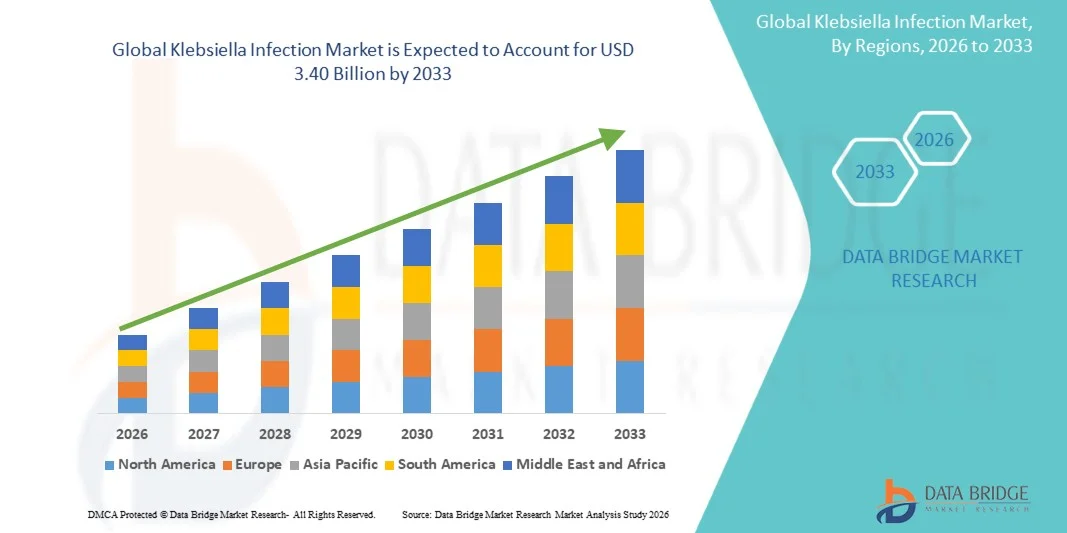
- As per Data Bridge Market Research analysis, the global Klebsiella Infection market size was valued at USD 2.26 billion in 2025 and is expected to reach USD 3.40 billion by 2033, at a CAGR of 5.25% during the forecast period
- The market growth is largely fueled by the rising prevalence of hospital-acquired infections (HAIs), increasing incidence of antimicrobial-resistant Klebsiella pneumoniae strains, and growing demand for advanced diagnostics and targeted antibiotic therapies in clinical settings
- Furthermore, increasing healthcare burden from multidrug-resistant bacterial infections and stronger adoption of rapid molecular diagnostics, infection control measures, and novel antibacterial drug development are establishing Klebsiella infection management as a critical focus area in global infectious disease control, thereby significantly boosting the industry's growth
Market Size & Forecast
- Global Market Value (2025): USD 2.26 billion
- Expected Market Value (2033): USD 3.40 billion
- Forecast CAGR (2026-2033): 5.25%
What are the Major Takeaways of the Klebsiella Infection Market?
- Klebsiella infections, primarily caused by Klebsiella pneumoniae, are a significant subset of hospital-acquired and community-acquired bacterial infections, with rising clinical concern due to the increasing prevalence of multidrug-resistant (MDR) and carbapenem-resistant strains, which is limiting the effectiveness of conventional antibiotic therapies
- The market growth is largely driven by the rising incidence of severe bacterial infections, increasing hospitalization rates, and growing antimicrobial resistance, which is driving the demand for effective antibiotic treatment options such as ceftriaxone, levofloxacin, moxifloxacin, and ofloxacin for managing Klebsiella-related infections in clinical settings
- North America dominated the Klebsiella Infection market with the largest share in 2025, accounting for 42.9% of the global market, supported by advanced healthcare infrastructure, strong antibiotic stewardship programs, and widespread availability of key treatment options, particularly in hospital settings across the U.S. and Canada
- Asia-Pacific is expected to be the fastest growing region during the forecast period due to rising infection burden, expanding healthcare access, and increasing adoption of advanced antibiotic therapies for resistant bacterial infections
- The ceftriaxone segment dominated the market in 2025, holding a 36.7% market share, driven by its broad-spectrum efficacy, widespread clinical use for moderate to severe Klebsiella infections, and strong adoption in hospital treatment protocols for empiric and targeted therapy
Report Scope and Klebsiella Infection Market Segmentation
|
Attributes |
Klebsiella Infection Key Market Insights |
|
Segments Covered |
|
|
Countries Covered |
North America
Europe
Asia-Pacific
Middle East and Africa
South America
|
|
Key Market Players |
|
|
Market Opportunities |
|
|
Value Added Data Infosets |
In addition to the insights on market scenarios such as market value, growth rate, segmentation, geographical coverage, and major players, the market reports curated by the Data Bridge Market Research also include in-depth expert analysis, patient epidemiology, pipeline analysis, pricing analysis, and regulatory framework |
What is the Key Trend in the Klebsiella Infection Market?
“Rising Focus on Rapid Diagnostics and Precision Antimicrobial Therapy”
- A significant and accelerating trend in the global Klebsiella Infection market is the increasing adoption of rapid molecular diagnostics such as PCR and multiplex panels, alongside precision-guided antimicrobial therapy to improve early detection and targeted treatment of resistant Klebsiella strains
- For instance, FDA-cleared multiplex respiratory and bloodstream infection panels are increasingly being used in hospitals to quickly identify Klebsiella pneumoniae and determine resistance markers within hours instead of days
- Advanced diagnostic platforms now enable simultaneous detection of multiple pathogens and resistance genes, allowing clinicians to optimize antibiotic selection such as ceftriaxone, levofloxacin, and moxifloxacin more effectively
- The integration of antimicrobial stewardship programs with hospital laboratory systems is enabling more data-driven infection control decisions and reducing the misuse of broad-spectrum antibiotics in critical care settings
- This shift toward faster diagnostics and personalized infection management is reshaping clinical expectations, as healthcare providers increasingly prioritize rapid, accurate, and resistance-aware treatment strategies for bacterial infections
- The demand for advanced diagnostic and targeted therapy solutions is growing rapidly across hospitals and specialty clinics as antimicrobial resistance continues to rise globally
- In addition, growing investment in AI-enabled diagnostic platforms is improving predictive identification of resistance patterns, helping clinicians choose the most effective antibiotic therapy at an earlier stage
Klebsiella Infection Market Dynamics
Driver
“Rising Burden of Antimicrobial Resistance and Hospital-Acquired Infections”
- The increasing prevalence of hospital-acquired infections (HAIs) and the rapid spread of multidrug-resistant Klebsiella pneumoniae strains are major drivers fueling demand for advanced diagnostics and effective antibiotic treatment options
- For instance, in 2025, surveillance reports from major hospital networks showed a rising incidence of carbapenem-resistant Enterobacteriaceae, with Klebsiella pneumoniae being one of the most dominant pathogens in intensive care units
- As infection severity increases, there is growing reliance on antibiotics such as ceftriaxone, levofloxacin, moxifloxacin, and ofloxacin for empiric and targeted therapy in hospitalized patients
- Furthermore, rising hospitalization rates, immunocompromised populations, and post-surgical infection risks are significantly increasing the clinical burden of Klebsiella infections worldwide
- The growing emphasis on infection control protocols and antimicrobial stewardship programs is further supporting structured treatment adoption in hospital environment
- Consequently, these converging factors are strongly driving market growth by increasing demand for both therapeutic and diagnostic solutions
- In addition, increasing healthcare expenditure and expansion of intensive care infrastructure in emerging economies are further supporting higher detection and treatment rates of Klebsiella infections
- Moreover, rising awareness among clinicians regarding early identification of resistant strains is improving diagnosis rates and boosting demand for advanced microbiology testing systems
Restraint/Challenge
“Limited Treatment Efficacy and Growing Antibiotic Resistance Pressure”
- Concerns surrounding the rapid emergence of extensively drug-resistant (XDR) and carbapenem-resistant Klebsiella strains pose a major challenge to effective treatment outcomes and market expansion
- For instance, in 2025, hospital outbreak reports in critical care units highlighted cases where standard antibiotics such as ceftriaxone and fluoroquinolones showed reduced efficacy against resistant Klebsiella pneumoniae infections
- The limited pipeline of novel antibiotics and slow pace of new drug approvals further restrict treatment options for severe and recurrent infections
- In addition, overuse and misuse of broad-spectrum antibiotics continue to accelerate resistance development, complicating infection management strategies in both hospital and community settings
- High treatment failure rates in severe bloodstream and respiratory infections increase healthcare burden and extend hospital stays, creating additional clinical and economic pressure
- Overcoming these challenges through new antimicrobial development, combination therapies, and strict antibiotic stewardship will be critical for sustaining market growth
- Furthermore, high costs associated with novel antibiotic development and clinical trials limit rapid commercialization of new treatment options
- In addition, lack of standardized global surveillance in some regions hampers early detection and effective containment of resistant Klebsiella outbreaks
How is the Klebsiella Infection Market Segmented?
The market is segmented on the basis of treatment, end-users, and distribution channel.
- By Treatment
On the basis of treatment, the Klebsiella Infection market is segmented into moxifloxacin, ofloxacin, levofloxacin, and ceftriaxone. The ceftriaxone segment dominated the market with the largest revenue share of 36.7% in 2025, driven by its strong clinical efficacy as a broad-spectrum cephalosporin widely used for empiric therapy in hospital-acquired Klebsiella infections. It is commonly preferred in moderate to severe infections due to its established safety profile, cost-effectiveness, and inclusion in standard hospital treatment guidelines across both developed and emerging healthcare systems. Its widespread availability in hospital pharmacies and strong adoption in critical care settings further strengthen its dominant position. In addition, ceftriaxone remains a first-line option in many treatment protocols for respiratory, urinary tract, and bloodstream infections caused by Klebsiella species.
The levofloxacin segment is expected to witness the fastest growth rate of 8% from 2026 to 2033, driven by increasing use in resistant bacterial infections and its strong oral and intravenous formulations that support flexible treatment approaches. Levofloxacin is gaining traction in both hospital and outpatient settings due to its broad-spectrum activity and effectiveness against respiratory tract infections. Rising cases of community-acquired Klebsiella infections are further boosting its adoption. In addition, growing preference for fluoroquinolones in step-down therapy after intravenous treatment is supporting sustained demand growth. Its expanding use in combination therapy for multidrug-resistant infections is also accelerating its market expansion.
- By End-Users
On the basis of end-users, the market is segmented into hospitals, homecare, specialty clinics, and others. The hospitals segment dominated the market with the largest revenue share of 60% in 2025, driven by the high incidence of severe Klebsiella infections requiring inpatient care, intensive monitoring, and intravenous antibiotic administration. Hospitals serve as the primary treatment centers for critical cases such as pneumonia, sepsis, and post-surgical infections caused by Klebsiella species. The presence of advanced diagnostic facilities and antimicrobial stewardship programs further strengthens hospital-based treatment adoption. In addition, the availability of specialized infectious disease units and critical care infrastructure ensures effective management of multidrug-resistant infections. High patient inflow and centralized treatment protocols further reinforce hospital dominance in the market.
The homecare segment is expected to witness the fastest growth rate of 9% from 2026 to 2033, driven by the increasing shift toward outpatient care and post-hospitalization treatment management. Rising adoption of oral antibiotics such as levofloxacin and moxifloxacin is enabling easier continuation of therapy outside hospital settings. Growing healthcare cost pressures are encouraging home-based infection management for stable patients. In addition, advancements in telemedicine and remote patient monitoring are supporting safer homecare treatment of bacterial infections. Increasing awareness of infection control and patient preference for home recovery are further accelerating segment growth.
- By Distribution Channel
On the basis of distribution channel, the market is segmented into hospital pharmacy, online pharmacy, and retail pharmacy. The hospital pharmacy segment dominated the market with the largest revenue share of 65% in 2025, driven by the high dependency on hospital-based treatment for severe Klebsiella infections requiring intravenous antibiotics. Hospital pharmacies ensure immediate availability of critical drugs such as ceftriaxone and levofloxacin for emergency and intensive care use. Strict prescription control and antimicrobial stewardship programs further centralize antibiotic dispensing within hospitals. In addition, hospital pharmacies play a key role in managing multidrug-resistant infections through controlled antibiotic administration. The integration of diagnostic labs with hospital pharmacy systems further strengthens its dominant position.
The online pharmacy segment is expected to witness the fastest growth rate of 10% from 2026 to 2033, driven by increasing digitalization of healthcare services and rising demand for convenient drug access. Growing acceptance of e-prescriptions and telemedicine consultations is boosting online antibiotic procurement. Patients recovering from mild or post-hospital infections are increasingly relying on online pharmacies for continuation therapy. In addition, expanding internet penetration and improved logistics networks are supporting faster drug delivery services. The rising adoption of digital health platforms and cost transparency is further accelerating the growth of online pharmacy distribution channels.
Which Region Holds the Largest Share of the Klebsiella Infection Market?
- North America dominated the Klebsiella Infection market with the largest share in 2025, accounting for 42.9% of the global market, supported by advanced healthcare infrastructure, strong antibiotic stewardship programs, and widespread availability of key treatment options, particularly in hospital settings across the U.S. and Canada
- Healthcare systems in the region highly prioritize early detection and effective management of multidrug-resistant Klebsiella pneumoniae infections, supported by widespread use of molecular diagnostics and advanced microbiology testing platforms in hospital settings
- This widespread dominance is further supported by high healthcare expenditure, strong presence of key pharmaceutical and diagnostic companies, and increasing prevalence of critical care admissions, establishing North America as a leading region for Klebsiella infection diagnosis and treatment adoption
U.S. Klebsiella Infection Market Insight
The U.S. Klebsiella infection market captured the largest revenue share in 2025 within North America, driven by the high burden of hospital-acquired infections and the increasing prevalence of multidrug-resistant Klebsiella pneumoniae strains. The strong presence of advanced healthcare infrastructure, coupled with rapid adoption of rapid diagnostic technologies, is significantly supporting market growth. Rising ICU admissions, immunocompromised patient populations, and post-surgical infection risks are further increasing demand for effective treatment options. In addition, robust investments in antimicrobial resistance (AMR) research and the development of novel antibiotics are contributing to the expansion of this market.
Europe Klebsiella Infection Market Insight
The Europe Klebsiella infection market is projected to expand at a substantial CAGR throughout the forecast period, primarily driven by increasing awareness of hospital-acquired infections and stringent infection control regulations across healthcare facilities. The rising incidence of antimicrobial resistance, particularly in intensive care units, is fostering demand for advanced diagnostic and treatment solutions. Europe’s well-established public health surveillance systems are supporting early detection and containment strategies. Furthermore, growing investments in infection prevention programs and antibiotic stewardship initiatives are accelerating market growth across the region.
U.K. Klebsiella Infection Market Insight
The U.K. Klebsiella infection market is anticipated to grow at a noteworthy CAGR during the forecast period, driven by rising concerns over healthcare-associated infections and the growing burden of antimicrobial resistance. The National Health Service (NHS) initiatives focused on infection prevention and control are playing a key role in improving diagnosis and treatment outcomes. Increasing hospital admissions, especially in critical care and long-term care facilities, is further contributing to demand. In addition, ongoing research collaborations and public health campaigns aimed at reducing bacterial resistance are supporting market expansion.
Germany Klebsiella Infection Market Insight
The Germany Klebsiella infection market is expected to expand at a considerable CAGR during the forecast period, fueled by strong healthcare infrastructure and increasing awareness of multidrug-resistant bacterial infections. Germany’s emphasis on infection prevention in hospitals and strict hygiene protocols are key factors supporting market growth. The rising prevalence of complicated urinary tract infections, pneumonia, and bloodstream infections caused by Klebsiella species is further driving demand. In addition, advancements in microbiological diagnostics and strong government support for antimicrobial resistance monitoring are enhancing market development.
Asia-Pacific Klebsiella Infection Market Insight
The Asia-Pacific Klebsiella infection market is poised to grow at the fastest CAGR during the forecast period, driven by a high burden of infectious diseases, increasing hospital admissions, and growing antimicrobial resistance across emerging economies. Rapid urbanization, expanding healthcare infrastructure, and improved access to diagnostic facilities are accelerating market adoption. Countries such as China, India, and Japan are witnessing rising cases of hospital-acquired infections, further boosting demand for effective treatment solutions. Moreover, increasing government initiatives to strengthen infection control programs are supporting regional market expansion.
Japan Klebsiella Infection Market Insight
The Japan Klebsiella infection market is gaining momentum due to its advanced healthcare system, aging population, and high susceptibility to hospital-acquired infections. The increasing incidence of pneumonia and bloodstream infections caused by Klebsiella species is driving demand for rapid diagnostics and targeted antimicrobial therapies. Japan’s strong focus on infection control practices and antimicrobial stewardship programs is further supporting market growth. In addition, integration of advanced laboratory technologies and continuous research into drug-resistant pathogens are enhancing clinical management of infections.
India Klebsiella Infection Market Insight
The India Klebsiella infection market accounted for a significant revenue share in Asia-Pacific in 2025, attributed to the rising burden of hospital-acquired infections and increasing prevalence of antimicrobial resistance. Rapid expansion of healthcare infrastructure, growing ICU admissions, and improved diagnostic awareness are key factors driving market growth. The increasing incidence of pneumonia, urinary tract infections, and bloodstream infections caused by Klebsiella species is further boosting demand. In addition, government initiatives aimed at strengthening infection control practices and expanding access to affordable healthcare are supporting market expansion.
Which are the Top Companies in the Klebsiella Infection Market?
The Klebsiella Infection industry is primarily led by well-established companies, including:
- Merck & Co., Inc., (U.S.)
- Pfizer Inc., (U.S.)
- Shionogi & Co., Ltd., (Japan)
- Bristol-Myers Squibb Company (U.S.)
- Novartis AG (Switzerland)
- F. Hoffmann-La Roche Ltd. (Switzerland)
- Sanofi (France)
- GSK plc (U.K.)
- AstraZeneca (U.K.)
- AbbVie Inc. (U.S.)
- Gilead Sciences, Inc. (U.S.)
- Eli Lilly and Company (U.S.)
- Bayer AG (Germany)
- Boehringer Ingelheim International GmbH (Germany)
- Takeda Pharmaceutical Company Limited (Japan)
- Amgen Inc. (U.S.)
- Teva Pharmaceutical Industries Ltd. (Israel)
- BIOMÉRIEUX (France)
- BD (U.S.)
What are Latest Developments in the Global Klebsiella Infection Market?
- In October 2025, a clinical surveillance study reported rising ICU outbreaks of carbapenem-resistant Klebsiella pneumoniae linked to hospital transmission failures. A peer-reviewed hospital study documented an outbreak of carbapenem-resistant Klebsiella pneumoniae in an intensive care unit, where multiple patients developed infections over a short period
- In September 2025, CDC reported a sharp surge in carbapenem-resistant Enterobacterales (CRE), including Klebsiella pneumoniae, across U.S. healthcare systems. The Centers for Disease Control and Prevention (CDC) highlighted a significant rise in drug-resistant infections, particularly NDM-producing carbapenem-resistant Enterobacterales (NDM-CRE), which includes Klebsiella pneumoniae
- In June 2025, CDC updated its Klebsiella infection surveillance and resistance profile, highlighting rising carbapenem-resistant infections in healthcare settings. The U.S. Centers for Disease Control and Prevention (CDC) reported that Klebsiella pneumoniae continues to be a major cause of healthcare-associated infections such as pneumonia, bloodstream infections, and surgical site infections
- In July 2024, WHO issued a global alert on hypervirulent and drug-resistant Klebsiella pneumoniae strains. The World Health Organization (WHO) reported the emergence of hypervirulent Klebsiella pneumoniae (hvKp) strains with carbapenem resistance genes detected across multiple regions
- In September 2023, NIH researchers reported emergence of community-acquired multidrug-resistant Klebsiella strains. The U.S. National Institutes of Health (NIH) published findings showing that hypervirulent and antibiotic-resistant Klebsiella pneumoniae strains are no longer confined to hospitals but are increasingly appearing in community settings

- Interactive Data Analysis Dashboard
- Company Analysis Dashboard for high growth potential opportunities
- Research Analyst Access for customization & queries
- Competitor Analysis with Interactive dashboard
- Latest News, Updates & Trend analysis
- Harness the Power of Benchmark Analysis for Comprehensive Competitor Tracking
Data collection and base year analysis are done using data collection modules with large sample sizes. The stage includes obtaining market information or related data through various sources and strategies. It includes examining and planning all the data acquired from the past in advance. It likewise envelops the examination of information inconsistencies seen across different information sources. The market data is analysed and estimated using market statistical and coherent models. Also, market share analysis and key trend analysis are the major success factors in the market report. To know more, please request an analyst call or drop down your inquiry.
The key research methodology used by DBMR research team is data triangulation which involves data mining, analysis of the impact of data variables on the market and primary (industry expert) validation. Data models include Vendor Positioning Grid, Market Time Line Analysis, Market Overview and Guide, Company Positioning Grid, Patent Analysis, Pricing Analysis, Company Market Share Analysis, Standards of Measurement, Global versus Regional and Vendor Share Analysis. To know more about the research methodology, drop in an inquiry to speak to our industry experts.
Data Bridge Market Research is a leader in advanced formative research. We take pride in servicing our existing and new customers with data and analysis that match and suits their goal. The report can be customized to include price trend analysis of target brands understanding the market for additional countries (ask for the list of countries), clinical trial results data, literature review, refurbished market and product base analysis. Market analysis of target competitors can be analyzed from technology-based analysis to market portfolio strategies. We can add as many competitors that you require data about in the format and data style you are looking for. Our team of analysts can also provide you data in crude raw excel files pivot tables (Fact book) or can assist you in creating presentations from the data sets available in the report.












