


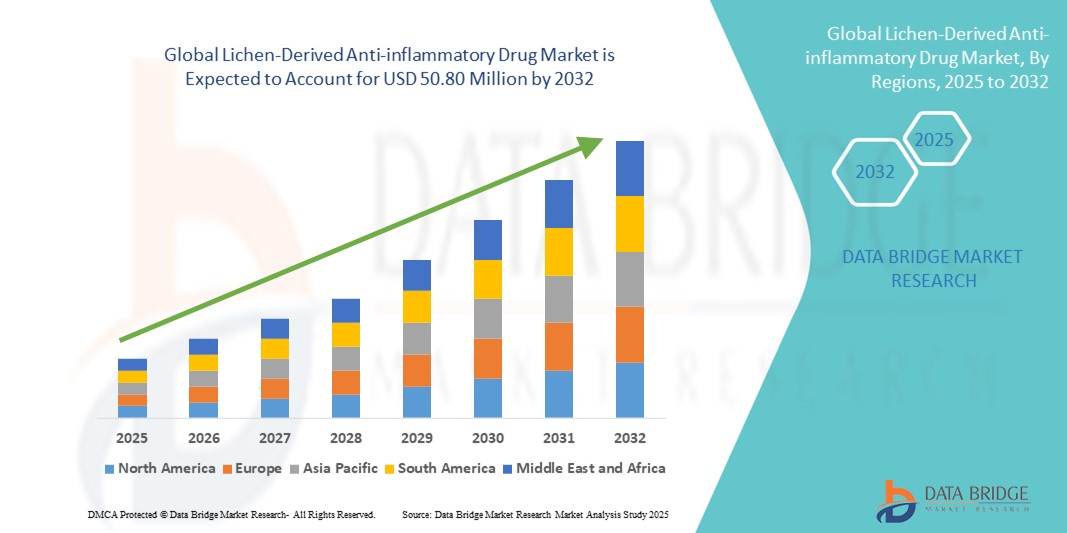
Lichen-Derived Anti-inflammatory Drug Market Size
- The global lichen-derived anti-inflammatory drug market size was valued at USD 36.78 million in 2024 and is expected to reach USD 50.80 million by 2032, at a CAGR of 4.12% during the forecast period
- The market growth is primarily driven by increasing interest in natural and plant-based pharmaceuticals, with lichen species emerging as promising sources of bioactive compounds such as usnic acid, depsides, and depsidones known for their anti-inflammatory effects
- Furthermore, the rising prevalence of chronic inflammatory disorders and a growing demand for safer, low-side-effect alternatives to synthetic drugs are strengthening the case for lichen-derived formulations. These evolving dynamics are propelling research investments and commercialization efforts, thereby significantly boosting the industry's growth
Lichen-Derived Anti-inflammatory Drug Market Analysis
- Lichen-derived anti-inflammatory drugs, formulated from bioactive compounds such as usnic acid and depsidones, are emerging as promising alternatives in the treatment of chronic and acute inflammatory conditions due to their natural origin, broad-spectrum activity, and favorable safety profiles compared to synthetic agents
- The increasing demand for these drugs is primarily driven by the global shift toward plant-based therapeutics, rising prevalence of inflammatory disorders, and growing interest in sustainable, low-toxicity alternatives within both pharmaceutical and nutraceutical sector
- North America dominated the lichen-derived anti-inflammatory drug market with the largest revenue share of 40.8% in 2024, supported by strong research and development activities, high healthcare awareness, and increasing commercialization of herbal and botanical-based formulations, particularly in the U.S., where natural product-based innovation is accelerating
- Asia-Pacific is expected to be the fastest growing region in the lichen-derived anti-inflammatory drug market during the forecast period due to traditional herbal medicine practices, abundant lichen biodiversity, and expanding government support for botanical drug development
- The Usnic acid–based drugs segment dominated the lichen-derived anti-inflammatory drug market with a market share of 72.9% in 2024, owing to extensive scientific validation of its anti-inflammatory properties, strong presence in topical formulations, and continued exploration in both pharmaceutical and cosmeceutical applications
Report Scope and Lichen-Derived Anti-inflammatory Drug Market Segmentation
|
Attributes |
Lichen-Derived Anti-inflammatory Drug Key Market Insights |
|
Segments Covered |
|
|
Countries Covered |
North America
Europe
Asia-Pacific
Middle East and Africa
South America
|
|
Key Market Players |
|
|
Market Opportunities |
|
|
Value Added Data Infosets |
In addition to the insights on market scenarios such as market value, growth rate, segmentation, geographical coverage, and major players, the market reports curated by the Data Bridge Market Research also include in-depth expert analysis, pricing analysis, brand share analysis, consumer survey, demography analysis, supply chain analysis, value chain analysis, raw material/consumables overview, vendor selection criteria, PESTLE Analysis, Porter Analysis, and regulatory framework. |
Lichen-Derived Anti-inflammatory Drug Market Trends
Rising Demand for Natural and Plant-Based Therapeutics
- A major and accelerating trend in the global lichen-derived anti-inflammatory drug market is the growing consumer and pharmaceutical industry interest in natural, plant-based, and sustainably sourced therapeutics as alternatives to synthetic drugs. This trend is reshaping R&D pipelines and driving the adoption of herbal formulations derived from lichen compounds such as usnic acid, depsides, and depsidones, known for their anti-inflammatory and antimicrobial properties
- For instance, formulations utilizing usnic acid-based topical creams have gained popularity for their dual wound-healing and inflammation-reducing effects, particularly in dermatological applications. Similarly, herbal capsules and tinctures integrating lichen extracts are increasingly being marketed through nutraceutical and wellness platforms
- Lichen-derived compounds offer multifunctional benefits, including antioxidant, analgesic, and anti-inflammatory activity, making them attractive for use in multi-symptom therapies. This aligns well with the preferences of consumers seeking holistic and side-effect-minimized treatment options. Moreover, the trend is supported by increasing publications and clinical studies validating the efficacy and bioactivity of these compounds, driving credibility and market expansion
- As consumers and practitioners grow more aware of the adverse effects of long-term NSAID or steroid use, demand for botanical-based alternatives is surging, especially in the management of skin, joint, and respiratory inflammatory disorders. This shift is enabling new entrants and established herbal medicine brands to explore and commercialize lichen-based drug candidates in topical and oral forms
- This movement toward more eco-conscious, minimally processed, and biologically derived therapeutics is fundamentally influencing innovation pipelines across pharma and nutraceutical sectors. As a result, companies specializing in plant-based drug development are increasingly partnering with academic institutions to study and patent lichen-derived formulations for chronic inflammatory diseases
- The demand for natural anti-inflammatory compounds with broad-spectrum benefits and fewer systemic side effects is rising quickly across both conventional and complementary medicine sectors, positioning lichen-derived drugs as an attractive option in integrative therapy frameworks
Lichen-Derived Anti-inflammatory Drug Market Dynamics
Driver
Increasing Burden of Chronic Inflammatory Conditions and Shift Toward Botanical Medicines
- The global rise in chronic inflammatory diseases including eczema, arthritis, and respiratory conditions combined with growing concerns about the long-term use of synthetic drugs, is a significant driver for lichen-derived anti-inflammatory drug development. These drugs offer natural anti-inflammatory efficacy with promising safety profiles, making them suitable for long-term and integrative use
- For instance, research advancements in bioactive lichen metabolites, such as the anti-inflammatory actions of usnic acid via COX and cytokine pathway inhibition, are fueling both academic and commercial interest in turning these natural agents into topical or oral formulations. This aligns with consumer shifts toward non-toxic and sustainable therapeutic options
- Increasing investments in phytomedicine and favorable regulatory frameworks in Europe and Asia for herbal drug approvals are further facilitating the entry of lichen-derived products into the market. In addition, rising consumer trust in herbal remedies, particularly for skin and respiratory health, is expanding opportunities in both over-the-counter and prescription markets
- The growing availability of lichen-rich ecosystems and bioprospecting partnerships between pharma companies and research institutions supports a sustainable supply chain for lichen extraction and drug development, contributing to scalable innovation in this field
Restraint/Challenge
Limited Clinical Data and Regulatory Complexity for Botanical Drug Approval
- Despite promising preclinical results, one of the main challenges facing the lichen-derived anti-inflammatory drug market is the lack of large-scale human clinical trials and regulatory clarity around botanical compound standardization. This hinders fast-track commercialization and broader acceptance within the conventional pharmaceutical market
- For instance, while usnic acid demonstrates strong anti-inflammatory activity in vitro and in vivo, concerns about hepatotoxicity and safe dosage range have limited its oral application, creating regulatory hurdles and cautious adoption by major pharmaceutical firms
- The need to comply with complex and region-specific herbal medicine regulations, including documentation of traditional use, clinical efficacy, safety profiles, and Good Manufacturing Practices (GMP), presents a significant barrier, especially for startups or smaller herbal medicine manufacturers
- In addition, challenges around extract consistency, compound isolation, and formulation stability continue to pose bottlenecks for pharmaceutical-grade lichen drug development
- Overcoming these challenges will require collaborative research efforts, well-designed clinical studies, and regulatory engagement to build strong safety and efficacy profiles. As interest grows, government and private research funding, particularly in Europe and Asia-Pacific, may help bridge the data and approval gaps, enabling wider adoption of lichen-derived anti-inflammatory therapies
Lichen-Derived Anti-inflammatory Drug Market Scope
The market is segmented on the basis of compound type, application, formulation type, and end user.
- By Compound Type
On the basis of compound type, the global lichen-derived anti-inflammatory drug market is segmented into usnic acid-based drugs, depsides and depsidones, lichen-derived polyphenols, and other lichen secondary metabolites. The usnic acid-based drugs segment dominated the market with the largest market revenue share of 72.9% in 2024 due to its broad anti-inflammatory and antimicrobial properties, which have been extensively documented in both traditional and scientific literature. Usnic acid is widely researched for its potential in topical applications, especially for treating skin inflammation, wounds, and microbial infections. Its inclusion in ointments, creams, and herbal blends makes it a leading component in both prescription and over-the-counter products.
The depsides and depsidones segment is expected to witness the fastest growth rate from 2025 to 2032, fueled by rising academic and pharmaceutical interest in their immunomodulatory and antioxidant activities. These compounds are being actively explored in inflammatory disease models, especially those involving the respiratory and gastrointestinal tracts, and their chemical complexity provides potential for the development of novel therapeutic candidates.
- By Application
On the basis of application, the market is segmented into dermatological inflammation, respiratory inflammatory conditions, musculoskeletal disorders, gastrointestinal inflammation, and others. The dermatological inflammation segment accounted for the largest share of the market in 2024, driven by the rising demand for natural and gentle skincare therapies and the increasing prevalence of chronic skin conditions such as eczema, psoriasis, and contact dermatitis. Lichen-based creams and ointments are gaining traction as safe alternatives to corticosteroids for managing inflammation and irritation.
The musculoskeletal disorders segment is expected to register the fastest CAGR during the forecast period, due to growing demand for natural pain and inflammation relief in arthritis, joint pain, and sports injuries. Lichen-derived capsules and herbal extracts are being adopted for their analgesic and anti-inflammatory effects, particularly in aging populations and wellness-focused consumers.
- By Formulation Type
On the basis of formulation type, the market is segmented into topical creams and ointments, capsules/tablets, injectables, nano-formulations/liposomes, and herbal extract blends. The topical creams and ointments segment held the largest market share in 2024, as they are the most accessible and widely accepted form of lichen-derived therapy, especially for skin and localized inflammatory conditions. Their non-invasive delivery and ease of application contribute to high patient compliance.
The nano-formulations/liposomes segment is anticipated to grow at the fastest CAGR from 2025 to 2032. This growth is attributed to increasing pharmaceutical R&D investments aimed at enhancing bioavailability and targeted delivery of lichen compounds. These advanced formulations improve drug stability and enable precise treatment of deep-tissue and systemic inflammation, attracting interest from biotech firms and research institutions.
- By End User
On the basis of end user, the market is segmented into hospitals and clinics, research & academic institutions, homecare / individual users, and pharmaceutical & biotech companies. The hospitals and clinics segment held the largest share of the market in 2024, due to the increasing prescription of botanical anti-inflammatory therapies as complementary treatments, especially in dermatology and respiratory care. The growing integration of herbal remedies in formal healthcare settings is also contributing to segment growth.
The homecare / individual users segment is projected to witness the fastest growth over the forecast period, supported by the expanding nutraceutical and OTC herbal supplement markets. Consumers are increasingly seeking natural self-care options, and the rise of e-commerce platforms has made lichen-based formulations more accessible for personal us.
Lichen-Derived Anti-inflammatory Drug Market Regional Analysis
- North America dominated the lichen-derived anti-inflammatory drug market with the largest revenue share of 40.8% in 2024, supported by strong research and development activities, high healthcare awareness, and increasing commercialization of herbal and botanical-based formulations, particularly in the U.S., where natural product-based innovation is accelerating
- There is rising interest in alternative medicine across the U.S. and Canada, supported by favorable regulatory frameworks for botanical drug approvals, increasing research initiatives, and growing demand for herbal formulations in dermatology and respiratory care
- The region’s dominance is further supported by strong investment in pharmaceutical R&D, a well-established nutraceutical market, and widespread availability of lichen-based OTC and prescription products across both traditional pharmacies and online channels
U.S. Lichen-Derived Anti-inflammatory Drug Market Insight
The U.S. lichen-derived anti-inflammatory drug market captured the largest revenue share of 79% in 2024 within North America, driven by increasing demand for botanical and alternative treatments amid rising awareness of chronic inflammation. Consumers are turning to natural-origin formulations for conditions such as dermatitis and arthritis, supported by favorable FDA pathways for botanical drugs. The U.S. market benefits from strong academic research, partnerships between pharmaceutical firms and herbal drug developers, and growing e-commerce access to lichen-based supplements and OTC creams.
Europe Lichen-Derived Anti-inflammatory Drug Market Insight
The Europe market is projected to grow at a notable CAGR during the forecast period, supported by stringent regulatory standards for synthetic drugs and a cultural preference for phytotherapeutic solutions. The increasing burden of chronic inflammatory diseases, combined with rising interest in plant-based treatments, is fostering demand for lichen-derived anti-inflammatory formulations. The region is experiencing growth across clinical and consumer healthcare settings, particularly in dermatology and rheumatology applications.
U.K. Lichen-Derived Anti-inflammatory Drug Market Insight
The U.K. market is anticipated to grow steadily due to strong government backing for herbal research and consumer awareness of natural health remedies. Growing cases of respiratory inflammation and skin allergies are fueling interest in topical and oral formulations derived from lichens. The well-developed retail pharmacy and online nutraceutical channels in the U.K. support market accessibility and expansion.
Germany Lichen-Derived Anti-inflammatory Drug Market Insight
Germany’s market is expanding considerably, driven by its strong tradition of herbal medicine, advanced pharmaceutical infrastructure, and public trust in natural therapeutics. The country’s leading role in phytopharmaceutical innovation, combined with high consumer spending on alternative healthcare, is bolstering demand for lichen-derived products, especially in topical anti-inflammatory applications.
Asia-Pacific Lichen-Derived Anti-inflammatory Drug Market Insight
The Asia-Pacific market is set to grow at the fastest CAGR of 23% during the forecast period (2025–2032), driven by increased traditional medicine adoption, rising disposable incomes, and rapid healthcare modernization across countries such as China, Japan, and India. Government initiatives supporting herbal drug development and integration into national health systems are accelerating market penetration.
Japan Lichen-Derived Anti-inflammatory Drug Market Insight
Japan’s market is gaining traction due to a rising elderly population and high acceptance of Kampo (traditional medicine) integrated with modern healthcare. Consumers seek natural anti-inflammatory remedies for chronic ailments, and product innovation in nano-formulated lichen extracts is contributing to market expansion in both clinical and consumer health segments.
India Lichen-Derived Anti-inflammatory Drug Market Insight
India accounted for the largest revenue share in Asia-Pacific in 2024, supported by a vast consumer base favoring Ayurvedic and herbal treatments. Rapid urbanization, increasing healthcare expenditure, and strong domestic production of plant-based ingredients—including lichens from the Himalayas and Western Ghats—are driving demand. The proliferation of herbal supplement brands and traditional medicine integration into public health policies further boost market growth.
Lichen-Derived Anti-inflammatory Drug Market Share
The lichen-derived anti-inflammatory drug industry is primarily led by well-established companies, including:
- Alchem International Pvt. Ltd. (India)
- Indena S.p.A. (Italy)
- Sabinsa Corporation (U.S.)
- Bio-Botanica Inc. (U.S.)
- Gaia Herbs, Inc. (U.S.)
- Valentis Nanotech (Israel)
- Himalaya Wellness Company (India)
- Naturex (France)
- Martin Bauer Group (Germany)
- Euromed S.A. (Spain)
- Finzelberg GmbH & Co. KG (Germany)
- Arjuna Natural Pvt. Ltd. (India)
- Bioforce AG (Switzerland)
- BASF SE – Pharma Solutions Division (Germany)
- Indofine Chemical Company, Inc. (U.S.)
- Natural Remedies Pvt. Ltd. (India)
- Cymbiotika LLC (U.S.)
- Laboratoires Expanscience (France)
- Kancor Ingredients Limited (India)
- NATAC Group (Spain)
What are the Recent Developments in Global Lichen-Derived Anti-inflammatory Drug Market?
- In June 2024, Symrise AG, a global leader in natural ingredient solutions, announced the development of a novel lichen-derived compound with potent anti-inflammatory properties intended for use in dermatological formulations. The innovation, extracted sustainably from Usnea barbata, is undergoing clinical evaluation for efficacy in treating eczema and psoriasis. This marks a significant step in bridging traditional botanical knowledge with modern pharmaceutical science to deliver effective, plant-based therapies
- In May 2024, researchers at the University of Helsinki collaborated with a Finnish biotech startup to launch a pilot program evaluating nano-formulated lichen polyphenols in treating gastrointestinal inflammation. The project integrates cutting-edge drug delivery platforms with naturally sourced compounds, aiming to enhance bioavailability and therapeutic outcomes. This initiative reflects growing interest in academia-industry partnerships for developing next-generation botanical drugs
- In March 2024, BioBridge Naturals, a U.S.-based herbal pharmaceutical company, expanded its product line with the release of “LichoRelief,” a lichen-based topical cream targeting musculoskeletal inflammation. Developed with clinically tested lichen secondary metabolites, the product caters to consumers seeking non-steroidal, plant-based alternatives to conventional anti-inflammatories. The launch demonstrates increasing demand for clean-label and sustainable formulations in pain and inflammation management
- In February 2024, the Indian Institute of Integrative Medicine (IIIM), under CSIR, announced a major discovery of a new anti-inflammatory compound from Himalayan lichens. The compound, currently under pre-clinical trials, showed promise in downregulating inflammatory markers in autoimmune disorders. This breakthrough highlights the potential of India’s rich biodiversity in supporting new drug pipelines through ethnopharmacological exploration
- In January 2024, GreenMed Pharma (Germany) entered into a licensing agreement with a Korean biotech firm to commercialize a lichen-derived oral supplement targeting chronic respiratory inflammation. The agreement covers product development, EU regulatory support, and distribution channels across Europe. This move underscores growing international collaboration in the development of phytopharmaceuticals tailored to chronic inflammatory diseases

- Interactive Data Analysis Dashboard
- Company Analysis Dashboard for high growth potential opportunities
- Research Analyst Access for customization & queries
- Competitor Analysis with Interactive dashboard
- Latest News, Updates & Trend analysis
- Harness the Power of Benchmark Analysis for Comprehensive Competitor Tracking
Data collection and base year analysis are done using data collection modules with large sample sizes. The stage includes obtaining market information or related data through various sources and strategies. It includes examining and planning all the data acquired from the past in advance. It likewise envelops the examination of information inconsistencies seen across different information sources. The market data is analysed and estimated using market statistical and coherent models. Also, market share analysis and key trend analysis are the major success factors in the market report. To know more, please request an analyst call or drop down your inquiry.
The key research methodology used by DBMR research team is data triangulation which involves data mining, analysis of the impact of data variables on the market and primary (industry expert) validation. Data models include Vendor Positioning Grid, Market Time Line Analysis, Market Overview and Guide, Company Positioning Grid, Patent Analysis, Pricing Analysis, Company Market Share Analysis, Standards of Measurement, Global versus Regional and Vendor Share Analysis. To know more about the research methodology, drop in an inquiry to speak to our industry experts.
Data Bridge Market Research is a leader in advanced formative research. We take pride in servicing our existing and new customers with data and analysis that match and suits their goal. The report can be customized to include price trend analysis of target brands understanding the market for additional countries (ask for the list of countries), clinical trial results data, literature review, refurbished market and product base analysis. Market analysis of target competitors can be analyzed from technology-based analysis to market portfolio strategies. We can add as many competitors that you require data about in the format and data style you are looking for. Our team of analysts can also provide you data in crude raw excel files pivot tables (Fact book) or can assist you in creating presentations from the data sets available in the report.












