Global Lincomycin Market
Market Size in USD Million
CAGR :
% 
 USD
607.64 Million
USD
884.17 Million
2025
2033
USD
607.64 Million
USD
884.17 Million
2025
2033
 Forecast Period Forecast Period |
2026 –2033 |
 Market Size (Base Year) Market Size (Base Year) |
USD 607.64 Million |
 Market Size (Forecast Year) Market Size (Forecast Year) |
USD 884.17 Million |
 CAGR CAGR |
% |
| Major Markets Players |
|
Lincomycin Market Size
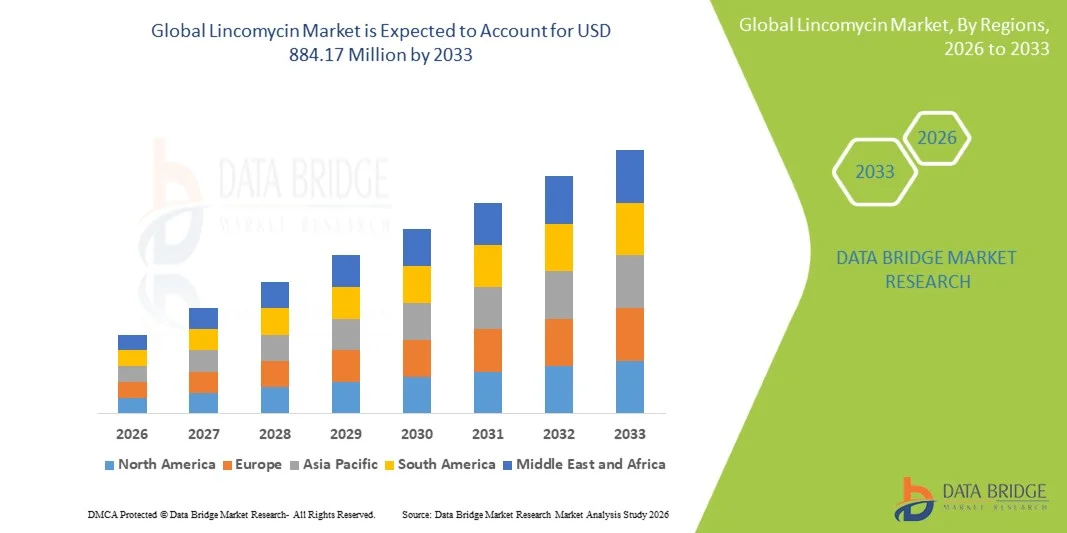
- The global lincomycin market size was valued at USD 607.64 million in 2025and is expected to reach USD 884.17 million by 2033, at a CAGR of 4.80% during the forecast period
- The market growth is largely fueled by the increasing demand for effective antibiotics in veterinary and pharmaceutical applications, along with the continued prevalence of bacterial infections requiring lincosamide-class treatments, leading to sustained consumption across livestock and human healthcare sectors
- Furthermore, rising awareness regarding animal health management, expanding livestock production, and the growing need for reliable antibacterial agents are establishing lincomycin as an essential therapeutic solution. These converging factors are accelerating the adoption of lincomycin products, thereby significantly boosting the industry's growth
Lincomycin Market Analysis
- Lincomycin, a lincosamide antibiotic used for treating bacterial infections in both humans and animals, plays a crucial role in pharmaceutical and veterinary applications due to its effectiveness against gram-positive bacteria and its widespread use in managing infections such as skin, respiratory, and bone-related conditions
- The escalating demand for lincomycin is primarily fueled by the growing prevalence of bacterial infections, increasing utilization across gastrointestinal and respiratory treatments, and rising demand for effective antibiotics in both clinical and livestock healthcare settings
- North America dominated the lincomycin market with the largest revenue share of 38.70% in 2025, characterized by advanced healthcare infrastructure, strong pharmaceutical presence, and high awareness regarding infection management, with the U.S. experiencing steady demand due to consistent prescription rates and established treatment protocols
- Asia-Pacific is expected to be the fastest growing region in the lincomycin market during the forecast period due to expanding healthcare access, increasing population, and rising incidence of infectious diseases, along with growing investments in pharmaceutical manufacturing
- Oral segment dominated the lincomycin market with a market share of 41.90% in 2025, driven by ease of administration, higher patient compliance, and widespread use of capsules and tablets for treating mild to moderate infections
Report Scope and Lincomycin Market Segmentation
|
Attributes |
Lincomycin Key Market Insights |
|
Segments Covered |
|
|
Countries Covered |
North America · U.S. · Canada · Mexico Europe · Germany · France · U.K. · Netherlands · Switzerland · Belgium · Russia · Italy · Spain · Turkey · Rest of Europe Asia-Pacific · China · Japan · India · South Korea · Singapore · Malaysia · Australia · Thailand · Indonesia · Philippines · Rest of Asia-Pacific Middle East and Africa · Saudi Arabia · U.A.E. · South Africa · Egypt · Israel · Rest of Middle East and Africa South America · Brazil · Argentina · Rest of South America |
|
Key Market Players |
|
|
Market Opportunities |
· Expansion of livestock production in emerging economies · Increasing focus on developing combination antibiotic therapies |
|
Value Added Data Infosets |
In addition to the insights on market scenarios such as market value, growth rate, segmentation, geographical coverage, and major players, the market reports curated by the Data Bridge Market Research also include in-depth expert analysis, patient epidemiology, pipeline analysis, pricing analysis, and regulatory framework |
Lincomycin Market Trends
“Rising Focus on Veterinary Antibiotics and Infection Management”
- A significant and accelerating trend in the global lincomycin market is the increasing utilization of antibiotics in veterinary healthcare and livestock production systems. This shift is significantly enhancing disease management and productivity across animal farming operations
- For instance, lincomycin is widely used in poultry and swine industries to control bacterial infections such as respiratory and gastrointestinal diseases, ensuring improved animal health and farm output. Similarly, pharmaceutical-grade lincomycin is prescribed for treating serious bacterial infections in humans, including skin and bone infections
- The growing use of lincomycin enables effective infection control strategies in both veterinary and clinical settings, particularly in regions with high livestock density and increasing disease burden. For instance, livestock producers utilize lincomycin-based formulations to maintain herd health and prevent outbreaks that could impact productivity and supply chains
- The widespread adoption of lincomycin across healthcare and agricultural sectors facilitates consistent demand, supported by its availability in multiple dosage forms such as capsules, tablets, and injectables. This flexibility allows healthcare providers and veterinarians to select appropriate treatment methods based on infection severity and patient requirements
- This trend towards increased antibiotic utilization and improved infection control is reshaping treatment practices in both human and animal healthcare sectors. Consequently, companies such as Zoetis and Elanco are focusing on expanding their antibiotic portfolios and strengthening veterinary product offerings to meet rising global demand
- The demand for lincomycin that supports effective infection treatment and livestock productivity is growing steadily across both developed and emerging markets, as healthcare providers and farmers increasingly prioritize reliable antibacterial solutions
- Advancements in formulation technologies, including improved injectable and oral delivery systems, are enhancing treatment efficacy and expanding the scope of lincomycin applications in both human and veterinary medicine
Lincomycin Market Dynamics
Driver
“Growing Demand Driven by Rising Bacterial Infections and Livestock Expansion”
- The increasing prevalence of bacterial infections in humans and animals, coupled with the expansion of livestock production, is a significant driver for the heightened demand for lincomycin
- For instance, in March 2024, Zoetis Inc. expanded its portfolio of anti-infective products for livestock, focusing on improving disease management and productivity in the animal health sector. Such strategies by key companies are expected to drive the lincomycin market growth in the forecast period
- As infection rates continue to rise and livestock farming intensifies, lincomycin provides an effective solution for controlling bacterial diseases, particularly in respiratory, gastrointestinal, and skin infections, thereby supporting both healthcare outcomes and agricultural productivity
- Furthermore, the growing emphasis on animal health management and food safety standards is increasing the adoption of antibiotics such as lincomycin, ensuring disease prevention and improved quality in meat and dairy production
- The availability of lincomycin in multiple dosage forms and routes of administration, along with its established efficacy, are key factors propelling its adoption across hospitals, clinics, and veterinary practices. The expansion of pharmaceutical distribution networks further contributes to market growth
- Rising global demand for protein-rich diets is driving livestock production, which in turn is increasing the requirement for effective veterinary antibiotics such as lincomycin
- Increasing awareness regarding early diagnosis and treatment of bacterial infections is encouraging timely antibiotic use, further supporting market demand
Restraint/Challenge
“Antibiotic Resistance Concerns and Regulatory Compliance Hurdles”
- Concerns surrounding the rising incidence of antibiotic resistance and stringent regulatory frameworks pose a significant challenge to broader market penetration. As lincomycin is an antibiotic, its overuse or misuse can contribute to resistance, raising concerns among healthcare professionals and regulatory bodies
- For instance, increasing global initiatives to reduce antibiotic usage in livestock production have led to stricter regulations and monitoring, which may limit the widespread adoption of lincomycin in certain regions
- Addressing these concerns through responsible usage guidelines, antimicrobial stewardship programs, and continuous monitoring is crucial for sustaining market growth. Companies are focusing on compliance with regulatory standards and promoting appropriate antibiotic use to mitigate risks
- In addition, the availability of alternative antibiotics and treatment options can act as a barrier to lincomycin adoption, particularly in regions with strict prescription controls and advanced healthcare systems
- While lincomycin remains an effective treatment option, overcoming challenges related to resistance, regulatory approvals, and competition from alternative therapies will be vital for long-term market sustainability
- Price sensitivity in developing markets and limited access to advanced healthcare infrastructure can further restrict the widespread adoption of lincomycin-based treatments
- Stringent approval processes and varying regulatory standards across countries may delay product launches and limit market expansion opportunities
Lincomycin Market Scope
The market is segmented on the basis of application, dosage, route of administration, age group, end-users, and distribution channel.
- By Application
On the basis of application, the lincomycin market is segmented into skin infection, gastrointestinal infection, respiratory tract infection, bone and joint infections, and others. The respiratory tract infection segment dominated the market with the largest market revenue share in 2025, driven by the high prevalence of respiratory bacterial infections across both human and veterinary sectors. Lincomycin is widely used for treating pneumonia and bronchial infections due to its effectiveness against gram-positive bacteria. The increasing incidence of respiratory diseases, particularly in densely populated and polluted regions, supports sustained demand. Its extensive use in poultry and swine industries further strengthens this segment’s position. The availability of multiple formulations enhances its clinical and veterinary adoption. In addition, rising awareness regarding early infection treatment is contributing to segment growth.
The bone and joint infections segment is anticipated to witness the fastest growth rate from 2026 to 2033, fueled by the rising incidence of osteomyelitis and post-surgical infections. Lincomycin’s strong penetration into bone tissues makes it highly effective for deep infections. Increasing orthopedic procedures and trauma cases are driving the need for reliable antibiotics. Growing healthcare investments and improved diagnostic capabilities are supporting early detection and treatment. The expanding geriatric population, which is more prone to bone-related infections, is further boosting demand. Moreover, advancements in treatment protocols are accelerating segment adoption.
- By Dosage
On the basis of dosage, the lincomycin market is segmented into capsules, tablets, and injectables. The injectables segment dominated the market with the largest market revenue share in 2025, driven by its rapid onset of action and high effectiveness in treating severe infections. Injectable lincomycin is widely administered in hospital settings where immediate therapeutic response is required. It is commonly used for critical conditions such as deep tissue and systemic infections. Higher bioavailability and controlled dosing make it a preferred option among healthcare professionals. Increasing hospital admissions and surgical procedures are further supporting demand. In addition, its extensive use in veterinary care enhances its dominance.
The capsules segment is anticipated to witness the fastest growth rate from 2026 to 2033, fueled by growing preference for convenient and easy-to-administer oral medications. Capsules provide improved patient compliance, especially in outpatient and homecare settings. Rising demand for self-medication and home-based treatments is boosting this segment. Pharmaceutical advancements are enhancing the stability and absorption of oral formulations. Increasing awareness regarding early-stage infection treatment also supports growth. Furthermore, expanding retail and online pharmacy access is contributing to higher adoption.
- By Route of Administration
On the basis of route of administration, the lincomycin market is segmented into oral, parenteral, and others. The oral segment dominated the market with the largest market revenue share of 41.90% in 2025, driven by its convenience, affordability, and widespread use in treating mild to moderate infections. Oral administration is highly preferred in both human and veterinary medicine due to ease of use. It eliminates the need for hospitalization, making it suitable for outpatient care. The availability of tablets and capsules ensures accessibility across diverse regions. Increasing awareness regarding early treatment further supports demand. In addition, growing adoption of homecare treatments strengthens segment dominance.
The parenteral segment is expected to witness the fastest growth rate from 2026 to 2033, driven by the rising need for rapid and effective treatment of severe infections. Parenteral administration ensures faster drug absorption and higher efficacy compared to oral routes. It is widely utilized in hospitals, emergency care, and critical care units. Increasing surgical interventions and infection risks are contributing to growth. Advancements in injectable drug delivery systems are enhancing safety and effectiveness. Moreover, rising healthcare infrastructure development is supporting segment expansion.
- By Age Group
On the basis of age group, the lincomycin market is segmented into pediatric, adults, and geriatric. The adult segment dominated the market with the largest market revenue share in 2025, driven by higher incidence of bacterial infections among the working population. Adults are more frequently exposed to environmental and occupational risks leading to infections. Increased healthcare awareness and access to treatment further support this segment. The growing burden of lifestyle-related health issues also contributes to susceptibility. Higher prescription rates among adults strengthen segment dominance. In addition, improved diagnostic practices support timely treatment.
The geriatric segment is anticipated to witness the fastest growth rate from 2026 to 2033, fueled by the rapidly increasing aging population worldwide. Elderly individuals are more prone to infections due to weakened immune systems. Higher hospitalization rates among geriatric patients drive antibiotic demand. The rising prevalence of chronic diseases further increases infection risk. Growing focus on elderly healthcare and long-term care facilities supports segment growth. In addition, improved access to healthcare services is enhancing treatment rates.
- By End-Users
On the basis of end-users, the lincomycin market is segmented into hospitals, specialty clinics, homecare, and others. The hospitals segment dominated the market with the largest market revenue share in 2025, driven by the high number of patient admissions and availability of advanced medical infrastructure. Hospitals are primary centers for treating severe bacterial infections requiring injectable antibiotics. The presence of skilled professionals ensures proper diagnosis and treatment. Increasing surgical procedures and infection management cases support demand. Strong supply chains ensure consistent drug availability. In addition, government and private investments in hospital infrastructure boost growth.
The homecare segment is expected to witness the fastest growth rate from 2026 to 2033, driven by increasing preference for treatment in home settings. Patients are opting for oral antibiotics to avoid hospital stays and reduce costs. Advancements in telemedicine and remote healthcare services support this trend. Growing awareness about self-care and infection management is boosting adoption. Availability of easy-to-use formulations further enhances demand. Moreover, rising healthcare costs are encouraging home-based treatment solutions.
- By Distribution Channel
On the basis of distribution channel, the lincomycin market is segmented into hospital pharmacy, retail pharmacy, online pharmacy, and others. The hospital pharmacy segment dominated the market with the largest market revenue share in 2025, driven by high prescription volumes in hospital settings. Critical and injectable antibiotics are primarily dispensed through hospital pharmacies. The direct link between diagnosis and medication availability improves treatment efficiency. Increasing inpatient numbers support sustained demand. Hospitals also ensure access to specialized drugs. In addition, strict regulatory compliance enhances reliability.
The online pharmacy segment is anticipated to witness the fastest growth rate from 2026 to 2033, fueled by rapid digitalization in healthcare and e-commerce expansion. Online platforms offer convenience, accessibility, and doorstep delivery of medications. Increasing internet penetration and smartphone usage are key drivers. Patients prefer online channels for easy access to prescribed drugs. Competitive pricing and subscription services further attract consumers. Moreover, the growth of digital health ecosystems is accelerating segment expansion.
Lincomycin Market Regional Analysis
- North America dominated the lincomycin market with the largest revenue share of 38.70% in 2025, characterized by advanced healthcare infrastructure, strong pharmaceutical presence, and high awareness regarding infection management
- Healthcare providers in the region highly value the efficacy, broad clinical applications, and availability of lincomycin for treating bacterial infections across human and veterinary sectors such as respiratory, skin, and bone-related conditions
- This widespread adoption is further supported by strong pharmaceutical manufacturing capabilities, high healthcare expenditure, and the growing focus on animal health and food safety standards, establishing lincomycin as a reliable treatment solution for both clinical and livestock applications
U.S. Lincomycin Market Insight
The U.S. lincomycin market captured the largest revenue share of 82% in 2025 within North America, fueled by the strong demand for effective antibiotics and the presence of advanced healthcare and veterinary infrastructure. Healthcare providers are increasingly prioritizing the use of reliable antibacterial treatments for managing infections across both human and animal health sectors. The growing prevalence of bacterial infections, combined with high awareness regarding timely treatment, further propels the lincomycin market. Moreover, the increasing use of antibiotics in livestock production and stringent food safety standards are significantly contributing to the market's expansion.
Europe Lincomycin Market Insight
The Europe lincomycin market is projected to expand at a substantial CAGR throughout the forecast period, primarily driven by strict regulatory frameworks and the increasing focus on antimicrobial stewardship. The rising prevalence of infectious diseases, coupled with strong demand for effective treatment options, is fostering the adoption of lincomycin. European healthcare systems emphasize quality treatment and controlled antibiotic usage, supporting market growth. The region is witnessing steady demand across hospitals and veterinary sectors, with lincomycin being utilized in both human healthcare and animal husbandry applications.
U.K. Lincomycin Market Insight
The U.K. lincomycin market is anticipated to grow at a noteworthy CAGR during the forecast period, driven by the increasing focus on infection control and effective antibiotic therapies. In addition, rising concerns regarding antimicrobial resistance are encouraging healthcare providers to adopt targeted treatment approaches. The country’s well-established healthcare infrastructure, along with growing awareness about bacterial infections, is expected to stimulate market growth. The demand for lincomycin is also supported by its use in veterinary applications and adherence to strict healthcare regulations.
Germany Lincomycin Market Insight
The Germany lincomycin market is expected to expand at a considerable CAGR during the forecast period, fueled by increasing awareness of infection management and the demand for high-quality pharmaceutical products. Germany’s advanced healthcare infrastructure and emphasis on research and development promote the adoption of effective antibiotics such as lincomycin. The country’s strong pharmaceutical manufacturing base further supports market expansion. In addition, the growing use of antibiotics in veterinary healthcare and adherence to strict regulatory standards contribute to sustained demand.
Asia-Pacific Lincomycin Market Insight
The Asia-Pacific lincomycin market is poised to grow at the fastest CAGR during the forecast period of 2026 to 2033, driven by expanding healthcare infrastructure, rising population, and increasing incidence of infectious diseases in countries such as China, Japan, and India. The region's growing livestock industry, supported by increasing meat consumption, is driving demand for veterinary antibiotics. Furthermore, as Asia-Pacific emerges as a major pharmaceutical manufacturing hub, the production and availability of lincomycin are increasing, enhancing market accessibility across diverse economies.
Japan Lincomycin Market Insight
The Japan lincomycin market is gaining momentum due to the country’s advanced healthcare system, aging population, and high standards for infection treatment. The Japanese market places significant emphasis on effective and safe antibiotic therapies, driving the adoption of lincomycin. The increasing incidence of age-related infections and chronic conditions is further fueling demand. Moreover, the integration of advanced pharmaceutical technologies and strict quality regulations is supporting the growth of the lincomycin market in Japan.
India Lincomycin Market Insight
The India lincomycin market accounted for the largest market revenue share in Asia Pacific in 2025, attributed to the country’s expanding population, rising healthcare awareness, and rapid growth in the pharmaceutical sector. India stands as a major producer and consumer of antibiotics, and lincomycin is widely used in both human and veterinary applications. The increasing prevalence of infectious diseases and expanding livestock industry are key factors driving demand. In addition, government initiatives to improve healthcare access and the availability of cost-effective medications are propelling market growth in India.
Lincomycin Market Share
The Lincomycin industry is primarily led by well-established companies, including:
- Zoetis Inc. (U.S.)
- Vetoquinol S.A. (France)
- Elanco Animal Health Incorporated (U.S.)
- Huvepharma EOOD (Bulgaria)
- Hebei Veyong Pharmaceutical Co., Ltd. (China)
- Dechra Pharmaceuticals PLC (U.K.)
- Virbac (France)
- Pfizer Inc. (U.S.)
- Ceva Santé Animale (France)
- Intas Pharmaceuticals Ltd. (India)
- Sun Pharmaceutical Industries Ltd. (India)
- Alkem Laboratories Ltd. (India)
- Taj Pharmaceuticals Ltd. (India)
- SiNi Pharma Pvt. Ltd. (India)
- Enomark Pharma (India)
- North China Pharmaceutical Group Corporation (China)
- Jiangxi Xinyu Pharmaceutical Co., Ltd. (China)
- Zhejiang Hisoar Pharmaceutical Co., Ltd. (China)
- Qilu Pharmaceutical Co., Ltd. (China)
- Shandong Lukang Pharmaceutical Co., Ltd. (China)
What are the Recent Developments in Global Lincomycin Market?
- In April 2026, the USPOULTRY reported rising use of antibiotics including lincomycin in poultry production following increased incidence of diseases such as gangrenous dermatitis. The report indicates a rebound in antibiotic utilization after prior declines, reflecting renewed demand for effective infection control in livestock. This development underscores the continued importance of lincomycin in maintaining animal health and productivity in large-scale farming systems
- In November 2025, Amber Lifesciences announced the launch of its new lincomycin-based product LINCOMET, developed under cGMP-compliant manufacturing systems to ensure high purity, potency, and efficacy. The product is designed to strengthen the company’s antibiotic portfolio and meet growing demand in both human and veterinary applications. The launch highlights increasing industry focus on quality-controlled antibiotic production and expanding pharmaceutical capabilities in emerging markets
- In May 2024, a research study published on ResearchGate evaluated the therapeutic effects and residue levels of lincomycin in broiler chickens. The study confirmed its effectiveness in controlling bacterial infections while analyzing residue compliance with safety standards. This research supports ongoing efforts to optimize antibiotic dosing and ensure food safety in livestock production
- In November 2021, U.S. Food and Drug Administration approved additional generic versions of lincomycin hydrochloride injectable formulations from manufacturers such as Micro Labs and others. This approval expanded the availability of cost-effective antibiotic options in the market. The move reflects regulatory efforts to improve accessibility and affordability of essential antibacterial drugs globally
- In March 2021, the U.S. Food and Drug Administration also approved lincomycin hydrochloride injectable products from new manufacturers, further strengthening the generic drug pipeline. These approvals enhanced competition among pharmaceutical companies and supported broader distribution across healthcare systems. The development contributed to improved supply stability and accessibility of lincomycin-based treatments worldwide
SKU-
Get online access to the report on the World's First Market Intelligence Cloud

- Interactive Data Analysis Dashboard
- Company Analysis Dashboard for high growth potential opportunities
- Research Analyst Access for customization & queries
- Competitor Analysis with Interactive dashboard
- Latest News, Updates & Trend analysis
- Harness the Power of Benchmark Analysis for Comprehensive Competitor Tracking
Research Methodology
Data collection and base year analysis are done using data collection modules with large sample sizes. The stage includes obtaining market information or related data through various sources and strategies. It includes examining and planning all the data acquired from the past in advance. It likewise envelops the examination of information inconsistencies seen across different information sources. The market data is analysed and estimated using market statistical and coherent models. Also, market share analysis and key trend analysis are the major success factors in the market report. To know more, please request an analyst call or drop down your inquiry.
The key research methodology used by DBMR research team is data triangulation which involves data mining, analysis of the impact of data variables on the market and primary (industry expert) validation. Data models include Vendor Positioning Grid, Market Time Line Analysis, Market Overview and Guide, Company Positioning Grid, Patent Analysis, Pricing Analysis, Company Market Share Analysis, Standards of Measurement, Global versus Regional and Vendor Share Analysis. To know more about the research methodology, drop in an inquiry to speak to our industry experts.
Customization Available
Data Bridge Market Research is a leader in advanced formative research. We take pride in servicing our existing and new customers with data and analysis that match and suits their goal. The report can be customized to include price trend analysis of target brands understanding the market for additional countries (ask for the list of countries), clinical trial results data, literature review, refurbished market and product base analysis. Market analysis of target competitors can be analyzed from technology-based analysis to market portfolio strategies. We can add as many competitors that you require data about in the format and data style you are looking for. Our team of analysts can also provide you data in crude raw excel files pivot tables (Fact book) or can assist you in creating presentations from the data sets available in the report.