Men’s Underwear Market Size
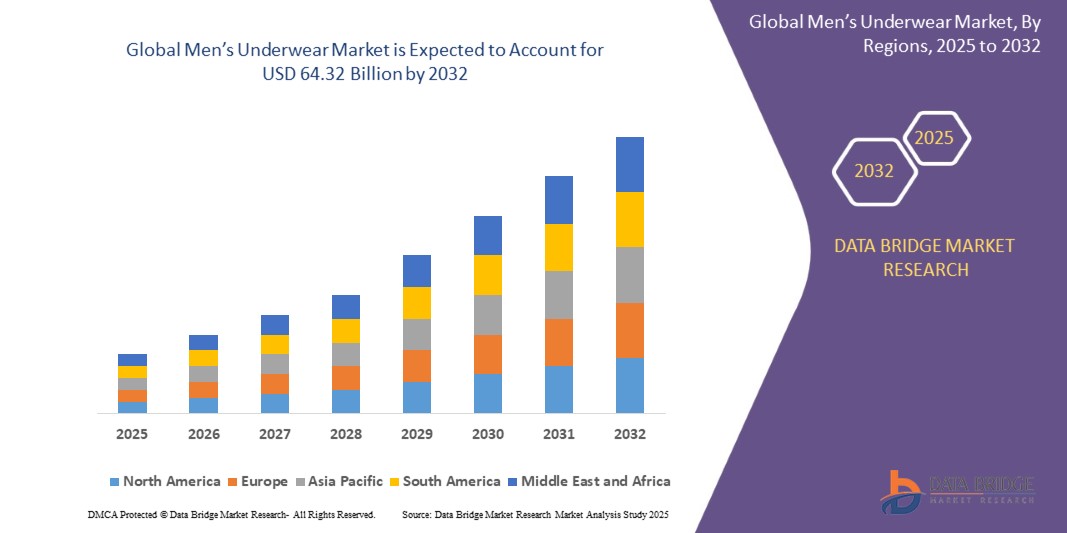
- The global men’s underwear market was valued at USD 37.58 billion in 2024 and is expected to reach USD 64.32 billion by 2032
- During the forecast period of 2025 to 2032 the market is likely to grow at a CAGR of 6.95%, primarily driven by rising e-commerce sales
- This growth is driven by factors such as mobile shopping, global reach, and convenience
Men’s Underwear Market Analysis
- Men’s underwear is a foundational segment of the apparel industry, offering a wide range of products including briefs, boxers, trunks, and performance wear designed for daily comfort, hygiene, and style
- Market growth is driven by rising fashion consciousness among men, increased focus on personal hygiene, and the influence of lifestyle changes, fitness trends, and premiumization in innerwear choices
- The market is evolving with innovations in fabric technology, design aesthetics, and sustainability, along with a shift toward personalized fits and inclusive sizing
- For instance, brands such as Calvin Klein, Tommy John, and MeUndies are introducing collections with moisture-wicking fabrics, eco-friendly materials, and bold, fashion-forward designs
- The men’s underwear market is expected to see consistent growth, fueled by the expansion of e-commerce channels, rising demand for functional and stylish innerwear, and increased investment in direct-to-consumer models and branding initiatives
Report Scope and Men’s Underwear Market Segmentation
|
Attributes |
Men’s Underwear Key Market Insights |
|
Segments Covered |
|
|
Countries Covered |
North America
Europe
Asia-Pacific
Middle East and Africa
South America
|
|
Key Market Players |
|
|
Market Opportunities |
|
|
Value Added Data Infosets |
In addition to the insights on market scenarios such as market value, growth rate, segmentation, geographical coverage, and major players, the market reports curated by the Data Bridge Market Research also include in-depth expert analysis, pricing analysis, brand share analysis, consumer survey, demography analysis, supply chain analysis, value chain analysis, raw material/consumables overview, vendor selection criteria, PESTLE Analysis, Porter Analysis, and regulatory framework. |
Men’s Underwear Market Trends
“Rising Shift Towards Sustainable Fabric”
- One prominent trend in the global men’s underwear market is the rising shift towards sustainable fabric
- This trend is driven by the increasing environmental awareness, consumer demand for ethically produced apparel, and the preference for natural, skin-friendly materials in daily wear
- For instance, brands such as Pact, Boody, and Organic Basics are offering underwear made from organic cotton, bamboo, and recycled fibers, emphasizing low-impact production, biodegradability, and transparency in sourcing
- The surge in conscious consumerism, clean fashion movements, and demand for low-carbon products is pushing manufacturers to adopt sustainable practices across design, packaging, and distribution
- As sustainability becomes a key decision factor for shoppers, the integration of eco-conscious materials into men’s underwear lines is expected to drive innovation, expand product portfolios, and enhance long-term brand loyalty
Men’s Underwear Market Dynamics
Driver
“Growing Fashion Consciousness”
- The growing focus on fashion consciousness and self-expression is a major driver of growth in the men’s underwear market. As men become more attentive to personal style and body confidence, demand has risen for innerwear that blends comfort, function, and aesthetic appeal
- This shift is especially notable among younger and urban demographics, who view underwear not just as a basic necessity, but as a fashion statement aligned with their lifestyle, identity, and preferences
- With increasing exposure to global trends, influencer culture, and premium fashion, consumers are seeking underwear options that offer stylish cuts, bold patterns, and premium fabric blends that reflect evolving fashion sensibilities
- Design innovation, luxury detailing, and brand storytelling are shaping product development, responding to preferences for expressive, body-positive, and trend-forward undergarments
- Brands in the men’s underwear space are investing in celebrity collaborations, social media marketing, and limited-edition collections to position underwear as an integral part of men’s personal style
For instance,
- Calvin Klein continues to lead with iconic, minimalist designs that emphasize body confidence and lifestyle branding
- SAXX and PSD Underwear are gaining popularity with bold prints, athletic fits, and lifestyle-focused campaigns targeting young consumers
- As fashion continues to intersect with function in men’s innerwear, the growing demand for stylish, confidence-boosting underwear is expected to drive market expansion and product diversification
Opportunity
“Increasing Awareness of Personal Grooming”
- The rising awareness of personal grooming and self-care routines presents a major opportunity in the men’s underwear market. As grooming becomes an essential aspect of modern masculinity, men are placing greater value on intimate apparel that supports both hygiene and style
- This cultural shift toward self-care and body positivity is driving demand for underwear that emphasizes comfort, fit, and functionality—offering men products that feel good and boost confidence
- Premium designs, fabric innovation, and skin-friendly features such as breathability, moisture-wicking, and seamless construction are helping brands cater to the growing expectations around grooming and personal wellness
For instance,
- Tommy John markets its underwear as part of a man’s daily grooming routine, emphasizing all-day comfort and support
- Hanes and Jockey are incorporating odor control, tag-free design, and stretchable waistbands to align with hygiene and grooming-focused consumers
- As grooming continues to intersect with wellness and lifestyle, brands that align underwear with self-care narratives will be well-positioned to tap into this evolving consumer mindset and unlock new growth opportunities
Restraint/Challenge
“Size and Fit Variability”
- Size and fit variability presents a significant challenge in the men’s underwear market. While demand for personalized and comfortable innerwear is rising, many brands struggle to provide consistent sizing that meets the diverse needs of male consumers
- Achieving the right fit requires precision in design, tailoring, and grading, yet disparities across regions, body types, and manufacturing standards often lead to issues such as poor fit, discomfort, and high return rates
- This challenge is especially evident in online retail channels, where the lack of physical try-on options and inconsistent size charts create uncertainty, impacting customer satisfaction and brand loyalty
For instance,
- Consumers shopping across international platforms often report discrepancies in sizing between brands such Calvin Klein, Uniqlo, and Fruit of the Loom, leading to product returns and negative reviews
- Without standardized sizing systems and improved fit analytics, the industry faces ongoing hurdles in reducing product dissatisfaction, increasing retention, and delivering a consistently high-quality customer experience
Men’s Underwear Market Scope
The market is segmented on the basis of category, distribution channel, fabric, age group, price, and size.
|
Segmentation |
Sub-Segmentation |
|
By Category |
|
|
By Distribution Channel |
|
|
By Fabric |
|
|
By Age Group |
|
|
By Price |
|
|
By Size |
|
Men’s Underwear Market Regional Analysis
“Asia-Pacific is the Dominant Region in the Men’s Underwear Market”
- Asia-Pacific dominates the men’s underwear market, driven by a large population base, rising disposable income, and a strong presence of key industry players
- China holds a significant share due to increased consumer inclination toward premium, branded, and designer underwear, as lifestyle and fashion preferences evolve
- Cultural openness to personal grooming, social media influence, and a growing middle class are also contributing to the adoption of high-quality, stylish innerwear
- With its vast consumer base, rising fashion consciousness, and expanding online retail ecosystem, Asia-Pacific is expected to maintain its dominant position in the men’s underwear market throughout the 2025–2032 forecast period
“North America is Projected to Register the Highest Growth Rate”
- North America is expected to witness the highest growth rate in the men’s underwear market, driven by rising demand for comfort, performance, and design diversity
- U.S. leads regional growth, fueled by increasing male grooming awareness, growing demand for innovative fabrics (such as modal and bamboo), and a shift toward premium and functional innerwear
- Consumers are seeking personalized fit, moisture-wicking properties, and eco-conscious options, encouraging brands to invest in R&D and new product development. Key players such as Calvin Klein, Hanes, and Tommy John are expanding their sustainable offerings, launching inclusive sizing, and leveraging influencer-led marketing to appeal to evolving customer preferences
- With a strong focus on self-care, sustainability, and style, North America is expected to be the fastest-expanding regional market in men’s underwear over the forecast period
Men’s Underwear Market Share
The market competitive landscape provides details by competitor. Details included are company overview, company financials, revenue generated, market potential, investment in research and development, new market initiatives, global presence, production sites and facilities, production capacities, company strengths and weaknesses, product launch, product width and breadth, application dominance. The above data points provided are only related to the companies' focus related to market.
The Major Market Leaders Operating in the Market Are:
- Hanesbrands Inc. (U.S.)
- PVH Corp (U.S.)
- Ralph Lauren (U.S.)
- Jockey (U.S.)
- AEO Management CO. (U.S.)
- Iconix Brand Group Inc. (U.S.)
- Penney IP LLC (U.S.)
- Under Armour, Inc. (U.S.)
- RibbedTee (U.S.)
- Fibre2Fashion Pvt. Ltd. (India)
- Levi Strauss & Co. (U.S.)
- Perry Ellis International Inc. (U.S.)
- Naked Brand Group Inc. (U.S.)
Latest Developments in Global Men’s Underwear Market
- In September 2023, Page Industries Ltd, the exclusive licensee of Jockey International Inc., expanded its flagship store in New Delhi, India. The newly upgraded, two-story retail space covers 2,500 square feet and features dedicated sections for men’s, women’s, and children’s collections
- In August 2022, Tommy Hilfiger enhanced its retail footprint by opening a new outlet in Bonn, Germany. Located in a historic building, the store is designed to provide a premium shopping experience, with a strong focus on men’s underwear and accessories
- In August 2022, Calvin Klein launched its 'Autumn 2022' campaign, highlighting the brand’s latest underwear and jeans range. Designed for everyday comfort, the collection emphasizes wireless support and incorporates sustainably sourced, recycled materials

- Interactive Data Analysis Dashboard
- Company Analysis Dashboard for high growth potential opportunities
- Research Analyst Access for customization & queries
- Competitor Analysis with Interactive dashboard
- Latest News, Updates & Trend analysis
- Harness the Power of Benchmark Analysis for Comprehensive Competitor Tracking
Data collection and base year analysis are done using data collection modules with large sample sizes. The stage includes obtaining market information or related data through various sources and strategies. It includes examining and planning all the data acquired from the past in advance. It likewise envelops the examination of information inconsistencies seen across different information sources. The market data is analysed and estimated using market statistical and coherent models. Also, market share analysis and key trend analysis are the major success factors in the market report. To know more, please request an analyst call or drop down your inquiry.
The key research methodology used by DBMR research team is data triangulation which involves data mining, analysis of the impact of data variables on the market and primary (industry expert) validation. Data models include Vendor Positioning Grid, Market Time Line Analysis, Market Overview and Guide, Company Positioning Grid, Patent Analysis, Pricing Analysis, Company Market Share Analysis, Standards of Measurement, Global versus Regional and Vendor Share Analysis. To know more about the research methodology, drop in an inquiry to speak to our industry experts.
Data Bridge Market Research is a leader in advanced formative research. We take pride in servicing our existing and new customers with data and analysis that match and suits their goal. The report can be customized to include price trend analysis of target brands understanding the market for additional countries (ask for the list of countries), clinical trial results data, literature review, refurbished market and product base analysis. Market analysis of target competitors can be analyzed from technology-based analysis to market portfolio strategies. We can add as many competitors that you require data about in the format and data style you are looking for. Our team of analysts can also provide you data in crude raw excel files pivot tables (Fact book) or can assist you in creating presentations from the data sets available in the report.