


Minimally Invasive Micro-Surgical Devices Market Size
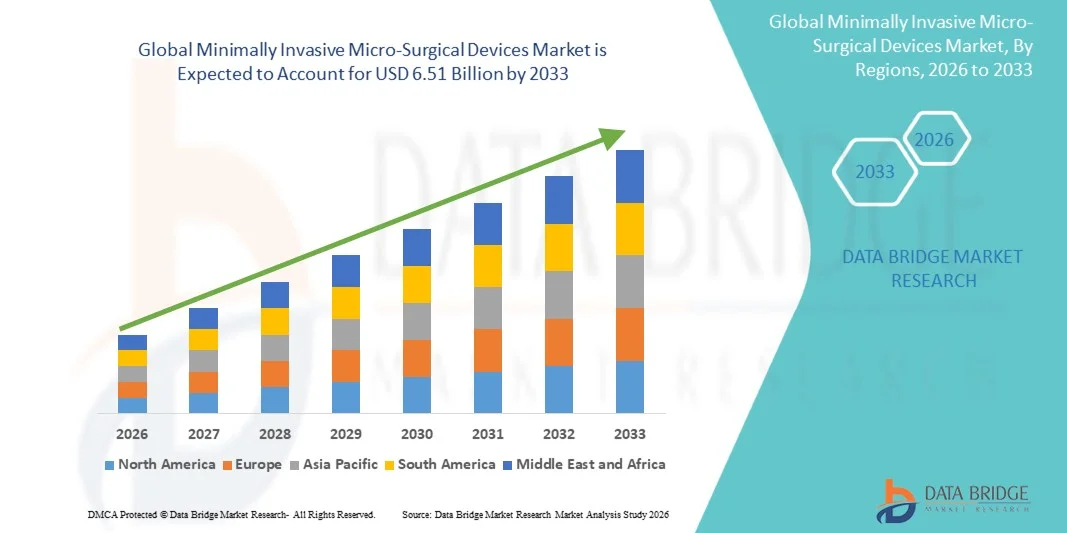
- The global minimally invasive micro-surgical devices market size was valued at USD 1.96 in 2025 and is expected to reach USD 6.51 billion by 2033, at a CAGR of 16.20% during the forecast period
- The market growth is primarily driven by the increasing preference for minimally invasive surgical procedures, supported by technological advancements in precision surgical instruments, imaging systems, and micro-scale operative tools, leading to improved patient outcomes and reduced recovery times
- Furthermore, rising prevalence of chronic diseases, growing demand for advanced surgical care, and expanding adoption of robotic-assisted and image-guided microsurgical techniques in hospitals and specialty centers are accelerating market uptake, thereby significantly boosting the industry’s growth
Minimally Invasive Micro-Surgical Devices Market Analysis
- Minimally invasive micro-surgical devices, enabling high-precision surgical interventions through advanced micro-instruments, imaging systems, and energy-based tools, are increasingly essential in modern healthcare systems due to their ability to reduce surgical trauma, minimize hospital stay, and improve surgical outcomes across multiple specialties
- The escalating demand for these devices is primarily driven by the rising prevalence of chronic diseases requiring surgical intervention, growing preference for minimally invasive procedures, and continuous advancements in robotic-assisted, endoscopic, and image-guided microsurgical technologies
- North America dominated the minimally invasive micro-surgical devices market with a revenue share of 42.5% in 2025, supported by advanced healthcare infrastructure, early adoption of innovative surgical technologies, and strong presence of leading medical device manufacturers, with the U.S. witnessing significant adoption across hospitals and ambulatory surgical centers driven by robotic surgery expansion and precision medicine initiatives
- Asia-Pacific is expected to be the fastest growing region in the market during the forecast period due to increasing healthcare expenditure, expanding hospital infrastructure, rising surgical volumes, and growing adoption of advanced minimally invasive techniques in emerging economies
- The handheld instruments segment dominated the market with a share of 36.9% in 2025, attributed to their widespread use across various minimally invasive procedures, cost-effectiveness, and continuous technological improvements enhancing surgical precision and ergonomics
Report Scope and Minimally Invasive Micro-Surgical Devices Market Segmentation
|
Attributes |
Minimally Invasive Micro-Surgical Devices Key Market Insights |
|
Segments Covered |
|
|
Countries Covered |
North America
Europe
Asia-Pacific
Middle East and Africa
South America
|
|
Key Market Players |
|
|
Market Opportunities |
|
|
Value Added Data Infosets |
In addition to the insights on market scenarios such as market value, growth rate, segmentation, geographical coverage, and major players, the market reports curated by the Data Bridge Market Research also include in-depth expert analysis, patient epidemiology, pipeline analysis, pricing analysis, and regulatory framework |
Minimally Invasive Micro-Surgical Devices Market Trends
“Advancements in Robotic and AI-Assisted Precision Surgery”
- A significant and accelerating trend in the global minimally invasive micro-surgical devices market is the increasing integration of robotic-assisted surgical systems and AI-enabled imaging technologies, which is enhancing procedural precision, reducing surgeon fatigue, and improving clinical outcomes across complex surgeries
- For instance, the da Vinci surgical system is widely used in minimally invasive procedures, enabling surgeons to perform highly precise micro-scale operations through robotic arms with enhanced dexterity and 3D visualization capabilities
- AI integration in micro-surgical devices is enabling real-time image guidance, automated tissue recognition, and predictive analytics for surgical decision-making, thereby improving accuracy and reducing intraoperative risks in delicate procedures such as neurosurgery and ophthalmology
- The seamless integration of endoscopic, laparoscopic, and robotic platforms is facilitating unified surgical workflows, allowing surgeons to perform multi-stage minimally invasive procedures with higher efficiency and improved patient safety outcomes
- This trend towards highly digitized, image-guided, and robot-assisted microsurgery is fundamentally reshaping surgical standards, with companies such as Medtronic and Intuitive Surgical advancing platforms that combine precision instrumentation with intelligent surgical support systems
- The demand for advanced minimally invasive micro-surgical devices is growing rapidly across hospitals and specialty surgical centers, as healthcare providers increasingly prioritize precision, reduced recovery time, and improved post-operative outcomes
- Additionally, increasing use of single-port and micro-incision surgical techniques is reducing patient trauma and expanding the applicability of minimally invasive approaches across diverse surgical specialties
Minimally Invasive Micro-Surgical Devices Market Dynamics
Driver
“Rising Burden of Chronic Diseases and Shift Toward Minimally Invasive Procedures”
- The increasing prevalence of chronic diseases such as cardiovascular disorders, cancer, and neurological conditions, coupled with the growing preference for minimally invasive surgical techniques, is a major driver accelerating demand for micro-surgical devices
- For instance, in April 2025, hospitals across major healthcare systems expanded robotic-assisted surgical programs to address rising surgical volumes in oncology and urology procedures requiring high-precision micro-instruments
- As patients and healthcare providers increasingly prioritize reduced pain, shorter hospital stays, and faster recovery, minimally invasive micro-surgical devices are becoming essential tools for modern surgical care delivery
- Furthermore, the expansion of advanced healthcare infrastructure and rising investments in surgical robotics and imaging systems are further supporting adoption across developed and emerging markets
- The convenience of reduced surgical trauma, lower infection risk, and improved clinical efficiency is strongly driving adoption of these devices in both hospital and ambulatory surgical center settings
- Additionally, growing geriatric population worldwide is increasing the demand for less invasive surgical options due to higher surgical risk tolerance limitations
- Furthermore, rising healthcare expenditure in emerging economies is enabling wider access to advanced minimally invasive surgical technologies
Restraint/Challenge
“High Cost of Advanced Surgical Systems and Limited Skilled Adoption”
- Concerns surrounding the high cost of minimally invasive micro-surgical systems, including robotic platforms and advanced imaging devices, pose a significant challenge to widespread market penetration, particularly in cost-sensitive healthcare systems
- For instance, hospitals in developing regions often face budget constraints that limit the adoption of advanced robotic surgical systems despite their clinical benefits in complex procedures
- Addressing cost barriers through scalable device models, leasing options, and increased reimbursement support is crucial for improving accessibility of advanced microsurgical technologies
- Additionally, the requirement for highly skilled surgeons and specialized training for operating robotic and image-guided systems further limits adoption in smaller healthcare facilities and emerging markets
- While training programs are expanding globally, the learning curve associated with advanced micro-surgical techniques can still slow down deployment across new surgical centers
- Overcoming these challenges through cost optimization, expanded surgical training programs, and improved system usability will be vital for sustained market growth
- Furthermore, stringent regulatory approval processes for advanced surgical devices can delay product launches and slow market entry for new innovations
- Additionally, concerns regarding device interoperability and integration with existing hospital infrastructure continue to act as operational barriers in large healthcare networks
Minimally Invasive Micro-Surgical Devices Market Scope
The market is segmented on the basis of product type, technology, application, and end user.
- By Product Type
On the basis of product type, the market is segmented into handheld instruments, cutter instruments, electrosurgical devices, guiding devices, inflation devices, monitoring & visualization devices, and support devices. The handheld instruments segment dominated the market with the largest revenue share of 36.9% in 2025, driven by their extensive use across nearly all minimally invasive surgical procedures due to their precision, flexibility, and cost-effectiveness. These instruments are essential for delicate tissue manipulation in microsurgeries such as neurosurgery, ophthalmology, and orthopedic interventions. Their widespread availability, continuous ergonomic improvements, and compatibility with multiple surgical techniques further strengthen their dominance across hospitals and specialty centers. Additionally, increasing procedural volumes globally continues to reinforce demand for advanced handheld microsurgical tools.
The monitoring & visualization devices segment is expected to witness the fastest growth rate of 14% from 2026 to 2033, fueled by rising adoption of high-definition imaging systems, 3D visualization platforms, and integrated surgical navigation technologies. These devices significantly enhance surgical accuracy by providing real-time visualization of microstructures during complex procedures. Growing use of endoscopic and robotic-assisted surgeries is further accelerating demand for advanced visualization tools. Increasing investments in AI-powered imaging and augmented reality-based surgical guidance systems are also contributing to rapid segment expansion.
- By Technology
On the basis of technology, the market is segmented into robotic-assisted surgery, laparoscopic surgery, endoscopic surgery, conventional minimally invasive surgery, and image-guided surgery. The laparoscopic surgery segment dominated the market with the largest revenue share of 40% in 2025, driven by its widespread adoption in abdominal, gynecological, and gastrointestinal procedures due to reduced surgical trauma and faster recovery times. Laparoscopic techniques are well-established, cost-effective, and widely supported by hospital infrastructure globally. Continuous improvements in laparoscopic instruments and imaging systems further support its strong dominance. High procedural volume and surgeon familiarity also contribute significantly to its leading market position.
The robotic-assisted surgery segment is expected to witness the fastest growth rate of 18% from 2026 to 2033, driven by increasing adoption of precision-based surgical platforms that enhance dexterity, accuracy, and control in microsurgical procedures. Robotic systems enable minimally invasive access to complex anatomical areas, reducing complications and improving outcomes. Rising investments by hospitals in advanced robotic platforms and expanding applications in neurosurgery, urology, and cardiothoracic surgery are accelerating growth. Integration of AI and machine learning into robotic systems is further enhancing surgical capabilities and adoption rates.
- By Application
On the basis of application, the market is segmented into orthopedic surgery, cardiothoracic surgery, neurosurgery, gastrointestinal surgery, urology, gynecology, ophthalmic surgery, cosmetic & plastic surgery, oral surgery, and laparoscopic procedures. The orthopedic surgery segment dominated the market with a revenue share of 30% in 2025, driven by the high global incidence of musculoskeletal disorders, sports injuries, and age-related joint conditions requiring minimally invasive interventions. Advanced microsurgical tools are widely used in arthroscopy and fracture fixation procedures. Growing preference for faster recovery and reduced post-operative complications is further supporting segment leadership. Increasing elderly population also significantly contributes to sustained demand in orthopedic microsurgery.
The neurosurgery segment is expected to witness the fastest growth rate of 16% from 2026 to 2033, driven by increasing cases of brain tumors, neurological disorders, and spinal conditions requiring high-precision surgical intervention. Minimally invasive micro-surgical devices enable safer access to delicate neural structures, reducing risk and improving outcomes. Advancements in neuronavigation systems and robotic-assisted neurosurgical platforms are accelerating adoption. Rising investment in advanced neuro-care infrastructure across developed and emerging economies further supports rapid segment growth.
- By End User
On the basis of end user, the market is segmented into hospitals, ambulatory surgical centers (ASCs), specialty clinics, and academic & research institutes. The hospitals segment dominated the market with the largest revenue share of 65% in 2025, driven by the availability of advanced surgical infrastructure, skilled surgeons, and high patient inflow for complex minimally invasive procedures. Hospitals are primary centers for robotic-assisted and image-guided microsurgeries requiring high capital investment. Strong reimbursement frameworks and integration of advanced surgical technologies further reinforce hospital dominance. Additionally, hospitals handle the majority of emergency and complex surgical cases requiring microsurgical precision.
The ambulatory surgical centers (ASCs) segment is expected to witness the fastest growth rate of 15% from 2026 to 2033, driven by increasing preference for cost-effective, outpatient-based minimally invasive procedures. ASCs offer shorter hospital stays, reduced infection risks, and faster patient turnover, making them attractive for both patients and healthcare providers. Technological advancements enabling compact and portable microsurgical devices are supporting ASC expansion. Growing shift toward decentralized surgical care delivery models is further accelerating adoption in this segment.
Minimally Invasive Micro-Surgical Devices Market Regional Analysis
- North America dominated the minimally invasive micro-surgical devices market with a revenue share of 42.5% in 2025, supported by advanced healthcare infrastructure, early adoption of innovative surgical technologies, and strong presence of leading medical device manufacturers
- Healthcare providers in the region highly value robotic-assisted surgery, image-guided systems, and advanced micro-instruments that improve surgical accuracy, reduce complications, and enable faster patient recovery across complex procedures
- This widespread adoption is further supported by strong healthcare infrastructure, high healthcare expenditure, favorable reimbursement policies, and the presence of leading medical device manufacturers, establishing minimally invasive micro-surgical devices as a standard of care in both hospital and specialty surgical settings
U.S. Minimally Invasive Micro-Surgical Devices Market Insight
The U.S. minimally invasive micro-surgical devices market captured the largest revenue share within North America in 2025, driven by the strong adoption of advanced surgical technologies and the rapid shift toward precision-based, less invasive procedures. Hospitals and ambulatory surgical centers are increasingly investing in high-precision micro-surgical instruments to reduce patient recovery time and surgical complications. The rising prevalence of chronic diseases requiring microsurgical intervention, such as neurological, cardiovascular, and ophthalmic conditions, further supports market expansion. Additionally, the integration of robotics, high-definition imaging systems, and AI-assisted surgical platforms is significantly enhancing procedural accuracy and fueling demand for minimally invasive micro-surgical devices.
Europe Minimally Invasive Micro-Surgical Devices Market Insight
The Europe minimally invasive micro-surgical devices market is projected to expand at a steady CAGR throughout the forecast period, primarily driven by the growing emphasis on patient safety, shorter hospital stays, and cost-effective healthcare delivery. The region’s strong regulatory framework and advanced healthcare infrastructure are encouraging the adoption of innovative surgical tools. Increasing demand for minimally invasive procedures in orthopedics, neurosurgery, and cardiovascular treatments is further propelling market growth. European healthcare systems are also increasingly integrating digital operating rooms and image-guided surgical technologies, supporting broader adoption of micro-surgical devices across both public and private hospitals.
U.K. Minimally Invasive Micro-Surgical Devices Market Insight
The U.K. minimally invasive micro-surgical devices market is anticipated to grow at a notable CAGR during the forecast period, supported by rising demand for advanced surgical care and increased focus on reducing post-operative complications. The National Health Service (NHS) is progressively adopting minimally invasive techniques to improve surgical efficiency and patient outcomes. Growing awareness among healthcare professionals regarding the benefits of micro-surgery, including reduced trauma and faster recovery, is also contributing to adoption. Additionally, the expansion of private healthcare facilities and medical tourism is further strengthening market growth in the country.
Germany Minimally Invasive Micro-Surgical Devices Market Insight
The Germany minimally invasive micro-surgical devices market is expected to expand at a considerable CAGR during the forecast period, driven by strong technological innovation and high healthcare expenditure. Germany’s well-established hospital infrastructure and emphasis on precision engineering make it a key adopter of advanced surgical systems. The increasing prevalence of age-related diseases, particularly in orthopedics and ophthalmology, is also boosting demand for minimally invasive procedures. Furthermore, the integration of robotics-assisted surgery and advanced visualization systems aligns with Germany’s focus on efficiency, safety, and high clinical standards.
Asia-Pacific Minimally Invasive Micro-Surgical Devices Market Insight
The Asia-Pacific minimally invasive micro-surgical devices market is poised to grow at the fastest CAGR during the forecast period, driven by rising healthcare investments, expanding medical tourism, and increasing adoption of advanced surgical techniques. Rapid urbanization and improving healthcare infrastructure in countries such as China, Japan, and India are significantly contributing to market expansion. Governments in the region are actively promoting healthcare modernization and digital operating rooms, which is accelerating the uptake of micro-surgical devices. Additionally, the availability of cost-effective surgical solutions and the presence of domestic manufacturers are broadening market accessibility across emerging economies.
Japan Minimally Invasive Micro-Surgical Devices Market Insight
The Japan minimally invasive micro-surgical devices market is gaining strong momentum due to the country’s advanced healthcare system, aging population, and high demand for precision-based medical care. Japan has a strong preference for technologically sophisticated and minimally invasive treatment options that reduce hospital stays and improve patient comfort. The increasing use of robotics-assisted surgery and high-precision microsurgical instruments in neurology, ophthalmology, and cardiovascular procedures is further driving market growth. Moreover, Japan’s focus on healthcare innovation and integration of AI-enabled surgical systems is strengthening the adoption of advanced micro-surgical devices.
India Minimally Invasive Micro-Surgical Devices Market Insight
The India minimally invasive micro-surgical devices market accounted for a significant revenue share in Asia-Pacific in 2025, driven by rapid healthcare infrastructure development, a growing patient population, and increasing awareness of advanced surgical options. Rising demand for affordable yet effective surgical procedures is encouraging hospitals and specialty clinics to adopt minimally invasive techniques. The expansion of private healthcare providers, along with government initiatives to improve access to modern medical technologies, is further supporting market growth. Additionally, India’s growing medical tourism sector and the availability of skilled surgeons are key factors propelling adoption of micro-surgical devices.
Minimally Invasive Micro-Surgical Devices Market Share
The Minimally Invasive Micro-Surgical Devices industry is primarily led by well-established companies, including:
- Medtronic (Ireland)
- Intuitive Surgical, Inc. (U.S.)
- Stryker (U.S.)
- Abbott (U.S.)
- Boston Scientific Corporation (U.S.)
- Olympus Corporation (Japan)
- Carl Zeiss Meditec AG (Germany)
- B. Braun SE (Germany)
- CONMED Corporation (U.S.)
- Zimmer Biomet (U.S.)
- Smith & Nephew (U.K.)
- Teleflex Incorporated (U.S.)
- Cook Group Incorporated (U.S.)
- Karl Storz SE & Co. KG (Germany)
- Richard Wolf GmbH (Germany)
- FUJIFILM Holdings Corporation (Japan)
- HOYA Corporation (Japan)
- MicroPort Scientific Corporation (China)
- Alcon Inc. (Switzerland)
What are the Recent Developments in Global Minimally Invasive Micro-Surgical Devices Market?
- In December 2025, Medical Microinstruments (MMI) announced U.S. FDA 510(k) clearance for its NanoWrist® Scissors and Forceps used with the Symani® Surgical System, expanding its robotic microsurgery capabilities beyond vascular anastomosis to include delicate tissue dissection in complex procedures. The first clinical use of these newly cleared instruments was completed at Tampa General Hospital, marking a significant step in fully robotic-assisted microsurgical workflows
- In July 2025, Medical Microinstruments (MMI), a robotics-focused microsurgery company, announced the first clinical use of its NanoWrist dissection instruments integrated with the Symani Surgical System at The Royal Marsden NHS Foundation Trust in the U.K. The NanoWrist tools are designed for ultra-precise robotic-assisted microsurgery, enabling delicate tissue dissection and improved vessel handling in complex reconstructive procedures. The system also introduced the Synaptix Digital Surgery Platform for enhanced surgical workflow integration
- In March 2025, SS Innovations unveiled its Mobile Tele-Surgical Unit at the SMRSC 2025 conference in India, demonstrating remote robotic-assisted minimally invasive surgery capabilities. The system is designed to expand access to advanced microsurgical procedures in remote and underserved regions through teleoperation technology. It supports real-time robotic control and surgical precision across multiple specialties. The launch highlights growing global interest in decentralizing advanced minimally invasive surgical care using robotic platforms
- In January 2025, Intuitive Surgical reported strong adoption growth of its da Vinci robotic systems, with rising procedure volumes and expanded use in minimally invasive surgeries globally. The company highlighted increased demand across urology, gynecology, and general surgery applications, supported by continuous system upgrades and AI-enabled digital features. Strong hospital adoption trends further reinforced robotic surgery as a key driver in minimally invasive surgical device innovation
- In October 2024, CMR Surgical received U.S. FDA clearance for its upgraded Versius Surgical System for gallbladder removal procedures. The modular robotic system is designed for minimally invasive surgeries with enhanced flexibility and smaller footprint compared to traditional surgical robots. The approval supports expansion in the U.S. market and reinforces competition in robotic-assisted microsurgery platforms. It also enables broader adoption in general minimally invasive surgical applications

- Interactive Data Analysis Dashboard
- Company Analysis Dashboard for high growth potential opportunities
- Research Analyst Access for customization & queries
- Competitor Analysis with Interactive dashboard
- Latest News, Updates & Trend analysis
- Harness the Power of Benchmark Analysis for Comprehensive Competitor Tracking
Data collection and base year analysis are done using data collection modules with large sample sizes. The stage includes obtaining market information or related data through various sources and strategies. It includes examining and planning all the data acquired from the past in advance. It likewise envelops the examination of information inconsistencies seen across different information sources. The market data is analysed and estimated using market statistical and coherent models. Also, market share analysis and key trend analysis are the major success factors in the market report. To know more, please request an analyst call or drop down your inquiry.
The key research methodology used by DBMR research team is data triangulation which involves data mining, analysis of the impact of data variables on the market and primary (industry expert) validation. Data models include Vendor Positioning Grid, Market Time Line Analysis, Market Overview and Guide, Company Positioning Grid, Patent Analysis, Pricing Analysis, Company Market Share Analysis, Standards of Measurement, Global versus Regional and Vendor Share Analysis. To know more about the research methodology, drop in an inquiry to speak to our industry experts.
Data Bridge Market Research is a leader in advanced formative research. We take pride in servicing our existing and new customers with data and analysis that match and suits their goal. The report can be customized to include price trend analysis of target brands understanding the market for additional countries (ask for the list of countries), clinical trial results data, literature review, refurbished market and product base analysis. Market analysis of target competitors can be analyzed from technology-based analysis to market portfolio strategies. We can add as many competitors that you require data about in the format and data style you are looking for. Our team of analysts can also provide you data in crude raw excel files pivot tables (Fact book) or can assist you in creating presentations from the data sets available in the report.













