


What is the Myxoid Cyst Market Size and Growth Rate?
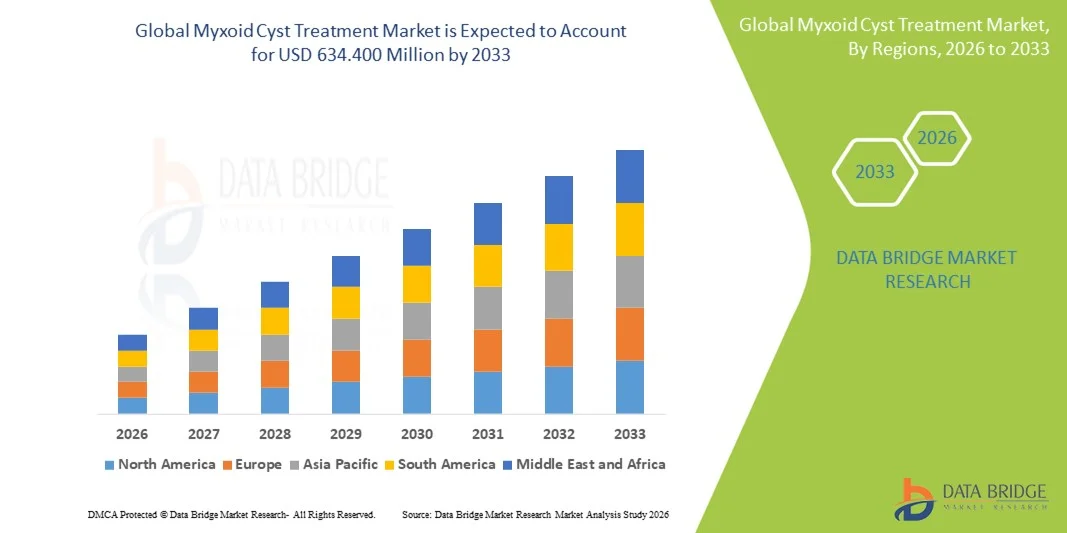
- The global myxoid cyst treatment market size was valued at USD 460.00 million in 2025 and is expected to reach USD 634.400 million by 2033, at a CAGR of 4.1% during the forecast period
- The market growth is primarily driven by the rising prevalence of digital mucous cysts, increased demand for minimally invasive dermatological procedures, and growing awareness regarding early diagnosis and effective treatment options
- In addition, increasing patient preference for safe, painless, and cosmetically favorable treatments combined with improved access to dermatology and orthopedic care is solidifying myxoid cyst therapies as essential solutions within clinical practice. These converging dynamics are accelerating adoption across hospitals and specialty clinics, thereby supporting steady market growth
What are the Major Takeaways of Myxoid Cyst Market?
- Myxoid cyst treatments, encompassing surgical excision, aspiration, sclerotherapy, laser therapy, and topical/interventional dermatology procedures, are critical components of modern hand and dermatological care due to their ability to relieve pain, improve cosmetic appearance, and prevent recurrence in patients with digital mucous cysts
- The rising demand for myxoid cyst treatment is primarily driven by the growing incidence of osteoarthritis-associated mucous cysts, increased awareness of minimally invasive options, and a strong shift toward outpatient procedures that offer faster recovery, reduced scarring, and lower treatment costs
- North America dominated the myxoid cyst treatment market with a revenue share of 38.4% in 2025, supported by a high prevalence of osteoarthritis, advanced dermatology and orthopedic care infrastructure, and strong adoption of laser- and image-guided procedures. The U.S. market continues to experience steady uptake driven by early diagnosis practices and wide availability of specialized hand surgeons
- Asia-Pacific is expected to be the fastest-growing region during the forecast period, fueled by increasing healthcare accessibility, rising awareness of dermatological disorders, and expanding medical infrastructure, particularly in China and India, where outpatient dermatology services are rapidly growing
- The surgical excision segment dominated the myxoid cyst treatment market with a market share of 46.7% in 2025, driven by its high success rate, lower recurrence risk, and strong preference among hand surgeons and dermatologists for managing symptomatic or recurrent cysts
Report Scope and Myxoid Cyst Treatment Market Segmentation
|
Attributes |
Myxoid Cyst Treatment Key Market Insights |
|
Segments Covered |
|
|
Countries Covered |
North America
Europe
Asia-Pacific
Middle East and Africa
South America
|
|
Key Market Players |
|
|
Market Opportunities |
|
|
Value Added Data Infosets |
In addition to the insights on market scenarios such as market value, growth rate, segmentation, geographical coverage, and major players, the market reports curated by the Data Bridge Market Research also include in-depth expert analysis, patient epidemiology, pipeline analysis, pricing analysis, and regulatory framework |
What is the Key Trend in the Myxoid Cyst Market?
Rising Preference for Minimally Invasive and Laser-Based Treatment Approaches
- A significant and accelerating trend in the global myxoid cyst treatment market is the growing shift toward minimally invasive procedures such as laser ablation, guided aspiration, and image-assisted interventions, driven by the need for faster recovery, reduced scarring, and improved cosmetic outcomes for patients
- For instance, advanced CO₂ and Nd:YAG laser systems are increasingly being adopted in dermatology practices due to their ability to precisely vaporize cyst tissue while minimizing damage to surrounding skin, offering a more comfortable and cosmetically favorable treatment option
- AI-enabled dermatology tools and imaging software are also emerging, enhancing diagnostic accuracy, improving procedural planning, and enabling physicians to identify recurrence patterns; for instance, digital tools can track cyst morphology changes and support clinicians in selecting optimized treatment pathways
- The seamless integration of dermatology lasers, imaging devices, and digital treatment platforms enables more accurate monitoring, documentation, and personalized care planning, creating a more efficient and patient-centric clinical experience
- This trend toward more intelligent, precise, and minimally invasive interventions is reshaping patient expectations around cyst management, prompting manufacturers to develop advanced outpatient-friendly devices and technologies tailored to dermatology and hand-care applications
- The demand for treatments that offer minimal downtime, lower recurrence risk, and enhanced cosmetic results is rising rapidly across both dermatology and orthopedic settings, as patients increasingly prioritize safe, efficient, and aesthetically favorable therapeutic outcomes
Myxoid Cyst Treatment Market Dynamics
Driver
Rising Prevalence of Osteoarthritis and Growing Demand for Minimally Invasive Care
- The increasing incidence of osteoarthritis, which is closely associated with the development of digital mucous cysts, combined with growing patient awareness of available treatment options, is significantly driving demand for myxoid cyst therapies across global healthcare settings
- For instance, in April 2025, several dermatology clinics in the U.S. and Europe reported increased adoption of image-guided aspiration and laser-based interventions as outpatient treatment standards, highlighting the market’s shift toward non-surgical, patient-friendly procedures that support faster recovery
- As more patients seek treatments that avoid unnecessary surgical complexity, options such as sclerotherapy, guided aspiration, and laser vaporization are becoming more appealing due to their reduced recurrence risk, minimized scarring, and shorter healing time
- Furthermore, the rising popularity of outpatient dermatology and hand-care services is making minimally invasive myxoid cyst procedures more accessible, integrating them as part of routine care for aging populations and individuals with joint-related conditions
- The convenience of short procedure times, reduced post-treatment discomfort, and the ability to return quickly to daily activities is propelling adoption across dermatology clinics and orthopedic practices, further strengthening market demand
Restraint/Challenge
Treatment Recurrence Risk and Regulatory Compliance Requirements
- Concerns related to the recurrence of myxoid cysts after certain low-invasive procedures, such as simple aspiration or drainage, pose a challenge to broader adoption, as patients may be hesitant to choose treatments with variable long-term outcomes influenced by joint involvement and tendon sheath connections
- For instance, published dermatology case reports highlight recurrence rates after basic aspiration techniques, prompting many clinicians to prefer more advanced or combined interventions, which may not be available in all regions or clinic types
- Addressing these concerns through improved diagnostic imaging, optimized procedural protocols, and enhanced clinician training is essential for building confidence in minimally invasive approaches and reducing recurrence rates across treatment centers
- In addition, regulatory compliance related to the use of lasers, injectable sclerosants, and outpatient surgical procedures can be stringent, requiring clinics to maintain specialized equipment, undergo certification, and adhere to strict procedural standards
- While minimally invasive technologies are becoming more accessible, the cost of advanced lasers, imaging devices, and procedural tools may be a barrier for smaller clinics, particularly in developing regions where dermatology infrastructure is still maturing
- Overcoming these challenges through standardized treatment guidelines, expanded clinician training, and the development of more cost-effective laser and sclerotherapy systems will be critical for ensuring consistent patient outcomes and broader market growth
How is the Myxoid Cyst Market Segmented?
The market is segmented on the basis of treatment, diagnosis, end-users, and distribution channel.
- By Treatment
On the basis of treatment, the myxoid cyst treatment market is segmented into corticosteroid tape, steroid injections, repeated puncture, carbon dioxide laser, surgical excision, cryosurgery, and others. The surgical excision segment dominated the market in 2025 with a market share of 46.7%, driven by its high long-term success rate and significantly lower recurrence risk compared with conservative options. Surgical removal remains the preferred approach for persistent or painful digital mucous cysts, particularly when osteophytes must also be addressed. Hospitals and dermatology centers increasingly rely on excision due to predictable outcomes and minimal postoperative complications. Growing availability of trained surgeons and advancements in microsurgical tools further support segment leadership. The strong preference among patients for definitive and long-lasting results reinforces the dominance of surgical excision.
The carbon dioxide laser segment is anticipated to witness the fastest growth rate from 2026 to 2033, fueled by the growing shift toward minimally invasive and cosmetically favorable treatments. CO₂ lasers reduce scarring, shorten healing times, and allow for high-precision tissue ablation, making them ideal for digital lesions. Clinics and dermatology practices are increasingly adopting laser platforms due to their procedural efficiency and patient comfort. Rising awareness of laser-based skin treatments and declining equipment costs support rapid uptake. The aesthetic benefits of laser therapy, especially for visible finger lesions, contribute to its expanding popularity. Innovation in compact and portable laser devices is expected to accelerate segment growth further.
- By Diagnosis
On the basis of diagnosis, the market is segmented into X-ray, CT-scan, MRI, ultrasound, and others. The X-ray segment held the largest market revenue share in 2025, driven by its routine use in preliminary evaluation of digital mucous cysts and associated joint degeneration. X-rays are widely available across hospitals and clinics, making them the first-line imaging modality for structural assessment. Physicians rely on X-ray results for treatment planning, particularly when surgical excision requires visualization of bone spurs or joint deformities. The segment benefits from low cost, rapid results, and strong insurance coverage. X-ray imaging remains deeply integrated into orthopedic and dermatology workflows worldwide. Its accessibility and diagnostic reliability reinforce its leading position.
The ultrasound segment is expected to witness the fastest CAGR from 2026 to 2033, supported by rising demand for non-radiation imaging and real-time soft-tissue evaluation. Ultrasound is increasingly used to confirm cystic structure, guide aspiration procedures, and assess tendon or joint involvement. Dermatologists and musculoskeletal specialists prefer ultrasound due to its portability and accuracy. Improvements in image resolution and expanding use of point-of-care ultrasound devices are accelerating adoption. The modality’s ability to facilitate minimally invasive interventions further enhances its relevance. Growing patient awareness of radiation-free diagnostics also contributes to the segment’s rapid expansion.
- By End-Users
On the basis of end-users, the market is segmented into clinic, hospital, and others. The hospital segment dominated the market in 2025, owing to the high volume of patients seeking comprehensive diagnostic and surgical treatment for myxoid cysts. Hospitals offer multidisciplinary expertise, including orthopedic surgeons and dermatologic surgeons, which supports effective management of recurrent or complex cases. Availability of advanced imaging tools and modern surgical equipment also strengthens hospital-based care. Strong reimbursement structures for diagnostic imaging and procedural interventions further drive patient preference. Hospitals manage most cases requiring surgical excision or bone spur removal, maintaining strong patient inflow. The segment remains supported by robust infrastructure and higher treatment reliability.
The clinic segment is anticipated to witness the fastest growth rate from 2026 to 2033, driven by rising adoption of minimally invasive outpatient procedures. Dermatology and podiatry clinics increasingly perform aspiration, laser therapy, and corticosteroid-based treatments. Clinics offer shorter waiting times, lower procedure costs, and greater convenience, making them attractive to patients with uncomplicated cysts. Adoption of portable ultrasound and laser devices is enabling high-quality care in clinic settings. Growing consumer demand for aesthetic-focused treatment options further supports clinic-based care. Expansion of specialized dermatology and musculoskeletal clinics worldwide contributes to rapid segment growth.
- By Distribution Channel
On the basis of distribution channel, the market is segmented into hospital pharmacy, retail pharmacy, and online pharmacy. The hospital pharmacy segment held the largest market revenue share in 2025, primarily due to the high number of treatments conducted within hospital settings. Hospital pharmacies supply corticosteroid tapes, topical antibiotics, analgesics, and sterile consumables required for surgical and outpatient procedures. Their integration with inpatient and outpatient care ensures reliable product availability. Strong regulatory oversight and patient trust reinforce hospital pharmacy utilization. As surgical excision remains a leading treatment option, corresponding pharmaceutical demand continues to support this segment. Hospitals’ established procurement systems further enhance supply stability.
The online pharmacy segment is expected to witness the fastest CAGR from 2026 to 2033, driven by increasing digital adoption and patient preference for doorstep delivery of wound-care supplies and medications. Online platforms offer competitive pricing, wider product availability, and greater privacy for dermatology-related purchases. Growth in e-commerce logistics is enabling faster and more reliable delivery timelines. Patients increasingly rely on online channels for corticosteroid tapes, compression products, and post-procedure care items. Expanding regulatory support for e-pharmacy operations is contributing to rapid market penetration. Rising smartphone and internet usage continues to strengthen this segment’s outlook.
Which Region Holds the Largest Share of the Myxoid Cyst Market?
- North America dominated the myxoid cyst treatment market with a revenue share of 38.4% in 2025, supported by a high prevalence of osteoarthritis, advanced dermatology and orthopedic care infrastructure, and strong adoption of laser- and image-guided procedures
- The region benefits from advanced healthcare infrastructure, widespread access to dermatology and musculoskeletal specialists, and high adoption of both surgical and minimally invasive treatment options for cyst removal
- Patients increasingly seek effective, low-recurrence procedures such as surgical excision and CO₂ laser therapy, supported by well-established reimbursement systems and clinical guidelines
U.S. Myxoid Cyst Treatment Market Insight
The U.S. myxoid cyst treatment market captured the largest revenue share of 78% in 2025 within North America, driven by the high prevalence of osteoarthritis among aging adults and strong access to dermatology and orthopedic specialists. Patients increasingly seek minimally invasive procedures such as repeated puncture, corticosteroid applications, and CO₂ laser therapy due to their short recovery time and lower recurrence risk. The growing preference for outpatient dermatology services and the widespread availability of advanced imaging tools support early diagnosis and effective intervention. Furthermore, strong reimbursement structures, high awareness of nail-unit deformities, and the adoption of aesthetic-focused treatments significantly contribute to market growth.
Europe Myxoid Cyst Treatment Market Insight
The Europe myxoid cyst treatment market is projected to expand at a substantial CAGR throughout the forecast period, primarily driven by rising geriatric populations and increasing incidence of joint-related degenerative disorders. The region’s strong emphasis on early detection and conservative management of hand and foot conditions is boosting the adoption of non-surgical approaches such as corticosteroid taping and cryotherapy. Growing demand for cosmetic-friendly treatments and reduced-scar surgical options further accelerates adoption. Hospitals and dermatology clinics across Europe are increasingly integrating high-precision imaging such as ultrasound for diagnosis, supporting market expansion across both public and private healthcare systems.
U.K. Myxoid Cyst Treatment Market Insight
The U.K. myxoid cyst treatment market is anticipated to grow at a noteworthy CAGR during the forecast period, driven by increasing referrals to dermatology and rheumatology specialists for digital mucous cysts linked to osteoarthritis. Rising awareness of nail deformities and demand for minimally invasive interventions such as steroid injections and CO₂ laser removal are influencing treatment choices. Concerns regarding recurrence and cosmetic outcomes are prompting patients to seek expert-led care in hospitals and private clinics. The country’s strong national healthcare infrastructure and high adoption of advanced diagnostic imaging support continued market progress.
Germany Myxoid Cyst Treatment Market Insight
The Germany myxoid cyst treatment market is expected to expand at a considerable CAGR, fueled by increasing awareness of musculoskeletal health, early intervention practices, and strong preference for technologically advanced treatment modalities. Germany’s well-developed healthcare infrastructure, combined with its emphasis on precision medicine, promotes widespread use of imaging techniques such as MRI and ultrasound for accurate diagnosis. Demand for surgical excision and CO₂ laser procedures is rising due to their lower recurrence rates and cosmetic advantages. The integration of advanced dermatology services within hospitals and specialty clinics continues to support strong market growth across the country.
Asia-Pacific Myxoid Cyst Treatment Market Insight
The Asia-Pacific myxoid cyst treatment market is poised to grow at the fastest CAGR during the forecast period of 2026 to 2033, driven by increasing awareness of degenerative joint disorders, rising healthcare expenditure, and expanding access to dermatology care in countries such as China, Japan, and India. Growing urbanization and improved diagnostic capabilities are enabling earlier detection of digital mucous cysts. The region is also witnessing increased adoption of minimally invasive, cost-effective procedures such as repeated puncture and cryotherapy. As APAC emerges as a key hub for medical device manufacturing, affordability and accessibility of treatment options continue to broaden across diverse patient groups.
Japan Myxoid Cyst Treatment Market Insight
The Japan myxoid cyst treatment market is gaining momentum due to the country’s advanced healthcare ecosystem, high geriatric population, and increasing focus on early diagnosis of joint-related conditions. Rising demand for minimally invasive procedures—including laser therapy and steroid injections—is driven by Japan’s strong cultural preference for precision-oriented, low-scarring treatments. Growing integration of digital imaging tools such as ultrasound and MRI into routine dermatological assessments supports timely and accurate evaluation. The country’s rapidly aging population is such asly to further drive demand for efficient, safer treatment options across hospitals and specialized clinics.
India Myxoid Cyst Treatment Market Insight
The India myxoid cyst treatment market accounted for the largest market revenue share in Asia-Pacific in 2025, attributed to the country’s expanding patient pool affected by osteoarthritis and growing awareness of dermatological and orthopedic conditions. Rising access to affordable outpatient treatments such as puncture techniques, steroid injections, and cryotherapy is supporting strong market penetration. India’s rapidly growing healthcare infrastructure and increasing availability of dermatology specialists contribute to faster diagnosis and improved treatment outcomes. Government-driven healthcare expansion, alongside rising private clinic networks, continues to accelerate adoption of both surgical and non-surgical treatment options.
Myxoid Cyst Treatment Market Share
The Myxoid Cyst Treatment industry is primarily led by well-established companies, including:
- AbbVie Inc. (U.S.)
- GALDERMA (Switzerland)
- LEO Pharma A/S (Denmark)
- Novartis AG (Switzerland)
- Pfizer Inc. (U.S.)
- Bristol Myers Squibb Company (U.S.)
- Sanofi (France)
- GSK plc (U.K.)
- Merck & Co., Inc. (U.S.)
- Eli Lilly and Company (U.S.)
- Amgen Inc. (U.S.)
- Sun Pharmaceutical Industries Ltd (India)
- Almirall, S.A. (Spain)
- UCB S.A. (Belgium)
- Regeneron Pharmaceuticals, Inc. (U.S.)
- Takeda Pharmaceutical Company Limited (Japan)
- Lupin (India)
- Glenmark Pharmaceuticals Limited (India)
- Aclaris Therapeutics, Inc. (U.S.)
- Bausch Health. (Canada)
What are the Recent Developments in Global Myxoid Cyst Treatment Market?
- In June 2025, Di Chiacchio et al. reported a retrospective series of 29 cases of surgical excision with autografting of the overlying skin plus Brown’s dressing and found a low recurrence rate of 6.9% over a mean follow-up of ~74 months, supporting excision + autograft + sustained pressure as an effective long-term surgical approach for myxoid cysts
- In October 2024, Jung et al. described a novel combined surgical deroofing technique with trichloroacetic acid (TCA) application performed on 27 lesions and reported that most lesions had clinical improvement minimal complications, and the ability to repeat treatment for recurrences positioning deroofing+TCA as a promising, low-morbidity option for persistent DMCs
- In September 2024, at the EADV Congress, Nejjari, Jazouly, Chikhaoui et al. presented a dermoscopic case study of a digital mucous (myxoid) cyst, highlighting new diagnostic insights: the lesion showed translucent structure with linear telangiectatic vessels from periphery to center, plus superficial white scales, indicating that dermoscopy can non-invasively support diagnosis and potentially reduce unnecessary biopsies
- In April 2024, bleomycin intralesional injection was reported as an effective non-surgical therapy in a comparative study, showing higher efficacy than corticosteroid injections and efficacy approaching that of surgical excision for digital mucous cysts, offering another minimally invasive treatment option especially where surgery is less desirable
- In May 2021, Sechi et al. published a prospective single-center study showing that intralesional corticosteroid injections for digital myxoid (mucous) cysts produced an initial complete response in ~53% of patients but fell to a 40% cure rate at 1-year follow-up, with a 27.3% recrudescence rate suggesting steroids are an easy, low-risk option but have limited long-term durability and that patient/lesion selection (age, absence of osteophytes, small volume) predicts sustained response

- Interactive Data Analysis Dashboard
- Company Analysis Dashboard for high growth potential opportunities
- Research Analyst Access for customization & queries
- Competitor Analysis with Interactive dashboard
- Latest News, Updates & Trend analysis
- Harness the Power of Benchmark Analysis for Comprehensive Competitor Tracking
Data collection and base year analysis are done using data collection modules with large sample sizes. The stage includes obtaining market information or related data through various sources and strategies. It includes examining and planning all the data acquired from the past in advance. It likewise envelops the examination of information inconsistencies seen across different information sources. The market data is analysed and estimated using market statistical and coherent models. Also, market share analysis and key trend analysis are the major success factors in the market report. To know more, please request an analyst call or drop down your inquiry.
The key research methodology used by DBMR research team is data triangulation which involves data mining, analysis of the impact of data variables on the market and primary (industry expert) validation. Data models include Vendor Positioning Grid, Market Time Line Analysis, Market Overview and Guide, Company Positioning Grid, Patent Analysis, Pricing Analysis, Company Market Share Analysis, Standards of Measurement, Global versus Regional and Vendor Share Analysis. To know more about the research methodology, drop in an inquiry to speak to our industry experts.
Data Bridge Market Research is a leader in advanced formative research. We take pride in servicing our existing and new customers with data and analysis that match and suits their goal. The report can be customized to include price trend analysis of target brands understanding the market for additional countries (ask for the list of countries), clinical trial results data, literature review, refurbished market and product base analysis. Market analysis of target competitors can be analyzed from technology-based analysis to market portfolio strategies. We can add as many competitors that you require data about in the format and data style you are looking for. Our team of analysts can also provide you data in crude raw excel files pivot tables (Fact book) or can assist you in creating presentations from the data sets available in the report.












