


Natural Edible Food Sources Market Analysis
The natural edible food sources market has been experiencing significant growth, driven by increasing consumer demand for healthier, cleaner food options. As people become more health-conscious and aware of the negative impacts of artificial additives, preservatives, and processed foods, there is a rising shift toward natural and organic food ingredient sources. This includes a variety of products such as fruits, vegetables, grains, nuts, and seeds that are cultivated without synthetic chemicals. In addition, plant-based and minimally processed foods are gaining popularity, aligning with the clean eating trend. The market is further boosted by the growing awareness of the health benefits associated with these foods, such as improved digestion, enhanced immune function, and better overall well-being. Recent developments in sustainable farming practices and innovations in food preservation technologies are expected to drive future growth. Brands are also expanding their portfolios to meet the increasing demand for natural, wholesome food products.
Natural Edible Food Sources Market Size
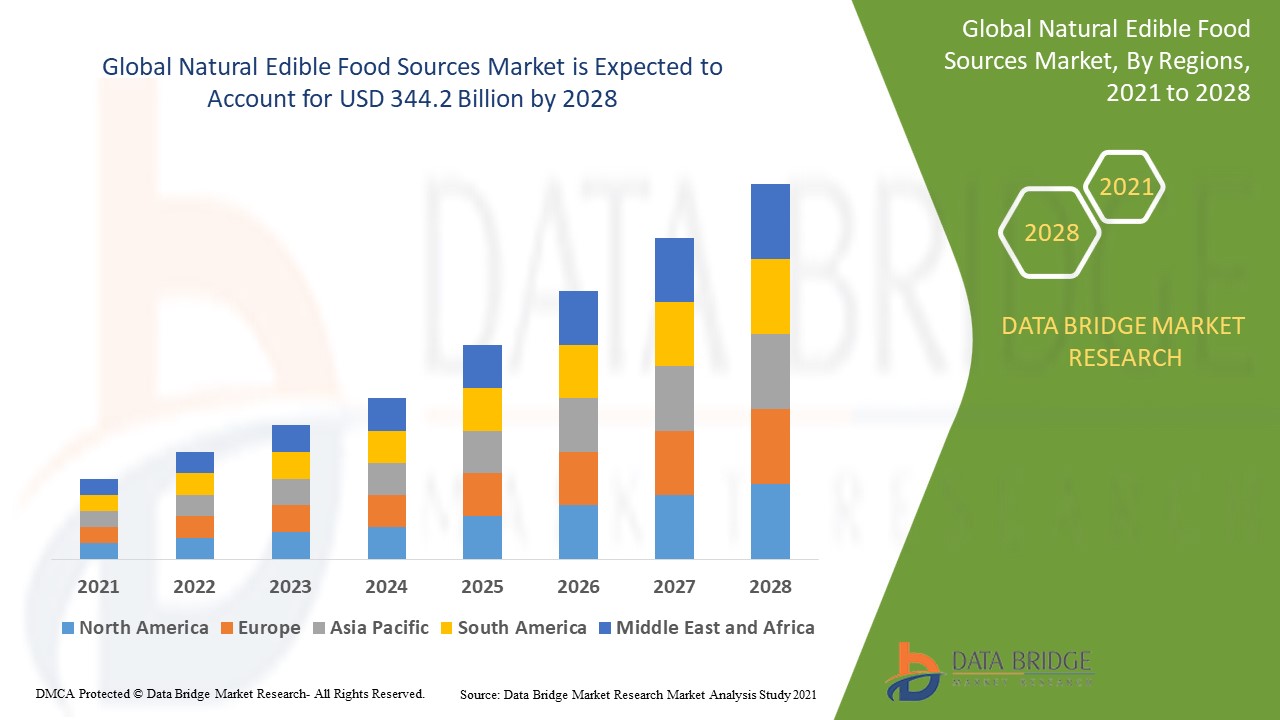
The global natural edible food sources market size was valued at USD 253.00 billion in 2024 and is projected to reach USD 468.28 billion by 2032, with a CAGR of 5.12% during the forecast period of 2025 to 2032. In addition to the insights on market scenarios such as market value, growth rate, segmentation, geographical coverage, and major players, the market reports curated by the Data Bridge Market Research also include in-depth expert analysis, pricing analysis, brand share analysis, consumer survey, demography analysis, supply chain analysis, value chain analysis, raw material/consumables overview, vendor selection criteria, PESTLE Analysis, Porter Analysis, and regulatory framework.
Natural Edible Food Sources Market Trends
“Rising Popularity of Plant-Based Proteins”
The natural edible food sources market is seeing a surge in demand as consumers gravitate toward cleaner and healthier food options. This shift is driven by an increasing preference for organic, plant-based, and minimally processed foods. One of the key trends in the market is the rising popularity of plant-based proteins, which cater to the growing vegan and vegetarian consumer base. Innovation in food preservation methods, such as freeze-drying and cold-pressing, is helping maintain the nutritional integrity of natural foods while extending shelf life. The market also sees advancements in packaging, with eco-friendly and biodegradable materials gaining traction as consumers seek sustainability. Overall, the market is evolving to offer natural, nutrient-dense foods that cater to diverse dietary needs and preferences.
Report Scope and Natural Edible Food Sources Market Segmentation
|
Attributes |
Natural Edible Food Sources Key Market Insights |
|
Segments Covered |
|
|
Countries Covered |
U.S., Canada and Mexico in North America, Germany, France, U.K., Netherlands, Switzerland, Belgium, Russia, Italy, Spain, Turkey, Rest of Europe in Europe, China, Japan, India, South Korea, Singapore, Malaysia, Australia, Thailand, Indonesia, Philippines, Rest of Asia-Pacific (APAC) in the Asia-Pacific (APAC), Saudi Arabia, U.A.E., South Africa, Egypt, Israel, Rest of Middle East and Africa (MEA) as a part of Middle East and Africa (MEA), Brazil, Argentina and Rest of South America as part of South America |
|
Key Market Players |
Venkatesh Natural Extract Pvt. Ltd (India), ADM (U.S.), Green Natural Extracts (India), Provital (Spain), Pioneer Enterprises (I) Pvt Ltd. (India), Bhoomi Naturals (India), Asean Aromatics Pvt Ltd (India), Panacea Phytoextracts Pvt. Ltd. (India), BIOVEDA NATURALS (India), Bio-Botanica (U.S.), Web Universals. (India), Phyto Life Sciences P. Ltd (India), HDDES Group (Sri Lanka), HimPharm (India), MartinBauer (Germany), Natural Extracts Industries Ltd (Sri Lanka), Xi'an Lanyor Biotech Co., Ltd. (China), Synthite Industries Ltd. (India) |
|
Market Opportunities |
|
|
Value Added Data Infosets |
In addition to the insights on market scenarios such as market value, growth rate, segmentation, geographical coverage, and major players, the market reports curated by the Data Bridge Market Research also include in-depth expert analysis, pricing analysis, brand share analysis, consumer survey, demography analysis, supply chain analysis, value chain analysis, raw material/consumables overview, vendor selection criteria, PESTLE Analysis, Porter Analysis, and regulatory framework |
Natural Edible Food Sources Market Definition
Natural edible food sources refer to foods that are derived from plants, animals, or microorganisms without undergoing significant processing or synthetic alterations. These foods are minimally processed, retaining their natural nutrients and flavors, and are typically free from artificial additives, preservatives, or chemicals. Instances include fresh fruits, vegetables, whole grains, nuts, seeds, and sustainably sourced animal products. These foods are valued for their health benefits, as they are rich in vitamins, minerals, fiber, and other essential nutrients, supporting overall well-being and nutrition. Natural edible food sources play a crucial role in healthy diets and are favored in the growing trend of clean eating and organic food consumption.
Natural Edible Food Sources Market Dynamics
Drivers
- Demand for Clean Label Products
Consumers are becoming more health-conscious and are increasingly prioritizing transparency in food ingredients. They are actively seeking foods with fewer additives, preservatives, and artificial ingredients. The demand for clean-label products, which provide clear information about the source and composition of ingredients, is growing. This trend is particularly prominent among consumers who are opting for natural, minimally processed foods that are perceived as healthier and more nutritious. The rising preference for clean and natural food sources is driving brands to reformulate products and embrace transparency in labeling, contributing to the growth of the natural edible food sources market.
- Rising Organic Food Consumption
The growing shift towards organic diets is significantly boosting the demand for natural edible food sources. Consumers are increasingly choosing organic options such as fruits, vegetables, and grains, driven by a desire for foods that are free from synthetic chemicals, pesticides, and genetically modified organisms (GMOs). This movement towards organic food aligns with a broader trend of health-conscious eating and environmental sustainability. As people become more aware of the potential health benefits of organic produce, including improved nutritional value and reduced chemical exposure, the natural edible food sources market is experiencing a surge in demand for organic offerings, driving market growth.
Opportunities
- Sustainability and Eco-Friendly Practices
As environmental concerns grow, consumers are increasingly choosing food products that are sustainably sourced and produced with eco-friendly practices. This trend has created a significant market opportunity for companies to meet the demand for natural edible food sources that prioritize sustainability. By adopting environmentally responsible sourcing methods, such as using organic farming practices, reducing waste, and minimizing carbon footprints, companies can attract environmentally conscious consumers. This growing preference for sustainable products allows brands to differentiate themselves in a competitive market and build consumer loyalty while contributing to environmental preservation, making sustainability a key driver of growth in the natural edible food sources market.
- Plant-Based and Functional Foods
The growing shift towards plant-based diets presents a significant opportunity for brands to introduce natural, plant-based alternatives to traditional animal-based food sources. Consumers are increasingly seeking plant-based options for health, ethical, and environmental reasons, creating demand for innovative food products. Moreover, the integration of functional foods, which offer added health benefits such as fortification with essential nutrients, caters to the rising consumer interest in functional nutrition. By aligning product offerings with these trends, companies can tap into a burgeoning market, providing consumers with nutritious, sustainable, and functional food options that meet their evolving dietary needs.
Restraints/Challenges
- Limited Shelf Life
One of the significant challenges in the natural edible food sources market is the limited shelf life of many fresh products, such as fruits, vegetables, and grains. Unlike processed foods, which often contain preservatives to extend their longevity, natural foods are more perishable and prone to spoilage. This leads to higher levels of food wastage, especially in the distribution and retail stages. As a result, the market faces difficulties in maintaining consistent supply, especially in regions with poor refrigeration and storage infrastructure. This challenge limits market expansion, as consumers may hesitate to purchase products that could spoil quickly.
- Higher Production Costs
The natural and organic food sources market faces a key restraint due to the higher production costs associated with these products. Methods such as using non-GMO seeds, sustainable farming practices, and avoiding synthetic pesticides require more resources, time, and care compared to conventional farming. These practices increase the overall cost of production, which in turn leads to higher retail prices. As a result, natural and organic food sources may be out of reach for some consumers, particularly in price-sensitive markets. This price disparity limits the market's growth potential, as a significant portion of the population may not be able to afford these premium products.
This market report provides details of new recent developments, trade regulations, import-export analysis, production analysis, value chain optimization, market share, impact of domestic and localized market players, analyses opportunities in terms of emerging revenue pockets, changes in market regulations, strategic market growth analysis, market size, category market growths, application niches and dominance, product approvals, product launches, geographic expansions, technological innovations in the market. To gain more info on the market contact Data Bridge Market Research for an Analyst Brief, our team will help you take an informed market decision to achieve market growth.
Impact and Current Market Scenario of Raw Material Shortage and Shipping Delays
Data Bridge Market Research offers a high-level analysis of the market and delivers information by keeping in account the impact and current market environment of raw material shortage and shipping delays. This translates into assessing strategic possibilities, creating effective action plans, and assisting businesses in making important decisions.
Apart from the standard report, we also offer in-depth analysis of the procurement level from forecasted shipping delays, distributor mapping by region, commodity analysis, production analysis, price mapping trends, sourcing, category performance analysis, supply chain risk management solutions, advanced benchmarking, and other services for procurement and strategic support.
Expected Impact of Economic Slowdown on the Pricing and Availability of Products
When economic activity slows, industries begin to suffer. The forecasted effects of the economic downturn on the pricing and accessibility of the products are taken into account in the market insight reports and intelligence services provided by DBMR. With this, our clients can typically keep one step ahead of their competitors, project their sales and revenue, and estimate their profit and loss expenditures.
Natural Edible Food Sources Market Scope
The market is segmented on the basis of source, crop type, and formulation. The growth amongst these segments will help you analyze meagre growth segments in the industries and provide the users with a valuable market overview and market insights to help them make strategic decisions for identifying core market applications.
Source
- Plant Source
- Tea Extracts
Crop Type
- Fruits and Vegetables
- Cereals & Grains
- Oilseeds & Pulses
- Others
Formulation
- Liquid
- Dry
Natural Edible Food Sources Market Regional Analysis
The market is analysed and market size insights and trends are provided by country, source, crop type, and formulation as referenced above.
The countries covered in the market report are U.S., Canada, Mexico in North America, Germany, Sweden, Poland, Denmark, Italy, U.K., France, Spain, Netherland, Belgium, Switzerland, Turkey, Russia, Rest of Europe in Europe, Japan, China, India, South Korea, New Zealand, Vietnam, Australia, Singapore, Malaysia, Thailand, Indonesia, Philippines, Rest of Asia-Pacific (APAC) in Asia-Pacific (APAC), Brazil, Argentina, Rest of South America as a part of South America, U.A.E., Saudi Arabia, Oman, Qatar, Kuwait, South Africa, Rest of Middle East and Africa (MEA) as a part of Middle East and Africa (MEA)
Europe dominates the natural edible food sources market, driven by increasing demand for essential oils in cosmetics, particularly for fragrances. In addition, the region's improving standard of living is expected to further fuel the growth of the market. This trend is likely to continue during the forecast period, with a rising preference for natural and organic food products.
The country section of the report also provides individual market impacting factors and changes in regulation in the market domestically that impacts the current and future trends of the market. Data points such as down-stream and upstream value chain analysis, technical trends and porter's five forces analysis, case studies are some of the pointers used to forecast the market scenario for individual countries. Also, the presence and availability of global brands and their challenges faced due to large or scarce competition from local and domestic brands, impact of domestic tariffs and trade routes are considered while providing forecast analysis of the country data.
Natural Edible Food Sources Market Share
The market competitive landscape provides details by competitor. Details included are company overview, company financials, revenue generated, market potential, investment in research and development, new market initiatives, global presence, production sites and facilities, production capacities, company strengths and weaknesses, product launch, product width and breadth, application dominance. The above data points provided are only related to the companies' focus related to market.
Natural Edible Food Sources Market Leaders Operating in the Market Are:
- Venkatesh Natural Extract Pvt. Ltd (India)
- ADM (U.S.)
- Green Natural Extracts (India)
- Provital (Spain)
- Pioneer Enterprises (I) Pvt Ltd. (India)
- Bhoomi Naturals (India)
- Asean Aromatics Pvt Ltd (India)
- Panacea Phytoextracts Pvt. Ltd. (India)
- BIOVEDA NATURALS (India)
- Bio-Botanica (U.S.)
- Web Universals. (India)
- Phyto Life Sciences P. Ltd (India)
- HDDES Group (Sri Lanka)
- HimPharm (India)
- MartinBauer (Germany)
- Natural Extracts Industries Ltd (Sri Lanka)
- Xi'an Lanyor Biotech Co., Ltd. (China)
- Synthite Industries Ltd. (India)
Latest Developments in Natural Edible Food Sources Market
- In November 2021, BASF acquired Horta S.r.l., an Italian company, to expand its geographical reach. This acquisition is set to enhance BASF's presence in the global market. The move aligns with the company's growth strategy, supporting further international expansion

- Interactive Data Analysis Dashboard
- Company Analysis Dashboard for high growth potential opportunities
- Research Analyst Access for customization & queries
- Competitor Analysis with Interactive dashboard
- Latest News, Updates & Trend analysis
- Harness the Power of Benchmark Analysis for Comprehensive Competitor Tracking
Global Natural Edible Food Sources Market, Supply Chain Analysis and Ecosystem Framework
To support market growth and help clients navigate the impact of geopolitical shifts, DBMR has integrated in-depth supply chain analysis into its Global Natural Edible Food Sources Market research reports. This addition empowers clients to respond effectively to global changes affecting their industries. The supply chain analysis section includes detailed insights such as Global Natural Edible Food Sources Market consumption and production by country, price trend analysis, the impact of tariffs and geopolitical developments, and import and export trends by country and HSN code. It also highlights major suppliers with data on production capacity and company profiles, as well as key importers and exporters. In addition to research, DBMR offers specialized supply chain consulting services backed by over a decade of experience, providing solutions like supplier discovery, supplier risk assessment, price trend analysis, impact evaluation of inflation and trade route changes, and comprehensive market trend analysis.
Data collection and base year analysis are done using data collection modules with large sample sizes. The stage includes obtaining market information or related data through various sources and strategies. It includes examining and planning all the data acquired from the past in advance. It likewise envelops the examination of information inconsistencies seen across different information sources. The market data is analysed and estimated using market statistical and coherent models. Also, market share analysis and key trend analysis are the major success factors in the market report. To know more, please request an analyst call or drop down your inquiry.
The key research methodology used by DBMR research team is data triangulation which involves data mining, analysis of the impact of data variables on the market and primary (industry expert) validation. Data models include Vendor Positioning Grid, Market Time Line Analysis, Market Overview and Guide, Company Positioning Grid, Patent Analysis, Pricing Analysis, Company Market Share Analysis, Standards of Measurement, Global versus Regional and Vendor Share Analysis. To know more about the research methodology, drop in an inquiry to speak to our industry experts.
Data Bridge Market Research is a leader in advanced formative research. We take pride in servicing our existing and new customers with data and analysis that match and suits their goal. The report can be customized to include price trend analysis of target brands understanding the market for additional countries (ask for the list of countries), clinical trial results data, literature review, refurbished market and product base analysis. Market analysis of target competitors can be analyzed from technology-based analysis to market portfolio strategies. We can add as many competitors that you require data about in the format and data style you are looking for. Our team of analysts can also provide you data in crude raw excel files pivot tables (Fact book) or can assist you in creating presentations from the data sets available in the report.













