


Necrotizing Enterocolitis Treatment Market Size
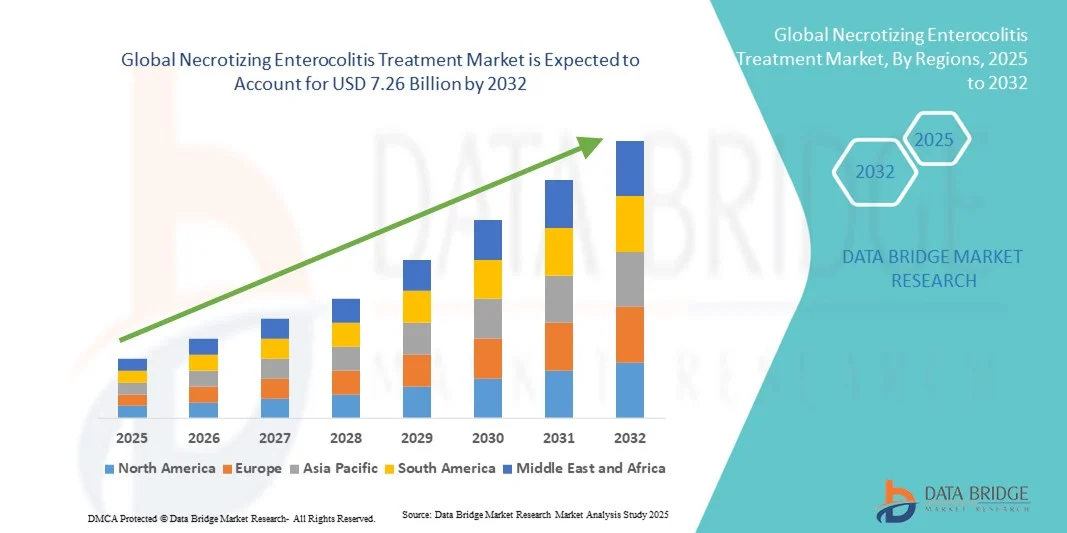
- The global necrotizing enterocolitis treatment market size was valued at USD 4.88 billion in 2024 and is expected to reach USD 7.26 billion by 2032, at a CAGR of 5.10% during the forecast period
- The market growth is largely driven by the increasing incidence of necrotizing enterocolitis in neonates, rising awareness among healthcare professionals, and advancements in neonatal care and treatment options
- Furthermore, growing investments in healthcare infrastructure, adoption of innovative therapies, and expansion of specialized neonatal intensive care units are contributing to better management of the disease. These converging factors are accelerating the uptake of NEC treatment solutions, thereby significantly boosting the industry's growth
Necrotizing Enterocolitis Treatment Market Analysis
- Treatments for necrotizing enterocolitis (NEC), including oral medication, botulinum toxin, and surgical interventions, are increasingly vital in neonatal care due to their ability to reduce mortality, improve clinical outcomes, and support the growth and development of premature infants
- The escalating demand for NEC treatments is primarily fueled by the rising incidence of NEC in preterm infants, growing awareness among healthcare professionals, and increasing investments in neonatal healthcare infrastructure and research for innovative therapies
- North America dominated the global necrotizing enterocolitis treatment market with the largest revenue share of 42.5% in 2024, driven by well-established neonatal intensive care units, advanced healthcare infrastructure, high adoption of innovative treatment protocols, and strong presence of key industry players focused on neonatal care solutions
- Asia-Pacific is expected to be the fastest-growing region in the global necrotizing enterocolitis treatment market during the forecast period due to increasing healthcare expenditure, expanding neonatal care facilities, and rising awareness about early diagnosis and treatment of NEC
- Definite segment dominated the global necrotizing enterocolitis treatment market with a market share of 48.3% in 2024, attributed to the high diagnosis rates requiring targeted treatments
Report Scope and Necrotizing Enterocolitis Treatment Market Segmentation
|
Attributes |
Necrotizing Enterocolitis Treatment Key Market Insights |
|
Segments Covered |
|
|
Countries Covered |
North America
Europe
Asia-Pacific
Middle East and Africa
South America
|
|
Key Market Players |
|
|
Market Opportunities |
|
|
Value Added Data Infosets |
In addition to the insights on market scenarios such as market value, growth rate, segmentation, geographical coverage, and major players, the market reports curated by the Data Bridge Market Research also include in-depth expert analysis, pricing analysis, brand share analysis, consumer survey, demography analysis, supply chain analysis, value chain analysis, raw material/consumables overview, vendor selection criteria, PESTLE Analysis, Porter Analysis, and regulatory framework. |
Necrotizing Enterocolitis Treatment Market Trends
Advancements in Neonatal Care and Early Intervention
- A significant and accelerating trend in the global NEC treatment market is the adoption of advanced neonatal care protocols and early intervention strategies, which are improving survival rates and reducing complications in preterm infants
- For instance, the use of standardized feeding protocols combined with probiotics supplementation in NICUs has shown to decrease NEC incidence and improve gut health among preterm neonates
- Technological innovations, such as AI-enabled diagnostic tools and neonatal monitoring systems, enable early detection of NEC symptoms, allowing timely and targeted treatment interventions
- The integration of electronic health records (EHRs) with NICU monitoring systems facilitates real-time data analysis and personalized treatment plans for vulnerable infants, improving clinical outcomes
- This trend towards more precise, data-driven, and proactive care is reshaping clinical expectations and treatment strategies, with companies such as Abbott and Nestlé Health Science investing in early intervention solutions for neonatal NEC management
- The demand for advanced treatment protocols and integrated neonatal monitoring solutions is growing rapidly across both hospitals and specialized clinics, as healthcare providers increasingly prioritize effective management and prevention of NEC
Necrotizing Enterocolitis Treatment Market Dynamics
Driver
Rising Incidence of NEC and Increased Healthcare Investment
- The increasing prevalence of NEC among preterm infants, coupled with rising investments in neonatal healthcare infrastructure, is a significant driver for the heightened demand for NEC treatments
- For instance, in March 2024, Baxter International expanded its neonatal nutrition and therapy programs, aiming to enhance NICU capabilities in high-risk infant care
- As awareness of NEC and its complications grows among healthcare professionals, hospitals are adopting evidence-based treatment protocols, improving outcomes and survival rates
- Furthermore, government and private funding for neonatal research and specialized care facilities are expanding access to advanced treatments in both developed and emerging markets
- The growing adoption of innovative therapies, including probiotics, biologics, and surgical interventions, is further propelling the uptake of NEC treatment solutions across global neonatal care units
- Increased emphasis on early screening and predictive analytics in NICUs allows for timely interventions, minimizing the severity of NEC and reducing long-term complications
- Expansion of public-private partnerships in neonatal healthcare is improving infrastructure, awareness, and treatment access for preterm infants worldwide
Restraint/Challenge
High Treatment Costs and Limited Access in Emerging Regions
- Concerns surrounding the high cost of NEC treatment and limited availability of specialized neonatal care in certain regions pose significant challenges to broader market penetration
- For instance, preterm infants in low- and middle-income countries often lack access to NICU facilities with advanced monitoring, limiting timely diagnosis and intervention
- Addressing these disparities through cost-effective treatment protocols, training of healthcare personnel, and expansion of NICU infrastructure is crucial for increasing accessibility
- In addition, variability in regulatory approvals for neonatal therapies across regions can delay the introduction of innovative treatments, affecting market growth in certain countries
- While improvements in healthcare policies and funding are gradually addressing these barriers, affordability and equitable access remain key challenges for sustained expansion of the NEC treatment market
- Limited awareness among caregivers and healthcare staff regarding early NEC symptoms continues to hinder timely diagnosis and treatment in some regions
- Supply chain constraints for specialized medications and biologics, especially in emerging markets, can delay critical NEC therapies, affecting overall patient outcomes
Necrotizing Enterocolitis Treatment Market Scope
The market is segmented on the basis of type, treatment, route of administration, end-users, and distribution channel.
- By Type
On the basis of type, the necrotizing enterocolitis treatment market is segmented into suspected, definite, and advanced. The Definite NEC segment dominated the market with the largest revenue share of 48.3% in 2024, driven by the high number of confirmed diagnoses requiring targeted therapeutic interventions. Hospitals and NICUs prioritize Definite NEC cases as they demand immediate and precise management to prevent severe complications, including intestinal perforation and sepsis. The segment benefits from established clinical protocols and guidelines that guide treatment decisions, increasing its utilization. Moreover, Definite NEC cases often require multidisciplinary care, including pharmacological therapy, probiotics, and surgical intervention, contributing to higher market revenue. The availability of advanced diagnostic tools, such as abdominal ultrasonography and biomarkers, supports early detection and treatment in this segment. In addition, healthcare providers increasingly focus on improving outcomes for confirmed NEC patients, driving consistent demand for effective treatments.
The Advanced NEC segment is anticipated to witness the fastest CAGR of 6.2% from 2025 to 2032, fueled by increasing prevalence of severe cases in extremely low-birth-weight infants. Advanced NEC often requires combined interventions, including surgery, biologics, and intensive monitoring, creating higher market potential. Growing awareness among neonatologists about early identification of disease progression is promoting the adoption of advanced care protocols. Technological advancements, such as minimally invasive surgeries and targeted therapies, are enabling better survival rates and long-term outcomes. Expansion of neonatal intensive care infrastructure in emerging regions is further accelerating adoption. Increased research funding for severe NEC management is also contributing to the growth of this segment.
- By Treatment
On the basis of treatment, the necrotizing enterocolitis treatment market is segmented into oral medication, botulinum toxin, and surgery. The Oral Medication segment dominated the market with a share of 45.6% in 2024, as it forms the first-line therapy for mild to moderate NEC cases. Oral medications, including probiotics and anti-inflammatory agents, are widely adopted in NICUs to stabilize preterm infants and prevent disease progression. Their ease of administration, cost-effectiveness, and integration into routine feeding protocols support high utilization. Hospitals prefer oral therapies due to their non-invasive nature and compatibility with other treatments. Clinical studies demonstrating efficacy and safety of oral medications reinforce trust among healthcare providers. Furthermore, continuous innovation in formulations and delivery methods contributes to steady revenue growth in this segment.
The Surgery segment is expected to witness the fastest growth rate of 6.5% CAGR from 2025 to 2032, driven by increasing cases of severe NEC requiring operative interventions. Surgical treatments, such as laparotomy and minimally invasive procedures, are critical for advanced NEC cases with intestinal perforation. Rising survival rates and improved post-surgical care are encouraging wider adoption of surgical management. Expansion of NICUs with specialized surgical capabilities is contributing to growth. Advanced surgical tools and techniques, such as laparoscopic interventions, are reducing complications and hospital stays. In addition, increasing investments in neonatal surgical training programs are fueling growth of this segment globally.
- By Route of Administration
On the basis of route of administration, the necrotizing enterocolitis treatment market is segmented into oral, parenteral, and others. The Parenteral segment dominated the market with a 51.7% share in 2024, primarily due to its role in severe NEC cases where oral feeding is not feasible. Parenteral nutrition and therapy provide critical support to preterm infants, ensuring essential nutrients and medications are delivered directly into the bloodstream. Hospitals rely heavily on parenteral routes for intensive care management. Integration with NICU monitoring systems allows precise dosage control and timely interventions. Research showing improved survival and reduced complications through parenteral therapy reinforces its dominance. Clinical adoption of parenteral formulations tailored for neonatal use supports sustained growth.
The Oral segment is expected to witness the fastest growth rate of 5.8% CAGR from 2025 to 2032, driven by increased adoption of probiotics and other oral medications for prevention and early-stage NEC treatment. Oral administration is preferred for less severe cases and supports integration with feeding protocols. Growing awareness among healthcare professionals about preventive oral therapies is boosting adoption. Pharmaceutical companies are introducing innovative oral formulations with improved bioavailability. Expansion of NICUs and increased focus on early-stage interventions are accelerating growth. Oral therapy also reduces dependency on intensive monitoring compared to parenteral therapy, making it attractive in both developed and emerging regions.
- By End-Users
On the basis of end-users, the necrotizing enterocolitis treatment market is segmented into clinics, hospitals, homecare, and others. The Hospitals segment dominated the market with a 62.4% share in 2024, owing to the high concentration of NICUs and specialized neonatal care facilities. Hospitals are equipped to provide advanced monitoring, surgical interventions, and multi-drug therapies for NEC management. Large hospitals adopt standardized protocols and maintain dedicated neonatal care teams, ensuring effective treatment. Hospitals also have access to the latest diagnostic tools, allowing early detection and improved outcomes. Integration of multidisciplinary care supports high treatment efficacy and utilization. Furthermore, government and private hospitals often lead adoption of innovative therapies, reinforcing their market dominance.
The Homecare segment is expected to witness the fastest growth rate of 7.1% CAGR from 2025 to 2032, driven by post-discharge monitoring and administration of oral medications at home. Telehealth and remote monitoring systems enable parents and caregivers to follow prescribed treatments effectively. Increasing awareness about continuity of care for preterm infants supports adoption. Companies are providing homecare kits and training for parents, enhancing convenience and compliance. Expansion of homecare services in developed and emerging markets contributes to accelerated growth. This segment also benefits from cost-effective management of mild NEC cases outside hospital settings.
- By Distribution Channel
On the basis of distribution channel, the necrotizing enterocolitis treatment market is segmented into hospital pharmacy, retail pharmacy, online pharmacy, and others. The Hospital Pharmacy segment dominated the market with a 57.8% share in 2024, as hospitals dispense specialized medications directly to NICU patients. Hospital pharmacies ensure timely availability of oral medications, parenteral therapies, and biologics for critical care. Integration with hospital inventory systems allows efficient stock management and compliance with neonatal protocols. Hospitals prefer in-house pharmacies to maintain quality control and proper handling of sensitive formulations. Established relationships between pharmaceutical suppliers and hospital pharmacies support sustained demand. Clinical guidance and prescription monitoring further reinforce hospital pharmacy dominance.
The Online Pharmacy segment is expected to witness the fastest growth rate of 8.3% CAGR from 2025 to 2032, fueled by rising e-commerce adoption and the convenience of home delivery for oral medications and supplements. Parents and caregivers increasingly rely on online platforms for timely access to preventive and follow-up therapies. Online pharmacies provide comprehensive product information and guidance for safe administration. Expansion of digital healthcare infrastructure in emerging regions is accelerating adoption. Partnerships between manufacturers and online retailers are facilitating wider availability of neonatal care products. Cost-effectiveness, convenience, and reduced travel requirements are key factors driving growth in this segment.
Necrotizing Enterocolitis Treatment Market Regional Analysis
- North America dominated the necrotizing enterocolitis treatment market market with the largest revenue share of 42.5% in 2024, driven by well-established neonatal intensive care units, advanced healthcare infrastructure, high adoption of innovative treatment protocols, and strong presence of key industry players focused on neonatal care solutions
- Healthcare providers in the region prioritize early diagnosis, advanced treatment protocols, and integration of innovative therapies such as probiotics, biologics, and surgical interventions, improving survival rates in preterm infants
- This widespread adoption is further supported by strong government and private healthcare investments, high awareness among neonatologists, and growing research initiatives in neonatal care, establishing North America as a key market for NEC treatments
U.S. Necrotizing Enterocolitis Treatment Market Insight
The U.S. necrotizing enterocolitis treatment market captured the largest revenue share of 80% in 2024 within North America, driven by the presence of advanced neonatal intensive care units (NICUs) and high adoption of evidence-based NEC management protocols. Healthcare providers are increasingly prioritizing early diagnosis and intervention using probiotics, parenteral nutrition, and surgical therapies. The rising prevalence of preterm births, combined with strong investments in neonatal care infrastructure and research, further propels market growth. Moreover, integration of AI-enabled diagnostic tools and telemedicine solutions is enhancing early detection and treatment efficacy. The focus on improving survival rates in preterm infants is a key factor supporting the U.S. NEC treatment market expansion.
Europe Necrotizing Enterocolitis Treatment Market Insight
The Europe necrotizing enterocolitis treatment market is projected to expand at a substantial CAGR throughout the forecast period, primarily driven by advanced neonatal healthcare systems, stringent treatment protocols, and increasing awareness about preterm infant care. The rising incidence of NEC and adoption of innovative therapies such as biologics, probiotics, and minimally invasive surgeries are fostering market growth. European hospitals are integrating early intervention strategies and standardized feeding protocols to reduce NEC-related complications. The region is witnessing significant growth across public and private hospitals, with specialized NICUs leading the adoption of advanced treatments. Government initiatives supporting maternal and neonatal health are further propelling market expansion.
U.K. Necrotizing Enterocolitis Treatment Market Insight
The U.K. necrotizing enterocolitis treatment market is anticipated to grow at a noteworthy CAGR during the forecast period, driven by the increasing focus on early diagnosis, neonatal care improvements, and advanced treatment adoption. In addition, rising awareness of NEC complications is encouraging hospitals to implement evidence-based therapeutic protocols. The U.K.’s strong healthcare infrastructure, along with widespread availability of NICUs and neonatal specialists, is expected to continue to stimulate market growth. Research funding for neonatal health and collaboration with biotech companies are further supporting the adoption of innovative therapies.
Germany Necrotizing Enterocolitis Treatment Market Insight
The Germany necrotizing enterocolitis treatment market is expected to expand at a considerable CAGR during the forecast period, fueled by increasing investments in neonatal healthcare, technological advancements in NICU monitoring, and adoption of evidence-based treatment protocols. Germany’s emphasis on clinical research and innovation promotes early diagnosis and effective management of NEC. Hospitals and specialized NICUs are integrating parenteral nutrition, probiotics, and surgical interventions to improve patient outcomes. Enhanced training for neonatal specialists and standardized treatment guidelines also drive market growth in the region.
Asia-Pacific Necrotizing Enterocolitis Treatment Market Insight
The Asia-Pacific necrotizing enterocolitis treatment market is poised to grow at the fastest CAGR of 7.5% during the forecast period of 2025 to 2032, driven by rising preterm birth rates, increasing healthcare expenditure, and expansion of NICU facilities in countries such as China, Japan, and India. The region’s growing focus on neonatal healthcare and government initiatives promoting maternal and child health are accelerating adoption of NEC treatments. Technological advancements in diagnostic tools and increased awareness among healthcare professionals are supporting market growth. Expansion of private hospitals and improved access to advanced therapies are further propelling the NEC treatment market in APAC.
Japan Necrotizing Enterocolitis Treatment Market Insight
The Japan necrotizing enterocolitis treatment market is gaining momentum due to the country’s advanced healthcare infrastructure, high awareness among neonatologists, and focus on preterm infant care. The adoption of early intervention protocols, probiotics, and minimally invasive surgical techniques is increasing. Integration of NICU monitoring systems with data analytics tools allows timely diagnosis and improved outcomes. The government’s emphasis on maternal and neonatal health, along with growing research initiatives, is driving demand for effective NEC treatments. Japan’s aging population and focus on specialized neonatal care are expected to sustain market growth.
India Necrotizing Enterocolitis Treatment Market Insight
The India necrotizing enterocolitis treatment market accounted for the largest market revenue share in Asia-Pacific in 2024, attributed to the country’s rising preterm birth rates, expansion of NICU infrastructure, and increasing awareness of neonatal care. India is witnessing growing adoption of probiotics, oral medications, and parenteral nutrition for NEC management. The government’s push towards improved maternal and child healthcare, along with private hospital investments, is driving market growth. The availability of cost-effective treatment options and increasing partnerships with global neonatal care companies are key factors propelling the market. Rising urbanization and improved access to specialized neonatal therapies are further accelerating NEC treatment adoption in India.
Necrotizing Enterocolitis Treatment Market Share
The necrotizing enterocolitis treatment industry is primarily led by well-established companies, including:
- Abbott (U.S.)
- Nestlé (Switzerland)
- Danone (France)
- Mead Johnson & Company, LLC. (U.S.)
- Fresenius Kabi AG (Germany)
- Prolacta (U.S.)
- Hollister Incorporated (U.S.)
- Baxter (U.S.)
- GE Healthcare (U.S.)
- Sandoz AG (Switzerland)
- Lupin (India)
- Aurobindo Pharma (India)
- Kyongbo Pharmaceutical Co., Ltd. (South Korea)
- Pfizer Inc. (U.S.)
- Uquifa (Spain)
- Zydus Group (India)
- Xinyu Pharmaceutical Co., Ltd. (China)
- RECORDATI S.p.A. (Italy)
What are the Recent Developments in Global Necrotizing Enterocolitis Treatment Market?
- In April 2025, a systematic review published in Frontiers in Pediatrics analyzed 13 quality improvement interventions (QIIs) across 17,961 preterm infants. The study found that nearly all QIIs, which included strategies such as improving breastfeeding rates and implementing standardized feeding protocols, led to a significant reduction in the incidence and severity of NEC in some neonatal intensive care units (NICUs)
- In May 2025, Infinant Health announced that its investigational drug candidate, INF108, received both Orphan Drug and Rare Pediatric Disease designations from the U.S. Food and Drug Administration (FDA) for the prevention of necrotizing enterocolitis (NEC) in preterm infants. These designations are intended to facilitate the development and expedite the review of INF108, potentially offering a new therapeutic option for this serious neonatal condition
- In February 2025, Frontiers in Pediatrics published a comprehensive research topic titled "Recent Advances in Our Understanding of NEC Pathogenesis, Diagnosis, and Treatment - Volume II." This compilation of studies explored various aspects of NEC, including the role of intestinal alkaline phosphatase as a protective enzyme, the impact of butyrate on brain injury in experimental NEC, and the development of novel scoring systems for NEC in animal models
- In November 2024, Noveome Biotherapeutics announced the completion of the first patient treatment in its Phase 1-2 clinical trial evaluating ST266 for the treatment of NEC in premature infants. This milestone marks a significant step forward in assessing the safety and efficacy of ST266 as a potential therapeutic option for this critical condition
- In August 2023, Noveome Biotherapeutics received FDA notification to proceed with a Phase 1-2 clinical trial evaluating its lead candidate, ST266, for the treatment of NEC in premature infants. This investigational therapy aims to address the inflammatory processes associated with NEC and could represent a significant advancement in neonatal care

- Interactive Data Analysis Dashboard
- Company Analysis Dashboard for high growth potential opportunities
- Research Analyst Access for customization & queries
- Competitor Analysis with Interactive dashboard
- Latest News, Updates & Trend analysis
- Harness the Power of Benchmark Analysis for Comprehensive Competitor Tracking
Data collection and base year analysis are done using data collection modules with large sample sizes. The stage includes obtaining market information or related data through various sources and strategies. It includes examining and planning all the data acquired from the past in advance. It likewise envelops the examination of information inconsistencies seen across different information sources. The market data is analysed and estimated using market statistical and coherent models. Also, market share analysis and key trend analysis are the major success factors in the market report. To know more, please request an analyst call or drop down your inquiry.
The key research methodology used by DBMR research team is data triangulation which involves data mining, analysis of the impact of data variables on the market and primary (industry expert) validation. Data models include Vendor Positioning Grid, Market Time Line Analysis, Market Overview and Guide, Company Positioning Grid, Patent Analysis, Pricing Analysis, Company Market Share Analysis, Standards of Measurement, Global versus Regional and Vendor Share Analysis. To know more about the research methodology, drop in an inquiry to speak to our industry experts.
Data Bridge Market Research is a leader in advanced formative research. We take pride in servicing our existing and new customers with data and analysis that match and suits their goal. The report can be customized to include price trend analysis of target brands understanding the market for additional countries (ask for the list of countries), clinical trial results data, literature review, refurbished market and product base analysis. Market analysis of target competitors can be analyzed from technology-based analysis to market portfolio strategies. We can add as many competitors that you require data about in the format and data style you are looking for. Our team of analysts can also provide you data in crude raw excel files pivot tables (Fact book) or can assist you in creating presentations from the data sets available in the report.












