


Neurosarcoidosis Treatment Market Size
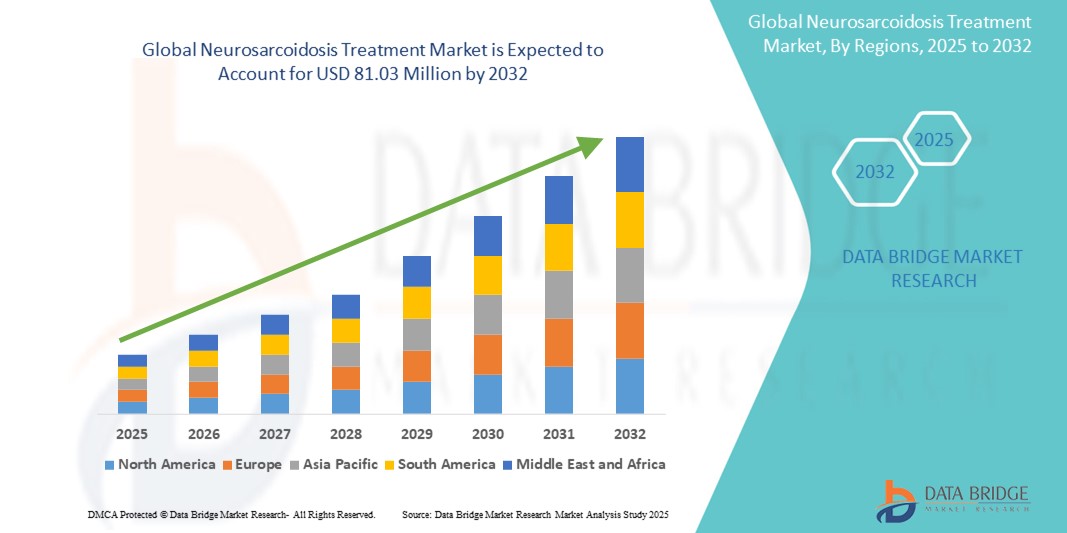
- The global neurosarcoidosis treatment market size was valued at USD 58.31 million in 2024 and is expected to reach USD 81.03 million by 2032, at a CAGR of 4.20% during the forecast period
- The market growth is largely driven by increased awareness, improved diagnostic techniques, and the growing availability of advanced therapeutic options targeting rare inflammatory disorders of the nervous system
- Moreover, the rising prevalence of autoimmune and neuroinflammatory conditions, coupled with ongoing clinical trials and investment in orphan drug development, is accelerating innovation in neurosarcoidosis therapies. These collective factors are enhancing patient care pathways and fostering market expansion across key regions
Neurosarcoidosis Treatment Market Analysis
- Neurosarcoidosis treatment, involving immunosuppressive therapies, corticosteroids, and biologics, is an essential focus area in the management of chronic inflammatory neurological disorders, gaining clinical importance due to its potentially debilitating effects on the central and peripheral nervous systems
- The rising incidence of sarcoidosis with neurological involvement, combined with greater physician awareness and improved diagnostic imaging, is fueling the demand for effective and targeted treatment protocols
- North America led the neurosarcoidosis treatment market with the largest revenue share of 41.1% in 2024, supported by advanced healthcare infrastructure, higher rates of diagnosis, and the presence of key pharmaceutical and biotech companies investing in rare disease drug development
- The Asia-Pacific region is projected to witness the fastest growth during the forecast period, driven by improved healthcare access, rising disease awareness, and increased clinical research initiatives across emerging economies
- Drugs segment dominated the neurosarcoidosis treatment market with a market share of 68% in 2024, driven by its effectiveness in managing inflammation and symptoms through corticosteroids, immunosuppressants, and emerging biologic therapies
Report Scope and Neurosarcoidosis Treatment Market Segmentation
|
Attributes |
Neurosarcoidosis Treatment Key Market Insights |
|
Segments Covered |
|
|
Countries Covered |
North America
Europe
Asia-Pacific
Middle East and Africa
South America
|
|
Key Market Players |
|
|
Market Opportunities |
|
|
Value Added Data Infosets |
In addition to the insights on market scenarios such as market value, growth rate, segmentation, geographical coverage, and major players, the market reports curated by the Data Bridge Market Research also include in-depth expert analysis, pricing analysis, brand share analysis, consumer survey, demography analysis, supply chain analysis, value chain analysis, raw material/consumables overview, vendor selection criteria, PESTLE Analysis, Porter Analysis, and regulatory framework. |
Neurosarcoidosis Treatment Market Trends
“Advancement in Biologic Therapies and Personalized Treatment Approaches”
- A significant and accelerating trend in the global neurosarcoidosis treatment market is the increasing use of biologic therapies, particularly TNF-α inhibitors such as infliximab and adalimumab, for managing steroid-refractory or chronic neurosarcoidosis. These therapies are offering more targeted and sustained relief compared to traditional treatments
- For instance, studies from institutions such as Mayo Clinic and Johns Hopkins have shown promising results with biologics in controlling CNS inflammation, reducing relapse rates, and improving neurological outcomes. Biologics are now being increasingly included in treatment algorithms for refractory cases
- Personalized treatment approaches based on the extent of neurological involvement, response to first-line therapies, and biomarker assessments are improving care precision and long-term disease management
- The integration of advanced imaging modalities such as FDG-PET and contrast-enhanced MRI has significantly enhanced diagnostic accuracy, allowing early intervention and monitoring of treatment response. These tools are being increasingly utilized alongside clinical scoring systems to tailor therapy
- This trend toward more individualized and targeted immunotherapy is fundamentally reshaping the treatment paradigm for neurosarcoidosis, as clinicians seek to balance efficacy with safety, particularly for long-term immunosuppressive regimens
- As pharmaceutical companies and research organizations continue to explore biologic agents and novel immune modulators, the market is witnessing a shift toward evidence-based, precision-driven treatment models aimed at improving patient outcomes across both developed and emerging healthcare systems
Neurosarcoidosis Treatment Market Dynamics
Driver
“Rising Awareness and Improved Diagnostic Capabilities”
- The increasing awareness of neurosarcoidosis among healthcare professionals, along with advancements in neuroimaging and CSF biomarker testing, is a key driver contributing to early detection and targeted treatment
- For instance, the availability of high-resolution imaging tools such as MRI and PET-CT scans has made it possible to identify and monitor central nervous system involvement more accurately, enabling physicians to initiate timely immunosuppressive or biologic therapy
- As more neurologists and immunologists recognize neurosarcoidosis as a serious, treatable inflammatory condition, the demand for effective long-term management options is growing steadily
- Furthermore, support from patient advocacy groups, increased publication of clinical guidelines, and academic collaboration in rare disease research are further propelling diagnosis rates and treatment advancements
- The emphasis on multidisciplinary management and growing research funding into rare neuroinflammatory conditions are expected to sustain market growth through the forecast period
Restraint/Challenge
“Limited Awareness in Low-Income Regions and High Treatment Costs”
- A key restraint in the neurosarcoidosis treatment market is the limited awareness and diagnostic capability in low-income and developing regions, leading to delayed diagnosis and poor disease management outcomes
- For instance, in many countries, non-specific neurological symptoms may be misdiagnosed or overlooked, resulting in untreated progression and long-term complications
- In addition, the high cost of treatment—especially with biologics such as infliximab—combined with limited reimbursement options, poses a major access barrier for patients in both public and private healthcare systems
- The chronic nature of the condition also requires prolonged therapy and follow-ups, which increases the financial burden on patients and caregivers
- As biologics and advanced diagnostics remain expensive and less available in resource-limited settings, bridging these gaps through affordable therapy options, training programs, and international collaboration will be crucial to improving global access and outcomes in neurosarcoidosis treatment
Neurosarcoidosis Treatment Market Scope
The market is segmented on the basis of treatment type, route of administration, end user, and distribution channel.
- By Treatment Type
On the basis of treatment type, the neurosarcoidosis treatment market is segmented into therapy, drugs, and others. The drugs segment dominated the market with the largest revenue share of 68% in 2024, driven by the widespread use of corticosteroids, immunosuppressants (such as methotrexate and azathioprine), and TNF-α inhibitors in managing inflammation and neurological symptoms. Drugs remain the primary line of treatment due to their efficacy in suppressing granulomatous inflammation and halting disease progression.
The therapy segment is anticipated to witness notable growth during the forecast period, as multidisciplinary approaches, including physiotherapy and cognitive rehabilitation, become increasingly integrated into long-term disease management strategies. These therapies aim to improve patient quality of life, especially in cases with persistent neurological deficits post-treatmen
- By Route Of Administration
On the basis of route of administration, the neurosarcoidosis treatment market is segmented into oral, parenteral, and others. The oral segment held the largest market share of 58.7% in 2024, attributed to the dominance of corticosteroids and immunosuppressive drugs administered orally for long-term disease control. The convenience, cost-effectiveness, and patient adherence associated with oral medications contribute significantly to this segment’s strength.
The parenteral segment is expected to witness the fastest CAGR from 2025 to 2032, particularly due to the increasing use of biologics that require intravenous or subcutaneous administration. Drugs such as infliximab and adalimumab are typically administered in hospital or infusion settings, making parenteral delivery critical for patients with moderate to severe disease or steroid resistance.
- By End User
On the basis of end user, the neurosarcoidosis treatment market is segmented into hospitals, specialty clinics, home healthcare, and others. The hospitals segment dominated the market with the largest revenue share of 46.5% in 2024, owing to the need for complex diagnostics, inpatient management, and multidisciplinary care in moderate to severe neurosarcoidosis cases. Hospitals serve as key treatment hubs for acute care and for administering high-risk therapies such as biologics and high-dose corticosteroids.
The specialty clinics segment is expected to witness the fastest CAGR from 2025 to 2032, driven by rising referrals to neurology and immunology centers for ongoing outpatient care. These clinics play an essential role in long-term disease monitoring and medication management, particularly in developed markets with advanced healthcare systems.
- By Distribution Channel
On the basis of distribution channel, the neurosarcoidosis treatment market is segmented into hospital pharmacy, retail pharmacy, online pharmacy, and others. The hospital pharmacy segment held the largest market share of 41.2% in 2024, due to the hospital-centric nature of neurosarcoidosis treatment, especially for administering parenteral therapies and managing acute exacerbations.
The retail pharmacy segment is anticipated to see fastest growth during forecast period, supported by demand for oral corticosteroids and immunosuppressants in chronic outpatient care. Patients often refill these prescriptions from community pharmacies once they are stabilized.
Neurosarcoidosis Treatment Market Regional Analysis
- North America dominated the neurosarcoidosis treatment market with the largest revenue share of 41.1% in 2024, supported by advanced healthcare infrastructure, higher rates of diagnosis, and the presence of key pharmaceutical and biotech companies investing in rare disease drug development
- The region benefits from widespread access to high-resolution imaging technologies, routine neurological assessments, and early use of immunosuppressive and biologic therapies, contributing to faster diagnosis and more effective treatment pathways
- Growing investment in rare disease research, favorable reimbursement frameworks, and a robust clinical trial infrastructure further support treatment innovation and accessibility, establishing North America as the leading hub for neurosarcoidosis diagnosis, care, and therapeutic advancement
U.S. Neurosarcoidosis Treatment Market Insight
The U.S. neurosarcoidosis treatment market captured the largest revenue share of 82% in North America in 2024, driven by advanced diagnostic infrastructure, high clinical awareness, and a strong pipeline of immunosuppressive and biologic therapies. Leading academic centers and hospitals are actively engaged in rare disease research, contributing to early diagnosis and personalized treatment plans. In addition, supportive reimbursement policies and widespread access to corticosteroids, methotrexate, and TNF-α inhibitors are reinforcing the U.S.’s dominance in this specialized therapeutic area.
Europe Neurosarcoidosis Treatment Market Insight
The Europe neurosarcoidosis treatment market is projected to grow steadily through the forecast period, supported by enhanced access to neurological care, robust healthcare systems, and ongoing research in rare autoimmune disorders. Increased physician education, coupled with pan-European initiatives on rare disease management, is encouraging early intervention. Rising usage of imaging technologies such as MRI and FDG-PET, and access to biologic therapies through public healthcare programs, is further accelerating regional market growth.
U.K. Neurosarcoidosis Treatment Market Insight
The U.K. neurosarcoidosis treatment market is expected to grow at a notable CAGR during the forecast period, driven by the National Health Service’s focus on rare disease diagnostics and specialist care access. The presence of expert centers and rare disease registries facilitates timely diagnosis and standardized treatment approaches. In addition, growing access to TNF-α inhibitors under public coverage and increased physician awareness are supporting market expansion across neurology and immunology departments.
Germany Neurosarcoidosis Treatment Market Insight
The Germany neurosarcoidosis treatment market is expected to expand at a considerable CAGR during the forecast period, bolstered by strong investments in neurological research and access to advanced imaging and biologics. The country’s dual public-private healthcare model enables better access to high-cost treatments, while its clinical networks facilitate early referral and treatment of complex autoimmune conditions. Germany’s proactive approach to rare disease care is driving innovation and adoption of newer immunomodulatory therapies.
Asia-Pacific Neurosarcoidosis Treatment Market Insight
The Asia-Pacific neurosarcoidosis treatment market is poised to grow at the fastest CAGR from 2025 to 2032, fueled by improving healthcare infrastructure, rising awareness, and increasing availability of diagnostics and immunosuppressive therapies in emerging economies. Countries such as Japan, China, and India are witnessing growth in neurology departments and specialty clinics, supported by government-backed rare disease programs and global clinical collaborations that are enabling wider treatment access.
Japan Neurosarcoidosis Treatment Market Insight
The Japan neurosarcoidosis treatment market is gaining traction, supported by the country’s emphasis on early diagnostic imaging, specialist referrals, and its well-established healthcare coverage for rare diseases. With a rising number of neurology clinics and integrated care networks, patients benefit from early intervention and access to corticosteroids, methotrexate, and second-line therapies. Japan’s clinical research participation is also expanding the treatment landscape for neurosarcoidosis.
India Neurosarcoidosis Treatment Market Insight
The India neurosarcoidosis treatment market accounted for the largest market revenue share in Asia-Pacific in 2024, owing to its growing base of neurology specialists, increasing rare disease awareness, and improved access to essential immunosuppressants. Urban hospitals are leading in diagnostics and treatment, while rising public-private partnerships and the government’s push for rare disease policy implementation are driving accessibility and affordability of care, especially in metro cities.
Neurosarcoidosis Treatment Market Share
The neurosarcoidosis treatment industry is primarily led by well-established companies, including:
- Johnson & Johnson Services Inc. (U.S.)
- Pfizer Inc. (U.S.)
- Novartis AG (Switzerland)
- F. Hoffmann-La Roche Ltd (Switzerland)
- AbbVie (U.S.)
- Sanofi (France)
- GSK plc (U.K.)
- Amgen Inc. (U.S.)
- Bristol Myers Squibb Company (U.S.)
- Merck & Co., Inc. (U.S.)
- Lilly (U.S.)
- Takeda Pharmaceutical Company Limited (Japan)
- Bayer AG (Germany)
- AstraZeneca (U.K.)
- UCB S.A. (Belgium)
- Biogen Inc. (U.S.)
- Regeneron Pharmaceuticals, Inc. (U.S.)
- Horizon Therapeutics plc (Ireland)
- Mallinckrodt (Ireland)
What are the Recent Developments in Global Neurosarcoidosis Treatment Market?
- In May 2024, Johnson & Johnson Innovative Medicine announced the initiation of a Phase II clinical trial evaluating golimumab, a TNF-α inhibitor, in patients with steroid-refractory neurosarcoidosis. This marks a significant step toward expanding the therapeutic options for complex neuroinflammatory conditions. The study aims to assess efficacy, tolerability, and neuroprotective outcomes, reinforcing the company’s commitment to addressing rare neurological disorders with high unmet clinical needs
- In April 2024, Mayo Clinic unveiled a collaborative project with the National Institute of Neurological Disorders and Stroke (NINDS) to develop a precision medicine framework for neurosarcoidosis, incorporating biomarker-driven diagnostics and individualized therapy regimens. This initiative reflects a broader trend in neurology toward tailoring treatments to specific patient profiles, with the goal of improving long-term disease outcomes and reducing treatment-related side effects
- In March 2024, Pfizer Inc. expanded its immunology research pipeline by announcing plans to investigate tocilizumab, an IL-6 receptor antagonist, for potential off-label use in neurosarcoidosis treatment. The company is responding to growing clinical interest in biologics beyond TNF inhibitors, particularly for patients who fail standard immunosuppressive regimens. This initiative illustrates Pfizer’s strategic push into rare neuroimmune diseases
- In February 2024, the Sarcoidosis Clinical Trials Consortium (SCTC) published interim results from its global observational study of neurosarcoidosis patients across 12 countries. The study highlights key data on treatment patterns, diagnostic variability, and disease progression, providing a comprehensive foundation for future international treatment guidelines. This global effort underscores the need for harmonized care protocols and greater research collaboration in rare neurological conditions
- In January 2024, Novartis AG announced the launch of a global awareness campaign in partnership with rare disease advocacy organizations to promote early recognition and referral for suspected neurosarcoidosis cases. The campaign includes physician training modules, digital outreach tools, and multilingual educational resources. This effort demonstrates Novartis’ proactive stance in bridging diagnosis gaps and supporting earlier intervention to improve patient outcomes globally

- Interactive Data Analysis Dashboard
- Company Analysis Dashboard for high growth potential opportunities
- Research Analyst Access for customization & queries
- Competitor Analysis with Interactive dashboard
- Latest News, Updates & Trend analysis
- Harness the Power of Benchmark Analysis for Comprehensive Competitor Tracking
Data collection and base year analysis are done using data collection modules with large sample sizes. The stage includes obtaining market information or related data through various sources and strategies. It includes examining and planning all the data acquired from the past in advance. It likewise envelops the examination of information inconsistencies seen across different information sources. The market data is analysed and estimated using market statistical and coherent models. Also, market share analysis and key trend analysis are the major success factors in the market report. To know more, please request an analyst call or drop down your inquiry.
The key research methodology used by DBMR research team is data triangulation which involves data mining, analysis of the impact of data variables on the market and primary (industry expert) validation. Data models include Vendor Positioning Grid, Market Time Line Analysis, Market Overview and Guide, Company Positioning Grid, Patent Analysis, Pricing Analysis, Company Market Share Analysis, Standards of Measurement, Global versus Regional and Vendor Share Analysis. To know more about the research methodology, drop in an inquiry to speak to our industry experts.
Data Bridge Market Research is a leader in advanced formative research. We take pride in servicing our existing and new customers with data and analysis that match and suits their goal. The report can be customized to include price trend analysis of target brands understanding the market for additional countries (ask for the list of countries), clinical trial results data, literature review, refurbished market and product base analysis. Market analysis of target competitors can be analyzed from technology-based analysis to market portfolio strategies. We can add as many competitors that you require data about in the format and data style you are looking for. Our team of analysts can also provide you data in crude raw excel files pivot tables (Fact book) or can assist you in creating presentations from the data sets available in the report.












